
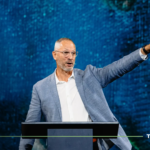


Sometimes life just hurts. Out of nowhere, death, illness, unemployment, or a difficult relationship can change our lives and challenge everything we thought we knew. But amid all this pain and confusion, we aren’t alone.
In this TGC Classic recorded in 2019, Paul Tripp weaves together his personal story, pastoral ministry experience, and biblical insights to encourage believers to cling to God’s promises when trials come and move forward with the hope of the gospel.
In This Episode
00:00 – Introduction and opening prayer
01:37 – Personal health crisis and initial hospital experience
05:28 – The gospel and suffering: understanding the now-ism
10:28 – Universality of suffering and its various forms
16:30 – The role of theology and interpretation in suffering
25:33 – Bad theology and its effect on suffering
41:07 – The cross of Jesus Christ and its transformative power
50:56 – The role of community in suffering
54:37 – Homework for preparing the soul for suffering
58:20 – Closing prayer and blessing
SIGN UP for one of our newsletters to stay informed about TGC’s latest resources.
Help The Gospel Coalition renew and unify the contemporary church in the ancient gospel: Give today.
Don’t miss an episode of The Gospel Coalition Podcast:
Transcript
The following is an uncorrected transcript generated by a transcription service. Before quoting in print, please check the corresponding audio for accuracy.
Paul Tripp
I just want to thank Crossway as we begin. They’re the sponsors of this workshop. I want to thank them too for my own partnership with them. I’m very thankful to be working with a publisher that is committed to the gospel and gospel resources, and that partnership has been wonderful for me. Let’s pray as we begin. Lord, we thank you for the stunning wisdom that we find in your Word. We wouldn’t know how to think, were it not for the wisdom on its pages. But we thank you most of all for the Lord Jesus Christ, who is a sinner of the wisdom of Scripture. We thank you that He is in this moment in us and for us and with us, and that gives us a right here, right now hope. We pray that you would open our hearts, that we would be ready to receive what you have for us, remove the distractions that are always around us, and I would be so bold to pray that this would not just be the dissemination of biblical information, but would result in heart and life transformation. We pray this in your sweet and strong name, Amen. August or October 19 of 1914 2014 Wow, I’m old, but I am not that old. Well, my life changed. I didn’t want my life to change. I didn’t plan for my life to change, but my life changed. I was experiencing some minor, what I thought were physical symptoms, and so I called my physician. He said, “You live in Center City of Philadelphia, right close to Jefferson Hospital. Just go to the hospital there. They’ll check you out. We went on a Sunday afternoon. We were quite relaxed. We stopped at Starbucks on the way for worship, and went to the emergency room. It was a Sunday afternoon. We watched the Eagles play football in 2014. The best place to watch the Eagles was in an emergency room, and I was quite relaxed. I thought that I would be an outpatient. They would give me some medication. I’d be on my way. They took me back into the emergency emergency examining room, and within a half hour, there were heads of five different departments in that room with me. I could hear conversations that made no sense to me. Conversations that were very serious, and I knew that something was going on that was way, way more dramatic than anything I thought I would experience. What I didn’t know was that I was an acute renal failure. My kidneys were dying, and I did not know it. The doctors told me if I had waited seven days, I would have died. They took me up into my room, and for reasons we still are not sure of, my body went into trauma and went into full body spasms that were uncontrollable. That lasted for 36 hours. It was the most horrendous experience of uncontrollable pain that I could imagine. I literally screamed for 36 hours. The only thing I could pray was, “God help me! God help me! God help me! God help me! My son, 30-six, would hold on to my feet, trying to just keep my body from literally writhing out of the bed. That started a 10-day hospital stay because they were trying to save my kidneys. I thought when I went out of the hospital that that was a horrible experience, but praise God, I had lived through it. I had lost 60-five of my. Percent of my kidney function never to return. Little did I know that was the beginning of two years of travail, followed by six surgeries-a surgery every four months. If you have a surgery every four months, you don’t recover from the last surgery before you’re in surgery again. The awareness came along the way that I would never be healthy again in my life. That the strength I once had would not return. That I would live forever with a very damaged body. That almost everything in my life would have to change, the way I approach ministry, just all my daily habits, the way I ate everything. Now, here’s what I want to say to you: when when that happens to you, when the unexpected, the unwanted, the unplanned, the hard, and the difficult enters your life, you will always preach some kind of gospel to yourself, always. Everybody in this room is a theologian.
Paul Tripp
Everybody in this room is a philosopher. Everybody in this room is an archeologist who will dig through the mound of his his or her existence in order to make sense out of life. And so, I want to think with you about the gospel, the gospel right here, right now, and suffering. What I want us to focus on is the nowism of the gospel of the Lord Jesus Christ. I think often we have a pretty clear understanding of the gospel past, and we have a pretty clear understanding of the gospel future, but we have a muddy, unclear understanding of the nowism-the right here, right now, present benefits, present reality of the person and work and presence of the Lord Jesus Christ, and my whole mission in ministry, mission in writing, is to connect the transforming power of Jesus Christ to everyday life. How does the gospel give you a radically different lens on suffering? And I’d like you to turn in your Bibles if you have a Bible with you, or your iPhone or iPad or whatever weird, sad off-brand you’re carrying. Hopefully, it’s not anyone in here is still not carrying a Samsung Note Seven because you’re about to explode. And turn to Psalm 20-seven. My my attention is not to exegete the psalm. I just want to anchor our our discussion in this wonderful psalm. The psalm has been a friend to me in these days. The Lord is my light and my salvation; whom should I fear? The Lord is a stronghold of my life; of whom shall I be afraid? When evildoers assail me to eat up my flesh, my adversaries and foes, it is they who stumble and fall. Though an army encamp against me, my heart shall not fear. The war rise against me, yet I will be confident. One thing I have asked of the Lord, and that will I seek after, that I may dwell in the house of the Lord all the days of my life, to gaze upon the beauty of the Lord and to inquire in His temple, for He will hide me in the shelter in His shelter in the day of trouble. He will conceal me under the cover of his tent. He will lift me high upon a rock. Scholars that study these things say that this psalm was written in one of two dramatically significant moments of suffering. David’s life. Some say that this psalm was written when David was fleeing from the jealous wrath of King Saul. You know the story that David had been nothing but a loyal servant to Saul, but the the anointing of God was on David, and David was doing amazing things, and Saul was murderously jealous and was out to do David harm. It was a situation of gross personal injustice. Or other scholars say that perhaps this psalm was written when David was fleeing from his own son Absalom, who had. Conspired to take his father’s throne, and if it’s a monarchy, it probably is going to mean the death of the king. It’s a situation of horrible family betrayal. Now, in in these one of these two dramatic, difficult moments of suffering, these words are written. I want to come back to Psalm 20-seven in a moment, but I want to begin to get us to think about this topic of the gospel and suffering. And here’s the first thing I would say to you: You can’t escape the reality that the Bible teaches that suffering is not a unique experience. It’s not a strange experience. It’s not a surprising experience. It’s not an episodic experience. Suffering is a universal human experience. In Romans eight, beginning with verse 18, when Paul discusses suffering, he assumes the universality of suffering. He assumes that somehow, some way, all of us will suffer. I can say this to you. This may not be a happy thing to hear, but if you’re not suffering now, you’re near someone who is, and if you’re not suffering now, fasten your seat belt. You will someday.
Paul Tripp
And I think when we when we speak of suffering, we ought to we ought to be thinking about, and we ought to bring the gospel to the full range of these experiences, suffering can be this 11-year-old who is being bullied in his school, so he he has his heart beating with fear every time he walks into a school building that should be a safe place for him. Suffering can be dramatic, physical, body-damaging sickness. Suffering can be systemic racism that I have to deal with all the time just because of the color of my skin. So. Suffering can be human betrayal, where wife one morning looks at her husband’s computer and realizes he’s had a long-term relationship with somebody other than her. Suffering can be the encroaching weaknesses of an elderly person’s body as the body begins to fail, the Bible says you will suffer because God has determined between the already of our conversion and the not yet of our home going. We are living in a world that’s dramatically broken, that will not operate according to the original plan. That means because the Bible says God is sovereign, He chooses the exact place where we will live and the exact length of our days. That the the presence of suffering in your life. Oh, you got to get a hold of this. It’s not a failure of God’s plan. It’s somehow, some way contrary than we would like to think. Part of God’s plan. God has chosen this world to be your address, and somehow, some way, suffering will enter your door. Don’t think that somehow you can lock out suffering. Don’t think somehow because you’re a child of God that you have a ticket out of suffering. God knows the address He’s made for your address. And we leave people unprepared for the experience of suffering when we don’t treat suffering with the universality that Scripture does. Suffering is a universal human experience. Peter says you should not be surprised as if something strange is happening to you. Now, there’s a second thing we want to say. Is that suffering is never neutral because you always bring something to your suffering. That’s why I said to you earlier: when you’re hit with the kinds of things that David was hit with, you will always preach to yourself some kind of gospel. I say this all the time, and when I say it, people laugh. But I’m really quite serious. No one is more influential in your life than you are because no one talks to you more than you do. See, you laughed. Some of you did. Some of you are too deeply mature to laugh. You’re way more spiritual than the people who laughed. You’re always talking to yourself. Most of us learned it’s best not to move our lips when we do that, because they think we’re crazy. And and when you’re debating something with yourself, don’t change places. They’ll put you away. But you’re always talking to yourself, and that conversation is profoundly important because the things you say to you you about you, about life, about meaning, purpose, about God, about His plan, His purpose, are are formative of your thoughts and your desires and your actions and your words, you’re always theologizing with yourself. It’s impossible not to, because you were wired by God’s plan to be an interpreter. There’s a principle for you here: human beings made in the image of God do not live life based on the facts of their experience, but based on their interpretation of the facts. Let me say that again: human beings made in the image of God do not live life based on the facts of their experience, but based on their interpretation of the facts. Let me give you. Some of you heard me elsewhere. You may have heard this illustration, a little silly family example of this. When my youngest son was three years old, he knew that his daddy had a doctor in front of his name, and he knew that I saw people for appointments, and he thought that I must be a medical doctor, but I’m not one of those. And he’s out in the backyard, wandering around the backyard like three-year-olds do. They live by the Christopher Columbus method, land and discover.
Paul Tripp
And he wandered in front of his older brother, who had a broken rake handle and was hitting stones over the fence into the neighbor’s yard. I always ask him to do that before I mowed. And. And Ethan took a great big swing as Darnay walked in front of him, hitting full swing in the forehead, knocked him down on the ground. He began to bleed profusely. I knew that something had happened because older sister was acting as the familial siren. She just began to scream, and she’s running laps around the backyard screaming. And you know how you can hear the siren go by your house. It’s soft and then loud and then soft again. That was her scream. Daddy, daddy! I ran to the backyard, and there’s the perpetrator of the crime holding his bleeding brother, pleading his legal case. Daddy, am I in trouble? How much trouble am I in, Daddy? I told him to put little Darnay down on the floor. I called for paper towels because he’s bleeding. Nicole’s screaming. Older brother is now plea bargaining. I’ll never go in the backyard again. I’ll never pick up a rake handle again. How much trouble am I in? I’m thinking this is a very bloody scene. I may have to call that emergency number 911 I cannot form this number in my mind. I have 999111919119 I have all the different combinations, but that one, Ethan’s now crying. Nicole’s screaming. I look down at the little Darnay. He’s utterly placid at peace, and I notice his little mouth is moving, so I put my ear down to his little mouth, and I hear him saying over and over again, “I’m just so thankful my daddy is a doctor. Poor deluded boy, this man can’t even think of a three-digit number, let alone provide for you medical assistance. Now, notice what he’s doing. He’s not responding based on the facts of his experience, but his interpretation of the facts. Write in your notes: “I am a God-ordained interpreter. and the way you interpret life is very important. Now, here, stay with me. Here, I’m afraid this sets up a difficulty for us, because often it means that your confessional theology, your spontaneous interpretance of life does not agree with your functional theology, your confessional theology. I mean, your formal, systematic theology does not agree with those spontaneous interpretation of life. Your functional theology. Listen, I. The enemy of our souls will gladly give us our formal theology if he can capture our hearts. Your spontaneous interpretations-Are you ready for this? Are actually the theology that is shaping your life. So you’re always interpreting. This means for suffering, we never just suffer the thing that we’re suffering. We always suffer the way that we’re suffering the thing that we’re suffering. I’ll say that again. Some of you are looking at me, thinking, “Please, we never just suffer the thing that we’re suffering; we always also suffer the way that we’re suffering the thing that we’re suffering. We have a profound ability to trouble our own trouble. Turn back with me to Psalm 20-seven. Just want to look at verse one. The Lord is my light and my salvation? Whom shall I fear? The Lord is a stronghold of my life. Of whom shall I be afraid? You will notice that Psalm 20-seven, although it’s a psalm of trouble, doesn’t begin with trouble. It begins with theology. Nothing is more important in a moment of trouble than the true, crisp, reliable theology of the Word of God, and the way that David is holding on to his theology here is very important. The Lord is light. In the broadest sense, that word picture means what is pure and true and righteous and holy. The Lord is salvation. In its biggest, broadest term, He delivers from evil. The Lord is stronghold, a place of safety. The Lord is light. The Lord is salvation. The Lord is stronghold. Now I’m about to confuse you here, but what I’ve given you is bad, unbiblical. It will hurt you. Theology. Do you know why? Does anybody know? Because I’ve left out a word. I left it out three times. In verse one, you know what the word was. Anybody?
Paul Tripp
My David is not saying somewhere off out there there is a God who’s light somewhere off out there there’s salvation somewhere out there their stronghold he’s not he’s not saying that he’s saying speaking better than he knows glorious grace has connected me to this one who is light, glorious grace has connected me to this one who is salvation. Glorious grace has connected me to this one who is stronghold. The Lord is light for me. The Lord is salvation for me. The Lord is stronghold for me. There better be a my in the middle of your theology. because good theology doesn’t just define who God is. Listen to me carefully. Good theology redefines who you are as a child of God. You don’t get your identity from your friends. You don’t get your identity from your experiences, you don’t get your identity from your performance. You don’t get your identity from your possessions. You don’t get your identity from your health. You get your identity from your theology, from what it tells you about who God is, and therefore the glory of who you are as one of His children. We cannot hold our theology in an abstract, distant, and personal way that is a violation of the theology of the Word of God. Theology is a shorthand for the story of the Redeemer, who is now in you and with you and for you. Theology always connects you to grace. It always connects you to Jesus. It always connects you to His promises, and in that way, always defines your identity. Now I’ve already begun talking about this, but I want to I want to talk more about this. One of the ways we trouble our trouble is bad theology. Bad theology that doesn’t bring the glory of the gospel of Jesus Christ in the kinds of ways that are needed when you’re going through these difficult experiences that expose you to all kinds of temptation. Let me say this: Suffering is spiritual warfare. Suffering exposes you to particular seductive and attractive, but devastating temptations. You could argue that suffering will always either deepen your faith and your rest in God and your affection for your Redeemer, or it will weaken the same. Suffering is a battleground; it’s a warfare, and so we want to arm ourselves for that battle with the beautiful theology of the Word of God. Bad theology doesn’t do that. So I want to I want to talk a little bit about that that bad theology. One of the one of the battlegrounds in suffering is the temptation to doubt God. Now I I want to I want to make this more nuanced than than what I just said. I believe there there are two kinds of doubt of God that are very very different, and they need to be distinguished. The first is the doubt of wonderment. That is the normal life of a believer because God is now central for you, because you’ve attached your identity to His existence, His grace, and His plan, you’re always referencing what is going on in your life to God. God is becoming has become your ultimate hermeneutic. Do you know what I mean by that? God is the key way that you make sense out of life, and because God’s ways are not our ways, and His thoughts are not our thoughts, and because what God understands is good for us, we don’t always think as being good. There will be moments where we’re confused, moments where we wonder, moments where we’re surprised. That’s not weak faith. That’s just faith. That’s the that’s the normal ebb and flow and struggles of faith that everyone has. God doesn’t tell me things ahead of time. Listen, we need to say it. God’s secret will is called a secret will because it’s secret, and I don’t. I don’t get the script ahead of time, and so I’m going to be surprised. I’m, I’m going to feel a moment’s unprepared. I’m going to wonder how this is good. How does this agree with the promises of God? That wonderment is part of running to God in faith and and trying to hold on to Him in moments of confusion. There’s nothing to be ashamed of in that. But there’s a second form of of doubt, and I would call this the doubt of judgment.
Paul Tripp
It’s when, because of what I’m going through, I have brought God into the court of my judgment, and I have judged him as being unfaithful, uncaring, and unkind. Now here’s the theological process that has been inverted in that moment. It’s tempting when you’re going through dramatic things that you cannot escape to use those. Let those function in your mind and heart as a way of understanding God. Danger, danger, danger. You don’t ever allow your experiences to interpret who God is. You let who God says He is to interpret your experience, and that’s warfare. You got to hold on to your mind. You have to run back to the Word of God. You have to do what David is. You have to speak words to yourself. Speak gospel to yourself. Speak God’s identity to yourself again. Let your surety of who God is then become a tool for interpreting what you’re going through, not the other way around. Now, here’s what’s devastating about doubt of God. If you allow yourself to begin to entertain the thought that God is in fact not good, He is in fact not kind, He is in fact not caring, He is in fact not faithful-a faithful keeper of His promises-that will begin to weaken your trust of Him. Stay with me, and because your trust is weakened, you will quit going to Him for help. You will, in ways, stop running to Him and stop running and start running from Him because you don’t go for help in a time of need to someone you no longer trust, and so you see this, and people are suffering. They quit having devotions. Say, “What difference does it make? It doesn’t change anything. They quit praying. They quit meeting with their small group. Maybe they become infrequent in attendance to worship services. There you have it. Somehow, some way, experience has begun to reinterpret who God is for them, and because of that, it’s hard for them to hold on to the goodness and holiness and faithfulness of God, and because they don’t trust Him as much, they’re not running to Him for help. There’s a piece of the great spiritual war that is suffering. We trouble our trouble by unrealistic expectations of life. If you’re going to be prepared for the suffering that will surely come, you better have a robust theology of the fall. Because if you don’t have a robust, robust theology of the fall in the Garden of Eden and the results on everything about the environment in which we live, you will not be prepared. I love the way that Paul talks about this in Romans eight. He says the whole world is groaning, waiting for redemption. You live in a groaning world. You groan when you’re in pain. You groan when you’re in distress. You groan when you need help. You groan when you long for something better. The world you live in groans. It’s not just us that are waiting for redemption. This world, the environment in which we live, is crying out for redemption. And to live in a world where you can expect hardship, you can expect difficulty. You can expect pain. You can expect sorrow because this world is dramatically broken, not functioning the way God intended. And see if you don’t embrace that theology, you leave yourself with unrealistic expectations. Here’s the second thing: naive to the temptations that will come, because you’re expecting things to be way different than they’re ever going to be. I, I can’t tell you how many people I’ve counseled, how many people have approached me, how many people have talked to me who are shocked at the fact that suffering has entered their door, surprised at the things that they’re facing. A third thing, selfism will get you into trouble. Now, what do I mean by selfism? Well, Second Corinthians 515 says that Jesus came so that those who live would no longer live. For themselves, here’s what sin does to me. Sin is essentially selfish. Sin inserts me in the middle of my world, making it all about me. That’s the one place for God and God alone. Sin causes me to reduce the field of my concern down to the claustrophobic confines of my wants, my needs, my feelings. Sin is self-absorbed and self-focused, selfish in the normal sense of what it is.
Paul Tripp
You could argue that Paul is teaching that the DNA of sin is selfishness. The chemical composition of sin is selfishness. That’s what it is. It’s my world. It’s what I want, when I want it, how I want it, where I want it, and who I want to deliver it. Now, it would be-it would be great to be able to say that we’re all free of this. But hear the gospel. Yes, the power of sin was broken in the justifying mercies of of Jesus, but the presence of sin is being progressively eradicated. We call that progressive sanctification. So that means there’s still sin living inside of me, and as long as sin is living inside of me, there will be that draw to put myself in the center to make life all about me, all about my comfort, my pleasure, my ease-a predictable life. You want to know if there are any vestiges of selfism in you? Just think about your behavior in traffic. I don’t know about you, but I want to drive on roads paid for by other citizens who choose not to use them. Some of you will get that later. Selfishness of sin. You see, if if if although in my confessional theology I sing of God’s glory and I I say I want to live for God’s glory, there there are ways in which I stick myself in the middle of the world. I make this about me. Why do we get mad? Mad at God when we suffer because we are too important to us. You could argue that the four most important words of the Bible are the first four: “In the beginning, God. If God is on sight, this whole story is about him, and it’s hard to tolerate anything that is uncomfortable if you are in the center of your world. I mean, if you get mad when somebody disagrees with you. If you are irritated because somebody has a distracting habit. If you hate to wait a little bit in the line at Starbucks, how? However, are you going to deal with your life being turned upside down by suffering? Selfishness of sin just expands the drama of suffering. You’re not just suffering. The physical thing you’re going through, your suffering that has hooked your love of self. Listen, the idol of idols is the idol of self. There is no idolatry more attractive, more seductive, more deceptive than the idle self. The idle self is the idol that exposes us to all other forms of idolatry. And if there are ways in which you are still worshiping at the throne of self, you will find suffering intolerable in every way. Let me mention one other thing in this catalog of bad theology: materialism. I don’t, I don’t mean money here. I don’t mean objects here. I mean too much confidence, too much trust in the physical self. Listen, I have been confronted with this thing. I’m quite willing to confess this to you this afternoon. That much of what I thought was faith in Christ wasn’t faith in Christ at all. I was strong, an avid exerciser, had lost a lot of weight, was as fit as anybody my age would be, and because of that, I was had lots of strength and ability to produce, and. all of a sudden, I got sick, and would never be that strong person ever again. That’s when you know what you’ve been trusting. It’s been very, very hard to take in that experience of weakness, it’s been very humbling to realize it’s in this moment of weakness that God has built a deeper and more biblical and more Christ-resting faith than what I thought I had. Now, here’s what I want to say to you next. It’s the cross of Jesus Christ that radically transforms the way we think about suffering. The cross radically transforms your thinking and your experience of suffering. Here’s the here’s the first way, because the cross is your most dramatic measure of the true values of your Lord. The cross is the most is the clearest and most dramatic measure of the true values of the Lord. You learn from the cross what is important, most important to the one who created you. I’m going to connect this to suffering, so stay with me.
Paul Tripp
God was willing to do this amazing thing, to harness the very forces of nature, and to control the events of human history, so that a certain time his son would come, and live the life we could not live, and die the death that we should have died, and face the very rejection of his father, and then conquering sin and death in his resurrection, so that are you ready for this? Not that our lives would be comfortable, not that our lives would be pleasant, not that we would have temporal happiness every day, not so things would be easy, but so something way more glorious would happen. We would be the recipients of spiritual rescue and restoration. There’s his values. God cares about your body; He’s the creator of it. But His primary purpose is to rescue you from your bondage to sin, from your slavery to self, to do the thing that you cannot do for yourself, because you can run from a situation, you can run from a location, you can run from a circumstance, but you cannot run from yourself. You and I were not just in need of comfort, not just in need of predictability, not just in need of temporary happiness. We were need in need of a redeemer. Redemption is its primary value. And of course, these things are important. Of course, there’s a whole theology of your physicality in Scripture. Of course, there is, but you have to have your values in the right place. If God’s sovereign attention is to make life comfortable, He’s a massive failure. He’s not delivering to you less. He’s delivering to you much, much, much, much more. Cross teaches us something else. It lets us know. I love this. I love this. This is hinted at in the first sermon of Peter in Acts two. The cross teaches us that God is able and willing to bring the best things ever out of the worst things. Ever, the best things ever out of the worst things ever. What was the worst thing that ever happened in the span of human history? It has to be the unjust torture and murder of the one perfect human being that ever lived. What could be worse than the killing of the Messiah? What could be better than the cross of Jesus Christ? What is more a victory? What is more a glory? What is more a delivery system of everything I need than the cross of Jesus Christ. Peter says it this way: that Jesus was delivered by the hands of evil men. It was evil. He doesn’t minimize the evil, but then he says, according to the foreordained plan of God, it’s my, it’s my experience of the beauty of what God has birthed out of my suffering. This, by far, these years of weakness have been, by every estimation, the most productive ministry time in my life. Some of you have read my parenting book. This is not an advertisement, but I want to talk about that book because that was book was written under horrendous suffering. I did what God had called me to do. I didn’t know what else to do, and I did it under great duress. People think I’m exaggerating when I say this, but I’m not actually. When I got the first copy of that book, I took it upstairs to my dear wife Luella. I opened up the book, and with tears coming down my cheeks, I said, “Loella, I don’t remember writing this book.” That wasn’t exaggeration; it was literally true. And for the first time, in all the years that I’ve been writing, I sat down and read my book from cover to cover. That’s what God is able to do. The weakness of suffering is a workroom for grace. The weakness of suffering is a workroom for grace. Why do you not? Why do you think that David in Psalm 27 says, in the midst of the horrible things that he’s going through one thing I desire, that I could dwell in the house of the Lord and gaze upon the beauty of the Lord. Why would he say that? Because suffering lays bare all your other idols. It lays bare your trust in self. It lays bare all those other things you would trust, and you’re left stripped bare and say, all I have is my Redeemer and His grace.
Paul Tripp
There’s not a better place in the universe to be than there. That’s me. I have nothing but you. All the things I trust on are gone. You see, David had come to realize that there’s one who sits in the throne of the universe that’s way more beautiful than any other thing he would ever face in life. He’s beautiful in sovereignty. He’s beautiful in grace. He’s beautiful in faithfulness. He’s beautiful in wisdom. He’s beautiful in love. He’s beautiful in mercy. He’s beautiful in. In power, he’s beautiful. He’s beautiful. He’s beautiful. He’s beautiful. He’s beautiful. And you will only ever properly understand the dark things you face in this broken world when you look at them through the lens of the stunning beauty of your Redeemer. Weakness drives you there, strips away your self-reliance, strips away your self-righteousness, strips away all of those crutches that you lean upon, strips away your your dependence on substances or whatever, and drives you in humility to your Redeemer. This was the King of Israel, who’s now faced with his weakness, faced with his total lack of control, not in a palace, in a cave. And he says, “One thing I desire, my Lord, that I could gaze upon His beauty. Remember that beauty doesn’t just tell you who God is, but it redefines who. You are as his child. Weakness, the weakness of suffering, is a workroom for grace. You see, as I run, I don’t run to one who is unable to understand. I love what it says in Hebrews four that our high priest is able to sympathize with our weaknesses because he’s lived the life that we live. Don’t be mistaken; the suffering of Jesus didn’t begin with the cross. Sovereign Jesus began in a manger, where shards of straw pushed against his tender infant skin. He suffered as an infant, and he suffered every day of his life. He suffered willingly. He suffered substitutionarily. He understands. I love the word for weaknesses. There, I don’t usually quote Greek words, but it’s astanaia. It’s it’s a broad word for for weakness. It’s all kinds of weakness. There’s a way in which you could you could translate that word, the human condition. He’s able to sympathize with our humanness, our weakness, our frailty, and how that gets exposed in these these moments of suffering, the range of Jesus ranged from thirst that he could not independently quench, to his father turning his back on him, to his body being brutally tortured, to his closest followers running away from him-it’s the full range of the suffering that you and I would face. I want to say one final thing, and then I want to give you homework. Suffering well is a community project. One of the things you must have in your theology, or you will not suffer well, is the essentiality of the sanctifying ministries of the body of Christ. Let me say that again. You must have in your theology the absolute essentiality of the protective, rescuing, sanctifying ministries of the body of Christ. My experience of suffering was dramatically impacted by the body of Christ and by God raising up instruments to speak into my struggle and speak into my weakness in moments when it was hard for me to speak myself. I have a dear Irish friend, and the Spirit of God would put him, put me in his mind, and he would text me a link to a great hymn of the faith sung by an Irish choir, a psalm, and I would put on earphones and listen to that, tears streaming down my face, luxuriating in the grace of the Redeemer, remembering my identity again. Praise God for that. Don’t be proud. Don’t suffer in isolation. Don’t suffer in silence. Don’t suffer as a hero. You’re not a hero. You’re not a hero. You’re not a hero. There’s one hero. His name is Jesus, and the gospel, the the reputation of Jesus, doesn’t need to be propped up by you faking it. You’re running to him and running to fellow believers in weakness actually preaches the gospel. So make yourself, make available to yourself the wonderful resources of the body of Christ. Well, here’s the homework. I want to give you four things to do every morning.
Paul Tripp
You can do these briefly, that will prepare your soul for suffering, for the kinds of things-the unexpected, the unwanted, the unplanned-when it enters your door. I’m going to give you four words. Everybody. Get out something. Get out your phone or something. Write this down. I I think that what you do after a workshop is more important than what happens during the workshop, with whatever the workshop was about. Here’s the first word: gaze. Every morning, take a few moments to gaze upon the beauty of the Lord. You say, Paul, I don’t know how to do that. Well, let me help you. Read Isaiah 40 again, a few verses. In Isaiah 40, the prophet stretches the human language to its furthest elasticity, trying to capture the stunning glory of the Lord. Last few chapters of Job, where God rips back the curtain and shows His creative glory. Ephesians one, where you see the sweep of the redemptive plan. Take a few moments, whatever else you’re studying, whatever else you’re reading, to gaze upon the beauty of the Lord. Second word: Remember. Remember that that beauty doesn’t just define the Lord, but redefines who you are as a child of God. Remember your identity as this one of believer, and that’s the moment. Just for a couple moments, remind yourself. Couple moments. Speak gospel identity to yourself. Third word: rest. Teach your heart to rest. Not because things around you are easy not because people like you, not horizontally driven rest, but rest because you’ve been connected by grace to this one of such awesome beauty. Vertical rest teach your heart to rest. That takes some instruction. That takes some learning. Grow in your ability to rest. Fourth word. Now act. Act. A c t. Live. Learn to live, based not on your feelings about your situation, but on the existence of God, your identity in Him, and the rest that that gives you, no matter what is going on. Rest. Suffering is universal. Suffering is never neutral. We will either trouble our trouble and grow distant in our confidence of God, or suffering will be used of God to deepen our faith. Suffering is a workroom of grace. God in suffering reveals us and reveals Himself and draws us ever closer to Him. Let’s pray, Lord. We again thank you for the majesty of your word. We thank you that you love us and you are with us and you are for us, and that in your grace you take the darkest things, things that are unthinkable to us, and you can do the most wonderful things in them. May that be our experience, and may we not give into bad theology. May we not run from you, but run to you when suffering enters our door, and may we have habits of faith that prepare us from when the day will come, so that we would experience in the breaking down of ourselves and things around us, the building up of our confidence in you, in Jesus’ name, Amen. You’re dismissed.
Free Playlist by TGC: ‘The Power to Persevere’
Looking for a playlist of fresh, inspiring Christian music to encourage you in your faith? Check out TGC’s new “Power to Persevere” playlist, created to accompany the upcoming TGC27 Conference.
The 75 songs on the FREE playlist, curated by TGC arts and culture editor Brett McCracken, represent a variety of styles but are united by themes of steadfast faith, God’s sovereignty, and the hope of heaven. Start listening today! Simply click below and you’ll receive a link to the unlisted playlist on Spotify or Apple Music.
Paul Tripp is a pastor, author, and international conference speaker. He is the president of Paul Tripp Ministries and works to connect the transforming power of Jesus Christ to everyday life.