


In this plenary talk from TGC25, Mark Vroegop teaches from Ephesians 2:11–22. He talks about the compelling need to remember our redemption and its results, to understand how our vertical reconciliation to God affects our horizontal reconciliation with each other. In response to this truth, Vroegop calls for the church to embody the unity and diversity foretold in Revelation 7.
Transcript
The following is an uncorrected transcript generated by a transcription service. Before quoting in print, please check the corresponding audio for accuracy.
Mark Vroegop
Well, friends, take your Bibles, and let’s go to Ephesians. Chapter two, verses 11 to 22 Ephesians two, verses 11 through 22 here is God’s word. Therefore, remember that at one time you Gentiles in the flesh, called the Uncircumcision by what is called the Circumcision, which is made in the flesh by hands. Remember that you were at that time separated from Christ, alienated from the commonwealth of Israel, and strangers to the covenants of promise, having no hope and without God in the world, are you ready for what comes next? But now in Christ, Jesus, You, who once were far off, have been brought near by the blood of Christ, for he himself is our peace, who has made us both one and has broken down in his flesh the dividing wall of hostility by abolishing the law of commandments expressed in ordinances that he might create in himself one new man in the place of the two so making peace and might reconcile us Both to God in one body through the cross, thereby killing the hostility. And he came and preached peace to you who are far off and peace to those who are near. For through him, we both have access, in one Spirit, to the Father. So then you are no longer strangers and aliens, but are fellow citizens with the saints and members of the household of God built on the foundation of the apostles and prophets. Jesus Christ Himself being the cornerstone in whom the whole structure being joined together grows into a holy temple in the Lord, in him, you also are being built together into a dwelling place for God by the Spirit. This is the word of the Lord. Would you say with me? Thanks be to God. Friends. Imagine a sea of people standing in front of Jesus. Everyone is wearing white robes and they’re holding palm branches in their hands. Their anthem rolls like a crashing wave as the crowd shouts, Salvation belongs to our God, who sits on the throne and to the Lamb with one voice, they offer a glorious tribute to their Savior. Jesus stands alone as the victor. Sin is defeated, Satan is banished. Redemption accomplished. The Ark of God’s redemptive plan from creation, fall, redemption has now reached its consummation. But what makes this scene so compelling is not just its celebration. It is the composition of the crowd. This eternally assembled multitude are the redeemed saints from every nation and tribe and people and languages. Think of this, men and women from all walks of life. Think of what it would look like. Just get it in your mind’s eye, the landscape of various hues beaming as they gaze upon the King of kings and Lord of lords. Imagine this assembled people in the presence of the King of kings, African and Hispanic and Asian and Native American and European and South American and Pacific Islander, and they’re all praising the name of Jesus. Imagine Hutu and Tutsis from Rwanda. Imagine White, Black, Latino, Asian Americans, imagine Brahmins and shrewders from India. Imagine white and black South Africans all proclaiming their allegiance to the risen Christ standing before the throne of God is a global, diverse and unified multitude rescued by a Jewish carpenter named Jesus. This was God’s plan from the beginning. The aim of the death and resurrection of Jesus Christ is the redemption of people from every nation. The Book of Revelation looks forward to this glorious day where this beautiful group of people will gather before the throne of God. It is an unbelievable, compelling vision of the future. But is it limited just to heaven? Is it limited only within the book of Revelation? And the answer of course. It is no. The Book of Ephesians shows us that our glorious redemption through the death, resurrection and the return of our Lord Jesus, certainly results in a beautiful future. But Ephesians makes the case that that future should be displayed and evident. Now we find in Ephesians the rich theology of chapter one and the first part of chapter two. Lead, listen carefully to a new identity in Christ that gets underneath all other identities in life, gospel identity. This gospel identity undermines worldly categories along which our culture is divided and the lines along which human culture has always been divided. This theological vision creates a transformative understanding of who we are, such that the vision is the creation of a new society. And every seven days, this new society gathers together on the first day of the week to celebrate the resurrection of Jesus Christ and to remember who they really are. The Church of Christ is a new society, a people foundationally shaped by the gospel. The Church of Our Lord has a radical new identity that is meant to declare something powerful. It’s meant to say something otherworldly about the power of the death and resurrection of Jesus. Ephesians 211, to 22 helps us see the power of this redemption and its results. And Paul wants his readers, he wants us to be sure that we don’t forget this vision because the gospel is too important and the results are too transformative. 20 years ago, Don Carson wrote the following words. And by the way, if you were here for Pastor John’s message, I’m quoting a book, not chat G P T in this moment. So I told John afterwards I didn’t have John Piper quoting chat G P T on my conference bingo card. That was as a moment, wasn’t it? It was a moment. And then he just brought that point home. Like, wow, he used chatgpt to convict me. I didn’t see that coming. But here’s what a book says. Okay, here it is. Don Carson. What binds us together is not common education, common race, common income levels, common politics, common nationalities, common accents, common jobs or anything of the sort. Christians come together not because they form a natural Co Location, but because they have been saved by Jesus Christ, and they owe him a common allegiance. In light of this common allegiance, in light of the fact that they have been loved by Jesus Himself, they commit themselves to doing what he says and he commands them to love one another, and in this light, they are a band of natural enemies who love one another for Jesus’ sake. This is a glorious reality of the gospel. It was true. It will be true. It is true. And Paul is calling the Ephesians. He’s calling for us to remember our redemption and its results. So if you’re a note taker, that is my big idea and my outline all at once, to remember point one, our redemption, point two and our results point three. Let me unpack this for you. First, remember verse 11 begins, therefore, remember, therefore, remember, therefore, is there because verse 11 connects the previous section, verses one through 10, which is a deeply theological summary of the way in which God has rescued his people through Christ, these verses, verses one through 10, help us understand that we have been delivered from our former lives, our former lives that were marked by spiritual deadness following the ways of the world and lives that are characterized by disobedience. When we read that text, we see ourselves. We see a mirror. But the hope was that God, being rich in mercy, pours out upon his people Grace such that they are not only alive, but they are seated with Christ. And all of this is in order to show the immeasurable riches of his grace in kindness toward us, in Christ, or to sum it up, Ephesians two, eight through 10 says we have been saved by grace, through faith, we are His workmanship, created in Christ, Jesus for good works. In other words, we are alive and we are alive together.
Mark Vroegop
What’s interesting is that this section that we’re in would surely not have been new in for. Information for the people at Ephesus Paul is not educating them. They knew this to be true. The risk for this church was not that they didn’t know information. The risk was them was that they would not be ignorant of the power. The risk was not that they would just simply disconnect themselves from this reality. The risk was that they would fail to remember who they actually are. He calls them not to learn, not to be educated, not to inform. No, he calls them to remember, remember, remember what. Well, we’ll see this explained in more detail, but he’s going to call them to remember who they really are, and he’ll remind them, inviting them. I want you to remember what this really means. So remember, remember what? First he reminds them about how other people identified them, and then he reminds them about their previous spiritual condition. So in this section, what Paul’s going to do, he’s going to talk about horizontal relationships, and then he’s going to identify the vertical, that horizontal first, and then the vertical is important, because you’re going to see later in the text, he’s going to flip it and he’s going to talk about the vertical and how it affects the horizontal. But Paul starts with the horizontal to talk about the vertical, so the vertical then informs the horizontal. That’s what he’s doing. The gospel is so powerful and so transformative that it not only creates clean hearts, the Gospel creates a new culture. It not only leads to a right standing with God, the Gospel leads to right relationships with one another, or at least it should do that. In verse 11, we see that these believers are identified as, quote, Gentiles in the flesh. He’s He’s highlighting a distinction between Gentiles and Jews, a physical, earthly and real division. He’s not ignoring the Gentile Jew dynamic. What he’s going to do is he’s going to transform it. What’s more, we see that this division is amplified with an emotionally loaded term. The Gentiles are called a name. They are called the uncircumcision, as usually happens in human history, differences can lead to divisions, which then can lead to derision. There is a gravitational pull within our broken human society along the lines of this difference, division, derision. What Paul is going to do here, though, is help us understand that this physical reality is not the only reality. There are sweeping spiritual implications that are in play here, and these vertical implications of who they are in Christ will affect the horizontal and they are massively significant. He lists five realities that he wants them and us to remember quickly. Here they are. He’s looking back. He reminds them that they were separated from Christ. This first statement is probably the most important, and serves as a summary of the whole list. That they were outside of Christ. They were not in him. They had no Messiah. They were separated from Christ. Secondly, they were alienated from the commonwealth of Israel. They were outsiders of God’s community. They weren’t citizens. They had no spiritual rights, no privileges. They weren’t included in the Jewish way of life. They were out. They were third, strangers to the covenants of promise. To make this point clear, we see that they had no connection or no standing in the future promises from God. They were strangers to those covenants. They were fourth, having no hope. They were in a continual state of spiritual hopelessness. And now we find a summary term at the end the fifth one. They were without God in the world. So while Gentiles had all kinds of idols and so called Gods, they were godless because they didn’t know the one true God. They were without God. It’s quite a list, isn’t it, Paul unpacks the vertical dynamic. William Hendrickson describes their condition this way. They were Christless, they were stateless, they were friendless, they were hopeless, they were godless. And this is the reality into which Paul speaks. He wants them to remember this. He desires for them to reflect on the vertical nature of their relationship, because he’s going to inform the horizontal nature of their lives. He picks up this historical division between Jew and Gentile, and he points to the spiritual realities that are actually underneath it. So you take the most pronounced division in that day Jew and Gentile and Paul is going to show us how the gospel actually gets underneath that in a way that is revolutionary. He reasons this way, because we are going to see how a spiritual identity change to be placed in Christ this. Vertical. Radical shift affects how we relate to each other. The vertical affects the horizontal, or to put it this way, a biblical identity becomes more foundational than any other identity, so that Christ transforms us, so that we can be together. This is the power of a different kind of identity. This happens in so many spaces in our human experience. Identities have power. I’ll give you the most recent identity marker that I have embraced I am now, and have been for two years a grandpa. I’ve embraced it okay now, but here’s the thing about being a grandpa. I was grandpa twice, and about to be with two more, so four grandkids in about total of six weeks here. But what happened when I announced that I was going to be a grandpa? Suddenly I had this rush of a particular question, which was, well, what are you going to be called? And I don’t know where I missed this thing about name choosing, but people were like, You got to choose a name. Like, what are your grandkids going to call you? I’m like, Huh? I don’t know. Dude, you know, cool guy and I have a Dutch heritage, so there’s Dutch words that could be used, like OPA kind of sounded kind of cool. Felt a lot of pressure to choose a name. In fact, one of our staff members developed a spreadsheet with all the suggestions that we received from people, and one was actually my favorite. I was really tempted, because there’s a Dutch grandfather name. It’s this Groot Vader. That’s like, yeah, that’s pretty cool. Groot Vader, I imagine my kids come my grandkids coming in the house. Groot Vader, good. Vader, nah. It sounds too much like Star Wars. So I dumped that. But so eventually one of my kids just left me off the hook, let me off the hook. And he’s like, Dad, could you just go with grandpa? I was like, Cool, yeah, let’s go with that. That’s awesome. But beyond the name Grandpa has transformed my identity. There are songs that I love that would have been kind of weird for me to sing a number of or two years ago. For instance, if you heard me in the elevator humming an itsy bitsy spider, you might think I’m a little odd, but if I’m a grandpa, it makes sense. Or if I’m rehearsing the song The B, I, B, L, E, yes, that’s the book for me. Or the wheels on the bus go round and round, round and round, and I find myself singing these songs with great joy and silliness for the delight of my grandchildren. I even love Miss Rachel. How about that? This identity has power. All identities have power. And what Paul is arguing is the gospel getting underneath all other identities has an enormous power, and he wants us to remember that. Remember Secondly, our redemption. Look at verse 13. Verse 13 begins with the two most important words in Ephesians. It is the words, but now these words reflect the hope of the gospel that we believe in, a message that candidly acknowledges the problem, namely, our sin and separation, while pointing us to the hope that we have in Christ. But now is a glorious pivot point. It really is a rallying cry for those who are in Christ. We are all but now kind of people. And what follows in this section is another glorious Christocentric celebration of the gospel. Paul is expanding on what he talks about in chapters one and two, regarding the centrality of Christ and our redemption. And he uses this but now language in order to highlight this because but now doesn’t matter if you’re not in Christ,
Mark Vroegop
there’s a new category Christian. You’re in Christ. But the question is, do you know what that means, vertically and horizontally? Martin Luther said this to a spiritually despairing man in 1530 when the devil throws our sins up to us and declares we deserve death and hell. We ought to speak thus I admit that I deserve death and hell. What of it? Luther is getting into the devil’s grill? Sounds like does this mean that I shall be sentenced to eternal damnation by no means, for I know one who suffered and made satisfaction on my behalf. His name is Jesus Christ, the Son of God. That’s what it means to be in Christ. So where do we see this in Christ? Sort of perspective. Verse 13. There’s five Christ centered statements regarding redemption. Paul is just hammering. This, hammering, this, hammering, this number one in Christ. Those who are far off have been brought near by the blood of Christ. So union with Christ in Christ is only possible because of the death of Jesus the blood of Christ. So the cross created the means by which a person is made new and brought into fellowship with God and with other Christians. Number two, he himself is our peace. Love this Jesus personally purchased by his death peace with God, and thus making peace with others possible. The peace is not merely theoretical or philosophical, it’s personal. Jesus broke down the dividing wall and fulfilled the requirements of the law, so that peace is possible for anyone who puts their faith and trust in Him. Friends, Jesus didn’t just bring peace. He is our peace. This isn’t just a thing he does. This is who he is for us, his identity, who he is created an identity for you who you are, who he is, is who you are. He himself is our peace. Third verses, 15 and 16, he created in himself one new man. Paul presses this. Jesus creates a new man, a new people, or you can think of it again as a new category, a new identity. The Gospel with this identity gets underneath our most pronounced and powerful categories in life and culture and society. This is why Paul says this in Colossians three you’ve put on the new self, which is being renewed in the knowledge after the image of its Creator. Here there is not Greek and Jew, circumcised, uncircumcised, barbarian, Scythian, slave or free, but Christ is all and in all. So to be in Christ means that the identity of Jesus becomes your foundational identity. It’s the floor of who you are. This is one of the many ways that Christ transforms culture and how the church becomes an outpost of heaven, because beyond all of the categories of life in Christ has the power to change them, and as a result, actually make reconciliation possible. Actually, he’s already made that a reality. The church is already a new man. We don’t become a new man. It’s already true. It’s just a matter of whether or not we look like it. Now. Fourth, he preached peace to both this new society was not accidental. Jesus preached peace to both groups, to those who were far. He preached peace to those who were near. He preached peace. This is a message about one Mediator, one body, one spirit, one baptism, one faith, one Lord. He heralded the same gospel to both groups. Five through him, we have access, in one Spirit, to the Father. Verse 18, not only is the temple curtain torn, but the barrier that limits Gentiles has been removed. Jesus created access the idea that’s connected to an ancient king or a court and being presented by someone who is trusted. But notice, we all have access in one Spirit, one Spirit. John Stott says it is the Spirit who regenerates and seals and indwells people who witnesses with our spirits that we are God’s children. We are all God’s children because of Jesus. And then even here, we have an example of the Trinity. We have the Father, the Son and the Spirit, right in this text, and this is not by accident, Paul is showing us that the very nature of the Unified but diverse Godhead is at work here. This one new man is meant to say something vertically about what God is like. It’s a stunning image. Is it not just think of what we have considered verses 13 through 18 reflect a Christ centered Trinity, proclaiming gospel saturated hope, creating and redemption rooted vision of what it means to be in Christ. This text heralds what the gospel is and what it does. This, this new society, this new man, this global and diverse community is at the heart of the Scriptures and what it means to be a Christian. And this is not a new plan. This was the plan from the beginning in creation, the Trinitarian God created man and woman in quote, Our likeness. In Genesis, 12, we see God’s plan to bless the world through Abraham. In Exodus, nine, we see a deliverance from Egypt, and God’s aim is to proclaim His name in all the earth. In Exodus 12, we learn of a mixed multitude that left Egypt. We read of names like Melchizedek and Jethro and Rahab and Ruth, who were Gentiles but grafted in to God’s people. It’s the Psalms in Psalm 87 that celebrate the name. Nations being welcomed into the city of God. Isaiah prophesied about the spirit being poured out on all nations, and that God’s people would be a highway for the nations to come to Him. The prophet Habakkuk tells of a Day when the earth would be full of the knowledge of God like the water covers the sea. In the New Testament, we see disciples coming from different places, different occupations, different instincts. We see his followers, our men and women, wealthy and poor, powerful and marginalized. We hear the Great Commission in Matthew 28 to go and to preach the gospel to all of the nations. In the Pentecost, we see the outpouring of the Spirit in Acts. We read of the Gentile and Samaritan Pentecost in Romans, we read of God’s power to reach both the Jew and the Greek. We see Peter in Acts 10. See the sheet that comes down where God tells him to take and eat. And we learn of a church in Antioch in Acts chapter 11, a multi ethnic church that was so remarkable, so remarkable that people didn’t know what to do about it. They didn’t know what to call it. You see, Antioch was a thriving metropolitan city with scores of people from various ethnicities and backgrounds, and like so many Roman cities, Antioch was segregated by design. It was founded in 300 BC, and it was divided with a wall that separated Syrians from Greeks. And as Roman domination grew, 18 different ethnic groups characterized its divided population. But here is a city where a church was planted, and it’s here in this city where a new kind of work begins, while Jerusalem played a pivotal role in the spread of the gospel, Antioch becomes the epicenter for the book of Acts and the missionary journeys of Paul and the planting of churches here, the ministry at Antioch was strategic, but it was also transformative. You see, the thing was, Antioch wasn’t Jewish and it wasn’t Gentile. It was both. It wasn’t just free, it was slaves. The unity of this gospel took root in the church such that the walls of culture and ethnicity no longer separated them. Their common love for Jesus and one another created a community of people that the world had no category for them. They weren’t Jewish, they weren’t Greek. What are these people? They had to come up with a new name and guess the name that they chose Christian. They called them Christian because the category under all the categories transformed their categories. In the book of Galatians we read, there is neither Jew nor Greek slave or free. There is no male or female for you, are all one in Christ. Jesus, oneness in Christ became the hallmark of this church. Underneath the most visible and tangible demarcations of division, a more fundamental reality emerged. The Gospel changed people’s hearts, which changed relationships. Jesus brought people together and Can I remind you it was at Antioch that Paul confronted Peter, when Peter, out of fear of the Jews, began rearranging the tables, not wanting to sit with Gentiles like he had before. And Paul on puts it on record that he confronted Peter because, quote, his conduct was not in step with the truth of the gospel. You see, if the Gospel is powerful enough to change our eternal destiny, then surely it is powerful enough to change our dinner tables. We not only need gospel centered books and gospel centered sermons and gospel centered movements and gospel centered churches Beloved. We need gospel centered dinner tables, the unity of the church across cultural divisions, it confounded the world. And this wasn’t an accident. The nature of redemption and the work that Jesus accomplished. It makes it all possible. This is what the gospel does. Redemption creates a new society.
Mark Vroegop
TGC, at its essence and its core, has two documents. We call them the foundational documents. One is a confessional statement and the other is a theological vision for ministry. They form the essence of what it means to have a center bound set the essence of who we are. Spreads from these two documents, our confessional statement reads as follows, Christ, Jesus is our peace. He has not only brought about peace with God, but also peace between alienated peoples. His purpose was to create in himself one new humanity, thus making peace and in one body, to reconcile both Jew and Gentile to God through the cross by which he put to death their hostility. The church serves as a sign of God’s future new world when its members live for the service of one another and their neighbors, rather than for self. Focus, the church is the corporate dwelling place of God’s Spirit and the continuing. Witness to God in the world. Our theological vision for ministry says this because the gospel removes fear and pride. People should get along inside the church who could never get along outside, because it points us to a man who died for his enemies. The Gospel creates relationships of service rather than selfishness, because the gospel calls us to holiness. The people of God live in loving bonds of mutual accountability and discipline. Thus, the Gospel creates a human community radically different from any society around it, beloved. The church is a one new man. The church is a reconciled community. The church is a place of peace. The church is a place where this new identity, who we are in Christ, creates a subversive effect that transforms every other relationship. And when that identity is understood and embraced, it says something powerful to the world about the power of the gospel. The idea is the world will look at the church and go, that doesn’t work anywhere out here. How does it work here? And we could say, because of a resurrect, a resurrected Savior named Jesus. So we might ask about the present witness of the church in this space is the Church of Jesus Christ a model to the watching world about how transformative the gospel can be. Is it patently obvious that our primary identity, what defines us, what we really love, what really motivates us is primarily theological, who we are in Christ, or is it possible that we are allowing other cultural markers to divide us and become more foundational than even the reality of the Gospel itself? Beloved? It It takes no creativity or redemptive power for divisions to emerge again. John stop men still build walls of partition. Divisiveness is a constant characteristic of every community without Christ, biblical unity and diversity is a miracle, but thank God, we believe in a miracle worker who is the Son of God and who made the miracle of redemption possible. Look, I get it. It’s hard, it’s complicated, it’s uncomfortable. We just got to ask ourselves, what does it say to a watching world if you live in a community that’s very diverse, but your church just looks very different than the rest of the society around you. It’s one thing, if your church just resembles the community, and the community the church look the same, but if your church is a bastion of a particular homogenous group, and the rest of your community doesn’t look anything like this, we have to ask ourselves, what does that say? And I know it’s complicated. I know it’s hard. I know it’s hard, I know it’s challenging, and there’s lots of questions. I’m just saying that witness that opportunity seems like we are one new man, and somehow, some way, we ought to find ways to with the authority of Christ. Ask, is there a way for the redemptive power of Christ to transform how we think about who we are. So it is a redemption that we are to remember. And then there are results. Here we go. Verses 19 to 22 Paul gives us another list, six summary statements about groups, how we gather. He talks about about kingdom, about family and about temple. Verse 19, here’s the results. We are no longer strangers and aliens. He tells Gentiles what they are not. They are no longer outsiders, no longer outcasts, no longer the other. They belong. They belong. They belong. They belong. Christ’s redemption created a vertical change in their relationship with God, but it created also a change with other believers, so that God’s spiritual acceptance created a social acceptance. They were out now they’re in next their fellow citizens. Verse 19, they belong to God’s kingdom. Paul is writing here to a people who understood citizenship, they understood kingdom, they understood empire. Rome dominated everything, and they were a part now of a kingdom. Within the kingdom, there are members number three of the household of God. Listen, they are home. They are family. They’re brothers and sisters. They are part of the community marked by love and care and affirmation. They no longer need to knock at the door or ring the doorbell. They just walk in because they’re home. Number four, they’re built on the foundation of the apostles and the prophets, with Christ Himself being the cornerstone. Paul now shifts his metaphor to worship, and specifically now to the temple. So we’ve gone kingdom, we’ve gone family. Now we’re going to go temple. Paul. Is reaching a crescendo here. These believers are connected to something historic. There is a construction project taking place, and it is built on nothing less than the apostolic teaching passed down by the apostles and Christ, Jesus Himself. Five, this whole structure, being joined together, is now growing into a holy temple in the Lord verse 21 this metaphor shift continues with the idea that there’s something organic, something growing that is both connected and it’s alive. So their togetherness isn’t just the fruit of their spiritual lives. No, the joining together fuels the growth. They’re not going to grow unless they’re together. That’s the idea here. The Union then creates Listen, a new kind of temple, a place for worship and communion and fellowship before the Lord. And sixth and finally, in him, you are being built together into a dwelling place for God by the Spirit. Here’s the Trinity again that shows up at the end, the final description that both summarizes the message, creates a crescendo and brings the truth of this text to a close. In Christ, this ongoing construction project creates a new dwelling place for the Spirit of God, Father, Son and Spirit and we catch an echo of what will appear in Revelation. 21 when John writes, I saw a new heaven and a new earth for the first heaven, and the first earth passed away, and the sea was no more. And I saw a holy city, new Jerusalem, coming down out of heaven from God prepared as the bride adorned for her husband. And I heard a loud voice from the throne, saying, Behold, the dwelling place of God is with man. He will dwell with them, and they will be his people, and God himself will be with them as their God. Listen, Revelation. 21 is our future home. This is where the Ark of biblical history is headed. It is why Jesus died. It’s why he’s been raised from the dead. This is the conclusion of the story God dwelling with his people. I can hardly wait for that day. And it’s supposed to be that every time the Church of Jesus Christ gathers, we get a little reminder that that day is coming, and we get a little taste now there’s coming a day, friends, when all who know and love the King of kings will enter into this biblical scene from Revelation seven, I looked and behold a great multitude, no one could number, from every nation and peoples and languages, standing before the throne and before the Lamb, clothed in white robes with palm branches in their hands, and they cried out with a loud voice, Salvation belongs to our God, who sits on the throne And to the lamb and the angels are standing around the throne, the elders and the four living creatures, they fell on their faces before the throne. They worshiped God, and they said Amen, blessing and glory and wisdom and thanksgiving and honor and power and might be to our God forever. On that day, Jesus will stand as the victor of sin will be defeated. Satan will be banished. Redemption will be accomplished. The Ark of God’s plan will be completed. And every seven days, when the Church of Jesus Christ gathers, we celebrate that spiritual reality that makes that vision possible. But beloved, that vision is not just supposed to be in the future.
Mark Vroegop
We are an outpost of heaven right now. Our gatherings are a foretaste of what is to come. We get glimpses, hints that we could see the beauty of what is a reality vertically and also horizontally. So can I call you to this, I hope, compelling call to action while the world keeps fracturing and struggles to find a path forward when it comes to anything that is characterized by togetherness, as the world is scrambling to figure out, what do we do with this problem? What if, in this moment, the Church of Jesus Christ stepped into that space in our generation with biblical, theological, historical and relational truth? What If the Church, this one new man, began to live out our identity of being alive together, and every seven days, we saw that reality manifested as people gathered the vertical and the horizontal. Because the church of Jesus Christ has a new identity. We have a new identity that gets underneath all other categories. It transforms everything else around us. We are already a new society. We are alive together, such that the Church of Jesus Christ can look like heaven right now, because it’s not that we’re just going to be alive together in the future. We are alive together now. Praise God. So. It and so Lord Jesus, let it be. Let it be in communities all around the world and in our nation and even here in this assembly, let it be that we are a new kind of people, a new man. Lord, we thank you that this vision given to us by the death burial and resurrection of your son is as true today as it was in Antioch and we would pray that in some ways, we might take strides and steps in our local communities, in our churches, in our relationships in our dinner tables, that we could embrace the vision of what it means to be this new society. God help us. This is a complicated space. It’s fraught with many trials and dangers. It’s fraught with uncomfortability and how we pray that you would grant us grace to persevere with a dream of the church living out its calling to live in the light of this gospel and in its implications. And we pray this in the name of Our resurrected King, in Jesus’ name, amen.
Free eBook by Tim Keller: ‘The Freedom of Self-Forgetfulness’
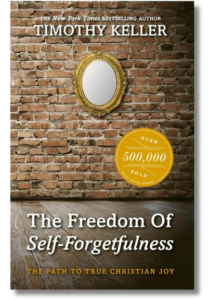 Imagine a life where you don’t feel inadequate, easily offended, desperate to prove yourself, or endlessly preoccupied with how you look to others. Imagine relishing, not resenting, the success of others. Living this way isn’t far-fetched. It’s actually guaranteed to believers, as they learn to receive God’s approval, rather than striving to earn it.
In Tim Keller’s short ebook, The Freedom of Self-Forgetfulness: The Path To True Christian Joy, he explains how to overcome the toxic tendencies of our age一not by diluting biblical truth or denying our differences一but by rooting our identity in Christ.
TGC is offering this Keller resource for free, so you can discover the “blessed rest” that only self-forgetfulness brings.
Mark Vroegop (BA, Cedarville University; MDiv, Cornerstone Seminary) is the president of The Gospel Coalition. He served in pastoral ministry leadership for nearly 30 years, most recently as the lead pastor of College Park Church in Indianapolis. An award-winning author, Mark has written several books, including Dark Clouds, Deep Mercy: Discovering the Grace of Lament and Waiting Isn’t a Waste: The Surprising Comfort of Trusting God in the Uncertainties of Life. Mark is married to Sarah, and they have three married sons, a college-aged daughter, and five grandchildren. You can find Mark on Facebook, Instagram, and X.