The following is an uncorrected transcript generated by a transcription service. Before quoting in print, please check the corresponding audio for accuracy.
Darryl Williamson
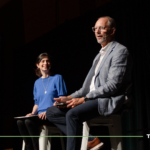
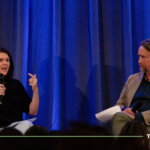
God has a vision for our work, and it’s not just a profile, it is a relationship. There’s a partnership between us and God in our workplace vocations, we see that very powerful in Genesis chapter two, when we see God’s creation, work actually seems to go through developmental phases as he does some things, and some things are waiting or pending a worker. And of course, when God gets that worker, then things begin to happen more richly and more deeply. So we are partners with God in our marketplace vocations. So we’re going to we’re going to talk about that. I am going to pray for us, and then we’ll do some introductions. We’ll have each person introduce themselves here in just a moment. But let’s just invite the Spirit of God in and ask Him to guide our conversation. Incline our hearts toward his vision for work.
Darryl Williamson
Father God we, thank you, Lord, for this moment, this space, work is your idea. God, we know that work is not curse. It’s cursed, but it is not a curse. And so God we, thank you, Lord, that we can have this conversation, Father, about what you see for us in work and so God, would you open our minds and hearts? God, would you be with the panelists as they talk about and discuss their own convictions about what you’re saying to them and to all of us about what you’re trying to do in the world through our labors? God, whether they are jobs or businesses, Father, what we do in our volunteer activities, God, whatever we are doing in your name, Jesus, you’re looking to show yourself that way. So would you help us now by your presence? Give this conversation unction and conviction. We love you, Jesus, it’s in your precious name. We pray. Amen. Amen. God bless you. So let’s just kind of, we’ll just start here with Bob and just kind of work our way over to Alex, but just introduce yourself. Tell us what you do and why you’re excited to be a part of this conversation.
Bob Doll
Hi everybody. Bob Dahl, I’m in the investment management business, been there for a few decades and working at a firm called Crossmark. It’s a faith based money management firm. We help people line up their investments with their faith. So it’s a whole lot of fun. It’s Yes, work, but it’s also a ministry. My interest in this panel, and this subject goes way back. I observe that God is a worker. He’s pretty good at what he does. Look out the window, and we are made in His image, and so we are workers as well, and we’re to be excellent at what we do. And I better stop the introduction, otherwise I’ll preach a sermon.
Jessica Cicali
I love it. Hi everyone. I’m Jessica Cicali. I actually live on both sides of the Commonwealth of Pennsylvania right now. Born and raised in the Philly area and just moved to Pittsburgh for my executive job at a global infrastructure company. My husband and I. My husband’s here too. We have five children. They range from seven to almost 23 and our middle daughter does not speak. She’s 15. She was born with a rare genetic disorder, so we haven’t had we haven’t had it easy, right? Like, if people say raising kids is like building a boat while you’re already at sea, I think we were doing that, like, kind of before I was born or something. It just feels like we just came into this storm and this chaos. But God has been so faithful. And this topic, for me is something I’m deeply passionate about. I’ve always been sort of guided into the workplace for, you know, obvious reasons like to provide for our many mouths that we have to feed, and also because I’m is how I’m wired. So I’ve been looking for over two decades for resources to really equip and support those of us who are out there trying to shine for God, and so it’s such a blessing to be here to have this conversation with all of you.
Chris Carneal
Thanks. I’m gonna tell my kids tonight that John Piper introduced us like he was the opening act for this group, not that we followed him. That was amazing. You guys chose well, congratulations. This is a fantastic topic. Can’t wait to learn from you guys. My name is Chris carne. I live in Atlanta, Georgia, for kids as well. College down to 12 in college as a religion major, and then later went to seminary at Southern in Louisville, Kentucky. I was wrestling big time with the sacred secular divide that doesn’t exist for about a decade, and started a business in college, religion major, went to seminary, started another business and kind of back and forth, wondering, what you know, what am I going to do? The business I started now I’m CEO of still, 23 years later, is called Boosterthon, fun run. It’s a fitness based fundraiser. If you have kids or grandkids, you maybe have made a play. Edge for a fun run at some school across the country, we have about 1000 employees work with about 6500 schools and three and a half million students, elementary kids. 15% of the country runs in our program. We teach character lessons that are virtues, values based in public schools. So I never would have thought when I was leaving or giving up ministry that my for profit work would be as missional, impactful and fulfilling as the Lord has made it to be.
Alex Harris
Hey everybody, I’m Alex Harris. I’m married to my wife, Courtney. We have a 13 year old daughter. We live in Denver, Colorado. And my background on this topic, and just in general is I grew up in a ministry entrepreneurial family. My parents, Greg and sono Harris, were pioneers of the Christian home schooling movement in 1980s and 1990s my oldest brother, Josh Harris was a well known pastor and Christian writer. My twin brother Brett and I, we kind of followed in our parents’ and older brother’s footsteps and started a nonprofit ministry organization when we were 16 years old, put on conferences, wrote a couple of books, including one called do hard things. And then God took me on a totally different direction, an unexpected one. I went to college at Patrick Henry college in Virginia with a goal of going into politics. That then took me to Harvard Law School, where I still thought I was going to go into politics, and if I really had to, I could always practice law. God had different plans. And for the last seven years, I have been an attorney practicing law at a law firm in Denver, Colorado. So this, this topic, is something I’m passionate about, but not, not just the topic of, you know, the workplace and vocation, but specifically the title of this panel, the gospel in the workplace, and how, as Christians, Are we faithful in our workplace? Whatever that workplace
Darryl Williamson
looks like. That’s fantastic. Yeah, this is going to be a very compelling conversation. That’s exactly what this is. This is a talk together. And so let’s just, let’s start with this is called some basics. And so we often discuss the cultural mandate that God has a vision for us to be His image bearers. So Alex, brother, if you wouldn’t mind just kind of kicking us off, just just kind of tell us, okay, what do we mean by that when we say the cultural mandate. What is God calling us to
Alex Harris
with that? Well, I want all these other guys to talk about this too, because this is such a rich and deep biblical truth, but biblical truth for the stuff of daily life, right? So in Genesis, one God creates man and women, woman in his image. In the image in the image of God, He created them, male and female, and that means that we are made to reflect who God is and what he’s like. And one of the ways we do that, and a command that follows just after that proclamation that man and woman are made in God’s image, is what is known as the cultural mandate that we are to go into all the world, be fruitful and multiply, fill the world and subdue it and exercise dominion over all of the living things in the world and and what that tells me, and what that has built and the theology of work that comes out of the cultural mandate is this idea that one of the ways that we reflect Who God is as mankind is in the incredible diversity and beauty of all of the different work and effort and cultivation and building and growing and creating that mankind does throughout history, across the world, and when we add to that, the teaching of Colossians chapter three, whatever You do, work heartily as unto the Lord, and not for men. What we have is this really dignifying thing that no no job, no vocation, no effort, our labor, whatever it is, is for God and for His glory to reflect Him to the world. And that just imbues all of it with an incredible meaning and purpose, however menial or exalted, however prestigious or non prestigious, it may be, that’s really good.
Darryl Williamson
Does anyone anyone else want to kind of weigh in on
Bob Doll
on that at all? To extend what you just said, obviously we’re all going to those of us who know Jesus will end up in heaven, and we know what that’s going to look like to some degree, we’re to be working we’re going to be plucking a harp. We’ll be working on the conditions that God started in Genesis, until we messed it up. So it’ll be even more glorious than it is now, because, well, as you said in your prayer, work is not a curse, but it is cursed, and that makes it thorns and thistles has so much said. You know, the book of Proverbs is just full of exciting things about work and the opposite of work, laziness. You know, we talk about work, but we don’t talk about the other side. Laziness is not acceptable to our Lord. We ought to be doing something, even if you can’t move. Move. You can pray assuming your brain’s functioning. And I know some old people who can’t move, but boy, do they pray. So whatever your work is, do it hardly to the Lord, as you just said, I’ll stop there. I could preach another sermon. Amen, brother.
Jessica Cicali
Amen. Yeah, Darrell, could I jump in as well? I think I love how Alex started with just pointing out that, you know, both men and women are needed to fulfill the cultural mandate, just like a garden does not grow without light and water, so too, we cannot promote human flourishing and reflect God’s image on this earth without working together. Collaboration is by God’s good design. And I love how you mentioned the book of Proverbs, because as I was praying about this, God through many different sources and friends just kept like sort of pointing me back to what is a passage of scripture that we’re probably overly familiar with. So who here has not heard of Proverbs? 31 woman. It’s almost like I don’t even want to hear about it anymore, like, get her out of here. But here’s the thing, here’s the thing. It’s so rich. So I’m learning Hebrew as one of my hobbies and and I do work with a lot of Hebrew speakers, so it’s helpful at work, the woman that’s described in Proverbs 31 is actually the Woman of Valor. The Hebrew word is Khail. I’m working on my cut, but Khail is the word, and that word throughout the ancient world was always praising women for their industriousness and their moral fortitude. The word is like a warrior woman. She is a woman who continually rises in the face of adversity, she wraps herself in God’s strength, she keeps the fire, which is the presence of God, burning in her in the darkest of nights. And she’s a person whose husband trusts and relies on her, and that very morning, when it was like this was like blowing up for me, spiritually, I went to church, and in front of me there was a there was a husband and a wife. The husband could not see. And we go, we go up to, like, have communion at these little stations at our church. So that husband was led by his wife, put his hands on on her and trusted her right to walk to partake in the Lord’s Supper, and that was just such a beautiful picture of like, let’s be these women. Let’s encourage these women. Let’s support these women, and let’s see God advance his kingdom in the most beautiful way on earth, through, through both of us, all of us
Chris Carneal
so good since we’re talking Hebrew words, I only know one, but it’s my favorite, and it’s Avada. I don’t know if you know the word Avada or have heard that before, and it means really three things, work, worship and service to man. And I think we have three different compartments of our brain, and God doesn’t He created us to work, which is worship, and it is creating flourishing for others.
Bob Doll
This brings up another couple of points that I’d like to make. Work is not a necessary evil. A lot of people view it that way. You know, I can’t wait for the weekend, I can’t wait for vacation, I can’t wait to retire. Not that those things are bad, but work. Look, we spend half our waking hours at work. Let’s make something of it, and let’s bring God into the picture. Do you think he doesn’t care about where we spend 50% of our waking hours? Of course he does, and that’s why I pick up what you said there. Work is worship, just like all of life is worship. And by the way, there are no second class workers. I grew up understanding that if I wasn’t called to be a pastor or a missionary, I was a second class citizen. Oh, there was a hierarchy. It’s the missionary and the pastor, and then they’re the, you know, the teachers and the doctors and the doctors and the nurses, people that really help other people. Then you go down the list, and down the bottom, depending on the environment, was either the, well, we got two of them, the lawyer, the politician, the business guy who’s greedy. No, no, that’s a lie from the pit of hell. We are all called to many things in life. Called to Be spouses as an example. We’re also called to our work. So figure out what your calling is. Not the calling of work can’t change it certainly can, but it’s a holy calling. We’re to treat it that way, Amen,
Darryl Williamson
that’s that’s really good, and we often feel like work is a necessary evil. And I want to come back to that in just a moment. But I’d like to force Bob, if you’re okay, let’s, let’s unpack calling a little bit, because you work in the marketplace, you work in finance, and doing some really compelling things there, and reaching into kind of like more common Kingdom spaces from there. Can you talk about your calling? How you recognize God’s calling you into your vocation, if others want also, just to think about your own particular calling, movements in your life, how you recognize that God was inclining you in that direction.
Bob Doll
So a particular calling into my field, along with all the other callings in life, came, I forgot if I said this in our little prep call between undergraduate and graduate school, I was dating a girl, and I like to say I did not fall in love with her, but I fell in love with what her father did for a living. He was an investor, and I investigated it, and I said, this is kind of cool. And as time went by, not too much time, I felt this is what professionally I am called to. And the excitement was, it’s new every day. The minute you think you got it figured out, the market slaps you in the face. There’s psychology and Finance and Economics and Psychology, if I didn’t say that already, and mathematics, it’s just an intramural kind of sport. And so as the years have gone by, and obviously tempted, perhaps to do other things or called by somebody, would you consider that I lost my job once, and the first call that came? Would you be president of a college, a Christian university? I got all excited, and then the five men that I was leaning on to help keep me get from where I was to where I was going, say, no, no, what’s your calling? And they reinforced and quickly I came back on track and say, No, God’s called me the investment management business, and I’ve done it, done it ever since. That doesn’t mean you’ll always do the job you’re doing. Now, I’m not trying to suggest that, but for me, that’s been the calling. Is God has reinforced over and over. It’s excellent. Others.
Jessica Cicali
Jessica, gosh, that’s good. I So here, here’s what I want to be when I grow up. I’ve gone, I’ve gone through this. So I am a lawyer. I don’t usually admit it when I first meet people, which is why, and we’re stuck with two of them up here. I’ve been stuck with two of us, but I similarly, went out. We sold a company where I was an executive, and so I went into a bit of a sabbatical and wilderness. And I remember thinking, you know, what is it? Do I get pulled into full time Christian ministry? Do I do something totally different? Do I become an author? I tried to do all these things at once, and and I just realized the best thing is to just grow up to be fully yourself, like I want to be fully Jessica, deploying my gifts and talents and skills and love for God anywhere in the world that he sends me. And I don’t care what Title I have when I’m doing that. I don’t care necessarily what organization I’m attached to, or if it’s 100 organizations, and I think that’s what, what’s best for all of us, like, know God, grow in God, and then be deployed. And don’t hide, don’t hide your gifts. I think you can have, like, humble confidence in what you’re good at, and please let other people do the things you’re not good at as well.
Chris Carneal
Don’t be discouraged if you don’t know what your exact vocational calling is. Now or ever I was not necessarily called to be a school fundraiser, but I knew I was well. I discovered over time. Now looking back, it looks like calling in the moment, it looked like stumbling, failing, pursuing things. I was excited about having conversations, but I knew I was a leader, and I knew as an entrepreneur, wow, so kind of a broad calling. And then when I step out of a daily work, I look and I think I’m starting things, and I’m leading things almost in every aspect. So your calling might not just be a specific job, it might be what you’re great at right now, serving encouraging, you know, gifts of spirit.
Alex Harris
Yeah, I would say it’s so important for us to both think more highly and maybe a little bit less absolutely about our jobs when it comes to vocation, because we’ve talked about why work is so important, how we glorify God by working in whatever task he has given us, no matter what it may be. And so that’s that’s the that’s the dignity, that’s the glory of work as Christians, but it’s also not the sum total of our calling or our vocation. So I love the word vocation, because I think that captures more holistic understanding of what it is we’re doing. So I would not say my calling or vocation is to be a partner at a law firm, but what I would say is that God has placed me in that role in this season to enable me to pursue what he’s called me to do, which is a whole bunch of different things, including being here today to hopefully encourage my fellow brothers and sisters in Christ to be faithful in what God has called them to. I feel a calling to help the church engage more faithfully in the public square, and particularly in politics. Based on some of my background and involvement in politics and some of my work at the moment, feels like a right. Cause, I’m representing the state of Nebraska, bringing a lawsuit against Tiktok for lying about the appropriateness of their platform for young people, and that feels like something that God has uniquely given me to do in my career at this moment, but it is so much bigger than that, and so we should both think, you know, we should view our work as dignified, but we also should think so much broader when it comes to what God is calling us to do. That includes every aspect of our lives, all our relationships, whatever platform we have, no matter how big or small.
Darryl Williamson
That’s excellent brother. So let me just kind of summarize where we are, and then we’re going to pivot into the workplace. And so God has a vision for work. He has a vision to do good things in the world through our work as we partner with him. Therefore work is dignified. It is a part of our identity and being made as image bearers of God. And then there also are elements of calling in our life where God has particular, our providential, sovereign God has particular plans and purposes for our lives that we want to discern and faithfully, responsibly act on. And now there’s this workplace thing, which I could have a job, I could have a business, and Bob, you said something that I want to kind of turn into, I want to, I want to pitch this question, Jessica, to you, if you’re okay with this, is that people do, we all feel that work is often a necessary evil. Work feels hard. The whole idea of TGIF has meaning. It resonates all of us. We all feel that way. We don’t necessarily choose it. We just feel it, and then we choose to dance out of the workplace that at the end of the day on Friday. And so what we are describing there is a kind of brokenness. There’s a brokenness that if we’re going to be a witness in the workplace, we’ve got to somehow be a witness in a broken workplace. So Jessica, could you just kind of talk about that, talk about how we recognize brokenness in the workplace when we say that, what do we mean? And then how do we respond to that in a way that’s redemptive
Jessica Cicali
and restorative? Wow, that’s a lot. There’s a lot there. Obviously, can we? Can we broaden the aperture, just for a moment? Is there brokenness in the workplace? Yes, every single workplace has brokenness. But why is that? Because there’s, there’s brokenness in the world, right? So in a real sense, every single person is called to be faithful in a corrupt system, in a corrupt and fallen and broken system. So then when we zoom in, you know, from that reality that we are living this exilic, you know, journey through through Babylon, you know, there’s a lot of idolatry all around us, there’s a lot of greed, there’s a lot of love of worldly systems and love of self. Everywhere we look, what are we called? Then to do in that reality every single one of us, no matter where you are in your Monday through Friday or on Sundays. You know? I think of I think of Daniel. Daniel resolved not to defile himself with the worship of false gods. He committed, he committed himself to God and to being faithful in that place, I also think of Moses. Moses would rather suffer with the people of God than enjoy the passing pleasures of sin. So I think it’s a two pronged approach, just kind of big picture, which is, I do think it’s important to pursue excellence in what you do. We have a God who’s excellent at everything he does. He calls us to work as if we’re working for him and not for human, you know, other humans. But at the same time, we must remain spiritually faithful. We are, you know, we’re called to be holy. We’re called to look different. We’re called to be a light in all of this brokenness, and personally, just kind of zooming back into me. Personally, the brokenness I see everywhere every day is how people react in the face of uncertainty. So we have shock waves right now. We have AI, we have tariffs, we have, you know, just people are feeling like, what new shock am I going to wake up to today? Many of us also have that at home. Many of us have that in our workplaces. So for me, I went through very violent storm, like, I call it just sort of very stormy. I was walking around saying toxic things like, smooth seas don’t make skillful sailors, you know. Like I was just loving riding this wild storm. And then I went into a wilderness. And I would say that those those times were extremely challenging for me. It was extremely tempting to become anxious and. Just stressed out. And Does God really have this? Do I really? Can I really trust God in these waves? And I think I probably failed the test multiple times, but I think through all of it, I did grow muscles of faith, of learning to depend on God. And so now, in this moment where I feel the whole world is spinning in anxiety and fear and lashing out at others. And God, I can bring a calming, you know, I can bring a calming presence into the workplace. I call myself chief psychologist. Sometimes just help people. We’re in a storm, visibility is about one foot in front of us, and we know generally where we need to go. We need to stay on the road. And here’s, you know, I’m a woman of faith, so I’m anchored in God, and here’s how I’m going to do it. So that does help as a woman, I know. I mean, I can only speak from a woman’s perspective. So in the workplace, too. I think we have, I think we have a particular access to talk about these deep things and and so to use that wisely, you know, to be a source of encouragement and strengthening and comfort. Comfort for others can really be a way of bringing restoration in a troubled place.
Chris Carneal
I read Daniel one of the airplane today, and this verses was in my mind when you said that, and the Lord’s favor was upon him. And some of y’all work in tough industries, talking to a gentleman, he goes like, I mean, I’m the only believer. I know I’m not. I mean, I’m like so far. And I think that might be our maybe, maybe our morning prayer. Lord just, would your favor be upon me today? And I think the Lord will will use that. You know, my favorite book, literally bought 1000 copies. Gave it to every team member give it’s my most recommended. I’ve read it multiple times. It’s tiny. It’s called the redemptive business praxis. Andy Crouch and Blanchard and that crew wrote it, and it differentiates between unethical, ethical, where the conversation usually stops, and redemptive. So do no evil, evil. Do no evil. Bless others. And it’s got like a whole grid to think through, from marketing to strategy, people, HR, talent, culture. How do you not just go from unethical to ethical, but how do you go from ethical to redemptive? And it’s convicting, it’s challenging, but I feel like it’s with the Lord’s favor being upon us. That’s what we’re called to do, regardless of the environment we’re in every day. Amen, that’s really good.
Darryl Williamson
I like Forrest. If we could to sit here for just another minute or two. There is a narrative right now about toxic workplaces. A good friend of mine. He’s a wonderful friend who’s worked in ministry in various contexts for a while, has like a social media platform talking about all the things wrong with your bosses and, and that is a narrative and, and so how they treating you? Are these expectations? Are they too much? Is you know, how do you strike a balance? Can you text me at home, a whole variety of things like that. And so I guess the a couple of questions I would throw out there. One is, we talk about toxicity, how do we recognize it? And then two, as believers, when do we know when to redeem or to run? Because there is a time where we need to dart out of there, we need to tell everybody to run, but, but there is also a time to to remain. And maybe that remaining is something that that God is doing providentially. Maybe it’s we are there redemptively until we can get out. But can we just talk about that? And then I would love to use that to kind of hyperlink our way to talk about what it means to be a gospel witness there, because it feels like that this kind of environment, just like if you evangelistic, you got to do so in this world, right? You got to do it in this present evil age. It’s also true that being a gospel witness that work means these kind of tough workplaces. So how do we recognize the toxicity? When do we know when they’re redeemed or run? This is kind of talk about that, and then we’ll navigate our way over to what that means for witnessing toxicity.
Bob Doll
How do you know it? It’s like pornography, hard to define, but when you see it, you know it, it’s the same thing. And we all have, you said this earlier in our workplaces, we’re all fallen so we have various levels of toxicity everywhere. And so crossing that line is really difficult. I find too many Christians up and run too quickly. They just give up. We need to be God’s people, wherever we are, to a point you’re absolutely right. I What comes to mind personally is I went past the point and I got fired. I got fired from my job for sharing my faith, not on work time, not on company premises. It was they found videos of me like if this. Is being put up on the on they found four of them. We found you talking to your church people, and you introduced as a senior muckety muck at the firm I was with. And we don’t do that here. You will resign. You know, a lot of spiritual lessons I learned that year. Won’t repeat that year, but it was, it was great. So, and I still have some friends at that place, and they say they’re following almost unanimously. I have a good job. I work at a successful firm. They pay me well, but I hate going to work every day because it’s toxic, and then it’s probably time to leave.
Darryl Williamson
Wow, that’s good. Anyone else,
Alex Harris
I think, in terms of when, when it’s time to leave. You know, the God’s Word does not give us some clear command for our specific situation. It’s a it’s an exercise of discernment and wisdom. But what the Bible does give is some very clear commands in terms of other priorities, obligations we have, if you’re married to your spouse, if you’re a parent to your child, if you’re a member of your local church, as a member of your church, and ultimately, to follow God and to obey His commands on your life. And there are a lot of situations that may be toxic, and we’ll get to the gospel witness aspect, I’m sure here shortly, where remaining and being faithful, even to the point of maybe suffering the consequences of that is what it means to follow Christ in that in that environment, but where we can no longer continue in that role and be faithful in the clear commands and obligations God has already given us. That’s that’s the moment when we have to leave. It’s good brother.
Bob Doll
PS, to my story that fits what you just said. Prior to losing my job for sharing my faith, we had a financial crisis that you would all remember, and I received a call from the president of the organization asking me to invest in one of the people we did business with, one of the firms we did business with, and that firm was clearly failing. We wanted to help our friends and put our clients money subject to that. And I said, on investment merits, I can’t do that. Week later, he called again. He said, Well, everybody else is putting some of that paper in their portfolios. How much are you putting in said zero, no, thankfully the firm, thankfully, firm did go bankrupt, so in the end, the judgment was right from a secular perspective, but I imagine if that went straight back up, what consequences I would face. But that was the beginning of the end, and they were looking for an excuse, and they found those videos.
Chris Carneal
Wow, run versus remain is probably a modern luxury. We get to even talk about this. It’s really good. You’re a farmer, good living in 1200 you’re a you’re a Mason. I mean, where you gonna run? So praise God we have the opportunity, through his common grace, to even have a conversation about options of careers and vocations. But if you have a stirring that you’re in a culture, maybe the Lord’s showing you a culture the opposite of what maybe he’s calling you to create. Maybe there’s an entrepreneurial stirring, and I feel, as an entrepreneur leader, that creating culture is my greatest form of worship, vocationally. So what do I not like you just saw the non examples. Start that business, firm, consulting thing, on your own, and then hire, celebrate, create joy, welcome all the things you feel like should exist in a culture. Entrepreneurs have the opportunity to do that, and it’s super rewarding when you get to see that. It’s really good.
Darryl Williamson
There was a sister in our church who who did not like her job, and we began to do some study together of Tom Nelson’s book, work matters. And she was greatly impacted by that book, and it caused her to begin to go to work with a whole different kind of attitude. And she started giving herself to her job. She was managing her time better. She was getting things delivered more quickly and and so her her teammates began to notice this, and her supervisor noticed it as well, and then she began to prompt him about things that she needed, that he needed her to do after she had gotten done with the stuff that she was required to do, and so her productivity began to open avenues for witnessing. She was literally asked by both her boss and her co workers, what changed? So what is the relationship between how we work and how that opens avenues for gospel witness. I
Bob Doll
may have said this earlier, so I’ll repeat it. We are made in God’s image, and God’s a good worker, so we’re to be really good. At our work. And can you imagine, I’m thinking of this woman, if she were a c minus at work, who wants to imitate the rest of her life or find out what makes her tick, but she became an A plus, and now all of a sudden, everybody well, what makes this gal tick? And they ask questions. When you’re with people all the time, they want to know who you are, especially if you’re really excellent. And that woman, how many people surrounded her say, what’s the change about it’s a beautiful thing. We’re to be excellent at our work. That’s the first but you know, the stranger out on the street, the only way you can tell them about Jesus is opening your mouth and tell them about Jesus. They’re not going to witness your life and your behavior. But at work, you’re living together. It’s good. It’s good. Anyone else?
Jessica Cicali
Yeah, I would just add, I think the only thing I could add to all of these amazing comments so far is just remember to be steeped in prayer. It’s because, again, back to Alex’s point, it takes so much discernment to know what to do. What are your options? What open doors? Do you have one just on the stay or run dilemma? You know, do what Daniel did? Pray. Pray to God. Like all the time. God will fight your battles. God will move mountains for you. And when he’s not, when he’s saying, Wait, trust and stay. You’re getting stronger. You’re building faith muscles that you’re going to need later. So being in that stuck place is actually very fruitful sometimes that you don’t you may not see it until later. But back to, you know, Bob’s point and about opening doors for witnessing. I’m a very strategic person. I like to take life by the reins. I like to think that I can order everything around me. Sadly, we all know that’s not true, but it really isn’t true when it comes to when it comes to God doing His work of redeeming humankind in and through us, right? Like I can’t decide to give somebody spiritual rebirth. So what I need to do is follow God’s instructions, pray for the people around me, be discerning about what it is, you know what it is I might be called to say, water, plant, scatter seeds. You’ve got to be really discerning, like our job. We don’t have to take it all on our shoulders. We’ve got to walk with God. Abide in him. You know, he’s the vine. We are the branches. We didn’t we need to abide and we will bear fruit. So I’ve toned it down. I feel like, actually over time, and that’s become very effective. The other thing, I think, is super important, super, super important. People can can sense if you’re just out to convert them. So I don’t I’m not out to convert anyone. I’m out to love them with the unfailing, unconditional love of God and Watch God work in their lives. And I will be friends with them for the rest of my life, whether or not they ever come to share our faith. And I think that’s really important, like really being there for people in a real, true way, really seeing them with the love and grace of God.
Darryl Williamson
That’s really good. Chris, Alex, what are your thoughts about sharing the gospel in the workplace?
Alex Harris
Yeah, I have a couple of thoughts. I mean, I think, on the one hand, we all know the simple answer, you know, what do we need to better share the gospel at work? Boldness and boldness in the sense of just kind of a faithful willingness to speak when given the opportunity. But I think the more complex answer is that typically, speaking Boldness is not actually what we’re lacking when it comes to sharing the gospel in the workplace. So if you’ll indulge me, the quick story time, when I went to Harvard Law School, I kind of expected to be persecuted for my evangelical Christian faith. That was my mentality going in. I’d grown up home schooled. I’d gone to a tiny, private conservative Christian College, which was a great experience for my faith, but now I was going to, you know, big scary Harvard Law School, where I knew I’d be in the minority. I kind of went in with my hard hat on. I was like, I got to be faithful to God, so I’ve got to be open about being a Christian, but I’m going to experience persecution. And the crazy thing I experienced is, and maybe a counterpoint to Bob’s story, where, yes, sometimes you do that and lightning does strike you, I found that all the people who talked about tolerance were actually reasonably tolerant. And as I proved myself as a student and as a friend to people and was open about my faith, they went out of their way to engage with me, to ask questions, to share. Hey, I was in youth group in high school, and kind of left religion behind ever since, but they would go out of their way to find commonality, and it just opened so many conversations. And I wasn’t being obnoxious, and I wasn’t being a jerk about it. I was just honest that, hey. Say, No, I can’t do something on Sunday mornings. My family and I always go to church on Sunday mornings. But when’s another time that will be convenient for you that type of thing? And what I’ve learned ever since law school and throughout my career now as an attorney, is that same approach has opened doors time after time after time to have a conversation, and so, you know, going to Bob your great example. You know, if a random stranger came up to you in the street and said, Can you tell me about Jesus, every single one of us in this room, we’d be, you know, prepared to answer that question. We do our best. God would give us the words the Holy Spirit would be with us. The problem is people don’t just randomly come up to you out on the street and ask you about Jesus, because, for one, they just don’t even know that you’re the right person to ask. And so especially in the workplace, if people don’t know you’re a Christian, they’re never going to ask. So you have to be a known Christian the second, and this is the other problem in the workplace, as opposed to the stranger on the street, is they’re not strangers. They know you, you live together, right? And so maybe they have seen you cut corners. Maybe they’ve seen you act out of greed and self interest. Maybe they’ve seen you lose your temper and speak harshly to them or to a co worker. Maybe they’ve seen you have one too many drinks during happy hour after work. Maybe they’ve seen you do a whole host of things, which, if they actually knew you were a Christian, you’d be ashamed of. And so that stops us, I think, more often than anything else. And so going into work with excellence, like we talked about, but also being a known Christian who then acts consistently with the witness that we are called to have, that I believe, is what most effectively opens the door for those types of conversations.
Bob Doll
Fantastic. I just add two things to follow up. I remember times when I would pray, God, could I give me a chance to share my faith with this one or that one or the other? And it never came up. So I said, I’m trying to make it something separate, as opposed to just part of life. So I did two things that really mattered. May not work for you, but the other two things I did simple. When somebody asked me on Monday morning, how was your weekend? What’d you do, which is very common question on Monday morning, I would always tell them the things I did that weekend that were unique to that weekend. And I purposed to say I would do that. And I went to church assuming I did which, like most of you, I do every Sunday. I’ll never forget when one guy said to me two weeks in a row, how was your weekend? And I answered and I went to church. Did you go to church last weekend? You went this weekend too. Total openness. Why do you go to church every week? Great. And he was one of the guys I was praying for. God give me a chance. The other thing I did was, particularly when a CEO, a couple of business people, come with their problems, professional ones, but personal ones too. And as they would leave, I would say, may I pray for you? And I’d write it down if they dared to come back a second time, can I pray for you? Right now, no one ever said no. And some of the very people I said, Lord, give me a chance to share my faith with Joey. Let’s say Joey was sitting there with his problem. Now I can talk to my god in front of Joey, the same God. I want to introduce him to So simple things. Find things that just fit into your life. Normally, that’s
Darryl Williamson
my advice. It is fantastic. Excellent. This has been fantastic. Jessica, would you just kind of tie everything together for is this just a closing thought for my sister.
Jessica Cicali
Closing argument, wow, lawyer. Closing argument, that’s exactly right, an alliteration. I think there are some pastors in the room that like that. I’d say, reflect, restore and rejoice. So we’re called to reflect the image of God to a lost and dying world. We’re called to restore right through that, through working with excellence and integrity and spiritual faithfulness. But don’t forget to rejoice. We’re part of a new humanity. We are people of the future. I don’t remember who said that, but I love saying that, like we are people of the future, this world will be entirely Redeemed and Restored. There will be no more sin, sorrow, sickness, pain or death, and no more effects of it. And we are people that belong to that world, so let’s bring that world here. And that’s that’s go forth. I think that’s it.
Darryl Williamson
Amen. Amen, can we give it up for our panelists? Amen. Hey, if it’s okay, I’m just going to close this in prayer before, before we’re done, Father God, thank you. Thank you, Lord for just letting us feel your heart for our work, for our vocation. God for every aspect of our lives. God, would you? Would you just continue to stir us, Lord, to incline us, to show who you are in our attitude? Tudes in everything we put our hands to God that we do with a full commitment energy excellence, God would help us to be your witnesses, your ambassadors in every domain of our lives. So God, we thank You Jesus and we love you. So in your name, we pray. Amen. Amen. God, bless you. You. You.







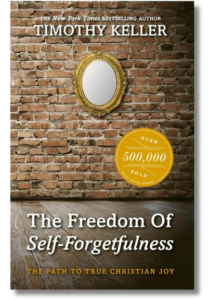 Imagine a life where you don’t feel inadequate, easily offended, desperate to prove yourself, or endlessly preoccupied with how you look to others. Imagine relishing, not resenting, the success of others. Living this way isn’t far-fetched. It’s actually guaranteed to believers, as they learn to receive God’s approval, rather than striving to earn it.