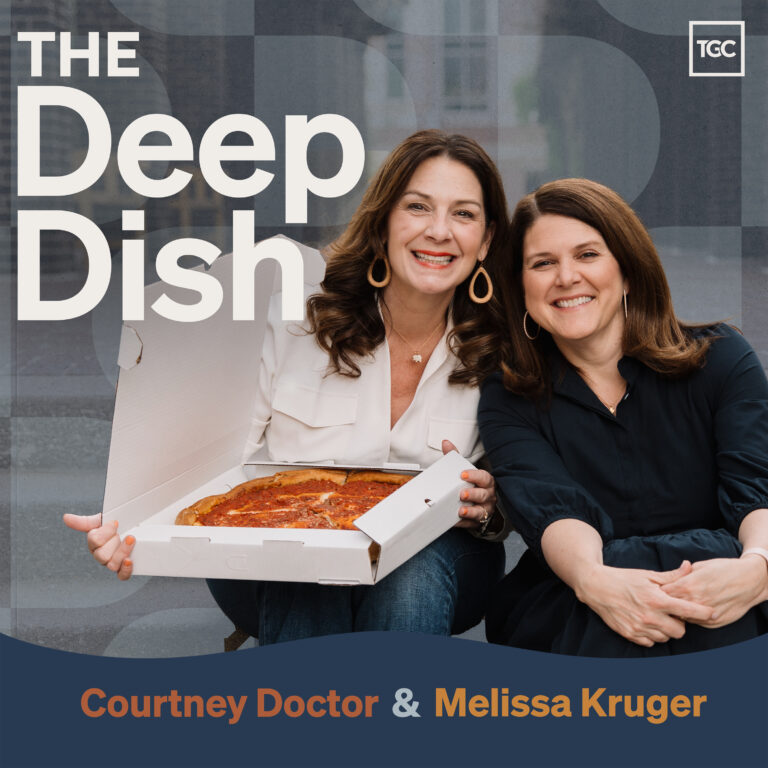




Melissa and Courtney talk with Jen Wilkin about their mutual love of children’s books and why reading to children can be a key part of discipleship (as well as a delight!).
They talk about what books they loved as children and the ones they read to their own kids. They consider the benefits and limitations of children’s Bibles and discuss why they’ve written books for kids.
Resources Mentioned:
- The Book of Virtues by William J. Bennett
- The Chronicles of Narnia (series) by C. S. Lewis
- Are You My Mother? by P. D. Eastman
- Go, Dog. Go! by P. D. Eastman
- The Little Rabbit Who Wanted Red Wings by Carolyn Sherwin Bailey
- Arlo Takes Off by Betsy Childs Howard
- Caddie Woodlawn by Carol Ryrie Brink
- B Is for Betsy by Carolyn Haywood
- Betsy-Tacy (series) by Maud Hart Lovelace
- Chronicles of Pydain (series, includes Black Cauldron) by Lloyd Alexander
- The Dark Is Rising Sequence (series) by Susan Cooper
- Hannah Coulter by Wendell Berry
- The Jesus Storybook Bible by Sally Lloyd-Jones
- Andy and His Big Question: A Story About How God’s Love Always Comes First by Courtney Doctor and Bo Doctor
- Made like Me: A True Story from the Beginning of Everything by Jen Wilkin
- His Grace Is Enough by Melissa Kruger
- Count It All Joy by Melissa Kruger
Related Resources:
- How Storytime Shapes Your Children
- Parents: Use Children’s Literature to Point Toward Christ
- Classic Christian Picture Books Every Family Should Read
- A Complete Classical Christian School Reading List: Grades 1–8
Discussion Questions:
1. What was a favorite book you remember reading as a child? Why did you enjoy it, and how did it influence you?
2. We often think of books as a source of entertainment or education. How can they also be a form of discipleship?
3. What are some books you’ve enjoyed reading with the children in your life? What virtues have you seen those stories promote or cultivate?
4. How can we prioritize reading with the children in our lives, even after they become independent readers? Why is reading together so important relationally?
5. When choosing books for your children (or yourself), what do you tend to prioritize (educational value, enjoyment, literary quality, or something else)?
6. With so many books available, how do you find quality options for your family (and yourself) and discern what’s worth spending your time reading?
Transcript
The following is an uncorrected transcript generated by a transcription service. Before quoting in print, please check the corresponding audio for accuracy.
0:00:00 – (Jen Wilkin): I had a seminary professor say that as we’re teaching children, whether it’s in Sunday school or in a children’s Bible, that we don’t ever want. We just want the door to keep revolving. And they just get more and more clarity on the story. We don’t ever want it to be a bait and switch where they get to be 20 years old and they read something, they’re like, wait a minute. That’s not what the story was really about.
0:00:21 – (Jen Wilkin): So it’s okay that it’s a simplified version, as long as it’s the direction. The thing that they can gain is just more understanding on the same story, not a whole new story.
0:00:39 – (Melissa Kruger): Hey, friends, welcome to the Deep Dish, a podcast from the Gospel Coalition where we love having deep conversations about deep truths. I’m Melissa Krueger, and I’m here with my co host, Courtney Docter. And we are joined today with our good friend. I mean, you’re basically a co host at this point. You’ve been on so many times.
0:00:57 – (Courtney Doctor): Usually the three of us.
0:00:59 – (Jen Wilkin): Don’t tell Kyle and JT
0:01:03 – (Courtney Doctor): we’re doing
0:01:03 – (Jen Wilkin): it on the her.
0:01:04 – (Melissa Kruger): We can still stole her.
0:01:06 – (Jen Wilkin): Did you just podcast?
0:01:08 – (Courtney Doctor): Love to go around.
0:01:10 – (Melissa Kruger): So smart. The last time we were all together, we were in Indy. Jen, are you okay talking about this? I mean, there were tornado sirens going on.
0:01:20 – (Courtney Doctor): Oh, my gosh.
0:01:22 – (Melissa Kruger): And Jen loved it. She was like, this is the best.
0:01:27 – (Courtney Doctor): Yeah. And Mike, Melissa’s husband, he was not having any of it. I am losing my mind. You were on what floor were we on? 17th floor.
0:01:38 – (Jen Wilkin): We were on the 17th floor. But to be fair, I did not know until later how intense your emotions were. You were really keeping it under wraps.
0:01:48 – (Courtney Doctor): I was trying to. And I’m like. I’m like, basically searching through this room that we’re in for an interior space. Space.
0:01:56 – (Jen Wilkin): So when my mom.
0:01:57 – (Courtney Doctor): It’s not even close to here. Which was a lie.
0:02:01 – (Jen Wilkin): It was close. So when my mom called and said, we need to go to the stairwell right now, you didn’t like that? Did not comfort you?
0:02:08 – (Courtney Doctor): I didn’t hear that. But, you know, then the next day, all of the women who. Who were in other hotels said that they had to come down to the lobby in the basement of their hotels. Our hotel was like, yeah, you’re probably fine. Fine. They were the Bike Krueger school of thought about emergency situation.
0:02:23 – (Melissa Kruger): I have to say he was the safety parent for us. So I am very used to. If Mike is not stressed about it, I’m not stressed about it because he. Yeah, he was the one who took on all the worry and fear of our home. So I was like, oh, no.
0:02:38 – (Courtney Doctor): In our marriage, I’m the one who’s got the dogs and the kids in a bathtub with a mattress over us. And Jeff is out in the front yard staring up at the sky, watching the clouds swirl. And I’m like, no one’s gonna marry me. Who’s gonna want me with all these little kids and pets?
0:02:52 – (Jen Wilkin): That is so funny. We used to have an actual storm, an actual tornado shelter in our house in Kansas. And every time it would start, like, getting. The girls would go get every single stuffed animal that they owned, and they would put them in the storm shelter. There would be no room for us. But the stuffed animals were going to survive that thing. By golly, yes.
0:03:11 – (Melissa Kruger): Do you know what my kids. What Kate brought in, this happened like a year ago. Books. She brought her Harry Potter books.
0:03:20 – (Jen Wilkin): Okay, well, look at me. I’m going to segue into our actual topic then on that, that one. Look at that. Because we’re going to talk today about why kids books are important. So we do all love children’s books. I actually still love reading, like Young Adult and. And some books that I read like in those late elementary. If they’re good literature, they’re good literature. So I. I love children’s books of all ages.
0:03:47 – (Jen Wilkin): We’ve actually each written a children’s book. Well, a children’s book that. We’ll talk more about those in a minute. Melissa’s been incredibly prolific and written more than one. But I’ll tell that story a little bit later. So what I want to start by asking is, what is a favorite memory that you all have of reading to your children?
0:04:07 – (Courtney Doctor): Well, at our house, someone gave us as a gift when our oldest was born, the Book of Common Virtues. Have you ever seen this? Yeah.
0:04:14 – (Jen Wilkin): William Bennet, was that.
0:04:16 – (Courtney Doctor): Yeah, yeah, yeah, yeah. And it was like a. It was like an anthology of, for all intents and purposes, morality tales that were drawn from all different traditions. And it ended up being such a fun introductory point to, like, longer works of classic writing. So, like right now, you know, the. Is it the Iliad that’s coming out or the Aeneid? Yeah, I never came.
0:04:44 – (Jen Wilkin): Iliad, I think.
0:04:45 – (Courtney Doctor): Anyway, everybody. All the guys in the family are doing read through and, you know, we got excerpts of that in the Book of Common Virtues. And it’s basic idea was children are not just going to hear good stories. They’re going to learn how to be good people. And I get it. People are listening to this. And they’re like, we’re not supposed to be good people. It’s all grace. Bear with me. My, my philosophy on this is I would rather raise a well behaved pagan than a poorly behaved pagan.
0:05:16 – (Courtney Doctor): So I’m just going to take it wherever I can get it. And obviously in a Christian home, you’re messaging grace. Right. And so for me, the, the, the stor. Morals were another way of teaching, hey, this is what it looks like to, to be a follower of Jesus. And it’s also how we love our neighbor, which is the, the big emphasis of being a follower of Jesus as well.
0:05:39 – (Jen Wilkin): And can I just ask. Virtue is a good thing. We want, we want, we want to be virtuous.
0:05:43 – (Courtney Doctor): We want our children to be virtuous.
0:05:45 – (Jen Wilkin): Exactly.
0:05:46 – (Courtney Doctor): Virtue is a good thing.
0:05:48 – (Jen Wilkin): And it’s like the law.
0:05:49 – (Courtney Doctor): You try, you try to be virtuous
0:05:50 – (Jen Wilkin): and you can’t and you need Jesus to do it.
0:05:52 – (Melissa Kruger): Well, I was just gonna say you’re also kind of setting your kids heroes. Like, don’t we want them? You know, like, I remember, oh, it was one of those fairy tales and it’s about cleaning under the rug. Do you remember this? And there was like, okay, it’s, you know, and so every time I think about that, I’m like, I should clean under the rug. Like, I should really do an excellent job. And it’s because of a story I read in my childhood.
0:06:16 – (Jen Wilkin): That’s awesome.
0:06:20 – (Melissa Kruger): It gets in your mind, like, oh, think about it this way. I think for me, you know what’s funny? When I think about my favorite memory of reading with my kids, it’s actually just their physical presence. And I know a mom of young kids right now probably wants to like knock me out because she’s like, people are touching me all day long and I’m so exhausted of being touched. But I, and so I’m saying this as an empty nester, you know, I don’t have anyone sitting on my lap and I’m not even a grandmother like you two, so I do not have little ones. And I miss those little thighs, you know, just sitting on your lap and sucking a thumb.
0:06:57 – (Jen Wilkin): You’re still.
0:06:59 – (Melissa Kruger): I just miss that physical presence of sitting together as they just love reading a book together. I just think it’s so special.
0:07:09 – (Courtney Doctor): I don’t know.
0:07:09 – (Melissa Kruger): What about you, Courtney? Do you have any memories of reading with your kids?
0:07:14 – (Jen Wilkin): Yeah, I have two. One is Craig would read the Chronicles to them out loud and just at such an early age, them just developing this love for the story and it’s just so beautiful. And then the other is. My dad used to. He had the story that he would make up when my brother and I were little, and he has continued that with his grandchildren and now his great grandchildren and the great grandchildren, they want the. It’s the rustler story. My dad grew up in western Oklahoma, and so it’s this cattle rustler, and it has all the, you know, the sounds to it, like a.
0:07:47 – (Jen Wilkin): You have to cut the barbed wire fence, and then it, you know, the. The cattle, like, run on the.
0:07:52 – (Courtney Doctor): It’s like going on a bear hunt. Yeah, exactly.
0:07:55 – (Jen Wilkin): And I just.
0:07:56 – (Courtney Doctor): I love it.
0:07:57 – (Jen Wilkin): I love it so much. And, yeah, it’s just so fun to see that continue through. Through the generations.
0:08:03 – (Courtney Doctor): We have a very funny shared family memory of reading Narnia out loud in the car on a car trip. And I was the reader and Jeff was the driver, and we needed to stop and use the bathroom and have dinner and everything. And so it’s like, you know, just get. Get a little further into the story. And we get to the part where Aslan, Spoiler alert, listeners. Aslan dies, and the whole car is bawling. And Jeff is like, I’m not pulling this car over until that lion is alive again.
0:08:35 – (Courtney Doctor): He’s like, you keep reading. Oh, my gosh. I, as an adult, was driving from
0:08:41 – (Jen Wilkin): St. Louis to Chattanooga one time, listening to the Horse and his Boy on audio, and I mean, ugly crying. When, you know, Ashlyn’s asking, like, you know, that was when he’s like, saying, you know, that was me. The lion that chased you here and the lion that did this and that, that was all me. And I’m just like, ugly crying. Oh, my gosh. I love that.
0:09:02 – (Melissa Kruger): That’s so good. Well, I think what you’re both talking about, too, is, like, kids, they actually really get into stories. Like, they are fully immersed in the fact that they’re crying. I remember Emma did the exact same thing, Jen, when I remember reading with her, and she was just weeping about Aslan. You know, it just. It makes. It makes things come alive for them. So let me ask you this. As parents are walking into a bookstore and they’re buying kids books, and they’re thinking through it, it could be a little bit like, oh, all kids books I’m talking about especially, let’s just say kids books. Three to six, seven.
0:09:39 – (Melissa Kruger): Oh, they’re all the same. It doesn’t really matter what you read to them at this age. What’s the opportunity as we sit down with our kids and read these books? What’s how is it shaping their, their minds and their imaginations as we start in those early years with them?
0:09:57 – (Courtney Doctor): Well, I think, I mean, it’s doing a lot of things all at once. Like, I’ve often thought about how one of the reasons that I am comfortable with public speaking is because not only was I read too, but we read as children to each other, as a family, as we were old enough to. And so you got used to hearing your voice, reading and doing different voice, you know, and all that kind of thing. And it gives you, it gives you like, for lack of a better term, oratory confidence. I don’t know if that’s even a term.
0:10:26 – (Courtney Doctor): And so I think that when I look at the children’s book, so that would be, you know, later on when you’re reading chapter books and things. But I think even with those earlier years, I like books that use words in memorable or beautiful ways. So I either want it to rhyme or I want it to be hypnotic in the way that it’s written, for lack of a better term. I want the illustrations to do work, but I want the words to carry a lot of that work too. Because, you know, you guys have done this as you’re authoring a book. You know, there’s this back and forth between what the illustrations are communicating and what the words are communicating.
0:11:04 – (Courtney Doctor): And when I’m reading now to my grandkids, a lot of times I’ll be like, this book is all about the illustrations. Like the words are an afterthought. And, and it doesn’t mean that there aren’t value to those kinds of books because I think it helps children really dial in and pay attention to what they’re seeing. But I think my favorite combo is when the words and the illustrations are working together seamlessly and the language is crafted.
0:11:30 – (Courtney Doctor): It’s not, it’s not just simple, it’s. It’s crafted. What do you guys think?
0:11:36 – (Jen Wilkin): Well, it’s giving them that love of language, even to hear, you know, it’s why Dr. Seuss was kind of important at that juncture, because it was giving
0:11:44 – (Melissa Kruger): this made up words though. I know, I’m like, so he just made it up.
0:11:51 – (Jen Wilkin): I know the kids love it because they’re loving to like learn the, the syntax and the, the sounds of words and like which ones are made up and which ones are silly and which, you know, all the different things. And so yeah, I think that the words that they, they really matter. And, and the, the message, this idea that it’s shaping what is true and good and beautiful just in the way that the message is presented, you know, because there are so many kids books where, you know, maybe the author thought it was funny for the kid to be kind of snarky or bratty or whatever.
0:12:26 – (Jen Wilkin): And, you know, that’s like. That’s a message. That’s a message versus. Versus what is actually true and beautiful. So I think it is. All of those matter. The illustrations matter, the words matter, the way they’re put together, and then the message matters. So they’re not all the same. Okay, what about when you guys were kids? Did you guys have a book that, like, how old were you when you remember loving a book? And what was it?
0:12:54 – (Courtney Doctor): I remember. Are you my mother? PD Eastman?
0:12:57 – (Jen Wilkin): Do you really?
0:12:58 – (Courtney Doctor): Yeah, because I think I had, like, an existential crisis reading it. Like, what if my mother just left? Or I didn’t know where she was? You know? And so I just vividly. That’s the first book I have a vivid memory of just wanting that one and then the other. I think it’s also P.D. eastman. Go, dog, go.
0:13:16 – (Jen Wilkin): Yeah.
0:13:16 – (Melissa Kruger): Oh, yeah.
0:13:17 – (Courtney Doctor): Where they had the dog party at the end.
0:13:18 – (Jen Wilkin): Do you like my party?
0:13:19 – (Courtney Doctor): Looking at that party hat so much. Yeah, I really actually do like it so, so much. That’s so funny. But it was the same thing. It was a good combination of thoughtful words and engaging illustrations. And, you know, I look at those illustrations now, especially compared to some of what comes out today for children, and they seem so simple. They’re like line drawings. And it’s a good reminder to me, I say this as someone who’s about to have a children’s book come out that is not anywhere close to line drawings.
0:13:52 – (Jen Wilkin): It’s.
0:13:52 – (Courtney Doctor): I think it’s visually so beautiful. But how we sometimes overcomplicate what we think. Children need to have their imaginations stirred. Yeah, I really liked those. What about you, Melissa?
0:14:04 – (Melissa Kruger): Okay, this book was a little bit traumatizing. I think that’s why I remember it. And it’s called the Little Rabbit who Wanted Red Wings. Have either of you read this book?
0:14:13 – (Courtney Doctor): No.
0:14:13 – (Melissa Kruger): Okay, so it’s a British book, and I’m like, that’s because they fought wars and won all the time. These are like, they want you to
0:14:19 – (Courtney Doctor): know straight out of the gate, life ain’t easy.
0:14:21 – (Melissa Kruger): It’s a little rabbit who sees a bird, and he sees that this little bird has these wings. And so he goes to the wishing pond and he wishes these wings on. And it basically tells the story of wanting what isn’t yours. And then the traumatizing Part is he goes home and his mother doesn’t recognize him. And so I think that’s the part where.
0:14:42 – (Courtney Doctor): Yeah.
0:14:42 – (Melissa Kruger): Notice this is why no one sells this book anymore.
0:14:45 – (Jen Wilkin): Right.
0:14:46 – (Melissa Kruger): But I will say I think it really, again, affected me. I mean, I went on to write a book on envy, you know, and this is what I end up, you know, eventually. That’s amazing. He wishes the wings off. And it really impacted me, I think, even as a kid, just to think, hey, how you’re made is how you’re made, and you should be thankful for how you’re made and not want the little red wings that the bird needs, but you don’t need anyway. I just remember even as a child, soaking in that message and. And thinking, oh, I want to be who I’ve been made to be, you know? But, yeah, that was before its time.
0:15:23 – (Jen Wilkin): That was. We might need to resurrect.
0:15:25 – (Courtney Doctor): Bring that one back.
0:15:26 – (Jen Wilkin): Little rabbit and the red wings. What is Betsy’s new book, though? What is it? Betsy’s new book. That’s about that exact thing. It’s so good.
0:15:35 – (Courtney Doctor): Is it?
0:15:37 – (Melissa Kruger): Arlo takes off.
0:15:38 – (Jen Wilkin): That’s exactly it. And that’s the same. There are wings in it. And it’s so good. And it’s about.
0:15:46 – (Melissa Kruger): His mother recognizes. His mother recognizes.
0:15:50 – (Jen Wilkin): I bet she does.
0:15:52 – (Courtney Doctor): I bet she does. That’s how you write a children’s book.
0:15:54 – (Jen Wilkin): Yeah, exactly. That’s amazing.
0:15:58 – (Melissa Kruger): Courtney, do you have a favorite?
0:16:00 – (Jen Wilkin): You know, my favorite was. Well, so I guess if it’s Little Kid. All the Richard Scarry books, I loved all of the illustrations and kind of, to your point, Jen, like, those illustrations and even today, like, even with the kids book, like, I like that idea of kind of Easter eggs being hidden, like, where you have to look like. Look further for what’s going on in the. In the picture. I think that those are super intriguing. I love that. But as a slightly older child, I read Caddy Woodlawn probably over a hundred times.
0:16:29 – (Jen Wilkin): I mean, I would. And there’s a. There’s a whole chapter where there’s something about apples and she eats a lot of apples, and I would just have to go get an apple. Like, it just, you know, like, it affected me. I was like, this apple. But even, you know, just her kind of independent, adventuresome self living up there on the plains, you know, I just. Yeah, I loved Caddy Woodlawn.
0:16:52 – (Melissa Kruger): Did either of you read the B is for Betsy series? B is for Betsy. Betsy and Tacy Betsy. Tasty into Betsy.
0:16:59 – (Jen Wilkin): Okay.
0:17:00 – (Melissa Kruger): That was the first series.
0:17:02 – (Jen Wilkin): British books.
0:17:04 – (Melissa Kruger): Well, I Know, I. I don’t even know if it. But that was the first series that got me as a reader hooked on reading. Yeah. Which is. And I think that’s a great thing for parents. If there’s a series, the child might get roped into the first one, and then they love the character, so they keep reading. And that’s a great way to kind of foster literacy as the kids are getting older like that. And. And I continued. I would look for.
0:17:31 – (Melissa Kruger): I would look for books that had series because I loved. Like, then I got into Anne of Green Gables, and I loved all of those, which. Jen, what is your confession about Anne of Green Gables? I’ve never read it. I know we were in Prince Edward.
0:17:44 – (Jen Wilkin): You remember?
0:17:45 – (Courtney Doctor): Because when we were in Prince Edward.
0:17:47 – (Jen Wilkin): I’ve never read it either, Courtney.
0:17:52 – (Melissa Kruger): I’m gonna have to make you both read it.
0:17:55 – (Jen Wilkin): I was busy reading Caddy Woodland.
0:17:57 – (Courtney Doctor): Yeah.
0:17:58 – (Melissa Kruger): We were in the center of Anne of Green Gate. Jen’s just like, I don’t know the story.
0:18:02 – (Courtney Doctor): And I’m like, I posted a picture of us there, and everybody said, oh, I just knew you were a kindred spirit. And I’m like, why is everybo. What’s happening here?
0:18:17 – (Melissa Kruger): Yeah, that’s what they were called.
0:18:19 – (Courtney Doctor): I read a lot of other things, though. In my defense. I grew up with brothers, and so I read a lot of, you know, like, young adult fantasy, a lot of that stuff, because that’s what my brothers were into, and I wanted to read what they were reading.
0:18:32 – (Melissa Kruger): Yeah. And it’s also what’s laying around the house sometimes. It’s like, well, they got it for their birthday, so now it’s here.
0:18:38 – (Courtney Doctor): Yes. Right. Yeah.
0:18:40 – (Melissa Kruger): Well, what are favorite books that you guys read to your kids? Because, you know, generations shift, and obviously, we probably all read books we loved that we. We loved as a child to our children. But were there any that you really loved reading to your own children? When you think back?
0:18:55 – (Courtney Doctor): Yeah.
0:18:56 – (Jen Wilkin): You know, what I loved are the. It was the Adam Raccoon series. Did you guys read Adam Raccoon?
0:19:00 – (Courtney Doctor): I don’t know about that.
0:19:01 – (Jen Wilkin): Do you guys remember the Family Circus cartoon that was in the comic strip? So that was built. Bill Keene. Bill Keene wrote that his son, Glen Keane, who is, like, a Disney animator extraordinaire, who’s also a very strong believer, he wrote the Adam Raccoon series. And then, if you guys have seen On Jen, I don’t think your grandkids are old enough yet, but did they watch Trash Truck on Netflix? Okay. It’s precious Trash Truck is precious, but Trash Truck was written by Bill.
0:19:30 – (Jen Wilkin): Well, Glen Keane’s grandson. Son and grandson. So it’s this four generation. But Adam Raccoon, and there’s King Aaron. He’s like the Christ figure and it’s just. And Adam Raccoon in the lost woods when he lets go of his little red ball. I cry every time. I just love it.
0:19:49 – (Courtney Doctor): We read a ton of stuff. We read. So we actually also got into a pattern of where we would all read, not necessarily aloud to each other, but we would read the same series at the same time. And so like the Black Cauldron. Do you know those? Who is it? As his last name is Llewellyn. The guy who wrote them. I’m sorry, Lloyd Alexander. That was one of the first, like, young adult sort of fantasy series that I ever came across. I just found it in the library when I was in elementary school.
0:20:21 – (Courtney Doctor): And it’s a very sweet, very sweet story that has very scary things and very rewarding things. You know, it has all the best elements of that genre in it, that one. And then Oversea Under Stone. Did you ever read that? Those. Oh, my gosh, we loved those two. The Dark is Rising trilogy, I think is what it’s called. And those were from my childhood. And then we were all reading Harry Potter together. And Mary Kate, she was probably in middle school when the last book came out.
0:20:59 – (Courtney Doctor): She might have been late elementary, but, you know, it was like we bought one copy of this last book and it shows up, Amazon delivers it to our doorstep, and everyone had to sign up for when they got to read it. And Mary Kate got to read it first because she was full on in love with Harry at that point. And she would go in a room and just. She’s read the whole thing, you know, from start to finish. And then next it went to Matt, but Matt would go to school and I would grab it and, you know, like, read it all day long. And we had the best time just waiting for everyone to finish so we could talk it. And.
0:21:32 – (Courtney Doctor): And we still do stuff like, I mean, we still have books like that, you know, that we all read at the same time.
0:21:38 – (Melissa Kruger): I love that.
0:21:38 – (Courtney Doctor): It just continued as a habit. It is.
0:21:41 – (Jen Wilkin): It is.
0:21:41 – (Melissa Kruger): Yeah.
0:21:42 – (Courtney Doctor): My son Matt is a compulsive book club joiner, and so the fact that he will also have one with the fam is.
0:21:48 – (Melissa Kruger): Is a. Is a big deal.
0:21:49 – (Courtney Doctor): We try to take his. I’m reading Hannah Coulter now at his recommendation. Favorite of the. Yeah, it’s my first time to read Wendell Berry.
0:21:57 – (Jen Wilkin): Okay. It’s my favorite of the whole Fort William. Yeah, I know. We have a joke in our family about Austin is my oldest, very voracious reader. Always has been, even as a young child. And we would share books back and forth. He would read them and then I would read and we’d talk about them. And so there was a day he came down the stairs, I was sitting in the chair reading, and he goes, mom, have you gotten to the part yet where you find out about that the guy is not really the guy?
0:22:21 – (Courtney Doctor): And I was like, heck no.
0:22:22 – (Jen Wilkin): What did you. No, I mean, so it’s like still a joke in our. Like in our relationship, like, oh, yeah. Well, did you find out yet that, like this major.
0:22:30 – (Melissa Kruger): Definitely plot twist worthy of grounding that child for doing that for me.
0:22:36 – (Courtney Doctor): I know Matt likes. Matt likes the real gut wrenching stories, you know? And so he. I will never forget this. He was engaged to Amber. They were not yet married. And they were. It was Christmas time. And I’m decorating the Christmas tree in the dining room, and the two of them are reading. They like to read books to each other. So they are Of Mice and Men to each other. And it’s the last chapter and Amber’s just reading along and reading along, and I am dying. I’m in the dining room just going, oh, make it stop. Make it stop. And all of a sudden I just hear her say, oh, no.
0:23:14 – (Melissa Kruger): And I’m like, matt, what is wrong with you?
0:23:16 – (Courtney Doctor): You want this woman to go through the entire wedding with you? Stop bringing these books out there.
0:23:22 – (Jen Wilkin): Such crushers.
0:23:23 – (Courtney Doctor): It is such a crusher. Out of nowhere. Oh, so bad.
0:23:29 – (Melissa Kruger): I remember Mike and I actually, we read the Lord of the Rings to one another. We lived in Scotland. And so I had never read it because. I’m sorry, Tolkien describes trees a lot. Every blade of grass. I mean, trust me.
0:23:43 – (Courtney Doctor): That whole Tom Bombadil thing, I mean,
0:23:45 – (Melissa Kruger): I know there’s a lot, but when we got to the end, I could not finish when, you know, when Frodo’s talking about the Shire was saved, but not for him. Yeah, just. Yes. I think that’s actually good as adults to read books out loud together, you know, I mean, if you. It’s. It’s something we’ve kind of lost culturally, you know, but it’s such a great shared experience, you know, it’s the original
0:24:09 – (Courtney Doctor): Netflix binge, you know, I mean, it was like. Do you remember that? I just remember thinking, we cannot go to bed until we read another chapter.
0:24:15 – (Jen Wilkin): Yeah, I know.
0:24:16 – (Melissa Kruger): Yeah.
0:24:16 – (Jen Wilkin): It’s so Good. Okay. I’m going to pivot just a little bit. Okay. Talk about children’s Bibles or children’s books that retell Bible stories. Right. For children. So how are they helpful? And is there anything that parents need to be aware of as they consider these books, Children’s Bibles for your children?
0:24:37 – (Courtney Doctor): I love.
0:24:38 – (Melissa Kruger): I mean, here’s what’s funny. I don’t know how you guys feel about this.
0:24:41 – (Courtney Doctor): When we.
0:24:42 – (Melissa Kruger): When my kids were little, there were so few children’s Bibles. I mean, there were. There were about three options. So now there are so many. I mean, and I loved. Oh, the Jesus Storybook Bible. I still just love what she did with that, but I never actually got to read it to my kids. They were already. You know, they were. You know, I don’t. I don’t think it was around when. When they were growing up.
0:25:05 – (Melissa Kruger): I. I will say this, and this is more because of Veggie Tales. Like, I still. When I think of Nineveh, think of fish slappers. I mean, do you guys. Like. I mean, like. So I. I think the reality is.
0:25:19 – (Courtney Doctor): No, but I do.
0:25:20 – (Jen Wilkin): With Jericho, the little peas on the
0:25:22 – (Melissa Kruger): wall, you and Nebuchadnezzar, it’s the bunny.
0:25:26 – (Jen Wilkin): The bunny.
0:25:27 – (Melissa Kruger): You bow down the bunny or what? You know, like, I have. I think what’s so great about children’s Bibles is they help our kids start developing an understanding of the characters. Oh, there was a guy named Moses. Okay. There’s this guy named Pharaoh. Oh, that’s what a locust looks like. Those are frogs that, you know, like, they start. Start gaining some sort of understanding of the characters of the Bible. So I see a real positive with that.
0:25:57 – (Melissa Kruger): The other reality is, is it’s an incomplete picture of those characters.
0:26:03 – (Courtney Doctor): And.
0:26:04 – (Melissa Kruger): And, you know, we tend to just. They do tend to tend towards moralism a lot of the time. The stories tend to be. Be like David, you know, be like with David and Goliath, not with David and Besheba, probably.
0:26:17 – (Courtney Doctor): Right, right, right, right.
0:26:18 – (Melissa Kruger): They never tell that one.
0:26:19 – (Courtney Doctor): They never mentioned that one. No. There’s a. Think of the Stor putting in. Yeah. Best. She is going to get zero air time doesn’t get in there.
0:26:26 – (Melissa Kruger): And so I think that’s the. I think they can be really helpful in their place. And I think they’re also limited in what they can do. So that’s. That’s my.
0:26:33 – (Jen Wilkin): I had a seminary professor say that as we’re teaching children, whether it’s in Sunday school or in a children’s Bible that we don’t ever want. We just want the door to keep revolving and they just get more and more clarity on the story. We don’t ever want it to be a bait and switch where they get to be 20 years old and they read it. They’re like, wait a minute, that’s not what the story was really about.
0:26:55 – (Jen Wilkin): So it’s okay that it’s a simplified version, as long as it’s the, the direction. The thing that they can gain is just more understanding on the same story, not a whole new story. And I thought that was a really good, like, way to think about it.
0:27:08 – (Courtney Doctor): Yeah, I think they’re a good starting point. I do think that there is a mentality among Christian parents that they need, need age appropriate resources for children beyond the point that they do. And so like, sure, a children’s Bible is great for very young children. And then as they’re getting older to where they’re able to actually read the Bible themselves, read along with you, like read the Bible as a family, you know, because that’s a harder, that’s harder reading than the books that you might, you know, be picking up to read as a family that are fiction or whatever.
0:27:46 – (Courtney Doctor): But it also builds confidence. And if you were to take them, you know, read as a family the story of David and Goliath from the scriptures and compare it to what was in the children’s Bible, I think that’d be an interesting opportunity to have with your kids as they’re getting older. I was looking at a children’s Bible recently that out of the entire book they had tried to sample from every portion of scripture in the, in the children’s, it was just admirable.
0:28:10 – (Courtney Doctor): But for the Book of Judges, they had chosen Samson and presented him as a hero. And so there’s stuff like that where it’s like you really, you really want to make sure you have a children’s Bible that is accurate to who the person in the story. They are going to be story driven. They’re going to go to the narratives and we want them to. That’s good. But you want to make sure that it’s representative. And I think any, any children’s Bible that’s teaching meta narrative or the, or the big story of the Bible, for lack of a better term, is going to serve your children better than one that’s just cherry pick stories from here. And there’s, but you know, what can often happen is we start with a children’s Bible and we move from there to elementary children’s devotional material and then Middle school and high school devotional material, and we forget that children are able to encounter the Bible on its own terms without us turning it into all devotional material.
0:29:06 – (Melissa Kruger): And I think that’s actually just a good word about having a lot of Bibles in your house. You know, I never sat down with my kids and said, you need to start reading this every day.
0:29:16 – (Courtney Doctor): Yeah.
0:29:17 – (Melissa Kruger): But all of mine slowly, over time, just started to. I think they got really. They were like, no, no, I want to know what it says for myself. I’m tired of hearing it from you people. So, like. And that’s great, you know, but to make sure that you just have Bibles in your house. And I think it’s a great gift. I mean, what age would you give it? Would you give a child above 7, 8 and say, hey, you can start?
0:29:40 – (Jen Wilkin): I just gave Mickey one. I gave one of my grandsons one for his kindergarten graduation. And it’s so precious. It’s sitting. They’re living with us right now, and it’s propped up right next to his bed. It’s just the most precious thing. So he’s not reading it yet, but it’s right there. It’s kind of this treasured thing, and it’s just really, really precious. I will just do one little caveat on that, you know, because I’ve got. Got like, friends in different parts of the world that to have one Bible for their family is a treasure. It is a treasure.
0:30:11 – (Jen Wilkin): And so I think that, you know, just to add on to what you said, I would say that it’s. It’s not like that you have to have a lot of Bibles in the house. It’s that they see you reading it because it is the source of life. And so, you know, that as. That we just need to have a Bible and have it open, you know, is. Is important because I know some of. Some of my friends in Kisumu listen to the deep dish. And so I want to say just have Bible open. I know it’s precious. I love it. Love my friends there.
0:30:40 – (Courtney Doctor): Well, and along along the lines of the children’s Bible too. Like my. My two older grandchildren that are here in town, they each have. They have a copy. Each of them has their own copy of the same children’s Bible. And it sits on the table next to the breakfast table, right next to mom and Dad’s Bibles. And in the morning, they all sit and read their Bibles together.
0:31:00 – (Jen Wilkin): That is amazing.
0:31:01 – (Courtney Doctor): It is the sweet. Now Jeffrey’s is missing the COVID He’s torn the COVID off, you know, But I mean, it’s like, that’s something, but there. And it’s. And it’s not even because Matt neighbor are like, we’re gonna have Bible time now. It’s because kids naturally wanna imitate what their parents are doing. And this is a vehicle for a small child to be like, look, I’m having my, my Bible time as well. It’s really sweet.
0:31:23 – (Melissa Kruger): We’re getting ready to go to a break. But I wanna ask one question before we do. How do the children’s books we pick as parents? And I’m talking about children’s books, you know, how do they help and influence parents of what we need to remember? And this is. We’ll talk more about our books right after the break. But like, do you write with the parent in mind in shaping their imagination and heart as well? I guess that’s my question to Tia.
0:31:49 – (Jen Wilkin): Well, as somebody who became a parent at the same time that I became a Christian, you know, that was those children’s books and it was the little cassette tapes that we were listening to. I mean, those were the things. That’s where I was getting my theology. That’s where I was understanding. I mean, I was memorizing scripture along with GT and the Halo Express, because that was, you know, kind of some of my first exposure to it. And so, yeah, I have a huge heart for that because I know, I know how much it informed and impacted me.
0:32:17 – (Courtney Doctor): Well, and I think that that Sally Lloyd Jones’s Bible, you hear, you hear adults all the time talk about how they didn’t understand a story until they
0:32:25 – (Melissa Kruger): read it in there.
0:32:26 – (Courtney Doctor): And she did that on purpose. She absolutely did that on purpose. And so I had that in mind, I think, as I sat down to write too, is. It’s like, it’s not just that I want children to learn this story that they probably, probably might not otherwise hear. It’s. I want parents to understand the significance of it too. Yeah.
0:32:42 – (Melissa Kruger): Yeah. I would definitely say I can trace my books back to my kids books even that I was working on. Like, wherever you go, I want you to know it was. I was living in a world where I felt like everyone was consumed with what’s my kid gonna be sometimes? Like, it was just like, do they have the right gpa? Are they getting in the right school? Are they like, what was obsessing the hearts and minds of the parents was sometimes just what income level are they going to be living at?
0:33:10 – (Melissa Kruger): And it was kind of like, do our kids just know? And every one of these Parents would have said this. The most important thing is that their child loves Jesus. But so often we don’t actually say that to our children. We’re saying a thousand other things to our children each day. And so I. I think children’s books are such a wonderful way for us to be reminded and to actually speak things that we want to say to our children and in hopes that they’ll remember when they’re older, too, you know? And that’s why I love rhyme. I’m a big.
0:33:43 – (Melissa Kruger): I think rhyme just gets into a part of the brain that you live with the rest of your life. I still remember. Do y’ all remember Shel Silverstein, the poem, his book of poetry? Like, I can right now be like, I can. I go to school today, said little Peggy Yamakaya. I have the measles and the most gash ration. Purple bumps from, like, sick. Like, that was.
0:34:04 – (Jen Wilkin): That was. I think Melissa was just rapping shell silver stone.
0:34:09 – (Melissa Kruger): But like, I memorized it. I read it so much because I thought it was such a fun poem. And I think. I think that we have the kids books we pick for our children have that ability. What do we want to fill their minds with at that age? It’s such an opportunity. So, well, we’re going to take a break, and then we’re going to come back, and I can’t wait to ask you guys about your upcoming kids books and hear a little bit more about them. So let’s take a break, and then we’ll be you back.
0:34:37 – (Melissa Kruger): Okay, so both of you have written a new children’s book.
0:34:41 – (Jen Wilkin): Courtney winger’s coming out September 22nd. So just about in a couple of days.
0:34:47 – (Melissa Kruger): Okay. And Jen winger’s coming out October 1st. Okay. Okay. So we’ve got. I mean, I feel like we’re all pregnant.
0:34:54 – (Courtney Doctor): So.
0:34:54 – (Melissa Kruger): September. September. October.
0:34:57 – (Courtney Doctor): Yeah,
0:35:02 – (Melissa Kruger): that’s right.
0:35:02 – (Courtney Doctor): Wait till Jeff hears.
0:35:05 – (Jen Wilkin): So excited.
0:35:07 – (Melissa Kruger): Okay, so, Courtney, you’ve just written one with a very special co author, which I think this is the sweetest thing ever. So tell us about your. Much more famous than your co author that you are. You know, like, he. He’s really the one who’s bringing this book to us. And I mean.
0:35:25 – (Jen Wilkin): And.
0:35:25 – (Melissa Kruger): And your horse is. Is in the book as well?
0:35:29 – (Jen Wilkin): Well, yeah, yeah, yeah. Midge is getting featured quite a bit in. In all of it. But I was this book with my oldest grandson, Beau, who we started the book when he was 7. He just turned 9. And he has been a huge part of not only developing, like, where the narrative arc was going to Go. But naming the characters, picking out exactly what. Andy, the main character, is struggling with some of the different scenarios.
0:35:56 – (Jen Wilkin): He had some very specific ideas on some of the different scenes. And one of them, he said, I had. I had put something, or maybe the illustrator had come back with a scene of his dad playing checkers. And he goes, you know, my dad doesn’t even know how to play checkers. He goes, we play chess. And so I had to, of course, go to his dad. And I was like, so Beau doesn’t think you know how to play checkers? And Austin’s like, I know how to play checkers. I’m like, I know you know how to play checkers. But we had. So if you look at the illustration in the book, it is a man playing chess because.
0:36:25 – (Jen Wilkin): Because his dad doesn’t know how to play checkers. But it was just so fun to do together. And as we’re kind of prepping for. For the launch of this, he’s really in it. He attended a marketing meeting with B and H. He came with his shirt buttoned all the way to the top, had a marketing idea for them. He said, you know, if you could just like, put a picture of the book on a piece of paper and then describe it, I could put those all over town.
0:36:51 – (Jen Wilkin): So his marketing ideas, you know, no further than his hometown, but. But B and H did it for him. They made flyers and. And he put them up. So it has been so fun, start to finish, getting to do this. Getting to do this with him.
0:37:07 – (Courtney Doctor): That’s so fun.
0:37:08 – (Jen Wilkin): Yeah. Yeah. So, Jen, you’ve just publisher. It’s coming out just like a week after. So with. Mine’s in a few days. Yours is in about a week and a half. So it’s a retelling in rhyme, which I’m super impressed with. I wanted mine to be. Did you do the rhyme? Rhyme?
0:37:24 – (Courtney Doctor): I did. You’re a rhyme inspired me. Yeah. Oh, yeah. Yeah. It’s a little known fact that I have the.
0:37:30 – (Melissa Kruger): The Dr. Seuss gift.
0:37:32 – (Jen Wilkin): The kids did not know that.
0:37:34 – (Courtney Doctor): Yeah, the kids all growing up, they would always try to challenge me to, like, rhyme things and stuff.
0:37:38 – (Jen Wilkin): That’s so fun. I tried writing it in rhyme. Mine. And as one of our dear friends and editors said, this is not without its problems. So it is not in rhyme. But tell us, Jen, I want to know why. J. Genesis 2.
0:37:57 – (Courtney Doctor): Yeah. So the book is called Made Like Me, A True Story from the Beginning of Everything. And it is a story on a chapter of the Bible that I think we think is redundant. A lot of times it’s about a story that we often think is redundancy. We, we. We hear the creation account from an earthly perspective in Genesis chapter two, but it can kind of feel like, oh, okay, it’s just kind of the rest of the story, but it doesn’t really add anything to our understand.
0:38:28 – (Courtney Doctor): And I think it’s a really important story that not only did I not hear it as a child, I didn’t hear it as an adult. And so I wanted to bring to light what I think, you know, there’s a, there’s a hermeneutical principle I know you guys are familiar with where you ask the question, how does the, how does the story change if this chapter just dropped out of the text? Like, what would we be missing? And so what I wanted to do for children, but also for their parents. Parents is show them why chapter two is so critical to our understanding of what it means to be human.
0:39:05 – (Courtney Doctor): It’s about who we are and what we’re charged with doing and how we view one another. That the idea of one another is not a New Testament concept.
0:39:13 – (Jen Wilkin): I can hardly wait.
0:39:15 – (Courtney Doctor): Doesn’t that sound like something your 3 year old will not? They just can’t wait to sit down and read? No, but the other thing I loved about it is it lends itself so easily to a, to a young audience because it has a parade of animals in it. It. Yeah. And then my hot take on the parade, I’ll just tell you, it’s in the parental note in the book is that we should picture that being a two by two parade of animals that passes before Adam because we have another.
0:39:43 – (Courtney Doctor): A later reiteration of the Eden story in the story of Noah. And so it makes sense to me that if there are two parades of animals in the book, and the second one mentioned specifically two by two, we should ask, would this be a two by two two parade as well? And I think the emphasis of Genesis 2 is each according to its kind. Yeah.
0:40:05 – (Melissa Kruger): And let’s just say that’s the one that should be in nursery rooms rather than the other one, which is actually a picture of judgment.
0:40:13 – (Courtney Doctor): Oh, and we. Yeah, it’s like. Yeah, like.
0:40:16 – (Melissa Kruger): I mean, this is actually a celebratory do.
0:40:18 – (Courtney Doctor): An Eden themed nursery. Exactly.
0:40:21 – (Jen Wilkin): Little tight.
0:40:21 – (Courtney Doctor): Yeah.
0:40:22 – (Jen Wilkin): No snakes allowed in for a tub toy. Oh yeah, my kids had a tub toy. That was the ark.
0:40:29 – (Melissa Kruger): What, what in the world.
0:40:31 – (Courtney Doctor): But Melissa, I mean, enough about the new authors. You’re the one who is prolific to say the least when it comes to writing children’s books. Which of the five picture books that you’ve written is your favorite? Do you have a favorite child?
0:40:46 – (Melissa Kruger): That sounds terrible. That it sounds awful. I’m such an accidental children’s book writer. Do you guys feel that way?
0:40:53 – (Courtney Doctor): Like. I feel like I do. I’m an accidental author in general.
0:40:56 – (Jen Wilkin): Melissa, though, Jen, like the Saturday before the conference, before TGCW 26, Melissa calls or text. I don’t know. She wrote a children’s book because she needed a break. So no, I’m not that accidental. I don’t just oops. I wrote a children’s book, guys.
0:41:15 – (Courtney Doctor): My head and I couldn’t get it
0:41:16 – (Melissa Kruger): out of my head, you know. And then I’m like voice sexy myself with a different rhyme, you know, and doing these things. But the reason I say accidental is because, like, wherever you go came about. Cause I broke my answer ankle.
0:41:26 – (Courtney Doctor): Jen, so this is your opportunity.
0:41:30 – (Melissa Kruger): But I was sitting home from church and it was oddly quiet in my home. And my oldest was getting ready to go to college and I had that moment of have I taught her anything? We had 17 years. And does she know how to clean a toilet? You know? And then this little rhyme just started to come out. So I feel accidental. I think I would say I love his graces and enough because it.
0:41:54 – (Courtney Doctor): It.
0:41:55 – (Melissa Kruger): I really tried to explain that concept to kids. Like, it’s. And I wanted. It was actually at a point when I was watching some of my children’s friends and things make choices in college that maybe weren’t the best. And I was writing with the thought of what rhyme would I want in their head as they’re maybe sitting in their dorm room, not pleased with choices they’ve made. And it was his grace is enough. It’s so big and so free. His grace is enough for both you and for me.
0:42:26 – (Melissa Kruger): So it was kind of that if I could get it in young that maybe it would come back at age 30 or 40 or 50.
0:42:34 – (Courtney Doctor): That.
0:42:35 – (Melissa Kruger): But. But yet also explain the concept of grace. Not free to sing more. He doesn’t want that. Free to live free. And that’s a great fact, you know, like trying to explain both that grace. Grace frees you from the penalty and it frees you from the power. And to take a big concept and make it simple for a kid. That’s what I love getting to do about kids books.
0:42:56 – (Jen Wilkin): I love that. If. If you guys are listening to this episode on and you’re watching it on YouTube, I want you to put in the comments how many times you see Jen’s pugs Walk by in the background.
0:43:07 – (Courtney Doctor): I am so it’s like a nose.
0:43:10 – (Melissa Kruger): Just like a little. Can you hear like a little.
0:43:13 – (Courtney Doctor): Can you see them?
0:43:13 – (Jen Wilkin): I just every once in a while one of them just walks by and I’m like, I don’t know how many times this happened and I want to know.
0:43:20 – (Courtney Doctor): I want closing the doors and they like jailbroke through the door over there and they have just been roaming around behind me. This whole is free range. And just for those who don’t know, I am podcasting from my living room because my ankle is broken. And so normally there’s a big distance between me and the dogs. And they are just, they want to be on the show. They’re like, did you mention a parade of animals two by two? Because here we are. We’re coming.
0:43:46 – (Melissa Kruger): We’re coming.
0:43:47 – (Courtney Doctor): Yeah, we’re coming.
0:43:48 – (Jen Wilkin): Melissa, I do want you to tell us though, about your new one that’s coming out because I’ve seen the illustrations for this and I know I’m not supposed to have favorites either, but this one is, it’s my favorite. I love it. I love the colors. I love what’s happening in it. It is so cute.
0:44:06 – (Melissa Kruger): That’s fun. Well, this one started when my child was five years old and we’ve been talking about how God always sees her and always pays attention and is always watching over them. And then she fell off her bike and skinned her knee and came up to me with this theological question on a Tuesday afternoon of, mom, if God is watching after me and he does good to me, then why did he let me fall? And I’m like, oh, great theological problem of evil question at 2pm on a Tuesday.
0:44:35 – (Melissa Kruger): And I’ve been trying to figure out to how to answer it since then in an age appropriate way. And so this is my attempt to answer. And it, it, it’s not so much the why, but more like what are we to do when hard things happen? So it’s really, it’s really, it’s called Count It All Joy. And it’s, it’s taking James one Count It All Joy when you meet trials of various kinds and intersecting it with Romans 8 and some, you know, concepts in scripture of like, how do we intersect when hard things are happening, happening, and how do we help our children start to start to get a glimpse of what God’s doing in those that he’s over the sunshine and the rain that both are needed.
0:45:18 – (Melissa Kruger): But, you know, so it’s a light topic. It’ll be really fun.
0:45:22 – (Jen Wilkin): Yeah.
0:45:22 – (Melissa Kruger): Light, fluffy, fun, fun, fun to Do. Okay, well, I have an ending question for both of you, because I don’t have this yet, so I’m a little bit jealous of both of you, actually. Um, so where do you two like to snuggle up? Where’s a place in your house that you like to snuggle up with your grandbabies and read? And like I say, I mean. Yeah, that’s so fun. I. I don’t. I don’t have any little people.
0:45:49 – (Courtney Doctor): We have these oversized chairs in our front room, and so there’s room on the chair for either two pugs or two grandchildren, depending on, you know, who’s in the house at any given time. And that’s a really good spot. There’s also the. The couch on the other side of the room holds more than two. If we happen to have more grand kids in. In town at. At the time. And I. I am usually Martha in these scenarios. I’m usually running around trying to get dinner on the table. And Jeff is.
0:46:18 – (Jen Wilkin): Mary.
0:46:19 – (Courtney Doctor): He’s the one who sits and actually, you know, does the reading. And I need to be better at slowing down and. And taking advantage of that. I better at it if I’m staying at. If I’m at the. Their house, not at my house house. Do you find that. Well, Courtney, yours are living with you,
0:46:35 – (Melissa Kruger): so I guess you’ve got all various.
0:46:37 – (Jen Wilkin): No, I. I love it. I don’t know. There’s something. It’s just the sweetest thing when they want to. When they want to slow down. Right. Because they’re the ones that are just, like, running around all the time. And so we have a. The kids have a bunk room, and right outside that bunk room is a couch that we love to, you know, get on and snuggle. It’s super comfy. And yeah, they like to fight over, you know, who says where. Of course. Yes. And so you kind of.
0:47:05 – (Courtney Doctor): A lot of jostling.
0:47:06 – (Jen Wilkin): A lot of jostling. But it’s just the best.
0:47:09 – (Melissa Kruger): It’s the best. It’s so fun. Well, we just encourage you. Read to your kids, read to your grandkids, read to your. If you’re in a church and you’re doing nursery, read to the kids in the nursery. Yeah, kids. I think it’s such a blessing when they’re read to.
0:47:28 – (Courtney Doctor): To.
0:47:28 – (Melissa Kruger): Because they will. It does help just develop a love for reading. And a love from reading can lead us to God’s word. And so I think that’s. That’s the bigger hope on all of this that they will read lots of words and be most attracted to the word from. From the Lord. So, friends, we just hope you all have been encouraged by this episode of the Deep Dish. We have loved having you, Jen. We will take you anytime.
0:47:55 – (Courtney Doctor): Thanks, guys.
0:47:55 – (Melissa Kruger): Co host.
0:47:57 – (Courtney Doctor): Yeah.
0:47:57 – (Melissa Kruger): Co host. Co host. And we just would love for you, if you enjoyed this episode, share it with a friend.
Courtney Doctor (MDiv, Covenant Theological Seminary) serves as the director of women’s initiatives for The Gospel Coalition. She is a Bible teacher and author of From Garden to Glory as well as several Bible studies, including Titus: Displaying the Gospel of Grace, In View of God’s Mercies, and Behold and Believe. Courtney and her husband, Craig, have four children and five grandchildren.
Melissa Kruger serves as the vice president of discipleship programming for The Gospel Coalition (TGC). She’s the author of multiple books, including The Envy of Eve: Finding Contentment in a Covetous World, Walking with God in the Season of Motherhood, Growing Together: Taking Mentoring Beyond Small Talk and Prayer Requests, Wherever You Go, I Want You to Know, and Parenting with Hope: Raising Teens for Christ in a Secular Age. Her husband, Mike, is the Samuel C. Patterson chancellor’s professor of New Testament and early Christianity at Reformed Theological Seminary, and they have three children.
Jen Wilkin is an author and Bible teacher from Dallas, Texas. She has organized and led studies for women in home, church, and parachurch contexts. An advocate for Bible literacy, her passion is to see others become articulate and committed followers of Christ, with a clear understanding of why they believe what they believe, grounded in the Word of God. You can find her at her website.