




Courtney and Melissa talk to Blair Linne about her struggle with anxiety and panic attacks and the tools that have helped her to fight anxiety.
They discuss the mind/body/spirit complexities of anxiety, when anxiety becomes sinful, and how to listen with compassion and wisdom to others who are struggling. Blair’s story and wisdom provide great encouragement and hope for any Christian walking through anxiety.
Resources Mentioned:
- Made to Tremble by Blair Linne
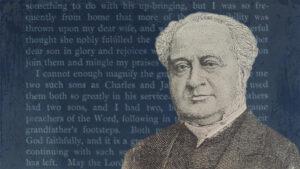
- A Practical Treatise of Fear by John Flavel
Related Resources:
- Rightly Ordered . . . Anxiety?
- Take Your Anxiety to Church
- Understanding Adolescent Anxiety, Depression, and Mental Health
Discussion Questions:
1. What situations and subjects trigger feelings of anxiety for you? Are there patterns you’ve noticed?
2. When you’re anxious, where are you most tempted to look for control or reassurance?
3. What are ways God has used past seasons of uncertainty or anxiety to deepen your faith or dependence on him?
4. Are there particular Scriptures you return to when you’re afraid or overwhelmed? What do those passages remind you about God?
5. What are ways we might unintentionally make someone’s anxiety worse when we’re trying to help?
6. How might experiencing our own weakness change the way we respond to others who are struggling?
Transcript
The following is an uncorrected transcript generated by a transcription service. Before quoting in print, please check the corresponding audio for accuracy.
0:00:00 – (Blair Linne): Not just a matter of getting over, you know, the anxiety. Because I think sometimes when we do that, we kind of fight anxiety with more anxiety.
0:00:08 – (Courtney Doctor): Right, right.
0:00:09 – (Melissa Kruger): Get anxious about being anxious.
0:00:11 – (Blair Linne): We’re anxious about being anxious. We do, you know, but it’s like, no, I am going to fight anxiety by clinging to my God, by standing in awe of him, by fearing him to the point where I remember saying, lord, even if my situation never changes. You’re with me.
0:00:37 – (Courtney Doctor): Welcome to the Deep Dish, a podcast from the Gospel Coalition where we love having deep conversations about deep truths. I am Courtney Docter, and I am here with my friend and co host, Melissa Krueger. We are so excited because today we are joined by a very dear friend, a real life friend, Blair Lynn. And we’re going to be tackling a topic that means a lot to all of us, and we’re going to be talking about how to fight anxiety, specifically with all the tools that God has given us.
0:01:07 – (Melissa Kruger): And, Blair, I’m so thankful that you took the time to write your story down, because I’ll be honest, you know, I would never have known this about you, like when. When. When you’re a realm, Blair. I mean, you just exude calm and peacefulness. And so I actually love that you took the time to explain your battle with anxiety. And the book’s called Made to Tremble, and the subtitle for that book is How Anxiety Became the Best Thing that Ever Happened to My Faith.
0:01:35 – (Melissa Kruger): So, you know, I would love. If we can just start. Can you just share a little bit about how anxiety became a part of your story that just. Just to start us off, you know, did you feel this all the time growing up? Did it. Did something happen that really made this a part of your story? Or can you give us a little bit of that background as we begin?
0:01:58 – (Blair Linne): Yeah, absolutely.
0:01:59 – (Melissa Kruger): Yeah.
0:01:59 – (Blair Linne): And thanks for having me. It’s funny because I never would have considered myself to be an anxious person. And just like you said, Melissa, so many people say your voice is so calming. And, you know, like, it’s like, I
0:02:11 – (Melissa Kruger): want to go to sleep to your voice. I want to be listening to you read scripture on my phone or something.
0:02:17 – (Blair Linne): It’s so calming.
0:02:18 – (Melissa Kruger): Yeah.
0:02:19 – (Blair Linne): So, like. Well, even some of us who have maybe calm voices, we do struggle. And, you know, it really happened for me in 2015 when our family moved to Philadelphia to help plant a church. And shortly after, we had this car accident. So it just kind of out of nowhere, I was driving and a deer came and just totaled our minivan. We were all in the Car. We were initially so thankful that we were all, well, physically well.
0:02:49 – (Blair Linne): But that spiraled me into a season of anxiety and panic attacks specifically. And so every time I would drive after that point, I would start to feel hot. I would hyperventilate. I remember the first time I was driving, and I felt like I couldn’t swallow, like I couldn’t take in a deep breath. And then all of a sudden, my heart is pounding. I mean, pounding so hard, I thought it was going to come out of my chest.
0:03:15 – (Blair Linne): I thought, this must be a medical emergency. I must be having a heart attack or, you know, something. And so I called my husband. He took me to the er and they did all the tests, ran all the tests, ekg, all the things, and they’re like, you’re fine. Everything’s fine. No one explained to me that I had had a panic attack. So I didn’t know. I didn’t have that language. And I just continued to have panic attack after panic attack.
0:03:38 – (Blair Linne): And I reached out to some older women at a previous church, and I said, this is what’s going on. I don’t know what’s happening, because immediately I’m like, I’m feeling anxious. You know, I’m dealing with these physiological symptoms. And for me, I thought at that time, Christians shouldn’t deal with anxiety. So it caused me to really condemn myself. I went through a season of feeling so much shame and isolation because, again, I’m the person who should be calm. You know, I mean, we were leaders in the church.
0:04:09 – (Blair Linne): Shouldn’t our life kind of be all figured out and it wasn’t at all. And these older women were so helpful initially with just, like, sending resources. I remember one said, oh, I have a thyroid issue. I had to get my thyroid removed. And I struggle with anxiety, you know, because of that. This is one of the symptoms of that. I was like, what? Why don’t we talk about this more? And so this. These panic attacks that kind of started in the car just started kind of spiraling into every area of my life to the point where I had to pull everything off of my plate. I remember being in bed for two to three weeks feeling like, okay, what?
0:04:46 – (Blair Linne): Like, I can’t do anything. And really wrestling with my identity, wrestling with my faith. What does this mean for. For us as a family? What does this mean for me as a believer? And it really was there that the Lord met me, really met me and ministered to me. So that’s where my journey started. Looking back, I do see moments of anxiousness biting my nails As a child, you know, like, there were moments.
0:05:09 – (Blair Linne): I lost my brother when I was 13, and I remember running out of class and feeling that sense of panic and angst and grief. I didn’t have the language for it. So this accident kind of pulled all of that out. I was like, oh, okay. Yeah, I do struggle with anxiety.
0:05:27 – (Courtney Doctor): What the mind stores and how the body reacts. It’s just. It’s amazing. Well, you. You talked a little bit about when it first started, especially in the car, like, that. You were. You had some real doubts and some even shame, maybe around it. Like, I’m a Christian. I’m a Christian leader. You know, I shouldn’t be having this. Were there any other emotions besides. I mean, obviously, besides the anxiety and the kind of initial shame around it, Were there any other emotions that those.
0:05:55 – (Courtney Doctor): That. That the panic attacks brought on?
0:05:58 – (Blair Linne): Yeah, I. I remember just grief also, because my. Our whole life was changing. A couple years in, you know, this journey, my husband decided to pull back from being on staff at this church that he helped start, in part because of my anxiety and the effect it was having on the family, which was, I think, the right thing for him to do, to care for our family. But for me, that spiraled me even further.
0:06:22 – (Blair Linne): And we were supposed to be here the rest of our lives. This was our plan, you know, and so now everything’s changing. So that was really hard. Trying to think what else. I remember feeling so much. I would. I was reading some books by Christians on the topic, and that made me feel worse at times because they were saying things like, you know, what’s between your ears? Like, basically this kind of self help. Even though these were, like, Christians. It was like, you have what you need between your ears, you know, to conquer this or basically go jump out of a plane, you know, like, conquer your fears, Face your fears. And I’m thinking, I am in bed.
0:06:59 – (Blair Linne): I cannot do anything. I can barely make dinner for my family. And so that was. That was just really hard to feel alone and isolated. Yeah, was really hard.
0:07:14 – (Melissa Kruger): I think what I hear from your story, too, is you had this initial incident that then triggered a cycle, you know, I mean, because that would be. I think we can all understand. Oh, wow. You know, you’re just driving along and this deer hits your car and that. That, you know, we’ve all had instances where an experience then produced anxiety the next time. Whether it’s like, you had a bad flight and then you’re like, I do not want to get on that plane again.
0:07:43 – (Melissa Kruger): But what I think is interesting about Your story is how it went into all these different areas of life. You know, it wasn’t less than driving. You know, it kind of awoke this situation, you know, this experience of anxiety in all these other areas. And so this leads me to a question like when we think about anxiety, and I think this is something that people wrestle with, you know, and sometimes we can give really overly easy answers because we. We categorize it in one way or the other.
0:08:14 – (Melissa Kruger): So if you think about anxiety, would you. You know, some people think it’s a spiritual situation, some people think it’s physical, some people think it’s psych. Psychological. So what would you say to that kind of question of what is this? Because it’s interesting when someone’s saying, it’s between your brains. I’m like, well, is it spiritually between my brain? Is it physically in my brain? Is it psychologically in my brain? You know, how.
0:08:40 – (Melissa Kruger): How have you come. What have you come to learn about anxiety? And how would you answer that question? Maybe differently than you would have before this experience? I know. I mean, I’ve just lived with so many women now who different, even hormonal seasons of life have produced panic attacks. Like one of my friends had the same experience you did, but it was brought on by perimenopause. And she was asleep. She woke up feeling like something was on her chest.
0:09:06 – (Melissa Kruger): Goes to the hospital, goes to the er.
0:09:08 – (Blair Linne): He’s like, I’m dying.
0:09:10 – (Courtney Doctor): And then they’re like, you’re having a panic attack.
0:09:12 – (Melissa Kruger): And she’s like, I was asleep, you know, and so I think there’s just. I’m so glad you talk about it, because I think these things happen and people don’t know. How do I categorize this? So when you think about those physical, spiritual, psychological. Where does this fit?
0:09:29 – (Blair Linne): Yeah, I think it’s all of the above, and I think it depends upon the story. So what? There are different ways to define anxiety. One way that we can define anxiety is that anxiety is the body speaking. I talk about natural fear in the book, which actually is a term I got from a Puritan, John Flavel. He talks about natural fear, sinful fear, and religious fear. I think that category is super helpful for us.
0:09:56 – (Blair Linne): Natural fear, this is the body speaking. It’s the trouble of mind from impending danger. This is the fight or flight. It’s not always sinful, but it is the result of what happened. Any Genesis 3. Right. We know it comes from Genesis 3:10 or Genesis 3:7 when they’re hiding in the garden. Right. I knew I was afraid, right? I was naked, and so I hid. That’s where all fear comes from. But it’s not always sinful. And so these are the physiological symptoms that can happen. Like you mentioned perimenopause or menopause or a car accident, right?
0:10:33 – (Blair Linne): We go through these things in life and our body responds as a way to say, alert, alert, like there’s danger here. And I think that’s why every time I got behind the. The steering wheel or a vehicle, I sat in the driver’s seat, my body was saying, hold on, alert. Don’t you know what happened the last time you were in these same conditions? The last time we were on a turnpike, the last time you were driving at night when a deer came.
0:10:58 – (Blair Linne): And so that’s the natural fear. So that’s one definition, but that’s not the only definition. And actually, what we see in the Bible. So actually, this idea of anxiousness or worry or cares that we see in the Bible, we do see it sometimes communicated in a positive manner. But overarchingly, what we find in the New Testament, it’s communicated in a negative manner. This is that sinful worry. So what happens is, because you know, that very good thing, that natural fear, for example, to have the adrenaline to stop, you know, somebody coming in and harming your family, that’s a good thing.
0:11:36 – (Blair Linne): That is good, right? Your body is responding. You hear about cases where, like, a mom was able to lift a car off her child. Like, we wanna have that kind of, like, natural adrenaline in our body because it’s meant to keep us alive and keep alive the people that we love. But because we’re in a fallen world, we’re in a fallen body, what happens is that, that fear, it then kind of starts to swirl and it becomes not about keeping you alive, it becomes about control.
0:12:05 – (Blair Linne): So what we see in the New Testament is that anxiousness. It’s a sinful worry, which means that you care to the point where you’re divided. All your attention is diverted away from God and it’s onto the thing that you’re worrying about or you’re caring about. So I like to say if you have a tunnel, you know, kind of a tunnel vision, all your cares are lined up in that tunnel is like, is God there? Is God anywhere?
0:12:31 – (Blair Linne): You know where your cares are? Or is it just you and your cares because you wanna control the situation? And so this looked like eventually me driving and then worrying, what if another deer comes? Oh, no, what am I to do? Right? So then that gets into the sinful Worry, oh, no, oh, no, oh, no, what about another deer? And now I’m not considering God. I’m not considering the God who has sufficient resources, right. Who can handle my concern.
0:13:00 – (Blair Linne): All I see is the thing I’m concerned about. And so it’s important to make that distinction, because what happens is we deal with a panic attack, and now we’re condemning ourselves. We’re saying, well, be anxious for nothing. You know, why am I worrying? And it’s like, oh, that’s not what the author had in mind. He wasn’t thinking about you and perimenopause, unable to sleep. You know, I mean, waking up in the middle of the night in a sweat because things are happening physiologically with your body, like.
0:13:29 – (Blair Linne): And so, yeah, I learned to make that distinction. And that was super helpful for me.
0:13:34 – (Courtney Doctor): That is so helpful. And even as you were talking, I was thinking, I’ve been asked before, what’s the best piece of advice I’ve ever received? And so I’ve said this before, but it’s turning your what ifs into even ifs. And it’s that idea of, like, when we start just ruminating on the what if, what if, what if, what if? Then what we’re doing is we’re projecting to the future, and we’re saying, if this happens, then God, you can’t. Like, you won’t be there, you know, then. Then it means you’re absent or you’re not doing this.
0:14:04 – (Courtney Doctor): But if we can change those things that we. Because even. Even perimenopause or menopause and you wake up in the middle of the night, that’s not sinful. But maybe what you do at that time, maybe what you allow to roll around in your mind, you know, it can turn into. Right, the sinful worry or the worry that’s not. I mean, let me say it in a more positive way, like, the worry that is not God honoring, the worry that is leaving God out of the equation.
0:14:31 – (Courtney Doctor): And so that turning your what ifs into even ifs was just really, really helpful for me. But as you’re talking, I’m really interested in this kind of what Melissa and you were just talking about with the different aspects, you know, physical, psychological, spiritual. And you say in your book, humans are like a braid intricately woven of spirit, soul and body. And so somehow understanding that interconnectedness has to play a part in our understanding of anxiety and how at any given moment, it has aspects of all three, Right? Like, we’re never just a bodiless soul or a soulless body.
0:15:14 – (Blair Linne): That’s right.
0:15:15 – (Courtney Doctor): We’re both at the same time. And so how does that, like, speak into that interconnectedness of body, spirit, soul, and mind help us understand anxiety? Yeah.
0:15:28 – (Blair Linne): You know, I mean, we’re made in the image of God, and that includes us being. It’s our embodied self. Right. As you said, mind, body and soul. But it’s interesting because, you know, I think in sometimes you have some circles where the emphasis is more upon your soul or your spirit to the neglect of your body. You know, like. And it’s like, we wouldn’t say, like, we’re Gnostics or like, the body is evil. You know, a matter is evil. But I think sometimes we function in. In that way. And then the other side is that it’s all about the body. It’s all physical, and there’s no, you know, part to this that has to do with the soul. And so I’m saying avoid the extremes. Right.
0:16:08 – (Blair Linne): I think what’s so helpful, Paul, he gives a category in 2 Corinthians 4:16, where he talks about, you know, how outwardly we’re wasting away, but inwardly we’re being renewed day by day. You know, these. This kind of dichotomy that we have. Like, we have a soul, we have a body. Right. And so what does it look like to say, okay, Lord, this is the way that you’ve made me? I think what happens is often people, they get so discouraged. So if the emphasis is upon their soul and they’re reading Scripture and they’re praying to God and they’re seeking to cast their cares and their concerns over to God, but they’re still dealing with the physiological symptoms.
0:16:48 – (Blair Linne): They can feel like, oh, why isn’t this enough? Why isn’t this working? What’s wrong with me? Somehow I’m not doing something right. And then again, the other side is, oh, it’s only physiological. You only deal with, like, the physical symptoms, and then to the neglect of the possibility that there could be sin here. What I say is that, you know, what’s so beautiful about being a Christian is that we have the Holy Spirit inside of us, and we can trust that the Holy Spirit is gonna make it clear.
0:17:15 – (Blair Linne): It’s gonna make it plain. But holding onto the Scripture and believing that the Scripture is sufficient right for you, that doesn’t mean that you can’t make use of things like nature or you can’t make use of things like even medication. I think taking the shame out of medication, if that’s needed for a time, or counselors or, you know, What I mean, therapy, I think these things helpful for so many people. And so it removes the shame, I think, when we see ourselves the way God has made us as image bearers.
0:17:48 – (Melissa Kruger): I love how you put that too, that, that we are in a fallen world, but the world does have ways to help us fight even, you know, I mean, because I do think, and this is not to simplify anything, but even physical activity, like being in nature, there are some ways that we can choose to fight that aren’t, aren’t always spiritual. I mean, that, you know, I mean, there, there are spiritual ways we can fight. And I’m getting ready to ask you about different tools.
0:18:17 – (Melissa Kruger): But, but I do think it’s interesting that even just because the world is the Lord’s, there are going to be things just in his world that help our bodies be healthy and, and work and even help our minds be healthier, you know. And so I think that’s why we need to have the conversation that Christians do struggle with these things. So talk about how do we fight. And so, you know, I, I picture you as you were describing yourself, you know, in bed and just struggling to get out of bed. But, you know, we’re on this podcast with you right now and you’ve written, I mean, just the fact, I think that you to know, oh, how hopeful it is you had that season.
0:19:00 – (Melissa Kruger): But then you eventually wrote a book about this and studied and reading John Fable about this and, you know, and now can speak about it and share with other people your experience. So how did, how did you go from being in bed, maybe thinking, maybe I’m never going to get out of this bed. I’m sure that’s how people feel sometimes, like, I’m never going to drive my car and not feel deeply panicked. What tools helped you move through this and do you still employ today, I’m sure, to help fight against anxiety? Are there any that you are in your toolkit that you go to regularly to help?
0:19:36 – (Blair Linne): Absolutely. Yeah. So for me, one of the things that I think my first stop, I guess, at help was getting a biblical counselor. So I found a biblical counselor in my area. And that was extremely helpful because for one, she opened up our sessions with prayer. She pointed me to God’s word. She encouraged me. Even as you mentioned Courtney, I talk about the what ifs and turning that around to, you know, even if or how do we see the Lord in the, in the midst of this.
0:20:06 – (Blair Linne): So that was helpful also, I think applying the scripture. So Philippians 4, I think is such a helpful text when it comes to especially sinful fear. A sinful fear, which it says here. Let me pull it up. Philippians 4, which, you know, we’re familiar with this. We can quote this, actually, you know, but do not be anxious about anything. But in everything, by prayer and petition, with thanksgiving, present your request to God. And the peace of God, which transcends all understanding, will guard your hearts and minds in Christ. You know, in this passage, actually, starting in verse four, there are like six commands, you know, that Paul gives here.
0:20:54 – (Blair Linne): One of the things that’s important is for us to see, first of all, where do we go with our anxiety, with our worry when it’s sinful. And he says here in everything, by prayer and petition. So I had to learn how to cast my cares over to the Lord. I have heard to cast your cares my entire life. Being raised in the church, I didn’t know how to do that practically. And so literally taking my requests before God in prayer and supplication, right? That desperation of God, I can’t handle this, but you can.
0:21:27 – (Blair Linne): And then I love how he says, and with Thanksgiving, right? So this looks like first taking your request to God is saying, okay, God, I’m feeling anxious right now. You know, I know we’re having dinner. I’m having dinner with friends, and yet I feel like a panic attack is going to come. I feel like I’m about to hyperventilate and my heart is starting to pound. Lord, I know that you’re in control of my body.
0:21:51 – (Blair Linne): Actually, Colossians 1, you are holding the entire universe together. You’re holding my mind together. You’re holding my body together. Lord, would you hold me right now? Would you help me in this moment? So I would pray prayers similar to that. And then with Thanksgiving, what’s so helpful about that is it reminds us of the character of our God and the promises of our God and how he’s come through in the past.
0:22:17 – (Blair Linne): So to be reminded, let’s say, for example, you’re concerned about financial strains that you’re dealing with right now. Well, can you recall in the past how the Lord came through that moment when you weren’t sure how you’re gonna feed your family or feed your kids? And the Lord provided, and he sent someone, you know, to offer a meal, or he sent that check in the mail, Right? Be reminded of his character or how the Lord saved you. Right? He took care of your greatest need.
0:22:43 – (Blair Linne): I mean, can’t he take care of these smaller needs? Right. He can take care of that prodigal child. He can Take care of your husband or your spouse and, you know, and maybe the fighting that’s happening or the conflict that’s happening, like he is able to take care of it. So it reminds us of the character of our God. And I love how it also says, present your request to God. And then it says, in the peace of God, which transcends all understanding, will guard your hearts and minds in Christ.
0:23:11 – (Blair Linne): It’s really. And later we see this encouragement to focus upon things that are true and good and lovely, right? So this idea of surrounding yourself with God’s truth, right? Casting these cares, reminding yourself of the gratitude that you can have because of who your God is, and knowing that he’s gonna be with you in the midst of it and actually his peace. So I explained that anxiousness is to be divided, right? It’s all these pieces, you’re diverted right away from God and onto your cares and.
0:23:45 – (Blair Linne): But he brings it all together. That’s what that peace there means, right? He unifies us earlier in this book. It says, we have the mind of Christ, we’re united with Christ. So he’s reminding us of who we are and of who he is, of what he has given us in Christ. And that allows us to surround ourselves with the good, the beautiful, right, the lovely, the things that are true. Which includes other believers.
0:24:11 – (Blair Linne): So other believers, right? This community of faith was so helpful for me that I can’t do this by myself. I can’t do this separate from God, but I can’t do this separate from my local church. So I began to welcome people in. So when I woke up, you know, at one o’ clock in the morning, because I was dreaming about deer and I was. I woke up into a panic attack. And I was in the moment thinking, do I wake up my husband or do I try to, like, you know, woman up, you know, man up and deal with this by myself?
0:24:41 – (Blair Linne): I began to say, no, I can’t do this on my own. Let me wake up my husband and ask him to pray for me. And he was happy to do that. When I’m sitting at dinner, let me ask my Christian friends to pray for me. And they were happy to do that, to walk with me. And that took away that shame. It took away the isolation and the gospel message. It takes away any feeling of condemnation, right? Because all of our sin and that punishment that we rightly deserve has been placed upon Jesus. We don’t bear it anymore.
0:25:16 – (Blair Linne): And so holding on, it’s kind of all of those things was so helpful for me. So those are Some of the things the Lord used in my life to just kind of help me to see. And it wasn’t that I felt like, okay, that means everything is, you know, within the blink of an eye. It’s all fixed. It wasn’t like that. It was a process. But I at least knew my God is going to be with me. And I have a community of people who love me, that even if this lasts longer than I would like it, it already has lasted longer than I would like it. But even if it lasts for a long, long, longer time, I can still rejoice in the process, because I know my good God is with me and he loves me, you know, and he does, doesn’t he?
0:26:00 – (Courtney Doctor): And doesn’t you have your book, you have your Bible open to Philippians 4? Doesn’t that whole passage start with the nearness of God? Because God is near, like, God is near. And that’s why we can do all these things. That’s why he can remove that anxiety that’s not of him or from Him. And that’s why we can go to him with Thanksgiving and present all of our requests. But, you know, Blair, what I love that you just did was, is you took us immediately. Like the tools that you just shared with us were immediately grounded in Scripture, but then you’re fleshing out how you actually not just applied it, but, like, clung to those words. And I think so often, you know, my experience, I have not experienced a lot of anxiety personally, but a lot of people I love have.
0:26:49 – (Courtney Doctor): And I know that so often, you know, the first inclination can be maybe some. Some helpful tools, but they’re not just running to the Lord. And so even the way you took that scripture and you showed us how in the middle of the night, you could cling to that and you could apply it. I mean, that was just a beautiful anchoring of this whole thing in the Word of God, because it is living, it is active. It’s actually helping us in the moment as we cling to it and believe it and apply it and live it. And so. So I just thought that was extremely helpful. So thank you.
0:27:32 – (Courtney Doctor): We are actually going to take a little break, hear a word from our sponsor, and then we’re going to be back and we’re going to. One of my questions that I’m so looking forward to asking you has to do with advice that you’ve regretted giving. So we’ll be back in just a minute, and we’ll hear more from Blair. Well, welcome back. So I told you that when we came back I was going to ask a question of Blair that I’m really excited to ask her because I think we’ve all been there. And I’ll tell you before I ask this question.
0:28:01 – (Courtney Doctor): Earlier in the episode, when you said you went to some older women in your church and they gave you good advice, I was so relieved to hear that because I think a lot of times, you know, the kind of caricature is that the older generation doesn’t always enter into this conversation very well or very nuanced, but that it is a little over simplistic to Melissa’s point earlier. So I was encouraged by that.
0:28:27 – (Courtney Doctor): And then I want to ask you. You say that you look back with regret on the advice that you gave a friend who was struggling with anxiety. And I think the advice you gave was just. She just needed to trust the Lord more. But now that you’ve been through this struggle, you’ve experienced it for yourself. How would that advice change and what advice was helpful when it was given to you?
0:28:49 – (Blair Linne): Yeah, so, yeah, this was an old roommate when I was in my early 20s, and she just came and said, you know, I’m dealing with feeling anxious. And, yeah, I was like, just trust the Lord, you know, kind of read these two scriptures, you know, and, you know, everything’s gonna, like, magically be okay, you know. And after, you know, years and years after, as I experienced this, I remember thinking, oh, no, for one, I didn’t even take the time to listen, to hear her out, to hear her story.
0:29:19 – (Blair Linne): I didn’t even know any of the details of her story. I just kind of almost like a band aid, you know, it’s like kind of like, you know, get yourself together, you know, like, why are you dealing with this? So just trust the Lord and it’s going to be fine. And so I remember having actually, maybe right before I wrote the book, I reached back out to her on Facebook and just apologized and said. I just. I was so quick to speak.
0:29:45 – (Blair Linne): And so my encouragement for those who are walking with other people do like Job’s did. Job’s friends did at the beginning, you know, when they initially came to Job, they were quiet, you know, for like seven days and seven nights, I think. I think we’re so quick, you know, to want to fix it. I think we have good intentions a lot of the time, most of the time, but until you listen to the person’s story, you won’t know what’s really going on. And often what our temptation is is to apply to other people what we’ve experienced. So it’s like, well, I’ve dealt with sinful worry, and so your experience must be sinful worry. And so you just trust the Lord, you read these scriptures, and it’s gonna, you know, be gone.
0:30:29 – (Blair Linne): But what if they are dealing with some physiological symptoms? And until you slow down and you ask the question, it might make more sense to say, oh, you’re feeling overwhelmed. You know, let’s set up a meal train. Oh, let’s see if there’s a benevolence fund. Maybe you need to see a counselor or, you know, maybe. Can I go with you? Maybe I’ll. I’ll drive you to a counselor, you know, or. Or maybe we. Let’s go talk and walk in nature.
0:30:54 – (Blair Linne): Let’s plan a girls trip, you know, if you could afford one, you know, where we just walk and we pray and maybe we have a little retreat. It kind of depends upon what’s going on. So a good friend listens well, is slow to speak, and then when you do speak, you know, Christ is our power and wisdom, right? That they need to be pointed to Jesus, but that doesn’t mean that they don’t need other things too. And so, yeah, just be a good. A good friend, a good listener. Be present with them.
0:31:25 – (Melissa Kruger): I love. I love that. And I think even the understanding behind that listening is that we are all different pieces of clay. We’re all clay. But the reality is, some things are easier for me than other people, and some things are harder for me than other people. And I remember, I mean, because I was kind of like Courtney, I really hadn’t struggled with anxiety, you know, in my life. And I’ll be honest, I think I kind of had a prideful, oh, I have the right theology.
0:31:57 – (Melissa Kruger): So therefore, because I believe God’s sovereign. Well, they were never anxious. Right. And then I went through an experience, and Courtney was actually with me when I went through this experience. And the first time I had a panic attack, and I remember being like, something outside is happening to me. I knew it was not normal because I didn’t normally struggle with anxiety, you know, in this experience.
0:32:19 – (Melissa Kruger): And it was like, oh, it gave me such a different sympathy and understanding for what different people are facing and just how each of us has different types of struggles. And so we really need to listen to one another and hear from one another. And I also love what you said earlier about that. Healing’s a process, you know, And I think about that, you know, Right. I broke my ankle at one point. No one thought I should be up the next day, like, walking on it. You know, it took time to heal and even to, you know, like you said, you had to learn how to speak even truth and cast your anxieties on the Lord. Like, that was a process.
0:33:04 – (Melissa Kruger): And I think the listening and then the patiently walking alongside, and the reality is, I think we’re just sometimes not that patient with. With one another and. Or. Or even with ourselves. And so tell me, how do we live then in that tension of the, you know. Okay, the now and the not yet of this battle?
0:33:27 – (Courtney Doctor): Because there.
0:33:27 – (Melissa Kruger): There are tools available to us, but we’re. We still are in a fallen world, and our bodies are still falling. Fallen. We. We are saved, and we are being saved. And one day we will be fully. You know, we’ll receive new bodies. But we do have these bodies, and they don’t, you know, they seem to be working less and less well as we age.
0:33:49 – (Blair Linne): But that’s a whole nother.
0:33:50 – (Melissa Kruger): That’s a whole nother episode.
0:33:52 – (Courtney Doctor): Right.
0:33:53 – (Melissa Kruger): So how do we. How do we walk in the now and the not yet when we battle anxiety?
0:34:00 – (Blair Linne): Yeah. You know, I think it’s important. We have to know who our God is. We have to know the character of God, but also to know that he’s with us. And what’s beautiful is, over time, the Lord is so merciful that he helps us to actually walk out in faith. Not just the knowledge of knowing who he is, but, like, practically. Okay, what does this look like? It looks like me clinging to you in the moment. It looks like me knowing I’m not going to, you know. What is it in Psalm 131? You know, I’m not gonna focus on things too wonderful for me, you know, because I.
0:34:37 – (Blair Linne): This is. This is beyond my pay grade. Like, I don’t have the resume, you know, to deal with these cares and concerns, but you do. And the thing that I need, you are actually able to provide it. Now, whether or not you choose to provide it, I’m still gonna trust you. Right. It’s like Job, though he slay me, yet will I trust him? Why? Because I know something that goes beyond my circumstances. I know someone who’s greater than my circumstances.
0:35:02 – (Blair Linne): And so it’s not just a matter of getting over, you know, the anxiety. Cause I think sometimes when we do that, we kind of fight anxiety with more anxiety.
0:35:11 – (Courtney Doctor): Right, right.
0:35:12 – (Melissa Kruger): Being anxious about being anxious.
0:35:13 – (Blair Linne): We’re anxious about being anxious. Yeah, we do. You know, but it’s like, no, I am going to fight anxiety by clinging to my God, by standing in awe of him, by fearing him to the point where I remember saying, lord, even if my situation never changes, you’re with me. Even if I drive and another deer comes, you are providentially over the deer. I can’t control the deer. You know what I mean? But you can.
0:35:41 – (Blair Linne): And so I can actually trust you. And I think that’s. That, you know, it’s focusing in on the hope. You know, focusing in on the fact that we have an eternal hope that supersedes our circumstances is gonna keep our eyes focused on eternity, on our Lord, on the new identity he’s given us in Christ, which says, I can keep hope alive. You know, like, I could keep walking day by day, trusting him, no matter what comes.
0:36:13 – (Blair Linne): Because the thing is, if we just. If I just look at it as, like, oh, yeah, well, I’m not really dealing with anxiety anymore the way I was before. I’m so grateful I don’t feel anxious all day, every day like I did. But also, I still have life to live, right? I’m still going to experience hardship. There’s still gonna be some suffering, you know, maybe affliction. I don’t know what’s to come. And so if it’s just about getting over, you know, a panic attack, right?
0:36:40 – (Blair Linne): That’s the temporal fix. But if it’s about me having my hope in God and me clinging to Christ no matter what comes, that is gonna set me up, I think, and set those listening up for success, for perseverance, right? For endurance, for long suffering, for knowing that we can trust God no matter what comes. And so that’s living, I believe, in the, you know, the not yet, the already. And the not yet is like fixing ourselves on that hope, that eternal hope we have no matter what comes.
0:37:17 – (Courtney Doctor): Blair, I feel like, okay, for anybody listening that is struggling with anxiety or struggling to understand somebody who is struggling with anxiety, I feel like they. I’m just gonna encourage you to go back, rewind what you’ve been listening to for five minutes, because chances are you’re driving down the road and your mind is on something else, and you’re half listening. I feel like the last five minutes are what we all need to hear in this conversation. Because you. You were talking about this idea of, you know, because so often we do become anxious about our anxiety. Like, we. And so the cure, like, it’s a. How do I fix this anxiety? And what you’re saying is, don’t fix your eyes on fixing the anxiety. Fix your eyes on something that transcends the anxiety.
0:37:58 – (Courtney Doctor): Fix your eyes on something greater than the anxiety. And I Just think that that is. It is beautiful and it’s true. And it’s really our only hope in it is to replace fear with a greater, you know, fear of the holy. Like fear of. Like, the fear. Not cowering fear, but to take the things that make us anxious and to cast them on the Lord and to look at him and his character and his goodness and his trustworthiness.
0:38:31 – (Courtney Doctor): We were talking about trustworthiness last night in Bible study. I’m in Bible study with just two young women, and we were talking about just the trustworthiness of the Lord and how that really is. It’s both the foundation of our faith, but it’s also kind of the pinnacle of our faith. Like, I think that’s what this whole life is pushing us towards, is to trust him more and more and more and more. And so how to even trust in the midst of anxiety.
0:39:00 – (Courtney Doctor): So I just thought that was a beautiful help and hope. Well, you’ve written a children’s book, which. My first children’s book is coming out in September, and this was really fun. So I want to hear more about yours, because it was quite a journey. I thought is 850 words. How hard can it be? It was a lot harder than I thought it would be. But you have written one called Yara the Brave and the Swirling Worry.
0:39:24 – (Courtney Doctor): So I do think we’re hearing more and more about children struggling with anxiety at pretty early ages. And so what have you learned? What advice would you give? What do you hope the book will accomplish for parents who have a child struggling with anxiety?
0:39:43 – (Blair Linne): Yeah. So you are the brave. I love writing. This was my first, and it was so much fun to create these characters. But Yara is like the bravest girl in her town, and yet one day she finds herself with a worry, and she’s not sure what to do. So she has decided that she’s gonna stuff it into her backpack. She’s gonna try to hide it, you know, so that no one knows. And there’s this worryworm that’s following her, and he’s spinning a silk all around her.
0:40:09 – (Blair Linne): And ultimately, she meets these friends, kind of in a fight or flight mode, meets these friends. Mr. Wind teaches her how to breathe. Mr. Raven teaches her how to sing God’s truth. Ms. Lily teaches her about God’s promises and how to pray to God. And then she meets a sheep who reminds her that she is a good shepherd who shares the gospel and just that, you know, Christ has conquered our worry, our fear, and so we can trust in Him. He’s with us.
0:40:36 – (Blair Linne): And in the end, all those swirly silk that. That miss the worry worm created around her, it actually allows her to now be brave, to develop wings, but not in our own strength, which is what she had at the beginning, but now in the strength of God, the strength that God provides. And in the end, I have this kind of big sheep, little sheep connection, and I’m hoping that it will spark a lot of conversation amongst parents and their children or a trusted adult who’s caring for a child who’s anxious.
0:41:10 – (Blair Linne): I think, yes, we are having so many more conversations about anxiety. We know it’s on the rise in children, especially young girls as well, kind of depending upon the age. And for me, I want to point people to Christ. I want to point them to our hope and the helps that we have as well. Even as I mentioned, like breathing techniques and nature, there’s beautiful helps that we have that we can make use of.
0:41:38 – (Blair Linne): I think for some parents, they are afraid to acknowledge any worry that their child might be dealing with. Because, you know, acknowledging it, it’s like, well, what does that mean? You know? Or if there is a label kind of placed on the child, what does that mean? I would say to avoid that fear, you want to offer help for your child, but then also avoid the other extreme, which is that that anxiety or worry has to be their entire identity.
0:42:05 – (Blair Linne): So that’s a big conversation as well. And. And so I’m like, avoid that as well, you know, as believers, as young sheep of God, you know, our primary. Primary identity is that we. We belong to the Lord, you know, and so even I had a label, you know, generalized anxiety disorder, but the truth is I don’t have that label anymore. Right. So if that became my identity and the Lord decided to change my identity, that would have been a hard. Right. But we use that maybe identity or that label to get the resources needed not to put a stamp, to say, this is who you always will be.
0:42:43 – (Blair Linne): So.
0:42:45 – (Melissa Kruger): So, yeah, I love how you give those two kind of ditches we may fall into, you know, and it. It’s always good to just be reminded because sometimes if we say, oh, this is who my child is, we might unintentionally feed more anxiety, you know, and allow it to almost just be something that we expect. Yeah. But then. Or if we just try to cover it up and that could just create this shame in the child of, oh, I’m just gonna have to try to hide it or something. I mean, I just love how you give those two things to just be aware of and in some ways it goes back to exactly what you were saying with a friend, listen and walk alongside. I mean, and I think as parents, like, we can’t solve our children’s struggles. We walk alongside and we can listen and we can provide wisdom.
0:43:34 – (Melissa Kruger): Just all the things that you said provide helpful tools. But I love that now we have the tool of this book because that it’s just a great place to even start the conversation and even start the conversation to, hey, these are ways to get help. So again, thank you for taking this place, this journey that I’m sure you never wanted to walk through. And what I just see is the Lord redeeming it in such a beautiful way, like using this painful part of your story.
0:44:08 – (Melissa Kruger): And yet he’s bringing life for other people through it as they can just hear your wisdom and even allow it to go into a children’s book. Because I’m sure this children’s book book will not just minister to children, it will probably minister to parents who might read it and feel anxious themselves about a lot of things.
0:44:26 – (Blair Linne): And I’ve heard that sometimes I think
0:44:27 – (Melissa Kruger): I may be on a first grade reading level. So I really learn a lot from kids books.
0:44:33 – (Blair Linne): So I like that.
0:44:34 – (Melissa Kruger): Well, let me just close with this question because you say that anxiety became the best thing that ever happened to your faith. Can you just give us some hopeful encouragement for, you know, I just think of all the people listening who struggle with this or love someone who deeply struggles with this, because it’s a deep journey for someone walking with someone who’s struggling with anxiety or walking themselves with it. So how can we be hopeful in the midst of it?
0:45:00 – (Blair Linne): Yeah, you know, I say I had an opportunity to be on a prayer call with Joni Eareckson Tada, kind of in the thick of my anxious journey. And she prayed to God and she asked God for something I never heard anyone ask for prior to that. She asked God as we were preparing for this conference for the ability to breathe. And the reason that struck me is because anyone who deals with anxiety, you know, you can struggle to catch your breath, to find your breath.
0:45:28 – (Blair Linne): But it helped me to see not many people will ask for this, but there’s a level of dependence that she has because of her affliction. For those that maybe aren’t familiar with her story, she’s a quadriplegic, has been since she was 17 years old. I believe she’s had two bouts of cancer, so has had extensive suffering in her life and yet is such a source of encouragement to the church and so that taught me the blessing of weakness, the blessing of dependence, of seeing even our suffering, our affliction, our anxiety.
0:46:08 – (Blair Linne): You may not be dealing with anxiety, but even if it’s depression, whatever the suffering is, it really can be a portal to a person, to clinging to Christ in the midst of it and to knowing that he’s near in a way that maybe you would not have known had you not experienced the hardship that you are facing. And so that’s why I say anxiety became the best thing that ever happened to me. Because even as I was beginning to come out of that season, I remember looking well, talking to the Lord, and I said, lord, even if you fully bring me out, if you completely heal me from this, do not let me lose what you’ve taught me.
0:46:44 – (Blair Linne): Do not let me lose the dependence upon you. You know? And so that’s been my prayer. And I’m thankful for our sister Johnny for kind of opening up and helping me see, you know, there’s nothing. What we would say is, you know, a small thing to pray for. No. We all need God to breathe. We need God to do anything that we’re doing right now in this moment. And so to know he’s here and we can depend upon Him. That’s a good thing. Anything that draws you to the goodness of God and to the dependence of God, we have to know it’s a good thing.
0:47:20 – (Melissa Kruger): That’s right.
0:47:21 – (Courtney Doctor): And I’m going to botch and butcher this saying, but what is it? Blessed be the wave that casts me on the rock of Christ. That’s not it. Exactly. And I don’t even know who to attribute it to right now.
0:47:33 – (Blair Linne): It is quoted in the book. It’s often attributed to Spurgeon. I quote it in the book.
0:47:37 – (Courtney Doctor): Yeah. Okay.
0:47:38 – (Blair Linne): That cast you on the Rock of Ages. Yeah.
0:47:40 – (Courtney Doctor): Yes. I mean, blessed be the wave. And so to be able to see any type of suffering through the lens of what it’s actually doing. Like, I think I liked how you said a portal to a person. You know, that it is. It is the thing that can cause us to call out, to cling to, to cry for Christ. And so blessed be the wave. What a beautiful testimony, Blair. Well, I know Melissa said that was the last question, but I really want to end on a really fun one. So we’re gonna ask one more now.
0:48:12 – (Courtney Doctor): We like to end on a fun one that you mentioned in your book, that a study has shown that dance is a surprisingly effective treatment for mental health. So, I don’t know. This is probably a little known Fact about me, but I absolutely love to dance. My dream is that I could do a TikTok dance sometime. Like, I really want to do that.
0:48:36 – (Melissa Kruger): If you do.
0:48:38 – (Blair Linne): If you do it, Melissa has to do it with you.
0:48:40 – (Melissa Kruger): No, I don’t.
0:48:41 – (Courtney Doctor): Melissa won’t do it. We barely got her on the dance floor at. Yeah, but, like, I love to dance. Maybe the people around me don’t. I left one wedding and this older couple came up and they said, we had so much fun watching you on the dance floor. I don’t think it was because I was so good. I want to know. So I want to know, do you like to dance too, Blair? And what’s your favorite type?
0:49:10 – (Blair Linne): Yes, I love to dance in private. I don’t want people looking at me. I think as I get older, I’m embracing the fact that I’m more and more of an introvert, you know? But one time I did dance on the beach at night. I was a group of friends, and it was the moon was out, so we had a little light, and we just dance and dance, and it was so much fun. So if I had to choose a dance style, it would be hip hop dance.
0:49:38 – (Blair Linne): That would be my jam.
0:49:39 – (Melissa Kruger): Ooh, get it.
0:49:40 – (Blair Linne): Not that I’m good. No, no, not that I’m good. You know what I’m saying? It’s like the difference between making a joyful noise and having an actual voice and what? Dancing before the Lord and actually being, like, skilled.
0:49:54 – (Courtney Doctor): Those are not the same thing.
0:49:56 – (Melissa Kruger): That’s okay.
0:49:56 – (Courtney Doctor): That is okay. But I love that. Dance is a surprisingly effective treatment for all of our mental health struggles. So may we all dance our way into. Into joy and healing and wholeness. But, friends, we do hope that you’ve been encouraged by this episode of the Deep Dish. And I just want to say again, Blair, thank you for sharing just your story, like, sharing your life with us. You didn’t just the gospel. You shared your very life, and we are grateful for that. And I.
0:50:24 – (Courtney Doctor): And if you are listening and you either struggle with anxiety or you love somebody who does. Not only do we recommend getting Blair’s book on this, but share this episode and our prayer is that it will help all of us cling to Christ. So we’ll see you next time on the Deep Dish.
Courtney Doctor (MDiv, Covenant Theological Seminary) serves as the director of women’s initiatives for The Gospel Coalition. She is a Bible teacher and author of From Garden to Glory as well as several Bible studies, including Titus: Displaying the Gospel of Grace, In View of God’s Mercies, and Behold and Believe. Courtney and her husband, Craig, have four children and five grandchildren.
Melissa Kruger serves as the vice president of discipleship programming for The Gospel Coalition (TGC). She’s the author of multiple books, including The Envy of Eve: Finding Contentment in a Covetous World, Walking with God in the Season of Motherhood, Growing Together: Taking Mentoring Beyond Small Talk and Prayer Requests, Wherever You Go, I Want You to Know, and Parenting with Hope: Raising Teens for Christ in a Secular Age. Her husband, Mike, is the Samuel C. Patterson chancellor’s professor of New Testament and early Christianity at Reformed Theological Seminary, and they have three children.
Blair Linne is a Bible teacher, author, actress, spoken word artist, and half of the team behind the Family Worship Micro Conference with Shai and Blair Linne. She has toured globally and is known as one of the originators of the Christian Spoken Word genre. Blair is the author of Made to Tremble: How Anxiety Became the Best Thing That Ever Happened to My Faith and Finding My Father: How the Gospel Heals the Pain of Fatherlessness. She lives in Dallas with her husband and three children.