

The patron saint of cultural apologetics is Augustine of Hippo, author most famously of City of God and Confessions. Second place is up for debate. But you’ll get a lot of votes for a 17th-century disciple of Augustine, the Frenchman Blaise Pascal.
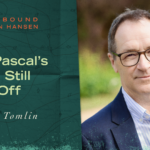
Graham Tomlin describes Pascal as the “man who made the modern world” in a new biography. Tomlin is the director of the Centre for Cultural Witness in Oxford, England. He writes of Pascal, “It is hard to think of anyone who has impacted so many fields of human endeavour in such a short time.”
Here’s a taste from Tomlin about Pascal’s accomplishments: He basically invented probability theory; proved the existence of the vacuum; laid the foundations of integral calculus; conducted the first modern scientific experiment; developed the theory that made possible the hydraulic press; demonstrated that air has weight; designed and built the first mechanical calculating machine, which led to what we know as the computer; set the trend of wearing wristwatches; and built the first public urban transportation system in Europe.
And did I already mention he was one of the most effective and enduring cultural apologists of all time, perhaps second only to Augustine? Tomlin writes, “His was a Christianity founded in a profound experience of God, an intense devotional life and a form of faith that offered a radical alternative to the comfortable assimilation to culture that the Church of his day often seemed to promote.”
I talked with Tomlin about the remarkable Pascal, who lamented man’s inability to sit quietly by himself, and who observed, “The heart has its reasons of which reason knows nothing.”
In This Episode
00:00 – Pascal’s wager and living as if Christianity is true
00:49 – Introducing Blaise Pascal, the cultural apologist who helped make the modern world
02:36 – Pascal’s remarkable inventions, including public transportation and the Pascaline
05:42 – Augustine’s influence on Pascal’s theology of desire, fallenness, and grace
08:11 – Why Pascal trusted reason in science but not as the starting point for faith
10:46 – Pascal’s “Night of Fire” and encounter with the living God
16:43 – Why Pascal went to war with the Jesuits
20:20 – Jansenism, Calvinism, and Pascal’s understanding of grace
25:51 – The hiddenness of God as an argument for faith
32:38 – How human misery points toward human greatness
39:46 – What Pascal’s wager actually means
48:45 – Pascal, Jonathan Haidt, and the psychology of belief
49:05 – “Make it attractive”: Pascal’s enduring strategy for cultural apologetics
51:59 – How Pascal anticipated both the modern and postmodern worlds
59:22 – What Pascal would say about modern science and scientism
1:01:43 – Why Pascal’s faith speaks to people who have looked into the abyss
1:03:21 – Outro
Resources Mentioned:
- Blaise Pascal by Graham Tomlin
- Pensées by Blaise Pascal
- The Provincial Letters by Blaise Pascal
- Confessions by Augustine
- City of God by Augustine
- The Righteous Mind by Jonathan Haidt
- The Happiness Hypothesis by Jonathan Haidt
- The Keller Center for Cultural Apologetics
SIGN UP for my newsletter, Unseen Things.
Help The Gospel Coalition renew and unify the contemporary church in the ancient gospel: Donate today.
Don’t miss an episode of Gospelbound with Collin Hansen:
Transcript
The following is an uncorrected transcript generated by a transcription service. Before quoting in print, please check the corresponding audio for accuracy.
0:00:00 – (Graham Tomlin): First of all, realize it’s not your reason that’s resisting God. It’s something else. It’s your heart. But if you want to put yourself in the position where God might touch you by his grace, well, go into each day acting as if it’s true even before you’re sure it’s true. You know, read the Bible as if it really is God’s word speaking to you. Treat every person you meet that day as if they are an image of God given to you in that moment to be treated with reverence and with love.
0:00:24 – (Graham Tomlin): Pray to God as if he is really there. Go to church as if it’s the place where you will meet with the people of God and so on. And in time, Pascal thinks it will dawn upon you that this really is true, and it will touch your heart as well. So that, I think, is how the wager works.
0:00:49 – (Collin Hansen): The patron saint of cultural apologetics is Augustine of Hippo, author most famously of City of God and Confessions. Now, second place is up for debate, but you’ll get a lot of votes for a 17th century disciple of Augustine, the Frenchman Blaise Pascal. Graham Tomlin describes Pascal as the man who made the modern world in a new biography. Tomlin is the director of the center for Cultural Witness in Oxford, England. He writes of Pascal that it is hard to think of anyone who has impacted so many fields of human endeavor in such a short time.
0:01:23 – (Collin Hansen): All right, so let’s just talk about some of those accomplishments. Here’s a taste from Tomlin about Pascal’s accomplishments. Pascal basically invented probability theory, proved the existence of the vacuum, laid the foundations of integral calculus, conducted the first modern scientific experiment, developed theory that made possible the hydraulic press, demonstrated that air has weight, designed and built the first mechanical calculating machine, which led to what we know as the computer, set the trend of wearing wristwatches, and built the first public urban transportation system in Europe.
0:01:55 – (Collin Hansen): That’s all. And did I already mention he was one of the most effective and enduring cultural apologists of all time, perhaps second only to Augustine. Tomlin writes, his was a Christianity founded in a profound experience of God, an intense devotional life, and a form of faith that offered a radical alternative to the comfortable assimilation to culture that the church of his day often seemed to promote.
0:02:18 – (Collin Hansen): So let’s talk to Graham Talmon about this remarkable man who lamented man’s inability to sit quietly by himself, who observed, the heart has its reasons of which reason knows nothing. Just a couple of famous Pascal quotes there. Graham, thanks for joining me on Gospel Bound.
0:02:33 – (Graham Tomlin): Very good to be with you, Colin? Yeah, Looking forward to the conversation.
0:02:36 – (Collin Hansen): Which of Pascal’s inventions or discoveries impresses you most?
0:02:41 – (Graham Tomlin): Yeah, that’s a good question, isn’t it? I mean, I suppose the one that probably impacts you most, or there’s the most surprising, is his invention of buses. Because, you know, we all go on buses from time to time. You know, we all kind of access urban transportation systems. But it’s a, it’s a remarkable thing that he, you know, here’s someone who’s not known for that. He’s known for his pense, he’s known for his philosophy, he’s known for some of his sort of scientific experimentation, but this very practical thing of working out, you know, towards the end of, you know, the first half of the 17th century, Paris doubled in size, which was fine for the rich because they could get around in their carriages.
0:03:18 – (Graham Tomlin): For the poor, it was a real problem. And one of the things that Pascal gained towards the end of his life was a deep devotion to the poor. And one of the things he wanted to try and do is to sort out a practical solution to the difficulties of poor people getting around Paris to visit family or to travel to work. And so he suddenly had this idea. He’s watching one day carriages going past the streets in Paris.
0:03:42 – (Graham Tomlin): Okay, what if we. What if we raised some money? We kind of bought up a number of carriages and they could go from point A to point B and they could stop at various places on the way. And people without much money could pay a very small amount. Cinque sol, you know, 5 cents was the amount he designated. That’s why it’s called the Carros cinq sol. The carriage is the 5 cent carriage. But people could get on and get off at different points and they could travel across the city for very little price.
0:04:11 – (Graham Tomlin): Terribly simple idea. But he not only had the idea, he had the kind of capacity to tap up his wealthy friends to gain the capital to get this thing off the ground, and designing five routes across Paris. And he got it going. And that says a lot about Pascal’s sort of practical ability, his ingenuity for solving problems. So I think that’s the one that kind of interests me most. And I mean, there’s lots of the others that are particularly in there.
0:04:37 – (Graham Tomlin): His calculating machine is an extraordinary thing. When you’ve seen one of these things, it’s a beautiful piece of engineering and again was a great precursor of when the story of the computer is told. Pascal’s, the Pascaline is often mentioned in that. So that’s a Remarkable invention. So, yeah, I guess those are the two I’d pick out.
0:04:55 – (Collin Hansen): Oh, man. Can you see one of those calculating machines somewhere? Are they in a museum somewhere?
0:05:00 – (Graham Tomlin): Yeah, yeah, there are various ones. There are about, I think about 25 of them still in existence. See, it was, it was a. It was a. It wasn’t a great commercial success because they were too expensive to build. He built various versions of them. Some are smaller, some of them are larger. I’ve personally seen a couple of them. There’s a couple of them in Claremont, the city where Pascal was born. There’s a museum there which has a couple of copies of it. There’s one or two in Paris.
0:05:28 – (Graham Tomlin): IBM own one of them. And so they’re scattered around the world. You know, the Pascaline themselves. And so, yeah, there’s a limited number. As I say, he never managed to sell enough of them because they were too expensive. But you can still find them if you know where to look.
0:05:42 – (Collin Hansen): Where do we most clearly see Augustine’s influence on Pascal?
0:05:47 – (Graham Tomlin): Yeah, you see Augustine kind of all over the place with Pascal. You can see it in his particular association with the Jansenists. The Jansenists were this group in 17th century France which was quite an austere form of Catholic devotion, but was a very deeply Augustinian influenced grouping. They were, they were called Jansenists because they kind of read a very long, rather slightly dull book by a man called Cornelius Jansen, which was an interpretation of Augustine, a particularly radical interpretation of Augustine. And the Jansenists took on this interpretation and not many people actually read it because it was very long, but Pascal knew of it and it was the inspiration for this form of devotion which Pascal was associated with. Many of his friends were in the movement.
0:06:37 – (Graham Tomlin): And so you see it there. You see it also in his emphasis on desire and fallenness, this sense that our minds are clouded by our desires, that we no longer think straight in the way that we were intended to in the beginning. Augustine obviously teaches that. And Pascal picks up this idea that in our original state we were made to be able to think straight, to desire what is good and to turn away from what is evil.
0:07:09 – (Graham Tomlin): But as a result of the Fall, our desires have become twisted and they no longer recognize what is good from what is harmful for us. And so we long for things that actually are deeply harmful for us and therefore our rationality is clouded. It’s not quite as straightforward to give people reasons why they should believe in God or why Christianity is the truth and so on. It’s not quite as straightforward as that you have to address desire.
0:07:34 – (Graham Tomlin): So I think that emphasis on desire is there. I think it’s emphasis upon the fallenness of human beings, that we are kind of broken, that there is a deep emptiness inside us that is made to be filled by only an infinite object, which is God himself. Pascal is often associated with the phrase the God shaped gap. Now he never uses that phrase, but you can find that idea in his writings and in his apologetics. And it’s something really he gets from Augustine. So Augustine, I think is all over Pascal. He was probably Pascal’s main theological influence throughout his life.
0:08:11 – (Collin Hansen): Is it ironic that one of the men who most deployed the reason of the Enlightenment was one who did not necessarily have a lofty view of reason, especially when it came to religion?
0:08:23 – (Graham Tomlin): Yeah, there was a certain irony in that. And Pascal’s view of reason is, is kind of interesting. You mentioned Colin, I think at the beginning, one of his famous quotes is, you know, the heart has its reasons of which reason knows nothing. And that’s testament to his very deeply Augustinian thing. It’s the heart. The heart for him is not just emotion. It’s not kind of romantic feelings. It’s a kind of deep instinct we have for what is true and what is false. The heart has its reasons which can’t be reasoned about. It’s about desire, it’s about evoking a desire for God.
0:08:57 – (Graham Tomlin): So that’s why he thinks you have to address the heart first. That’s not because he thinks that reason, he’s not an irrationalist. He doesn’t think that reason is useless for us. He does think that our reason is fallen. But he makes a very clear distinction between the places where reason is really useful to us and where it’s really not much use to us. So it is useful for us, he thinks, in the scientific enterprise.
0:09:24 – (Graham Tomlin): So he has a great belief in the power of experimental science. And he’s one of the pioneers of that. You know, he inherits a form of science that he got from Descartes and others, which was more about. Well before Descartes and Pascal, science was about, you know, bowing to authority. If Aristotle or Galen said it, it must be right. Both Pascal and Descartes dispute that. But Descartes approaches science on the basis of a priori reasoning and Pascal doesn’t. Pascal thinks that, you know, you do science by doing experiments.
0:09:55 – (Graham Tomlin): You do an experiment and you repeat it and you try it over and over again and you record the results carefully and you work out the best, the best explanation for the results that you Get. So he’s a classic experimental scientist, and he thinks that reason is really useful in that. But what he doesn’t think reason is very useful for is in the knowledge of God, because he thinks we have very strong, powerful reasons for not wanting the truth about God to be known, or at least for not sort of bowing to that truth, as it were. And so he makes this very strong distinction between where reason is useful in things like geometry and mathematics in science, but not so much in theology.
0:10:33 – (Graham Tomlin): Now, again, he doesn’t disavow the use of reason in theology. He comes up with reasoning, all kinds of good, reasoned theology, but he thinks that’s not where it starts. It starts with the heart, not with the reason.
0:10:46 – (Collin Hansen): This is related, then, to his famous Night of Fire. Tell us about it. Yeah.
0:10:52 – (Graham Tomlin): Well, it’s a key moment in Pascal’s life. It happened in November 1654. He was born in 1623. And you kind of need to know the background to it. The background to it is that he was brought up as a fairly conventional Catholic family, not particularly devout. The family then get influenced by this Jansenist movement and they become, some of them, his sister in particular, his younger sister, Jacqueline, and to a certain extent, his older sister Gilbert, they become influenced by this Jansenist movement, this devotional movement in France. Pascal is sort of attracted to it, but he’s also a kind of man about town. He’s doing his scientific explorations. He’s becoming famous for his calculating machine. Everybody wants to talk to Pascal. He’s very kind of witty, he’s very clever.
0:11:40 – (Graham Tomlin): He’s going around the salons of Paris, and there’s a bit of a tussle going on, I think, in Pascal’s life at this time. On the one hand, his sister is very devoted to Jansenist, this Jansenism spirituality. She enters a convent, shuts herself off from the world, and she kind of feels that Pascal, her brother Blaise, should do the same thing. And part of him is drawn to that, but the other part of him is drawn to this public career as a scientist, as a public intellectual, someone who’s interacting with people like Rene Descartes and others, who was a contemporary of Pascal’s.
0:12:10 – (Graham Tomlin): And so there’s a kind of unresolved tension at the heart of Pascal’s life. You know, where should he go? Should he enter the monastery? Should he enter into a kind of secluded life like his sister did, and a life of devotion to God and prayer and the reading of Scripture and so on, or should he throw himself into this kind of. This other world, which is the world of the salons in Paris and, you know, witty conversation and scientific experimentation and winning prizes at mathematics and so on.
0:12:38 – (Graham Tomlin): And this tension is slightly resolved. You feel this is kind of building up, and it’s building up and it’s building up, and it leads to a particular experience which happens at the end of November, 1654. We know exactly when this happened because, well, what happened was somehow alone in his room at night, he seems to have had a profound experience of the presence of God. And this lasts for about two hours, he says, from half past ten at midnight till about half past ten in the evening till about half past midnight.
0:13:10 – (Graham Tomlin): And he dates it exactly so we know when it is. And what he does is he writes a kind of poem. He writes an account of it. In fact, he writes two. One scribbled at the time, one written out a little bit more carefully, and he folds them together and he inserts them into the lining of his cloak. No, he never tells anyone, never tells his sisters, never tells his family, never tells his friends about this experience.
0:13:34 – (Graham Tomlin): And we only know about it because when he died, the servant who was preparing his body for burial was cutting open his jacket and felt something in the lining and thought, there’s something here. So he opened it up, and out came these two bits of paper. And on it is written this document, which is now known as the memorial. And it has the word fire at the top, which is why it’s sometimes called the Night of Fire.
0:14:00 – (Graham Tomlin): And. And this is this powerful account of this experience. It’s a very visceral account of this sense of certainty he gets with this encounter with God. And you might know the phrase the God of the philosophers, the God of Jesus Christ, not the God of the philosophers. It comes from that text. And so in terms of the God that he has encountered in this moment is the living God, the God of Jesus Christ, the God of Abraham, Isaac and Jacob, this deeply personal God who has been hunting down Pascal for years, as it were.
0:14:33 – (Graham Tomlin): Not the God of the philosophers, not the God of Descartes, not the God who is the end of a whole process of philosophical argumentation that you can just tick off and say, yes, I believe in this God. Now, this is a real, live, living God who has kind of been hunting Pascal down for some time. So this is a profound experience for him. That doesn’t mean that he gives up his scientific explorations. He carries on doing those, he carries on doing mathematics, but they take a much lesser place in his life.
0:14:59 – (Graham Tomlin): You feel There’s a kind of peacefulness descends upon Pascal from this moment because he’s found he hasn’t turned away from scientific mathematical work, but they found the proper place in his life. They no longer dominate his horizon. They no longer are a source of. Well, they become less of a source of prideful arrogance in him. There’s a streak of arrogance in Pascal’s character that I think is part of the significance of this moment.
0:15:26 – (Collin Hansen): Well, you described that as his besetting sin. Is that right? His pride?
0:15:29 – (Graham Tomlin): Yeah, I think it is. There was a, There was a. Every now and again, you know, you see, it kind of flashes out. There’s a, there’s a. You know, he was brilliant and he knew it and he would see, would often sort of parade his knowledge a little bit. And he had a particular thing which is what one, one, one writer, Pascal, calls his. His demon of combat. He loved an argument, he loved winning arguments.
0:15:54 – (Graham Tomlin): And he could be quite. He could be cruel sometimes because he was very clever. You’d never want an argument with Pascal. And he could kind of pummel his adversary into the ground. There are occasional times when you kind of feel he’s being pretty unfair on people. He picks on people who are left less clever than him that he disagrees with and he really beats them down in argumentation. It’s not an attractive characteristic, but I think it’s one that he began to overcome towards the end of his life.
0:16:20 – (Graham Tomlin): You sense as you, as he moves towards the end of his life, there’s a renewed sort of humility. There’s a kind of gradual overcoming of that besetting sin of prideful, combative arrogance that he recognizes in himself and he begins to address it, which is kind of humbling to see.
0:16:43 – (Collin Hansen): Speaking of people he did not like, why didn’t he get along with the Jesuits?
0:16:47 – (Graham Tomlin): Yeah, well, the Jesuits, you’re right, he had the kind of long. He picked a fight with the Jesuits for quite some time, which is not a clever thing to do in many ways in 17th century France because the Jesuits were very powerful. So the Jesuit order by this stage had become very allied to the royal court of Louis xiv. And the king’s confessor was a Jesuit. And I think the reason why he disliked the Jesuits was because he felt the Jesuits were, when advocating a kind of conversion without repentance.
0:17:25 – (Graham Tomlin): Because in some ways there are similarities between Pascal and the Jesuits. They both want to try to help people find faith in Christ. They’re aware of a kind of growing skepticism, maybe the beginnings of modern atheism happening around in France and in Europe in the 17th century. And they’re both keen to kind of enable people to. To live the Christian life and to kind of find Christ and to be part of the church and so on. But they take very different approaches to it.
0:17:53 – (Graham Tomlin): The Jesuits take the approach of saying, well, let’s make this as easy as possible for people to be part of the church. You may know Jesuits, the Jesuit tradition is known for what’s called casuistry, case law, you know, particularly individual approaches to different people rather than the kind of generic approach to things. And he felt that the Jesuits were kind of bending the rules, making it possible. So they would say things like, well, you know, if you go to Mass, you can’t stay for the whole thing, but if you’re there for the beginning, that’s fine.
0:18:25 – (Graham Tomlin): That’s a work that is so meritorious before God. If you kind of think of God from time to time, well, that’s enough. You know, they kind of lower the bar, if you like, of Christian behavior to make it possible for firstly. Now, some of the people that Pascal knew very well, sophisticated men about town like him, to be Christian, to be part of the church, they would kind of lower the bar to make that possible.
0:18:49 – (Graham Tomlin): Pascal takes the opposite approach. You need to raise the bar for him. Discipleship was a rigorous thing. It was about intense prayer. It was about devotion to God. It was about encountering this powerful personal God that he’d encountered on the night of fire. And so when he read of the Jesuits arguing for a kind of you could be converted without real change of life, without real repentance, he reacted quite strongly against that.
0:19:22 – (Graham Tomlin): And that’s what led to the provincial letters, which we could talk about in a moment. But, yeah, antipathy towards the Jesuits of his time. I think there’s also in there a kind of subtle resistance, or if you like, a subtle kind of attack on the court of Louis xiv, which was this very opulent, very extravagant, powerful assertion of sort of Catholic presence and of royal power. Everyone had to bow to the king.
0:19:57 – (Graham Tomlin): His favor was what gave social advantage. It’s almost as if the king had come into the place of God, place of Jesus Christ. And Pascal didn’t like that at all. And the Jesuits allied to that royal court, making that kind of powerful Catholicism possible within France. He was already opposed to that. And so those, I think, are some of the reasons why he was opposed to the Jesuits.
0:20:20 – (Collin Hansen): So that’s the Jesuits you’ve mentioned earlier, the Jansenists mentioned a little bit of some of his family connection and that was a little bit closer to his social circle. But help explain the relationship between the Jansenists then to Calvin and to reform the. This is a very complicated matter because when you read Pascal as a Calvinist, you see, wow, there’s a lot of similarity here. That’s the Augustinian heritage, no doubt.
0:20:48 – (Collin Hansen): But Pascal was absolutely appalled by that connection. So help explain this Jansenist movement.
0:20:55 – (Graham Tomlin): Yeah, that’s right. Yeah. So you’re right. There are surreal similarities between. Pascal is sometimes called a kind of crypto Calvinist. People have seen connections between Protestantism and Calvin. Was he really a secret Protestant all along? And now he always denied that. He always denied it very sort of vociferously, partly for political reasons, because in France at the time, the deep divide between Catholics and Calvinists was very, very deep. You know, the memory of the St. Bartholomew’s Day massacre was kind of still alive in Pascal’s time, which is when, of course, many thousands of Protestants were murdered by Catholics and there were atrocities on both side sides in this debate. So the kind of Protestant Catholic thing in France, Calvinist Catholics was a. Was a deep, deep issue. He could not afford to be seen as a Calvinist. But it wasn’t just politics, I think, for.
0:21:47 – (Graham Tomlin): For Pascal, the similarities, I think, are explained by their common background in Augustine, because both Luther and Calvin are, of course, deeply, deeply influenced by. By Augustine and this deep sense of fallenness. And again, that’s something that Pascal shares with him, that he doesn’t share with the Jesuits. Just Jesuits don’t have a strong sense of the fallenness, the brokenness of humanity, which is why a little bit of tinkering here and there of the Jesuit seems to be fine. That’s all that’s needed, at least as far as Pascal sees it.
0:22:19 – (Graham Tomlin): And of course, both Augustine has a very strong doctrine of grace. Grace is predominant. Grace is what liberates the human being. Grace is what releases in us a desire for God. And unless grace touches us, unless grace reaches down and changes our hearts, we don’t love God. You know, we love ourselves. We’re oriented to ourselves, which is the great kind of Augustinian opposition. Now, there’s something of that in Luther, there’s something that in Calvin, there’s something that in Pascal.
0:22:50 – (Graham Tomlin): But they do take different views of grace in it all. And so, you know, Pascal doesn’t go with a kind of Calvinist sense of determination. He doesn’t go with sort of Calvin’s kind of ideas of predestination. He places himself in between on the one side Calvinists, where there’s no sense of a kind of human choice at all. And on the other side, what he calls Molinists, which are kind of. Kind of like the Jesuits, where basically it’s all about human choice.
0:23:20 – (Graham Tomlin): So for him, he sets up this opposition that Calvin, God determines everything and there’s no human participation in salvation whatsoever. On the other side, he argues the Molinists, the Jesuits, it’s all about human response. You know, grace is given to every person, but the use of that grace is entirely dependent on our will. And some choose to do that, some don’t. And he paints himself as a classic Augustinian.
0:23:46 – (Graham Tomlin): And by that he says that in our unfallen state, you know, God gave us the grace to be. He gave us grace that could be acted upon by each person. But in our fallen state, we’re unable to respond to God, but the God enables us to respond. And then, if you like, we do respond. So he kind of tries to position himself in between the Jesuits and the Calvinists in that way. But there’s a very strong similarity with the Calvinists for Pascal, which is why he’s often been seen as a kind of secret Calvinist, even though I do think he is quite exactly that.
0:24:19 – (Collin Hansen): So more of like a Arminian prevenient grace similarity, then.
0:24:24 – (Graham Tomlin): It’s not really that, because it’s not. Well, it is a kind of prevenient grace that enables us, that frees us. Without that grace, God cannot, you know, we cannot respond to God. But he then does urge a kind of response. There are things we can do to place ourselves in the place of grace. And he argues that in the wager. Well, again, we’ll talk about that in a minute, I’m sure, as well. But that’s kind of where he gets to in that.
0:24:54 – (Graham Tomlin): So he kind of sees. Yeah, and he doesn’t go for a kind of double predestination that you find in Calvin. He says that salvation is from the will of God, damnation is from the will of man. And so, you know, in the kind of various depictions of grace and how it works, he tries to position himself kind of between the Jesuits and the Calvinists. And I think that’s what he tries to do. Now, whether he’s successful in that, that’s up to others to judge, but that’s what he tries to do.
0:25:22 – (Graham Tomlin): I think he’s also worth saying he has a much. I mean, he has a very intense spirituality, which is kind of some ways like. Like Calvin, but it’s a little bit more. There’s a Great emphasis upon self denial and the hatred of the self is a language that he uses. Again, we might talk about that in a moment in a much more kind of stronger way. I think the Calvin would have. And that’s something about Pascal.
0:25:47 – (Collin Hansen): Yeah, Or Luther, probably, then either Olithe.
0:25:49 – (Graham Tomlin): Yeah, exactly. Yeah. Yeah.
0:25:51 – (Collin Hansen): Okay, well, let’s talk then. I think this related to one of his apologetic arguments, the hiddenness of God as an apologetic for his existence. So, Graham, in my reading of Pascal, in my teaching of cultural apologetics, I’d actually just never encountered this before. So the biggest takeaway that I couldn’t stop talking to people about, I was trying to explain this to my, you know, family, and it was.
0:26:16 – (Collin Hansen): I wasn’t explaining it very well. But this line from Pascal, he hides himself from those who test him and reveals himself to those who seek him. It seems like one of the basic arguments that we get for atheism is, well, if God existed, wouldn’t he make that obvious? Which they’re saying to me. And then Pascal spins that on its head. Correct. And says, well, it’s exactly his hiddenness that proves his existence, because if you wanted him, you would find him.
0:26:45 – (Collin Hansen): Tell us more.
0:26:46 – (Graham Tomlin): No, that’s right. And I think it’s a big theme for Pascal. He has this idea, le Dieu cachet, the hidden God is the big theme. It’s actually there in Luther and Calvin as well. Actually. They talk about the hidden God in different ways, but in a similar kind of way. And I think it comes about in Pascal, because the way I tell the story in the book is that he. There’s this remarkable event in Pascal’s life where in the middle of this great controversy with the Jesuits, his niece, little girl called Marguerite, has this terrible eye condition. She has this really kind of bad fistula in her eye. And in a kind of strange moment, especially for those of us who are Protestant, perhaps the.
0:27:33 – (Graham Tomlin): In the convent where she lives, there’s a kind of relic of the crown of thorns. You know, one of the thorns that was meant to be on Jesus’s head was. Was there. And one of the nuns takes this. This thorn and applies it to the. To the. To this, you know, this fistula in the eye. And later on that night, the girl comes to the nun and says, you know, Sister, the fistula’s gone. And this really dreadful condition which the doctors were about to treat by inserting a kind of red hot iron in the eye to kind of drain it and so on.
0:28:05 – (Graham Tomlin): And they were trying to work out whether they do this, suddenly the thing is remarkably gone. This miracle happened. It’s sometimes called the miracle of the Holy Thorn. Now, whatever you make of that, they then get seven doctors to come along who’d seen the girl’s eye, and they all say, well, we can’t make anything of this. It must be a miracle. But Pascal then thinks, well, this is a pretty big miracle thing that’s going on here. But he recognizes his opponents in the argument, because of course, the people on the Jansenist side are saying, oh, this is evidence that God’s on our side.
0:28:37 – (Graham Tomlin): But the Jesuits say, no, no, no, this can’t be right. This can’t be right. This is. Maybe sometimes God uses miracles to show that people are wrong, you know, and use it all kinds of sort of weird ways to kind of argue against this. And Pascal, it strikes Pascal that. That even faced by very strong evidence like a miracle, you know, you still don’t believe. And that doesn’t really get you very far. And so he starts beginning. And in the course of writing about this, he starts writing about this idea that God hides himself. He hides himself even in the most obvious places.
0:29:13 – (Graham Tomlin): And so this becomes a really important theme for Pascal. The God of Jesus Christ, the God of the Bible, is a God who hides himself. And he always hides himself. He very rarely reveals himself fully. So key point in this is that Pascal says that the place where God has revealed himself most fully, as Christians believe, is in the person of Jesus Christ. He is the divine word made flesh. But even there, God is hidden because, of course, you could actually meet Jesus. You could shake him by the hand, you could look him in the eye, and you could entirely miss the fact that you were talking to God.
0:29:50 – (Graham Tomlin): So God is hidden in the flesh of Jesus Christ. Even in the most obvious place, where God is making Himself obvious, making Himself known to us, he’s hidden there. He also goes on talking about God is hidden in the pages of the Bible. You can read the Bible and just read it as a historical text. You don’t know it’s the Word of God. You might not see it’s the Word of God. Pascal is a good Catholic. He also believes that in the bread and wine of.
0:30:15 – (Graham Tomlin): Of the Mass, the Eucharist, the Holy Communion, God’s presence, the presence of Jesus Christ is in the bread and the wine, but it’s hidden. It’s hidden under the form of bread and wine. It tastes like bread. It tastes like wine. Doesn’t look any different. And so his point is that the God who reveals himself in Jesus Christ is a God who always hides himself from us. Now this I think is significant for a number of ways. One is because, as you say, Colin, the, you know, the classical atheist argument is, okay, where’s God? You know, you can’t see him, he’s obviously not here, in which case he surely doesn’t exist.
0:30:57 – (Graham Tomlin): And then sometimes, you know, Christian apologists come on and say, okay, we can come up with all kinds of reasons that prove that he does exist. And Pascal’s less convinced you can go down that line. But Pascal says that maybe there’s a third option. It’s not that he doesn’t exist or that he is plainly manifest in the world, but he is present in a hidden form, which is a really brilliant idea when you think about it, that actually maybe God is there, hidden in particular places.
0:31:25 – (Graham Tomlin): And so then he asks the question, well, why does God hide himself? And back to the quote you said earlier on. God hides himself from those who attest him, but he reveals himself to those who seek him. And so in other words, what Pascal says is the God of Jesus Christ is not interested in a casual relationship with a person, where that person just sort of say, okay, I believe in you, tick the box, get on with my life.
0:31:51 – (Graham Tomlin): He’s not interested in that kind of relationship. The God that we’re dealing with is the God who made us, who loves us, who gave himself to us in Jesus Christ, the God who kind of, again, who is the object of beauty and love and desire that the human heart is looking for. And therefore he hides himself for those who casually interested, who aren’t really that bothered in looking into it. But he only reveals himself to those who really do seek him with all their heart.
0:32:23 – (Graham Tomlin): And that’s Pascal’s contention that God reveals himself in that way. So that, I think, is what Pascal talks about in the Hidden God, which I think is a really sort of generative idea, one worth thinking about, and a very sort of sort of powerful apologetic idea, I think, in a lot of our conversations.
0:32:38 – (Collin Hansen): Well, I agree. And then connected to that, it’s actually an argument of his that I picked up on in a book I wrote on the problem of evil. Whereas God in the world was so much evil, especially looking at the Holocaust and engaging there with Elie Wiesel’s work in particular. And this is Pascal’s argument that our misery is what points to our greatness. Tell us a little bit more about that.
0:33:04 – (Graham Tomlin): Yeah, Pascal often thinks in threes. He often thinks. He kind of polarizes two things and then says gets to the middle. I mean, he’s talking about grace and how he kind of argues, on the one hand, the Calvinists, on the other hand, the Molinists, the Jesuits and the true Augustinians in the middle. That’s what he argues. And he does something similar with this idea of misery and greatness. And he’s a great observer of people.
0:33:26 – (Graham Tomlin): He’s a great observer of the human condition. And so he says, when you look at humankind, the kind of mystery of humanity is on the one hand, we have this extraordinary greatness. We have this capacity to understand the world, to. To discern how things work. We can look into the secrets of nature. We can understand things like the existence of vacuums, which is what he spent a lot of his time thinking about as a scientist.
0:33:52 – (Graham Tomlin): We can do geometric, mathematical calculations. We can understand. We have these extraordinary minds that are given to us. We have this capacity to speak. Language is an extraordinary gift that we have. We have this ability to love one another, to be kind to one another. So there’s a greatness in the humankind that is beyond any other animal form within the world. But on the other hand, there is this weakness, this frailty, this misery, this capacity that we have to hate each other. He says all men naturally hate each other. That’s one of his lines, that underneath, there’s a kind of competitiveness in the human heart that always sets ourselves against other people. We have this also, this capacity to hurt one another, to damage one another, to.
0:34:39 – (Graham Tomlin): To display great cruelty, to display great ignorance and so on. So he always plays again, how do you play this kind of mystery of humankind that he says, we are the glory and the refuse of the universe. We’re the glory and the refuse. The glory, the greatness of humanity, but we’re the refuse of the universe. We are capable of more beauty and creativity and scientific exploration than any other animal. But we’re also capable of greater cruelty than any other animal as well.
0:35:15 – (Graham Tomlin): So how do you explain this thing, this misery? And he says, well, the only thing that explains this. And again, this is a little bit back to Augustine, is the Christian understanding of human beings as both created and fallen. That we are created in the image of God, who is the Creator, who is the source of all beauty and truth and order and goodness. And because we are created in that image, we have this capacity to understand these things, but we have deeply fallen from that place.
0:35:48 – (Graham Tomlin): And therefore, we kind of wander around in this world looking for our place within the world, not sure of anything particular. And he talks about how, you know, we have laws that seem to differ from one country to another. It just seems to be custom. It’s not nothing kind of, you know, sure about it. You know, we seem to be unable to find a sure place to stand. And so this misery and greatness, he thinks, is only resolved by the doctrine of the creation, by the human beings are created in the image of God and yet deeply fallen and then redeemed by Christ.
0:36:24 – (Graham Tomlin): Because it’s not just a diagnosis, it’s actually something that points to redemption. And so in some ways, our greatness, our misery, as Hugh says, is somehow something that paradoxically points to our greatness. So he talks about happiness. For example. He says, why is it that we have this universal desire for happiness? Every single human being wants to be happy. No exceptions. Even the ones who want to be miserable want to be miserable because being miserable makes them happy.
0:36:52 – (Graham Tomlin): So this is universal desire for happiness. And yet, he says, happiness always eludes us. It always slips through our fingers. You know, when we grasp a moment of happiness, it’s gone just like that. You know, we have a moment of absolute joy. You know, maybe you’re in a. You know, seeing some beautiful sunsets, or you’re in a concert and the music is sublime, or there’s some sporting brilliance or whatever. We have a moment of joy and happiness, but it slips through our fingers so quickly.
0:37:16 – (Graham Tomlin): And then he said, well, this sense of loss, this sense of this aching longing for something beyond that we occasionally grasp, where does that come from? And he says, might it come from the fact that we once knew what happiness was? That in the beginning of all things, we were in the presence of a God for whom we were made and who showered us with a love beyond our imagination. We knew what happiness was.
0:37:43 – (Graham Tomlin): And so he says that he has this remarkable image that he says, you know, no one ever complained that they don’t have three eyes, but the man who is blind is inconsolable. In other words, the point is you only mourn the loss of something that you once had. You know, we never had three eyes, so we don’t complain about the fact we don’t have three eyes, but we kind of do have eyes. And therefore, if you lose your sight, you mourn the loss of that sight.
0:38:14 – (Graham Tomlin): And his point is that maybe our yearning for happiness, our longing for happiness, even our inability to find it, our misery, if you like, is a sign that we once had it, that we were made for this God who made us in the first place. And so that’s, I think, what’s going on in that sort of idea of Pascal’s.
0:38:31 – (Collin Hansen): Sounds like one of your Oxford predecessors, CS Lewis as well.
0:38:34 – (Graham Tomlin): Yeah, exactly. Yeah, yeah. He has the same idea of joy which he calls. I mean, Pascal doesn’t talk about joy in the kind of same sort of way, but I think they both have this sense of a yearning, a longing for something beyond that is deep within the human heart and that, you know, that can only be satisfied by God. And if you like, Pascal has the same similar sort of idea in a different kind of context. And so that’s what he, you know what Pascal says. And he has this right famous line where, you know, Pascal says, you know what?
0:39:10 – (Graham Tomlin): He writes about this in ways that are very similar to kind of Lewis and Augustine. He says, you know, what else does this craving, this helplessness proclaim? That there was once in man a true happiness of which all that now remains is the empty print and trace. This we try in vain to fill with everything around us, seeking in things that are not there the help we cannot find in those that are. But none can help, because this infinite abyss can only be filled with an infinite and immutable object. In other words, by God himself.
0:39:42 – (Graham Tomlin): So that’s kind of very Lewisian, very like Augustinian, but it’s pure Pascal.
0:39:46 – (Collin Hansen): So we’ve come to that portion where we have to talk about the wager. Get to talk about the wager. Widely discussed, seemingly almost universally misunderstood. If I understand you correctly, you’re underscoring something from Pascal that I actually covered in an earlier episode of Gospel Bound with your neighbor, Alistair McGrath. That unbelief is a moral phenomenon more than an intellectual one. Understanding you correctly.
0:40:16 – (Graham Tomlin): Yeah, I think that’s right. I think that is what Pascal thinks. It’s a matter of the heart, not the mind, primarily. And the wager is probably the argument for which Pascal is most famous. I mean, many people who don’t know much about Pascal have probably heard of Pascal’s Wager, as you say. They probably misunderstand it. Most people do. It’s an argument that’s been criticized in all kinds of ways philosophically.
0:40:43 – (Graham Tomlin): But I actually think most of the philosophical objections to the Wager actually missed the point of it because people think it’s an argument that he’s trying to strong arm you into belief, and it’s not. So if I can kind of go through the wager and try to explain kind of how it works, I guess the background to it, and it comes in the pense, as listeners may know, the Pensee is a collection of sayings of Pascal towards the End of his life. After the Night of Fire, one of the projects he set himself was to write a great apology for the Christian faith.
0:41:18 – (Graham Tomlin): At least most scholars think he was trying to do that. And he would write down notes. He would write. Some of them are just a line, some of them are paragraphs, some of them are kind of slightly longer essays. And one day he was going to work these into a kind of a book of some kind of. To present Christian faith to the sort of skeptics of his day and his friends, who were kind of sophisticated, you know, nominal Catholics, but not really that interested in God.
0:41:45 – (Graham Tomlin): And he never finished it. He died age 39. And so he never finished this book. And so they found these notes at the end of his life. And one of these notes, one of the longer ones is. Is this text called the wager. And so scholars have always tried to work out, where would it have come? Would it have come in the beginning, in the middle, at the end? Well, I kind of think it would have come in the middle, but, you know, we can go into that later on. But. But the way the argument works is this, and you have to understand by background, Pascal had done this work on probability.
0:42:13 – (Graham Tomlin): He was a kind of mathematical puzzle. And he’d done some work with Pierre de Ferma, the great mathematician. You may have heard of Fermat’s Last Theorem. He was a contemporary of Pascal’s, a bit older than Pascal. They never actually met, but they wrote about this thing of probability. And particularly they addressed a problem, a classic problem in probability. This is the beginnings of probability theory, which was, if you’ve got a game, maybe you’ve got a game of baseball or American football or soccer or whatever it might be, and people are bet on the outcome, and halfway through the game, it has to be interrupted. You know, there’s a storm or there’s weather, and it can’t finish.
0:42:52 – (Graham Tomlin): How do you allocate the stake if the game isn’t finished? And many people at the time said, well, you can’t, because it’s just a game of chance. But Pascal and Fairmount said, well, actually, you could actually allocate. You could find out a way to allocate the stake. And they worked out a kind of a mathematics of probability. Now, that’s kind of the background to this. And what do you do about an unfinished game and this argument? Pascal starts by saying, well, in a way, life is like that. Life is kind of like an unfinished game.
0:43:21 – (Graham Tomlin): At the end, we will discover whether there’s a God or whether there isn’t. A God. One or the other is true. And to be honest, we don’t entirely know for sure within this world. We don’t know the ending. So life is like that. And he has a conversation with a friend, and I think the wager would have come in the court in the kind of context of a conversation. And he says to this friend, who is probably an unbeliever, someone who is poised between belief and an unbelief, not quite sure which way to go.
0:43:54 – (Graham Tomlin): And he says, well, you know, there’s a coin being spun at the far edge of the universe. It’ll come down heads or tails. God exists or God doesn’t exist. Which way are you going to bet? So the guy says, well, do I have to bet? Surely I could just be agnostic. Pascal says, no, you can’t. You have to bet. In fact, you’ve already bet because you’re already living your life as if God exists or as if God doesn’t exist. So you’ve already bet. The only question is whether you’re going to change your bet at this stage.
0:44:21 – (Graham Tomlin): So he says, you know, you’re already on barque, you’re already embarked on the journey. You’re already living as if God exists or doesn’t. So then the guy comes back to Pascal and says, well, okay, is there any evidence to point me one way or the other on this? This is a really important choice. And Pascal says, well, there is some evidence, but not enough to convince you. In other words, back to his point about, you know, argumentation, Philosophical argumentation doesn’t get you very far. It’s not conclusive. It doesn’t give you kind of 100% proof on this, because we make decisions by our heart, not by our heads and so on. So then the guy says, well, what do I do then if there’s no hard and fast 100% proof either way?
0:45:01 – (Graham Tomlin): And Pascal says, okay, well, let’s work out the probability in this unfinished game. And he says, well, if you know, if you bet that God doesn’t exist and you’re right that God doesn’t exist, well, when you die, you haven’t gained that much. Maybe a few more years of pleasure in this life before going into internal nothingness and so on. If you bet that God doesn’t exist and you’re wrong, well, that’s bad news because there’s the prospect of eternal damnation. That’s not good.
0:45:27 – (Graham Tomlin): But on the other hand, if you bet that God exists and you’re wrong, well, again, you haven’t lost too Much, maybe a few years of self denial in this world, then going into nothingness, you haven’t lost a great deal. But if you bet God exists and you’re right, you stand to gain eternal bliss. So that sounds very kind of mechanical, the argument, but that’s kind of what he says. This is where the point comes.
0:45:50 – (Graham Tomlin): People think that’s meant to be an argument, you know, to persuade people to believe. And you know, if it is that you kind of think what’s a bit, it’s a bit, bit mercenary, it’s a bit self interested, it’s not a very good argument. But that’s not the way Pascal argues. His point is this, that if you are a betting man or a woman, you’d always bet on God because the odds are in favor of that. You know, you’ve got a stake to play the rest of your life.
0:46:17 – (Graham Tomlin): You’d always bet on God because the odds are, it’s the odds that make people go into the lottery all the time. You know, you stand to gain a great deal. If you’re wrong, you stand to lose not very much. If you’re right, you stand to get a great deal. If you’re wrong, you don’t lose that much. So if you were betting, if you were being rational about it, you’d always bet on God. And this is the kind of point he’s saying to this person, the rational thing would always be to bet on God.
0:46:44 – (Graham Tomlin): Now the other guy comes back and says, ah, yeah, but I can’t make myself believe something I can’t believe. And that’s where Pascal says, yeah, I get that, I absolutely get that. But then he says, the killer lion. He says, at least get it into your head that if you’re unable to believe, it’s because of your passions, since reason impels you to believe and yet you cannot do so. So his point is that the real resistance to faith is not primarily intellectual, it’s moral, as you were saying, it’s that you don’t want to believe it’s not a rational thing because if you were really being rational, you’d always bet on God.
0:47:18 – (Graham Tomlin): But the fact you can’t do that shows that it’s a different thing altogether. So then the guy says, well, what do I do then? And that’s when Pascal says, okay, let me give you an answer. He says, concentrate not on convincing yourself by multiplying proofs of God’s existence, but by diminishing your passions. He says, learn from those who were once bound by you and who now wager all they have, he says. And he gives us this thing. He says, these people like me, he says, Pascal, they behaved as if they did believe.
0:47:49 – (Graham Tomlin): In other words, they went about their life acting as if God existed and that God was real, that God was the God of Jesus Christ even before they believed it was true. And so I think what he would say to us is, if you’re in that position, not sure whether God exists, not sure God doesn’t exist. Well, first of all, reason is not your first of all. Realize it’s not your reason that’s resisting God. It’s something else. It’s your heart.
0:48:14 – (Graham Tomlin): But if you want to put yourself in the position where God might touch you by his grace, well, go into each day acting as if it’s true even before you’re sure it’s true. Read the Bible as if it really is God’s word speaking to you. Treat every person you meet that day as if they are an image of God given to you in that moment to be treated with reverence and with love. Pray to God as if he is really there. Go to church as if it’s the place where you will meet with the people of God and so on. And in time, Pascal thinks it will dawn upon you that this really is true and it will touch your heart as well. So that, I think, is how the wager works.
0:48:45 – (Collin Hansen): Pascal Olson, innovator in social psychology, because you can. You see a whole lot of Jonathan Haidt in Pascal’s work as well.
0:48:55 – (Graham Tomlin): When I read Jonathan Knight’s book, I kind of thought of Pascal because he again, has that same sense that this is how we make our decisions, that our key decisions are made with the heart, not the head.
0:49:05 – (Collin Hansen): Yeah. Whether it’s the righteous mind or going back to the, you know, the happiness hypothesis, all that sort of stuff with height. It’s very much downstream from Pascal and Augustine there. Let’s talk about another. This is very foundational to the work that we do at the Keller center for Cultural Apologetics. One of Tim Keller’s favorite sections from Pascal. Here’s the quote. Men despise religion.
0:49:31 – (Collin Hansen): They hate it and are afraid it may be true. To cure this, we have to first show that religion is not at all contrary to reason. It is worthy of reverence and respect. Next, make it attractive. Make good when men wish it were true, and then show that it is true. Tell us a little bit more about this from Pascal.
0:49:51 – (Graham Tomlin): Yeah, I think that comes in many versions of the Ponsse. I mean, you can imagine scholars have great fun working out what order these would have come in, but very often it comes towards the beginning, and I think it would have come quite near the beginning, or at least at the key point, or it’s a key programmatic statement of the approach of the pensee. So he starts, you know, people despise religion.
0:50:15 – (Graham Tomlin): And he’s talking about his friends and, you know, we know, we know who some of them are. You know, Damien Miton, Chevalier de Merret, these people who were, again, you know, intelligent, sophisticated people who enjoyed witty conversation in the salons. They were interested in hunting and playing games of tennis and women. They were just, just not interested in God at all. And he thinks to these people, just multiplying the proofs, which is what many apologists at the time did. They just. It’s like water off a duck’s back. It doesn’t really get anywhere with them.
0:50:49 – (Graham Tomlin): You have to make them want it to be true. And so that’s why you see, you know, make it attractive, make people wish it was true, and then show that it is. So there is a place for reason, there is a place for showing the truth of Christian faith, but only after you’ve made them long for it to be true. And he says, you don’t get anywhere until you actually somehow make people wish that Christian faith was true. And so he comes up with a number of arguments as to why he thinks Christian faith is attractive and how it draws people and how it kind of gives a sort of better explanation of the reality than, say, either Descartes on the one hand, the great rationalist, or Michel de Montaigne, on the other hand, the great skeptic.
0:51:33 – (Graham Tomlin): And he draws on both of those, why it’s a better and more attractive vision that you get in Islam or in Judaism. So he basically, he’s a great student of the other philosophies, religions of his time, and wants to show how Christian faith offers a more satisfying and attractive vision of life than any of those. But that, I think, is his key to his apologetics. It is make it attractive, make good people wish it was true, and then show that it is.
0:51:59 – (Collin Hansen): Get just a few more. They’re big questions, but looking for shorter answers. Because I’ve taken so much of your time, we’ve covered so many wonderful things already in here. We’re talking with Graham Tomlin about Blaise Pascal, the man who made the modern world. Well, it’s not enough that he just made the modern world, Graham, but you also identify him as one of the makers of the postmodern world. What do you mean by that?
0:52:26 – (Graham Tomlin): Yeah, well, in many ways, we find ourselves in our time between the kind of modern and the postmodern. And if you like, that echoes something that was true in Pascal’s time. And he often positioned himself between two great thinkers of his own. Well, one of his own date Rene Descartes, who is the kind of great rationalist thinker, if you like, the precursor of the modern world. This person who’s very confident in human reason and its capacity to understand everything and to kind of prove God’s existence and so on.
0:52:55 – (Graham Tomlin): But then, on the other hand, the precursor of the postmodern world is this figure from the previous century, from the 16th century, Michel de Montaigne, who was the great founder of the skeptical tradition. And Pascal is fascinated by Montaigne. He’s both fascinated, drawn to him, but also quite repelled by him at the same time. Because Montaigne is the opposite of Descartes, he doesn’t actually think that human reason could get you very far at all. He thinks that most human laws are just custom, they’re just random things invented by people.
0:53:25 – (Graham Tomlin): He thinks we can’t be very sure about anything. His great phrase, if you think of Descartes, you think of cogito ergo sum. I think, therefore I am. Human rationality is the heart of it. Montaigne’s great phrase, and he carried a little coin with this thing written on it, was the French phrase, what do I know? Not even I know nothing. It’s what do I know? And that’s his basic approach to life. What do I know?
0:53:53 – (Graham Tomlin): I can’t be sure about anything much, really. So in other words, just get on with life, enjoy it. Examine your own internal workings of things. And so the essays of Montaigne are basically this exploration of his own internal motivations. And they’re fascinating, they’re brilliantly written, and they’re still very popular today. But that’s really the precursor of the postmodern. Now, Pascal draws on that quite a bit. He has quite a lot where he goes back to this idea of the greatness and the misery of humankind. The greatness is going to be. He gets that from Descartes.
0:54:26 – (Graham Tomlin): Descartes, he says, understands the greatness of humanity and its capacity to understand the world. Montaigne understands the fallenness of the world. And if you like Montaigne’s emphasis upon, you know, we can’t know anything for sure, there’s something of that in Pascal as well, this inability we have within ourselves purely from human reason, to kind of. To really get to the bottom of things to find God and therefore, sort of multiple perspectives on things that we see within the postmodern world. That’s very Montaigne.
0:54:58 – (Graham Tomlin): And Pascal plays with that. He uses that. And he talks a great deal about the kind of uncertainty of human life and the way in which we understand things. You know, he talks about, you know, how, you know, reason’s last step is the recognition there are an infinite number of things which are beyond it. Again, that’s very Montaigne. That’s very kind of postmodern, in a sense, you know, that reason has to know its limits.
0:55:20 – (Graham Tomlin): He talks about how, you know, if there is a reason, if there is a God, he’s infinitely beyond our comprehension because he bears no relation to us. So he says in ourselves, God is beyond our comprehension unless he reveals himself in Jesus Christ. And so in some ways, because he. Because Pascal channels a little Montaigne, and he plays this part of wanting to. He kind of plays with his reader saying, on the one hand, yeah, there’s the greatness, yeah, but there’s the misery at the same time, and you can’t have one without the other. You’ve got to have both.
0:55:51 – (Graham Tomlin): And in that case, he is both the precursor of the modern world, but also the postmodern world in his statements about the uncertainty of humankind and our inability to kind of know anything for sure. And he also, I think he’s very aware of the smallness of humanity and the vastness of the world. And he’s living in a world after the invention of the telescope. He’s able to look into space and see the smallness of this planet. The smallness of humanity is a little speck of life on it.
0:56:21 – (Graham Tomlin): It’s a very modern sensibility, something that neither Luther or Calvin would have said. And that, again, plays into the postmodern sense of the kind of frailty of humanity, its inability to use reason, multiple perspectives on life, none of which can be said to true. This says everything’s up for grabs, everything could be deconstructed. That’s Montaigne. And so Pascal draws on that. And so in some ways, he kind of channels that into the modern world.
0:56:47 – (Collin Hansen): I think I teach a good bit on the modern breakthrough of the Nordic countries of Scandinavia. But I was having trouble making sense of the essence or nature of that modern breakthrough, the kind of secularism, early 20th century, carrying through today, until I started reading Montaigne. And then all of a sudden I saw it.
0:57:06 – (Graham Tomlin): Yep, exactly.
0:57:08 – (Collin Hansen): So that is the man who embodies more of modern Western secularism. Today, somebody who was a contemporary of Calvin.
0:57:19 – (Graham Tomlin): Yeah, exactly. That’s right. Yeah. And he does. And again, Pascal draws on him quite a lot, again, to unsettle his reader. He wants to unsettle his reader, who is a very. The kind of Cartesian Descartes reader who’s very confident in human reason. He wants to unsettle him. He wants to kind of unsettle the reader to realize, you know. Yeah. These things, you know, when I look into space, I kind of, why am I here? Who put me here?
0:57:44 – (Graham Tomlin): You know, what’s going on? Why am I such a sort of emphasizing the smallness of humanity? Which, again, is something he draws from Montaigne. What is, again, Pascal’s famous statements is, you know, put the world’s greatest philosopher on a plank that is smaller than need be, suspended above a great abyss, even though his mind tells him he’s safe, his imagination tells him it’s not. That’s something he actually got from Montaigne. He wants to kind of undermine confidence in human reason because he thinks that that is not going to lead you to God.
0:58:19 – (Graham Tomlin): And so in some ways, Montaigne uses Montaigne in very powerful ways. I think.
0:58:24 – (Collin Hansen): Been trying to think of who is the biggest foil, but I hadn’t thought quite as much about how he uses Amontin there as that postmodern. So you’ve got me thinking in new directions in here. I was trying to think of how he’s a foil with Voltaire and Nietzsche as well. Of course, they come after him. So they’re reacting to Pascal in a lot of ways. But I do find on Tann so many different ways to be more the man of the moment.
0:58:49 – (Graham Tomlin): Yeah, yeah, yeah. I think Montaigne has. It’s why there’s a lot of, you know, Montana’s very popular today because he embodies that sort of. Sort of stoicism that can be there, this kind of sense of. This uncertainty, the kind of sense we can’t be sure of anything. We don’t have a confidence in absolute truth. Everything is there to be deconstructed. That is classic Montaigne. And so he does, you know, he resonates with a lot of modern people.
0:59:18 – (Collin Hansen): And yet a desire for imminent contentment.
0:59:20 – (Graham Tomlin): Yeah, Yep.
0:59:22 – (Collin Hansen): Above all, if you just added a little dose of cosmopolitan humanitarianism, then you would get, I think, the modern secular West. Okay, again, big question. But. So I’m trying to enter all these different new spheres here. But what would be Pascal’s biggest critique of modern science?
0:59:44 – (Graham Tomlin): I think his biggest critique of Modern science would not be. Not be of science, but of what you might call a scientism. I think his biggest critique of someone like Richard Dawkins would be the confidence that science can tell you everything you need to know about everything that matters. Pascal is a great believer in science. He thinks it can tell you a lot about the way the world is and the way the world was.
1:00:10 – (Graham Tomlin): The world works. So he’s not an irrationalist. As I was saying earlier on, he’s a great believer in experimental science. But he draws this strict distinction between where science is useful in physics, in biology and mathematics and geometry, the geometric mind, as he called it, and another kind of thinking, what he calls the esprit de finesse. It’s kind of a spirit of finesse, or whatever it might be, which is the kind of thinking you need to have when you’re in the world of theology.
1:00:40 – (Graham Tomlin): He thinks that God is not an object within the world to be understood, like the books on my shelf behind me or the plant in your room. God is not something that can be analyzed in a test tube. He’s a different order of being. And therefore science is of very little use when it comes to understanding God. It might kind of hint in one direction or another. He actually doesn’t think that science leads you one way or the other. In fact, he says that science actually leads you to the hidden God.
1:01:07 – (Graham Tomlin): This is one of the arguments he does use, I think, is that science leads you to a kind of sense of uncertainty. There might be a God. There are some indications that suggest there may be an intelligence behind everything. There is, but it’s not enough to convince, in other words, a God who is hidden. Where have I heard that before? So you can sort of see how he actually does think that science can lead you towards God, but not by the kind of normal scientific method. So I think that would be his main critique of a science that’s overblown, that claims more than it’s able to do.
1:01:38 – (Graham Tomlin): He said science has great ability, but it needs to know its place within human knowledge and understanding.
1:01:43 – (Collin Hansen): Well, Graham, I want to end with just a couple quotes that I thought are just amazing that you wrote in this book, and just something that’s a great summary of why the book is so excellent, which is Blaise Pascal, the man who made the modern world, but also just summarizing so much of the insights of this conversation. You say Pascal’s religion is not one for the converted, the affluent, those who have succeeded in life, who are unaware of any deep yearning of the soul. Who never experience a nagging sense of guilt that just can’t be shaken off.
1:02:14 – (Collin Hansen): It is a faith for those who have looked into the abyss, for those who have seen their own shame and despair, who have come to the end of their own resources and realized that they do not have within themselves the capacity or the strength to navigate life and death in all their complexity. It is a faith that grasps the tragedy of the human cond? Both in the general sense of human life as a whole and in the personal tragedies that affect almost every human life.
1:02:40 – (Collin Hansen): Thank you so much for introducing us to this man and his faith. He may not have been a comfortable person to be around. You talk about that as well, but he left behind an amazing legacy that will outlive any of us. He was and again, I’ll end here with your words, an insightful, if sometimes uncomfortable companion along the journey, illuminating our path with a strange light from another world, a world he yearned for and of which he wagered his and on which he wagered his life.
1:03:09 – (Collin Hansen): Beautiful work, Graham. Thanks so much.
1:03:11 – (Graham Tomlin): Thanks Colin. Really enjoyed the conversation today.
1:03:21 – (Collin Hansen): Thanks for listening to this episode of Gospel Bound. For more interviews and to sign up for my newsletter, head over to tgc.org gospelbound Rate and review gospelbound on your favorite podcast platform so others can join the conversation. Until next time, Remember, when we’re bound to the gospel, we abound in hope.
Collin Hansen serves as vice president for content and editor in chief of The Gospel Coalition, as well as executive director of The Keller Center for Cultural Apologetics. He hosts the Gospelbound podcast, writes the weekly Unseen Things newsletter, and has written and contributed to many books, including Timothy Keller: His Spiritual and Intellectual Formation and Rediscover Church: Why the Body of Christ Is Essential. He has published with the New York Times and the Washington Post and offered commentary for CNN, Fox News, NPR, BBC, ABC News, and PBS NewsHour. He edited The Gospel After Christendom, The AI Apocalypse, and The New City Catechism Devotional, among other books. He is an adjunct professor at Beeson Divinity School, where he has co-chaired the advisory board.
Graham Tomlin is editor-in-chief of Seen & Unseen, president of St Mellitus College, and chair of the Inter-Anglican Standing Commission on Unity, Faith and Order. He was bishop of Kensington from 2015 to 2022. He is the author of many books, including Looking Through the Cross, Why Being Yourself Is a Bad Idea and Other Countercultural Notions, and most recently, Blaise Pascal: The Man Who Made the Modern World.