Based on concepts from his book The Wisdom Pyramid: Feeding Your Soul in a Post-Truth World, Brett McCracken teaches about how to become wise in a world that offers too much information, too quickly. He shares three things making us sick:
1. We have too much information.
2. We receive it too quickly.
3. The information is too focused on the individual (self).
McCracken counsels that, instead of going with the flow of our post-truth world, we should go online for a purpose, stay online only as long as we need to, and then go offline.
In This Episode
00:00 – Introduction and purpose
01:52 – The epistemological crisis and its historical context
05:07 – Impact of the epistemological crisis in 2020
06:55 – Sources of our sickness: Too much information
09:39 – Sources of our sickness: Too fast information
13:28 – Sources of our sickness: Too focused on me
17:11 – The wisdom pyramid: Introduction and foundational elements
21:10 – The Bible: God’s direct revelation
24:43 – The church: God’s presence among his people
29:23 – Nature: God’s creation
35:34 – Books: Focused attention and critical thinking
39:49 – Beauty: art and worship
44:03 – Internet and social media: Intentionality and purpose
Resources Mentioned:
- The Wisdom Pyramid: Feeding Your Soul in a Post-Truth World by Brett McCracken
- The Rise and Triumph of the Modern Self by Carl Trueman
- Uncomfortable by Brett McCracken
SIGN UP for one of our newsletters to stay informed about TGC’s latest resources.
Help The Gospel Coalition renew and unify the contemporary church in the ancient gospel: Give today.
Don’t miss an episode of The Gospel Coalition Podcast:
Transcript
The following is an uncorrected transcript generated by a transcription service. Before quoting in print, please check the corresponding audio for accuracy.
Brett McCracken
Let me just start by praying for this session, Lord, thank You that we are here. Thank you for the blessing of being together. Thank you for those who are joining us online. We just pray for this conference. We pray that You are the center. You are the focal point, that you are the greatness of who you are is celebrated and known by every attendee, and that we can leave this conference just more confident in your gospel, more confident to preach your gospel, to share it, to live in the light of it. Thank you for this time we have this morning Amen.
Brett McCracken
So our world has more and more information, but less and less wisdom. This is how I open my book, the wisdom pyramid, feeding your soul in a post truth world. I think it captures a fundamental tension that many of us are feeling right. The Internet and the smartphone has given us more access to information than any human has had access to in any generation prior. But would anyone say that we’re living in the wisest generation? I don’t think so. And here’s the troubling thing, we’re becoming less wise at the very moment when we desperately need wisdom because we’re bombarded with ideas and information and voices like never before. So how do we evaluate it? How do we tell what’s true, what’s false, what’s good information, what’s bad information. We need wisdom. We need wisdom in order to navigate what some are calling an epistemological crisis, or a crisis of knowledge and truth. So I wrote this book, the wisdom pyramid, largely in response to this epistemological crisis, trying to answer the question, how do we develop wisdom so we are better positioned to know what is true, what to trust, what to believe. So this epistemological, epistemological crisis has gotten worse in recent years. I think we would all agree, and so much so that Oxford English Dictionary named the word of the year a couple years ago, post truth and phrases like fake news, alternative facts have come into our kind of cultural vocabulary. But really, this epistemological crisis is the late the latest in a long brewing crisis of authority. The foundations of knowledge and authority have been crumbling for many centuries, going back probably to the enlightenment, when Truth has gradually moved from being something largely outside of the self, this frame of reference before which we submit ourselves to over time, gradually becoming something that’s within ourselves. So there’s been this slow, steady progression of the inward turn, looking within yourself for truth. Follow your heart kind of you are the standard. You are the source of truth and wisdom. If you want a good kind of history of that long progression, I really recommend Carl Truman’s new book, The Rise and triumph of the modern self, he does a great job charting kind of this long history. But as the transcendent has been replaced with the self, naturally, truth becomes unstable, right? If you look within yourself for truth, then there’s a billion different truths out there, and we’re seeing the chaos that results from that time magazine made an interesting connection. In 2017 they had a cover. You may have seen it. The cover said, is truth dead? Just a three word question, is truth dead? But they designed it in a very clever way to mimic a previous Time magazine cover from 50 years earlier with this with a similar three word question. The three word question 50 years ago was, Is God dead? So it’s interesting that a secular outlet like time is making this connection, that when you do away with God, you do away with truth, that’s the natural progression. That’s natural consequence. So it’s been five years since Oxford Dictionaries made post truth the word of the year, and it’s been four years since Time magazine asked the question, is truth dead? But even in just the last year, I think the problem has gotten so much worse.
Brett McCracken
2020 really took the epistemological crisis to a whole nother level entirely. And it’s interesting, because I wrote this book before 2020 I finished the manuscript in December 2019 before anything in 2020 of the pandemic. All of that happened, but everything that happened last year just proves the epistemological crisis. Crisis that we’re in this crumbling of foundations, authorities, truth. There was a report that came out a couple months ago, the 2021 Edelman Trust Barometer, and it showed that 2020 saw precipitous trust declines across the board, in every institution and globally. The report described, quote, an epidemic of misinformation and widespread mistrust of societal institutions and leaders around the world, and much of it was accelerated, of course, by covid 19. So I’ll talk a little bit about covid 19 throughout my talk, and how I think what I’m getting at here has been demonstrated very clearly with the pandemic, which was as much a information disaster as it was a public health disaster. So what is making us so sick in the information age? What is making us so foolish? Why is it so hard to find wisdom in the first half of the book? The first part is called sources of our sickness. And I go into the dynamics of the digital age, the information age, that are making this crisis of knowledge so much worse for us. And then in the second half of the book, I get into the wisdom pyramid itself. And I’ll get into that later, which is kind of my contribution to just how we might become healthier in this sickly information environment. So first, let me talk about the sources of our sickness these. I talk about three kind of dynamics of the information age, particularly technology, that has made the epistemological crisis so much worse. And with each of these, there’s kind of a corollary to eating food, because that’s kind of the connection I make throughout the book with the wisdom pyramid. Is basically a take on the food pyramid. And it’s true that just as we are physically healthy by virtue of what we take in, physically we are spiritually healthy or unhealthy by virtue of what information, what ideas we take in. So what are the dynamics of the Information Age making us sick, the sources of our sickness, I’ll mention them quickly, and then I’ll go through each of them in depth. There’s too much information. It’s too fast, and it’s too focused on me, on the individual. So first, too much information. I call this information gluttony. So just like with food, right? Like, gluttony is a bad thing. You get sick if you eat too much food, if you keep going back to the buffet time and time again to fill up your plate, you’re going to get sick. The same is true of information, and we’re seeing it, right? We live in this too much information, this information overload world, and there’s many problems with this that are making us sick, but one of the interesting ones is that it’s physically changing our brains. There’s neuroscience that’s showing that brains in the digital age are being rewired. So they’re actually losing the ability to think deeply and critically, because they’re spending all of their energy on constant triage, like all this information coming at them constantly. Our brains are like, is this important? Is this trivial? Do I need to file this away, or can I discard this like your brains are, like, watching cat videos and then watching headlines about serious things and then reading articles about theology and then watching a YouTube video, like it’s just this crazy intake of information that’s taxing our brains at the very time that we need our brains to be firing on all cylinders, right, to be able to be wise, to be able to think critically. Another problem of the overloaded digital information landscape, which with Google kind of as the gateway, is that we tend to find whatever we want to find, because there’s limitless space on the internet. Like every little idea, every little niche community, every little conspiracy theory community, can have fertile ground to grow. And so whatever thought you have about something, if you want to Google evidence for that, you’ll probably find it. And it’s understandable to some extent, because our stressed out, exhausted brains don’t like complexity, right? We just kind of want to go with the narrative that we like. So we tend to just find the simplistic, partisan narrative, rather than dealing with the complexity of multiple perspectives and angles, nuance. Covid 19, of course, highlighted this problem, right? A mind boggling amount of information about the pandemic is online, projections, studies, statistics, opinions on lockdowns, different experts chiming in with their perspectives. With a bit of
Brett McCracken
Googling, you can find something to back up whatever you want to believe about the pandemic, and so each person arrives with their own set of facts and figures. Did you see that study? Did you read that article in the Wall Street Journal? Did you read that article on Vox Did you hear what that epidemiologist said? What about that guy? Right? Everyone comes with their preferred set of facts, and few of us can be convinced. Their facts are less valid than the others. So too much information is a problem, and then the speed too fast in the book, I call this perpetual novelty. We’re just going from thing to thing so fast it’s not conducive to wisdom. Just like eating food too fast is bad for you, it’s going to give you a stomach ache. Fast food is generally not great for you. So it is with information. The speed of information today is mind boggling, and it’s simply too fast for our wisdom. It’s too fast for sufficient vetting, fact checking for prudence. Should I really retweet that it’s too fast for common sense critical thinking. Is there another side to this story? Is there a larger context that this story is missing? So it’s too fast on the receiving end for us, kind of taking in information, but frankly, it’s too fast on the delivery side. The Need for Speed in the media industry right now is destroying journalism. It’s destroying credibility in the media industry, because profit comes with being quick, right? Like that’s why breaking news sells. That’s why being the first reporter to report on some calamity happening in the world. There’s eyeballs there, there’s clicks there, and so the media industry is oriented around speed. And there’s profit there, but there’s not wisdom there. In the book, I have a line where I say something like, Fortune favors the fast on the internet, but it doesn’t favor wisdom. And so you have hot takes, right, which are often not really helpful. You have instant commentary, reaction of real time, complex events, whether it’s a shooting or some sort of political thing. And all this instant commentary, which is often very unwise, this creates all sorts of new problems, right? It erodes our collective trust and information. Fake news is a thing viral misinformation, stories that go viral, and then later it turns out it wasn’t really accurate. Conspiracy theories, too hasty reporting from otherwise reputable news outlets, so even the New York Times, right? It’s can fall into these speed traps. And of course, we’ve seen a lot of examples of this in covid. The speediness of information was an utter disaster for covid 19 because we responded to an unfolding complex situation with viral articles, studies, data that were incomplete or misleading. And so over time, right? The public is just like, I don’t trust anything anymore. The fact is, the truth about something like a novel coronavirus, which has never been known to humans before. The truth of it is not easily known on day one week, one month, one year, one we probably won’t know the full story of what covid was, exactly how it acted for many years, and yet our need for speedy information to feed this beast of speedy information means that there was a huge market for fast food information about covid, and much of it was faulty at best, and it’s making us sick, Right? Fast food information makes us sick. So too much information, too fast information. And then the third source of our sickness is that it’s too focused on me, look within yourself. So this is kind of like it’s the problem I was describing, of this gradual look within yourself, orientation of epistemology. Now there’s a whole technological layer that’s added to that that basically the infrastructure of the digital age is set up around the individual, right? It’s called the iPhone for a reason, everything is oriented around the individual. So just like eating food that only looks that you like, like only eating your favorite foods all the time is bad for you. Or, like, imagine if you’re just, like, walking through a forest, and you’re like, that mushroom looks good to me. I’m gonna, I’m just gonna eat that you could die. Like, literally,
Brett McCracken
your gut instincts could kill you. And it’s true for eating food, and I think it’s true for information as well. Like, just trusting your own gut is not always the wisest thing. But this is our world. This is the world. It places us at the center and says we shouldn’t question our preferences, our desires, what we deem is good. We are the only authority. We are the only expertise needed. And algorithms are built around this idea, right? They just kind of learn what we like and feed us more of the same. They feed us more of what we like. Of course, this has been a big problem in covid as well, right? There was a book that came out a few years ago by Tom Nichols called the death of expertise. And I think that this year really showed it. We all became experts, right? We all became armchair epidemiologists. This and again, part of it’s understandable, because the experts, the real experts, whether the CDC World Health Organization, they proved to be a little incredulous at times. They they were wrong enough that their credibility has been undermined. And so naturally, people are like, it’s just easier to kind of trust my own gut, just to go with my instincts, because these experts have been wrong, but that’s ultimately not a great thing, right? If we as a society lose all trust in expertise and kind of credentials, even if they have disappointed us, we’re in a bad place, because it’s just, it just becomes like judges, right? Like everyone did what was right in their own eyes, and that’s not a good thing. With no agreed upon authorities, no consensus or on trusted information, trusted experts, and in a highly partisan environment, what we do is we simply default to our respective bubbles, our echo chambers, right? And they just kind of reinforce their own narratives, their preferred narratives. And so you have people who are fully convinced that covid is a hoax, that it’s just way over reaction. Masks are a socialist imposition, right? And you have other people on the other extreme who are not going to go out of their house for years and are not going to take their masks off for a long time, even if you know the science says it’s okay like so you have people who have their narratives entrenched by virtue of the media diet that has just perpetuated it in their minds. Of course, this goes beyond covid Right? Politics is the biggest area, I think, where we see this January 6 was an example of how dynamics like this, information dynamics have real world implications. I was watching the storming of the Capitol building just thinking, Man, this is like, this is the real world. This is what happens in the real world when we are formed online, in these echo chamber bubbles, right? You have people who were utterly convinced that the election was stolen, there was a vast conspiracy, and that it was their duty to take back, you know, the country. And then you have people on the other extreme who by in their bubble, it was unthinkable that anyone could have any questions about the legitimacy of the voting, and so you have these extremes, right, who just can’t talk to each other anymore because they’re coming to these issues with totally different sets of facts, totally different narratives, by virtue of the information environment that they’re living in. So we could spend the whole time unpacking these problematic dynamics, these sources of our sickness. But I think it boils down to this. The information environment we’re spending so much of our lives in is forming us in negative ways, and it’s actively undermining our wisdom. For Christians and church leaders and pastors, what this really amounts to is not just an epistemological crisis, but also a crisis of formation, because we are formed by what we take in, right? It’s as true of our physical health. We are physically healthy or sick by virtue of what we eat. It’s as true of physical health as it is for spiritual health, right? We are formed by what we take in the ideas, the information, the media. And I think we’re entering a formation crisis in the church, because you only have a couple hours of Christian formation with church and your small group, you know, whatever, but you have 60 hours plus of formation online podcast you’re listening to, you know, websites you visit, blogs, whatever, like Reddit. You’re being formed spiritually in everything you do in life. And most of what we do in life is online right now. And so you can see how this is kind of becoming a crisis of formation.
Brett McCracken
So that leads us to the wisdom pyramid. If we’re facing a crisis of formation that has come in large part by an unhealthy, disordered diet of information, intake of information, then it stands to reason that a properly ordered, ordered diet of intake is one way we can address reverse this crisis of formation. So the food pyramid, as many of you probably remember, was guidance for what to eat and what not to eat, and kind of in what proportion with like the healthier food groups at the bottom and the less healthy ones near the top, in order to become physically healthier, the wisdom pyramid is taking that idea and applying it to wisdom. So instead of food groups, what knowledge or information groups are the most important for our wisdom and our spiritual health? What would a wisdom pyramid look like? Well, here’s what I came up with. I think it’s going to be on the screens. You can look at this, and I’ll just kind of spend the rest of my talk going through this level by level. And. I’m unpacking kind of why I’m claiming that these are more healthy sources of wisdom for us. And just a couple things to note, and then I’ll go through each level. One is that I’m not like, this is a general rubric, so I’m not getting granular or overly prescriptive about like, you need five to six helpings of the Bible and three to four helpings of the church and two to three helpings of nature, whatever. It’s mainly just about getting people thinking about what occupies the most foundational place in their diet and what should be the used sparingly category at the top. I think people look at this and the first reaction they have a lot of times is, oh, yeah, I flipped it. The internet and social media is the foundation of my diet, and that’s honestly what’s making us all so spiritually sick. Another thing to note, people often ask me, how did you order the levels? Like, why is like nature more important than books and etc? So one of the like, guiding kind of ideas for me was that God is a source of wisdom, right? He is the standard. He’s the the ultimate source of wisdom. He is wisdom embodied. So if that’s true, then it makes sense that the closer we are to God, the more proximate we are to God, the better we’ll be able to glean wisdom. So the categories of knowledge that have more proximity to God, I think, are going to be better sources of wisdom for us. So the Bible is God’s direct revelation to us. So that’s the kind of closest to the source. And then the church is God’s presence among his people. The Holy Spirit is gathering people together, forming them. Nature is God’s creation. So we’re proximate to God in nature because it’s what he made. And I’ll go into each of these levels more. So let’s do that. Let’s just go through each level a little bit, and I’ll just give you kind of a teaser for for the book. The book, I have a chapter for each level of the pyramid where I just make my best case for why each of them is a beautiful, nourishing source of wisdom, even the internet and social media, how it can be a good source of wisdom if used in the right way. So let’s start with the Bible. As I said, this is God’s direct speech to us. It’s, it’s a special revelation. So of course, it must occupy the foundation, and it’s such a miraculous thing, when you think about it, right? I think for those of us who grew up in the church, the Bible is just, we take it for granted. It’s just like, yeah, the Bible. We have 10 copies in our house. You know, we can get a cool, new ESV Bible every month if we want. But, like, it’s so miraculous that God chose to reveal Himself to us in such a clear way. This is him giving us his wisdom, the mind of God given to us in a book. What an amazing thing that is like we shouldn’t ever take it for granted. And it’s so important for just flourishing in life to have a infallible foundation. I’ve been thinking about people who don’t believe the Bible is an infallible, kind of true source, because for them, it’s like, what is there like? What can you build your life on? You can’t like? And what a way to live where there’s literally
Brett McCracken
no, there’s, there’s no kind of check and balance against information you can never like ultimately determine that something is true or false because there’s nothing you can check it against that’s that’s ultimately foolproof or infallible. But with Christians, if we have the Bible as our foundation of the pyramid, we have not only a sturdy foundation to build our knowledge, our epistemology on but I think it also functions with like a vertical dimension as like scaffolding that keeps all the other sources of wisdom in their proper place. So if you detach like beauty in the arts, for example, like that can be actually an unhealthy, sometimes toxic source of wisdom. It can lead us to foolishness. But if you have the Bible as your foundation, as your scaffolding, as kind of the rubric through which to evaluate everything else, then you can watch any given film or read any given book, and you can, if you have any question about like, Is this helpful? Is this true? You can check it against the Bible, right? So the Bible functions in that wonderfully horizontal and vertical dimension. It kind of it’s like, if you have the first things in place the Bible, like the second things can be more fruitful, can be more life giving to you, because you’re freed up to actually glean things from it while also recognizing what’s not helpful in it. So let’s move on to the second level of the pyramid, the church. This is God’s presence among his people. It’s the body of Christ on earth. It’s also an interpretive community. So if, if the Bible is the ultimate source of wisdom for us, then the church is a great benefit for our wisdom. Because it’s a place where we can help each other understand the Bible. We can help each other interpret it, apply it to our lives. So not only in the local church, but also the Church throughout time is a great resource for our wisdom. Christians, church leaders throughout the centuries have been plumbing the depths of Scripture, trying to tease out theological truths.
Brett McCracken
And so the church is such an important source of our wisdom. For that reason, it’s also an important source of our wisdom for the community dimension. So if, if one of the three big sources of our sickness is this kind of orientation around me, this individualistic orientation, look within yourself for truth. The communal dimension of church is so vital because it takes us out of our own frame of reference. It brings us into something bigger than ourselves. People around you in the church can kind of point out your blind spots. Can, like, help you see things in a different way. In Scripture, you might be prone to read Scripture one way, but there can be saints around you in the church who can help you kind of better understand the truth of it. So I think community in general, like you can better grasp truth in community than you can alone. And so God gives us the gift of community in the church for our wisdom, and it’s a great kind of antidote, I think, to the individualistic orientation of our day and age. The church is also embodied in a disembodied age. This is one of the big things I talk about throughout the wisdom pyramid, is I think foolishness comes when we are disembodied, right? And we live so much of our lives through screens. These days, we’re becoming detached from our embodied nature, and all sorts of wackiness is coming out of that right where we start to conceive of our selfhood as having nothing to do with our biology or our bodies. And there’s just all sorts of foolishness that comes with starting to think of life as a disembodied thing. So that’s why physical gathering, like as the Church, which has been a conversation this year with covid and having to have virtual church, I think all of us should leave this year understanding that physical, embodied community is the priority with church. It was a nice thing to be able to have technology and virtual church when we couldn’t meet, but it was not anywhere close to the ideal, because being physically embodied with your church is just a powerful way to shape you. Because wisdom isn’t just about the head, it’s about our it’s a full bodied experience. So there’s wisdom in being physically present with you know, an 80 year old Saint to my right and a 16 year old Saint to my left, and taking communion together, the physical act of communion. So the embodied nature of the church is valuable for our wisdom. Also the orientation of church, the God centered orientation, again, if wisdom is in large part about proximity to God and being close to God. The church helps us in that orientation. Everything we do, the singing, the praying, reading God’s word. It’s an it’s it’s rituals of Orient, orienting us around God in a me centered age. The iPhone is a liturgy of me centered worship, right? Church is a liturgy of God centered worship, and so it’s so beneficial for our wisdom. And I think one more thing I’ll say about the church. And I wrote a whole book about the church uncomfortable, which I get into a lot of this as well. But the continuity of the church across time is so valuable in a constantly changing, transient, ephemeral age where, like, you don’t remember what was breaking news yesterday, let alone last week. Everything is moving so fast. It’s this disposable world. And we also have this kind of chronological snobbery, to quote CS Lewis, where we we apply our like way of thinking and our cultural framework to all of history, the church, just like
Brett McCracken
counters all of that mess, it like connects us to the saints who have come before us, the 2000 year history of our faith. And it also situate situates us in an eternal story, right? Like the church is an eternal entity, and I think that perspective is so valuable in this like, transient age of novelty. Okay, so let’s move on to nature, the next level up in the pyramid. This one is a fun one, because people often ask, like, Oh, what is he getting at with nature as a source of wisdom? Like I said, this is God’s creation, so it’s proximate to God by virtue of being what he made, right? So, just like you can know an artist a little bit by looking at their work, if you look at enough Van Gogh paintings, you can start to glean things about who this guy was, the artist who would make these sorts of paintings. I think we can know things about God by really examining being out in his creation. And and looking at it like, you know, sometimes I just, like, lay under a tree and I just ponder, like, what kind of God would make this tree? Like, I’ve been going to the beach a lot recently, because my two year old is suddenly in this, like, loves the beach phase. We live in California, and I was just sitting there the other day in front of the ocean, and I pondered just the waves, like the beautiful, repetitive rhythm of the waves, and how it never ends. It’s like this picture of eternity, that eternity is a concept we can’t conceptually really wrap our heads around. But I think God gives us nature and creation sometimes to help make connections and in ground, you know, give these ideas some real sticking power in our souls through what he has made. The Bible itself talks about this, right? Psalm 19 says this was in my Bible reading plan. This morning, I was reading Psalm 19, The heavens declare the glory of God. The sky above proclaims His handiwork, right? So scripture itself tells us often, like, look to nature, you know, the Proverbs like, look to the ant. You know, what can we glean from the ant? Jesus, you know, talks about various creatures and uses them in his storytelling. So nature is a great teacher for us. And it’s never a replacement of scripture that’s important, right? It’s it’s always a supplement. It’s always something that can help ideas sink in, but, but it’s a really valuable one to avail ourselves of. I think it also helps us in it inspires us to worship God. And one of the big ideas in my book is that wisdom is ultimately worship like worship is wisdom. Wisdom is worship like, if worship is what brings us closer to God and His presence, and that is also what wisdom is, then worship helps us become wise, and nature helps us become worship. It helps us worship God like, go, go to a national park, go on a walk in a beautiful place like and just consider what God has made that is way more beautiful than it needs to be, right? God didn’t have to make this world with, you know, 40,000 species of hummingbirds. I don’t know if that’s at all close to the right number, but there’s a lot. And he didn’t have to be so gratuitous in creating all of this beauty, but he did. So what kind of god is this like? I don’t know, but I want to worship him. I say in the book that nature is not something to worship. We don’t worship nature. We don’t deify nature. But nature is a theater. It’s a canvas, and it’s a cathedral in which God’s glory is on display. He’s on center stage. We’re worshiping him in this kind of theater of creation. And worshiping God helps us become wise. There’s other things I could say about nature that are kind of more about our mental health. Like, it’s interesting. There’s all these books being written now about the nature fix and, like, how you know, for in the mental health crisis that we’re facing, like, doctors who are actually prescribing nature prescriptions for people, like, if you’re anxious, if you have, like, all these problems, like, actually don’t take pills, just like, spend X amount of hours outside. So that’s interesting, right? Like even kind of secular ideas are picking up that there’s something about us as created beings, being in God’s creation, that’s good for us. We’re in our proper place when we’re aware of our embodied nature. We’re aware of our creatureliness when you’re when you’re hiking, you’re huffing and puffing, you’re aware of your limits, you’re aware of your need for oxygen, and that’s a good thing, because when you’re just plugged into screens all day, and you start to view yourself as this disembodied, whatever avatar, it disconnects us from God’s creation, and bad things happen when you’re disconnected from God’s creation.
Brett McCracken
Nature is also objective in a helpful sense, in a hyper subjective age, so in a world of a post truth, kind of no one knows what’s true. Like, everyone’s opinion is just so partisan, and we can never fully trust anyone, because what’s their agenda? Where are they coming from? Nature? Like, doesn’t have a partisan agenda, right? Like it’s either raining or it’s not like it’s when it rains. It’s not like only raining on Democrats and like Republicans are dry, like no, like the weather is the weather. Nature is nature, and that’s a wonderful thing, right? The LA Times had a headline a few years ago, and I thought it was funny. It said, we may live in a post truth era, but nature does not, and I think that’s actually a wonderful thing that like, and I have found like in on my worst days when I’m like, the internet is such a cesspool, like civilization is lost, like going outside on a walk is like, the best thing for my sanity, because it just gives me the perspective I remember. Were a few times early in the covid pandemic where I was like, is civilization ending? Like, what’s happening? I don’t know what’s going on, but I went outside to my backyard. I listened to the birds chirping, as they do every spring when the new baby birds are born. And I was just like, comforted. I was like, this is the cycle that God set up in nature continues, and they’re totally ignorant of this pandemic that is shaking the foundations of the whole world. There’s doing their thing. They’re doing what they were created to do. And so looking at nature, watching it do what it was created to do, which is worshiping God by virtue of doing what he created it to do, right? Is so helpful for our wisdom. So I could say a lot more about nature, because it’s a fun one, but let’s move on to books. So books is kind of an obvious one, if we’re talking about becoming wise, right? Like reading books is probably a good thing, but it’s it’s helpful for our wisdom, not just in what we read, like the content of what you find in books. That’s helpful for our wisdom, but also the process of reading a book, the focused attention that it requires, the attentive listening in a distracted age, that’s so helpful, right? I often describe reading as basically practicing the wisdom of James when he calls us to be quick to listen and slow to speak. And man, do we need practice with that? Right? Like in a world on social media where we do the opposite, we’re quick to speak, slow to listen, reading books is actually practicing like be quick to listen, slow to speak. You’re giving your attention, your silent attention, to another person’s perspective for a long, extended period of time, right? I read some books this year that were, like, 600 pages long, and I didn’t agree with everything in it, and it was a discipline to have to, like continue to give my attention to this writer. But what a helpful discipline, right? In this age of not listening well and not really focusing on someone’s perspective, I think reading as a discipline also helps make connections in a disconnected age. So if, if the hyper fragmentation of the digital age is a problem for our wisdom, because we’re taken in so many directions constantly, books help make us they help make connections. They help us with the art of synthesis, right? Like, we’ve all had experiences where we’re reading a book and there’s like, an epiphany where you’re like, wow. Like, I finally understand how this connects with that. And this author helped me see that reading also helps make human connections through empathy, right? When you’re reading another person’s book, especially someone who comes from a different background than you and a different life experience, to read their story, to put yourself in their shoes for an extended period of time is an amazing way to practice empathy, which is another Lost Art in today’s world. And I think maybe the biggest one with reading books is that it just helps us become better thinkers. It helps us think critically, to be able to evaluate ideas in a way that can say of any given book, any given article, whatever. I agree with this. This is true, but I disagree with that, and I’m going to discard that, and that’s okay, right? We don’t have to agree with everything in every book we read. And I honestly think this is one of the biggest problems in our society right now, is we’re losing the ability to critically evaluate any given thing, whether it’s a YouTube video, talk or a article or a book. We’re really struggling to be able to take what is helpful from something and discard what is unhelpful. Instead, we have this all or nothing approach where, like, the minute you see something you disagree with, you’re like, Oh, this is the whole thing is corrupted. We can’t get anything of value from that.
Brett McCracken
Or the opposite extreme is equally dangerous, where you’re like, I agree with everything in this I’m just like, eating it all up. That’s probably not a good approach either, because I would venture to say that in any given book, including my own book, I will say there’s probably some things that you’ll disagree with and you’ll find unhelpful, and some things that maybe you need to hear and that are helpful. And so we need, we as Christians, need to recover this idea like, you know, Aristotle, I think, I don’t know if he actually said this, but he’s often attributed this quote as something like, the mark of an educated man is the ability to entertain a thought without assenting to it. That’s what it means to be educated. That’s what education is, is learning to be exposed to thoughts and ideas without like having it kind of colonize your heart and mind. Like it doesn’t have to be that every book by an atheist that we might read is just this dangerous thing that work that is going to change us. It could do that. And so we have to be careful. But we as Christians should be freed, freed up again, because we have. Bible as the ultimate trump card as the ultimate grid, rubric, kind of check and balance that should free us up to explore the whole world of God’s creation and human creation in order to see what we can find that’s helpful by common grace and discard what’s unhelpful. Okay, so let me move on to beauty, because we’re running out of time. This is one of my favorites. I’m if you’ve read any of my stuff at the gospel coalition website, you know that the arts and movies is one of my passions. And so some people are like, Why did you put beauty like so high? Like, why is it like, the least, second, least important? And I say, like, it’s not the second least important. It’s just the second most prone to being an avenue of foolishness, if not approached carefully. The Arts, as we know culture, the arts can, can lead us astray and and is does have great power to lead us astray if it’s untethered from the bottom layer scripture. But again, I think Scripture should free Christians up to really dig into beauty and the arts, because we have the ability to recognize what’s good and true and beautiful and what’s not so beauty is a source of wisdom for us, because it speaks to the fact that wisdom is not merely a cerebral thing. It’s not just about facts in our brains. It’s not, not just about, you know, information in our information processor, right? It’s, it’s a full bodied, fully human experience, right? God created us. We’re not just brains on sticks. We are full bodied creatures with senses, the ability to touch and taste and see right? We taste and see that the Lord is good. We don’t just think that the Lord is good. We don’t just know it intellectually. So beauty is so important. If wisdom is kind of coming into the presence of God, beauty can help us come into the presence of God in ways that theorems and kind of facts maybe can be challenging sometimes, not that those are unimportant, but beauty is another layer that can add to this. And the Bible itself uses beauty, right, like God in His communication to us in Scripture, so much of it uses the forms of the arts, poetry, so much of Wisdom literature is poetry, metaphor, parables. You know, throughout the Bible, there’s beauty, there’s art. It’s an artful document. It’s not like God revealed Himself to us with like a PowerPoint presentation with 1000 bullet points, like, here’s what you need to know, and that’s that here it is. No he told a story. He has characters, there’s heroes, there’s villains, there’s darkness, there’s light, there’s despair, there’s hope, and that’s what beauty is. That’s what art is. So if the Bible itself uses beauty, if God sees that it’s a priority, then we should as well. And then going back to nature, beauty and nature are quite connected. There’s a lot of overlap in why nature and beauty are helpful for our wisdom. The distinction, I think, is that nature is God’s artistic creation, and the arts beauty is human artistic creation. So there’s a degree of fallibility in the one that there isn’t quite in the other.
Brett McCracken
The arts can also inspire worship like nature can, which is a wonderful thing. I’ve had so many experiences in a concert or just a beautiful piece of art that has just led me to glorify God, and that’s a wonderful thing. It’s also something that can slow us down, that can help us be silent, which is so essential for our wisdom in a busy age, right? We need silence in order to be wise. So let me just move on to the top of the pyramid here, meaning not the pinnacle of wisdom, but the most hazardous, potentially, but also something where we can, if we’re careful, we can glean wisdom. So internet and social media, it’s on the pyramid, so I could have left it off. I could have suggested that we as Christians need to throw away our smartphones. We need to go offline, go off the grid. But of course, I wouldn’t suggest that, because I’m a digital editor for a website the gospel coalition. So I believe that the internet can be used for positive things, that there is wisdom to be found. But one thing I would say is that the internet is helpful to the extent that it points us to the other categories. So if what we do on the internet and social media is about pointing people to those lower categories, the Bible, church, nature, whatever. Like sharing a beautiful album on Spotify, that’s something I love to do. Like, then it’s it can be a good thing, right? And that’s what we try to do at the gospel coalition website. Everything we do is about pointing people, largely to the Bible, helping them unpack scripture, but also to the church. How can you be more effective? Of ministering together in a church. I write articles sometimes about nature. I wrote an article for the gospel coalition last summer with the headline like, look at a river and learn about God. So what we’re trying to do is use the internet to point people, kind of away from the internet to healthier things. And you know one thing I’d say, I’ll say just about how to be healthy online. And I go into a lot of this in the chapter on the internet and social media in the book, but much of it boils down to intentionality. We get into so much trouble online when we’re passive, when we just pull out our phone and start scrolling right out of habit, like I don’t have any reason to be on here. I’m just I have five minutes in between this activity and this so I’m just going to start scrolling that posture, the passive posture, is where you’re just totally at the mercy of the algorithms. You’re just going to go where they take you. And the digital Wanderer is a dangerous thing to be. You will be taken to all sorts of unhealthy places if you’re not intentional. So I say in the book, go online for a purpose. Go for a reason. Stay online only as long as you need to, and then go offline. So I think I will stop there, because we’re over time. But yeah, I think also just share what’s good like on social media, if Christians would all just commit to being a more positive presence on social media and point people to the more nourishing things in the world for our wisdom, rather than just kind of perpetuating the really negative toxic cycles, then I think that would be a great thing. So thank you. Let me pray, just to close us and and then you can go to your next session. I think your next session begins. Session begins at 1115 father. Thank you that you are the source of wisdom, the author of wisdom. Thank you that you have revealed yourself to us, first and foremost in Scripture. What a gift, what a miracle that is, and we never want to take that for granted. And thank you for the freedom that your direct revelation to us in Scripture gives us so that we can pursue and glean truth in all these other areas of life. And so I pray for everyone here that they would leave this session better equipped to wisely navigate this information glut that we’re living in and to be more winsome people, and people who display the gospel in their lives and aren’t prone to the foolishness that is everywhere. So I just ask this in your name. Amen.
Free eBook by Tim Keller: ‘The Freedom of Self-Forgetfulness’
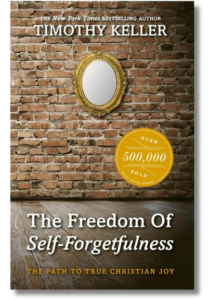 Imagine a life where you don’t feel inadequate, easily offended, desperate to prove yourself, or endlessly preoccupied with how you look to others. Imagine relishing, not resenting, the success of others. Living this way isn’t far-fetched. It’s actually guaranteed to believers, as they learn to receive God’s approval, rather than striving to earn it.
In Tim Keller’s short ebook, The Freedom of Self-Forgetfulness: The Path To True Christian Joy, he explains how to overcome the toxic tendencies of our age一not by diluting biblical truth or denying our differences一but by rooting our identity in Christ.
TGC is offering this Keller resource for free, so you can discover the “blessed rest” that only self-forgetfulness brings.
Brett McCracken is a senior editor and director of communications at The Gospel Coalition. He is the author of The Wisdom of Sleep: How Rest Reveals God’s Truth and Revives Weary Souls, The Wisdom Pyramid: Feeding Your Soul in a Post-Truth World, Uncomfortable: The Awkward and Essential Challenge of Christian Community and several other books. Brett and his wife, Kira, live in Santa Ana, California, with their four children. They belong to Southlands Santa Ana. You can follow him on X, Instagram, or his website.