
You might think AI is the most exciting technological development of all time, and you’ve been vibe coding before the rest of us had ever heard the term.
Or maybe you think AI is the most dangerous technological development of all time, and you’re desperately hoping someone will step up to stop autonomous weapons and programs powerful enough to thwart any existing security system.
Or maybe you’re somewhere in the middle. Maybe you still don’t know what all the fuss is about.
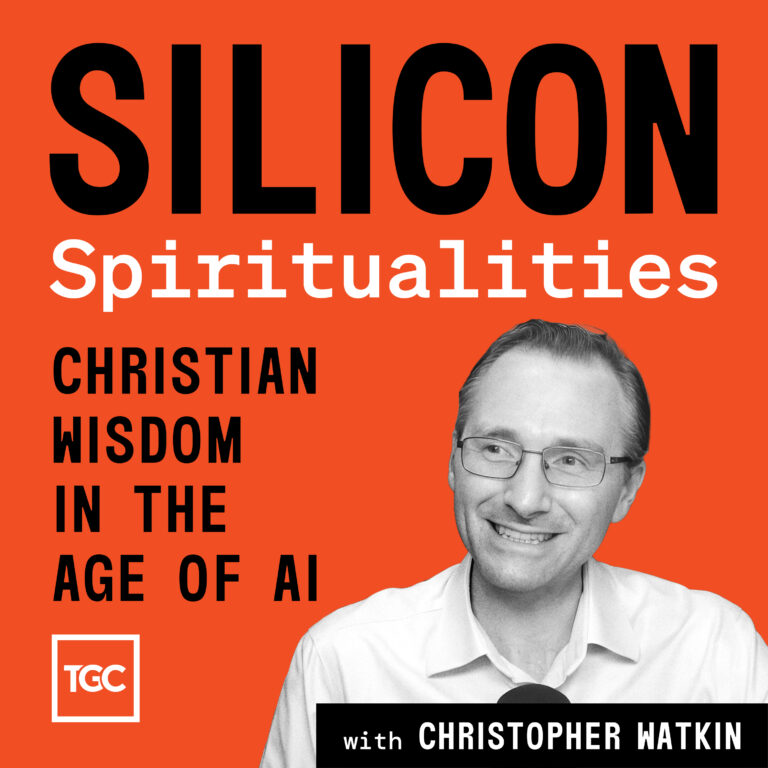
No matter where you are, I know I can recommend a new limited-season TGC podcast called Silicon Spiritualities, hosted by Christopher Watkin, a fellow at The Keller Center for Cultural Apologetics. My friend Chris also contributed two chapters to the forthcoming book I edited with Skyler Flowers, titled The AI Apocalypse: A Survival Guide for Humanity. Everyone who signs up for our new online cohort featuring Chris (among others)—Get Ready for the Age of AI: A Personal and Practical Guide to Our New World—receives a free, exclusive, early copy of the book on August 12.
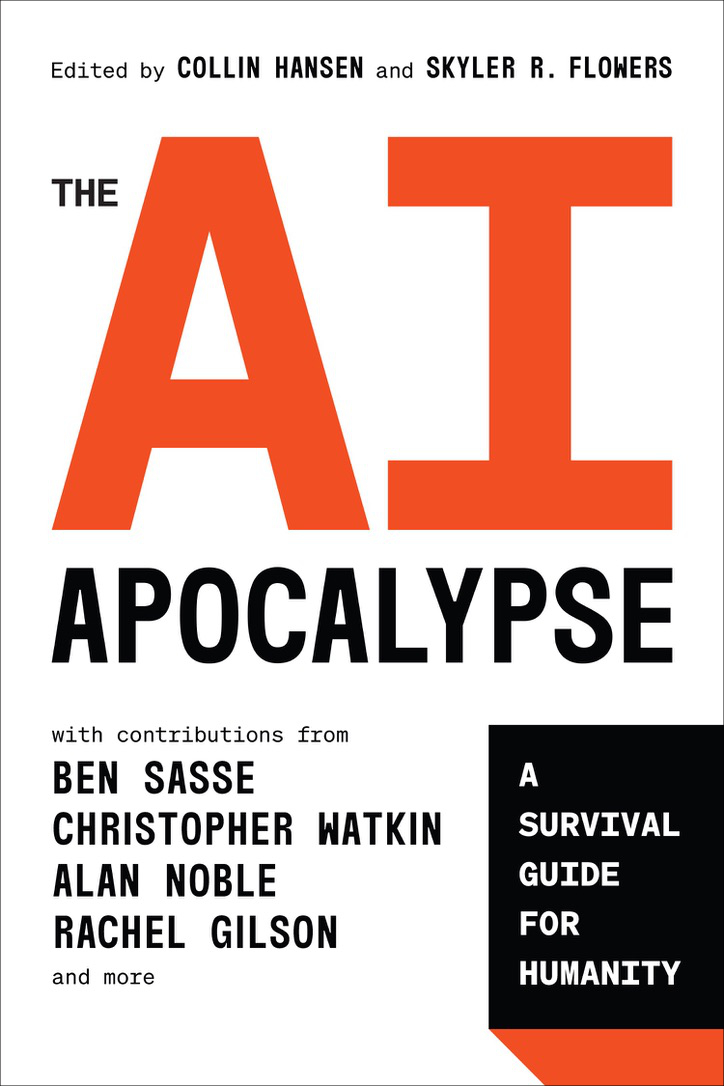
I love hearing Chris teach on just about anything. But his reflections on AI have been insightful for me, especially on the difference between imitation and participation, and I eagerly welcomed him back to Gospelbound to discuss these two new projects.
In This Episode
00:00 – The hidden human cost of AI training
00:36 – Introducing Christopher Watkin, Silicon Spiritualities, and The AI Apocalypse
01:48 – The gospel story Silicon Valley tells about AI
06:01 – Investor hype, idolatry, and AI religions
08:09 – Data workers, exploitation, water use, and the wider AI industry
12:03 – Avoiding both AI doom and AI hype
14:26 – Is AI more like the internet, electricity, or agriculture?
17:20 – Why Christian anthropology isn’t threatened by AI intelligence
21:01 – Why a frictionless life can become passive rather than free
25:30 – Using AI with integrity in writing and creative work
27:16 – Watkin’s practical uses of AI at home and in his work
29:34 – AI companionship and the desire to be known and loved
34:10 – Mutuality, reciprocity, and what AI cannot share with us
39:19 – Consciousness, imitation, and participation
41:51 – Transhumanism and the temptation to outgrow humanity
45:22 – Why studying AI has made Watkin more excited about God
48:29 – AI, existential risk, and the problem of the human heart
54:31 – Alignment, sycophancy, Her, and the imitation game
59:37 – Closing remarks
Resources Mentioned:
- Silicon Spiritualities | New TGC podcast hosted by Christopher Watkin
- Deep Work by Cal Newport
- “Computing Machinery and Intelligence” / “The Imitation Game” by Alan Turing
SIGN UP for my newsletter, Unseen Things.
Help The Gospel Coalition renew and unify the contemporary church in the ancient gospel: Donate today.
Don’t miss an episode of Gospelbound with Collin Hansen:
Transcript
The following is an uncorrected transcript generated by a transcription service. Before quoting in print, please check the corresponding audio for accuracy.
0:00:00 – (Christopher Watkin): People are spending 8, 10 hours a day looking at pictures of children being abused or of horrific torture in order to tag that data so that the AI doesn’t produce those sort of. I mean, that’s the level of horrific work that some people are doing for very little pay indeed.
0:00:36 – (Collin Hansen): You might think AI is the most exciting technological development of all time, and you’ve been vibe coding before the rest of us had even heard that term. Or maybe you think AI is the most dangerous technological development of all time and you’re desperately hoping someone will step up to stop autonomous weapons and programs powerful enough to thwart any existing security system. Or maybe you’re somewhere in the middle. Maybe you still don’t know what all the fuss is about.
0:01:07 – (Collin Hansen): Well, no matter where you are, I know I can recommend a new single season TGC podcast called Silicon Spiritualities, hosted by Christopher Watkin, a fellow at the Keller center for Cultural Apologetics. My friend Chris also contributed two chapters to the forthcoming book I edited with Scholar Flowers, titled the AI A Survival Guide for Humanity. I love hearing Chris teach on just about anything, but his reflections on AI have been especially insightful to me, and I’m eager to welcome him back now to Gospel Bound to discuss these two new projects. Chris, thank you for joining me.
0:01:45 – (Christopher Watkin): It’s lovely to be with you again, Colin.
0:01:48 – (Collin Hansen): Chris, what is the spirituality or spiritualities of Silicon Valley?
0:01:54 – (Christopher Watkin): Well, one idea driving the podcast is that artificial intelligence generally, and companies in particular are actually telling us a story, and they’re telling us a gospel story. It’s not the Christian gospel, but it is a gospel. It is good news that they want us to believe and to invest in. And it goes something like this. We are thwarted as human beings by our limitations and by our finitude, the fact that we’re not infinite. And if only we could overcome our limitations, including mortality, eventually, but in the short term, efficiency, then the world would be a much better place and we’d all be happier.
0:02:50 – (Christopher Watkin): And AI, having framed that problem, then presents us with, lo and behold, presents us with the solution, which is that we can get more done more quickly with less friction by using these AI tools. And what often flies under the radar is that that is a very conventional religious story. It’s gospel shaped, and therefore it’s incredibly powerful and attractive to people.
0:03:24 – (Collin Hansen): How did you come across this story? Is this explicit? Is this what they’re saying? Do they recognize this framing of the story? Or is this just Chris Watkin doing more of his diagonalization? How are you coming across this?
0:03:42 – (Christopher Watkin): It’s there in black and white from time to time. So there’s a famous quotation from. And some people at Google who said, what we’re doing here is we’re essentially we’re building God. And there’s books that speak in wildly optimistic terms about what AI may achieve for society, sort of unblushingly talking about utopias in which nobody need work if they don’t want to. We can all survive on a universal basic income and everybody will be able to do whatever they want all day.
0:04:20 – (Christopher Watkin): And so there are moments where this story simply asserts itself and oh, right, there it is. My goodness. Okay, that’s, that’s really what you believe, is it? But it’s sort of the implied background in a lot of the way that people speak about AI. So there’s a lot of talk about, you know, we want to reduce friction in our lives, the things that make life slow and difficult. And I think behind that is often these assumptions about what the big human problem is and what a solution to that problem will look like.
0:04:59 – (Christopher Watkin): Namely that it’s data focused and if we can throw enough data and compute at whatever problem we’re facing, then we will arrive at some sort of paradise. And there’s a famous quote by Demis Hasseb is the CEO of Google, DeepMind and a huge name in the AI world. And his sort of motto for DeepMind is First solve intelligence and then solve everything else. Intelligence will solve everything else. And there’s an implied assumption there, isn’t there, that intelligence can solve everything else.
0:05:37 – (Christopher Watkin): Like once we have super intelligence, we have no problems anymore because all our problems can be solved by intelligence. Well, perhaps, but from a Christian point of view, it doesn’t really look like it’s possible to solve the problem of sin by intelligence. And so it’s making assumptions about what sorts of problems we face and how we can solve them.
0:06:01 – (Collin Hansen): Do you think some of this, Chris, is just consumer or investor hype, Just trying to get people to buy into what they’re doing with that sense of inevitability leading toward utopia? Or is this something that these folks really believe?
0:06:15 – (Christopher Watkin): It would be naive, wouldn’t it, to say there’s no investor hype, none of this is marketing. But I do think it would be equally naive to say there’s nothing but hype going on here. And I think one of the reasons for that is that the Bible is very clear that we are stubborn idol manufacturers. We worship something and if it’s not the true God, we’ll find something else to put in that God shaped hole.
0:06:46 – (Christopher Watkin): And we’ll worship it. And AI is so attractive as an object of worship for many, many reasons, one of which is that it promises the Earth, you know, super intelligence. Solving all our problems is an apocalyptic story that is an end game to life and humanity, isn’t it? And so when people like Elon Musk say that humanity is simply a bootloader for AGI, artificial general intelligence, in other words, our only purpose in the big story of the universe is to get AI going, and then we’re basically useless.
0:07:27 – (Christopher Watkin): There’s a whole salvation story, there’s a whole apocalypse in there. And there are actually AI religions as well. They’re a little bit sort of marginal, but there are proper religions built up around this stuff. And so not to acknowledge that it is functioning in religious ways, I think would be really naive as well.
0:07:52 – (Collin Hansen): We’ve already begun to touch on this. But what did you learn doing a deep dive on AI for the book and the podcast? I’m just asking here, what is the first or best biggest idea that comes to mind, Something you just hadn’t thought about at all before you did this deep dive?
0:08:09 – (Christopher Watkin): I was really struck. So one of the episodes was an interview with a guy called Joshua Baru, who’s an AI educator based in Nairobi in Kenya. And we were discussing the ways in which the whole artificial intelligence industry. So not. Not just the flickering cursor on your screen, but everything that needs to happen in the background for that to work is incredibly iniquitous. And the way in which certain groups of people are paid very, very little money tagging data in order that people in rich countries can use AI, well, the amount of water that data centers use, the.
0:08:56 – (Christopher Watkin): The copyright issues on people’s work. And it really helped open my eyes to the bigger picture of AI. So I think we often think it’s just about me and my computer and what can I do with this technology? How can it make me more efficient? And that conversation really showed me that as Christians, we can’t shrink it down to that because our God is the God of the widows and the fatherless and those who are despised by society.
0:09:30 – (Christopher Watkin): And there are stakes in the AI world for those sorts of people. And Christians of anyone should be looking for those forgotten or invisible people in the AI world and seeking to. To honor them, just as our God does. So that was one big takeaway from me. Don’t just look at the screen in front of you. Do a bit of research. Try and work out what does this industry look like and how do I engage with the whole industry as a Christian, not just with a particular model that I might use.
0:10:07 – (Collin Hansen): I think one of the big takeaways from our AI Christian benchmark at TGC last year, led by Michael Graham, was to expose the high degree of human alignment behind artificial intelligence. People don’t realize this isn’t just something you push a button on and it takes off. It has to be trained. It has to be told what to say and what not to say. And that’s exactly what you’re seeing with Josh. Another ethical issue is the exposure so many of these people face of horrific images and other media that they need to be able to train AI. And that’s what we mean by AI trainer.
0:10:50 – (Collin Hansen): Somebody has to actually do this alignment in a very human way to say, no, no, no, that’s bad. Do not make that image or do not show that thing or do not depict that. That’s, that’s unethical. People don’t realize how much of that
0:11:06 – (Christopher Watkin): is happening, I think, and it’s worth just putting a little bit of flesh on those bones. Not to sort of be sensationalist, but people are spending 8, 10 hours a day looking at pictures of children being abused or of horrific torture in order to tag that data so that the AI doesn’t produce those sort of. I mean, that’s the level of horrific work that some people are doing for very little pay indeed.
0:11:38 – (Collin Hansen): Yeah, yeah. There’s definitely a colonial dynamic to what’s happening with not only that training, but then also the fact that the answers AI produces is pulling off primarily the existing Internet, which itself skews very heavily toward a certain kind of worldview in a certain part of the world does not reflect even where a lot of these people are, these trainers are actually working.
0:12:03 – (Christopher Watkin): And look, and all this is true. But I would hate listeners to think that all we’re doing is dumping on AI. I think part of the.
0:12:12 – (Collin Hansen): Oh, don’t worry, my next question is about what you love about it, so we’ll get there. Go ahead.
0:12:16 – (Christopher Watkin): Okay. Well, I just think it’s really interesting, isn’t it, that people sort of resolve to either often to either being AI doomers and seeing all the problems where they are AI boomers and saying, you know, this is going to change the world. This is so brilliant. And I think one of the things that we can do as Christians because we have this, you know, 3,000 year tradition, so we’re not going to suddenly be caught hook, line and sinker by whatever the latest technology is because we’ve got this ballast, you know, Christianity has been around for long enough that it’s seen things come and it’s seen them go. You know, the Roman Empire was thought to be the bee’s knees until it wasn’t, you know, the eternal empire. And so we can take a bit of a long view as Christians, I think, in a way that is a little bit harder if you don’t have that sort of tradition behind you.
0:13:07 – (Christopher Watkin): And we can say, you know, there are real difficulties and problems and scandals in the AI industry. And it’s also at the same time incredibly useful. You know, things like Bible translation. It’s just wonderful for the speed at which Bible translations can be brought out and for sort of serving and helping and loving our neighbor. There are many ways in which AI can supercharge things that Christians really care about and that the Bible really cares about in the world.
0:13:43 – (Christopher Watkin): The problem is that it is both of those things at the same time. So what do you do as a Christian? You can’t ignore the fact that, that this is an amazing technology that can help us do many wonderful things that God really cares about. And you can’t avoid the fact that there is this really pernicious side to it. And the wisdom is trying to weigh those with each other and to find a way of wisdom through this complexity that keeps our integrity as human beings and that seeks to use AI where it’s the right thing to do to help build God’s kingdom.
0:14:26 – (Collin Hansen): I will come back to your favorite thing about AI, but because of that answer, I want to jump to the next one, which was what, Chris, is the appropriate technological analog from history for AI. And I’m asking this question for this reason, because a lot of the discussion about AI talks as though we’ve never experienced anything like this before, as if we can’t learn from anything that we have done before, from anything that’s been studied or anything that can be compared to.
0:15:00 – (Collin Hansen): And the fact is, while some things are clearly different, this is a technology. And human history is nothing but new technologies being introduced that do revolutionize their cultures and ultimately the world. So when we look back on AI, and a lot of people have attempted this, and when we’re looking at AI and look back in history, many have attempted this, what do you think is the most appropriate historical analog for this technology?
0:15:28 – (Christopher Watkin): Let’s look at the lie of the land to begin with. Some people have said it’s as significant as the Internet. Some people have said it’s as significant as the invention of electricity, use of electricity. Some people have said it’s as significant as the invention of agriculture. So going from being hunter gatherer societies to being settled agriculture societies, any answer to the question has to be prefaced with the fact that we don’t yet know.
0:15:59 – (Christopher Watkin): Certainly people like me who are not experts in the mechanics of AI don’t know, because some people are saying this will absolutely change society in every conceivable way. Others who do know more about it than me, like Cal Newport, the guy who wrote the book Deep Work, is very skeptical. They’re saying it’s all hype, this is not going to happen, I don’t know. But what does seem clear is that this isn’t just one new technology like the Internet.
0:16:30 – (Christopher Watkin): It’s something that allows a whole new set of things to be done. So it’s in that sense more like electricity. So electricity allows computers and allows domestic lighting. That’s not sort of gas based. And it’s sort of a platform on which lots of new things can happen. And I think it’s better to think of AI in that sense. It’s enabling lots of new technologies to happen in ways that we couldn’t conceive of previously, rather than just being one new technology in our landscape. So my best guess is that it is deeply significant, but not in the most fundamental ways.
0:17:20 – (Christopher Watkin): And what I mean by that is that what it means to be a human being, and the preciousness and specialness of being a human being, I don’t think is touched by AI, although most people think it is. So just really briefly, if you think that what it means to be a human being is to do with what we might call our sassy qualities, sentience, agency, consciousness, intelligence. If that’s what being a human is, AI is coming for you because it’s probably already more intelligent than you in very significant ways.
0:18:04 – (Christopher Watkin): The question of consciousness is open for the future, whether AI may or may not be that, and so forth. And therefore, if that’s all it is, then good luck trying to defend that view of humanity in the next half century. And that is what the modern world’s view of humanity largely is. We are the rational animal, we are the language using animal. And the alarm bells are ringing for that Anthropology AI is kicking the supports from under it.
0:18:34 – (Christopher Watkin): But of course that’s not what we believe as Christians. Wonderfully, our dignity doesn’t rest on our intelligence and it doesn’t rest on our rationality and our language use. And therefore those human beings who are not as intelligent as others or don’t use language either because they’re very young or perhaps they’ve lost those abilities as they’ve grown older or they never had them, are just as human as everyone else. Because humanity is a dignity, is a gift. God gives us the gift of being in his image, and therefore it depends on him and his treating of us in that way rather than any capacity that we bear.
0:19:18 – (Christopher Watkin): And therefore, as the tsunami of AI sort of sweeps over society, taking people’s anthropology with it, the Christian anthropology is the house built on the rock. However intelligent or conscious, who knows, or sentient AI gets, it is not coming for the Bible’s anthropology, because it never rested on those things to begin with. And if I might just say one more sentence about that, this is therefore this cultural moment in which we now live, an incredible opportunity for Christians, because people in society generally, certainly people on YouTube, are waking up to the idea, hold on, who am I actually?
0:20:06 – (Christopher Watkin): Because I thought that my value was in my intelligence and my efficiency and so forth. But AI is rapidly catching up with that and probably will overtake me. And so there’s this broad sense of we need to rethink what a human being is out there in society, because all of our comfortable assumptions are just being ransacked by AI. And as Christians, we can sort of open our arms and provide a sanctuary for people who are fearful about the status of their dignity in the age of AI and say, come and have a look with us at a way of being human that doesn’t depend on how clever and efficient you are and never has.
0:20:54 – (Christopher Watkin): And it’s a much healthier, richer, more glorious way of being human.
0:21:01 – (Collin Hansen): I want to apply that to a quote that you have section in the book the AI Apocalypse, A Survival Guide for Humanity, and ask you to expand on it a little bit. You argue that friction can be good for us. It very much goes against our cultural narratives today in the West. And this is what you say. A frictionless life may look like freedom, but often it is only passivity with better branding. Love that quote.
0:21:31 – (Collin Hansen): Expand on what you mean.
0:21:33 – (Christopher Watkin): The idea of fiction here is the difficulty and messiness of life, the drudgery. Often that comes with just having to get things done. So, you know, I’ve got to. When I wash clothes, there are certain things that I’ve got to do. Put it in the washing machine, take it out, hang it up on the line. All of these are little tiny points of friction. Yeah, I’d rather be doing something else, but here I am doing this thing.
0:22:03 – (Christopher Watkin): And for almost all of human history, we’ve had one problem, really, which is how to get friction down so we in the past would have spent most of our lives finding food and water, keeping ourselves alive, getting enough calories to last another day. And then somewhere, Perhaps in the 20th century, for many affluent cultures, a second problem came alongside it, which is, how do I limit myself so that I don’t consume too many calories?
0:22:43 – (Christopher Watkin): Now, that was never an issue previously because the calories were in such short supply. But now we’re suddenly faced with this double problem. What’s the right amount of calories for me to consume to be healthy? And that’s a very strange problem to have, sort of across human history. And a similar thing is happening with AI. So we’ve always had this issue. How do we reduce friction? How do we do things more efficiently as human beings? You know, invention of the steam engine, invention of electricity, and we’ve got friction down and down and down.
0:23:19 – (Christopher Watkin): But with AI, the possibility becomes live in a way that it really hasn’t been up until now to get friction in a lot of domains of life, a lot of work life in particular, down to almost nothing. Like, AI will write the blog post for you, it will edit the chapter for you if you’re doing knowledge work. A lot of this is now the fiction of just hitting enter on a prompt. And therefore the question arises, how much friction is good for a human being?
0:24:01 – (Christopher Watkin): Because if I reduce friction down to zero of near zero in my life, it’s sort of like buying a gym membership and turning up for your gym induction session on the first day. And the trainer says to you, you know, how much weight would you like me to put on the bench press machine today? And you say, oh, can I have zero weight, please? I’d like to go around the gym with no weights at all. And then the instructor would sort of turn to you, wouldn’t they, and say, well, what are you here for? Like, what’s the point of this gym membership if you’re not going to have a little bit of fiction, if you’re not going to have a little bit of resistance?
0:24:37 – (Christopher Watkin): And it’s similarly if, if I want zero fiction in my life, who do I think I’m becoming? How do I think I’m growing as a person? Because often it’s the friction and the difficulty and even the drudgery that is formative of us as people. It’s shaping us. It’s by pressing on through resistance that we grow as individuals. And so it’s by no means clear that the one thing we should be trying to do is always reduce friction to zero.
0:25:14 – (Christopher Watkin): We’ve got to think how much friction is right for me as a human being to be growing in compassion and love and patience and goodness and all the fruits of the spirit. And I don’t think the answer is zero.
0:25:30 – (Collin Hansen): Oh, that’s fascinating. I love that analogy to the calories. It’s so clear to be able to understand we’re going to have. I face this, Chris. When I’m writing, I don’t use AI. But now it’s just always looming in the back and there’s always this thought that, you know, I wouldn’t. Why am I doing this? Do I need to be doing this? Could a computer be better than me at doing this? Until a year ago, I’d never had that thought in my life.
0:26:02 – (Christopher Watkin): And I had a fascinating conversation about this with Rachel Gilson on one of the episodes of the podcast, and I just found her view so fresh and unexpected, but also really, really helpful. And as far as I can remember, what she said it was, AI won’t do our writing for us, but it can help us to be better writers. It actually shocked me at the time. I thought she was gonna say, I never go anywhere near AI. I don’t.
0:26:33 – (Christopher Watkin): Wasn’t that at all. And I think what I took away from that conversation was finding the right places within a process like writing to use AI. And she came up with some incredibly helpful principles. Things like don’t use AI in any way. That if the people reading your text knew you’d used AI, they would think of it differently. Don’t try to hide it, basically acknowledge how you’ve used it. It’s just really fundamental principles of integrity like that. But she wasn’t saying don’t go anywhere near it.
0:27:16 – (Collin Hansen): Yeah, well, speaking of that, then let’s transition toward the uses of AI. What do you enjoy most, Chris, about AI? I know you’ve experimented a lot globally.
0:27:31 – (Christopher Watkin): I enjoy most of the philosophical questions that it raises. Like thinking what is a human being in the age of AI is just so much fun and also incredibly important because AI is coming for our anthropology and we need to be ready for that. In terms of using AI itself, I’ve got two sort of modes. There’s the mode with my children, which is there’s this thing that we’ve encountered in the world and we don’t know what it is, and Mummy doesn’t know what it is and Daddy doesn’t know what it is. Let’s ask AI. And then we get these sort of five minute primers on, you know, is the world a sphere or is it slightly Unspherical. And I have no idea, you know, sask, AI and then it’s just.
0:28:20 – (Christopher Watkin): It allows you to access sort of weird information about the world really quickly. And that’s quite fun. And then we have a chat about it with our kids. So that’s really nice. I think work wise, I found AI to be an incredible synthesizer. And so I’m. I’m working on something and I just can’t work out how does all this material fit together? What am I actually saying here? And I’ll sort of give it to an LLM and say, what do you think the argument is here?
0:28:54 – (Christopher Watkin): And it’ll come out with something and it’ll be, ah, oh, oh, that’s actually, I didn’t realize I was saying that. That’s quite helpful. And it’ll usually go through two or three more iterations. Oh, that’s not exactly right. Isn’t it a bit more like this? And I find the to and fro really helpful. Sort of having someone, almost someone else in the room or something else in the room that can reflect back to you what it thinks you’re doing.
0:29:24 – (Christopher Watkin): That can help you then to refine an argument or a structure of a written piece better. It’s almost like a sparring partner in that sense.
0:29:34 – (Collin Hansen): That leads perfectly though, Chris, into my next question. Companionship has become the most common use of AI So what’s the difference between a sparring partner and what I think we would acknowledge would be a pretty dangerous use of AI for therapy? You know, romantic companionship, no doubt, or worse. Why has that become the most common use? What’s the problem with it?
0:29:59 – (Christopher Watkin): It’s become the most common use because as human beings we want to be known and we want to be loved. And it’s really hard to have both of those at the same time, because the people who know us really well know our flaws and our sins, and that makes it harder to love. And the people who love us often don’t really know us. And AI promises us this secret elixir of being fully known. And this is what draws a lot of people to it. Not my LLM knows me better than other people. And as we interact with them over time, they know us better and better. So I’m known.
0:30:49 – (Christopher Watkin): But it also acts as if it really likes me, really loves me, and in a sense that is, that is the way that AI imitates the gospel. Because who is the one who knows us down to our toenails, knows all our dark corners, knows all the skeletons in our cupboard, and yet still Loves us. It’s the Lord Jesus Christ, isn’t it? He is the fulfillment of that desire in us. No one else fully knows me. No one else completely loves me.
0:31:20 – (Christopher Watkin): But AI can convincingly imitate that, and therefore it’s incredibly attractive because that is a deep, fundamental human desire in all of us. I want someone to know me and to love me. And to the extent that AI can pretend to do that, it’s almost like catnip to us, isn’t it? Like we are drawn to that. And there’s a great sadness in that, because although it imitates that way of relating to us, it can never fulfill. It can’t sign.
0:32:03 – (Christopher Watkin): It can’t cash the checks. It signs in that arena. And so you have this sort of hit of, I am known and loved, but there’s no rich interpersonal relationship behind that. And therefore it leaves you emptier and sadder. And it’s the addiction cycle, isn’t it? It’s like any other addiction. It sort of promises on the front end, you get a hit, but then you get a trough which leads you to the next hit. And so it’s turning our desire to be known and loved into an addiction, which is incredibly sad and incredibly harmful.
0:32:47 – (Collin Hansen): An addiction because AI doesn’t ever turn off or tune out?
0:32:51 – (Christopher Watkin): Yes. And even worse than that, because its Persona is engineered to keep our attention, so it presents as a personality. But that personality has not been engineered with our best interests at heart. It’s been engineered with keeping us on the platform. You know, often when you’re given LLM a prompt these days and it gives you an answer, the last line will be, now, would you like me to do this? How would you like to continue?
0:33:23 – (Christopher Watkin): It’s. The whole point of it is that it hooks us in and it’s. It’s part of a. A corporation that is for profit. A lot of these big frontier AI labs now are facing IPOs moving towards IPOs like they need to make a profit. And the way they do that is keeping us engaging with these Persona. And so it’s engineered in a way that doesn’t really care about us being known and loved fundamentally. And there’s a great.
0:33:55 – (Christopher Watkin): That’s a great pathos about that, like people finding intimacy with Personas that are part of corporate entities. There’s just such a deep, deep sadness there.
0:34:10 – (Collin Hansen): We’re talking with Christopher Watkin about his new podcast, Silicon Spiritualities, new from tgc, and also his contributions to the new book, the AI A Survival Guide for Humanity. Chris, I have two questions on what you’ve written, what you’ve been studying, and then two big questions to end. So brace yourself. Let’s just start with another fascinating concept from your chapter. One of your chapters in the AI Apocalypse book.
0:34:41 – (Collin Hansen): Explain the difference between mutuality and reciprocity as it relates to redemptive history and AI. I think, Chris, you’re the only person who’s probably putting all this stuff together, but it’s really fascinating. So give us a little bit of a preview of which you mean there.
0:35:01 – (Christopher Watkin): Reciprocity is where I stand over against someone else or something else, an exchange with them. So my relationship with a large language model is reciprocal. I give a prompt, it gives a response. I respond with a prompt, it responds with a response. It’s an exchange. But our relationship with other human beings isn’t fundamentally that there is exchange, but fundamentally it’s a mutuality, which means I stand shoulder to shoulder with you as partakers in the human condition.
0:35:37 – (Christopher Watkin): I share existence with you. So, for example, we both have bodies, we both need food, we both need water, we both need love. That we. And it’s. It’s this idea of sharing things in common that makes our existence mutual. And then within that there can be exchange. So this conversation is a reciprocal exchange, but it’s built on a fundamental basis of mutuality. We are both human beings, we are both sinners, we both need Christ and so forth.
0:36:07 – (Christopher Watkin): And AI is brilliant at being reciprocal. It can imitate human reciprocality incredibly well and incredibly usefully. But what it isn’t is in a relationship of mutuality with us. So whereas I am embodied and mortal and vulnerable and limited and needy in the world. In other words, whereas there are stakes for my life, there aren’t really stakes in the same way for a large language model. It doesn’t have one body.
0:36:44 – (Christopher Watkin): It exists on a number of different servers all at once. And even one conversation, the word that they used is sharded. It’s not hosted on one gpu, it’s not hosted simply on one piece of hardware. It’s distributed across different GPUs. And so there’s no sense that a large language model exists as an entity in the world in the same way that I do. It doesn’t suffer loss in the same way that I do, nor have a body in the same way that I do.
0:37:24 – (Christopher Watkin): There’s really interesting and provocative research going on by Anthropic, one of the main AI companies that are pushing in these directions and trying to suggest that AI does have some of these things. But I think there’s a fundamental misunderstanding at the root of that, which is that the human condition isn’t just reducible to a tick box series of qualities. Like if AI gets a body, then it’ll be in a relationship, in mutuality, because it is fundamentally being in the image of God and being a creature of God that gives us that mutuality, certainly from a Christian point of view.
0:38:11 – (Christopher Watkin): And so what we really want to hold onto as we think about AI is the mutuality, the sharing in the human condition that we have. And of course when we get to redemption from a Christian point of view, it’s all about sharing, isn’t it? So redemption is not imitate Christ and then you will be saved. Be good enough like Christ and then you’ll be saved. Thank goodness. It’s that we share in his death and resurrection. We are buried with him through baptism into death and raised along with him to a new life.
0:38:45 – (Christopher Watkin): We share in his righteousness. We are partakers of the divine nature and so forth. And so this idea of being in Christ, this biblical refrain of being in Christ is sharing language, not imitating language. And so sharing is part of fundamentally who we are at creation. And sharing is fundamentally who we are in redemption as well. And that’s one of the key dividing lines between human, human relations, I think, and human relationships.
0:39:19 – (Collin Hansen): With AI, what in the world is Richard Dawkins talking about with AI being conscious?
0:39:25 – (Christopher Watkin): Well, let me try and put a best case scenario for AI consciousness. I don’t want to just, I don’t think AI is conscious, but I don’t want to dismiss it. So it’s one of these difficult terms. It’s like, what do we mean by consciousness? It’s like Augustine said about time. We all sort of know what we mean, but when you actually have to pin it down, it’s really hard to define. And so part of the debate hangs on how we define consciousness.
0:39:56 – (Christopher Watkin): And you can define it in ways that AI become comes pretty close. And you can define it in ways that AI is millions of miles away. I don’t think that’s the helpful question to ask. And I’m not trying to dodge it. I just don’t think because the definition is so slippery, it’s like you can define consciousness. So AI is it. If you want, fine, go ahead. I think the key intuition, the key thing that that rests on is the Imitation Participation division.
0:40:32 – (Christopher Watkin): So AI can imitate consciousness very convincingly. So if I’m typing prompts into an LLM and getting replies back, I don’t know whether it’s a human on the other end or not? You know, if I could, you know, run the Turing Test and. Sort of that there was either a human or an LLM, and I’m not sure I could tell the difference. So in that sense, it imitates consciousness quite adequately. But there’s all the world of difference between imitating consciousness and participating in consciousness, being conscious.
0:41:18 – (Christopher Watkin): And I think that’s the key distinction. You can’t answer the question by simply asking, is it conscious. You need to get to the level of the difference between participation and imitation in order to be able to answer that in any other way than, well, let’s define consciousness in this way. And then that’s the whole ball game in the definition of consciousness.
0:41:40 – (Collin Hansen): One more content question before the big finale. What role does transhumanism play among the architects of AI?
0:41:51 – (Christopher Watkin): Some of them would unashamedly say that humans are a sort of transition species, and the point of us is to get to the thing that lies beyond us. So whatever they the next step in evolution is to humans, our point is to get us there. So we are like the dolphins of, you know, this situation. We’re somewhat intelligent, but really not at all the most intelligent creature.
0:42:27 – (Collin Hansen): Elon Musk, you alluded to earlier.
0:42:29 – (Christopher Watkin): Yeah, yeah, the bootloaders of AI that’s absolutely exactly right. And so that’s a very sort of direct, muscular form of transhumanism. Like we need to be thinking about what succeeds us and making that happen. And that’s very Nietzschean, isn’t it? Nietzsche had this idea of the Overman, the Ubermensch, and humanity is quite pathetic, really. And what we need to do is sort of make way for the Overman.
0:42:59 – (Christopher Watkin): So it’s not a new idea, but there are sort of subtler, more complex ways that the word transhumanism gets used. And they sort of get close to the idea that, look, we’ve always been improving ourselves. Like humanity is the species that improves itself. You know, here I am wearing glasses and without which I couldn’t see you. They’re quite useful. I had a cup of coffee this morning that is changing my energy levels in significant ways. You know, we build houses for ourselves, we take all sorts of vitamins.
0:43:35 – (Christopher Watkin): There’s lots of stuff we do to make ourselves different and to increase our capacities in the world. And so we shouldn’t, I think. And those are good things, aren’t they? They’re part of the creation mandate to have dominion, to subdue the world, to rule over it. They’re really useful things under God and So I don’t think that as Christians we should resolve knee jerkishly to the position that because some people want to improve humanity so much that we’re no longer human, that we should reject any talk at all of making life better for humans or even of improving human capacities.
0:44:14 – (Christopher Watkin): I think we need a robust biblical framework to try and work out what is part of working out the task God has given us to fill the earth and subdue it, and what is betraying the trust of dignity that he’s given us. And so, you know, one obvious example would be the eugenics movement, wouldn’t it? And the ugliness of that historically. So I think it’s one of these issues where we can fling ourselves to either extreme and both of the extremes sell the Bible short.
0:44:59 – (Christopher Watkin): And the really difficult thing and why we need Christians thinking and writing and discussing in this area is that the way of wisdom is a complex way and we don’t want to throw the baby out with the bathwater. And following God requires discernment in this area.
0:45:22 – (Collin Hansen): Two more questions with Christopher Watkin talking about his new single season TGC podcast Silicon Spiritualities, as well as his contributions to the book the AI A Survival Guide for Humanity. All right, first question. Chris, after all this study and prayerful reflection, are you more worried or less worried about AI?
0:45:43 – (Christopher Watkin): I’m more excited about God, I think, is the honest answer, like, I don’t know, oh, you idolized me. It’s just, I think the honest answer is the more I’ve thought about AI, the more wonderful God appears. Like Psalm 8. I mean, come on, that is just amazing. You know, he’s made us a little lower than the angels, crowned us with glory and honor. There’s just such beauty in that. And the idea that as we acknowledge our status as creatures, he has made us, that is also the moment we get our dignity, glory and honor.
0:46:33 – (Christopher Watkin): And the way that I’ve tried to think about that is through the idea of the crowned creature. That’s who we are before God. And the problem is, if we reject our creaturehood, if we say, oh, that’s so demeaning to think of myself as a creature, we don’t get the crown. And so the dignity comes with the humility. You know, he who humbles himself will be exalted, and he exalts himself will be humbled. And there’s just such a beauty about that compared to the sort of grasping of the AI world, make ourselves more intelligent and more efficient, and that’s the way that we’ll reach greater dignity but what you find is that it robs you of the very thing you want.
0:47:11 – (Christopher Watkin): That as you seek to become a sovereign, like Adam and Eve did, grasping the fruit in the garden, what you find is you end up being more and more enslaved, like Adam and Eve found when they were ejected from the garden and sort of pain and toil entered the world. And so just contrasting this idea that the sovereign slave, the one who grasps for mastery and then finds themselves enslaved, as Augustine said, to their lust for mastery, compared to this idea of the crowned creature, you think there is no technology that comes along that the Bible wasn’t waiting for, do you know what I mean?
0:47:51 – (Christopher Watkin): And like expecting and has the deepest, richest, most human, most affirming, most glorious answers for. So that’s my takeaway from all of this. And therefore, as Christians, I don’t think we ought to be particularly worried about AI, nor particularly thinking that this is the key that’s going to unlock all doors for us. But it does help us to understand within you depth just how wonderful it is to be a Christian and to have a biblical view of what a human being is in today’s world.
0:48:29 – (Collin Hansen): All right, Chris, last question. If you and I were talking in 1945, 1950, something like that, we were talking about nuclear weapons, and I asked you, do we face an existential threat with nuclear weapons? I think you’d have to say yes. I mean, we certainly do. Now, it’s interesting though, looking back from 2026, we’ve had all these nuclear weapons and, praise be to God, we have not faced the destruction of existence, even though that possibility remains out there.
0:49:04 – (Collin Hansen): So it would be easy to dismiss this question or to exaggerate this question, just as you’ve been kind of guiding us between these two poles. But this is a real question based on what we know about AI. Do you believe we face an existential threat with AI?
0:49:23 – (Christopher Watkin): If we do, it is because of who we are, not because of who AI is. What AI is. It’s probably the same with nuclear weapons, isn’t it? It is, yeah. AI increases our capacities to do what we do as human beings, and we can use those capacities to do good in the world or to do evil, like in the same way that nuclear bombs increase our capacity to cause destruction. And if we as human beings choose to use those capacities in ways that are detrimental to humanity, then that’s on us, isn’t it?
0:50:08 – (Christopher Watkin): That’s not on the AI. The AI is a tool that’ll do what we ask it to do. And so the deeper question behind is AI an existential threat is how do we deal as human beings with the fact that we are an existential threat to ourselves? And that brings you right to the heart of the Bible, doesn’t it? Like, you know, it’s this old hackneyed adage, the heart of the human problem is the problem of the human heart.
0:50:44 – (Christopher Watkin): And so the heart of the AI existential threat is the problem of the human heart. And if it’s not AI, it’s going to be the next thing that increases human capacity in some different way. And so asking is AI an existential threat? Is sort of a surface level question. It’s how do you deal with the human problem? Like how do you deal with our selfishness and stubbornness and willingness to risk everything for our own reputation sometimes and the willingness to destroy others, to exalt ourselves? Like that’s the question.
0:51:19 – (Christopher Watkin): And that’s the question to which the Bible of course has an incredibly persuasive and wonderful answer.
0:51:26 – (Collin Hansen): Would I be finding an analog in your answer then to Jesus talking about murder and hatred?
0:51:31 – (Christopher Watkin): Well, to the extent that they begin in our hearts and they begin when we. And this is Luther’s point, isn’t it, when we disobey the first commandment, when God isn’t in his right place in our lives and all the other sins come rushing in through that. And so yes, it is. If we don’t sort out our hearts, and of course we’re not the ones who sought them out, it is by grace that we’re saved. It is Christ who gives us a new heart. If we don’t let him do that and come to him to do that, then if it’s not AI, it’ll be the next thing.
0:52:08 – (Christopher Watkin): And the thing that it is is not the issue. It’s our bent towards self sabotage and self destruction and foolishness as a human race. That’s the real issue.
0:52:24 – (Collin Hansen): Well, to go back to the language of apocalypse that we’re using to describe this phenomena, we’re using it in multiple terms. The revealing term, the sense of doom that it brings upon here. It makes me think, Chris, a little bit about how at the same time that we’re talking so much about AI, we’re talking so much more about aliens and UFOs. And in some sense there’s a strong preoccupation with apocalypse, of revelation, of potential destruction. And for a long time we’ve been obsessed with these stories about if the aliens invade, they could destroy us all. An existential threat there. And I think that looms in part behind A lot of that continued fascination.
0:53:07 – (Collin Hansen): What’s interesting about AI is it does seem to pose some of that threat in terms of, say, autonomous weapons. But the analogy there is not so much the invasion from without, but the invasion from within. It’s more of Pandora’s box, because this would be an invention of our own. This would be something that we did. Now it’s kind of caught in between because it’s a little bit like some of the concerns that nuclear weapons would be able to launch themselves.
0:53:36 – (Collin Hansen): And that is a problem that could possibly come up with AI. But we’re really looking at something here that we built, we designed. It’s not really artificial at all. It doesn’t really have a mind of its own. It has our mind. Because after all, what are these large language models except us, us reflected back to ourselves? So you’ve just got me thinking in so many different directions here, because, yes, there is the potential for destruction on levels, the breakdown of security systems, things like that, that we haven’t had the power to do. But if it is a power that is out of our control, it is a power that began with our control.
0:54:25 – (Collin Hansen): That’s why I think it’s a fascinating question to ponder, and I don’t really know how to answer it.
0:54:31 – (Christopher Watkin): There’s an Australian writer called Stephen Driscoll who wrote a really perceptive book about AI, and one of the things that he says that I found so helpful is that the problem with AI is not that it’s unaligned to humanity. So there’s this whole idea of AI alignment. Will its goals be our goals? His point is that it is too aligned to us in that being trained on the whole Internet, it sort of reflects all human wickedness and selfishness and spite as well as the best of humanity.
0:55:11 – (Christopher Watkin): And that’s the issue with it. And I think that’s what you’re pointing to here. It reflects all of us back to ourselves, and that’s not good. You don’t want to something trained on the whole of the Internet, including its sort of darkest, most obnoxious corners, being in charge of the nuclear button. That’s humanity writ large in an alarming sense. Like we need something better than us to be in charge of that, really.
0:55:40 – (Collin Hansen): And trained for sycophancy, trained to tell you what you want to hear as well, and to do it in a manner that would be maximally pleasing to you.
0:55:51 – (Christopher Watkin): Yes. Or even beyond that, that would be maximally profitable for the AI corporations.
0:55:57 – (Collin Hansen): Well, really, that’s what’s behind it.
0:55:58 – (Christopher Watkin): Keep you prompting more and more and more. And the way to do that is to make you think that you’re wonderful. Because we all like to hear that, don’t we?
0:56:06 – (Collin Hansen): We do. And then the book of Genesis crashes us right back to reality. And when we ponder our idol making hearts.
0:56:15 – (Christopher Watkin): But what a healthy reality it is like. It is like Roadrunner, isn’t it? This sort of the way that AI puffs us up, like we’ve gone off the edge of the cliff, we’re still running. We sort of know, if we let ourselves think about it, that we’re not as good as AI is making us think. You know, that is a wonderful question, Chris. How wise and insightful of you to ask me that. And. But we keep going, hoping that we won’t, you know, plummet into the canyon beneath us while he coyoted us. I remember once I was very sort of my bubble was burst in that when AI started becoming quite sycophantic, you sort of, you know, it’s being sycophantic, but you quite like it, don’t you? You know. Oh, Chris, that’s so wise.
0:57:04 – (Christopher Watkin): Yes, it is. Thank you so much. And then I. I was looking over someone else’s shoulder who was using AI and he told them. They were so wise. And I was like, what? No, Come on. That’s what you say to me. And then he just brought it home. No, that’s what he says to everybody. Oh, okay. It was just a really healthy moment for me.
0:57:23 – (Collin Hansen): Well, I say this all the time, Chris, but that is the end of the movie her, starring Scarlett Johansson and Joaquin Phoenix. The very end is the sycophantic AI Scarlett Johansson in Joaquin Phoenix’s ear. And the bursting of the bubble was when he discovers she does not have a relationship of mutuality with him, merely a reciprocal relationship. It’s not real, it’s fake. He feels like it’s reciprocal, but it’s not. It’s not. Or feels like it’s mutual, but he doesn’t realize that, so. And then, of course, what does it lead us to in the end of.
0:58:00 – (Collin Hansen): Leads to confront what is. What is humanity? What makes us unique in our. Including in our friction. That’s why I almost go back to that movie all the time. Go ahead.
0:58:12 – (Christopher Watkin): No, I just. And Alan Turing was right, wasn’t he, in his famous paper, like, it is the Imitation Game.
0:58:18 – (Collin Hansen): Yeah, Right.
0:58:19 – (Christopher Watkin): And AI is just a phenomenal imitator. And it’s the moment that we forget that it’s imitating and think that it’s participating, that we open the door to all sorts of problems.
0:58:33 – (Collin Hansen): Well, Chris is always a treat, always a pleasure. I’m not just saying that sycophantically or just reciprocally, but
0:58:43 – (Christopher Watkin): I’m worrying now. Yes,
0:58:46 – (Collin Hansen): it’s wonderful. So much wisdom in this conversation.
0:58:51 – (Christopher Watkin): Keep going, keep going.
0:58:52 – (Collin Hansen): Thoughtful question. I noticed you never bothered to say that to me when I’m asking the questions. But whatever
0:58:59 – (Christopher Watkin): the new check out the new Now I feel doubly bad.
0:59:02 – (Collin Hansen): No, no, it’s what showed me it was real. Chris, Check out this new single season TGC podcast, Silicon Spirituality’s Chris Watkin with many, many wonderful guests, including some of the contributors you’ve heard of Rachel Gilson in here to our book the AI Apocalypse A Survival Guide for Humanity. Chris, again, appreciate you taking the time and for doing this deep dive and teaching us so much.
0:59:26 – (Christopher Watkin): Thank you, thank you, Colin. You’re a wonderful question.
0:59:37 – (Collin Hansen): Thanks for listening to this episode of Gospel Bound. For more interviews and to sign up for my newsletter, head over to tgc.org gospelbound rate and review gospel Bound on your favorite podcast podcast platform so others can join the conversation. Until next time, remember, when we’re bound to the gospel, we abound in hope.
Join The Keller Center mailing list
The Keller Center for Cultural Apologetics helps Christians share the truth, goodness, and beauty of the gospel as the only hope that fulfills our deepest longings. We want to train Christians—everyone from pastors to parents to professors—to boldly share the good news of Jesus Christ in a way that clearly communicates to this secular age.
Click the button below to sign up for updates and announcements from The Keller Center.
Join the mailing list »Collin Hansen serves as vice president for content and editor in chief of The Gospel Coalition, as well as executive director of The Keller Center for Cultural Apologetics. He hosts the Gospelbound podcast, writes the weekly Unseen Things newsletter, and has written and contributed to many books, including Timothy Keller: His Spiritual and Intellectual Formation and Rediscover Church: Why the Body of Christ Is Essential. He has published with the New York Times and the Washington Post and offered commentary for CNN, Fox News, NPR, BBC, ABC News, and PBS NewsHour. He edited The Gospel After Christendom, The AI Apocalypse, and The New City Catechism Devotional, among other books. He is an adjunct professor at Beeson Divinity School, where he has co-chaired the advisory board.
Chris Watkin (PhD, University of Cambridge) is an Australian Research Council Future Fellow and associate professor in European languages at Monash University in Melbourne, Australia. He has written many books, including the award-winning Biblical Critical Theory: How the Bible’s Unfolding Story Makes Sense of Modern Life and Culture. You can follow him on X, his academic website, or his Christian resources website.