



By God’s providence, I was able to watch most World Cup matches. I held a watch party at my house for the United States vs. Bosnia and Herzegovina contest. Even as I was on the road in the Middle East and Africa, it wasn’t hard to watch the games, whether on the plane (live on Starlink), in watch parties with fellow Christians in Cairo, in Nairobi, or on my way home with people from who-knows-where huddled around screens in the airport.
“One, holy, catholic, and apostolic church.” FIFA falls short of this by miles. Yet like the church, football (soccer) is universal. During the World Cup, we’ve seen an unbelievable outpouring of friendship. On numerous occasions this summer, I struck up conversations with strangers from any number of countries. We all spoke the same language: the names of individual players, the stats of national teams, and the history thus far in the tournament.
Common Cup
There was an unforgettable “liturgy” in the diverse venues where I watched the matches. It wasn’t just a screen but a sense of participating at a distance in a microcosm of the televised match.
The World Cup gave our summer—starved of genuine global friendship, companionship, and honorable competition—a slice of common grace. Not saving grace, to be sure, but a shadow of the reality that’s true in Christ.
We weren’t just entertained monads watching a movie as individuals. We were united in each match by the others in the room who shared—or, in a friendly way, opposed—our cheers. I even made Muslim friends during the tournament. It wasn’t something that would have happened spontaneously just by having a conversation but rather arose over a shared meal—a common Cup—as it were.
Like the true catholic church, the World Cup was exploited by the usually proscribed political interferences. But isn’t that the way with important communal events? Politicians are prone to derail the energy of larger, more important, and more widely persuasive events to make their statements and assert their self-importance.
Common Grace
I’m sorry the World Cup is over. There were horrible moments, as when Kylian Mbappé received racist ridicule at home and abroad or when Argentina’s players violated the spirit of the Cup by unfurling a political statement against the United Kingdom.
Yet despite these fouls, the World Cup gave our summer—starved of genuine global friendship, companionship, and honorable competition—a slice of common grace. Not saving grace, to be sure, but a shadow of the reality that’s true in Christ.
I hope the experience many of us had this summer would give us all a greater appetite for the truer and better unity, peace, and joy Christ offers—an experience that doesn’t end with the awarding of the Golden Boot.
Free eBook by Tim Keller: ‘The Freedom of Self-Forgetfulness’
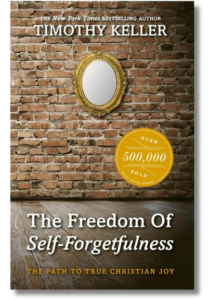 Imagine a life where you don’t feel inadequate, easily offended, desperate to prove yourself, or endlessly preoccupied with how you look to others. Imagine relishing, not resenting, the success of others. Living this way isn’t far-fetched. It’s actually guaranteed to believers, as they learn to receive God’s approval, rather than striving to earn it.
In Tim Keller’s short ebook, The Freedom of Self-Forgetfulness: The Path To True Christian Joy, he explains how to overcome the toxic tendencies of our age一not by diluting biblical truth or denying our differences一but by rooting our identity in Christ.
TGC is offering this Keller resource for free, so you can discover the “blessed rest” that only self-forgetfulness brings.