




Contemporary digital technology allows us to easily watch videos of terrorists beheading victims and offers the possibility of live streamed executions of terrorists. With a few clicks, we can find a video of whatever sexual fantasy or morbid curiosity our dark heart conceives.
We can use new media for these purposes. But that doesn’t mean we should.
Since the fall, humans have been tempted toward voyeurism. We struggle to resist turning our attention to the lurid, the scandalous, the taboo; our eyes can’t look away from spectacular crashes, whether literal crashes or personal collapses. Maybe gawking feels like a “safe” outlet for our sinful lusts. Maybe fixating on the bad behavior of others is a way we cope with (or deflect from) our own sin. Whatever the reason, we’re darkly captivated by the macabre and sensationalistic.
Modern media companies know this about our nature—and they’re cashing in.
We’re darkly captivated by the macabre and sensationalistic.
“If it bleeds, it leads” has been a defining principle of the news industry for at least the last half-century. Cable news “breaking news” or local TV news “top stories” gravitate toward the bloodiest and most horrific: mass shootings, house fires that kill entire families, campus gang rapes, fiery 22-car pileups, boys beheaded on waterslides, people flung off roller coasters to their deaths. The gruesome guarantees good ratings. News media prioritizes blood and scandal because audiences can’t look away.
But the thing is, we can look away. Being “out of the loop” on unnecessarily sordid headlines is a choice we can make. We can choose not to be aware of every calamity that happens across the world and every murder trial capturing the nation’s imagination. We can choose not to doomscroll or reflexively turn on cable news as ambient noise in our living room. We can choose to delete apps if we find the algorithm is increasingly feeding our more unwholesome appetites.
For Christians, is there any spiritual benefit in giving your attention to sordid spectacles? I’ve yet to hear a good argument. But the spiritual reasons to resist voyeuristic media are clear. Whether driven by bloodlust, sexual lust, or an unloving desire to dehumanize or objectify an image-bearing human, the voyeuristic impulse seems to be an attempt to gratify the desires of the flesh for which we should “make no provision” (Rom. 13:14).
True Crime, Court TV, and Celebrity Scandal ‘Pseudoevents’
Some expressions of our voyeuristic gawkerism remain culturally taboo: watching pornography in public, for example, or watching Faces of Death–style videos on the dark web. But lots of other examples have become normalized and socially acceptable yet should give us pause. The prospect of a live-streamed military execution is a current, rather extreme, example. But this sort of neo-gladiatorial obscenity feels like a natural outgrowth of a society of spectacle long addicted to bloody infotainment.
The prospect of a live-streamed military execution feels like a natural outgrowth of a society of spectacle long addicted to bloody infotainment.
Consider the cottage industry of true-crime stories—podcasts, books, blogs, YouTubers, made-for-TV movies, and streaming documentaries. Whether it’s another documentary on the JonBenét Ramsey case or a new limited series inspired by Ted Bundy, Jeffrey Dahmer, or the Zodiac killer, audiences can’t get enough.
Entire channels are dedicated to covering the latest high-profile murder trial, and it seems like every week a new nationally buzzed-about courtroom drama feeds our insatiable hunger: Caleb Flynn, Lindsay Clancy, Luigi Mangione, Brendan Banfield, and on and on.
Especially irresistible are salacious crime stories involving celebrities. From the Fatty Arbuckle scandal in the 1920s to the O. J. Simpson trial of the 1990s, the Michael Jackson pedophilia trial of the 2000s, and the Harvey Weinstein sex-abuse scandal of the 2010s, today’s mass media feeds a conveyor belt of celebrity licentiousness.
On slow news days, the headlines become absurdly straining: Selma Blair bit a flight attendant! Kelly Clarkson got mad she couldn’t buy a $15,000 bird! But it’s always something. Martha Stewart imprisoned for insider trading. Jussie Smollett fakes a hate crime. The Bachelorette season canceled because the star once threw a chair at her ex-boyfriend.
Due to our eagerness to click and watch, this sort of content has become close to a sure-fire hit for media publishers desperate to monetize our attention. But it doesn’t have to be this way. The trash-TV cycle can stop if enough of us start turning it off.
Don’t Stream Lurid Stories
Another “respectable sin” expression of our voyeuristic bent is the proliferation of explicit TV-MA content on streaming TV. Much of this it pitched as “prestige” content—auteur driven, highbrow. But make no mistake: It’s cashing in on our fleshly voyeurism too. Much of it is just TMZ-style salaciousness in more elegant form.
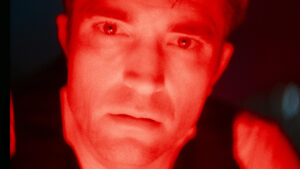
The new Lance Oppenheim and Nathan Fielder documentary, You Can See Everything—about disgraced Theranos founder Elizabeth Holmes—feels like a test case or commentary on our collective voyeurism. The title alone plays on this appeal, promising a no-filter look inside a high-profile train wreck. But even as a meta critique of voyeuristic media and our appetite for celebrity scandal, is this edifying? We can see everything, but that doesn’t mean that we should.
Sadly, you can hardly turn on any “trending” show on Netflix, Prime Video, or HBO Max these days without being bombarded by excessive foul language, sex, and nudity. Grotesquely violent horror movies have never been more popular at the box office. What passes as normal these days would have been considered utterly taboo just decades ago.
How did we get here? Audiences kept watching. Hollywood follows the money and the market. Sex and shock sells. Audiences reap what their consumption habits sow. And so now the X-rated is inescapable.
But we can escape it. We can choose not to watch.
Audiences reap what their consumption habits sow. And so now the X-rated is inescapable.
That’s a choice I’ve started to embrace more and more. Early in my career as a film and TV writer, I felt more pressure to watch everything. Maybe it was FOMO, or maybe it was just an immature lack of discernment. But the older (and hopefully wiser) I get, the more freedom I feel not to watch content that pushes the envelope in unedifying ways. It may be “critically acclaimed” and full of great acting and beautiful cinematography, but if it’s gratuitous, exploitative, or needlessly explicit, I’ll opt out.
I’ve walked out of movies for this reason. I’ve stopped watching acclaimed TV shows after a few episodes. Just last week, I gave up on the new Netflix miniseries East of Eden after two episodes, because of how needlessly TV-MA Zoe Kazan’s version of Steinbeck’s story is. Kazan’s grandfather Elia managed to make a masterfully cinematic (PG-rated) version of East of Eden in 1955, without any scenes of sex or nudity. Why do today’s versions find that sort of restraint impossible?
The answer is probably a combination of a few factors. We’re deeper into the “post” part of post-Christian morality, such that consciences are barely pricked by what used to make us blush beet red. We’ve amused ourselves to death and become numb due to constant envelope-pushing. And the media industry keeps profiting from our prurience and morbid fascinations.
Make No Provision
How should Christians respond to a mass-media environment where temptations to unedifying voyeurism are everywhere? Here are a few ideas:
- Audit your algorithm. If your feeds are full of voyeuristic temptations, outrage bait, or unedifying content, don’t be passive. Make changes! Delete apps, impose screen-time restrictions, make frequent use of “hide posts like this” buttons. Take active steps to flee youthful passions (2 Tim. 2:22).
- Examine your heart. Are we like those who “have become callous and have given themselves up to sensuality, greedy to practice every kind of impurity” (Eph. 4:19)? Today’s media environment forms all of us in this direction. Resist it! Pray for retrained affections, “to be renewed in the spirit of your minds, and to put on the new self” (vv. 23–24).
- Turn off trash. Be willing to turn something off or click away when you realize you’re watching something more voyeuristically than virtuously. Vote with your views (or lack thereof). If enough Christians refused to give their attention to trashy content, the market dynamics might shift and force a change.
- Turn to better things. Meditate on God’s Word. Live to worship. Try to touch grass more than you touch screens. Feed your soul whatever is true, honorable, just, pure, lovely, commendable, excellent, praiseworthy (Phil. 4:8). Pray this: “Turn my eyes from looking at worthless things; and give me life in your ways” (Ps. 119:37).
In a world where raunch rules and transgressiveness is the new norm, Christians must remember this: Holiness is more transgressive. Whether in exploitative documentaries, televised murder trials, or TV-MA highbrow smut, the spirit of the age is lusty voyeurism—media that invites us to “practice every kind of impurity.”
Let’s endeavor to resist this spirit.
Free Playlist by TGC: ‘The Power to Persevere’
Looking for a playlist of fresh, inspiring Christian music to encourage you in your faith? Check out TGC’s new “Power to Persevere” playlist, created to accompany the upcoming TGC27 Conference.
The 75 songs on the FREE playlist, curated by TGC arts and culture editor Brett McCracken, represent a variety of styles but are united by themes of steadfast faith, God’s sovereignty, and the hope of heaven. Start listening today! Simply click below and you’ll receive a link to the unlisted playlist on Spotify or Apple Music.