
Many of us have seen the statistics that Gen Z is the least explicitly Christian or religious generation on record. As a result, we might immediately despair about ministering to this generation.
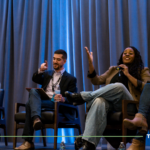
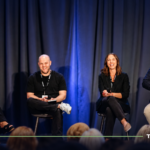
In this panel recorded at TGC25, Rachel Gilson, Alex Harris, Kori Porter, and Derek Rishmawy discuss unexpected signs of gospel hope and renewal. They talk about the challenges facing ministers and parents of Gen Z, as well as what gospel strategies are bearing spiritual fruit around the world.
In This Episode
00:00 – Introduction to Gen-Z ministry
02:48 – Alex Harris on faithful presence
07:43 – Kori Porter on campus discipleship
12:24 – Rachel Gilson on gospel openness
22:03 – Addressing the church gap
26:45 – Relational needs and challenges
32:25 – Q&A and final reflections
Resources Mentioned:
- Do Hard Things by Alex and Brett Harris
- The Anxious Generation by Jonathan Haidt
- Bowling Alone by Robert Putnam
SIGN UP for one of our newsletters to stay informed about TGC’s latest resources.
Help The Gospel Coalition renew and unify the contemporary church in the ancient gospel: Give today.
Don’t miss an episode of The Gospel Coalition Podcast:
Transcript
The following is an uncorrected transcript generated by a transcription service. Before quoting in print, please check the corresponding audio for accuracy.
Derek Rishmawy
Hello and welcome. My name is Derek Rishmawy I am the campus minister with RUF at UC Irvine, and I am the, I guess, the host of this panel that we titled “Hope for Gen Z Ministry. Is that that’s what I’m told? “Help for Ministry to Gen Z. Okay, I had the grammar wrong at the Gospel Coalition. So really glad to have you here. I have my my fellow panelists. Why don’t you guys just introduce your names really quick? We’ll go through it. Alex,
Alex Harris
Alex Harris,
Kori Porter
Kori Porter.
Rachel Gilson
I’m Rachel Gilson.
Derek Rishmawy
They’re going to introduce themselves again in a second and just kind of tell you what they do related to Gen Z and kind of walk through essentially points that we’re hopeful about when it comes to this generation ministry things that we have ministry and trends and things that we have seen that encourage us, but I did want to just on the front end make something clear when it comes to talking about hope for Gen Z ministry, I don’t think any of us is here looking to present some new tactic, some new formula, some new method that is our surefire way of getting Gen Z through the door and and converting them like with 90% accuracy or something like that. Our hope for Gen Z is the same hope that we’ve had for every generation, for millennials, for Gen X, I didn’t forget you, Boomers, and and everybody else is simply the gospel of Jesus Christ, right? It’s the same gospel. It’s the same power to save. It’s the same Holy Spirit who has been converting people down through the centuries as the word is preached, as the bread’s broken, all these things. And so we just really want to be very clear. The hope for Gen Z is the gospel of Jesus Christ. Now, on the ground, it’s the same gospel, but the gospel does go out to unique times and places and cultures. And Gen Z is a unique culture and and in a unique time and place. And so that’s kind of what we want to talk about: is is how we’ve seen that that same universal hope get into the hearts and lives of this particular generation. And so I wanted to start by just pitching it to Alex first, and we’re just kind of go down the line. What have you been seeing that has like what’s your context, your experience with Gen Z, and it’s kind of given you hope about this generation, which I’m feeling pretty bullish on. I like Gen Z. I’m I’m I’m excited about them. So, why don’t you start out?
Alex Harris
Yeah. So everybody, I’m an attorney by trade. I have a ministry two teens background, you know, dating back now quite a long time ago, when I was 16 years old, so literally 20 years ago, my twin brother and I started a nonprofit organization. Went around writing articles and speaking at conferences to teens as two teenagers. We called it the Revolution, which is just the kind of name the two 16-year-old guys come up with for their website and organization, and we defined it as a teenage rebellion against low expectations. We went around talking about how society has low expectations for teens, the way that we, as young people, needed to rebel against those low expectations and do hard things for the glory of God. We wrote a book called “Do Hard Things, and and traveled all around ministering to kind of the the beginning of Gen Z, and then you know quite a lot of of millennials, which which that’s my generation. That was big conferences. That was standing on a stage, talking to a bunch of young people, interacting online, and it was an exciting time. And God did some some really cool things there. Fast forward 20 years, and now I’m a dad. I have a 13-year-old daughter. She is a member of Gen Z, kind of at the the tail end, and she is a member of our church’s student ministry, and I’m because she is a member now a volunteer in our student ministry. I work with the middle school boys; she hangs out with the middle school girls, but I just kind of keep an eye on things and just around. And and there’s something very refreshing and very powerful to me in that experience of working with young people, not as a speaker on a stage or as an author on a page, but just doing daily, weekly life with young people. And so I’m seeing these kids over the years as they grow up, I knew them before they entered our student ministry. Now I’m one of their leaders, opening the Bible with them, talking to them, hearing about their lives, their school, their hopes and dreams, the latest memes on TikTok, all of that, and and it’s it’s been incredible to to see. The power of just faithful presence in the life of young people in a way that I had an experience despite you know some very high-profile teen ministry in my past. So that’s that’s kind of my context. Another part of my context, I mentioned I’m an attorney. One of the lawsuits that I’m involved in is representing the state of Nebraska in their lawsuit against TikTok for misrepresenting the safety of their platform for minor users. So that’s another aspect that I kind of think about when we think about this topic of Gen Z hopes and and challenges. I think the biggest takeaway I have, the biggest thing that gives me hope is just seeing the fact that so many members of Gen Z they they value relationship and and that faithful presence I mentioned a buzzword that’s used a lot but I think is actually really important in this topic and and with Gen Z is authenticity big conferences with a band, and we shot foam rockets off into the crowd to give away copies of you know theology books and all of that. Like that doesn’t connect as well, I think, with Gen Z as it maybe did with with my generation. For them, a lot of that seems very fake, and and just being present can be incredibly powerful, so that’s that’s something I’ve seen work in the faithfulness of of other leaders in our just local church, and it’s also something I’ve seen is that there’s a whole host of Gen Z members who actually don’t have a lot of baggage when it comes to Christianity, and in part because they just don’t know much of anything about it, and that is a challenge in some ways. It’s also an incredible opportunity in others, because in the past ministry and evangelism to young people often just ran into the fact that they already were familiar, they already knew the stuff, and and they were skeptical because they’d seen the abuses, they’d seen the warts, they’d been in the church.
Alex Harris
I’ve recently been able to help disciple and do a Bible study with a couple of 20 somethings who just came to Christ, just in the last few months, and they know nothing. They were shocked to find out that Jesus was once a baby. That He didn’t just appear as a 30-something and start His ministry. They just had no idea, but they just have this hunger to learn and to study God’s word and to understand what it means to follow Jesus. And that is so exciting. That gives me incredible hope. And I think that’s not just an anecdote. I think that is true of a lot of members of this generation.
Derek Rishmawy
That’s absolutely something I’m sure we’re going to hear that comment tracking along a lot of different ways. But I wanted to hear right now from Corey. Why don’t you go ahead and share a little bit about what you’re up to?
Kori Porter
Yeah, I had a lot prepared, but Derek told me to be brief, so and but he wasn’t, so I’m just going to share my story. Okay, I came to faith actually in college, so I believe that’s why college ministry is so important to me. I was a high school dropout. I was on drugs. I was every statistic I was told I was going to be by the age of 18. Two campus ministers invite me to a Bible study, and they shared the good news of the gospel, and it forever changed my life. So, as a freshman coming into the University of Mississippi, Ole Miss, hi Toddie, I was able to be a part of a campus ministry who loved Christ and shared Scripture with me, and it totally not only redeemed my mind, my heart, my soul, but it forever changed the trajectory of my life. And so I started to, because the Bible tells us to care for the poor. I started leading Bible studies and started to go into the inner city mission trips, because the Bible tells us to care for those who are orphaned or widow. I was like, oh my gosh, what does it look like to spread the gospel amongst nations that have never heard the gospel before, and so I took my senior year off. My senior year off, and I went to Cambodia to share the good news for four months. And in that experience, I was like, “Wow, God works. He is so powerful. He’s amongst all the generations, but also amongst all the world. And so that totally changed my mindset, also my worldview, which helped me to understand what does it look like to be a person who loves God and loves people and is really intentional about spreading God’s good news, but also being in proximity to people. My natural personality is an introvert, so I much rather just share the good news and go about my life. But that’s not the way God calls us to. Very quickly, I noticed in the scriptures early on, it’s in Second Thessalonians. He said, “Not only did I share the gospel with you, but I share my very life. And that’s the type of discipleship that I had. I had men and women who saw me for where I was and did not leave me there, but cared enough for me to be able to disciple me in God’s word, be able. Call me out when I was out of pocket, and be able to love me through things in which I was going through. And again, for somebody who was on drugs, high school dropout, you can only imagine how much craziness I brought to the table during those years. And so God was gracious and faithful to me. I was 21 and getting ready to go into the world, and I wanted to be a lawyer, but I wanted to be a Christian lawyer, whatever that meant, and so I had a decision between going to DTS, which is Dallas Theological, or RTS. The people who were discipling me were Presbyterians, so you already know I went to RTS. They made it very clear. Okay, they made it very clear. And while there, I met up with a guy named Kevin DeYoung. He was great. He was funny because he could impersonate John Piper, and so he just did these crazy, cool talks. And so we hit it off. He invited me to be associate director of his campus ministry, so I helped develop women there. And then John Nielsen, which is Kathleen Nielsen’s son, was a campus minister at Princeton University, and so transferred, graduated from Princeton Theological University with theology and society as my degree, but focused with the college students on princeton’s campus as well. And so, campus ministry in and of itself, I understand that not only again does it take people and help them to understand a relationship with God and intimacy with God and can never change their life, but it also changes the world around them. And lastly, the work I do now.
Kori Porter
When I graduated from Princeton Theological, I was able to go and to do that great work that I thought I wanted to do, which was I was the CEO of an advocacy organization that advocated for Christians and others around the world, and we advocated before the UN, before State Department, and I thought that was all great, but the bureaucracy can sometimes get in the way of the gospel work of peacemaking. And so I started a nonprofit that focuses on college campuses. We go from the elites of Harvard, we go to Kent State, the blue collar, and we go to Ghana to international to say, can the good news of the gospel, which is one of Christ, but is also one of peacemaking in the world that is sincerely polarized and isolated. Can it work on college campuses? And we’ve seen amazing results of students wanting to sign up for one-on-one Bible studies or conversations about the gospel. And so it’s a new way in to evangelizing and to having Christian conversations through hospitality. So that’s the work we do.
Derek Rishmawy
That’s really helpful. Thank you. We’ll come back around to all that. Let Rachel jump in and introduce herself and all that she does, and and what she’s hopeful about.
Rachel Gilson
Yeah. So I I work for Crew, formerly known as Campus Crusade for Christ, another campus ministry. I’m just like so much campus ministry happening here. So, like Corey, I became a Christian in college. So I went from knowing like nothing at all to like, oh, I need to know some stuff. So experience firsthand being 1819, 20, like figuring out what all of this is so. I’ve been doing campus ministry professionally since 2011. At that point, I was still dealing with younger millennials, and now it’s transitioned more towards Gen Z students. So now I work. I’m no longer on campus with crew. I work for our theological team, which means I resource every one of our divisions. I’m talking to a lot of people on the field who are working with Gen Z, and personally, I lead just a little discipleship group of some ladies every Monday morning at Harvard Square, Gen Zers who keep me young. I remember I’ll be 40 this summer, and there’s a sweet girl. She asked me to like. She’s like, I need to talk. So we we’re walking all around Harvard Yard and we’re talking and just different things. And at the end, she’s like, it’s just so nice to have someone older to talk to. And I was like, Oh, oh, okay. Well, that’s nice. And then I realized, yeah, actually these girls are closer in age to my 11-year-old than they are to me, just slightly. I was like, oh well, that does seal it. Although technically my daughter’s Gen Alpha, it’s weird. It’s like just made the just made the cutoff, and all those alpha kids are making fun of the beta babies. They’re like, oh, beta. Anyway, so I feel really hopeful about ministry to Gen Z because I think a lot of these folks are getting to like they’re scraping the bottom of the barrel of what secularism has to offer. They’re like, oh, is this it? This kind of grody, and so they’re really spiritually open. We, even in a very progressive place like Boston, which is where I now live, some of our crew movements, we have so many people coming to faith. We don’t have the staff to care for them. It’s an excellent problem to have, and it’s not just happening in Boston. There’s a real gospel openness. It’s really, it’s very hopeful. The challenge is that there are, and I think you’ve seen this as well. There are more coming to faith with less of a background in the Bible or theology, the crew started in 1951, and a lot of the very early ministry was like ministering to people who knew a lot of Bible and knew sort of Christianity and just needed to actually personally respond to Christ. Now, where people are coming to Christ, and they’re like, “Oh, is the Bible alphabetical? You know, they just don’t. I was just recently on a service trip with a group of college students from Michigan University of Michigan and Michigan State. Was hanging out with these kids all week. They were excited to be doing evangelism, to be doing service, they were a lot of zeal for the Lord. And then the last night, I was talking to this younger brother of mine. I think he’s probably 20, and I realized over the course of our conversation, he didn’t think Jesus was still alive. I don’t know. I was like trying to figure out what do you think happened after the resurrection, and he was like, “Well, because Jesus is dead. I’m like, no, he’s seated at the right hand of God the Father. He’s like, no, he’s alive in our hearts. And I was like, okay, so was his
Derek Rishmawy
name Marcus Borg?
Rachel Gilson
Yeah. So there was some real. I’m like, someone needs to give you the Apostles’ Creed. So there’s just a lot of. I wouldn’t have guessed like this giant gaping hole, right? So you’ll suddenly hit these things. You’re like, oh, we need some catechism. Yeah, yeah. No,
Derek Rishmawy
that’s great. I wanted to ask you guys. Thinking about this, I’m well. I guess I’ll share a little bit more. I forgot. You
Rachel Gilson
didn’t. You didn’t do you.
Derek Rishmawy
I didn’t do me. Okay. Yeah. Okay. It’s my turn. Okay. So my experience with the campus ministry is one. I’m currently a campus minister with RUF on campus at UC Irvine, but again, college was a significant time for me, getting basically called a ministry, a revitalization of my my own walk with Jesus, and then essentially the earliest ministry I ever had was having my former small group of high school dudes, who were all about to scatter to the winds, over to my parents’ living room dining table every Saturday morning to read through the chap through a chapter of the reason for God and eat some Costco muffins, and and and really coming to realize, like college is the time when people are asking all the best questions, and all the biggest transitions. And so I’ve been kind of doing some form of college ministry ever since then. I think I was 21 right then, but a couple different places like that. But I’m currently, you know, campus minister at UC Irvine, and I will say I I’ve loved all of my students all the years, but there has been something pretty fun about the last few with Gen Z, and I I do think there’s a lot going into that. But one of it is one of the things is it was really just the thing that y’all named with the openness to the gospel that’s there, and this is, I think, something that tracks with a lot of the data that’s coming out. Is you know Gen Z? There was some there was some thing that came out of the what was it was the study that just came out? It was the Quiet Revival in the UK. There was some stat. I think six years ago, three to 4% of all Gen Z males were church going, and like in the last six years, that bumped to what 20, 20% 21% in six years, right? One of my favorite stories is just I I I’m an alumni at UC Irvine, and so I get access to work out at the at the gym there. So I work out at the gym there, and I run into students, and it’s just an easy like, hey, bro, you got that weight, blah blah blah. You can just talk to people, and I ran into some guy. He’s this freshman kid, and the great thing is two great things. One, this generation is so open, and they have so little of the baggage that we use that I think my peers had that it’s not weird or awkward when they ask, “Hey, well, what do you do? What do you do? Well, I’m a pastor. Oh, cool! And they’re not just being ironic, like, “Oh, cool. Let me go over here. They’re open to it. But I talked to this one kid who says, “Oh, that’s awesome. I’m a believer. Oh, really? Where do you go to church? They’re like, “Oh, I’ve never been to church. Oh, interesting. How did that happen? And in the course of things, it just turns out his senior year, his friends just started talking to him about Jesus, and then I don’t know-he watched some YouTube videos or something, and he just found himself believing that yeah, it just makes sense. Like the the universe is beautiful, and. It seems orderly, and that’s just beauty and and and causes, and and it just makes more sense that there’s a God. And you know, I’ve come to believe in Jesus and His teachings, and and and He’s come to believe the gospel. And so, I met this kid in the wild. He’s already a believer, and then my job from there was okay. Well, let’s just start talking about Jesus. Let’s get you your first Bible. Let’s get you to your first church. Let’s talk about basic doctrines that you are just accepting from me without a lot of fight. You’re just asking questions about the parts that don’t make sense. But in all my experiences, like I think you you’re filled with the Holy Spirit. You regenerate. You love Jesus, and you just this just happened, and and I meet with him on campus, and his friend from the frat walks by. He’s a frat kid, and he says, “Oh, hey, come over here. This is my this is my friend Derek. He’s a pastor.
Derek Rishmawy
We’re talking about the gospel, just way more octaves higher, way way more decibels higher than most of my other students in the past would have said out loud on campus. We’re just out there at a Starbucks or something. He’s like, “Oh yeah, we’re talking about the gospel and things. He’s like, “Oh, very cool. That is interesting. What is what’s happening here, right? And so there, there just is an openness there among all the whole cohort, I do think that the stats do bear out. This is especially the case increasingly, I think, among young men, but we see it amongst our young women as well. And so, I’ll just say it’s it’s been a pretty fun season in terms of openness and feeling like the the sense of liability or the drag or the weight, the baggage is just not quite there as it was five years ago. Quick
Kori Porter
question for clarification: maybe to you too, Rachel. Do you feel that the openness is there, but the relationship with the church is that a different conversation?
Derek Rishmawy
That is an awesome follow-up, and I want to hear from you guys on this too because that I think is one of the biggest gaps right now is students who are willing to talk about the gospel. They’re willing to meet with you, talk about Jesus, but the ecclesial relationship, the connect the dots between yeah Jesus, religion, God, all the stuff I’m seeing on the YouTube channel, et cetera, et cetera, and then me actually showing up at a church, becoming a member, sticking around. Brian Burge just tweeted out some statistic about the way Gen Z, even the ones who show up to church, they leave almost immediately in comparison to millennials and Xers. Like the time they spend actually after service, so that is one of the challenges that we’re finding. I don’t know if your your experience is the same, Rachel, Alex, anything that you are you saying? It’s been my
Kori Porter
experience, and I didn’t know if there was any solutions that you guys had because they’re open to the conversations, they’re open to one-on-one discipleship, but the formation that’s found in the local church, I don’t know how to replicate that without the church and the overseers of pastors and deacons and you know family outings with people and seeing gospel in family life. So when I was at De Young, what was so helpful was the campus ministry I was a part of was rooted in the local church, and we were we weren’t even a parachurch ministry. So we were able to bring people to church, and they had real formation. And so I just felt that they were a little bit maybe more knowledgeable and stronger in some of the ways in which they were able to decipher certain narratives out in culture versus with the students I had at Princeton because I was in a para church setting. Not many of them went to church on Sunday. They had a certain angst against the church for various social reasons, and so I found it. I found it that it’s not that their faith wasn’t true. I felt like they had more resilience because they were true believers during a pandemic when they didn’t have to be at a very liberal school. Yet I did find that it it left me wanting for them in their richness in their relationship with Christ.
Alex Harris
Yeah, I had thoughts of it. Alex, yeah, I do think that is a challenge, and it’s something with the the two young guys that I’ve been meeting with. They are just thrilled to be doing weekly Bible study with me and a couple other strong believers. They’re not sure about going to church, and so it’s just kind of trying to build that theology of the local church for them because they’re so open, they want to they want to follow God, they want to do what the Bible teaches. They just don’t know, like they don’t know any of the passages that talk about the importance of gathering with God’s people, and they don’t have any context or understanding of what it looks like to be in a in a local church community. But at the same time, you know, just again, this is anecdotal, but our church, my church in Denver, we are down the street-not like right down the street, but pretty close to University of Denver (DU) And for many years, our church had staff members or people involved with crew and other other campus ministry. Who were on staff or supported by the church, trying to do campus ministry there, and and just the distance and the fact that a lot of students didn’t have cars. They just never really engaged. They never showed up at church. Maybe they would go to you know campus Bible studies, but that was it. In the last couple of years, we’ve just suddenly seen this steady trickle and growing trickle of students. Some of them very new believers at DU who found us because we’re somewhat close to the campus and just started showing up. And they’ve stayed, and they’ve shown up every week, and they’ve joined what we call fellowship groups or small groups and really built community. And that was entirely after all of our like focused campus ministry efforts had ceased, that they just started showing up. So I think, you know, what explains that is just you know the Holy Spirit at work in the heart of a of a believer. But also, I do think that these students, once they did show up, were plugged into community, and and that sometimes takes very intentional steps to say like, hey, do you want to come and like hang out with a group of us during the week to build some of that relational richness that that sticks? Whereas if they just show up and it’s just a traditional church service and that’s this foreign thing to them, and their attention spans maybe are not primed for an hour and a half long worship service. That can be tricky, and they may be like, you know what? Do I feel like doing that every week? No. But if they have relationships once they’re in community, I think that’s that’s such an important aspect of keeping them in the local church, as they grow that theology of the church.
Derek Rishmawy
Yeah, I think ironically, this is one of those places where, again, I’m bullish on Gen Z. I love them; they’re great. I do think this is a this is a their relational capacities and their risk aversion, and there’s a lot of fear. To be honest, comparatively in this generation, in a lot of relational areas, this is why we’re seeing them date less, have less sex, which is like youth pastors are like, yay! Also, no, you’re not dating or anything. There’s just there’s like there’s trade-offs here, right? Where some of their deepest needs are deeper connection, getting out, touching grass, like being in community. We have our our camp ministry has something we called it Touch Grass Thursdays for a while because we go to the park and we just get them out, just get out and just get out in the just get out in public because you need to get out from behind the computer and just be in nature, but the but the relational dynamic, they are more I think relationally starved, and and yet at the same time one like so, one of the biggest obstacles is their relational fear, but one of the biggest draws I think of the gospel and the church is the opportunity to overcome that. So weirdly, it’s this thing where it’s a big challenge to get them to show up. But when you do, and and when you do, when they do, if they show up in your churches and you see like a youngster and they see, oh, I don’t know if they want to talk to, you go to them. This is this is one the practical tip I’m going to say is, if you are in the older cohort, you actually have to initiate. You have to initiate. You can’t think, well, they’re adults, kind of. Yes, but in this area, in this area, a lot of you know demographic issues when it comes to COVID and lockdowns and screens have delayed certain things that you actually have to you you have to be prepared as a church to take the initiative and bring them in and when you do, things happen, homes open up. When you open up homes, people start bringing people to them like that. There’s there’s a hunger there that once you light the fire, it gets things going, but you have to be prepared to exert more efforts in these areas, in the relational areas. It’s not as natural as it might have been in prior generations. That’s my. That’s why I’m seeing. I don’t know about Corey. You’ve had some experience with talking about thinking, speaking of the isolation of, of this group, I don’t want to talk about your your group’s efforts.
Kori Porter
Yeah, and I know we’re going to open it up for questions in a second, but I just want to give you guys two books if you haven’t already read it. The Anxious Generation, got a pair of that book. It’s pretty popular. It’s an amazing understanding of Generation Z. So the Anxious Generation, how the great rewiring of childhood is it causing an epidemic in mental health, and then the second one along the lines of isolation is Bowling Alone, the collapse of of the revival of American community, and that one’s by Robert Putman. So those are just two books that really help you to understand the sociological impacts of what’s happening from generation to generation, but also help. You to understand particularly what the digital devices are doing to the students’ minds. So you think you’re engaging with the person that, yeah. Anyway, what my campus, what my organization does on college campuses, we’ve identified three things to stop students from engaging in community. And so one is isolation. The second one is polarization, and then the third is just a sense of hopelessness or just a sense of loss. And so, particularly on the isolation part, what we’ve seen to be really helpful on college campuses. Again, it doesn’t matter if you’re at Harvard, it doesn’t matter if you’re Kent State, doesn’t matter if you’re in Ghana. Is we give them free food. Okay, so we come with free Chick Fil A. We come with free Chipotle. We partner with different campus ministries or different diversity efforts on campus, and through partnership serving the students, allowing them to have free food. We also sit down and have community organized events, and so that may be painting, that may be sitting down and problem solving something together. But what you end up seeing is not only diversity of people from different backgrounds, different religions coming to this Christian-hosted event, and Christians are now normalized. Christians are now something that’s accessible. Christians are something that people can see themselves in. So the proximity dispels the anxiety, right? So proximity is so important to allowing people to be able to come together to have a ear lent to the gospel. The results of that last ministry, the last hosting we just did was at the University of Mississippi. We had around 350 kids come through 12 to 1 o’clock, and of those 300 of those 350 kids, 100 of them asked to sit down with a campus minister and hear the story of the gospel. 101 kids. I mean, that was amazing for us, right? And so, just seeing the hospitality aspect, and like you just said, the opportunity that the gospel gives us-that it gives us community. I mean, there’s so many verses against us not being able to join together on Sunday, but it’s just one of those things of, as John 17 says, “How do you know that you love me? You follow me? It’s because of the love that we share amongst each other in our community, and that is an invitation for a broken and dying world that feels starved of connection and community. To say what’s going on over there in the church, what’s going over there with Christians? So,
Derek Rishmawy
I’d love to keep going here, but actually, we have found over the years that your questions are often better than whatever we prepared. So, I wanted to actually open it up to the floor. If you all had few personally had a question you want to ask for some of the panel, we just wanted to do that. So if you just pop up and and yell.
Speaker 1
First, do you see the church gap close with young parents? Because I’m seeing that in the long history, and then the other part of it is flip side. Are are you also seeing an increase in mental health issues? Because I’ve got
Derek Rishmawy
So to to repeat you, you said, are you guys seeing the church gap close? And I’m guessing the church gap in terms of people coming to church with young marrieds. So once they get married, coming to community, and then two, do you see a lot of like a big spike in mental health issues with Gen Z? I’ll speak to the latter. Yes, a lot. Yes,
Rachel Gilson
a lot.
Derek Rishmawy
Yeah, massive amounts of anxiety and other things.
Rachel Gilson
I think doesn’t help that there’s like whole sections of TikTok and YouTube that are like you should self-diagnose as anxious.
Derek Rishmawy
Yes, you need to soothe them faster.
Alex Harris
I I already did.
Derek Rishmawy
Keep going. Okay. As for the young marrieds gap, I don’t know. You guys have seen. We’ve had young marrieds show up in our church, but we also have a ton of babies. It’s a boom right now. But I don’t know that we’re indicative of a lot. I don’t. I don’t know. The challenge there is. I feel like there’s less young marrieds. Like statistically, the part of the problem with Gen Z right now is that they’re not dating, they’re not hooking up with each other in several different ways, and that is it. We
Rachel Gilson
just need to be clear, right? You are against premarital sex. Yes. Okay. Yeah, that’s right. Just want to be clear. No one on the stage is for premarital sex.
Derek Rishmawy
Yes. Yes. I give that talk. I, I yes, thank you. Yes, no, no pre. What I’m saying is that they’re not starting to date. They’re not, which is the precursor to the hooking up of engagement and then marriage. So, yeah. We got to use another another term. Okay, so, but I I do think that there’s there’s actually the relational averseness is leading to a lot of just actually fear between the sexes and between risk and even risking friendships. I was talking to one young woman the other day, she was like, yeah, she was telling me about being interested in a young man. She’s like, but I think it would make the friend group awkward, and I just looked at her and said, “You do realize your friend group is not going to be forever, but potentially a spouse is like for a really long time. Risk the friend group, just try. She it didn’t go over as as as well as I thought, but like, but there like that whole consider. No, no, she didn’t she didn’t try today yet. But but the idea that like I’m not going to make my sentiments known because it might make things potentially kind of a little awkward. I’ve I’ve never seen this level of that than with this generation. I don’t know. What are you guys experiencing? I
Rachel Gilson
don’t know. In my church, we’ve still got a more typical problem where there’s like a lot of women and fewer men, so I could use some of this quiet revival at my local church.
Derek Rishmawy
Yeah, I mean, I I’ve had so I don’t I don’t know that I’ve last four years we had to work to get our our college group to go from like 80% male to like I don’t know 60 or 55 or something like that. So I don’t know. This
Alex Harris
is this is just a guess. I don’t know. Boston is a is a very has a ton of colleges and universities. Colleges and universities increasingly are more young women than young men, and so that’s that’s probably a big part of it.
Rachel Gilson
Still true? I don’t know. I don’t hang out with the high schoolers.
Derek Rishmawy
Yeah, we we we
Alex Harris
do have way more middle school boys than girls in in my in my student fellowship ministry, but that’s like purely just that’s the babies that the parents had. It’s not a. It’s not like the girls just won’t come to student fellowship. It’s just like that’s somehow.
Derek Rishmawy
Well,
Rachel Gilson
yeah, that’s super weird. I don’t know. Why
Derek Rishmawy
are there girl-heavy groups and why are there guy-heavy groups? I have no idea. I, if we could set up a a dating community app there for the for the kids. No, we had a question over there. I see a hand. We have a question. Yes, you, sir, yell. Yeah. So, if Gen Z has a risk risk aversion of their fear, isolated, anxious, all the words, and a problem that you’re seeing is an openness to the gospel. I mean, we’ve got so many sources, YouTube, every social media
Speaker 2
platform that we can engage and grieve believers, yet we’re missing this discipleship piece, this catechizing piece of teaching them, educating them in these big holes in their their worldview of the gospel. What is work? How do you invite them to discipleship in the way that that All
Alex Harris
right. I’ve been told I haven’t said anything for a while, so I’ll give it a shot. So, Derek mentioned the Quiet Revival study that just came out in the UK. So they looked at I think 19,000 young people in in England and Wales, and tracked them from 2018 to 2024, and that’s where you have these incredible statistics, where the the percentage of young people age 18 to 24 who have attended church at least once in the past month has just skyrocketed in just six years, and you know they’ve looked at the role of immigration and other issues, and it doesn’t explain this increase. It seems like an actual, very real increase in in receptivity and in practice. And when we talked about the fact that so many members of Gen Z may actually you know come to Christ and never go to church, you know those numbers are probably undercounting the actual you know quiet revival, as that report is titled. But one of the things it mentioned was that of the young people who do go to church, rates of depression and anxiety and other mental health challenges are lower, which is which is incredible and and also what you’d expect because so much of that is driven by the isolation and it’s driven by. Social media, and and getting out of that and into community with other people is is so powerful. And so, to your question, I mean, I think yes, there’s there’s a definitely a huge role for meeting them where they are, which is on YouTube and and on social media, and and we can be thoughtful as a church on how to do that, but ultimately, like what you win them with, you win them too, and so much of the problem is the fact that that’s where they’re getting their information, that’s where they’re getting their theology, that’s where they’re getting their teaching, and what we really want to do is to bring them into communities. So it’s not there’s not some novel solution. It’s just we need to get them into local churches, and the question is how do we do that? We’ve talked about some of that. You know, free food is a great way, but just inviting them, inviting them, and then following up, and not taking them, not responding as oh well, they must just not be interested, so I won’t ask them again. Just continuing to show up, invite them, and then what I think is going to happen, and what I think has been most effective is when Gen Z brings Gen Z to church, and that’s going to be the most effective. And so, if as a church we can be ready to welcome them in and to greet them and to invite them into community and to stay involved and to stay present in their lives, Gen Z itself will start evangelizing each other and saying, “Hey, this is so fun! Do you want to come? There’s free pizza too. And then more people are going to show up. So that’s that’s what I think we can do. And then we just have to be ready. Like these are going to be maybe some kids who don’t have any catechism, don’t have any theological background. We need to, as a church, be ready to disciple.
Derek Rishmawy
Yeah, this summer I think focusing on the Gen Zers you have, when it comes to their outreach, they’re going to do it. They’re going to do the best job for you. They’re the people who bring people in, and then preparing to disciple that. I saw two hands. I’m going to go right here up front.
Speaker 3
It’s been really cool to be a church partner and to be there. But the difficulty of someone with me a few times is that these kids that like have an experience with Jesus and don’t like asking how their church experience is on like their body, so there’s not this felt need for something more than like the actual church. So the only thoughts on how to like do these kids that like genuinely do love.
Derek Rishmawy
Yeah, I mean, well, you can repeat it. Yeah. So his question is: so he’s been partnering with a with a Young Life Ministry as a youth pastor, and you see kids who have a real experience of Jesus, but for them, functionally the parachurch becomes the church, and so they don’t see any need to go to church because they go to the young life meeting, or and so on and so forth. Am I catching that? So how do we communicate? How do we communicate a need for church? I’m extremely sympathetic to that. You know, I’m well. You know, ministry. I’m an REF campus minister. One of the things I like about our model, and I know other other campus ministries do front load this. Is when I tell the students, we’re not a replacement for church. You just have to tell them up front. I’m not going to baptize you on campus. I’m not going to give you the Lord’s Supper. I can’t give you old people. Old people are a gift. I can’t. I don’t bring babies to campus. Yes, I don’t. You are. I don’t bring babies to campus either. You need babies screaming in the middle of the sermon for you to understand what church is. You actually, you. But there’s no other way than just telling them, “Hey, we’re doing something cool here, and also this is like one small slice of the pie, and you’re missing out on so much because old people and babies and the whole body of Christ and the supper and that like you actually have to have an incarnate incarnated gospel. You actually need you you need to teach about the sacraments and a place where you don’t administer the sacraments. You’re like, hey, here’s something really essential to your life that I am not going to give you here. You got to go to church to go get, right? That is a big front end thing. And you honestly, when it comes to the campus, when the campus ministries that you partner with, like, I’m I’m ordained. I’m sent in front of my campus to do that. But there’s there’s other campus ministries that also have an ecclesial consciousness. They know they’re not the church, and they want their kids to go to the church. The question is talking to them and saying, actually, just talking with those para churches that you’re teaming up with, like asking them, do you have that in mind? Do you talk to these students about it? And if they’re trying to reach students for Jesus, they’ll probably think, oh gosh, I hadn’t thought of it that way. Yeah, I’m going to try and. So I mean I would just talk to the to the young life folks to get them to encourage that. Yeah. Yeah. See, that’s great. So they’re they’re trying. That that’s wonderful. I don’t know.
Rachel Gilson
We’re out of time.
Derek Rishmawy
Oh, we’re out of time. Okay. Okay. So on the. Note: If you have more questions, our panelists will be off to the side and so forth. But thank you so much for coming. It’s been great to talk Hope and Gen Z.
Free Playlist by TGC: ‘The Power to Persevere’
Looking for a playlist of fresh, inspiring Christian music to encourage you in your faith? Check out TGC’s new “Power to Persevere” playlist, created to accompany the upcoming TGC27 Conference.
The 75 songs on the FREE playlist, curated by TGC arts and culture editor Brett McCracken, represent a variety of styles but are united by themes of steadfast faith, God’s sovereignty, and the hope of heaven. Start listening today! Simply click below and you’ll receive a link to the unlisted playlist on Spotify or Apple Music.
Rachel Gilson (PhD, Southeastern Baptist Theological Seminary) serves on the leadership team of theological development and culture with Cru. Her writing has appeared at Christianity Today, Desiring God, and The Gospel Coalition, and she regularly speaks at churches and on college campuses. She is the author of Parenting Without Panic in an LGBT-Affirming World and Born Again This Way. She lives in the Boston area with her husband and daughter.
Alex Harris is an attorney and fellow at The Keller Center for Cultural Apologetics. As a teenager, Alex coauthored Do Hard Things: A Teenage Rebellion Against Low Expectations with his twin brother Brett. A graduate of Harvard Law School, Alex worked as a law clerk for U.S. Supreme Court Justices Neil Gorsuch and Anthony Kennedy and was named to Forbes 30 Under 30 for law and policy. He and his family are members of Fellowship Denver Church. You can find him on Instagram and X.
Kori Porter is the former CEO of Christian Solidarity Worldwide. She graduated from the University of Mississippi and completed her MA in theological studies with an emphasis in religion and society from Princeton Theological Seminary. She has been published in His Testimonies, My Heritage and the AND Campaign’s A New Narrative on Abortion: Pro-Woman and Pro-Child. She has 13 years of experience in campus ministry, serving most recently on the campus of Princeton University.
Derek Rishmawy (PhD, Trinity Evangelical Divinity School) is the Reformed University Fellowship (RUF) campus minister at University of California Irvine. He cohosts the Mere Fidelity podcast. You can follow him on X or read more at his blog.