



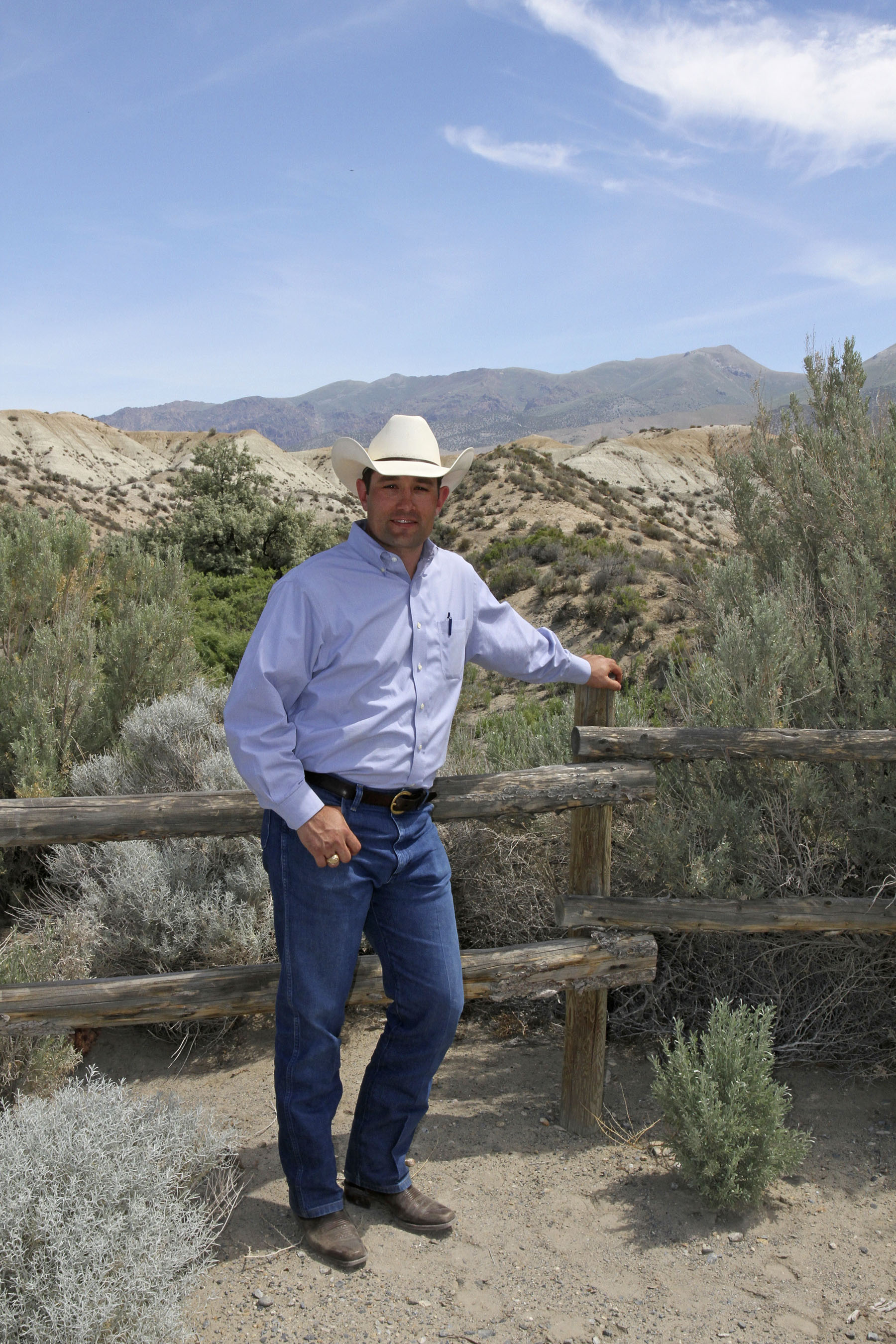
Nathan Jaeger is originally from Colorado and has cared for cattle his whole life. He was raised on a purebred Limousin ranch, and his mother’s family operated the largest dairy in Western Colorado from 1907 into the late 1990s—at one point delivering milk more than 100 miles away. A graduate of Texas A&M and Colorado State University, Nate has worked for the National Cattleman’s Beef Association, Laura’s Lean Beef, and AgInfoLink. He is currently director of beef, equine, hay and forage, meat, goat, and sheep divisions for the Alabama Farmers Federation. He serves as an elder at Riverside Presbyterian Church in central Alabama. Nathan and his wife, Molly, have five sons, Timothy, Mark, Peter, Andrew and David.
 How would you describe your work?
In Genesis, God commanded us to “be fruitful and increase in number; fill the earth and subdue it” (Gen. 1:28). My work helps others to follow this command. I work with farmers to identify problems, create solutions, and organize forums to discuss what might best benefit their work. Basically, I strive to help farmers get better through education and application of concepts learned from each other and from other farming experts.
As an image-bearer of God, how does your work reflect some aspect of God’s work?
Man’s first work was as a farmer, a caretaker of God’s creation—a task complicated after the fall because of sin. While the work of farming and caring for creation remains good, our broken relationships with one another—on and off the farm—are often challenging.
The people with whom I work reflect God as creator on their farms, and it is my goal to develop relationships between them—as well as with lawmakers and consumers—in a way that not only benefits agriculture but also reflects a sense of community, cooperation, and purpose that mirrors his church.
How does your work give you a unique vantage point into the brokenness of the world?
Beyond the immediate challenges of raising livestock where not every calf or lamb survives, I sometimes see ranchers dealing with doubt, fear, and hopelessness. What if the drought persists? Why are we being attacked for the way we raise animals? How can we communicate with the public about the goodness of our work when farmers like us represent less than 2 percent of the population?
Jesus commands us to love our neighbors as ourselves. How does your work function as an opportunity to love and serve others?
The relationship-building I do helps educate farmers to be better farmers and equips them to advocate, grow, and pass their farm to the next generation. So my commitment to serve people in a field I love can affect generations of families who will help feed us all in the years to come. This comes in a variety of shapes and forms—from mentoring youth to educating local law enforcement on agriculture to helping farmers keep their animals healthy and their farms organized and effective.
In 2012, for example, the USDA rolled out a new animal disease traceability program, and I had the opportunity to help the state veterinarian and local farmers collaborate on how to implement it without burdening farmers with excess regulations. The model we developed was adopted by other states, like Texas and Florida, and it has shaped how the program is implemented for cattle across the country. Through animal disease traceability programs like this one, the government is able to better trace animal diseases to protect our nation’s herds—and this, of course, helps protect people’s source of nourishment.
Editors’ note: TGCvocations is a weekly column that asks practitioners how they integrate their faith and their work. Interviews are condensed and edited.
Free eBook by Tim Keller: ‘The Freedom of Self-Forgetfulness’
 Imagine a life where you don’t feel inadequate, easily offended, desperate to prove yourself, or endlessly preoccupied with how you look to others. Imagine relishing, not resenting, the success of others. Living this way isn’t far-fetched. It’s actually guaranteed to believers, as they learn to receive God’s approval, rather than striving to earn it.
In Tim Keller’s short ebook, The Freedom of Self-Forgetfulness: The Path To True Christian Joy, he explains how to overcome the toxic tendencies of our age一not by diluting biblical truth or denying our differences一but by rooting our identity in Christ.
TGC is offering this Keller resource for free, so you can discover the “blessed rest” that only self-forgetfulness brings.