


We all live in a world influenced by therapy culture, whether or not we’ve been to therapy ourselves. We see evidence of therapy culture online and in popular songs, TV shows, movies, and books, and we can likely find traces of it coming out of our own mouths. Embedded in it is the idea that one’s feelings are paramount and anything distressing or unpleasant can become a clinical problem to be avoided.
In Resisting Therapy Culture: The Dangers of Pop Psychology and How the Church Can Respond, Matthew Loftus examines the failures of therapy culture and ways to navigate a world where therapeutic values have infiltrated everyday life. But if you’re looking for a book that hates on therapy, this isn’t it. As a physician and someone who has himself been diagnosed with major depressive disorder, Loftus isn’t antitherapy.
Nevertheless, Loftus takes issue with the way “ideas and concepts from therapy culture have filtered down into excuses for bad behavior and self-pity” (9). He argues that, though it promises to make us feel better, therapy culture negatively affects mental health through three factors: “the medicalization of normal emotional and spiritual experience, the judgment of all activities by their perceived or potential impact on mental health, and the loss of agency induced by the first two components” (11). He also highlights how social media can turn into an echo chamber for therapeutic narratives. Christians, he argues, must actively resist the siren call of therapy culture.
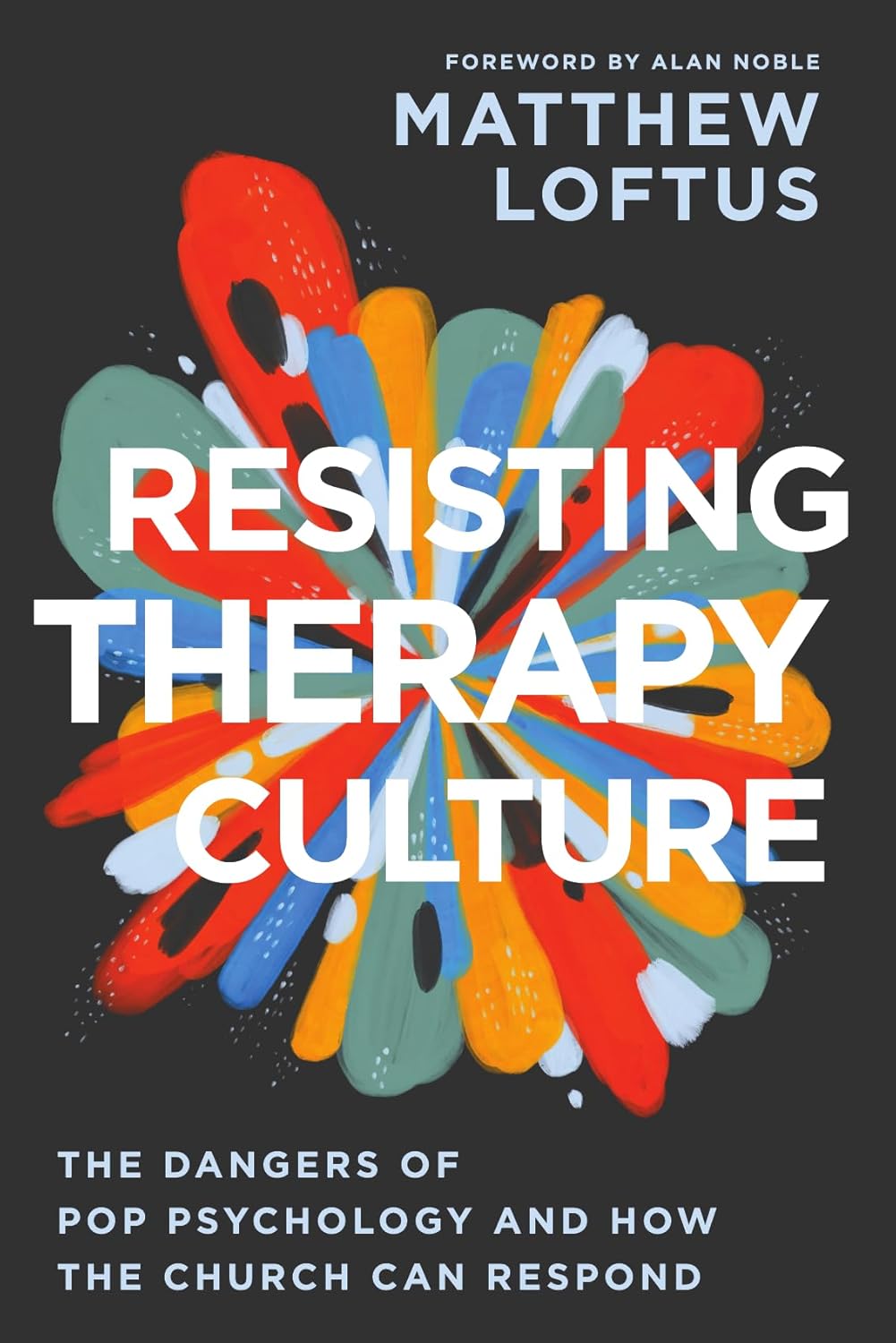
Resisting Therapy Culture: The Dangers of Pop Psychology and How the Church Can Respond
Matthew Loftus
Resisting Therapy Culture: The Dangers of Pop Psychology and How the Church Can Respond
Matthew Loftus
We live in an age where “therapy culture” dominates our cultural milieu. Everywhere we look, therapeutic language and psychological concepts are popularized, misapplied, and lose their medical significance. Therapy and psychiatry are good practices, but when people begin to filter everything in life through a therapeutic lens, it becomes harmful rather than helpful.
The church is not immune to this phenomenon. Increasingly, people’s expectations of the church and its leaders are viewed through the lens of psychological health and wellness.
What Grows Out of Therapy Culture
It’s impossible to miss the way therapeutic concepts have overwhelmed our cultural imagination. Mental health diagnoses, the language of self-care, and terms like “attachment” and “trauma” are part of everyday speech. Loftus helps us see why familiarity with therapeutic concepts isn’t entirely bad, but he also highlights how therapy culture undercuts the goods it promises.
One of the more damaging aspects of therapy culture is that it teaches us to be observers of our own existence. Instead of asking, “What will I do about this?” people learn to ask “Why am I like this?” Thus, every struggle becomes an issue to be analyzed rather than a situation to be acted on. Good therapy can help people take steps toward meaningful change; therapy culture, in contrast, keeps people circling their own psychology in a never-ending loop.
One of the more damaging aspects of therapy culture is that it teaches us to be observers of our own existence.
Loftus calls us to recognize that we still have agency. “One of the best things that Christians can do is help retain that sense of moral responsibility and remind people that no matter their circumstances, they can choose to do good and not evil” (155). This is an important correction. Scripture is clear that while we may not have control over the form our suffering takes, we do have some control over how we respond to the troubles when they come.
Therapy and Church Shouldn’t Feel the Same
Therapy culture has infiltrated many churches. Loftus pushes against that trend, arguing that the church and therapy have—and should have—different goals and a different mission. When the church takes on a therapeutic tone and drifts toward therapy culture, it loses its institutional distinctiveness.
As Loftus argues, “Therapy culture incentivizes deliberately avoiding subjects that may be psychologically distressing while also encouraging teachers and preachers to ensure that their audience feels more okay with themselves by the end of the service” (20).
Sometimes people will feel better at the end of a church service, but sometimes the Holy Spirit’s conviction of unconfessed sin leaves people emotionally raw. Churches influenced by therapy culture will be tempted to avoid teaching on specific sin issues if those moral judgments are unpopular or could be seen as inducing shame. It could even drive some churches to avoid making clear statements about our need for salvation, for fear of causing offense or distress.
Pastors and teachers should approach sensitive subjects with care, compassion, and tact—but never to the neglect of clearly sharing the gospel. The mission of the church isn’t ultimately to help people feel better about themselves; the mission is to create more and better disciples of Jesus Christ. This requires clear teaching on sin, repentance, and faith, which is the wellspring of the peace we long for.
Are Boundaries the Solution?
Despite these critiques of therapy culture, Loftus affirms that therapy and the church serve complementary goals. He writes, “People will live healthier lives when churches and therapists are working well, but the two do not have the same mission, methods, mandates, or measures of success” (28).
Sometimes people will feel better at the end of a church service, but sometimes the Holy Spirit’s conviction of unconfessed sin leaves people emotionally raw.
The church assists in guiding our spiritual lives, and therapy should help people see themselves more accurately while taking positive steps toward better mental health. Accordingly, he argues, “Good therapy corrects distortions, replaces falsehoods with truth, examines motivations, deconstructs self-destructive impulses, and asks which steps, however small, a person can take to improve” (38).
However, here we see a weakness in Loftus’s analysis. If therapy operates best as a separate entity from the church, on what basis will distortions and falsehoods be challenged and truth identified? Without an anchor in Scripture, therapists are prone to being tossed by the waves of client perceptions and desires—or at least current cultural norms. When subjective values become the arbiter of what is “healthy” and “good,” the therapist may offer guidance that conflicts with God’s Word.
In an increasingly post-Christian world, despite the sustaining power of common grace, we can’t assume that worldly wisdom will align with God’s call to holiness. Without denying the importance of therapy, Loftus’s argument would have improved with a deeper examination of the role of biblical wisdom in evaluating therapeutic advice.
Seeking help when distressed is good, but it matters whether that help is oriented toward truth. The inappropriate application of therapeutic ideas to the rest of life can do more harm than good. In a therapeutic age, Resisting Therapy Culture will help Christians identify where therapeutic concepts distort our worldview and derail our confidence in the gospel.