Diversity is biblical, uncomfortable, beautiful, and rare. But it’s worth it.
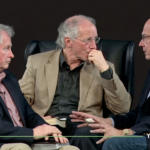
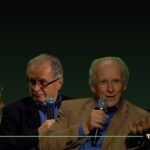
This candid and thoughtful conversation, recorded at TGC25, explores the biblical vision of diversity—its connection to the gospel, the most challenging barriers, the best practices, and how to maintain a hopeful posture. Panelists Michael Aitcheson, George Robertson, Irwyn Ince, and Mark Vroegrop speak from the Scriptures and personal experience about how to help the church look more like heaven right now.
In This Episode
00:00 – Introduction and purpose of the meeting
02:31 – Introductions of panel members
04:38 – Personal journeys into biblical unity and diversity
23:47 – Biblical basis for biblical unity in diversity
36:56 – Challenges in applying the gospel in local contexts
50:55 – Encouragement and conclusion
Resources Mentioned:
- The Last Segregated Hour: The Memphis Kneel-Ins and the Campaign for Southern Church Desegregation by Stephen R. Haynes
- Worship Across the Racial Divide by Gerardo Marti
SIGN UP for one of our newsletters to stay informed about TGC’s latest resources.
Help The Gospel Coalition renew and unify the contemporary church in the ancient gospel: Give today.
Don’t miss an episode of The Gospel Coalition Podcast:
Transcript
The following is an uncorrected transcript generated by a transcription service. Before quoting in print, please check the corresponding audio for accuracy.
Mark Vroegop
Good. Hey, welcome to our breakout session about beautiful diversity. So we are so glad that you’re here. This is a really, really important topic, one that all four of us are passionate about. Coming at this subject from different cities, different denominations, different experiences, and yet we have one Lord, one faith, one baptism and one mission to try and help the church of Jesus Christ look a little more like heaven like right now. So we are really grateful that you would like to just be a part of this conversation, and we hope that our time here together with with you will be helpful and instructive. Hope you’ll leave encouraged. I hope you’ll leave with some new questions. Sometimes in life, it’s not that you have better answers, we just have better questions. Or in some cases, it’s like, oh, okay, so I they, they’re, they’re wrestling with some of the same issues, so I’m going to just kind of persevere and continue on in the good work that that you’re doing, or perhaps you have particular questions that you’re wrestling through that maybe will give you some level of clarity to today. So we hope to be helped you. That’s what our our goal is. So one of the things that I love about panels is an opportunity to dig into things a little bit deeper. And so we’ve had a pre meeting just to talk about where we think this conversation is going to go. At the same time, I’m the moderator and I can decide where it goes. So that’s going to be fun and enjoyable, and that just scared all of them, because we have a game plan, but we’re going to see if we call some audibles. So let me pray, and then we’ll do some introductions. God, we thank you for the opportunity that we have to think and talk and dream about a biblical vision of what diversity looks like in the body of Christ. We want to recognize that forever this has been a challenge, and it’s just part of the brokenness of our humanity. It’s a challenge in our present day, and so we just want this conversation to be helpful, to help advance conversations for us to think in ways that would be edifying. And so we pray you help us to be biblical, help us to be contextual, help us to be thoughtful. We want to help the local church. So we pray that you would guide and direct our conversation today in Jesus. Name Amen. Let me start with introductions, and we’ll start down here at the end. So Michael, I want you to introduce yourself, explain a little bit about who you are, where you serve, etc, etc. My name is
Michael Aitcheson
My name is Michael Aitchison. I’m the planting and now Senior Pastor of Christ United fellowship in South downtown Orlando. We are a congregation of the PCA. We are what you would consider an atypical Presbyterian Church. We are. We clap our hands, and all my Presbyterians said, Oh no, oh no, oh no. And we’re multi ethnic, cross cultural and diverse in many respects.
George Robertson
George Robertson, pastor of second Presbyterian Church in Memphis, Tennessee. We’re in the evangelical Presbyterian Church, we lift our hands and kneel, and we are pressing toward diversity.
Irwyn Ince
My name is Erwin Ents, and I serve as the coordinator of mission to North America for the Presbyterian Church in America. M and A is the domestic missions arm for the PCA, church planting, outreach, mercy, helping our churches. In that regard, I served for many years as a pastor, church planter of City of Hope, Presbyterian Church in Columbia, Maryland, a cross cultural, multi ethnic church in that in that community. And I now live in in Washington, DC,
Mark Vroegop
and I’m Mark ROG up, the new president of the gospel coalition. And I am not Presbyterian, so I’m the lone token non Presbyterian up here. In fact, I’m not any I’m non denominational, which means I just love everybody. Is what I mean. It means we don’t know who we are. No it actually means we get to pick and choose the best of both traditions, so whenever it’s most convenient for us. So and I’ve served for 17 years at College Park church here in Indianapolis. All kidding aside, I describe ourselves as a baptistic church that was congregationally ruled and elder LED. And it’s a real delight to be able to lead this conversation. We’ve had delightful just engagement over the last number of years on this subject in a lot of different spaces. And so it’s a real delight for us to share this plaque. Form. What I’d like to start is maybe have each of us just talk a little bit about what brought you into the conversation about biblical unity in diversity. So what, what was the thing, the moment, the situation, the story your life like? What? What was it that called you to be now on this platform. So Irwin, we’ll start with you, and then we’ll just go down here
Irwyn Ince
and come back. Yeah, I I love the fact that God writes our stories and brings us to particular points of passion in the work of ministry. My background is I grew up in a Christian home from Brooklyn, New York. Rejected the faith as a teenager, and then when I got to college, those were what I call my radical black nationalist days. I, at the time, it was called the afro centric movement. I During those years, had a strong rejection of the Christian faith. I viewed it as the white man’s religion, a tool that was used to oppress and enslave people of African descent. And so as a part of this story, you know, the amazing thing is, I like to say, God ultimately rejected my rejection of him and brought me to faith in a historic African American Baptist Church in Washington, DC. But what happened is, now I am looking at the scriptures through the lens of faith. And I am seeing this language that the scripture, this familial language the Bible uses to describe God’s people, and this seeming expectation that in the context of the local church, you find these people from all manner of life and cultures and nationalities. And I just stopped, and I said, Wait, well, you know, I go to church. I said, literally, everybody’s black. There’s not a non black person in the place. And as a church over there, and everybody’s white over there, everybody’s Asian over there, I see these divides and and and so that put in my own heart what I call a divine dissatisfaction with the mono ness of most churches in in the US context. And I know there are historical reasons for it, but it put this burden on my heart to say I cannot be content in pursuing ministry, unless I’m pursuing it with an ethos of an indiscriminate love of neighbor across lines of deep difference in Jesus Name,
George Robertson
reflecting on Ken bully has a powerful sermon last night. There’s nothing, and all the sermons from Ephesians, there’s nothing to boast about of why I’m here. It’s all been gospel because my biography would militate against any sensitivity. I grew up in a deeply southern town, small town in North Alabama, which was the international headquarters of the Ku Klux Klan and I grew up in that soup of segregation and and racism, but, but God saved me. When I was in middle school, I began to receive good discipleship. I went on to a Christian college, covenant College, heard more of the social entailments of justification by faith and the one on the covenant seminary, and continue to get that kind of discipleship. But the real turning point for me came all along God, exposing my blind spots and deepening my understanding of what it meant for human being to be made in the image of God and every human being to be so I was on faculty at seminary. I was pastoring a church as well. And it was commencement service, a man named Jonathan SATA, Hispanic pastor, BCA pastor in Dover, Delaware, which is not known for its diversity, but he was convicted that to be a New Testament church you you needed to pray for work toward multi ethnicity. So he was, he was our commencement speaker, and he opened up Ephesians to me. It when he started at the end and said, for this, this is why I’m in chains for the mystery of the gospel. And then he went to chapter three, verse six, what is the mystery of the gospel, that the Gentiles will be heirs with the Jews, and why was Paul in prison for that gospel? In particular, went to Acts 22 everything was going fine with that sermon in Acts 22 that testimony, until he said, he sent me to the Gentiles far away, and he said, Ephesians is an apologetic for this mysterious power the gospel, a manifold wisdom of God being displayed in the church. And I felt so embarrassed that I must be the only member of the faculty who had never known the message of Ephesians before. I knew it as a proof text for predestination and go there for marriage counseling and all those other rich reformed doctrines which are certainly there, but that blew open the whole of scriptures for me, where I could finally understand why God was reaching the nations. What, what the that this was, this is the objective demonstration of the reconciling power of the gospel, and it’s and so I went back to my congregation, my church, which was in an area of St Louis that was 99.5% white, and with my staff, we started praying for God to cause us to reflect the complexion of heaven, looking at our demographics, that’s impossible. But I said, I am compelled that this is, this is the this is a mission that with an outworking of the gospel, it’s not the gospel. It’s an apologetic for the beauty of the gospel and God slowly brought people of color, African American family, we Asian Americans, no Hispanics before I left, but it’s a small taste. And then went on from there to Augusta and now Memphis, pursuing that mission.
Michael Aitcheson
Yeah, my journey commenced in Miami, Florida, where I was born to the son of a Jamaican immigrant and an African American woman with roots that are in deep, deep, deep South, in fact, a place called millery, Alabama, and I’d be surprised if anybody’s ever heard of it in the air, 70 miles north of mobile, where my grandparents migrated to Miami, probably in the third or fourth great migrations. And so both sides of my family rich history as it relates to the African diaspora in general, and all the complexities of coming to and living it, coming to America and living in America as a minority, I grew up with all the stories good and bad, taught to love everyone, but the struggle was kept very closely to me. There was a season in my life where my father went through a journey with black Islam. So we paid close attention to Louis Farrakhan, Minister, Louis Farrakhan, and in the fourth grade, I wrote a small little book, and it was so sophisticated and advanced that the teachers wouldn’t allow me to read it to anyone below fourth grade. So they sent me to the fourth and other grades because of the dynamics around race and all the things that were mentioned in it. So at a very early age, according to God’s providence, by God’s providence, I became aware of some unusual things as it related to the white and black dynamic. Now that’s not the only area of hostility that we have to address, but it’s one of the most pronounced, if not the most pronounced in our context. Both of my grandmothers did domestic work, so I would travel across the tracks, literally, tracks, highways, beautiful neighborhoods. Come back to mine, which was also beautiful, but a few degrees off from the experience that I had when I went to school and where my grandparents worked. And so these things conjured up something in me. As a kid in high school, I developed some rich friendships. We had a prayer day around the flagpole, and I noticed that people next to me didn’t look sound, act like me, but they loved Jesus. Then I got to college and went into English 101, and there was one other minority in the room, a Japanese woman at the University of Kentucky. So I realized, okay, this is a different dynamic, and why? In college, I took with me a robust love of all people, but not decoupled from the difficulties of people who look like me. And so there were certain things that were taboo that I was taught, you know, you don’t date this type of person, or you got to be mindful of these kinds of people. Well, the Lord did a great work on me. He sent Christian, white, wealthy Republicans my way to befriend me. He sent all the boogeymen and women and and we had lots of arguments. There are lots of things, and several of those relationships to this very day, 20 some odd years later, are the closest relationships. So God did a major work in my heart. A major work in their heart. I married a woman from the south, from Birmingham, Alabama. I’m from Miami. And so there were lots of things to discuss and work through there. So this whole entire arc of my journey up to the present, I realized that something is off when it comes to the dynamic of race and culture, particularly in the church. And I’ll conclude with this. There arose a moment in practice when a teammate and I got into a very intense disagreement, and I hurled a racial slur at him, and then he pulled me aside in the locker room later, only discovered that we both were believers. We worked through it, and then a week later, on the football field was the first time I still remember where I was. It was actually in this state. I remember the person’s name, where I was called, one of the most degrading things that you could ever call a human being, and even more so, a minority. So those types of stories, good and bad, have shaped me as with regard to this conversation on a positive note, been married 16 years to a beautiful Anglo sister, and we have four beautiful mixed daughters and a multi ethnic church, so I have a lot invested in
Mark Vroegop
this conversation. Thank you, brother, that’s great. So my father was born in the Netherlands and came over here when he was three years old. My grandfather came over on a American Recovery ship that was sent over with supplies and that would be vacant when it returned. So he came over with five children. The passage was paid for by a Massachusetts farmer, and so they lived as indentured servants for, I think it was two years to pay off the voyage of the family. In order to get the family to Kalamazoo, Michigan, where there was a Dutch enclave, or we called it the Dutch mafia, we sent them by train and had to borrow money from a friend in Kalamazoo for a bus ticket for the remaining children. So he lands in Kalamazoo, Michigan, and begins as a Dutch, only speaking immigrant, you know, doing all the things just try and survive, garbage collection, planting flowers in the backyard, everything else. And so a number of about four or five years later, died of a heart attack. And my grandmother survived two world wars, spoke two languages, lived on two continents, outlived two husbands, and she passed away at 101 years old. But I think it was at the time 90 grand and great grandchildren. So my story is the American dream in that respect, and that was baked into the ethos of the culture in which I was raised. It’s actually a simple, straight line narrative. You work hard, you pay your debts, and this is a land of opportunity, which is so true at so many levels, usually or sometimes or maybe, depending on where your experience what your experience is. So that was my, my cultural narrative of, if you will, in college or in seminary. Rather, I paid for seminary by working as an admissions counselor in the undergraduate division of the school, and so one of my responsibilities was to try and recruit students from a variety of places in Michigan. One was downtown Grand Rapids, and part of my territory involved African American churches. So my job was to go and to meet with the top African American pastors among others, and ask how we could help recruit their kids, and I was meeting with one of the most senior African American leaders in the community, and I asked him, along with our diversity coordinator, who was with me, how we could get more students to our school. And he said, With all respect, all due respect, that’s just not going to happen. And I said, why? And he said, Because. And the the opportunities that most of your students have, mine simply don’t have. The kids that go to my church are not in the same lanes that your kids are. And I immediately pushed back with my familiar cultural narrative. Told the story of my grandfather coming to the United States. Blah blah, worked hard, so I told this to this day, I can’t believe how just maybe borderline disrespectful. I was not really knowing the EQ sort of the moment told this narrative, and then at the end he he looked at me and he said, let me ask you a question. Do you think that my grandfather and your grandfather could have gotten the same job in Kalamazoo, Michigan, when he landed in that city, and I had never thought of that question. And I said to him, no, actually. And then he said, Just think how much, what a difference that made.
Mark Vroegop
And I immediately began weeping. It was, it was a moment, and the diversity director that was with me asked the senior pastor what’s happening right now, and here’s what he said. He said, our brother has just seen something that he’s never seen before. And he was right. And that was sort of an eye opening moment to realize, Wow, there is another narrative, another experience within the same city with which I in, which I live, of people who follow Jesus, worship in churches. But my narrative is not the only narrative. And mind you, this is a culture where there’s a statement that I really don’t like, and it goes like this, if you’re not Dutch, you’re not much, which is really a unfortunate but emblematic statement of that cultural narrative. So fast forward, I landed College Park church, and about seven or eight years into being a pastor there, our church is on proverbial railroad tracks, if you will, with a changing city to the south and a very wealthy city to the north, demographics are changing. More minorities are coming to our church, and I begin hearing about their experience in our hallways, in atrium, and how they felt they were coming because they wanted to worship, because they believed in Reformed theology and the Bible, and they and I began to hear some stories I just couldn’t believe, like, are you serious? Like, that’s actually, it reminded me of that other narrative, like, our there’s two different experiences. And so pastorally, began thinking about, how do I care? Like, I have to respond to this, this thing that’s, that’s, that’s happening, this collision of cultures. And at the same time, I was working on the subject of lament, and it dawned on me that what’s actually happening and why there was so many missing conversations was because my minority church members were grieving over what was happening, but in their talking generally, the majority culture, Christians didn’t understand that They were grieving, and there was a missing language, and they didn’t realize that this group was lamenting. And so I began to realize, whoa, as I’m working on lament, this is actually a situation happening within our church. So we began leaning into that strange that strangely providentially, one of our core values is biblical unity and diversity. But at our church’s founding, that meant that we do theological triage really well, or if one person is okay with alcohol and another isn’t, hey, we can worship together. One brother goes to movies, another doesn’t okay. And so now we have to apply our core value in a very new category that’s not new biblically, but was new for us as a church, so we set out on a journey to explore that in lots of ways, to think about, how do we help, in our case, a predominantly white church in the suburbs of Indianapolis, embrace a biblical vision in light of the context in which we are and in light of the folks who are actually Coming to our church. And so this wasn’t an intentional effort on my part. It really was providential, with a couple conversations and circumstances that led me into into this space, and I’m really grateful, because it’s important space. It’s one that fits with the heart of God, and it’s one that is always fraught with challenges, difficulties, and yet it is. It’s beautiful. It’s diversity, and it’s it’s amazing. So let’s start at a high level, brothers, if you could just talk about the biblical basis for biblical unity in diversity. So where would you start? What would be your high level? And maybe what we could do is not any one of us present the whole case, but maybe we could do like a football play, and we’ll hand it off, maybe like it’s the end of the game. We keep throwing it back to each other as we’re trying to get down the field right, we’re going to score. Here we are. Right? That’s right, because we got Mike over here. He’s going to help us. He’s got us. So there we go. All right. So once you start us out, where do we? Where do we begin when we think about biblical
Irwyn Ince
union, diversity, for me, biblically and theologically, we begin at the beginning, literally, of of the Bible, when we ask these questions, what? What is? What is the first thing that the Bible says about humanity, first thing we hear out of the mouth of God. Let us make man in Our image, according to our likeness, which begs a question, what does it mean for humanity to be the image of God. Who is this God that we image, and I would put before you what we see revealed to us in the pages of Scripture, that God is the epitome of unity and diversity in his triune nature as Father Son and Holy Spirit. He is absolute, the absolute perfection of unity and the absolute perfection of diversity. One of my favorite theologians, Herman bavinck, puts it this way. He says, In God too, there is unity in diversity, indeed, this order and this harmony exist in him Absolutely. He says, in the case of creatures us, you only see a mere kind of reflection of it among us. He’s talking about fallen humanity. Unity exists only by attraction, by the will and the disposition of the will is a moral unity that’s fragile and unstable. So he said, we have to start with God, and who God is. And therefore, what does God mean when he says, Let us make humanity in our image that we were created to image the God who is unity and diversity, therefore it is our expectation that we will image him as unity and diversity, last Bob and quote, and then I’ll pass the mic, my last Bob and quote for now. Okay, he says, the image of God is much too rich for it to be fully realized in a single human being. However richly gifted that human being may be, it may only be somewhat unfolded in its depths and riches in a humanity counting billions of members, it is only humanity in its entirety, as one complete organism, summed up under a single head, spread out over the whole earth, as Prophet, proclaiming the truth of God as priest, dedicating itself to God as ruler, controlling the earth and the whole of creation Only it is the fully finished image, the most telling and striking likeness of God. That’s where you start.
George Robertson
Wow. Let’s do it biblically. Theologically, you’ve got Old Testament text.
Michael Aitcheson
Okay, here we go. The offensive lineman got the ball. Continuing in Genesis, if you go to Genesis chapter 12, there’s a man named Abram who was once a pagan called out of ear of the Chaldeans and given a promise of land and a new identity and offspring. And the Lord says to him, in your offspring, Abram, all the families of the earth will be blessed. All the families of the earth will be blessed two generations later, two patriarchs later, Isaac, his son, the promise is reaffirmed. Jacob. The promise is reaffirmed. Jacob has a son named Joseph. Joseph is sold into slavery because of his brother’s envy of him, Joseph probably had some issues with maturity. He was a great leader. Boasted of the dreams that the Lord gave him, sort of disrupt some things in the family, they said, are we going to bow down to you? And he gets sent off into exile and ends up being elevated to Commander of Egypt, second only to Pharaoh. Now I’m going to jump ahead to Genesis 48 when you get to Genesis 48 Jacob is blessing his sons, and he says, Hey, Joseph Ephraim and Manasseh, my two grandsons are going to be like sons to me, put a pause right there. I want you to go back to Genesis chapter 41 the woman that Joseph married was an Egyptian woman, Asenath. What does that mean? Ephraim and Manasseh were ethnically speaking, that’s right. They were. Half Egyptian. And right as Jacob is blessing them, he recounts the promise that God made to him. And so we see as the unfolding mystery of Scripture is taking place. Revelation is unfolding before our very eyes. We get a little proleptic insight as to what God is up to. Missiologically, after Egypt is free from after Israel is freed from Egyptian captivity, you’ll notice that some of those who left were also Egyptians. Now, if we jump forward to Psalm 87 one of the worship texts in Israel, life, oh, glorious things are spoken of the old city of Zion. We know the hymn. It says, born in her that Hebrew word yalod, which means born as though they were born from Jerusalem. Will be Rahab, Babylon, Philistia, tyre and Kush Rahab was the nickname for Egypt. We already know who Babylon was. Israel worshiped. They sang in their worship service of a day where not only different enemies, but different ethnicities would worship the living and true God. It was a part of their life, there was an expectation that their enemies and different ethnicities, Ethiopia, tyre Kush, would all be included in the registry of people born in Zion. So it’s not quite a new thing. It just was somewhat hidden. But God gave us some incredible insight as to what he was up to from the very beginning.
George Robertson
So if we round out the New Testament picture and and use the help of Bob ings insight in the beginning, God created man, male and female. He created them in his image, as Robert Gagnon said, the beauty of God’s tri unity was too great to be reflected in one gender. And then if we use bavinck as well, it’s too magnificent to be captured in one race. And so revelation seven nine is the effect of putting back together what the devil tried to destroy in the in the garden and the whole of the Bible is the unpacking of that battle of the serpent striking against the heel of of Christ, putting humanity back together. Christ ultimately crushing his head with every tribe, tongue, people and nation, worshiping God together in heaven and the the the New Testament mission, then was to reflect that, that mission, reflect that, that coming day, that DNA, as Alistair said of heaven in the local church, never going to do it perfectly, but we want to astonish the world. We want to provide opportunity for the world to come in and say that is not supposed to happen. Or with the Don Carson quote, today, the church is made up of enemies. So Paul then nine of his 13 letters he brings up ethnicity or race. It’s not a new topic. It’s one that’s it’s been pulled all through redemptive history, that God is reflecting the beauty of his Trinitarian love that we were called to imitate on Earth, that the devil tried to destroy, and the and Christ in the church is making the effort to put back together. I think we, I think we get a sense of that, that spiritual battle in the in the life of Jesus, as well as in Paul,
George Robertson
that the gospel, of course, is in essence our reconciliation with God through Jesus, Christ, the resulting justification, adoption, sanctification. This is not a replacement of the gospel, but it is a it’s an objective demonstration of the gospel that works powerfully when it’s seen. We see it historically with the growth, the rapid growth of the church in the first four centuries. Among the main reasons, Larry Hurtado says, is that they’ve never seen anything like this. You only worshiped your regional God, but here are people who are not supposed to be together, and they’re worshiping the same God, and they’re identifying themselves as a new race, as father mother and sister and brother, and so the devil does his best to oppose that. Think about Jesus’ first public sermon in Luke four. He sits down, he starts teaching. He’s quoting from Isaiah, 61 and then and and they’re amazing. Even after he says this day the scripture has been fulfilled, they’re a meaning. Wow. What a how eloquent is he? He’s effectively claimed to be the the Messiah that doesn’t cause any up for uproar until he says, The Gospel went to the widow at Zarephath, and it went to Sidon. And then all hell broke loose, literally. And then the same with Paul. They were even willing for him to say, the resurrected Christ met me on the road to Damascus. That’s fine, Paul. And then he told me to go to the Gentiles. Oh no, rid the earth of this man. So to me, that’s very exciting that we should, we should strive not to be, not to be controversialist, but strive to bring a church into fruition that rattles the gates of hell, to preach a gospel that could get us killed instead of one that just causes the world to yawn and the devil to be happy and say, good, they’re not a threat. Let me go look for one that resembles revelation seven, nine.
Mark Vroegop
So with that kind of beautiful biblical vision. Let’s, let’s talk a little bit about some of the challenges that are. There are so many I’d like, I’d like to start with this one, just at a high level, which is, how do we think about the application of the gospel in this space in light of historical and specifically local historical realities. And so that’s my first question. The second is, why is it that in our missions training, we think about contextualization on the front end of pursuing missions. But when we think about gospel ministry in our home culture, contextualization, or the missiological story, gets backgrounded, not foregrounded. And so this, let’s just talk about that a little bit. It could sound anything like, Hey, we’re not talking about 1930s 1920s we’re in 2025 and as a result, therefore sometimes the conversation is either diminished, sidelined or even criticized as unnecessary. So what are some of the challenges how we think about gospel ministry in that context? So who’d like to jump into this very easy question? That’d be great.
Irwyn Ince
So I looked over Mike was like,
Speaker 1
okay, he’s throwing you the ball. Yeah, he’s throwing to me the ball.
Irwyn Ince
A number of things come to my mind. Let’s just talk about our current dynamic culturally. Here in this country, it is very clear that we are not beyond the issue of race, racial hostility, racism, polarization, ethnic division, whether you’re talking about race and ethnicity, whether you’re talking about immigration, right, like we are, not to the point where, like, oh yeah, this is not no longer an issue for us, culturally, right, or even socially in Our communities. And so what does a church do in response to that? How does the church live and lean into this beautiful gospel, right that can get you at the very least criticized on x? I’ll leave that for. I would say to our church very regularly, the Lord is giving us an amazing opportunity, because we get to ask a particular question, because here’s what we know, when we offend, that we will offend one another. You can’t bring all of these different people together from these different backgrounds. And I mean, you can. You can be a mono cultural church, and you know, you got a fence, but you start having all of this socioeconomic diversity, ethnic, racial diversity, and and I said, we get to ask the question, Why am I offended? What is actually offending me is this thing that is offending me, at root a cultural preference that I have, that the Lord might be calling me to die to for the sake of our Unity, of our lived out unity, because biblically speaking, George pastor, George mentioned right nine of Paul’s epistles. He he deals with race and ethnicity and these divert these differences. In his letter to the Colossians, he says to them. And I think he even quoted from Colossians 311 when he says, Here Colossians the church there isn’t Greek and Jews circumcised or uncircumcised, barbarian, Scythian, slave, free, but Christ is all and in all. And he could say that, right, because that’s who’s in the church. And then this is what he says, right? So he says, Put on then as God’s chosen ones who are holy and beloved, compassionate hearts, kindness, humility, meekness, bearing with one another, and if one has a complaint against another, forgiving one another, as the Lord has forgiven you, you must also forgive and above all these things, put on love, which binds everything together in perfect harmony. We’ve we’ve been given this model, this, this, this mandate that says, oh, in this expect, expected community that is dealing with all of these differences and these hostilities, right, that you get to practice a particular expression of The love of Christ. It looks like patience, it looks like humility, it looks like kindness, it looks like bearing with one another, forgiving one another, right? And so that’s there’s not a new solution right to the current contextual issues, and there’s still pain in that offering. When you do that, not only will you have to deal with that internally, right, but then outside. There are those who want you alright, I’m going to stop here because you and I can. There are those who, particularly in our day, because of our echo chambers and social media. Who who thrive on the weaponization of our differences? Who, who who live to build their platforms on othering people,
Irwyn Ince
and so you just have to know we’re going to have to just lean in and we’re going to get those barbs from those who who want to press into the polarization as their way of being.
Mark Vroegop
I want to have the two of you answer this question as well, but George, would you mind maybe providing a little bit of context of the history of your own church, that which you presently serve in, and just how that informs even what you do presently?
George Robertson
Yeah, my church said second Presbyterian in Memphis, and you can read this story in a book called The Last segregated hour that records the very shameful era we had up until the late 1960s TGC of banning African Americans from our worship and from the Lord’s table, the pastor in the 1940s was pressured by his session to write a policy that no African American would be allowed to take communion. And he succumbed to the pressure, and then shortly after that took his life, he was followed by Jeb Russell, who was Brother of Richard Russell, from whom for whom the Senate building is named, DC, very famous, powerful Georgia Dixiecrat family and Jeb Russell departed the fold and believed that the gospel was supposed to break down those dividing walls. He thought that he could outlast the racist elders at second prayers, but he found very great out he wasn’t going to be able to, and they ultimately, the congregation asked for a congregational meeting. They voted to rotate out these elders. But the main catalytic event that brought everything to head was one of the strategies of civil rights movement was called a kneel in, not a sit in, but a kneel in that is just going up to African American going up to white church and just Bible in hand, going into worship that happened in churches around Memphis, only the Christian Science church allowed African Americans in into the balcony the other Protestant churches that didn’t get the spotlight that second pres did also banned people from coming in, and so they knelt outside and prayed for several weeks. Some of them were Presbyterians from the local Presbyterian College, but they were still not allowed. Dr Russell opposed that. He led the congregation into a vote. They and the congregation overwhelmingly voted out those racist elders, and they started again. But our our church, is still known for that my predecessor, Sandy Wilson, led the church in a public act of repentance, public expression of sorrow, inviting the ones who were still living, who were in that kneel inn, including my friend Lillian Hammond, who’s the last living one who comes to our church often now, I invited them to come back and and for the leadership of the church to ask forgiveness publicly. It was a very moving thing recently. And the our director of choirs is African American. Our organist is African American, and one of our music leaders I see right back there, James Ryan, thanks for being here. We did an organ dedication concert not long ago, and there wasn’t any planning to this happening, but late to the service. I saw Lillian Hammond walk in, and then I scanned the audience. I looked back at the choir. The choir was about 100 plus voices. It was almost exactly 5050, black, white and other people of color, but mostly African American. That’s that’s our we’re 60% African American and and the congregation was too. And I had the the privilege before my sermon of saying Lillian. Look at your legacy, and it’ll be one of the thin moments of my life. I’ll never forget.
Mark Vroegop
Then we’ll go to Michael, how does that history and that amazing story? How does that inform what you guys do all the time? Because somebody could say, Yeah, somebody could say that was, you know, a generation ago.
George Robertson
Well, even though they made that great stand, there were no there were very few, if very few, African Americans or any person of color who joined for the next number of years. It and in under Sandy. And then, for whatever reason, in the last number of years, numerous people of color have started joining our church. And part of it, I think, is part of it, is a strategy I learned when I was I did the same work in Augusta, Georgia, and I learned it from Gerardo Marty in his book worship. I never can remember titles but worship across the divide, or something like that. But he he studied multi ethnic churches across the country and asked, What’s the common denominator? He thought it was going to be music. You just plug in whatever music the race you want to attract in it. He said, That’s not it. It is, as he calls it, ritualized racial inclusion, meaning, hold yourself accountable to make sure there’s diversity on the platform every Sunday, so that when someone looks at you, as they have through a TV camera to us, or when they come in the back door, they say, I’m not only welcome here, I’m wanted here. That made a great difference in in my work in Augusta, and it’s made a great difference here. And so we’re trying to be, as one African American brother in Augusta said, Before I started that, in more intentional effort from the front, intentionally praying that God would diversify us being publicly accountable for that. He said, I believe you’re sincere. I just don’t see any authenticity. So it means pursuing authenticity, which is inherently risky, but it’s worth it.
Mark Vroegop
Good. Michael, what would you add?
Michael Aitcheson
Yeah, well, and I must, because I have the opportunity to do it, point of privilege, little Presbyterian thing. George invited me to preach at Augusta years ago, with an emphasis on these realities multiple times. And then once he moved to Memphis, he did the same thing as well. So he’s not only talking about
Irwyn Ince
a personal privilege. George invited me to preach at Augusta years ago, and then invited me to second prayers Memphis, to preach on these issues as well.
Mark Vroegop
Okay, point of privilege, whatever that means, but looks like it gets you the mic. Point of privilege, George has never invited me to preach at his church. Is point of privilege, a
Irwyn Ince
Presbyterian thing. Well, Robert’s Rules of Order.
Mark Vroegop
Robert’s Rules of Order. I see, okay. Well, okay,
Michael Aitcheson
and he did tell me he’d be invited me back at lunch, so I’m grateful for that. Well, as it relates to the question and what would would have happened if someone would have said point of order
Mark Vroegop
answer the first question. Well, you realize that only you guys laughed about that, right? Everybody else was like, I don’t know what’s so funny, but they’re having a good time. So Okay, continue.
Michael Aitcheson
When we planted Christ United fellowship, as we were casting vision, it was met with a range of responses, all the way to excited, because people needed to see something like this in our city and particularly in our denomination, because it had never done been done before. Then some folks, folks were skeptical and quite honestly pessimistic about it, because of a whole sort of external factors and failed attempts when we planted, we had a stated core value of diverse community. Now you can have a stated value of something, but it only becomes a core value if you actually live it out. And so we planted in 2015 it’s 2025 I don’t need to give you the litany of things that have happened in the world since then related to race, and we were met with the question of whether or not we were going to address the core concerns of our minority members. And because we did that imperfectly, at times, people believed that we were serious about this they wanted to know, does the gospel have anything to say about my core concerns as a minority, my hard experiences in the world, living in a dominant culture? Does it have anything to say about the racism I experienced, the prejudice, or the things that I see, the injustice I see on television and by God’s grace? We answered that. Then on the flip side of that, you have also folks who come in and they have a historical deficiency in terms of minority experience. So you have to be gracious and bring people along, and you have to confront error where it’s there. And then also, I’ll conclude with this. We have to stand fully on the gospel. That is when people, someone pulled me aside and said, Hey, Pastor, Mike, if we do admit that we have a problem with racism, is there going to be forgiveness for us? I said, that’s 100% fair question, and that’s a categorical Yes, white guilt is not enough to bear the freight of your sin or any form of guilt only the cross can. And so pessimism arises in these conversations because people are fearful about acknowledging history or acknowledging the things that are going on in their heart. And I think part of it is a result of not just seeing, not seeing just how vast the cross is and how deep God’s grace goes for all of our sins.
Mark Vroegop
It’s wonderful. So we are coming to the conclusion of this time, is there a way to say that in Presbyterian language? Yes, there is. Okay. Well, I’m not motioning to adjourn yet, but we’ll let you do that. So before I motion to adjourn, I just would like to have you very quickly, one or two sentence encouragement about pressing on in this conversation. So hopefully this has been encouraging, but there’s so much more we could spend hours having really helpful conversations. So Michael, we’ll start with you. We’ll come this way just one or two sentences before our motion to adjourn.
Michael Aitcheson
Yes, it’s number one. It’s Biblical. It’s near to God’s heart, so it should be near to our hearts. Okay, the grace of God is amazing, and it’s enough to push us. The question is, will we step in and pursue relational resilience through forgiveness and repentance? And if we do that, we will leave. We’ll set an example for the generation that is coming beyond us that’s hungry for answers, and we’ll leave an incredible witness for the church to the watching world Amen of just how amazing our God is good George,
George Robertson
the world is hungry for something beautiful. They know cancelation, they know guilt. They know symbolism over substance. We have the truly good news, and we have a truly beautiful picture when we preach it. And we we must preach unity, the unity that the gospel brings across all the divides, and if you’re preaching a beautiful message and a beautiful goal, and you get beaten up for that, you can sleep well at night.
Irwyn Ince
Yeah, you have already heard Michael say that this is close to God’s heart. It is near and dear to God’s heart, and that means that it will, without question, be resisted by our enemy. And so we lean on our Lord, who says, In this world, you will have trouble, but take heart, because I’ve overcome the world. And so we press in with a with a clear expectation that we will not be surprised at resistance, that we will meet resistance with faith and a trust and a learned dependence on the grace of the Holy Spirit to keep moving forward and persevering.
Mark Vroegop
Amen, the Gospel is powerful enough to not only change a person’s life, but it also changes church communities. It changes cities, it changes neighborhoods, but that really gets powerful when it changes dinner tables. So I think it’s important for us to think about this subject, not as church change, cultural change, societal change. I think it needs to help us think about my friends, change people that my kids know, change that biblical unit and diversity is not the subject that we talk about. It’s one of many that we talk about because we’re Christians first, and then we’re men and women. We’re different ethnicity. Cities and different socioeconomic backgrounds, that the gospel does get underneath everything, so it changes everything, including our fellowship and our dinner tables. Let’s pray, Father, we thank you for this time, and hope that this is encouraging and helpful to our brothers and sisters in this room. We pray that the Church of Jesus Christ would continue in real and tangible ways to look more like heaven now, and we ask you to help us to follow you well in every calling that you place upon our life. We pray this in Jesus’ name Amen.
Free eBook by Tim Keller: ‘The Freedom of Self-Forgetfulness’
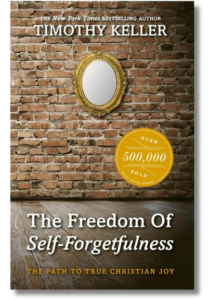 Imagine a life where you don’t feel inadequate, easily offended, desperate to prove yourself, or endlessly preoccupied with how you look to others. Imagine relishing, not resenting, the success of others. Living this way isn’t far-fetched. It’s actually guaranteed to believers, as they learn to receive God’s approval, rather than striving to earn it.
In Tim Keller’s short ebook, The Freedom of Self-Forgetfulness: The Path To True Christian Joy, he explains how to overcome the toxic tendencies of our age一not by diluting biblical truth or denying our differences一but by rooting our identity in Christ.
TGC is offering this Keller resource for free, so you can discover the “blessed rest” that only self-forgetfulness brings.
Michael Aitcheson (MDiv, Reformed Theological Seminary) is senior pastor and planter of Christ United Fellowship (PCA) and a Council member for The Gospel Coalition. He is cohost of the As in Heaven podcast. He and his wife, Lucy, are retreat speakers for Family Life’s Weekend to Remember. They live in Orlando, Florida, with their four daughters.
Irwyn Ince (MAR, Reformed Theological Seminary; DMin, Covenant Theological Seminary) serves as the interim lead pastor of Grace Mosaic Church in Washington, DC and adjunct professor of pastoral theology for Reformed Theological Seminary. Ince is also a Council member of The Gospel Coalition. He has contributed to the books Heal Us, Emmanuel and All Are Welcome: Toward a Multi-Everything Church and authored The Beautiful Community: Unity, Diversity, and the Church at Its Best and Hope Ain’t a Hustle: Persevering by Faith in a Wearying World. He and his wife, Kim, have four children.
George Robertson (MDiv, ThM, Covenant Theological Seminary; DPhil, Westminster Theological Seminary) is senior minister of Second Presbyterian Church in Memphis, Tennessee, and a Board member of The Gospel Coalition. He is the author of several books, including Am I Called?, What Is Evangelism?, and Soul Anatomy: Finding Peace, Hope, and Joy in the Psalms. He writes regularly at gwriteshere.substack.com.
Mark Vroegop (BA, Cedarville University; MDiv, Cornerstone Seminary) is the president of The Gospel Coalition. He served in pastoral ministry leadership for nearly 30 years, most recently as the lead pastor of College Park Church in Indianapolis. An award-winning author, Mark has written several books, including Dark Clouds, Deep Mercy: Discovering the Grace of Lament and Waiting Isn’t a Waste: The Surprising Comfort of Trusting God in the Uncertainties of Life. Mark is married to Sarah, and they have three married sons, a college-aged daughter, and five grandchildren. You can find Mark on Facebook, Instagram, and X.