
The Christian landscape has shifted in significant ways since 2005, the year The Gospel Coalition was founded.
In this panel discussion recorded at TGC25, Ligon Duncan, Nancy Guthrie, Collin Hansen, Juan Sánchez, and Mark Vroegop reminisce about TGC’s early days and reflect on all God has done in the past 20 years. They also talk about what they hope to see in the future as TGC seeks to help renew and unify the contemporary church in the ancient gospel.
In This Episode
0:00 – Video: TGC’s origins and expansion
3:45 – Panel members’ connections to TGC
11:19 – The original vision and early challenges
15:38 – Innovations and online platforming
20:25 – Influence on local churches and personal testimonies
29:53 – The role of charity and conviction
31:16 – Closing reflections and future vision
SIGN UP for one of our newsletters to stay informed about TGC’s latest resources.
Help The Gospel Coalition renew and unify the contemporary church in the ancient gospel: Give today.
Don’t miss an episode of The Gospel Coalition Podcast:
Transcript
The following is an uncorrected transcript generated by a transcription service. Before quoting in print, please check the corresponding audio for accuracy.
[Video]
Don Carson
It needs to be the center out of which we think about everything. Even our name is a hint in that direction. It’s the gospel coalition 2025,
Speaker 1
the Gospel coalition celebrates its 20 year anniversary. But before there was a coalition, there was a conversation 2002 New York City Don Carson and Tim Keller met in a Manhattan sidewalk cafe. That conversation would help catalyze a significant global gospel movement in the decades to come. In the rapidly secularizing West, Keller and Carson saw the need for an Orthodox Christian movement, a space where biblically faithful Christians could engage the culture and not withdraw or assimilate.
Don Carson
If the gospel is merely assumed, while relatively peripheral issues ignite our passion, we will train a new generation to downplay the gospel and focus on the periphery. It is easy to sound prophetic from the margins. What is urgently needed is to be prophetic from the center.
Speaker 1
Before the gospel coalition was a conference or a website that reached the world, it was a small relational network of pastors from various denominational backgrounds.
Speaker 2
The original reason was strictly the relationships. We had no idea whether we were going to be able to come together theologically, whether we could do anything more organizationally. But the reason why we all came back there was like almost no attrition, was we said, these are people we I want to be friends with. It still is the I think the beauty and the key of it.
Speaker 1
2007 the gospel coalition launched a website and hosted its first national conference
Don Carson
as a coalition. Then we aim not only to encourage ourselves and to sharpen ourselves to become more accurate and mutually edifying, but also then to set up a kind of encouraging center, through conferences, through the website, through publications for other people who want exactly the same kind of thing in their own churches and ministries.
Speaker 1
2013 TGC, first international coalition was launched dedicated to strengthening the global church.
Speaker 2
When you get people together who are like one another, so they trust each other about the gospel and yet very unlike each other, people of different races and classes, people of different temperaments, people from different parts of the country, and as I said, in different parts of the world, when we get together and talk about now, how do you do evangelism now? How do you do fellowship and discipleship? There’s going to be innovations. There’s going to be creativity. And so the gospel coalition is not just looking to preserve the past, but it’s really looking to take the gospel into the future.
Speaker 1
So what is the gospel Coalition? We’re more than an institution, we’re a movement. We’re more than a platform, we’re a network. For the last 20 years, TGC has united Christians who believe in the central importance of getting the gospel right and then applying that gospel to all of life. The people may change. The methods may change, the cultural challenges may change, but the mission to declare, defend and apply the timeless gospel of Jesus Christ never changes. How will God use the gospel coalition in the next 20 years? How will God use you? Let’s renew and unify the contemporary church in the ancient gospel together.
Speaker 3
You. [End of Video]
Mark Vroegop
Well, that’s an amazing summary historical record of God’s faithfulness to the gospel coalition over 20 years, and here we are gathered at TGC 25 on the 20th anniversary of a beautiful movement of God’s Spirit, of gospel centered ministry, that we are all now stewards of a moment that, quite frankly, that we look back and we think about the beautiful reality, the surprising reality of what God, by His Spirit, has done, And also for us to look forward to think, okay, so what does it mean now as we move into the next generation to help renew and unify the contemporary church in the ancient gospel? So in this panel, we’re going to talk about those 20 years, a little bit of history. And on our platform are some folks who have been a part of the TGC world at the very beginning and all throughout its history. And so you’re going to, I think, really appreciate and enjoy the conversation that we’re about to have. So let me have each of you introduce yourself, if you’ve just come to the conference today, I’m Mark vogup, the new president of the gospel coalition, and then we’ll go here to the left.
Nancy Guthrie
Hi, hi. I’m Nancy guy. Three and you want to tell our church affiliation? Did you Yes? Yes. Alright. And so I am a glad member of Cornerstone Presbyterian Church in Franklin, Tennessee.
Speaker 4
Colin Hanson, I serve as the vice president for content in the editor in chief for the gospel coalition. Been here since 2010 I live in Birmingham, Alabama, where I’m a member of Redeemer Community Church.
Juan Sanchez
Juan Sanchez, chairman of the board of the gospel coalition, and senior pastor of high point Baptist Church in Austin,
Ligon Duncan
Texas. And I’m Ligon Duncan, and I serve on the board of the gospel coalition, and I am the Chancellor of Reformed Theological Seminary.
Mark Vroegop
So given your title, just quick question, raise your hand if you’re in a Presbyterian Church, okay, raise your hand if you’re in a Southern Baptist Church. Raise your hand if you don’t know what kind of church you’re in, we would be in the non denominational which means we just love everybody, right? So there we go, and everyone loves us. That’s right, absolutely, yeah, that’s so true and kind of not okay. So, so let’s talk about how you all got connected to the gospel coalition. Here we are 20 years and as I’ve talked to a lot of people about their engagement with the gospel coalition, it’s remarkable, both how, why and when they became part of what I’ll call maybe the TGC ecosystem. So we’ll start with you League, and we’ll just go right down the line here. Tell us how you got involved in this beautiful community we call gospel
Ligon Duncan
coalition. I had become a friend of Don Carson’s through Mark Dever, Don and Mark dever had had a long friendship and relationship, and Mark kindly brought me into that friendship, and of course, I had been an admirer of Don’s scholarship for years, going Don was writing stuff for on on the inerrancy of Scripture back in the 70s and 80s that had a huge impact on me as a seminarian. Tim and I had become friends because we had been invited to debate a controversial issue in our denomination, and everyone was expecting fireworks, and Tim and I really liked one another, and friendship began in about 2000 and so as we’ve said, all of us at that first meeting were friends of Don and Tim. So I had been brought into that friendship with both those dear men. That’s so
Juan Sanchez
great. Juan, I had developed a friendship with Mark dever early on, and then I think Mark mentioned to Don Carson and Don and Tim from the very beginning, had a heart to see this coalition be represented in its diversity, from different denominations, different backgrounds and different ethnicities. And so I’m in my office, in my assistant says there’s a DR Don Carson on the phone. I thought she was pulling my leg, like, what would he be doing calling me, but he called me, and he just explained, you know, the Gospel coalition is trying to plant the gospel flag Central, centrally, in the midst of all the cultural wins, and he invited me to come in. And so I came in in 2007 Okay,
Speaker 4
Don Carson was one of my seminary professors, and I became the fourth staff member of TGC back in 2010 somehow I got the job despite my grades on Don Carson’s notorious New Testament verbal exams in there, I’d get 15 out of 20. I think that’s great, until I realized it was a C in there. So Don hired me after I graduated there, but I’d been at the 2007 conference writing for Christiane Today magazine about it, where I’d been the news editor, so that’s my connection. Also, I’d started editing books with Tim Keller shortly before I joined staff, that was my onboarding Nancy.
Nancy Guthrie
I had spoken at covenant college and met Neil Neilson and his wife, Kathleen. Neil was the president of covenant college at that time, and I think it was a while after that that Don Carson called Kathleen and asked her to to be head of the women’s initiatives for gospel coalition. And the first thing that was part of that was having a few women that were offering some breakout sessions at the gospel coalition conference in 2011 so I got to be a part of that. And a great memory from that time was sitting around a table with Don Carson and I think Crawford Lauritz, and then the women who were offering breakouts at that session. And I so remember Don, he was talking about what the women’s initiatives was going to be all about, and he said, this isn’t going to be about women. It’s going to be about God for women. And Kathleen was starting something she was so committed to it being scripturally serious for women, which launched the women’s initiatives in such a great way. A because there is such a commitment to seriousness about the
Mark Vroegop
scriptures. Wow, that’s awesome. I think my engagement was first with a conference, just fascinated and really encouraged with the diversity of backgrounds, the friendship, but a commitment to Reformed theology, thinking clearly about the scriptures. But I actually think relationally, it came through you, Colin, you’re, you’re my entry point
Unknown Speaker
in 2010 college church. Wheaton, was
Mark Vroegop
that? Well, okay, yeah, I’m glad you’re historian. To remind me of the dates when we have Steve DeWitt was with us. Steve DeWitt was with us. I think we talked about what it means to be an ordinary pastor, and how we could help ordinary pastors. And just thinking about that, and then joining the council, I believe it was in 2000 and and 16. So it’s just interesting to see the trajectory of God’s providence in all of our lives, the personal, the theological, the local church connections, how all of that converge with what the gospel coalition has been and continues to be. Well, let’s think about the original vision of why did Juan Sanchez get a phone call from Don Carson? What was the original impetus, the problem that they were looking to solve, the issues that Don and Tim were trying to address, what was the core issue? We will start with you, and then whoever wants
Ligon Duncan
to jump in, Colin will do a better job of answering this, but from where I was sitting, for the more theological wing of evangelicalism, however you wanted to define evangelicalism, we were in a place where there was there was no organization pulling us together, and Don and Tim wanted people with a high view of Scripture, a high view of God, a high view of grace, a high view of a biblical pastoral ministry that was aware and effective in contemporary culture in reaching all kinds of people with the gospel, especially people that are hardened to the gospel. How do you reach out in blue states? How do you reach out to skeptics, etc, with with real truth exposition? You know, Don talked about being expositionally driven in our ministry. And so you had a lot of people from a variety of backgrounds, denominational and otherwise, that shared those same concerns, and it really did create a center. I was asking Colin, is there, is there anything out there in sort of our neck of the woods, in evangelicalism like this, that’s able to pull people together? I don’t think there has been. TGC has really been a rallying place for those kinds of people with those kinds of convictions. There’s a
Speaker 4
little bit of a back and forth in evangelical history between some of our impetus to be innovative, but also can veer toward the pragmatic, and then you go back toward the confessional and the theological. And one of the besetting sins that we saw at that time of evangelicalism, 80s, 90s and the early 2000s was an obsession with being pragmatic. And then on top of being pragmatic, then that actually opens the door to a lot of theological liberalism. And so what, what Don and Tim, the other original council members, were responding to, was a moment where there was everybody was talking about what was new and novel and different, what was going to reach young people. And I remember thinking about my college ministry. I graduated college in 2003 thinking that’s not what we’re talking about at all. We’re talking we’re reading Wayne Grimm system act theology. We’re talking about Jonathan Edwards and his theology. And we just didn’t realize Don and Tim did that this was a bigger thing than what we were just seeing in part of a significant move of God in the evangelical church.
Juan Sanchez
Yeah. And what’s interesting is, at that point, in my mind, the presenting issue was the Emergent Church and how post modernism was influencing the thought among the younger generation. And so the idea was to plant that flag centrally. But what’s interesting, and this speaks to the need, the ongoing need, of the gospel coalition. You know, I remember reading Joel Carpenter, I can’t remember what book, but he he shows how during the Billy Graham era, the Youth for Christ rallies, they were trying to win that post world war two generation. And then, of course, Bill Hybels, with the Willow Creek, they’re trying to reach the boomer generation. The Emergent Church was trying to reach the children of the boomers. So, so there’s always this concern among evangelicals, of reaching the generation that’s leaving the church, but through innovation and pragmatism. And I think the place of the gospel coalition is no we need the ancient gospel to take hold and to keep that Central, and that’s what will draw the next generation. I have
Mark Vroegop
a question to follow up on that. But you any comments about the early vision from your
Nancy Guthrie
seat? Well, I guess I would just say you mentioned expositional preaching, and I remember the first women’s conference that I did a plenary. And. After I spoke, I got four words from Don Carson. He said, Thank you, genuine exposition. Okay, I’ll take it.
Unknown Speaker
That was a high compliment.
Nancy Guthrie
But honestly, there was, and I would say there still is not another women’s conference where you have women giving expositional talks, and all of the plenaries that are that are focused on the text. And so there wasn’t up to that point with gospel coalition, so that’s been a real
Mark Vroegop
distinctive. So what’s interesting, though, you when you talk about the early days of the gospel coalition, there was this concern about over pragmatism and and and, and maybe even over innovation, if you will, trying to find creative ways to reach the next generation. But it wasn’t that long after the establishment of the gospel coalition that we’re launching a website that’s fairly innovative, and doing things to be able to platform the gospel in a lot of new ways. So Colin talk a little bit about just the the genesis of of that. I don’t think in the original meetings 2005 2007 that anyone had an idea that there would be this kind of of online platforming, if you will, what we have now.
Speaker 4
Yeah, before I had showed up and started in 2010 the gospel coalition was already innovating with the website, as you saw there, and primarily through blogs. So you think about somebody really significant in our history, in our present and our future, Justin Taylor crossway, with his blog there. Kevin De Young’s blog was at the gospel coalition as well. So that was one of those early innovations. And I think what you see in that video from Don and Tim both is that you can have confessionalism and wise ministry in the same like I remember sitting there in Don’s office in 2010 and he said, we’re discussing what we would put on the website. And he said, best practices, talk to one church about what they’re doing well, how it’s working in their context, put it on the website so that other churches could learn from that. That’s pretty simple, but using the internet to be able to do that was still a fairly innovative thing at the time, and that’s still what we’re doing today. So that the kernel of the vision was there in the beginning, but it was that it always had to be connected to the Gospel itself, and with a confessional history and defining evangelicalism as not merely some sort of sociological phenomenon, but something that has a theological core to it.
Mark Vroegop
So at the core of who and what TGC is, are a set of documents. We call them the foundation documents. And I would like to just unpack that. What what do we what are those documents? And why are they so important? How did we even get them? So maybe Juan, you want to start by just explaining what they are, and then we could talk further about how they’re unique in terms of the two sets.
Juan Sanchez
Yeah. So you have the the confessional statement, the preamble just kind of summarizes the vision, but you have the confessional statement, and then you have the theological vision for ministry. And I wasn’t there in the initial meetings, and ligand was there. Can probably help, but my understanding, it was quite a rugged process of editing and going back and forth. But that sets not only the confessional boundaries, if you will, but also the theological vision for ministry.
Ligon Duncan
You were there 50 people in a room, around the table. Don had done the drafting, sent the documents out. John Piper came with about 117 suggestions on changes, no surprise, approximately so precise and careful with words that really helped us generate discussions just to figure out where we were in the room. We didn’t know a lot of us did. We were all friends of Don and Tim, but we didn’t necessarily know one another. It helped us to get to know one another, to talk through those issues and the refining process. Came out with an even better document. But we didn’t want just a theological statement. We wanted a statement on vision for ministry, because what what we saw happening in evangelicalism is you could have people with a good statement of faith that was not translating into the way that they were doing ministry. And Don and Tim wanted a theologically driven vision for ministry to be expressed that was going to be positive. Not just we’re not that or we’re against that, but we’re for this, and we think this is the way to do pastoral ministry, and this is the way to reach out to the culture in a scriptural, effective way. And so that was a very good process to talk through that
Mark Vroegop
I had a conversation with Don Carson about a month ago, just asking about the history of everything at TGC. And he he mentioned that moment when all of those edits came in. And he even said, like, he wasn’t sure how this was going to go, like it was, it was, I mean, it was, what’s how is this going to play out? And he said something interesting. He said, You know, he wanted to honor everyone’s contribution, to be sure that we heard and listened. So that there was good give and take. And he said in that conversations about some of those edits and changes, there was this sense of renewed commitment, not only the gospel and precision, but also to honoring one another. Hey, help me understand why you’d want to use that word. Let’s talk about it in a way that was charitable and yet also convictional. I think that’s one of the things I love about TGC, is there’s just not many spaces left where you can be convictional and charitable and actually see that displayed, because that’s not a theoretical thing. It’s an experiential thing as well. Like I see it, oh, that’s and that becomes a model, and that’s what I experienced going to the first TGC conference, the way that things were talked about, not just what, but the way, was really helpful in my local context, trying to figure out, who do I partner with, and how do I be friends with other pastors, but we have differing viewpoints, and how do we think about that? And I think that’s one of the ways that TGC has really served the local church. When we think about the local church in TGC impact, what other examples might you give of the ways that TGC has been a bit of a meeting place for gospel material for local churches being helped. So maybe we can start even like women’s ministry is, in particular, a really big example.
Nancy Guthrie
Absolutely, I have so many conversations with women and with women’s ministry leaders, Bible teachers, and I think when they discovered TGC and all of its resources, whether it was coming to a conference and being in a room with all of these other people who have a heart for word centered women’s ministry, so many women are out there in their local churches. They haven’t necessarily had any formal training, and all they’ve known is maybe what they’ve experienced. And so they’re really hungry for some influence, and a lot have been hungry for something deeper and something more substantive, and so I think they’ve been able to come to a TGC conference and see that modeled, and absorb that from what’s taught. You know, they’ve absorbed from podcasts and, of course, from reading, from discovering better sources than maybe they’ve had in the past. And I love what Courtney doctor is doing today. You know, TGC is always thinking about what will serve the local church. That’s the real heart, isn’t it? And so I really see that what Courtney doctor is doing, she’s been holding all of these online cohorts for women, and so like the women’s director at my church did a cohort to just get some fresh ideas about how you’re going to do women’s ministry, and how you’re really going to get the women in your church who may not be that interested into the Bible, into the Bible, those kinds of things. So TGC, I think, has played a huge role in that, in women’s ministries across the country. Maybe, I think we could say around the world, because it has been interpreted in so many languages and not so far
Mark Vroegop
other local church impacts. Well, you get an applause there.
Speaker 4
I think, I think about a number of the young adults who have grown up in these last 20 years. I think about a couple things that God has been kind to use the gospel coalition to make rather normative. One of them would be Christ centered preaching from all of Scripture, Nancy. You do this so well in your teaching. That was not a normative thing across evangelicalism, maybe in Presbyterian circles, but that’s become a more normal thing in our non denominational churches as well. So that’s one thing. A second thing I think about is catechesis that was not a common practice within our non denominational or Southern Baptist churches. God’s use the new city catechism to in these last 20 years and the 10 years since, that’s been out to help raise up a new generation who have grown up with these doctrines of grace, not having discovered them later, but having been taught them by their parents and by their churches at young ages. So those are a couple of the different legacy projects that we’ve invested in that have invested in that have really made a big difference in the younger
Juan Sanchez
generation. Yeah, and I can speak it to the the Spanish speaking world, you know, at these conferences and others, I would, I would gather Spanish speakers who were attending these conferences. We would just meet in the side room and just have conversations and and talk about the needs and the vision. I met David Adams from poema, and then I heard about Miguel Nunez. He was going to desire God conference. He was kind enough to stop in Austin. And we just, we just brainstorm, what, what can we do like this? And so we we desired to see an awakening that would lead to a revival that might lead to a reformation in the Spanish speaking world. And so when I would travel to places like Cuba, I would just take a flash drive, and we would disseminate resources, and they would just spread like wildfire. I remember one time going like a year later in a. Pastor pulled me into into a room, and he showed me a video of John Piper that had been subtitled. And I said, Where did you get this? He says, Oh, you brought it here a couple of years ago. Wow. And it’s just amazing how, like wildfire, the resources have spread and coalition emerge from that same vision. Wow.
Mark Vroegop
It’s incredible. So as we’re wrapping up here, TGC has not only been a beautiful organization and a movement, but it’s also had a direct impact on all of us personally. So I wonder if we could just start with leg and just a sentence or two of what it’s meant to you at a personal, pastoral, human, Christian
Ligon Duncan
level. Well, just to give give testimony to the friendship of Tim Keller, in my life, you know, Tim and I meet sort of in a general assembly context in the PCA, we become friends, then we serve together on TGC. Then Tim asks reformed Theological Seminary to come to New York City, and I get to teach with him every year for seven years, and then I then I get to watch him die, and I get to watch him die in faith. And he says things to me like, Luke, how old are you? I’m 62 Tim, don’t think you have time just and to watch him die in faith to watch him cross the finish line trusting the Lord, I will value that till the day I close my eyes for the last time,
Juan Sanchez
praise God one Yeah, as a young pastor, being in that room when we would have a colloquium, seeing people that You read and admired and understand these are just men. Yeah, you know, like JC rouse said, you know the best of men are men at their best. And to see these brothers at their best, and and treating me as an equal brother in Christ, brother pastor in Christ, and then these last several years serving on the board, learning from Ligon and Phil reichen and Dan doriani and Tony Maria, learning from these brothers who are leading institutions and have led Ministries has made me just a better leader. So for me, it’s been about the relationships and just the natural discipleship that takes place when men are getting together. It’s good.
Speaker 4
Colin, I don’t know quite how to verify this mark, but I think I’m the last person left who’s been to every TGC national conference, wow, including all the women’s conferences, and so I think about meeting Don and Tim and the other council members at a fairly young age, and then seeing them pass from the earth or just like Don, not able to attend with us anymore, Don, if you’re watching, we miss you and appreciate you. I just see it as part of my life’s calling to help carry on and carry out for the remainder of my days the legacy of faith that they demonstrated, but also what they taught and the Savior that they worshiped, they loved, and they taught so many of us to help love even more. So that’s one way I helped change my life. It’s good.
Nancy Guthrie
In 2008 I read a little book called Young, restless and reformed, and I didn’t know the author, Colin Hanson, but I wrote him a letter that I never sent. Oh, and I looked for it, I don’t seem to have kept a copy. And the reason I wrote him a letter he wrote about this world that I was just discovering of, of convictional glad, Reformed theology, and this was a world I didn’t know I was, you know, very enmeshed in the generally evangelical world, and happily so. And so was I was discovering Reformed theology and what he was writing about. But when I read the book, my thought was, Where are the women? And I didn’t send it to him, because I thought he didn’t know me. I was like, he’ll think, I’m saying, hey, I want to be the woman. But anyway. But it was like, Where are the women? So, you know, when I think about what TGC has meant to me, you know, this is where I have found my sisters and my brothers, who I’ve come to love so much. I’m so grateful that, when I came up with the idea, hey, I want to, I want to go around and talk to all of my favorite theologians and Bible teachers and record it for this podcast. Help me teach the
Unknown Speaker
Bible. Help me teach the Bible. Go check
Nancy Guthrie
it out. And Colin said yes, and that’s been a thrill of my life. Really to it was really all just for me to invite myself to their offices to talk about the Bible. And so I yeah, I just pinch myself to get to be a part of TGC, I’m glad for all I’ve learned and all the people I know. And just to get to be a part of something having such a significant gospel impact in the world is a profound privilege,
Mark Vroegop
so great. And my one sentence would just be TGC with all the things that it. For me, personally, helped me to be a better pastor in my local church by modeling what charitable, convictional pastoral ministry looks like, and also giving me resources so I could help know how to help my people in a way that was clear and trusted 700 words or less just to help me get started on a theological subject that I needed just to understand in a way, particularly in the cultural apologetic space. So super grateful. So I hope this has been helpful for you to know a little bit more about some of the background behind TGC. We are stewards of the legacy of the last 20 years. Institutions matter. Organizations like this are helpful, because in particular, TGC is trying to hold the center. Coalitions are beautiful. You might not be surprised. They’re also complicated. You got people with differing viewpoints and personalities, backgrounds and in the middle of a society where coalitions and organizations are dividing, fracturing, going their separate ways, we’d like to create a beautiful, different environment in the context of TGC, quite frankly, who knows if the center can hold but someone has to try. And TGC is the organization that’s going to try to do that in order, in other words, to try and help renew and unify the contemporary church in the ancient gospel. That’s who we are. It’s what we’ve been doing, and that’s what we’re going to continue to do, because we think the gospel is not only important, but it also brings people together in a way that says something really, really powerful to the world, and then it impacts local churches every seven days. So we’re so grateful that you’re here, and thank you for your prayers for the gospel coalition with that let’s pray together. Let’s stand and pray as we move into our next keynote address, God, we thank You for Your mercy and grace to us. We are humbled to be both in this room, knowing that we would not be here apart from your goodness and grace. We are a broken people, a but now kind of people. We are a grace, loving, miraculously changed people. We are Ephesians people. It’s our story that we’re studying and we’re seeing ourselves, and we’re also seeing you. And it’s so great to sing together, to hear 7000 people singing a cappella just there’s nothing like it. It reminds us of what heaven is going to be like. So we thank you for that foretaste of what is yet to come, we pray You’d use this conference to build new relationships, to renew old ones, help us find helpful content, and then help us just to savor what it means to meet with you and to worship together and we Bless you and praise you In Jesus name, amen.
Free eBook by Tim Keller: ‘The Freedom of Self-Forgetfulness’
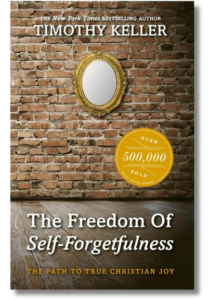 Imagine a life where you don’t feel inadequate, easily offended, desperate to prove yourself, or endlessly preoccupied with how you look to others. Imagine relishing, not resenting, the success of others. Living this way isn’t far-fetched. It’s actually guaranteed to believers, as they learn to receive God’s approval, rather than striving to earn it.
In Tim Keller’s short ebook, The Freedom of Self-Forgetfulness: The Path To True Christian Joy, he explains how to overcome the toxic tendencies of our age一not by diluting biblical truth or denying our differences一but by rooting our identity in Christ.
TGC is offering this Keller resource for free, so you can discover the “blessed rest” that only self-forgetfulness brings.
Ligon Duncan (PhD, University of Edinburgh) is chancellor and CEO of Reformed Theological Seminary, president of RTS Jackson, and the John E. Richards professor of systematic and historical theology. He is a Board member of The Gospel Coalition. His new RTS course on the theology of the Westminster Standards is now available via RTS Global, the online program of RTS. He and his wife, Anne, have two adult children.
Nancy Guthrie (MATS, Reformed Theological Seminary) teaches the Bible at her home church, Cornerstone Presbyterian Church, in Franklin, Tennessee, as well as at conferences around the country and internationally, including through her Biblical Theology Workshop for Women. She is the author of numerous books and the host of the Help Me Teach the Bible podcast from The Gospel Coalition. She and her husband founded Respite Retreats for couples who have faced the death of a child, and they’re cohosts of the GriefShare video series.
Collin Hansen serves as vice president for content and editor in chief of The Gospel Coalition, as well as executive director of The Keller Center for Cultural Apologetics. He hosts the Gospelbound podcast, writes the weekly Unseen Things newsletter, and has written and contributed to many books, including Timothy Keller: His Spiritual and Intellectual Formation and Rediscover Church: Why the Body of Christ Is Essential. He has published with the New York Times and the Washington Post and offered commentary for CNN, Fox News, NPR, BBC, ABC News, and PBS NewsHour. He edited the forthcoming The Gospel After Christendom and The New City Catechism Devotional, among other books. He is an adjunct professor at Beeson Divinity School, where he also co-chairs the advisory board.
Juan Sánchez (MDiv, ThM, PhD, Southern Baptist Theological Seminary) has served as the senior pastor of High Pointe Baptist Church in Austin, Texas, since 2005. Juan serves as a Council member of The Gospel Coalition and is cofounder and president of Coalicion por el Evangelio. He is the author of numerous books, including 1 Peter for You, Seven Dangers Facing Your Church, and The Leadership Formula. He has been married to Jeanine since 1990, and they have five adult daughters.
Mark Vroegop (BA, Cedarville University; MDiv, Cornerstone Seminary) is the president of The Gospel Coalition. He served in pastoral ministry leadership for nearly 30 years, most recently as the lead pastor of College Park Church in Indianapolis. An award-winning author, Mark has written several books, including Dark Clouds, Deep Mercy: Discovering the Grace of Lament and Waiting Isn’t a Waste: The Surprising Comfort of Trusting God in the Uncertainties of Life. Mark is married to Sarah, and they have three married sons, a college-aged daughter, and four grandchildren. You can find Mark on Facebook, Instagram, and X.