






What happens when AI promises not just to help us work but to help us become the selves we most want to be?
That question runs through this episode with Rachel Gilson, director of theological development and culture for Cru and the author of Born Again This Way and Parenting Without Panic in an LGBT-Affirming World. In our conversation, she brings unusual clarity to the question of work in the age of AI: not simply what these tools can do but what they may be doing to our integrity, our vocation, and our sense of ourselves.
We talk about writing, voice, and the temptation to present work that isn’t really ours as though it were. AI may be able to write, but it cannot witness. It cannot speak from a life, a body, a history, or a situated perspective. That is why this episode isn’t a simple rejection of AI but a careful exercise in discernment: learning where these tools may genuinely help, and where they risk hollowing out the human work God has given us to do.
We also explore desire, embodiment, personhood, and the difference between using a tool and being quietly deformed by it. Rachel joined me on Silicon Spiritualities to ask how Christians can work faithfully in the age of AI and how the Scriptures help us hold together honesty, community, embodiment, and hope.
Resources Mentioned:
- Born Again This Way by Rachel Gilson
- Parenting Without Panic in an LGBT-Affirming World by Rachel Gilson
- Biblical Critical Theory by Christopher Watkin
- Entering into Rest by Oliver O’Donovan
- The Great Divorce by C. S. Lewis
REGISTER for our 6-week cohort, Get Ready for the Age of AI, where you’ll get an exclusive, early, free copy of the book The AI Apocalypse, featuring Watkin, Gilson, and many others, such as Ben Sasse and Alan Noble.
JOIN the conversation on Discord, along with other Silicon Spiritualities listeners.
Help The Gospel Coalition renew and unify the contemporary church in the ancient gospel: Donate today.
Transcript
The following is an uncorrected transcript generated by a transcription service. Before quoting in print, please check the corresponding audio for accuracy.
0:00:00 – (Rachel Gilson): Foreign.
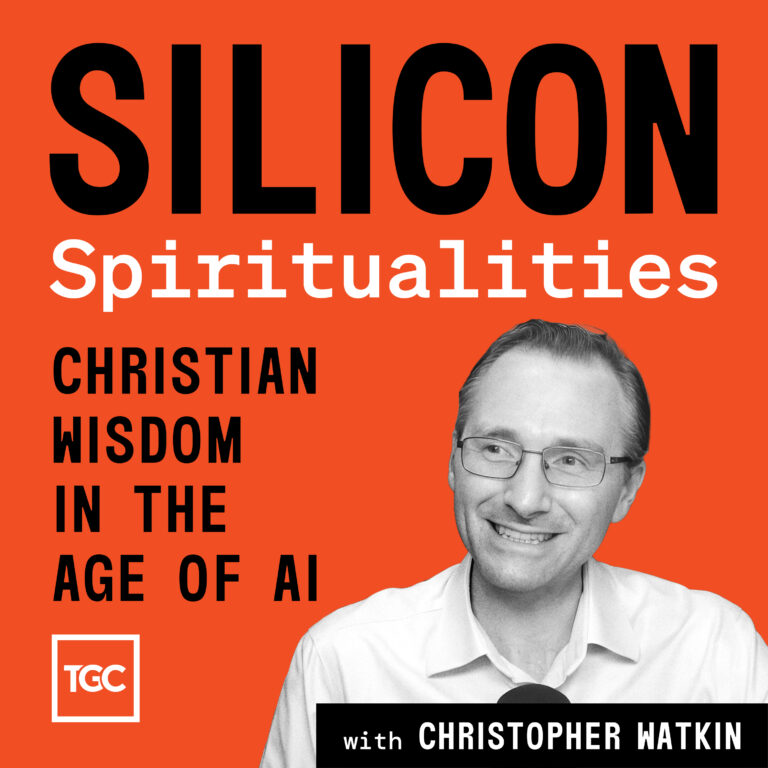
0:00:08 – (Christopher Watkin): Welcome to Silicon Spiritualities, a podcast from the Gospel Coalition exploring what it means to be human in the age of AI. I’m Christopher Watkin, and in each episode we’re circling around three crucial questions. What can AI do for us? What is it doing to us? And what does it show us about who we really are? And today I’m joined by Rachel Gilson, Director of Theological Development and Culture for the Campus Ministry crew and author of Born Again this Way and Parenting Without Panic in an LGBT Affirming World.
0:00:51 – (Christopher Watkin): And in this episode with Rachel, I’m going to be thinking about work. What it is, how AI might be changing it, and what that means for our view of ourselves. Rachel, welcome to the podcast.
0:01:06 – (Rachel Gilson): Yeah, it’s great to be on with you, Chris.
0:01:08 – (Christopher Watkin): I’d love to start, Rachel by just painting a picture for you and asking you to react to this particular scenario. So I want you to imagine Jesse. Jesse is a final year college student doing an arts degree. And although he’s very scrupulously never used AI in his own assignments, his friends do and they actually get better marks than he does. And that makes him really angry. Job advisors keep telling him that if his job isn’t taken by AI, then it’ll probably be taken by someone who knows how to use AI better than he does.
0:01:49 – (Christopher Watkin): And his passion ever since he was young is be a writer. But he sees fewer and fewer entry level writing jobs in journalism or anywhere else, and he’s beginning to wonder whether there’s any future for him at all. How might you counsel someone like Jesse?
0:02:09 – (Rachel Gilson): Well, I think in this hypothetical situation, this young man who’s avoided all AI tools in his course of study, it’s quite the hero’s challenge on that part. But I think there’s, you know, there’s so many different anxieties and hopes and dreams in this situation. On the one hand, I think this theoretical advisor is probably right. There’s going to be plenty of job opportunities for people who are more exposed to AI tools and how to use them well than those who have no exposure.
0:02:46 – (Rachel Gilson): So to Jesse, I might say, hey, I think it’s really good that maybe you haven’t used AI tools in terms of the cheating aspect, but it might actually be worth playing around with some of them to figure out, you know, how they’re useful. But the other thing I might counsel is, you know, anyone coming out of undergraduate or, you know, coming up to the end of it, there can for anyone be just so many anxieties about what am I going to do? How am I going to use the gifts that God has given me. How am I going to provide for myself?
0:03:15 – (Rachel Gilson): So he’s not necessarily in a brand new scenario, even though the rise of these tools can create kind of new anxieties. But the thing that the tools cannot really do yet is write compellingly. They can do. AI tools can do all kinds of wonderful things. But writing, especially writing that’s in our own voice, that draws on our own gifts and experiences and expertise, that’s still going to be worth something right now and I think even into the medium future.
0:03:52 – (Rachel Gilson): So I wouldn’t want him to despair. I would think through, listen, if you think this is a gift and a call that you have keep pursuing, growing in the craft of writing, figure out some of these AI tools and what they’re good for. But for you, for finding your voice and your contribution, just keep doing it. There might not be, you know, the same kinds of, the same amount of entry level jobs in writing, but writing is such a.
0:04:23 – (Rachel Gilson): It’s such a useful tool for anything you might do that investing in it. Even if you get a job that is only tangentially related to at first, I wouldn’t want him to give up hope, say, keep investing in the craft, see what the Lord will do.
0:04:40 – (Christopher Watkin): That’s such good advice. And I love the way that you put your finger really precisely. I think on what it is the day I can’t do there because it can do so much of the writing craft, it can write already at the stage things are at now incredibly well in many ways. One way that I heard it put recently was that it can write, but it can’t witness. And a lot of writing is witnessing. It’s from my experience as a situated human being. This is how I see the world.
0:05:12 – (Christopher Watkin): Let me tell you what it looks like from my perspective. But the thing about AI is that it doesn’t have a perspective because it’s aggregated from so many millions of different perspectives.
0:05:22 – (Rachel Gilson): That’s right, yeah. You know, recently, I think it was sometime last year, I had a piece of organizational writing. So for example, this is not my voice. It’s not. Author Rachel Gilson. We had a document that was a certain. I think it was like 13 pages. And we found out from our supervisors, listen, this document needs to be six pages by Monday. My team thought. My team and I thought, oh gosh, it was hard enough to get this at 13 pages.
0:05:47 – (Rachel Gilson): And honestly, we were able to. What we did is we took that document, we put it into one of the AI tools. We said, hey, can you can you cut this by half? And the output that it gave us, we were like, oh, you know what? This did a lot of that grunt kind of work at first. And then we spent a couple days editing, really, and saying like, oh, it cut that thing. We want to put back. Oh, it reworded this. We’ll add a little bit of clarity.
0:06:15 – (Rachel Gilson): It was an example for me of like, oh, wait a minute. This tool, in this situation, it’s actually really useful because it. It’s keeping all of our core ideas from the team. It’s not supposed to reflect any one particular author. It’s just an organizational document. And it. I mean, it probably saved us days worth of work. That for me was a breakthrough of like, wait a minute. I think there’s all kinds of places AI tools shouldn’t go, but I probably need to have a little different perspective on. There are some places where it can be incredibly useful.
0:06:51 – (Rachel Gilson): The trick is going to be, can we be people who discern the difference?
0:07:00 – (Christopher Watkin): Well, that’s really interesting. I didn’t know you were going to say that. So as an author whose work fundamentally relies on your words being your own, your position is crucial to your writing. Your attitude to AI is sort of a. Would it be right to characterize it as a symbiosis that there’s a skill and a wisdom in knowing when to bring AI into the writing process and when to shut it out?
0:07:29 – (Rachel Gilson): Yeah, I think so. Which for me is actually, I’ve had to grow to get there. I start with a base level high suspicion of AI tools. I think that’s probably because my. My parents gave me unfettered access to the Terminator movies when I was a child. So I easily go into just like, visions of Skynet. And I think I don’t have the biceps of Sarah Connor, so I’m not going to make it. But what I realized when my team, because I serve on the theological team for crew, when last year we said, hey, we need to start thinking about AI tools and really working on a Christian ethic of their use, especially for our missionaries, I realized I was having a baseline response to AI tools from fear instead of from faith, which I think the inappropriate thing would just to be jump from uncritical fear to uncritical acceptance.
0:08:30 – (Rachel Gilson): But I’ve spent a lot of time this past year trying to think what. How can I approach these tools for what they are each individual tool? I have been given particular work to do by the Lord, and my team has as well. And so we should be able to evaluate the Tools piece by piece and think are these useful to us? If so, how. What remains? Specifically, just our work to do. And that’s been really helpful to me to realize there actually are certain types of writing or modes of writing where the use of a tool in the process can be extremely helpful.
0:09:08 – (Christopher Watkin): There’ll be a lot of people listening to and watching this who will have to write a lot, either for work or in secular work or in Christian ministry. I’d love you if you’re able just to let us into that thinking that you’ve sketched for us. What are the principles that you have in your mind? What are the things you pray about when you’re working through? How to integrate and whether to integrate AI with a particular, particular writing task?
0:09:37 – (Rachel Gilson): Well, one of the texts that my team comes back to again and again is Ananias and Sapphira from Acts and this. I mean, they weren’t writing, but the question of integrity. They came to the community of faith and said, oh, we gave such and such, and they were lying. They hadn’t. They were misrepresenting what they had contributed. And they were, and they were punished for it. So one of the things we return to a lot is something AI tools are going to tempt us to is representing work that’s not ours as if it’s ours.
0:10:26 – (Rachel Gilson): So one of the key things I think about whenever I’m using an AI tool, especially in the course of writing, is what needs to be mine, what needs to be, like, Rachel Gilson mine. Like, in terms of I brainstormed it, I developed the thinking, I wrote the words and edited the words, and all of this, versus other times, like with this organizational document that has no particular author, that’s sort of grouped around these other things. I think, okay, well, that’s.
0:10:58 – (Rachel Gilson): That’s taking a lot of different perspectives and synthesizing, analyzing. That’s something an AI tool is really good at. But if I’m sitting down and writing my testimony or writing, here’s my position on if I were to write down instead of podcasts, here’s my position on AI tool use, I’d want it to be mine. So I think that’s. That’s one factor, like the integrity factor. And if I do use an AI tool to help me produce something, I like to put on the bottom in a footnote.
0:11:28 – (Rachel Gilson): You know, I used Gemini to help me create this, or I used Claude to help me create this, even just to introduce myself and my little community, hey, if we’re going to use the tool, let’s actually let’s actually say when we’re using it so that we. We don’t feel weirdly secretive about it. So, for example, even recently, I had an article that was submitted to a journal. It was accepted, and they said, oh, we need an abstract. And I thought, okay, I’ll write an abstract. And then I thought, oh, I wonder if I could put this in an AI tool and see if it would come up with the abstract. Because it’s really just summarizing my words.
0:12:05 – (Rachel Gilson): Said, oh, here’s the paper. Can you give me something that’s a couple hundred words? And it spit out something that was fine, and I doctored it up. And I was like, actually, this is pretty good. Because an abstract, it’s just meant to be a couple hundred words right at the front of your thing. It’s not the heart of the argument. I felt okay about that, actually, because I think that’s saving me. I put a lot of time and energy into writing the article at this stage, having a little bit of help just to give a nice snappy summary so someone can scan it and see if they want to read it or not. I felt pretty good about that.
0:12:41 – (Rachel Gilson): I’d also be comfortable if other people didn’t feel good about that. Because these tools are so new, we’re each probably going to have different thresholds of what we think is okay and what we think is not okay. And one of the things I’m concerned about is that we just. We don’t attack each other over it. We should be able to have calm conversations with each other so we can press each other, but not kind of just quickly say, oh, I can’t believe you’d ever do that, or, oh, I can’t believe you wouldn’t do that, et cetera, and just kind of be quick to judge each other.
0:13:15 – (Christopher Watkin): I really love this idea of just putting in a footnote. I used Gemini or whatever to create this because I think it neutralizes the Ananias and Sapphira dynamic, doesn’t it? There’s no difference between what I’m presenting to you and what actually happened. So it keeps me honest. One way that I’ve tried to think about this in the past is if the person for whom this document is destined knew how it had been created, would it change their opinion of it?
0:13:49 – (Rachel Gilson): Right.
0:13:49 – (Christopher Watkin): And if it probably would, then that’s an issue. So if. If I’m, you know, to use the extreme example, someone writing a love letter to their spouse.
0:13:59 – (Rachel Gilson): Right.
0:14:00 – (Christopher Watkin): That would, you know, if AI had written that, that would materially transform the way that that text landed, and therefore that in itself is a huge red flag. I mean, obviously that’s an extreme example, and, you know, people wouldn’t do that. But. But there’s also that. That’s one question that we can ask ourselves.
0:14:18 – (Rachel Gilson): Yeah, I mean, obviously sometimes we just write in a journal that’s just for us. But so much of our writing is actually to bless, help, encourage, strengthen other people. We’re writing for an audience. And so one of the principles that has to be at play. How am I loving the people who are going to read this? And I think that integrity is huge there. And that’s actually a through line that runs through our work.
0:14:45 – (Rachel Gilson): Work is always for someone, even if it’s just for the Lord. Right. There are. There are times when no one is going to see. No one is going to. So to the extent that AI tools hinder the ability to love, that would be a major red flag, a major stop sign.
0:15:07 – (Christopher Watkin): Absolutely. Absolutely. We talk a lot in literary studies at the university about voice. And I guess another question would be, is my voice significant in it? So if I’m writing instructions on how to assemble a table, for example, it doesn’t. It doesn’t matter that much that it’s me who’s written it. It’s functional text that helps people do something I’m not witnessing as I’m writing that. And so if I can use AI to help me get that clear, then it doesn’t seem to me that there’s a huge problem there.
0:15:42 – (Christopher Watkin): But if I’m writing a piece of fiction or if I’m writing a story as something that happened to me, then my voice is crucial there. That is, in a sense, what the text is about. And not only, you know, do I fall foul of the Ananias and Sapphira factor when I do that, but I rob myself of that, which is, in a sense, in a textual way, most mine, which is my voice, which is
0:16:11 – (Rachel Gilson): especially at play for our hypothetical Jesse. Like our younger people who are having AI tools enter their journey. Sometimes people are finding themselves with these really powerful tools before they’ve had a chance to develop their voice.
0:16:26 – (Christopher Watkin): It’s a tragedy. It really is.
0:16:28 – (Rachel Gilson): Yeah, it’s. It feels. And now, of course, okay, I’m trying to speak against my doomerism. That comes up easily. Human beings are incredibly creative. We are amazing when we’re given a new tool and we figure it out. I have faith that Gen Z and Gen Alpha and the ones who come behind them will encounter all kinds of crazy tools. And as they follow the Lord, are empowered by his spirit. They will figure out how to use these tools to love God and love their neighbor. So their development might be really different than yours and mine.
0:17:05 – (Rachel Gilson): It certainly will. But I do think how hard we’ve had to work to find our own voices at writers. You think, oh, there was just so much toil that went into. It was really important. And this is especially why. I mean, so a technical writer, you know, like somebody who’s doing science, maybe, maybe their voice doesn’t matter so much if they’re writing up various reports. I don’t know. I’ve never been a scientist.
0:17:27 – (Rachel Gilson): But you think especially about things like. I think about crew missionaries or sort of any minister when you’re writing devotional material, when you’re writing a sermon, when you’re preparing a Bible study. That’s exactly the kind of place where, like you said, we need to be able to express our voice because God loves to work through his people. He loves to work through his people. I mean, he could just save everyone in dreams if he wanted to. But there’s something about the fact that the gospel is meant to be spread person to person, that’s really key there.
0:18:03 – (Rachel Gilson): And of course, doing the work, getting the Word inside of us so that it forms us as we prepare to lead others through it is so huge. You wouldn’t want to give that away to a tool.
0:18:16 – (Christopher Watkin): Absolutely. And I do wanna come back to that in a moment. But just as you’re speaking, I was reflecting on the different voices in the biblical texts. You know, God has given us a book, a series of books with an incredible range of voices. And, you know, he didn’t necessarily have to do that. There could have been a standard way of speaking that could have been used throughout the Bible. And yet you read one of John’s letters and you read Peter and you read Paul, and you only need one sentence to know which of those you’re in.
0:18:47 – (Rachel Gilson): Right.
0:18:47 – (Christopher Watkin): The voice is so different. I don’t know whether there’s an answer to this, but I want to ask it anyway. Why do you think God has done that? Why? In other words, why is voice so important in the Bible?
0:19:06 – (Rachel Gilson): I have never considered this. Let’s think out loud a little bit. I do wonder if it has to do with the apparent delight that God has in creating so many different people. Right. Just the diversity of humanity seems to please him, that he is the father of all these different nations, all these different tribes and peoples, all these different individuals. And that even in the church, you know, we have this beautiful image of like, hey, not all the body parts are the same.
0:19:39 – (Rachel Gilson): And the I can’t say to the hand, I don’t need you. We’re clearly intentionally designed to bring different strengths, even different weaknesses, so that as a body together, we love each other. And I think voice must play into that. There’s going to be different ways of saying the same thing, that it’s important to have it in stereo and not just that one channel. I mean, it is beautiful. Right. We have four different Gospels.
0:20:10 – (Rachel Gilson): It’s a beautiful thing.
0:20:12 – (Christopher Watkin): And it’s so confounding to the modern ideology of sort of universal, pure, singular discourse as well.
0:20:22 – (Rachel Gilson): Yeah. But I think it’s one of the beauties of Christianity that it’s always been about, well, let’s get things in translation. There’s an obvious difference between, for example, how Islam, the Quran is in Arabic. Anytime you do a translation, it’s called an interpretation. But when it comes to the Bible, it’s like, let’s get this thing. As many languages as we possibly can. And they’re all valid. You know, they’re all the. I mean, you can do worse translation or better translation, but there’s.
0:20:55 – (Rachel Gilson): There’s that impulse to get it across in multiple ways right at the heart of our faith.
0:21:02 – (Christopher Watkin): And I think you’re absolutely right. And Lamin Sana, the scholar, makes the argument that there is no sort of base camp, untranslated Bible in the sense that it is a multilingual text itself. And Jesus spoke Aramaic and we have his words in Koine Greek.
0:21:26 – (Rachel Gilson): That’s right. Except for those couple. Right. And every time they occur, they occur. They’re, you know, oh, this is what that means.
0:21:32 – (Christopher Watkin): Yeah, absolutely. Let’s bring this back to AI. Fascinating though that is. So I guess what we’re saying is that there’s one thing that Jesse would do well to guard in his heart is that AI doesn’t do voice authentically. And voice is incredibly important for society in general, but all the more important for Christians. And so cultivating his voice, developing his voice in writing, is something that he can be doing that even if AI can imitate, it won’t be able to witness through a voice in the same way that a human being can.
0:22:16 – (Christopher Watkin): That’s really, really helpful. I want to slightly shift focus and come back to something that you mentioned a moment ago. You’ve done a lot of work on the cultural narrative that we are our desires, that they in some sense define us. They’re at the core of who we are. And AI is doing something is doing a couple of things really, really interesting and perhaps quite disturbing as well, with our desires.
0:22:46 – (Christopher Watkin): The one thing that it’s doing is that it’s enabling people to think, think that they are able to fulfill their desires in deeper and richer ways than before. I can sound articulate and I can look organized in ways that were unavailable to me before. How do you read and understand what AI is doing to this narrative that I am my desires? And what do you think the effects of that could potentially be?
0:23:21 – (Rachel Gilson): It’s a good and important question, and I wonder if it’s not. I wonder if AI tools aren’t necessarily adding something new, but they act as an accelerant to these impulses that have been shaping Western people forever. We have been trained that our authentic life is about getting whatever we want inside. Sometimes that’s just crass commercialism, right? And so any type of tool that’s come along has been trying to continue to feed that.
0:23:56 – (Rachel Gilson): Sometimes it really feels demonic, right? So we didn’t have the Internet, and then suddenly the Internet is available. And so now I can spend all this time online shopping or all this time looking at people’s lives on social media and thinking, oh, if I had those vacations. Oh, if I had a body like that. Oh, if I had that interesting bookshelf that’s behind Chris, I would be so more, you know, respectable.
0:24:17 – (Rachel Gilson): And so I suspect what AI tools are going to do is they’re going to give us an even more individualized little tickle, you know, like, oh, well, this tool knows me. It all the algorithms know me perfectly. So it’s going to be able to tell me what I should buy to be perfect or what I should do to be perfect, or if I find relating to people really hard, then it can be my little, you know, companion or boyfriend, and I won’t have to talk to anyone or do anything like that.
0:24:49 – (Rachel Gilson): It starts to separate us off. Like I only need what my desires are. It starts to kind of mimic that picture of hell that C.S. lewis had in the Great Divorce with the houses miles and miles and miles away from each other. And that’s not the tool’s fault, because it was already at play. But the tools can help us chase that isolation down into just my own
0:25:21 – (Christopher Watkin): navel gazing that Lewis image. I hadn’t thought of it in relation to AI before, but that captures something profound, doesn’t it, about what AI is doing to us? It is enabling us to build houses, you know, 10 miles away from each other rather than half a mile, as we, as we previously had and you know, as Louis says, that is hell. No, obviously the full biblical definition of hell. But there is something hellish about that, that we are able to exist in splendid or wretched isolation from each other, having our desires fulfilled in some sort of recursive loop that doesn’t require any other human beings.
0:26:01 – (Christopher Watkin): There’s something infernal about that.
0:26:04 – (Rachel Gilson): And, and the community aspect is actually a really important aspect of most of our work. If we’re going to think about labor that either, either paid work or unpaid work, it is with and for others. All of my work relies on the, on faithful work that’s gone before me. Both like, like the faithful work of my mother to feed and raise me and the faithful work of scholars whose work I’ve relied on. And of course, my work is designed to be for others. I need to be thinking about them.
0:26:37 – (Rachel Gilson): And so to the extent that our, that AI tool use can cut us off from people we should be receiving from or the people we should be serving, it’s going to impoverish our work. I think people already experience this in the work from home problem when they don’t have community within their work. And AI tools could probably make that worse as well. If it’s just me with a chatbot all day, as opposed to collaboration with a real person who can press back on me in ways that chatbots will not. A chatbot will always tell you you’re amazing and you just had the best idea that’s ever happened.
0:27:15 – (Rachel Gilson): It impoverishes work.
0:27:18 – (Christopher Watkin): Yes. And the only context in which it will not tell you you’re amazing is if you tell it to tell you that you’re not amazing. So you’re still in control. It’s not the same as a human being spontaneously telling you you’re not. In other words, you can engineer chatbots to be nasty to you, but that’s very, very different to a human being criticizing you.
0:27:39 – (Rachel Gilson): Absolutely.
0:27:41 – (Christopher Watkin): And there is, isn’t there? So we’re talking about the way in which AI isolates people. There is a dirty secret to the AI industry behind this, which it is that it is a hugely collaborative enterprise. So for you to be able to be isolated by AI, hundreds of thousands, perhaps of people have had to clean the data that was used to train the AI and were paid very, very little for that labor. And so the isolation is itself a fantasy.
0:28:11 – (Christopher Watkin): You’re sitting on the shoulders of the people who were paid cents an hour to look at repulsive pictures telling the AI that they’re not good in order to be Isolated. And we’re going to go into that much more detail in another episode. So I won’t sort of labor that now. But. But it’s important to realize that our experience of large language models as users is the tip of an iceberg of an industry that is often actively kept from us, that we.
0:28:40 – (Christopher Watkin): There’s an interest of these companies, of us not realizing the bigger picture.
0:28:43 – (Rachel Gilson): And of course, the companies want to position themselves. There’s a frenzy about this is going to change work forever. Everyone’s going to lose jobs because they need to prove to their investors they’re going to make money. When you actually look at the tools, there’s not very much they can do yet. They’re great for certain specific things, but they can’t even do them on their own yet. But if you listen to the discourse, the CEOs are invested in stoking that kind of panic because they want their technology to be seen as world changing. Right?
0:29:17 – (Rachel Gilson): And so that’s creating some panic for people about their jobs. Ah, should I make my kid be an electrician instead of going into the arts so that she’ll get a job someday? And we need to remember this tool use. They are incredible. They can do some really cool things, but it’s not as dramatic as we think. We get to keep our heads on. We can explore the tools, but also continue to do, continue to approach our work and helping others think about work with standard Christian wisdom, as in, God has made us to be workers.
0:29:53 – (Rachel Gilson): So even if tools change the landscape, that’s not going to change the fact that we are fundamentally made to till and to keep, to love our neighbor, to produce good things, to fight back evil and darkness. That that’s always going to be there no matter what the tool landscape is. And for Christians, no matter what context we find ourselves in, it’s always going to be an opportunity to share the gospel, to love even our enemy.
0:30:23 – (Rachel Gilson): So we can sometimes get so overwhelmed about what’s going to happen. And there could be very potentially frightening things. But there’s so much about our basic vocation as persons that no set of tools can change because they come from God. They’re a gift to us.
0:30:40 – (Christopher Watkin): Amen. Amen. And in relation to that, do you think that there’s a danger that AI is quietly robbing us of the privilege of carrying out some of that? And I don’t know if this is too doomongering on my part, so you have this wonderful phrase that resonates in your writing. You talk about the muscle of Christian obedience, that it’s the hard things that we do when we don’t just follow the narrative. I am my desires, for example, that build character and resilience and godliness in us. And one of the big things that’s being pushed about AI is that it reduces the hard things.
0:31:30 – (Christopher Watkin): It reduces friction in our lives. It does all the dirty work so that, you know, we can focus on other things. What do you think that fantasy of AI doing all the things for me that I don’t like is doing to us?
0:31:48 – (Rachel Gilson): Well, and it’s silly too, because it’s the same playbook that was spoken over email. I thought, oh, once we get email, we’re gonna have so much time to do this beautiful creative work. Do you know what happened when we got email? Now we’re just covered in email. People said, oh, once we have video meetings, imagine the time that will be saved. We won’t have to walk down the hall, we won’t have to go to these different countries.
0:32:14 – (Rachel Gilson): There’s actually a lot that’s extremely convenient about video conferencing. But now many of us are covered in video meetings. We have to critically examine promises that have made about other recent tech and see that they’ve never panned out. So as much as AI tools want to sell us this sweetness about, oh, you’re going to have so much time, probably it just means your employers are going to try to squeeze even more work out of you, even more product, because that’s how they’ve worked in the past.
0:32:48 – (Rachel Gilson): So I, I don’t believe the song that we’re going to be saved all this time. The other trouble, of course, is that many of us, even when we find ourselves with time, don’t tend to use the time that profitably if we’re left to the flesh, right? Many of us struggle with, oh, I’ve got 30 extra minutes and suddenly I find I’m scrolling ridiculous news I don’t even care about. I’m reading about Hungarian soccer leagues, you know, or some random thing. You think even, even if AI tools become this thing that save us all this time and work, we actually have to become people who are formed to use time. Well, this is part of why this scripture warns us, like, redeem the time.
0:33:36 – (Rachel Gilson): Why does scripture have to say that to us? Because we are foolish, sinful people who will spend our time on silly things, sometimes evil things, right? So anytime a tool makes us these promises, I have to go back to my community and think, how do we actually be people who use our time? Well, that’s going to be A gift that comes from God’s spirit and God’s word and God’s people forming us, not from a tool.
0:34:02 – (Christopher Watkin): That’s really, really helpful. And I just want to keep thinking about this idea of work and the different sorts of work we do and the way in which those different sorts of work shape us as people for a moment. The philosopher Hannah Arendt has this very sort of famous and often used distinction in her writing between labour and work. And she basically says that labor is the repetitive things like, you know, making a bed every morning or washing the dishes that don’t leave a direct mark on the world but just need redoing again and again.
0:34:38 – (Christopher Watkin): And work is more something like painting a picture or writing a book that does leave the. That direct mark on the world. And the discourse from the AI companies is AI is going to take the labor away so that you can focus on the work so that you can do the high value, high leverage jobs. And one critique of AI is that it’s actually the opposite. AI is writing the poetry for me, but I still have to wash the dishes.
0:35:07 – (Christopher Watkin): But I want to ask the question slightly differently, do you by that distinction and that hierarchy to begin with because it seems to me that there’s an ideology of what washing the dishes is doing for us embedded into that. And what do you think of this narrative that AI frees us from busy work so that we can focus on the quote unquote, higher things?
0:35:31 – (Rachel Gilson): Yeah, there’s a lot that’s just smuggled in even in the statement. Right. We, it can feel, there’s parts of it that absolutely resonate because we can feel the difference between when you have an infinite home and you’re like, I have changed so many diapers today. And this is not necessarily. It doesn’t feel emotionally enriching at this point versus when I am deep in a text and feeling just vibrantly alive with the ideas that I’m encountering.
0:36:06 – (Rachel Gilson): But I become immediately suspicious because again, anything that contributes to the well being of others automatically has a dignity. So changing a diaper for the 12th time in a day might not be very emotionally stimulating. Well, maybe it’s emotionally is depends on how you feel intellectually stimulating. But the act of service I’m performing for my daughter and the way it’s, it’s an opportunity for me to remember what is actually important is loving my neighbor because I can make a total idol out of intellectual work.
0:36:55 – (Rachel Gilson): Oh, it’s so fancy. Oh I’m so interesting because I do these various things, etc, etc that I sometimes need the reminder and the rebuke of the small, the quiet, the repetitive. That just serves my family. It just serves the people that I have over. This is why I actually appreciate. Oliver o’ Donovan has a chapter on work in his third volume in the Ethics as Theology series where he talks about the various different aspects of work. And I think I like it better than just labor and work.
0:37:30 – (Rachel Gilson): He talks about every aspect of work, has material, has social, and has the possibility of the personal. And I think that’s helpful because drudgery can show up in any of them because of the fall, but all of them still have access to the good and the true and the beautiful. It’s when the curse came in, in Genesis 3, work was cursed, right? So I don’t deal with thorns and thistles, but I do deal with meetings and emails, right. There are always going to be aspects to labor that are difficult, but the task is becoming people who can identify when are the difficult things the right difficulty.
0:38:20 – (Rachel Gilson): It is difficult to care for a small child and it’s unpaid. Well, I mean, I guess unless you work in childcare. But the way that it forms us and affirms this is good, the care for each other is good. I wouldn’t want to farm all of that out to an AI tool. Now, part of, part of what we haven’t talked about yet is that sometimes when people do, when. When people are very anti AI tools, they want to romanticize the past.
0:38:53 – (Rachel Gilson): You know, when we were just all like peaceful Jeffersonian farmers under our own vines and fig trees and they forget that a lot of tools before AI tools. A lot of the tools that have become so prominent in our domestic life have really helped women. I for one, do not know how to raise, dress and cook a chicken from scratch. I’m sure plenty of my ancestors did. I’m sure plenty of my. The women behind me would probably stare open mouth, disappointed at me that I didn’t know how to do that.
0:39:33 – (Rachel Gilson): But I have all kinds of. I live in a whole system where I don’t need to know how to do that. And it has actually opened me up to do well work that I find much more fulfilling. Maybe I have lost access to a real love of chicken butchery that I would have had otherwise. But I feel so thankful, especially as a female, to live in this time where actually I do have access to work that sometimes was only offered to my brothers. So I never want to just poo poo tools, full scale. Like actually they can free us from things, but let’s just be Realistic about it. Can a Roomba actually vacuum your house? Well, no, it can do some of it, but you’re still going to go around and pick up if you have someone over for the first time.
0:40:30 – (Rachel Gilson): So we’ve just, we’ve got to carefully look at, hey, if something really just is a pain and I don’t think it’s developmentally important for me or it’s not extremely useful for other people, that, that social aspect, if it’s not calling something out of me or forming me, and I could figure out a way a tool can help relieve some of that, perhaps that’s a green light, perhaps I should explore it. But to any extent that my work, it has meaningful contact with the material, meaningful contact with other people, my community, meaningful ways that God is shaping me, who he wants me to be, that I need to be careful about, what tools I enter in there, it’s like the word processor.
0:41:15 – (Rachel Gilson): It’s a lot nicer than a typewriter. As I think about my. My vocation of writing. Fine. I’m not, I’m not worried about that. But again, to go back to writing and work, do I want chat to think about all my ideas? Like, oh, I wanna, I wanna submit at an academic conference. Hey, Chat. Given what you know about me, what are some proposals I should do? I guess I could do that, but there’s something important about me as a scholar that should sit and think, well, what questions have I encountered that I find fascinating voice? Again, shouldn’t that be what I bring out?
0:41:52 – (Rachel Gilson): There’s so many different things to think about and each of our work is so different. This is why we’re going to need communities of people where we can talk without judging each other. What do we think? Given my work, given your work, how should we approach these things?
0:42:06 – (Christopher Watkin): And it’s also, isn’t it, about not only what content am I going to produce for this conference, but how is the process of producing it going to change me so that in the future I think a little differently and perhaps am a little wiser in doing everything in the future than I would necessarily have been. So it’s this work in us that we sometimes sacrifice to the work through us. I can give you the content, but I have not been changed and shaped as I would have been had I gone through the labor of doing it myself.
0:42:43 – (Christopher Watkin): I want to focus squarely on biblical texts for a moment. You’ve introduced this fascinating lens of Ananias and Sapphira, which I’m going to think a lot more about over the coming days. I Think that’s a really incisive passage for understanding how we relate to AI. Are there any other biblical passages or verses that have been particularly helpful to you in navigating the AI landscape?
0:43:20 – (Rachel Gilson): Yeah, there are two others that I return to again and again as I think about this. One is our lines that happen at the end of Second John and Third John, where he says, I have so much more to say to you, but I don’t want to write it. I want to say it face to face. Now you think about what writing is for the New Testament. We wouldn’t have the New Testament if it wasn’t for writing. And so many jewels, treasures that convict us and reassure us and comfort us and spur us on are letters. You know, these men took the time, empowered by the spirit to write.
0:44:03 – (Rachel Gilson): How beautiful. And yet still embedded. And these little letters from John, there’s just something that tech can’t replace. That communal sharing of a message, of stories, of comfort, of sorrow. I love writing as a tool. Very happy about it. I know we’re not oral cultures anymore. I’m sure that’s a huge loss. But that scripture reminds me that even embedded in the most important, important writing we have is this reminder there’s something that can’t be replaced about human community and sharing together.
0:44:48 – (Rachel Gilson): The other text that I think about a lot is chapter 28 of job. It’s a beautiful poetic reflection on man’s technological skill. Man in the old sense of the word, you know, humanity’s ability to go deep underneath the mountains and mine and work and scratch. The other animals can’t see it. They don’t know it. They don’t have these abilities. We can pull treasures from the depths of the earth. You know, I’m picturing, like, the mines of Moria or something from Lord of the Rings.
0:45:22 – (Rachel Gilson): But then it asks at the end, but where is wisdom found? Can you find the fear of the Lord down there with all of your technical brilliance? It says, like, no, like this. This wisdom, fearing the Lord and obeying him that comes from him, no matter how fancy we are with our tools, no matter what we can produce. And it continues to remind me, God has made us insanely creative. We will continue to produce tools that can do just incredible things.
0:46:00 – (Rachel Gilson): And to the extent that we use them to glorify him, there will be something worth standing in front of him to say, like, here’s how I used your talents that you’ve given me. But at the end of the day, none of these fancy tools can replace the fact that we need to Be formed by the fear of God, that reverence for him, that love for Him. We need to be formed by the wisdom that understands the difference between technical competency and a life of repentance and faith.
0:46:33 – (Rachel Gilson): So I don’t want to be. I don’t want us to be a people that are just, you know, distracted by the flashy and the impressive. I want us to be people who keep first things first. So that text comes to my mind all the time.
0:46:44 – (Christopher Watkin): Goodness, I have learned such a lot in the last two minutes. Thank you so much for sharing those two texts with us. There’s a huge amount to keep meditating on and a huge amount of biblical wisdom there. I’m just really grateful for the thinking you’ve done and for sharing it with me and people listening and watching. A lot of the work that you’ve done has reflected on the importance of. Of the physical body and the theology of the physical body.
0:47:15 – (Christopher Watkin): And AI is speaking into those discussions in a very perplexing, perhaps perturbing way. So essentially, a lot of it is about this. Technology gives you the opportunity to escape your physical limitations. You can work faster, you can think without sleeping. Your agents are 247 doing your job for you. I’d love to hear how you would bring that into conversation with a biblical theology of the body and how a biblical view of being embodied might potentially push back against some of this AI hype.
0:47:56 – (Rachel Gilson): Well, that could be an episode on its own for sure. And I think it’s worth asking lots of people how they think about it. One of the things that’s most fundamental about our faith in the Lord Jesus Christ is what an amazing thing it is that he took on human flesh, that in, like, he decided to take on human flesh, underlining what was already established in Genesis, that our embodiment is good. It’s really good.
0:48:28 – (Rachel Gilson): And so to the extent the AI tools suggest to us that our embodiment is bad, we need to be suspicious now. Our embodiment is troubled. We were gifted a world, thanks to Adam and Eve, that is full of corruption and sin. Death is in fact our enemy. Illness strikes our families, strikes us, aging, etc. So it’s not that embodiment that we experience, embodiment like we should have in the garden, or like we will in the new heavens and the new earth when we’re gifted these glorious spiritual bodies.
0:49:08 – (Rachel Gilson): But nonetheless, to the extent that AI tools can say, like, ugh, it would be so much better if we were just a hive mind. Ugh, it’d be so much better if we could construct Terminator bodies, which is really just a gross parody of the new body God is going to give us in the resurrection, that’s something we need to be careful of. Like we are embodied, we are limited in ways that God said was good, and we need to, we need to embrace that.
0:49:38 – (Rachel Gilson): One of the questions that’s interesting to me, even in just terms of theology of the body, people have a lot of questions about is this going to damage our understanding of what a human is? And I’ve been thinking recently, actually I did submit a proposal for an academic conference along this line recently. I think there’s actually two questions. AI tools do cause us to ask what is a human? But they also cause us to ask what is a person?
0:50:09 – (Rachel Gilson): And I think they’re separate questions and they’re both really important because Christianity affirms a particular dignity to humanity. We’re made in God’s image. We’re given a particular vocation under him over the world. So we need to work on that and not, I don’t know, seed ground that’s properly ours by God’s decree to AI agents. What even that sentence could mean in all the particulars, I don’t know yet, but I think it’s a beginning.
0:50:44 – (Rachel Gilson): But the other question we have to think of is ethically, as I relate to especially young people, they’re not going to be tempted to think that Claude or Gemini or Chat is a human. They know what a human is. They are going to be tempted to think that Claude or Gemini or Chat is a person. And how could that potentially deform them? And we’re already like, I text my mom, you know, I’m used to interacting on a screen.
0:51:17 – (Rachel Gilson): I’m not just constantly face to face with her. I’m used to texting my friends like, oh, did you see this? Haha. So when I go over to Claude and I type something in, it feels actually like interaction I have with real persons all the time. And to the extent that I, that I start to believe I’m interacting with a person, I think it could malform us. This is why we see people who are marrying bots or things like this.
0:51:43 – (Rachel Gilson): So that’s the thing that kind of spooks me a little more is that people will think there’s a ghost in the machine, when actually the spirit we need to relate to is the Holy Spirit. And the spiritual beings around us, the human beings we’ve been called to love right around us. So that’s, that’s actually one of the concerns I have. We Are given bodies to be this. The locus of how we relate to each other now, of course, through letters, even. Not even just digital technology. Right. Some of the. Jonathan Edwards had this amazing relationship with the people across the sea in Britain because he could write letters. Right. So I’m not saying embodied relationship is the only style to have, but our bodies are the site of how we relate to.
0:52:29 – (Rachel Gilson): To humans and to people. Like, there’s a reason that so many religions, including Christianity, have often had postures of prayer, because our embodiment, as we relate to the ultimate person, can really matter and shape us. And so when we interact with AI persons, our bodies seem to almost disappear sometimes, or we have to, you know, we’ll end up putting AIs in robots and creating other bodies. There’s a lot of questions we’re at the beginning of, and we’re going to need a lot of different answers as we go back to the scriptures, back to our theological resources, because it’s not going to be answered immediately. We’re not going to find the answer to these things in the first two years. We’re going to have to be a community that works on it together.
0:53:16 – (Rachel Gilson): It’s going to take time, and that’s okay. I think the opportunity to discover new things in our text about who we are and who God is, we can be thankful for that.
0:53:28 – (Christopher Watkin): Absolutely. That’s one of the thrills about living as a Christian in any period of history, isn’t it? Is that the Bible is such a rich resource for dealing with whatever new thing comes along and the sort of sense of expectation that you have of just digging into the biblical text. Okay, AI, let’s have a look. What are we gonna find here? And you’ve already given us such riches in this conversation.
0:53:53 – (Christopher Watkin): These passages sort of almost hidden away in the Bible. You think, oh, my goodness, that is such a profound reflection on the moment of AI in our culture. And just finding those passages is one of the most. Those wonderful, thrilling things about Bible study. I think certainly from a cultural point of view that there is.
0:54:13 – (Rachel Gilson): And how much could we learn just from, like, probably each of us should stop right now and, you know, spend the next couple weeks reading the book of Proverbs with AI tools in mind and think, what does Proverbs have to teach me about work? And how does that fit in with these new moments? Right? So, like, we’re. We will never get to the end of the riches that God has given us in the Scriptures. We just won’t.
0:54:36 – (Christopher Watkin): And you could do that with every book of the Bible and get a different. Oh, yes. A different angle on it, couldn’t you? And then build up this sort of multifaceted view of AI with every book of the Bible giving its individual unique voice, I suppose. Back to this idea of voice.
0:54:51 – (Rachel Gilson): Or, you know, I could just enter into. Claude, hey, Claude, tell me what every book of the Bible says about work and AI tools. And then I wouldn’t be shocked shaped at all. I wouldn’t get the delight myself. Yeah, right.
0:55:04 – (Christopher Watkin): As you’re speaking, one thing that came to mind was the idea of the face as a particular sort of part of the body and the importance of the face biblically. I’m sure someone’s written a book on the biblical theology of the face. I just haven’t read it. But the idea of seeing God face to face is a very, very special. Oh, yeah. Mode of encountering God. There’s something unique and frightening about seeing God face to face and the way in which the face is so important philosophically as well.
0:55:40 – (Christopher Watkin): Philosophers in the 20th century like Emmanuel Levinas talk about the face as this incredibly significant mode of encounter. I think there’ll be fascinating work to be done about the way in which AI through not having a face or through having an artificial sort of confected face. Something that looks like a face and imitates a face. But. But isn’t a human face what that does to relationships as well? And rooting that in a biblical theology of the face would be a.
0:56:09 – (Rachel Gilson): Well, it reminds me. I don’t even know if this is a valid connection. Let’s think out loud again together. But so many idols had faces too. Think about the head of Dagon fell over but cannot speak. And so it. There’s also this element of, Ooh. So previously when Isaiah was making fun of idols, he’s like, you cut off half the stick and cooked your lunch on it and you carved this other half and made it into an idol.
0:56:38 – (Rachel Gilson): But we’re trickier, aren’t we? Ah, we don’t worship sticks. I have this perfectly formed AI face that can talk to me and solve my plans for dinner and my anxieties over my health problems and listen to my day. I have to wonder if that ancient thread of idolatry isn’t going to try to creep in through this. It looks fancier than what Isaiah was talking about, but if there’s no there there, there’s no someone there.
0:57:14 – (Rachel Gilson): It’s a simulation that has the potential to deceive in very dangerous ways.
0:57:24 – (Christopher Watkin): So, three questions to think about then trying to distill what we’ve been talking about. What does it mean to have a voice? What does it mean to have a face? And what does it mean to speak from somewhere or, or another way of saying that? What does it mean to witness through language and those incredibly important questions for us to be asking as a Christian community in. As AI becomes more and more present in our culture, we’ve sort of spread our wings and flown in this conversation we’ve mentioned, aren’t we mentioned o’? Donovan? We’ve been in Bible paths.
0:58:02 – (Christopher Watkin): I want to, I want to make sure that we don’t lose the practical side of this. And so I’m thinking about the person listening to this or watching this and how their life might be in, say, five years time. If someone took to heart everything that you’ve been pointing to in the scriptures throughout this conversation, how do you think their life could potentially look noticeably different? I’m thinking particularly about their working life, but you might want to go further than that.
0:58:36 – (Christopher Watkin): Five years from now. How can these issues that we’ve been talking about really shape us?
0:58:42 – (Rachel Gilson): Yeah, and it’s a good question, especially because there’s so many different types of work, so many different, we could possibly cover them all. I think in five to 10 years time we’ll probably see a proliferation of various AI tools that do various tasks. Just like we’ve had very, like a variety of other digital tools that have come into our, our life. So someone who works as a farrier, you know, making horseshoes.
0:59:14 – (Rachel Gilson): I don’t know that an AI tool is going to make much of a difference in her, her work life. Right. So it could be she’s more thinking about AI tools. And as she maybe drafts an email to a difficult, difficult family member, perhaps sometimes having a brainstorm that lowers your own temperature if you’re angry or nervous about something can be just a helpful sounding board. But for those of us whose work has already been saturated with things like email and video conferencing, we should expect in five to 10 years that we’re going to be much more familiar with AI tools, what they can do, what they can’t do.
1:00:01 – (Rachel Gilson): So I think we should learn them to the extent that they are part of the work that God has put in front of us. If you work in a particular organization and a tool gets rolled out, be the kind of person who says, okay, I will learn, I will learn this tool, I will learn its strengths and its weaknesses, and pay attention to how it might be tempting you. We’re all very different in what we’re tempted towards. Right. But anytime, any.
1:00:34 – (Rachel Gilson): There’s so many things in work that tempt us. I remember working at a law firm right out of college and I was so tempted. I would be listening to these great gospel coalition content things and not doing the work I should have been doing. And the Spirit would convict me. Right. So work has always had its own temptations. So learn the tools, think of, be critically thinking about like, ooh, where am I tempted to misrepresent myself? Where am I tempted to cut corners as opposed to reducing work? Where am I tempted to maybe cut out collaboration with colleagues because it’s just harder when it would be actually good to build the team. Right. Like just think critically, use the tools and think critically.
1:01:20 – (Rachel Gilson): We have in our work always an opportunity for Christ to transform us and so to be a witness. And it could be that some of us, the way we relate to AI tools will be a kind of witness. Like, oh, I see you’re able to use these things but you don’t seem to be beholden to them or afraid of them. That’s kind of curious, like how do you have this type of peace in your work life? I don’t know. That could be one option. Right. So I’m trying to think through being the kind of person that can use any tool, well, including AI tools. And so I, that’s going to depend on who we are and what we’re doing. But each of us can think that through.
1:02:04 – (Christopher Watkin): Yeah, I, I love the way that you’re, you’re picking through these issues carefully. You’re not sort of knee jerkishly either, you know, resolving to some sort of doomer position or some sort of boomer position. But there’s a. And that is hard, isn’t it? The, the way that doesn’t just paint itself into one of the corners is a difficult way to travel because it requires constant thinking and going back to the scriptures and working things out of us.
1:02:35 – (Christopher Watkin): And one thing that you mentioned, a little phrase that you used in that last answer really resonated with me. I think you talked about being the sort of person who can do this or that. And in a sense that is one of the things that’s up for grabs, isn’t it, as AI does more and more of our work. Because what the difficult work, and perhaps even the busy work does to us is it makes us the sort of person who, you know, fill in the blank, can receive the phone call at 2am in the morning and knows what to do about it.
1:03:07 – (Christopher Watkin): The sort of person who can change the 20th diaper that day and still love their neighbor, you know, and it’s that priceless, irreplaceable sort of capacity that you, you can’t in that moment ask Claude what to do, that there are moments when it’s down to you. And are you the sort of person who can rise to a particular occasion?
1:03:31 – (Rachel Gilson): Well, that reminds me, even Paul’s discourse to slaves in the New Testament, right? There’s very much like, hey, if you can gain your freedom, do it. It’s starting to say, like, there’s forms of work that fundamentally, if you can get out of it, go ahead and get out of it. And still, even in that condition, we have enough humanity, like, we retain our humanity and our dignity in front of the Lord so that no matter where we find ourselves, we have the opportunity to be transformed into his image, even in work that, like, if we can get out, we should get out, right? And so that’s, that’s a comfort because some of us are going to be in seasons where we’ve got work or labor to do that. Like goodness, we never would have chosen and God can still meet us there.
1:04:21 – (Christopher Watkin): What a grace that is. How terrible it would be were that not the case. What inefficient human habit are you committed to keeping in the age of AI?
1:04:34 – (Rachel Gilson): Oh, that’s such a good one. Right now, I do most of my thinking by hand, like as in when I brainstorm, I have a piece of paper, I have a pen or a pencil and I write things out by hand. I find that engages me in a very different way and I’m committed to that for sure.
1:04:59 – (Christopher Watkin): It’s been an absolute delight, Rachel, speaking with you about these things. I certainly, for one, have learned a huge amount from the conversation and I trust and pray that our viewers and listeners will have done the same. If people listening or watching want to take these ideas further, please do join the Silicon Spiritualities Discord, where we’re learning together how to live for Christ in a tech saturated world.
1:05:25 – (Christopher Watkin): You’re going to find practical experiments related to every episode, things you can do, behaviours you can change and try in your own lives, and also details of an upcoming online cohort as well. The link for that is waiting for you in the show notes. We’d love to see you there. And Rachel, thank you ever so much for the wisdom. Thank you. And the gracious manner as well, with which you shared it with us today.
1:05:52 – (Rachel Gilson): That was my pleasure.
Join The Keller Center mailing list
The Keller Center for Cultural Apologetics helps Christians share the truth, goodness, and beauty of the gospel as the only hope that fulfills our deepest longings. We want to train Christians—everyone from pastors to parents to professors—to boldly share the good news of Jesus Christ in a way that clearly communicates to this secular age.
Click the button below to sign up for updates and announcements from The Keller Center.
Join the mailing list »Chris Watkin (PhD, University of Cambridge) is an Australian Research Council Future Fellow and associate professor in European languages at Monash University in Melbourne, Australia. He has written many books, including the award-winning Biblical Critical Theory: How the Bible’s Unfolding Story Makes Sense of Modern Life and Culture. You can follow him on X, his academic website, or his Christian resources website.
Rachel Gilson (PhD, Southeastern Baptist Theological Seminary) serves on the leadership team of theological development and culture with Cru. Her writing has appeared at Christianity Today, Desiring God, and The Gospel Coalition, and she regularly speaks at churches and on college campuses. She is the author of Parenting Without Panic in an LGBT-Affirming World and Born Again This Way. She lives in the Boston area with her husband and daughter.