



Everyone loves a good story. Especially in these hard times. Or maybe not. Should we be swapping yarns while the world burns? Maybe we need less levity, more solemnity, when we see so much wrong in the world.
As a professional storyteller, Sean Dietrich brings together the levity and solemnity in his new book, Will the Circle Be Unbroken? published by Zondervan. Also known as Sean of the South, Dietrich regales readers with stories of family, faith, and food. But this memoir of learning to believe you’re going to be ok deals with serious themes of fatherhood, suicide, education, and physical abuse. In his novel Stars of Alabama, published last year, Dietrich likewise explores themes of poverty, faith, friendship, religious hypocrisy, and hope.
Sean of the South joined me on Gospelbound to discuss hope and heartache during the best and worst of times. And to tell a few good stories.
This episode of Gospelbound is brought to you by the Sing! Global Conference from modern hymnwriters Keith and Kristyn Getty. This four-day online event will bring together an array of more than 100 Christian leaders and artists from around the world—such as John Piper, Trip Lee, Joni Eareckson Tada, and David Platt—to examine how the songs of Scripture build deep believers in the 21st century. Register by Tuesday, August 25, and save 20 percent with the code GOSPELBOUND.
Transcript
The following is an uncorrected transcript generated by a transcription service. Before quoting in print, please check the corresponding audio for accuracy.
Collin Hansen: Everyone loves a good story, especially in these hard times, maybe not. I mean, should we be swapping yarns while the world burns? Maybe we need less levity, more solemnity when we see so much wrong in the world. Well, the professional storyteller, Sean Dietrich brings together the levity and solemnity in his new book, Will the Circle Be Unbroken?, published by Zondervan. Also known as Sean of the South, Dietrich regales readers with stories of family, faith, and food. This memoir of learning to believe you’re going to be okay deals with serious themes of fatherhood, suicide, education, and physical abuse. In his novel, Stars of Alabama, published last year, Dietrich, likewise explores themes of poverty, faith, friendship, religious hypocrisy and hope. Sean of the South joins me on Gospelbound to discuss hope and heartache during the best and worst of times, maybe we can even get him to tell a few good stories. Thank you for joining Sean.
Sean Dietrich: Oh, thanks for having me.
Collin Hansen: Your mother had previously encouraged you to write about what you’d been through together, what made you feel ready to finally write that story?
Sean Dietrich: Well, I would say, by the time I wrote, Will the Circle Be Unbroken?, I had produced almost 2,000 daily columns of about 700 to 900 words a piece. So I had explored a lot of topics, which was something I never thought I would ever, ever do in my life, get the opportunity to do. So I had talked a lot about some really bad things and never really was prepared for what that might do to me. Wasn’t really prepared for the good that it would do for me. I can remember the first thing I ever wrote, it was really kind of sentimental. Normally I always write kind of humorous stuff to start with. My first story really did well, it was about going fishing and eating a lot of fiber and having an accident. The thing just kind of did really well and that was kind of what started, that’s not a way to launch a literary career, but-
Collin Hansen: Just like Faulkner, I think.
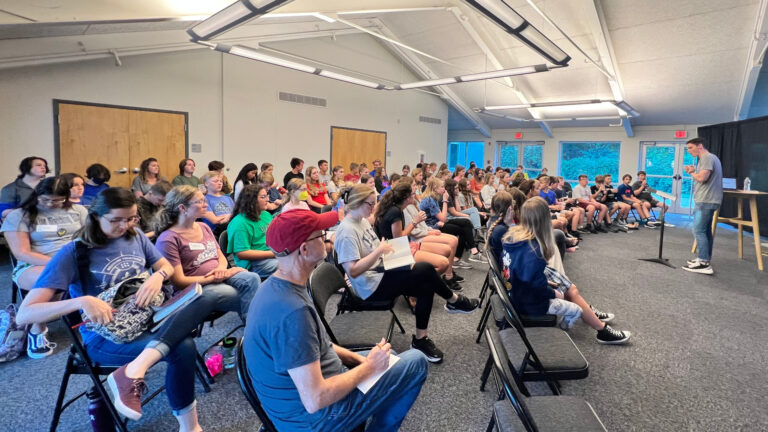
Sean Dietrich: Yeah. So there I was, and I wrote something on Mother’s Day about my mother and it was such a brutal but wonderful experience at the same time that when I was done, I felt just kind of chilly all over, but good, like I really [inaudible 00:05:45] in my soul. And that was kind of the steady beginning to me talking about some deeper things. And so people were kind of viewing me as humorous and I then would write some about my father and [inaudible 00:06:01] for winter, and I didn’t realize I had so much to say. And then we started doing a lot of events. This was all before Will the Circle, we started doing these live events and I would tell stories, I’ve never done that before, certainly didn’t think I would ever do it or don’t know why people would come to see it.
Sean Dietrich: When the events were over after I had played music and told stories, which were all funny and laughable and fun, the line of people at these events to just meet me, it was at every event, it was like they would be the best people, they were like friends. And I would say 40 percent of everybody in the line had a story about the death of a loved one or pretty traumatic childhood or suicide. Suicide was a very common thing. And I started to feel extremely, humbled is such an overused word, I started to feel strangely leveled. I did not deserve to be talking to these people, they needed to be talking to me. I know nothing.
Sean Dietrich: And they know I know nothing and that maybe puts us all on an even playing field. So it became the most profound era of my life. By the time it was time to write the book I realized that I had enough bravery accumulated to explore some things I would have never explored before until it may be in a way that was not dark, because that was the issue for me to tell a story the way I grew up and what to laugh and not make it dark, but hopeful, even a little bit humorous and even dare I say it, maybe make someone feel good for just a little bit. That was the goal of the book, and I really felt like I was prepared for it. Then the pandemic happened and now everything’s gone.
Collin Hansen: The internet can be such a vicious space, how do you feel about putting yourself out there in such vulnerable ways on the internet?
Sean Dietrich: That’s a good question, no one ever asked that. And that is perhaps a daily occurrence for me. I get more ugly mail than you would think, and I don’t write about anything that’s divisive. I mean, I shun from everything that’s divisive because it’s not me at all, I know it’s not me. But I still get messages or comments from some truly disturbed people. And some of them have really hurt, but it brings out a really good piece of you or a really bad piece of you, and the bad piece of you, if it brings that out, you need to see that because you need to deal with it, instead of saying, the dark pieces of my personality or nature or whatever, I don’t want to keep them, I want them to go away, I want them to be dealt with.
Sean Dietrich: But I would say that by and large, those ugly messages have brought out interesting things in me that I didn’t know were there. And it’s sometimes, maybe 50 percent of the time led to something kind of cool on the other hand. I’ll usually, sometimes, I made a habit of addressing some ugly comments that people would write to me publicly. And I would try to be just kind as I could be to them and concede to the things they were criticizing me for and say, you’re right. And the next day I would get a message back from them and it would be this long apology, and then we would become friends and now we’re still friends. Had I gone the other direction, had I told them that they were full of it, and maybe pointed out where they were wrong or whatever, I don’t know if that would have happened. So that’s kind of interesting.
Collin Hansen: You may not deal with divisive themes, and that’s true when it comes to politics or religion, kind of those typical divisive topics, you’re not kind of jumping in there and making a lot of polemical arguments on that front. But I would imagine when you’re dealing with just the heaviness of the tragedies with your father and growing up and things like that, it’s going to trigger some powerful emotions in people
Sean Dietrich: Definitely.
Collin Hansen: And when they’re coming at you, they’re coming out of those emotions and they’re pinning more than they should on you. And the positive people are doing the same thing, they’re pinning more on you than they should.
Sean Dietrich: Definitely, definitely.
Collin Hansen: So if you can find ways to defuse them, it really helps and treat them as people who are struggling.
Sean Dietrich: I found that in the age of the internet, people can see what they want to see in you, and they can make you what they want you to be. So it is, you’re absolutely dead on.
Collin Hansen: I work with a lot of Christians struggling to make peace with the religion of their youth and that’s even if they continue to practice their faith in a different church, how do you find a way to appreciate your particular kind of Southern Baptist upbringing warts and all?
Sean Dietrich: I’m going to tell you, I have never had a more conflicted viewpoint in my own personal life than with the Baptist tradition. I know things about the Baptists that I grew up with that just really make me sad. And yet I know things about them that you have to kind of be in the tradition to know, and I know certain people, people that are still close to me and people who helped raise me, who are nothing short of beauty. I mean, they are beauty inside and out. The tradition itself for me was where I found some of the greatest things that have traveled with me in my own personal journey, morality that they practiced and all that. And yet some of their hangups were also some of the things that really screwed me up, we were the kind of people who didn’t believe in premarital relations because it could lead to dancing. We didn’t believe in alcoholism, but everybody kept their beer in the garage refrigerator, so these things didn’t line up.
Collin Hansen: Inconsistency is part of what you deal with that I was going to talk to you about in Stars of Alabama, in particular, you have a finely tuned sense for that religious hypocrisy or inconsistency at least.
Sean Dietrich: We had great people and we had some nuts. I gave a big old talk to a room of 600 Alabaman municipalities in Mobile, Alabama, it was good fun. And I mostly talked about denominations, because I loved the differences of denominations. I’ve never had that good of laughs before telling stories, they laughed so hard that my ears hurt. When I got out into the lobby after the show was over, this little old man was there standing to meet me and I knew he was Southern Baptist, I could tell by the way he walked. He was mad. He was mad. He berated me out there in that lobby for maybe 30 minutes, I didn’t say a word to him because I knew that it was important for him to get it out, and he did.
Sean Dietrich: He had a right to say what he felt, and he was so angry with me. And it was just such an amazing juxtaposition to see half that room was Southern Baptist, there were several Baptist preachers in there and then there are some who … I love that tradition though. And that’s just saying a lot of bitter people who’ve left certain traditions don’t understand about me personally. And I have been in that position before in my life so I understand where they’re coming from. But I do value the way that I was raised and I valued being in those traditions. I try not to think about some of the grossness. I try to remind myself that the Baptist tradition, yes, the Southern Baptist primarily was steeped in some kinds of racism and bigotry, but Baptists were also Martin Luther King, Jr. And there were also some people that I very highly respect who say words and believe things that line up with everything I feel to be true also.
Collin Hansen: I think that you could broaden what you’re saying there about Southern Baptist to Southern life.
Sean Dietrich: That’s true.
Collin Hansen: And Southern history in general, that it’s for those of us who love the tradition, love being Southern, proud to be Southern. We nevertheless hold things in tension from the inside because we know better than anybody else the problems.
Sean Dietrich: Yeah. And I like awareness. So some people get inflamed when we’re criticized, but I think we need to be criticized. I think some of our things are a little skewed, but I also love to honor the traditions in the middle of it. So I don’t know, that probably got me all off course here but …
Collin Hansen: Well, in your writing about Southern Baptist, it’s interesting, I hear less about baptism and a lot more about fried chicken. And it seems like every denomination has its particular go to food. So I come from the Midwest, Methodist on one side, Lutheran on the other, and you better believe we’ve got our foods.
Sean Dietrich: What are your foods?
Collin Hansen: Well, it’s the hot dishes. It’s all about the hot dish, it’s all about those casseroles. I mean, southerners would call them casseroles-
Sean Dietrich: Yeah, okay.
Collin Hansen: But hot dishes. But then you connect back to the particular … I mean, so often the tie is between the ethnicity and the religion.
Sean Dietrich: Sure.
Collin Hansen: So it would be hard to differentiate, but Lutherans for all intents and purposes eat the lutefisk and the lefse and things like that, versus what the Germans do and versus, who else? And the Irish there, but how would you describe the relationship between food and faith?
Sean Dietrich: The real heart of the Southern Baptist tradition for me takes place in two places, not the sanctuary, but the fellowship hall and the parking lot. This is where we talk, this is where we don’t fake it, this is where we’re kind of being who we are. When we’re sitting down and we’re eating, we’re piling it in and we’re laughing and we’re happy. And when we’re out in the parking lot, we’re full and we’re sick and we’re talking and we don’t know how to say goodbye. As soon as we say goodbye, we’re out there for another hour and a half. I have died out in several Baptist parking lots watching my mother say goodbye to someone for the 50th time until it was time for supper.
Sean Dietrich: But I do love food, and I was a very chubby child growing up, so I had a real affinity toward food. And I’m not exaggerating by saying the fondest memories I have of my life take place in those little fellowship halls and still do. We’ve been really fortunate to travel a lot with the rod and stuff, and we go to a lot of different denominations, a lot of churches, and I’m so happy to report that it still happens. It still goes on, you know what I mean? Sometimes I get afraid that that part of our culture in U.S. has disappeared. That church fellowship halls, they’re not doing potlucks anymore, they’re not doing cover dish steppers, they’re not doing the hot dish, they’ll get some food delivery service, Cisco or somebody or a catered barbecue. I mean, I go places and 80-years-old ladies with thin casseroles covered in dangerous amounts of cheese. I mean, it’s wonderful. It’s wonderful. I hope it never disappears.
Collin Hansen: I remember talking with a pastor who had come into the South, I think he was from actually Europe, and he said, “It was so confusing for me at first, I realized that nobody actually did anything in meetings. All of the politics had already happened in the parking lot before the meetings.” That’s exactly right.
Sean Dietrich: That’s dangerously true.
Collin Hansen: All the decisions have already been made, the meeting is just where you find out if you won. Which means if you don’t know that you’re going to win, it means you already lost.
Sean Dietrich: You already lost. That’s profound.
Collin Hansen: Southern church politics. I’ve learned that transcends denominations, by the way, I think. I think it was a Presbyterian who told me that.
Sean Dietrich: Wow.
Collin Hansen: But what makes for a good story?
Sean Dietrich: Well, change for me. If you can enter into the story one way and you can change at the end, or be changed by the end and just flop and wiggle and die out in the open, that makes to me a really honest story. A good, funny story to me also is made by not taking ourselves seriously, I like people who can tell a story in which they are the punchline themself. Some of the best humor out there is told by people who just are not afraid of looking like a fool. And so I would say that all boils down to just blatant vulnerability too, makes a good story.
Collin Hansen: That’s part of just entertainment in general, but it’s also preachers for that matter, that’s vulnerability, that’s putting yourself out there. It just comes with the stage.
Sean Dietrich: I agree. And I love to see people who can do it because it’s not easy to do. And certainly, you have to let down a lot of defenses and you have to admit that you’re wrong a lot, and that kind of stuff makes a good story. And that makes a good, approachable, narrative, I guess, to use the popular word.
Collin Hansen: What do you hope people will take away from your stories? Are you just hoping to bring a little joy or comfort which certainly we need more of, especially with the aforementioned internet. I remember thinking at the beginning of this pandemic as if the last thing we need is more time at home by ourselves in front of a computer, it doesn’t add up. But is there a point you want to convey in these stories? We’re talking about whether it’s your memoir or your novel, I mean.
Sean Dietrich: I should tell you that I have a point and a message, but I don’t, and that’s not accidental, it’s actually on purpose because I don’t know enough to give an eternal message that I believe you need to get, or you need to know or you need … I feel like I learn more from you. In fact, in the podcast, I’ve learned more from you than I thought I would. So how could I have a message when I want to listen? My only goal of writing that book was to see my own life from the third person view to where I didn’t personalize everything, where I could see that character who was me. And I found so much sympathy without self pity for that young man and for him and for his family.
Sean Dietrich: And I felt like I understood who I became a whole lot better, which was invaluable therapy for me. That was one of the primary things. Everything else, if it’s made any difference to anybody, that has nothing to do with me, that’s all periphery. I want to make people feel good, right now, especially because one-third of the U.S. by the U.S. Census Bureau is probably clinically depressed. I wrote a simple column about that a few days ago, and was inundated with hundreds and hundreds of emails within 24 hours of suicidal people, depressed people. These are people that we know. These are people that we love. Our friends are not talking about it, they’re depressed right now. The emails are still coming in right now while I’m talking to you, I see two emails just came in. I promise you they’re about depression, it blew my mind. And I want to help, I want to make people feel better, that’s the goal of my life. That’s maybe little grandiose but …
Collin Hansen: No, I think that’s … We’re taking all these measures to be able to protect people’s health, but there are major consequences to what we’re doing. Especially for older people who are isolated from those church meetings, isolated from those fellowship halls that have been their life, and that have been their spiritual sustenance, the friendship, the fellowship they shared, the communion that they take and partake in, it’s a real tragedy.
Sean Dietrich: Oh, it is.
Collin Hansen: And we do need stories of uplift, stories of hope, stories of change, stories of transformation to show us that we’re going to be okay.
Sean Dietrich: And they’re out there. What I have been so touched with is they’re out there in spades right now more than we would even imagine. And I have been fortunate to hear them from people who want to share their stories, that people are really rising to the occasion too, as well as being depressed. There’s a lot of people who are becoming better human beings.
Collin Hansen: Well, that’s the way the Lord works, he tends to work through those tragedies like you talked about even in your memoir, works through those dark moments, and that’s the story of the cross, that’s the story of Jesus. So it’s not surprising, and it’s the story of Scripture, and it was a story of how he continues to work. Faith healing has never been a part of my Christian practice, so I’m pretty easily rankled by the kinds of religious hypocrites or false teachers that you portray in Stars of Alabama. And yet, somehow you managed to write sympathetically about the people who are being conned, how do you manage that balance?
Sean Dietrich: Wow, what a great, great question. I mean, these are some of the best questions I’ve had. Well, I’ll tell you, my mother is profoundly a spiritual woman, and I hope she doesn’t ever listen to this because I’m about to tell on her. But she used to go to some of them faith healing crusades when I was growing up, she’s the most trusting woman I ever met, IS the most trusting woman I ever met. That trust that she gives to anybody freely, has led her to get taken advantage of a lot, but it has also kept her tremendously innocent, and if I could only be that trusting and less cynical, yes, I’d get hurt, but I would also be so free from cynicism, pessimism, guile, whatever you want to call it. So I saw her and some friends and my mother was very, I like to call her Bapticostal she was very interested in every single kind of denomination. Really, if any church was local, we’d go. She was really more like a myth about the Metho-bapti-costal-tarian.
Sean Dietrich: So I saw a lot of that, camp meetings were a huge part of our life, Baptist too, they’d come in and we had a lot of that. I remember one guy led a laughing revival across town, and he sat at the tent, came up to the stage, and he got behind the pulpit, and he looked at everybody real quiet, you could hear a pin drop, and he just said, ha. And some guy in the back of the tent said, haha, and another lady in the corner said, hahaha. And after that in about maybe 10 seconds, the place came on glued. There was laughter, and it got creepy. It was not like …
Sean Dietrich: And this is not me judging anybody’s view of what the Holy Spirit does, but for me it got creepy. You had people clucking like chickens for Jesus. And you had people who were getting slain and all this … So that always fascinated me because I’ve got some friends who believe in that very strongly. And I’ve also got some friends who’ve had experiences with it where they know it to be untrue. And the thing I like the most about it is that good things can happen even with people who had bad intentions. And so-
Collin Hansen: Apostle Paul said that, in the book of Philippians, even if they have bad motives, Christ can be glorified, Christ can work through that.
Sean Dietrich: And I love to watch some people with not good intentions not win. So anyway, that’s a subject I really enjoyed exploring. I had a lot of fun actually exploring the topic of book because it was advised and it was kind of fun.
Collin Hansen: Well, even novels can be autobiographical in many cases to a certain level. I think a great Southern writer, Harper Lee was certainly true in her case, writing about that thing, we’ve learned more and more since time has passed of how autobiographical her famous novel was about her own family, things like that though set at a different time. Well, Sean it has been a real privilege to be able to talk books.
Sean Dietrich: The privilege is mine.
Collin Hansen: Will the Circle Be Unbroken? published by Zondervan. Also, check out his novel from last year, Stars of Alabama, published by Thomas Nelson. My guest on Gospelbound has been Sean of the South. Sean, thank you very much for joining me.
Sean Dietrich: Thanks for having me, it’s been a true pleasure.
Free eBook by Tim Keller: ‘The Freedom of Self-Forgetfulness’
 Imagine a life where you don’t feel inadequate, easily offended, desperate to prove yourself, or endlessly preoccupied with how you look to others. Imagine relishing, not resenting, the success of others. Living this way isn’t far-fetched. It’s actually guaranteed to believers, as they learn to receive God’s approval, rather than striving to earn it.
In Tim Keller’s short ebook, The Freedom of Self-Forgetfulness: The Path To True Christian Joy, he explains how to overcome the toxic tendencies of our age一not by diluting biblical truth or denying our differences一but by rooting our identity in Christ.
TGC is offering this Keller resource for free, so you can discover the “blessed rest” that only self-forgetfulness brings.
Collin Hansen serves as vice president for content and editor in chief of The Gospel Coalition, as well as executive director of The Keller Center for Cultural Apologetics. He hosts the Gospelbound podcast, writes the weekly Unseen Things newsletter, and has written and contributed to many books, including Timothy Keller: His Spiritual and Intellectual Formation and Rediscover Church: Why the Body of Christ Is Essential. He has published with the New York Times and the Washington Post and offered commentary for CNN, Fox News, NPR, BBC, ABC News, and PBS NewsHour. He edited The Gospel After Christendom, The AI Apocalypse, and The New City Catechism Devotional, among other books. He is an adjunct professor at Beeson Divinity School, where he has co-chaired the advisory board.
Sean Dietrich is a columnist, novelist, and podcast host, known for his commentary on life in the American South. His work has appeared in Southern Living, South Magazine, Alabama Living, the Birmingham News, and many other publications. Sean has authored seven books, including his newest book, Will the Circle Be Unbroken? A Memoir of Learning to Believe You’re Gonna Be Okay.