
What if I told you that one of the most powerful evangelical revivals of the 20th century, and one of the greatest missionary success stories of all Christian history, gave way in one generation to the most enduring, notorious, oppressive, anti-Christian, communist personality cult of all time?
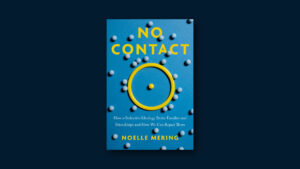
Now you know why I say that Jonathan Cheng’s new book, Korean Messiah: Kim Il Sung and the Christian Roots of North Korea’s Personality Cult, is one of the most important books I’ve ever read. I wrote about the famous 1907 Pyongyang revival for my 2010 book A God-Sized Vision: Revival Stories That Stretch and Stir. I knew that Presbyterian missions in Korea contributed to the large number of Korean Americans who attend and lead Presbyterian churches today. And I knew of course that Pyongyang is the capital of communist North Korea today, so something bad must have happened.
But the missionary success story was so much greater, and the fall from grace was so much farther, than I imagined. Cheng worked on this book for more than 10 years, and the depth of research shows.
Originally from Toronto, Cheng lives in Beijing and works as the China bureau chief for The Wall Street Journal. Before that, he worked as the Korea bureau chief, covering both North and South Korea. He’s one of my most helpful people to follow on X, for news from and about China. Let’s dive in to this fascinating and horrifying story about the Christian origins of North Korea’s Kim dynasty.
In This Episode
00:00 – How Kim Il Sung learned from Christianity’s institutions and rituals
00:45 – From the Pyongyang revival to North Korea’s personality cult
03:11 – Why Cheng spent more than a decade researching this story
07:08 – Why North Korea may be better understood as deeply religious than simply atheistic
09:54 – The overlooked importance of Kim Il Sung’s Christian upbringing
12:11 – Samuel Moffett and the missionary transformation of Pyongyang
16:21 – Why Pyongyang once looked like an unlikely place for revival
18:33 – The violent encounter that preceded Moffett by 30 years
19:19 – War, devastation, and the birth of Pyongyang’s missionary compound
20:42 – How Pyongyang became the “Jerusalem of the East”
22:25 – Churches, hospitals, schools, and the world’s largest Presbyterian seminary
24:27 – How Christian Pyongyang became the sacred center of the Kim dynasty
26:00 – Christianity, Korean nationalism, and Woodrow Wilson
30:10 – Japanese occupation and missionaries’ changing attitudes toward imperial rule
32:50 – The bitter irony of American forces destroying Pyongyang’s churches
35:07 – Cheng’s biggest surprises from 12 years of research
38:38 – Why Kim Il Sungism has endured for generations
41:53 – North Korea as a “religious society” of doctrine, ritual, and devotion
45:45 – What it means when every aspect of life becomes political
49:28 – What we actually know about life and Christianity inside North Korea today
51:05 – Kim Il Sung’s surprising late-life reengagement with Christianity
52:35 – Cheng’s visit to Protestant churches in Pyongyang
55:40 – Kim Il Sung’s dream about his Christian mother
57:24 – Was Kim Il Sung ever a Christian?
58:25 – The “eternal president” and North Korea’s towers of immortality
1:00:48 – Why Cheng’s argument may be controversial
1:05:50 – What Cheng hopes readers take away from the history
1:07:47 – Why North Korea makes more sense when viewed as a religious society
1:08:50 – Lessons for modern missionaries from Moffett
1:11:40 – Humility and the consequences we cannot control
1:15:14 – How Presbyterian revivalism was repurposed by the Kim personality cult
1:16:08 – Outro
Resources Mentioned:
- Korean Messiah by Jonathan Cheng
- A God-Sized Vision by Collin Hansen
SIGN UP for my newsletter, Unseen Things.
Help The Gospel Coalition renew and unify the contemporary church in the ancient gospel: Donate today.
Don’t miss an episode of Gospelbound with Collin Hansen:
Transcript
The following is an uncorrected transcript generated by a transcription service. Before quoting in print, please check the corresponding audio for accuracy.
0:00:00 – (Jonathan Chang): You know, from the very beginning, he’s quite explicit about instructing his top officials to learn from the pastors to learn from the church about how successful they were, especially in Korea, at bringing younger people into the faith at building these institutions, the rituals, the doctrine that ends up lasting. Because we know Christianity, of course, by the time it gets to Korea, Christianity has been the dominant world religion for more than a thousand years, right? And in Korea, in North Korea, Kim Il Sung ism the replacement.
0:00:45 – (Collin Hansen): What if I told you that one of the most powerful evangelical revivals of the 20th century and 1 of the greatest missionary success stories of all Christian history gave way in one generation to the most enduring, notorious, oppressive, anti Christian communist personality cult of all time? Now you know why I say that. Jonathan Chang’s new book, Korean Kim Il Sung and the Christian Roots of North Korea’s Personality Cult is one of the most important books I’ve ever read.
0:01:18 – (Collin Hansen): I wrote about the famous 1907 Pyongyang revival for my 2010 book, God Sized Revival Stories that Stretch and Stir. I knew that Presbyterian missions in Korea contributed to the large number of Korean Americans who attend and lead Presbyterian churches today. And I knew, of course, that Pyongyang is the capital of Communist North Korea today. So something bad must have happened in the middle. But the missionary success story was so much greater and the fall from grace was so much farther than I had imagined.
0:01:48 – (Collin Hansen): Jonathan Chang worked on this book for more than 10 years and the depth of research shows. Originally from Toronto, Chang lives in Beijing and works as the China Bureau Chief for the Wall Street Journal. Before that he worked as the Korea Bureau chief covering both north and South Korea. He’s one of my most helpful people to follow on X for news and about China. So I want to dive into this fascinating and horrifying story about the Christian origins of North Korea’s Kim Dynasty.
0:02:17 – (Collin Hansen): Jonathan, thank you for joining me on Gospel Bound.
0:02:20 – (Jonathan Chang): It’s really a pleasure to be here. And wow, what an introduction. I think you really summed up the book actually almost better than I feel like I did. So thank you for that. I should bring you on as my publicist or something.
0:02:31 – (Collin Hansen): I’ve been selling books left and right ever since I read it, so it’s just been thrilling. I mean, it’s a long book, but I just could not put it down. And it’s one of those history books also where you’re not quite sure what happened, you know where it’s going, but you don’t know how it got there. So there’s a whole Lot of intrigue about that as well. But I’m just wondering, Jonathan, how do you even begin to undertake such a massive project? You’re not Korean. You’ve been working hard to learn Korean for 20 years and had to do a lot, a lot of original language research.
0:03:02 – (Collin Hansen): It’s not like you had a lot of existing scholarship to build on. What was your North Star in this process? What kept you going for more than a decade?
0:03:11 – (Jonathan Chang): It’s a great question. It’s a question I get a lot. And you’re absolutely right that, you know, actually talking to you now in the year 2026, I can’t believe that I wrote this book. I know I did because I wrote it. You can ask me anything about it. You know, this is. This is like my child here. And yet it was quite a journey. And, and I think really what fueled me for all this time, I usually say about 12 years to get this book done, researched and written and everything else, is precisely that exact question that you planted there. We know how North Korea got to where it got today, and actually it’s not well known, but certainly I’m talking to somebody who does know just how Christian Pyongyang was in the past. And so how do you get from point A to point B?
0:03:58 – (Jonathan Chang): And you know, for myself, it was very much kind of part of my own faith journey, I guess you could put it in that way. I mean, I was raised actually not that different from how Kim Il Sung was raised. And so for me to understand that he was raised in this sort of gospel environment, in this kind of. He wasn’t just a Christmas and Easter service kind of a Christian. I mean, I want to be careful. I don’t want to say that he was a Christian per se, but certainly he grew up in that sort of environment. He knew the church inside out, he knew his Bible inside out.
0:04:32 – (Jonathan Chang): And yet how do we get from point A to point B? And so really I just wanted to understand that question. And I think every worthy project, journalistic, historical, whatever project, I think it has to start with a question that is going to fuel you and that is going to drive you to just satiate that curiosity. And so that’s really what happened. And I really nerded out on this topic. I mean, that’s how you get a book of this length and with the footnotes and everything else. I mean, I just pulled on every thread that I could. And again, that’s part of being a journalist. That’s my day job.
0:05:06 – (Jonathan Chang): You ask a question, you have a hypothesis. But Then you stress test it and you start. In journalism, we talk to people. In this case, this is a work of history. Almost everyone that I would want to talk to is no longer around to be talking to. So I was going through the memoirs, I was looking at archives, I spent a lot of time doing that, and I did study history in college. And so this allowed me to really just exercise some muscles that I haven’t been able to. And yet, really, to answer your question, it really comes down to just this essential question.
0:05:38 – (Jonathan Chang): And I love the way you put it. It’s not only one of the most incredible revivals, perhaps the greatest missionary story, the missions story certainly of the 20th century or of the last 200 years, let’s call it that. And yet I also agree with you that it is the greatest personality cult of all time. And so the extremes are just incredible here. And I’m not saying it’s a happy story. It obviously isn’t a happy story. And yet it’s a story that we need to know about.
0:06:10 – (Jonathan Chang): As, you know, just as people living on this planet, you know, whether or not your life is ever going to have anything to do, North Korea or not. The themes and what’s at stake here is so much bigger than that. And it’s about faith. It’s about why we believe the things that we believe. And it’s about how faith can be really a double edged sword. There are some people for whom religious belief is the worst thing that’s happened to humanity. It’s the source of all the wars and all the division and all the rest of it. And for others, many of the listeners of this podcast, of course, faith is the greatest thing that’s happened to them.
0:06:48 – (Jonathan Chang): They couldn’t imagine their life without faith. And yet here you have this case study, I hate to use the word case study phrase, case study, because these are real human lives here. These are 25 million people living in North Korea today. And yet for all of human history, I don’t think there’s been anything quite like this.
0:07:08 – (Collin Hansen): No, I agree. And for people who know me, been watching, listening to this podcast for a long time, they can see talking to a journalist who studied history in college about revivals. I mean, that’s my whole background as well. And it gives you such an incredible perspective on not only the blow by blow of how does this actually happen, and also the curiosity, but then also the willingness to pursue the story, to actually get to the bottom of it in ways that nobody else has done before.
0:07:37 – (Collin Hansen): And then the dramatic sense that you have for juxtaposing the unexpected. Of course, I also lead the Keller center for Cultural Apologetics. So we talk a lot about these kinds of dynamics, and one of them is how we often think about atheism on one end and faith on the other end. And of course, communism would be the epitome in the 2020 first century of atheism. And yet what I titled this podcast is how North Korea became the most religious place on earth.
0:08:08 – (Collin Hansen): And your book is what made that, made that connection possible.
0:08:11 – (Jonathan Chang): No, And I think you’ve nailed it. I think Samuel Moffitt, who’s a major character in my book, and I’m sure we’ll talk about him a little bit, but before he dies in 1938. Right. I mean, what he says is he’s at sort of the pinnacle here. He’s buil one of the most incredible mission stations, mission stories in modern history. And yet before he dies, he says, what I fear more is not a threat to the church from outside. What I fear is a threat to the church from the inside.
0:08:38 – (Jonathan Chang): And you think about Lucifer, and you think about who Lucifer was. I mean, Lucifer didn’t come out of left field. He didn’t crawl out of some deep, dark pit. Right. He was at the right hand of God. Right. And so you have this notion that the antithesis of faith is not necessarily the lack of faith. It can be faith perverted or faith
0:09:04 – (Collin Hansen): undone from the inside, or faith in this world, essentially. If you understand communism as a Christian heresy, which I think is the way to understand the development of communism, and then this particular form of it that we’re going to be talking about, that took on all these different dimensions. It’s faith being transferred from the. From the eternal into the imminent, essentially. I’m just wondering, Jonathan, as far as, you know, what in your book is new, what makes your argument unique? For a lot of people reading this, they don’t know hardly any of this.
0:09:40 – (Collin Hansen): And I know a little bit of it, enough to have written a little bit about it in the past. But what is it that when people are picking up this book that is going to land on people who even do know quite a bit and say, oh, I didn’t even know that.
0:09:54 – (Jonathan Chang): Yeah, well, I mean, a lot of Korea scholars have said exactly that, that they have seen things and read things in my book that they didn’t know about, which is obviously an honor for me to hear, because I haven’t spent my life learning about Korea in that same way. And yet I think, honestly, it’s not any particular Fact, it’s not any particular anecdote, although I think I found some pretty cool anecdotes and some pretty mind blowing ones.
0:10:18 – (Jonathan Chang): These episodes that happen and from the 1880s all the way up to the 1990s with Billy Graham, Town with Kim Il Sung. But I think the main contribution I wanted to bring was the whole sweep of things. You can actually read a lot about how Korea became a Christian nation. There were a lot of books, a lot of magazine articles, a lot of documentaries, a lot of this made about that. And so that’s very well known. And there’s obviously been a lot written about North Korea and how North Korea became the way it came.
0:10:49 – (Jonathan Chang): I just don’t understand why more was not made of the fact that the one guy who established the state and ruled it for 49 years and when he dies, hands it off to a son, who then hands it off to his son. Why is there so little attention paid to him and to the first 20 years of his life and how just thoroughly steeped he was in Christianity, in the faith, in the gospel. I mean, he. You can’t. I mean, let’s start with a really basic idea. I don’t think that any of us can be disentangled from our upbringings.
0:11:25 – (Jonathan Chang): Whether or not you embrace the way that you were raised or whether you reject it and run in the opposite direction. I think all of us at some level are reacting and responding to our childhoods. And I don’t want to say that’s the be all, end all. But how can we look at a state as personalist as North Korea, where he is literally synonymous with the state, and not look at the man himself and in particular the milieu that he grew up, up in this, this incredibly Christian city, to an incredibly devout Presbyterian family, and knowing the Bible the way he did, and playing the organ at church and teaching Bible school and performing in church plays and living in the home of pastors, speaking at the ymca and all the things that Kim Il Sung did when he was growing up. I mean, he knew his Bible very well. Say what you will about him.
0:12:11 – (Collin Hansen): Oh, so many more details. But let’s just go back and let’s talk about Samuel Moffat, okay? I mean, because again, having read the book, I’ve got so many things. We’ll get to them. Again, basic Samuel Moffitt hardly even has a Wikipedia page today. Now, you’re right in having done my first book on Billy Graham and then having done a later book on the history of revivals in the last 2,000 years. Of course, Samuel Moffat would have come up.
0:12:39 – (Collin Hansen): And that period of time, a lot of people don’t realize I’ve begun a little bit of work on this. That early 20th century period was the largest Christian revival globally in world history in terms of reached to the ends of the earth compared to the early church. So you’ve got India, you have Wales, you have Korea. You’ve got a lot going on in the United States. A lot of people don’t remember it because of what happened in the First World War a few years later, which really put a stop to a lot of that. But Samuel Moffitt, hardly even a Wikipedia page. If you’re in mission circles, you do know who he is.
0:13:11 – (Collin Hansen): One of the most successful and influential missionaries of all time. But here’s the question. You do a great job of this in the book. What was Korea when he arrived?
0:13:19 – (Jonathan Chang): Yeah, well, Korea when he arrived. First of all, he wasn’t the first missionary, if there is one Presbyterian missionary who is well known in Korea. I lived in Korea for six years. If you talk to anyone and you ask them for a missionary name, they will tell you Horace Underwood. And Horace Underwood did great work as well. He happened to be based in Seoul, which is, of course, now the capital of South Korea.
0:13:39 – (Jonathan Chang): And the reason why his legacy lives on is because many of the institutions that he built are still standing, are still there. Samuel Moffat had the bad fortune. I don’t know if that’s quite the right term, but anyways, he had the bad fortune to be building in Pyongyang, which, of course, fell on the other side of the 30th parallel and into what is now North Korea. And so all the institutions and all the legacy that he had built up was mostly destroyed, either physically or sort of spiritually destroyed, you could say.
0:14:05 – (Jonathan Chang): And he arrives in Korea as maybe he’s among the first dozen missionaries to reside in Korea. He arrives there from Hanover, from. From Madison, Indiana. This is on the banks of the Ohio River. I’ll be there in October to promote my book and. Oh, really? Yes. And I’ll be.
0:14:29 – (Collin Hansen): Oh, that’s so exciting.
0:14:30 – (Jonathan Chang): And he went to Hanover College, which is a small, small school there. It’s in fact the alma mater as well, of Mike Pence. So Mike Pence, 93 years later, I believe, attends the very same school as Samuel Mo. And like so many young, earnest Christian young men of that time, he wanted to go to the ends of the earth. He wanted to share the gospel. And so he sails for Korea, which at that time was known as the Hermit Kingdom. It’s still.
0:14:59 – (Jonathan Chang): Today, we sometimes use the Hermit Kingdom to refer to North Korea, but really, it was coined for all of Korea because Korea was up there with Tahiti, was up there with Greenland, was up there with, you know, Central Africa or central India. These were the most inaccessible places in the world, if you’re a Western mission missionary. And Korea today, of course, is deeply integrated with the rest of the world. It seems strange that it was so isolated, and yet it was.
0:15:23 – (Jonathan Chang): So he’s one of the very first people to get there. And when he arrives, he lands on his 26th birthday, as it happens. So he’s very young guy when he gets there, and they send him up to Pyongyang because Seoul was the capital of Korea then. That’s where most of the missionaries were based. So when he gets there, his colleagues, including Horace Underwood, have already been working in Seoul for a few years, not terribly, terribly successful.
0:15:50 – (Jonathan Chang): They send a few missionaries down to Busan in the south of Korea, even less success there. And so when Samuel Mafa gets there, there’s no inkling yet that Korea is about to explode in the way that anyone who deals and has any engagement with Korean American Christians today would say, well, of course, Korea does have this special relationship with Christianity. But there was not even a glimmer of that yet, because it looked like a very unpromising.
0:16:21 – (Jonathan Chang): When they send Samuel Moffat up to Pyongyang, it’s known as sort of the Sodom and Gomorrah of Korea. That’s how they referred to it. It was the place you would go if you wanted a beer. It was the place you would go if you wanted a dancing girl. That was the more polite term that they used there. And it’s where you would go if you wanted to get into a fist fight or if you wanted to throw stones at people. It had a reputation, and I don’t think it was a misguided reputation, but it did have this reputation as kind of a den of sin. That’s what they called it, I suppose you might say the Vegas of Korea, if you wanted to think that way.
0:16:58 – (Jonathan Chang): And so it was very unpromising. He’s 26 years old, he goes up there, and what’s so remarkable is that he finds within a couple of visits, within a couple weeks, months, that he is unable to keep up with all of the interest from all of the inquirers there, because there is something in Pyongyang that. That was crying out for this message that Samuel Moffat was preaching. It wasn’t that he was a Westerner with a beard and different clothes and was sort of funny looking. And we want to find out what this alien looking guy is all about. There was a little bit of that, of course, but actually what they were really saying to him was they were saying, we want to know what you’re preaching about. We want to know about this man that you say was crucified 2,000 years ago. We want to hear about that.
0:17:46 – (Jonathan Chang): And I mean, Samuel Moffat was just as surprised as everyone else. I mean, to his grave, he never said, oh, this is of course, because of my wonderful speaking, or this or that. Of course not. He would have turned all the credit over because he would have said, it wasn’t me. And I think for years the missionaries, including Samuel Moffat, were trying to figure out what was it about Pyongyang that really was so different here.
0:18:14 – (Jonathan Chang): And we can get into that if you’re interested. But the bottom line, pretty straightforward, which is that there was something different in Pyongyang that just needed this Christian message. And so when you saw it took off there, it took off in a way that nobody could have ever dreamed of.
0:18:33 – (Collin Hansen): How many years before Moffat’s arrival or. Yeah, before Moffat’s revival was the. The ship that comes up and with a missionary and they get killed. How many years difference?
0:18:44 – (Jonathan Chang): It’s about 30 years between them. So 30 years prior to Samuel Moffat, you have the first American vessel sort of sail up the river into Pyongyang. Long story short, you have one missionary on board, a Welshman, who ends up just tossing Bibles over the side of the ship while the people of Pyongyang surround the ship and basically burn it down and kill everyone there. And so. So that was the reputation that Pyongyang had when Moffat gets there in the 1890s.
0:19:19 – (Collin Hansen): So now take us to the scene of devastation when Moffat looks out and decides he is going to buy a huge swath of Pyongyang and build his famous missionary compound.
0:19:31 – (Jonathan Chang): Sure, yeah. So in 1894, this, four years after he arrived, so he’s about 30 years old at this point, there’s a big war that sweeps across Korea. The war is actually not between Korea and some other country at all. It’s between China and Japan. So Korea is kind of wedged between China, the historical hegemon on one side, and you have Japan, the up and coming upstart. And of course, we know that this is the beginning of Japan’s ascent. This is how Japan goes from its own isolation to eventually Pearl Harbor. And of course, beyond their first move here, was to try and take Korea from China, because Korea was an independent kingdom, but was basically under the tutelage or under the thumb of the Chinese.
0:20:12 – (Jonathan Chang): So. And it’s really after Pyongyang is destroyed and Moffat is still there that I think the people of the city realize, hey, this guy really cares about us. And so there were people who were resistant to the message. I don’t want to make it sound like everyone was. Was. Was receptive, but I think after the destruction of Pyongyang in 1894, that really changed the dynamic. And that’s where you really start to see Pyongyang truly emerge and blossom as the Jerusalem of the East.
0:20:42 – (Jonathan Chang): This city that wins renown all around the world in the Western church for the fervency of its believers. It’s not just the number of people who decide to become Christians, it’s also how Christian they become. And within a few years, you have some of the biggest names in the American church at the time. You have guys like John Mott, like Robert Speer, who are sailing across the Pacific because they want to see this Jerusalem of the east for themselves.
0:21:08 – (Jonathan Chang): And so this is part of what I wrote about in the book. I mean, I went through all the archives throughout the Presbyterian Historical Society in Philadelphia, spent a lot of time with these letters, these diary entries. And you have these missionaries coming over, these missions advocates coming over, and they’re writing letters back, and they’re saying, we thought we were introducing the gospel to the Korean people. It turns out that I get here, and I’m watching the believers here get up at 4, 5, 6 in the morning and pray for hours and hours on end before I’ve even woken up.
0:21:44 – (Jonathan Chang): They’re so deep in prayer, it makes me a little ashamed of my prayer life. And they’ll meet these Korean converts who have read the entire Bible, Genesis to Revelation many, many, many times. And in some cases, they memorize entire books of the Bible. So there was one preacher, Kiril Song Ju, who is very famous for having basically memorized the entire Book of Revelation. He had read it so many times that he could give you chapter and verse from the very beginning to the very end of the Book of Revelation. And so, you know, the missionaries are just astounded. They’re saying, what have we brought? Right. This sort of question here. And of course, I mean, they mean that in a positive way. Of course. Right.
0:22:25 – (Jonathan Chang): And yet they just. They’re pinching themselves. They can’t believe it. And so before long, you have Samuel Moffitt. That’s Right, I missed the point that you were asking about. After the destruction of Pyongyang, you have Samuel Moffitt look around and say, all of this land that nobody wants right now, I’m going to buy it. And he bought it for the church. Church. And it was one of the largest swaths of Presbyterian mission station land in the entire world. It was the largest Presbyterian missionary in the world at the time.
0:22:53 – (Jonathan Chang): It was home to the largest Presbyterian seminary in the entire world when he started it. And it sits right in the center of Pyongyang today. So the city right now that if you turn on your TV and you watch Kim Jong Un standing on the rostrum at Kim Il Sung Square, and he’s presiding over these intercontinental ballistic missiles getting marched past and all these goose stepping soldiers going back, all of that land there once upon a time was occupied by some of the largest churches in all of Asia, in all the world.
0:23:27 – (Jonathan Chang): And so that was the land that Samuel Moffat bought up in 1894 and turned it into this incredible, almost alternate world in Pyongyang. It was like a city within a city. So it not only had these big churches, of course, it also had men’s and women’s hospitals, it had boys and girls schools, it had middle schools, it had high schools, it had the first modern college in Korea. It had the largest seminary in the world, as I mentioned. It had schools for the blind, schools for the deaf, it had facilities for lepers.
0:24:01 – (Jonathan Chang): It had a missionary kid school, a school for mish kids like Ruth Bell Graham, right, the future wife of Billy Graham, who attends high school there. In the 1930s, you have all of this flourishing in the center of Pyongyang, in the center of what is now, you know, the holy city of the Kim dynasty. And people from all around the world are coming here to see for themselves what’s happened here in Northern Korea.
0:24:27 – (Collin Hansen): And that includes also a hilltop, right? I mean, there’s a hilltop with churches overlooking the city as well. I mean, the first thing I saw in your book, and I’m sure you and your publisher intended it exactly this way, it’s a two page spread. It’s a map of central Pyongyang, 1912, and then the same area, 1994. And I think this is what you were trying to get at theologically, underneath everything.
0:24:55 – (Collin Hansen): In some ways the city has changed completely. The most dramatic difference you could imagine. And in other ways, it hasn’t changed at all. As the Apostle Paul might say at Athens, I see that you are religious in every way. Only now there are no churches worshiping Jesus Christ, just monuments to the worship of Camille Song. Tell me a little bit more about what you were trying to communicate with that arresting visual right at the beginning of the book.
0:25:22 – (Jonathan Chang): No, that’s exactly what I was trying to do. And actually there was. There was a scenario in which I think technically it may have been too difficult for the book publisher to do, but I was almost hoping that we could almost have a translucent or almost semi transparent sort of overlay so you could see that where this great church once stood, now stands a statue of Kim Il Sung, or a museum to Kim Il Sung’s greatness, or a mosaic of Kim Il Sung, or this or that of Kim Il Sung, because that is effectively what he did. He replaced in so many ways. I mean, in this case, geographically, physically. He replaced Christianity, the worship of Christ, with the worship of himself.
0:26:00 – (Collin Hansen): Speaking of which, I don’t know if this was your intent, but the book also just reads like Tale Two Cities. I mean, it’s the best of time, worst of times when it comes to Christian nationalism. Again, you’ve been working on this book for a long time, and developments across much of the world were only part of that when there’s been a lot of conversation about Christian nationalism. But Korea’s national hopes found their expression in Christianity and church growth exploded. That’s part of the major thesis of your book.
0:26:33 – (Collin Hansen): But then there’s the great betrayal of the fellow Presbyterian Woodrow Wilson after the First World War. And it sent those national hopes looking for other vessels. One of those nearby vessels was Communism. I’m just going to ask the most cynical question here. Was Christianity always subservient to Korean national aspirations?
0:26:55 – (Jonathan Chang): That’s a great, great, great question. And I think you really hit the nail on the head. I mean, I think many people who study missions history will be aware of the term rice Christians, right? And a rice Christian is a native of whatever country the missionaries are in who become Christian, who become Christian because they’re looking for some sort of a worldly benefit. Now, the phrase rice Christian, of course, explicitly refers to this notion that you’d be fed if you.
0:27:20 – (Jonathan Chang): You would become a Christian. In this case, what you’re alluding to here is not that they necessarily couldn’t feed themselves nor going to literally starve unless they join the church. But it’s similar enough in that many of them may have indeed sought Christianity because of what it represented. And what it represented to many Koreans at the time was a vessel, a vehicle for these nationalist aspirations. Now they look, looked to America.
0:27:47 – (Jonathan Chang): And they looked to the missionaries who were primarily from America. They looked to someone like Woodrow Wilson, who was, of course, the President of the United States at the end of World War I, as well as being the son, grandson and nephew of Presbyterian ministers. And he couched his language. I mean, all of the 14 points and a lot of the lofty language that he promised was very much. It wasn’t explicitly Christian, but it certainly feels very Christian. And I think that’s certainly how the Koreans heard it and read it.
0:28:21 – (Jonathan Chang): And they were thinking at the time, 1919 here. This is after World War I ends. They’re saying, we are perhaps the most Christian nation in the world. Now, just in terms of actually statistically, maybe not, but in terms of how much Christianity had permeated society, that’s a very qualitative rather than quantitative measure. But I think it had a pretty good shot at perhaps being number one. And so there was a lot of chatter in the church world back in the west that Korea might really become the first fully Christianized nation in the world. And so I think many of the Koreans are saying, look, if.
0:29:00 – (Jonathan Chang): And they looked to America with admiration. They wanted American style democracy, they wanted American style freedom. They wanted all these things that they saw. I mean, truly, America did have a city on the hill, sort of an effect on many of the Korean Christians. And so I don’t think that they were necessarily there cynically for that. I think many of them wanted Christ, but they also wanted what they believed came along with Christ as well, which is freedom, a spirit of democracy, a freedom of all these sorts of things. And so how much of it was conflating the good and maybe either the spiritual and the worldly?
0:29:45 – (Jonathan Chang): I think they would have said it goes hand in hand. Now, I can’t speak for every single one of them, of course, and you’re going to have a whole spectrum here, but certainly the ones who were in it almost entirely for worldly reasons, yes, once Woodrow Wilson fails to deliver independence for the Korean nation, yes, they are all off in another direction, and they’re looking at Moscow. And that’s really what happens with a lot of people, including, I think, Kim Il Sung, effectively.
0:30:10 – (Collin Hansen): What year does the Japanese occupation start again?
0:30:13 – (Jonathan Chang): It starts in 1905, if you include the protectorate. 1910 is when it formally becomes a colony, but.05 to 45. So that’s about four decades in which Japan is basically the masters of Korea.
0:30:25 – (Collin Hansen): And part of the problem here is that Japan’s on the Allies side in World War I, and Japan is really Upset that they didn’t benefit from winning World War I the way that other Western nations did. And that’s part of what leads to the major conflict in the Second World War. The attitude of the mission, I mean, we’re just so scratching the surface on this book. The attitude of many American missionaries was that Japan, what time period was it where American missionaries were thinking, well, Japan actually is a modernizing positive influence on this backward Korea.
0:31:01 – (Collin Hansen): So in some ways, they were even on the side of the Japanese. Now, that changed because then Japanese rule was brutal, and it really repressed the church as well. But what time did that change?
0:31:11 – (Jonathan Chang): It was actually very, very, very much coincident with that period when Pyongyang was destroyed. And when you see the whole trajectory of the Jerusalem of the east take root in Pyongyang, so really, 1894 or so till about 1910, that’s really when you start to see a lot of the missionaries were not. Not pro Japan per se, but they did look at Japan. And Japan was indeed making astounding advances in terms of hygiene, in terms of modernization, in terms of technology, in terms of.
0:31:40 – (Jonathan Chang): And it had a political system that looked familiar in some ways to a British missionary or an American missionary. It was modeled a little bit more on the British than it was on the Americans, but nonetheless, it had a lot of these democratic institutions.
0:31:53 – (Collin Hansen): Well, you said that the nationalism, Christianity, that would have gone hand in hand for a number of people. I think, in fairness, for the missionaries, a lot of that would have been similar, meaning that they were bringing the gospel, they were bringing education, they were bringing hospitals, they were bringing. We were bringing care for the poor, they were bringing better hygiene. All these things they would have seen as going hand in hand as well.
0:32:21 – (Collin Hansen): And also economic development, democracy, things like that. And so it is very hard to go back and separate all these different things, but also difficult to anticipate what different trajectories they would take, what people would latch onto permanently and what they would not latch onto. Now, here’s another one of the great ironies of this story as we get into progress into the current North Korea.
0:32:50 – (Collin Hansen): Do you think it’s common knowledge the role that the Americans played to the end of the church in Pyongyang? Kim Il Sung, of course, and his allies delighted to point out this historical fact. Did you get a sense for what American Christians were saying at the time of the Korean War and what the Americans did to the city?
0:33:08 – (Jonathan Chang): Yeah, so during the Korean War. This is after 1945, of course. This is 1950-53, and this was under General MacArthur. He’s replaced during the Korean War. But under Harry Truman and eventually under Eisenhower, you have the US Led UN forces basically bombing Pyongyang to oblivion. So we talked about Pyongyang being destroyed in 1894, 95, when China and Japan fought over Korea. And then you had a fight again between China on the one side, but it was the US Primarily on the other side in this case.
0:33:43 – (Jonathan Chang): And so, yeah, yes, at first they didn’t bomb the churches because they wanted to preserve the churches. But then they realized that the North Koreans were hiding in the churches or using them as refuge. I don’t know that they were doing it cynically, per se. They may have been. But it’s also just possible that you have these magnificent structures that are made of stone and they’re good places to hide out when there’s a bombing raid.
0:34:05 – (Jonathan Chang): And so before long, the US Air Force basically takes down all these churches. And, you know, it’s not. I mean, I think as many of your listeners will know, I mean, the church is not merely a building. The church is a community. The church is spiritual in some sense. And yet, of course, the destruction of the churches is a bitter irony when you think about how it was an American, Samuel Moffitt, who helped to raise, to r a I s e raise all these churches in Pyongyang and across Northern Korea, and it’s the US Air Force that comes and raises them ra z e e them to the ground. Right. And so there is a great irony there.
0:34:48 – (Jonathan Chang): And yes, Kim Il Sung certainly used that to his advantage because he was now able to point to the US and say, well, you guys are the bad guys. You guys are the ones that destroyed the church. It wasn’t me. Although, of course, if you think of a church as more than a mere building, well, it was Kim Il Sung that did destroy the church.
0:35:07 – (Collin Hansen): Before we get into a little bit more about that religion that he perpetuated, built and continues today as a family dynasty, let me just take a pause and look back big picture and say, Jonathan, was there a What was the biggest aha or surprise moment in your decade plus of research?
0:35:28 – (Jonathan Chang): Oh, boy, there was so much of it. I don’t want to give any spoilers because this would be ahead in the chronology, but certainly some of Kim Il Sung’s re engagement with the faith of his youth towards the end of his life, I mean, that just every single thing I found there, I just couldn’t keep my jaw off the ground because I couldn’t Believe what I was reading and what I was seeing. But to pick something from the earlier period, I think it really was just the extent to which the Korean Christians put the missionaries to shame in a certain way with how deeply and how genuinely they had embraced the faith.
0:36:10 – (Jonathan Chang): You know, in the second third of the book, where I really look at Kim Il Sung and his childhood, I was just astounded to see the depths to which he was raised in the church and how well he knew his Bible and also just how he gives us these little hints about how growing up as a boy in the Jerusalem of the east, to these two parents that are so devout, you can kind of see the cogs in his head turning a few times.
0:36:37 – (Jonathan Chang): There are a couple of moments where you can sort of start to see him say, aha, this is how faith works. This is how belief works. And I just imagined him. This is a fictional image that I had in my head. But I had it from the very beginning of my book until now. I had a picture in my head of Kim Il Sung sitting in a packed Korean church. And these churches were packed to the gills. They were so packed that the missionaries would write about how if you had another person, if you could squeeze in one more person into this church, the walls would bulge out.
0:37:10 – (Jonathan Chang): It was like that sort of packedness, right? And so you can imagine Kim Il Sung in there with his mother, with his father, looking around and just looking at all of these congregants, looking up at the pastor, and the pastor is giving his sermon and they’re transfixing mixed with what the preacher’s saying. Now, I’m not saying he got the right lesson from this. And again, this is all fictional and imaginative in my own head. And yet I think that a little Kim Il Sung, however old he would have been, four or five, six, seven, eight, nine years old, would have looked around and said, there’s something powerful here and there’s something that I can sort of learn from this.
0:37:48 – (Jonathan Chang): What if I’m that pastor? Or hey, what if I’m the object of worship? Right? And I think there was something like that. Again, I can’t prove it. And yet that’s kind of the kind of takeaway that I have in a very. He definitely understood the mechanics, and he understood more than just the mechanics. He understood the heart and the way the heart works and the way that we do have, if you want to call it a God shaped hole, or if you want to say some sort of, we want to believe in something, we want to belong to something. And he understood that desire at such a visceral level and was able to harness that, to weaponize that to such a degree and to such devastating effect in North Korea today.
0:38:38 – (Collin Hansen): Is that the. I guess, the more powerful explanatory side of the success, the enduring success, we might call it in worldly terms, of Kim Il Sung ism? I’m not sure even many listeners or viewers of this podcast are familiar with, with that actual technical definition of Kim Il Sungism as the official religion, effectively, of North Korea. You do a great job of contextualizing it as one of the world’s largest religions, around the same size as Judaism.
0:39:14 – (Collin Hansen): Now, I guess probably at this level, I’m mostly just an ignorant American because I look at this and. And I can’t understand how any regime can maintain that firm a grip on so large a population. But I guess there’s the flip side that people want to belong to something. People want to believe in something. People want to be part of something that’s bigger than themselves. Help me understand the push and the pull there of Kim Il Sung ism.
0:39:44 – (Jonathan Chang): Yeah, I mean, look, let’s start with something that I think most Americans will be fully aware of, which is that repression plays a massive role. It always has. It has from day one. So if you don’t believe, if you do not love the leader, there are going to be consequences. So let’s start with that. But I don’t want to give the impression that it’s all stick. There’s a lot of carrot as well, because I think Kim Il Sung’s genius, if you want to use that word, be careful with that word there. But the genius of Kim Il Sung was that he understood, again, what we’ve just been talking about. The cravings of the heart, like the deep desires of the heart to belong to something bigger, to know what happens after you die.
0:40:24 – (Jonathan Chang): I mean, that’s something that science can’t answer for anyone. And so I think he was able to tap into that, because I think a lot of people can look at North Korea and laugh at it, can mock it, can memeify it. And I definitely understand that. I’ve participated in that myself. I’ve laughed at some of the pictures you see coming out of North Korea. You almost can’t believe that this Kim Jong Un, this guy with the bad haircut, who is hanging out with Dennis Rodman, who is, you know, all these sorts of things. It’s just. It’s. How do you.
0:40:52 – (Jonathan Chang): How do you take these guys seriously? And yet, of course, you have to. You have to take them seriously, because they are a nuclear armed country. And it doesn’t matter that the world’s superpower has been trying for decades now to prevent North Korea from getting nuclear weapons. It hasn’t worked. And so you have to take them seriously. But I think a big part of what we’re missing when we think about North Korea is that there’s genuine appeal to Kim Il Sung ism. There is a message here, there is something that you can rally around.
0:41:23 – (Jonathan Chang): But I don’t want to undersell the importance of repression, because repression keeps things from getting too far. But really what it comes down to is from day one, 1945, Kim Il Sung comes to power. It’s now 2026. It’s now been 81 years. 81 years. There’s almost nobody in North Korea who even remembers what the country was like before a Kim was in charge. And from day one, they started with an information blockade. They. They cut the country off from the rest of the world.
0:41:53 – (Jonathan Chang): And so one big argument that I have implicit in the book is that North Korea has always been a religious society. And I use this term because it’s a very neutral term, religious society. I think there’s a more common term that a lot of people would prefer to use, which is a cult. And I don’t want to throw that word around because I think cult is a very loaded word. Obviously we have the phrase cult of personality or personality cult, which is a little bit more neutral, but let’s call it a religious society because I think that’s a more neutral term.
0:42:26 – (Jonathan Chang): I think what Kim Il Sung built from his first state in power and what his grandson now runs, is effectively a religious society. It is a nation state. It is a United nations nation state. It is a genuine state in the Westphalian international law sense of the word. And yet at heart, what it is, it’s a religious society. And I think in a religious society, yes, he cut off his people from the outside world, but he also gave them something to believe in.
0:42:57 – (Jonathan Chang): He gave them a narrative, he gave them a story, he gave them doctrine and ritual. And ritual pervades North Korean life from the moment you wake up to the moment you fall asleep. Your life revolves around the Kim family to a certain degree, through all the rituals that are done. And there’s also, you could also take it over a lifespan, from cradle to the grave. I mean, every one of your life milestones, whether it be your graduation day or your wedding day or whatever it may be, it’s always done at the foot of a Kim statue.
0:43:32 – (Jonathan Chang): And so your entire life, all the rituals there effectively are a religion. And the doctrine, the words of Kim Il Sung, the praise songs, the theology, as it were, that develops. And you see it develop over. It’s not all there in one piece on day one, but you see it developed over time. And so much of the theology is strikingly similar, would be very familiar to a Christian. And I don’t think that’s a coincidence. And when North Koreans who have been raised in Kim Il Sungism flee the country, many of them become Christian.
0:44:07 – (Jonathan Chang): A very large number of them become Christian when they leave North Korea. But almost all of them have the same first initial response to Christianity when they first encounter it after leaving North Korea. They say it is uncannily to the Kim Il Sungism that we were raised with. And again, I do not think that’s a coincidence either. And so what we have here is, yes, you have a church boy, a boy who was raised in a Christian bubble, who understood how it all worked, coming to power at just the age of 33. He was only 33 years old when he became the dictator of North Korea. And so you compare that to Stalin. Stalin was in his early 50s when he became the leader of the USSR, the unquestioned leader of the Soviet Union. And you had Mao, but Mao was also his early 50s when he became the leader of the People’s Republic of China.
0:44:55 – (Jonathan Chang): But Kim Il sung had a 20 year head start on both of them being 33 when he took over. And he lived 49 more years. So he had a long time to put his stamp on this society, this religious society. And from the very beginning, he’s quite explicit about instructing his top officials to learn from the pastors, to learn from the church about how successful they were, especially in Korea, at bringing younger people into the faith, faith at building these institutions, the rituals, the doctrine that ends up lasting.
0:45:28 – (Jonathan Chang): Because we know Christianity, of course, by the time it gets to Korea, Christianity has been the dominant world religion for more than a thousand years. Right. And in Korea, in North Korea, it’s Kim Il Sung ism, the replacement. That’s the only thing that they’ve had.
0:45:45 – (Collin Hansen): We’re talking here with Jonathan Chang about Korean Maasai Kim Il Sung and the Christian roots of North Korea’s personality cult. This was a comment that I flagged. It stood out to me. I’m not sure people understand the full extent of what it means. That is hugely significant. You say every aspect of life and thought in North Korea is political. Okay, what does that mean?
0:46:09 – (Jonathan Chang): Well, I think many Americans these days would probably agree that life feels a bit more political than it did. I think, I don’t know, 10, 15, 20, 30 years ago. And it’s hard to have a conversation. I mean, I’m in Beijing right now, which by the way, is also a very political country. It’s very hard sometimes to have a conversation without politics getting into it. You can talk about the weather, but even the weather can become political. I don’t know. I mean, you can talk about, I mean, there was, you think about the COVID times. It was almost impossible to talk about daily life without things getting political because of COVID and how much it had affected all of our lives in North Korea.
0:46:44 – (Jonathan Chang): I think it’s on another level altogether. I don’t think you’re even capable of having too much of a conversation without Kim Il Sung’s name being invoked or these days, Kim Jong Il or Kim Jong Un. And it sounds strange to us. And I’ve been to North Korea, I’ve been there twice. And I am struck by how much politics seems to intrude on almost everything. You see his image everywhere, not only on. On the walls of virtually any room that you’ll walk into, but also literally pinned over the hearts of every single North Korean citizen. You will see Kim Il Sung’s face.
0:47:20 – (Jonathan Chang): You will see him on the front page of the newspaper every day. You will see him when you turn on the evening news. You will see him in the bookstores. You will see him on murals and mosaics on the street. It’s everywhere. And so I think what you have in North Korea, I talked about a religious society, right? I think what you have is you have a society that is very much struct around the veneration and worship of the Kim family, starting with Kim Il Sung himself, but of course his descendants since then. And so that’s sort of what I mean.
0:47:53 – (Jonathan Chang): And again, we talked about ritual and doctrine. You have weekly sessions, sure sound like church, where they show up to the fanciest building in a town, in a village, they put on their Sunday best, as we might say, and you go into the holy of holies, and you’re there to study Kim Sung and you’re there to be on your best behavior and you do your self confession. You repent effectively for the sins that you’ve committed against the Kim family.
0:48:19 – (Jonathan Chang): This is all just a part of what daily life is like there. And so if you think it’s political in America now, well, you ain’t seen nothing yet.
0:48:30 – (Collin Hansen): But it is Something conservatives often talk about mediating institutions. Tocqueville Famous famously talked about those. A social society in the United States where not everything is political because you have the family, you have the church, you have labor unions, you have other different groups that are getting together for other purposes. One of the distinctiveness of communism and fascism, where they are both similar, is that every aspect of life is political.
0:49:00 – (Collin Hansen): You cannot avoid it, and therefore the family is. Is pushed down, is limited to that, or even eliminated in some different ways. And religion, same thing in there. So I was picking up on what you were laying down there. I just wasn’t sure everybody else understood the full extent of what that means. And also that it’s not unique to North Korea and it has gotten different in different parts of the world, like China or the United States.
0:49:28 – (Collin Hansen): This is an obvious question, Jonathan, but you just mentioned there, you’ve been to North Korea twice. How much do we know about life inside North Korea today? Do we have any sense whether people are dissatisfied? You indicated some different perspectives on the endurance of the church. You left some ambiguity in there because I’m sure we just can’t know, is there any sign of weakness in the Kim dynasty?
0:49:50 – (Collin Hansen): I’m sure you get these questions a lot.
0:49:52 – (Jonathan Chang): No, I do. And I wonder myself. I wish I could answer them. And of course I think the answer is nobody really knows. I mean, what is daily life like? We know that there are North Koreans who flee the country. It’s happened a lot less since COVID Technology, I think, has enabled the state perhaps more than its empowered individuals. So it’s made it a lot harder to flee the country. But we have more than 30,000 North Koreans who have fled the country since, I mean, almost all before COVID and made their way to South Korea or to other countries, including the U.S. u.S. Including Canada, including to a few other countries.
0:50:30 – (Jonathan Chang): So we do have their testimony. We know what their lives were like. Things are changing. And there are far fewer that have fled under Kim Jong Un. And in the last few years, there is the question of whether or not there is a remnant church remaining in North Korea. I think most people would agree that there is, but how big is it? How many people are we talking? I don’t know that anybody could give you a straight answer, including including perhaps members of the remnant church within North Korea themselves. I don’t think they know how many there are in the underground church. There is an above ground church because Kim Il Sung before the end of his life, he died in 94.
0:51:05 – (Jonathan Chang): He ends up having this extraordinary re embrace with his faith, which I had alluded to earlier, right? So he invites Billy Graham to come to visit him twice. He invites Jimmy Carter to come and visit him, but he also invited. Invites a string of Korean American pastors to come visit him in Pyongyang. He says grace with some of them. He regales some of them with his knowledge of the Bible. And he ultimately ends up building two Protestant churches in Pyongyang, which still stand today, which Billy Graham spoke at on both of his visits and which I was able to attend church at in 2017.
0:51:44 – (Jonathan Chang): And so when I traveled there in 2017, I was going as a Wall Street Journal reporter. They had explicitly invited the Wall Street Journal to send reporters to go in and do a reporting trip. It was just the four of us. We had four from the Wall Street Journal. We all flew in together. And they asked us on the opening night when they had dinner with us, our handlers from the foreign ministry, they said, what would you like to see when you’re here? What would you like to report on?
0:52:09 – (Jonathan Chang): Now, this was 2017. So this was. Trump won. This was at the height of. Of the nuclear standoff between Donald Trump and Kim Jong Un. And the reason why they invited us to come to North Korea was because I think they wanted to show us the strength of the country, and they wanted to show us that they weren’t going to back down in the face of US Pressure. But once they had us there, they didn’t really have much of an agenda for us. They wanted to show us how their economy was doing okay under sanctions. They wanted to show us this and that.
0:52:35 – (Jonathan Chang): And so, as reporters, the most obvious thing for us to ask for was we asked for an interview with Kimberly, and they politely declined that. We asked for a visit to the nuclear facilities, which was also politely declined. But beyond that, we asked for all sorts of things. Can we see this? Can we see that? Can we go to a hospital? Can we go here and there? And at some point, the light bulb went off in my head, and I just said, you know, and I’ve been working on this book at this point. I said to them, I said, I know you’ve got two Protestant churches here in Pyongyang. It happens that our trip, we’re here over weekend.
0:53:09 – (Jonathan Chang): Is it possible for us to go to church on Sunday morning? And so they actually said, oh, that’s an interesting request. I don’t think they predicted that I would ask for that, but they said, we’ll look into it. And sure enough, on Sunday morning, they brought us to the two Protestant churches that Kim Il Sung had built in the capital. And I don’t want to say that these churches are real or fake or however you want to describe them.
0:53:32 – (Jonathan Chang): I can tell you this much. In the church service that we went to, there were no images of Kim Il Sung on the walls. There were no Kim Il Sung badges pinned to the hearts and the lapels of all the people inside. There were Bibles in the pews. It looked like a church inside. I mean, I lived in South Korea for six years. It looked like the inside of a South Korean church. And there were wooden pews. And on the backs of the pews are Bibles in Korean.
0:54:01 – (Jonathan Chang): All 66 books of the Bible are there. You can flip through it. They have a hymn. These are all donated by South Korean Christians. So these are quote unquote, real Bibles, as it were. When the pastor goes up to the pulpit to preach, he wasn’t preaching Kim Il Sungism. He wasn’t preaching this and that. He was preaching from a passage in the Bible. I don’t remember which one it was actually. It’s now been almost a decade now. But I think it was from the gospel.
0:54:25 – (Jonathan Chang): I think it was from one of the four gospels he was preaching. And it was a relatively benign message. It wasn’t asking you to sell all your possessions or for you to give your life to Christ or anything like that. But it was something more along the lines of maybe one of the more feel good stories from the Gospels that were picked out. The message would have been something along the lines of, I don’t know, work hard or love your family or something like that.
0:54:50 – (Jonathan Chang): And so that was the message. And so I don’t want to say that this means that there’s religious freedom in North Korea, because there absolutely is not religious freedom in North Korea. And yet I think what is happening here is that Kim. Illustration Sung couldn’t ever fully break away from his church upbringing. I think he had a deep, a deep debt to the faith. And he felt it was also bound up a lot with his mother because his mother was a Bible woman. That was her position in the church. It was a position that the Presbyterian church created back 100 years ago because women could not be ordained or given a position of leadership. But she could be given a role as a Bible woman and effectively be a woman evangelist, sharing the Gospel and teaching women to read and teaching them to read using the Bible.
0:55:40 – (Jonathan Chang): And so she’s, you know, in Kim Il Sung’s mind, I don’t think it’s possible to take the church out of his mother or take his mother out of the church because they were inextricable to him. And there’s this great moment. Yeah, this. This is one of those aha moments. There is that North Korean sources, and this is quite an obscure one. I probably. I don’t know that anyone had ever found it before, per se. But this was Kim Il Sung meeting with one of his top deputies.
0:56:14 – (Jonathan Chang): And they’re having a conversation, and it’s recorded for us in the official North Korean transcript, where he kind of says, like, my mother came to me in a dream. And I don’t know what this means. And keep in mind, Kim Il Sung here is now in his 70s or in his 80s. He’s presided over this incredible cult of personality now for several decades. But his mother comes to him in a dream, and he doesn’t explain the context of the dream, what happens in the dream, what his mother says.
0:56:40 – (Jonathan Chang): But he asks his interlocutor, what do I do? He’s clearly distressed by this dream because he doesn’t know what to make of it. And so the answer comes back, and the person he’s speaking to is not a Christian, but says, you should build a church on your mother’s birthplace. Which is kind of an interesting reply here. And sure enough, that’s what Kim Il Sung then does. He goes and he looks for the specific spot where his mother was born, identifies it, and has a church built there. And again, this is a church that Billy Graham would then go and speak at, which I visited as well. And so, you know, I don’t want to speak for Kim Il Sung.
0:57:24 – (Jonathan Chang): I don’t know what’s going on in his heart. I don’t know if he was ever a Christian. I don’t know if he ever was a believer. People ask me this quite a lot. They say, was Kim Il Sung a Christian? And, you know, I mean, look, everyone has a different definition of what it means to be a Christian. I would certainly say he was a cultural Christian. He certainly grew up in the church. But that’s not the same in my books as being a Christian. I don’t know that he had had a personal relationship with Jesus Christ, let’s put it that way. I mean, I don’t know, because I’m not him. I haven’t spoken to him. He died in 1994.
0:57:59 – (Jonathan Chang): And ultimately, what he truly believed in his heart of hearts is something that honestly, at some level, is between him and God. Right? That’s not something for me to judge or for you to judge. I just don’t think that we know. I think what we can say though is that he was certainly a cultural Christian and he carried that legacy with him to the very end of his life. And it shaped so much of what he did over the decades that he was the ruler of these 25 million people in North Korea.
0:58:25 – (Jonathan Chang): And his legacy extends even beyond his death because one, he remains the eternal president of North Korea as written into the North Korean constitution. But also they put up all these obelisks, like Washington Monument type things, like these big pointy structures all over. I’ve seen them. There’s even one here in Beijing at the North Korean embassy. But they’re all over the country, country, tens of thousands of them. And they all say the same thing down the side. They say, our leader, our great leader, Comrade Kim Il Sung will be with us forever.
0:59:00 – (Jonathan Chang): And they’re called towers of immortality. And really what they are is, you know, it was actually a missionary that first pointed this out to me because there are, there were, until Covid, there were still American missionaries operating in North Korea. And it was one of them, man from North Carolina, I won’t go further than that. But he, he tells me, he says that is so similar, the language here is so similar to the language that you see around Christ in the Ascension when he goes up and says, I’m leaving you, but I’m going to leave the Holy Spirit with you. I’m going to be with you. I’m going to be present with you.
0:59:34 – (Jonathan Chang): And so it lives on beyond the grave, and it lives on to a third generation and now perhaps to a fourth generation because we see North Korea potentially preparing for a fourth generation handoff. And I don’t think I need to remind everyone that this is a North. This is a nuclear armed state. And so this is a state that for all we know, may last decades more to come. I’m not saying I want that to happen, but this is a geopolitical issue that has confounded every single administration going back to Truman. And no one’s been able to figure out what to do with North Korea.
1:00:11 – (Jonathan Chang): But in a certain sense, geopolitically, they’ve only gotten stronger and stronger and stronger over the years in terms of their military and nuclear assets. And so, yes, this world that they’ve created in North Korea, this alternate reality in which the Kims are living deities, they’ve effectively replaced Christ, the Christian God with the Kim family. It may be here for many, many more years to come. And I’m not saying that I’M not saying that as a hope, but I’m saying that as the world that we live in.
1:00:48 – (Collin Hansen): Few more quick questions here. Jonathan Chang talking about fascinating book, Korean Masai Kim Ho Sang and the Christian Roots in North Korea’s Personality Cult. Again, I’ll try to cram in a few quick ones here at the end. Jonathan, do you consider your book to be controversial either because Christians don’t want to admit the Kim dynasty began with Christian education and parents, or because the Kim family, other Communists, wanted to conceal the religious nature of their rule? So let’s go back.
1:01:15 – (Collin Hansen): Simple question.
1:01:16 – (Jonathan Chang): Yeah.
1:01:16 – (Collin Hansen): You think your book is controversial?
1:01:18 – (Jonathan Chang): I think it is. You know, I think in China here as well as in North Korea, in many Communist states, history is extremely important because. Because it’s a wellspring of legitimacy. I think they want to get their origin story right, and I think they want it to be pristine. And we know that life in the world is not pristine. Things don’t always go in a straight line. There are lots of these great ironies of history and unexpected twists and turns, and North Korea is no exception.
1:01:47 – (Jonathan Chang): And all I’ve done in this book is try my best with as much evidence as I can mount and as dispassionately as I could. And. And again, this is the journalist in me speaking here again, you know, you’ve read the book, Colin, I’m giving a little bit of spin on the ball as I talk to you here, but when you read the book, I think you’ll find that it’s very, very straight in a certain sense. I try not to color it too much, as much as possible.
1:02:15 – (Collin Hansen): Well, here’s. Here’s the evidence, Jonathan, that it is straight. Okay? So I could imagine a lot of different people writing this book because it is such an important story. It’s a fascinating story. But what stood out to me among many other things from your book, is that you treat the Western missionaries with far less suspicion of motives than I would have seen. But here’s what I mean by it. I’m speaking journalist to journalist here.
1:02:44 – (Collin Hansen): You let them speak for themselves and you let them state their own motives for what they’re doing. So even when I was asking earlier about nationalism, how these things are tied together, that’s an important observation, but you’re not even putting your finger on that scale in the book. You’re saying this is why these people said that they went there. They went there to save souls, ultimately, soul and souls from that.
1:03:10 – (Collin Hansen): That’s why they said that they were going there. And you don’t ever say something like, like, yeah, but we really know they were trying to build an empire to expand the United States or something like that, or to enrich themselves. You don’t ever do that, and you don’t do it. It’s also very interesting, the rise of Kim Il Sung. There’s still a lot of mystery as to how exactly he pulled this off. It’s not clear how he went from being a guy who, who was not nearly the successful revolutionary that he portrayed himself to be to becoming the one guy that was in charge of everything.
1:03:50 – (Collin Hansen): There’s mystery there. You don’t try to fill in those gaps and say, well, here’s exactly how it happened and here’s the lesson that we get from that. Is that a fair description of what you were trying to do in the book?
1:04:01 – (Jonathan Chang): I think it is. Yes. Yes. I mean, look, North Korea is a humbling thing to try and take on because there are many things that there is just. They’re just unknowable. They may never be known. And so you have to be comfortable with not knowing everything. And so I try where I can, to make clear where we’re certain of something or where we have a higher degree of certainty and where we simply don’t know.
1:04:27 – (Jonathan Chang): But here’s the evidence that’s out there, Dear reader, you can ascribe as much or as little credence to this or that claim as you like. So I try to do things that way and I hope that comes across without being too wishy washy. I’m trying to strike a balance here. And so look, the motives, like why did Kim Il Sung do this or that? Again, I don’t know. And perhaps even Kim Il Sung himself at some level can’t explain it. I think there are many things that I do that, if you ask me, why did you do that? And I might say, I don’t totally know why I did that.
1:05:03 – (Jonathan Chang): I just really knew I wanted to. I don’t know if you had, like, like, why did you order that? Why did you order that? That big burger or something? I don’t know. I just felt like it. Right. Or whatever it may be, or why did you. I don’t know. Why did you? I don’t know. Whatever it may be, you know, why did you write this book? I don’t know. I just. I felt like I had to do it, you know?
1:05:23 – (Collin Hansen): Do you? Yeah, I mean, that’s. I guess that’s kind of what I mean. And a lot of times people are writing from a particular worldview, a particular political agenda. So they will fill in those gaps and say, well, because of presuppositions I’m bringing to the table here, I can tell you why somebody was doing something. But that’s not what we get in this book. We get people speaking for themselves. We get some mystery.
1:05:50 – (Collin Hansen): Do you hope, Jonathan, again, in my quick questions here, do you hope for any action from readers when they finish? Because the book lingers. It’s hard to digest. Not because it’s overly complicated. It is very detailed, it’s very long. But I’m just saying it lingers. You kind of sit there like, I don’t know what to do with what I’ve just learned here. Do you have any hopes for that?
1:06:13 – (Jonathan Chang): You know, I’m not. This is not a policy book, that’s for sure. You know, I did present this book in Washington to several audiences and there were policy type questions that sort of came up here. But obviously that’s not what I’m trying to write. Again, it comes back to humility. You have to have humility to sort of say, listen, we barely even know how North Korea came to be North Korea, in terms of steering North Korea and where it’s going to go in the future, even trying to predict.
1:06:43 – (Jonathan Chang): I say this all the time in my day job. I say my job as a journalist is not prediction. It is certainly not prescription. It is merely description because description is hard enough as it is and North Korea makes it so difficult. My job is to present it all. And honestly, I don’t know, North Korea is a tough one to crack. And you know, even if you’re reading this as a Christian, if you’re reading this as a non Christian, if you’re reading this as a Korean, if you’re reading this as a non Korean, you’re all going to have. Everyone’s going to have a slightly different takeaway from it.
1:07:17 – (Jonathan Chang): What I hope to present is, is honestly like some actual reliable, fact checkable record so that people know how North Korea came to be the way it is. Because if you don’t even have that right, then your predictions and your prescriptions are going to be even more misguided. So that’s kind of how I see it. I think if there is, however, having said all that, I will give one thing, and it’s more of a mindset thing, which is this idea I gave of a religious society.
1:07:47 – (Jonathan Chang): I think if we look at North Korea primarily as a nation state or primarily as a nuclear state, I’m not saying that it’s not a nuclear state. It is. I’m not saying it’s not a nation state. It is, but I just think we really, really miss the central nub of what North Korea is if we don’t appreciate it for what I believe it is, is a religious society. And it was a religious society that was built by a born boy who grew up in the church and knew Presbyterianism inside out.
1:08:20 – (Jonathan Chang): Whether he was ever himself a Christian, a Presbyterian, I don’t dare go there. But he knew how this faith worked, and consciously or subconsciously, it flowed through everything that he did for the 49 years that he was ruling North Korea. And so he fashioned the state very much in his influence image. And the state that we have today in the year 2026 under Kim Jong Un is very much a product of that Presbyterian upbringing that he had, for better or for worse.
1:08:50 – (Collin Hansen): I want to press you in one last question then on making a recommendation to one of the groups that would be watching or listening to this podcast. Now, one of the things you describe in the book, you mentioned having been raised in the church. You mentioned that earlier in here, but you mentioned having drift it away into a more complex posture. But I do want you to be thinking about modern day missionaries and I want you to say, are there any lessons, positive or negative, that they should take away from what happened in Korea? Because I do think for the people who are watching and listening here, that is probably a group that will be very interested in this book and they will probably walk away saying, what should I learn from Jonathan, Jonathan’s research on this?
1:09:34 – (Jonathan Chang): You know, when I think about Samuel Moffat, I. I agree with what you said, his motives. I let him speak for himself. I didn’t come into this with the view that missionaries are, you know, agents of imperialism or anything like that. I mean, we know that the ultimate record of Christianity spread around the world has happened, had a lot of negative stories. And I think that even the most passionate defender of Mischa’s work would acknowledge. Of course, there’s a human element because missionary work happens through human beings and we know that human beings are flawed.
1:10:14 – (Jonathan Chang): And so I think as much as is possible, I kind of feel like Samuel Moffitt did it right in so many ways. He was trying to be culturally sensitive. There were many things he wouldn’t compromise on, but he basically said there are a lot of things that are not in Scripture. I don’t need to tell these people how to dress. I don’t need to tell them how to do this or to do that. I don’t need to tell them how to take care of themselves, hygiene wise or something like that. Now, obviously we know that there’s some hygiene practices that scientifically are going to going to make your life better and extend your life and improve your health.
1:11:01 – (Jonathan Chang): But he would have said, that’s not what I’m here for. If people also improve their life, lengthen their lifespans and are better educated and all the rest of it, that’s wonderful. But that’s not why I’m here. And I kind of respect that and I understand that and I fully get what he was trying to do. He tried to devolve power very early on to the career Korean believers. And so I didn’t feel like he was in many ways, because the gospel got to Korea so much later than it did to China or India or Japan or certainly the Americas or many other parts of the world.
1:11:40 – (Jonathan Chang): He did have precedent to draw from. He did have negative examples that he could look at and say, let’s not do it that way. And now here we are in 2026, looking at Moffat’s example, example from a little over 100 years ago. And I don’t know, I think maybe the answer I’m going to give you, Colin, is coming back to that same word I’ve been using a little bit here, which is humility, which is that you simply do not know the seeds you’re planting, how they’re going to grow.
1:12:09 – (Jonathan Chang): Maybe that’s a lesson that parents learn all the time, too, that you can do everything in your power to set the path right, but you cannot walk that path. That path must be walked by your children or by your flock or by your converts, or however you want to put it. And so the fact that the son of one of their converts turned out to be the ultimate undoing of the church in the Jerusalem of the east is not something that I think necessarily is the fault or the responsibility of Samuel Moffitt or of any of the missionaries.
1:12:54 – (Jonathan Chang): So maybe that’s what I’d say. I mean, I guess what I’m trying to say is do what you do, but you have to kind of let it go a little bit because you don’t have control over all the consequences that come from it. And all you can do is to do the right thing. I mean, you can even take it out of the missionary context and say, way, all of us, when we’re living life, we obviously hope that our actions, our words, all of these things end up bearing positive fruit. But it can bear the opposite of positive fruit. Through no fault of your own. But that doesn’t mean that you shouldn’t continue to be a good person. Right?
1:13:32 – (Jonathan Chang): So I think. I think that’s my best stab at an answer. It’s a great question. It’s a great question.
1:13:38 – (Collin Hansen): Well, imagine Moffatt has the precedent of the plagues of Rome in the first three centuries of the Church. And in the conflict where Pyongyang gets raised, he’s thinking, you know what, One of the reasons that the Church flourished in Rome was because they stayed. They didn’t leave. They committed themselves to the people. They helped the people there. Let’s say he had the. That example. I don’t know that he did, but he clearly could have had that example.
1:14:09 – (Collin Hansen): And he could have said, you know what? This hermit kingdom has been caught here between China and Japan and ascended Japan, like you said, in the dominant, historically dominant China. But I’m going to help love these people, these Koreans, and stay with them in that. And maybe let’s say that was a key to a success, but how could he have ever anticipated? But wait a minute. This is what’s gonna happen in Japan, and then this is what’s gonna happen in the United States.
1:14:38 – (Collin Hansen): Oh, and then you’re gonna get nuclear weapons. I mean, there’s no way he’s able to anticipate any of that. So again, with humility. And you also. Another key. You said at the very beginning of this interview, you said he didn’t necessarily know either, why things. Things were working so well. That’s significant. There’s nothing in this book that says, oh, yeah, they were a model, they were an inspiration, but they were not a. Now go back and do everything this way and it’ll work for you as well.
1:15:14 – (Collin Hansen): That’s significant. That’s humility, too. Well, you do a great job. There’s one last thing. It’s a summary that you write. You put us in the conclusion. You say, this is such an amazing encapsulation of the whole book. For half a century, Kim Il Sung presided over a cult of personality that was astonishing in its scope and scale, one that repurposed the evangelical fervor and Presbyterian revivalism that Samuel Moffat, a product of postbellum Midwestern America, had brought decades earlier to a once neglected corner of an isolated kingdom still largely touched by modernity.
1:15:46 – (Jonathan Chang): Wow.
1:15:47 – (Collin Hansen): What a summary, an amazing story. Thank you for. For telling us this story. Jonathan. The book again. Korean Messiah Kim Il Sung and the Christian roots of North Korea’s personality cult. Thanks, Jonathan.
1:15:59 – (Jonathan Chang): Thanks. It’s been a pleasure.
1:16:08 – (Collin Hansen): Thanks for listening to this episode of Gospel Bound for more interviews and to sign up for my newsletter, head over to tgc.org Rate and Review Gospel Bound on your favorite podcast platform so others can join the conversation. Until next time, remember when we’re bound to the gospel, we abound in hope.
Editors’ Note: Due to a technical issue during recording, the video quality becomes choppy toward the end of the episode. The audio was mostly unaffected, so TGC is publishing the full conversation.
Collin Hansen serves as vice president for content and editor in chief of The Gospel Coalition, as well as executive director of The Keller Center for Cultural Apologetics. He hosts the Gospelbound podcast, writes the weekly Unseen Things newsletter, and has written and contributed to many books, including Timothy Keller: His Spiritual and Intellectual Formation and Rediscover Church: Why the Body of Christ Is Essential. He has published with the New York Times and the Washington Post and offered commentary for CNN, Fox News, NPR, BBC, ABC News, and PBS NewsHour. He edited The Gospel After Christendom, The AI Apocalypse, and The New City Catechism Devotional, among other books. He is an adjunct professor at Beeson Divinity School, where he has co-chaired the advisory board.
Jonathan Cheng is the China bureau chief for The Wall Street Journal and was previously the Korea bureau chief, running coverage of the Korean peninsula, including politics and society in both North and South Korea. A native of Toronto, he lives in Beijing. He has traveled to North Korea twice. Korean Messiah is his first book.