In this episode, hosts Jim Davis and Justin Holcomb welcome Ligon Duncan in the first of a two-part discussion of the history of black people in America. Duncan begins with the onset of chattel slavery in 1619 and carries us all the way to the Civil War. Understanding these historical realities will help white believers both understand how they still play a part in our cultural moment and grow a greater empathy for our black brothers and sisters. The group discusses:
- Introduction and background for Ligon (1:10)
- How chattel slavery began (2:43)
- Africans selling other Africans into slavery (8:40)
- Tribal identity and the slave trade (11:27)
- Conditions on slave ships (13:30)
- Impact of slavery on the early colonies (17:53)
- Slave Codes (23:00)
- How the Bible was misused to support slavery (27:07)
- People and movements that fueled abolition (33:34)
- How slavery and segregation affected the development of churches and denominations (38:00)
- The fundamental purpose of the Civil War (43:53)
- The Fugitive Slave Act of 1850 and Dred Scott v. Sandford (48:21)
- Ligon Duncan’s personal journey (52:13)
Explore more from TGC on the topics of Race and Slavery.
DISCUSSION QUESTIONS:
1. When you think about the timeframe 1619 to the Civil War, what is the narrative you learned? Where did slavery fit into that narrative? How was it talked about?
2. What were attitudes underlying slavery? Did you grow up with arguments or justifications for it? If yes, what arguments were used to justify it? Was the Bible used in these justifications? If so, how?
3. How do you hear people talk about slavery today?
4. What effects did slavery have on the church? How have those effects lasted until today?
Transcript
The following is an uncorrected transcript generated by a transcription service. Before quoting in print, please check the corresponding audio for accuracy.
Ligon Duncan: But that’s what really starts it, is friendships with Godly Christians with whom I share a complete commitment to the gospel and to the Bible and even to reform theology, but where we have totally different experiences in life.
Matt Kenyon: You’re listening to As In Heaven, a Christian conversation on race and justice. This episode is part one in a two part episode series led by Dr. Ligon Duncan on the history of black people in America. Dr. Duncan starts at the very beginning, 1619, the onset of chattel slavery and takes us all the way to the Civil War. Understanding these historical realities and how they still play a part in our cultural moment will enable us to have greater empathy for our black brothers and sisters.
Jim Davis is your host. Justin Holcomb is the guest cohost on this episode. Mike Graham and myself, Matt Kenyon, are the producers of As In Heaven. Without further ado, please enjoy this conversation with Dr. Ligon Duncan.
Jim Davis: All right, welcome to As In Heaven, season two. My name is Jim, I am joined by Dr. Justin Holcomb and we have the pleasure today of getting to talk with Dr. Ligon Duncan, who, it would take too much of the episode to really dive into your resume, things that you have done, but our connection point, the three of us, you were chancellor of mine and Justin’s alma mater, Reform Theological Seminary. You do a tremendous amount of writing and speaking. You helped found T4G, you’re extremely involved with the Gospel Coalition. You come to us from Jackson at this point, I presume. That’s where you live. Mississippi is another touch point, that’s where we met when I was in Oxford, Mississippi pastoring.
We are just so thankful for your voice in a lot of areas and specifically this one. So thank you for your time today.
Ligon Duncan: I’m delighted to be here with both of you gentlemen.
Jim Davis: You can divide the race conversation into three parts. That’s maybe a little bit of an over-generalization, or a minimalization, but really, you have this Jamestown to the Civil War period. You have the Civil War to Civil Rights movement period and the Civil Rights up until today. You are going to join us for two of those episodes. This first one is where we’re focusing today, Jamestown up until the Civil War. You’re going to join us for the second one and then Colin Hanson is going to join us for the Civil Rights, and Mike Aitcheson, who you know, Civil Rights up until today.
We can just dive in with question one. First question is really starting at the beginning of what became chattel slavery in the US. How did this begin?
Ligon Duncan: I think it’s helpful for people to remember that chattel slavery occurred in a world that was filled with servitude and I actually think that’s key to how people could have been unsurprised and unhorrified by chattel slavery. Because they occupied a world that was filled with various forms of servitude. All over Europe there would have been everything from indentured servants to permanent servitude and very often that servitude was racially tinged with certain groups feeling themselves superior to others. English feeling themselves superior to Irish. The class system in Europe is another part of the thinking that we’ve got to get into our minds, a very stratified class system so that an upper-class Scot wouldn’t have hesitated to reduce to servitude Highlanders probably from Gaelic backgrounds of a different socio-economic stratum. You have a world in Europe that is filled with servitude and I think that is why chattel slavery is able to get a foothold without immediately shocking people as to what is going on.
The other thing is, it’s happening off-site. The people that are beginning to bring chattel slavery into the English speaking world, the Spaniards and the Portuguese are already involved in this. When it becomes big industry in the English speaking world, it’s not happening in Britain, it’s British captains and sailors going to Africa and then going to the colonies or to what’s now what we call Central America and the Caribbean or to South America and a lot of it is out of the public mind and eye. That’s why, if I can scroll forward, because we’re not even here in our history. When John Newton and William Wilberforce get involved in the battle, first against the slave trade and then against slavery itself, Newton is brought in for star testimony before the House of Commons just to tell people what happens on a slave ship.
What that let’s you know is, there is a lot of ignorance in the general population that allows this thing to gain steam and I’ve tried to wrestle how could this have happened. How could people have done this and I see actually several components. One is the fact that Europe, in the 16th century, is a world of servitude and there was no, in a lot of peoples minds, a sharp distinction between the kinds of servitudes that existed in Europe and the kind of stuff that was being done to Africans. I think the second this is, Europeans, when they encountered Africans, immediately felt superior. They felt technologically superior. They felt sociologically superior. They were militarily superior and I think that helps explain how chattel slavery happens.
I also think the world of Aristotle and the classics has a big role to play because, I see you smiling, Justin, you’ve got things to add in this area, I can tell. I think that set into the sort of class structure thinking and there was a hierarchy. Long before Darwin, there was already this hierarchy of peoples thing that goes back to the classical world and to Aristotle and I think that helped intelligent otherwise moral people justify this. And then let’s face it, the bottom line of this, my friends, is economic. This is all about money. There is a lot of money to be made in this. And it’s not only the money of the people that are transporting them, but the money of the people they are being transported to become the slaves of.
When you put those four things together, I think, and look, there are historians of slavery, Jim, that you can talk to that will know a whole lot more than me, but as an amateur historian of this subject, as I’ve tried to figure out how in the world did this happen, those are four things that occur to me that explain how this thing gets going and how people that have at least a nominal affirmation of the gospel, they have a national church that’s Christian, they have a Christian ethical system, they have all the commandments that you and I have. How did they get there, I think those four things are a big part of it.
Justin Holcomb: I was smiling because for years I’ve taught Christian thought in philosophy and many people reading the classics think that it’s all about some abstract realm of metaphysics and here you are referring to chattel slavery and Aristotle and the influence. Because when students start reading the classics, they start noticing implications like that, that I just love the connection there.
One statement we often hear is that it was Africans who were selling other Africans into slavery. How do you, as a historian, process that statement and help us novices of history understand that statement?
Ligon Duncan: As you will no doubt be teaching your students, Justin, the therefore is always the trick in a statement like that. When somebody makes a statement like that, what’s their therefore. What deduction are they drawing from that statement? African nations have been very frank, especially in the last 50 to 75 years in reckoning with the fact that you just mentioned. If you go to Benin, they are very, very clear about their culpability in facilitating the trans-atlantic slave trade and so of course, it’s true that Africans were selling other Africans into slavery, but obviously when that was part of warfare and tribal conquests in Africa and there obviously not African prejudice against Africans as Africans. There may have been tribal prejudices and such.
And so the Europeans certainly took advantage of that reality and no doubt that was something in the back of their mind that they allowed to justify their own activity in the slave trade. Well, after all, it’s Africans selling us Africans. The tribal conquerors are selling us the tribal conquerees and so we’re justified in participating in this. But that doesn’t somehow justify what happens. One, when white Europeans decide that they are superior to Africans and then how that makes them relate in this. That’s one of the uniqueness of chattel slavery is the white supremecy or north European supremecy or whatever you want to call it, just gets woven in at the very basis of our participation in the trans-atlantic slave trade and mentioning the fact that Africans were selling Africans is absolutely irrelevant to that.
That’s important to understand the history of how this thing gained traction and yes, you had collusion and cooperation from African princes and tribal leaders who had their own agenda going on, but their motives were very, very different than their European partners and the European partners attitudes towards all Africans was very different than Africans, intra-African opinions of one another.
Justin Holcomb: You mentioned earlier, the economics of it. That’s clearly driven by economics for the African countries who were involved in this. You mentioned a tribal dimension. I was ordained and have served in Africa and Sudan and there is three tribes there, the Mahdi, Acholi, and Dinkas, and when I preach on the Good Samaritan, I use the tribal distinctions. And when I preach about Jesus loves the Dinkas as much as the Acholi, that’s offense. It’s offense and so I don’t want people to hear you referring to the tribal identity and being able to dismiss it. That was a huge piece of African culture and history there, too.
Ligon Duncan: Look, that is the case in so many cultures, isn’t it, Justin? We could go to Scotland and the word that Gaelic Highland Scots use for non-Gaelic speakers is and it literally means Saxon speaker. And of course, there are two types of people in the world, Justin. There are Gaels and Saxonic. All the rest of us are Saxonic, so it’s like Jews and Gentiles. These sorts of things aren’t just an African thing for primitive peoples. You can find this kind of stuff all over history and culture. And so you’re absolutely right, this is not something for us to say, by way of belittling African people, it’s an important historical fact that we need to be aware of. And by the way, we can also say the Muslim culture does not come off looking good in this area either because there is a horrific Muslim slave trade.
So, if you have this idea out there somewhere where Islam, their hands are clean on this. Oh no, there is a horrific Islamic slave trade in Africa as well. And Africans, I think, have disproportionally suffered in this area in comparison to other cultures.
Justin Holcomb: You mentioned John Newton and as being brought in as a witness about what was happening on slave ships. Can you tell us some of the conditions that were happening on slave ships as they crossed the Atlantic?
Ligon Duncan: By the way, for somebody, if you want to read something that is both spiritually edifying and also will just sober you on this issue, read the relatively new biography of John Newton, called, From Disgrace to Amazing Grace. From Disgrace to Amazing Grace. And I’m trying to think of the British politician who wrote it. Do you remember, Justin? I think it’s maybe Jonathan Aiken or something like this. He would interestingly, like Chuck Colson, he was in power in the conservative administration of John Major and there was a scandal and he ended up in prison and he was converted in prison. When he came out, one of the things that he did, is he wrote this biography of Newton, where he has a lot of Wilberforce material. But he is more frank in discussing what happened on those slave ships and Newton’s culpability than many of the older Newton biographies that tend to sort of paper that over.
There were some things, Justin, that you just didn’t say about people, that they had done and they didn’t talk about certain things in public. I remember really having my breath taken away and realizing how emphatically serious John Newton was when he said the words, that saved a wretch like me. I think that Newton is accessing the person that he was. That’s not some sort of spiritualized hyperbole. That’s an accurate reflection of his heart and soul and his actions in life. Slaves were typically packed on the lower decks in chains in such a way that they could not move. They would defecate and urine and lie in the affects of their body as they crossed the middle passage. Disease, as you could imagine, would run through the decks in that kind of setting. It was amazing if you survived the voyage in the first place.
In that context, people were vulnerable to the worst kinds of abuses, sexual abuse and everything else that you can imagine that a wicked human heart can do happened to these people on the middle passage. Newton, he lays it out. He says this is what it was like, this is a man that was involved in the slave trade for many years, made many trips down the slave coast all the way down the west coast of Africa, all the way down to the Cape and then back up again many times and so he knew what he was talking about. In very clear, unflattering terms, described what happened. I would really encourage people to read that. I think our kind of people, the kind of people that are listening to this podcast will trust John Newton. They know that John Newton isn’t some agent of Marxism and political correctness and all kinds of secular wickedness. This is a godly gospel man who believes his Bible, was dramatically and truly converted and spent his life sharing the gospel of the Lord, Jesus Christ, but who was also emphatically with his whole soul, set against the slave trade and slavery itself and along with Wilberforce, provided the moral support necessary to see the end of that in the British Empire.
Jim Davis: Another statement that I hear is that slavery was basically a southern thing, that the Civil War eradicated. Could you speak to the impact slavery had on the early colonies and the establishment of the United States as a whole.
Ligon Duncan: Sadly, slavery permeated every aspect of American life, in the north and in the south, from the earliest days. Before there were Pilgrims in Massachusetts, there were slaves in Virginia. And you have to remember that Connecticut was a major slaving state. That’s one reason, if you’ve heard the story of Amistad, the captain tries to get the ship to Connecticut because he thinks there are going to be favorable treatment because Connecticut is a slave state and so he wants to get them to Connecticut when all the stuff is going on. Sadly, the reality of slavery was a nationwide reality. Now it is certainly true that by the time of the American Civil War, support for slavery in the northern states was at an all-time low and that became part of the cause in the Civil War and so even states like New York, which would have been sympathetic to the slave trade because it was part of … We called New York the empire state and part of the empire is, New York people were in part, they were financing and facilitating and shipping in the slave trade.
Every part of the United States is impacted by this and let me tell you, every part of the United States is impacted by the attitudes that underlie slavery. In the Spielberg version of the Abraham Lincoln movie that was done just a few years ago, there’s this poignant scene where a black woman who is at the White House is asking Abraham Lincoln if he thinks this is finally going to mean social equality for, they are talking about the emancipation proclamation, is this finally going to mean social equality, and the script has Abraham Lincoln say something like, I don’t know. That’s very, very telling because Lincoln himself was not committed to social equality of black people. Even in emancipation causes in the northern United States, you have people that don’t believe in black social equality.
We have to remember that even in the abolitionist movement, that there are not necessarily the same attitudes that we have today about the equal dignity of every human being created in the image of God, no matter what their color, no matter what country they are from, no matter what religion they are from. Those things have not worked out and part of that is because white supremacy and the economic motives impacted everybody in the United States, not just people in the south. This wasn’t just a southern problem, it’s an American problem and certainly the people that worked to abolish slavery, should be lauded for those efforts. And I don’t mean to morally equivocate between them and those who were trying to buttress the slave trade or the condition slavery itself, but underlying, even a lot of the abolitionist movement were attitudes that, as Christians, we would call into question and criticize today.
Again, that’s not just a southern thing, if you read Thabiti Anyabwile’s book, Faithful Preachers, Lemuel Haynes faces this in the northern United States as an African-American New England Puritan. He faces these kinds of discriminatory attitudes and when Francis Grimkey is in Washington, DC, he’s escaped the slave-holding American south, he’s gone to Princeton. He’s been educated by the great Princetonians of 19th century and he’s ministering in Washington, DC, the District of Columbia, just blocks from the Capitol Building. He’s still encountering racist attitudes in the District, which, at that time, that would have been in sort of the high water mark of the ideal of the union that was against slavery and for equality for all and yet he’s encountering discrimination in every aspect of life.
And in fact, he’s involved in starting the NAACP. Presbyterian minister and his brother. So why is that? Because from the beginning, the attitudes that allowed slavery to happen were commonly shared attitudes by everyone.
Jim Davis: I love how you pointed out that slaves preceded Pilgrims because a lot of people don’t realize that the, I want to say this right because it’s not the first European colony, the first settlement that lasted. Jamestown was completely going bankrupt and the only reason that it worked was because they began to bring, I believe, the Portuguese slave trade. There is something, actually, that I was not familiar with until relatively recently. Something called slave codes. Can you explain what they are and give a few examples?
Ligon Duncan: One quick example of this is, immediately you have to start dealing with the question of what happens if a slave converts and masters were not interested in losing their economic rights or their property rights in slaves. So codes are written that make it clear that conversion does not impact their economic and property relation to their masters. Codes are written on what happens if a slave marries a free woman and everything is designed, by the way, it’s completely opposite, a lot of times people say, “The Bible teaches slavery.” There are slave codes in the mosaic wall, but unlike marriage, which is presented as a positive good in Genesis chapter two, slavery is never presented as a positive good or the way things that were meant to be in original created order.
And if you look at the slave codes in the mosaic wall, they actually mitigate the plight of those who are in slavery. By the way, it’s not chattel slavery that’s being talked about in the mosaic codes, for one thing. So that’s a whole if you say, “The Bible teaches slavery.” Therefore, chattel slavery, the kind of slavery that’s going on in the ancient near eastern world is a different kind of thing than chattel slavery. But the mosaic codes begin by mitigating some of the … and by putting responsibilities on the masters. The slave codes are all designed, in the United States, to privilege the master’s power and to make sure that the slave doesn’t have a chance for freedom, doesn’t have a chance to do things. There are things like, the slave codes in the early 19th century, the early 1800s will start denying, for instance, the right of slaves to learn to read. Why? Because the theory is that if they learn to read, they will rebel because they will be able to communicate better in written form and therefore it’s against the law now to teach a slave to read, et cetera.
The slave codes govern everything from robbing slaves of family rights. The progeny of slaves, don’t belong to the mother and father, they can be sold off to another master. Husbands and wives can be separated, all sorts of things that are clearly against the mosaic code, are being done and they are being blessed by these particular slave codes. And you’ll find Virginia has them, South Carolina has them, Maryland has them, all the varying states will have these kinds of slave codes. By the way, one important thing about this, Jim, is when you run into people who say, I don’t believe in systemic racism, one thing that systemic racism means is, racism that has been woven into the very codes of law that govern our society.
Here is an example of how slavery was woven into the very law that governs our society. That’s systemic. These are really good things to remind people, this is actually how we treated people. We wove in justice into the laws of the states of the United States of America.
Jim Davis: You mentioned what the Bible says about chattel slavery. How was the Bible misused during this time to support slavery?
Ligon Duncan: This is something that I’ve wrestled with. It’s one of those, how could my guys, my heroes, how could they have misused the Bible? The good news about this is, that not all Christians and not all reformed Protestant Christians caved in on this particular issue and especially in Britain. British Baptists, Scottish Presbyterians, they thought the 19th century American reform apologists for slavery were nuts. And even in the United States, outside of the world of the Quakers, we know the Quakers had a good long track record of being anti-slavery, but even outside of the world of the Quakers, you had people like the descendants of the Scottish Covenanters that had come to the United States. Today they exist in a little denomination called the Reformed Presbyterian Church of North America.
Alexander McLeod, one of those early convenanting ministers in the United States, late 1700s, early 1800s writes a brilliant theological critique of slavery. So if you want to see an American or a person who was here in America speaking from a reformed protestant position against slavery, Alexander McLeod is your guy. But what did people like Thornwell and Dabney and Palmer and others, most of these guys, let’s face it, were in the American south, how did they misuse the Bible? I think one thing that they did, and this by the way, I think is a warning to all of us, is they assumed, they did not realize the way their context impacted the way they read scripture. They moved from their context and circumstances to text and never questioned the way the context was skewing the way they read the Bible.
They ended up doing precisely what Jesus criticized the Pharisees for doing and that is that they are concerned for very small things while they ignore the weightier matters of the law. It’s very easy, and let me say, here’s the other thing that I think happens with southern interpreters, and I’m picking on my own people here, because I’m a 9th generation South Carolinian. My family was in the colony of South Carolina before it was a colony. These are my people. I think they saw so many of the voices of the anti-slavery movement as coming from what they would have identified a liberal, secular Jacobinism. The impetus of the French Revolution and all that kind of stuff flowing out of the Enlightenment. They pulled back into what they thought was the position of fidelity to the Bible and they thought that they could simply say, Moses has slave codes, there must be nothing wrong with slavery.
Paul sends Onesimus back to Philemon. Paul doesn’t call for the abolish of slavery so therefore there must be nothing wrong with slavery, and that’s a bad way to read the Bible. It’s reading the Bible without paying attention to the context of those things. For instance, with Paul, Paul blows up chattel slavery in one sentence when he tells Philemon to receive Onesimus as a brother. That is a game-changer sentence. Furthermore, the kind of slavery that exists in the Greco-Roman world in the Mediterranean is not the same kind of slavery that is existing with chattel slavery so it’s smart people, otherwise moral people not thinking about how is what is happening in my culture different from what’s happening in the Bible. And am I using something in the Bible that’s very different and drawing wrong deductions about how I ought to be acting in this culture. And let’s face it, to oppose slavery in the American south was to court social ostracism, to be completely marginalized from the influential places of culture.
And by the way, that’s just a reminder to me that all of us have those same kind of temptations today. If we believe X, the culture is going to think that we have three heads and I don’t want to lose my ability to have influence in the culture and my forebearers just completely blew it in this area. And I think that’s big way, Jim, is they just allowed culture to keep them from seeing clearly what scripture says and what it doesn’t say.
Justin Holcomb: In Exodus 21:16, it says it really clearly. Whoever steals a man and sells him and anyone found in possession of him shall be put to death. Again, I’m just highlighting the point that the same thing they do is the same thing we all do. The whole point is that we can put on blinders for bias to help us not see what is clearly stated in scripture.
Ligon Duncan: Absolutely true. And by the way, Paul glosses that very passage in his writings in the New Testament and it’s often translated, kidnappers, and so you miss it, but he’s talking about man stealing, he’s talking about exactly that passage that you’re talking about. And it’s right there in the New Testament and that should have been it right there. A clear minded Thornwell, Dabney, or Palmer should have said, okay, what we’re doing is completely wrong. We’ve got to scrap the whole thing. But you’re economically and culturally interested in the system.
Justin Holcomb: We’re going to move to the abolition movement. What were some of the main people and movements prior to the Civil War that gave momentum to the abolitionist movement?
Ligon Duncan: For one thing, we should not ignore voices from enslaved Africans themselves and from freed Africans. One of the people that I was introduced to just a few years ago was Olaudah Equiano. I started reading him and I said, “Man, this guy is my brother.” Theologically, this guy has big God theology, he’s got a doctorate. You know, Justin, you’ll run into people who will say, “Oh, but in God’s providence the Africans that were brought as slaves to America were in so much better shape than the poor Africans.” This guy has a big doctrine of God’s providence and he does appreciate how God can use even awful things, aka, Genesis 50:20 and use them for good, but that doesn’t excuse the wickedness. That’s the failure that people make in there. Guys, and by the way, you can get his little book and there are numerous editions of his little, it’s his own testimony to his experience, Olaudah Equiano. He was given a Latinized name, Gustavus Vassa, but his African name was Olaudah Equiano.
From his time to Phyllis Weebly, there’s a wonderful tradition of godly big God Protestant slaves and freed slaves that give great impetus and speak with great moral and biblical force to the issue at hand. I’ve already mentioned the Quakers. The Quakers were opposed to slavery from the 18th century on and were a part of this. I’ve mentioned Alexander McLeod and the Covenanters. They were some of the reformed voices that were strongly opposed to this. Before the American Civil War, the book that caught everybody’s attention was Uncle Tom’s Cabin, Harriet Beecher Stowe was a part of a long line of people that opposed slavery. By the way, Benjamin Breckenridge Warfield’s family was involved in the anti-slavery campaign. I had always wondered, Justin, what it was, if you read Ned Stonehouse’s biography of J. Gresham Machen, you know that Machen had this tremendous tension and falling out with Warfield. Well, now I come to find out, oh, Machen was a racist and he didn’t like the fact that Warfield wasn’t.
Warfield’s family had been involved in the abolition movement for years. He was very, very proud of that fact. And by the way, he comes across, if you read his involvement at Princeton, he comes across like a boss. That guy, he is way ahead of his time in terms of his addressing of these issues. He comes a line of abolitionists. It’s just not true that only the secular, anti-Christian, romantic 19th century movement folks were the ones that were against slavery. You can find some wonderful orthodox Christians from a variety of denominational traditions and solid Protestants that were working hard against the slave trade and then against slavery and for abolition.
Justin Holcomb: I think we’ve got our quote of the episode. I think it was just to hear you clearly. B.B. Warfield is a boss. I want that as a tee shirt somewhere. Being ready to be made up.
Ligon Duncan: There are tee shirts to be printed, Justin.
Justin Holcomb: Oh, boy. I love this because this is like … I feel like I’m having a good dinner party where I’m just peppering an expert with questions left and right, but I don’t want to stop. Another question. How did both slavery and segregation in free states affect the development of both black and white churches and denominations?
Ligon Duncan: Variously. But here’s the deal. Especially after the American Civil War, and I know that’s supposed to be for next episode, but especially after the American Civil War. Whereas slaves had been allowed a limited type of participation in the life of predominately white and free churches, now there was actually even more reticence to allow that. Every once in a while I’ll hear somebody talk about how terrible it is that freed African-Americans went off and started their own denomination. The reason there is a black church is because of the white supremacy of white churches. And that’s something that even before the American Civil War, there were tenuous allowances. Let me give you an example from Jackson, Mississippi where I am.
The oldest African-American congregation in Jackson is the Mount Helm Baptist Church and it’s actually named after a deacon from First Presbyterian Church, Jackson. Now you say, why is the oldest African-American Baptist church in Jackson, Mississippi named after a deacon from First Presbyterian Church, Jackson. I’m glad you asked that question, Justin. Here’s the story.
Justin Holcomb: The problem with this is that Jim’s a reformed Baptist so he’s going to take some type of glory. Don’t give him more ammunition, but go ahead.
Ligon Duncan: The African members of the First Baptist Church in Jackson worshiped in the basement of First Baptist Jackson. After the emancipation proclamation, the deacons of First Baptist Church asked them no longer to meet there anymore. They had no where to go. Apparently a number of them where in the employment of Mr. Helm, who was a deacon at First Pres, and of course, in those days, First Pres, First Baptist, First Methodist, the Catholic church, they were all right next to one another in downtown Jackson and Mr. Helm had a plot of land a few blocks away and he gave them the material and the land to build a black Baptist church for themselves. That’s a picture, Justin, of the way that this happened everywhere.
We could tell the story of the African Methodist Episcopalian Church, we could tell the story of the black Baptist churches which became things like the National Baptist Church or the Missionary Baptist Church. We could tell the story of the Methodist churches but it would all be the same thing. Essentially blacks were tolerated in a limited way, and very often they would have to sit in the galleries or sit around the edges of the rooms and such. They wouldn’t be allowed to occupy the same pews that were occupied by the white people in the congregation. And then after the war, there was just less tolerance for even allowing blacks to be around them.
Interesting, at First Pres Jackson, I noticed because I went back and looked at the rolls, there were white and colored rolls at First Pres Jackson into the 1880s or 90s. Now what happens is, the colored rolls get smaller and smaller and smaller and smaller until they eventually die out. In some churches, black Presbyterians and white Presbyterians continue to worship together, but in most places there is a separation. And by the way, there’s a big argument about this. You’ll know this as a historian. There’s a big argument about this in the southern Presbyterian church.
At the Columbus General Assembly, I think it was in 1878, Columbus, Mississippi. The General Assembly of the Southern Presbyterian Church, there is a huge debate over whether you can have black and white Presbyterians together and the only, the only voice at the Columbus General Assembly speaking for a united black and white southern Presbyterian denomination was John Lafayette Girardeau. Girardeau was of Huguenot dissent. He pastored a 1200 member, almost all-black church in Charleston, South Carolina, where the white folks sat in the balcony and the black folks occupied the main floor of the hall. And Girardeau said, you’re making a huge mistake. But, of course, that happens and there’s segregation at the church level. That happens is all denominations, Justin. It just happens at different times.
The Episcopalians split at different times. The Baptists split at different times. The Presbyterians split at different times, but it happens in almost all the Protestant denominations.
Justin Holcomb: Just from my tradition, the Anglican tradition, even the role of suffragan bishop, there’s a diocesan bishop, who is the pastoral authority for a region and then there’s an assisting bishop but there is also a category for a suffragan bishop who is a bishop whose role lasts longer than diocesan if they stay there. That role was actually created and useful regarding black leaders in the church. Trying to make sure there was a role for leadership at the highest level, but also was at the same time problematic in how it was misused to actually cap how far a black leader could go. That’s what’s so helpful, every denomination has a role of how this was influenced in polity and theology and just social realities.
Ligon Duncan: Yeah.
Jim Davis: I am of Huguenot descent so I appreciate that story. I did not know that. I’ve been to Columbus, Mississippi. Thanks for that. But another part of my background wasn’t uncommon growing up to hear the Civil War referred to as the War of Northern Aggression. It comes from a deep seated debate as to what was the purpose, the fundamental purpose of the war. Was it states’ rights or was it slavery? How do you process that argument?
Ligon Duncan: Look, I’m sympathetic to folks who say that, Jim, because I was born and reared on that. That’s what’s called the Lost Cause. It was a twisting of history that was begun almost immediately after the war was over. I was taught it from the time that I was a child, in a milder form probably than it would have been taught in the 19-teens or the 1950s, but never the less, there. It ignores a lot of indisputable historical realities. Sometimes you’ll hear people say, the American Civil War was really about states’ rights. Well, states’ rights to chattel slavery. It’s in almost all the ordinances of succession in the south.
You look at South Carolina ordinance of succession. You look at the Mississippi ordinance of succession, you look at the Texas ordinance of succession, it’s all there and it will explicitly say, we’re fighting this war over slavery. Here’s the thing, that was deliberately hidden from generations of southerners because, look, people will often … Justin will understand this. People will often talk about when you’re in eastern society, this is an honor/shame culture and you westerners wouldn’t understand an honor/shame culture. I laugh because I was reared in an honor/shame culture. If the southern United States is anything, it is an honor/shame culture.
In an honor/shame culture, you dishonor somebody publicly, he’ll kill you. The depth of shame that was accrued to the hearts of southerners after the loss of the war was psychologically, it just left a pathological effect the entire culture. And the way that southerners chose to deal with that was through denying and through rewriting history. And boy, is that not a picture. We can see that play out in individual people’s lives. That can happen in a culture’s life. In the entire culture of the south, created a fiction in order to cope with the sense of shame that was entailed in the loss of the war and all of the things that that involved. I’m sympathetic, Jim, when people want to argue with me about that, because I’ve heard it all myself.
Jim Davis: I really appreciate the way you’re connecting it with honor/shame. I lived 15 years in honor/shame cultures. Five in Italy, 10 in Mississippi, which was a culture I loved, but that connection is a really helpful one to make. And just in case anybody is wanting to argue with you, I just want to read, I have the Articles of Succession here. Mississippi’s position, again, family there, love it, but just so everybody knows you’re not just making this up. Mississippi’s position, and I quote, is thoroughly identified with the institution of slavery, the greatest material interest of the world, it’s labor supplies. The product which constitutes by far the largest and most important portions of commerce to the earth. Texas, I believe, mentions it 21 times in theirs.
Ligon Duncan: And by the way, the Mississippi succession statement, Jim, actually goes on to address explicitly the issue of the social equality of black people and to deny the social equality of black people. So it even provides for you, the white supremacy undergirding of the institution of slavery in the ordinances of succession. It’s right there.
Jim Davis: There are two really important pre-Civil War rulings that we can’t finish the episode without addressing. Would you mind explaining the Fugitive Slave Act of 1850 and the Dred Scott versus Sanford.
Ligon Duncan: As the Supreme Court is trying to navigate the issue of, you’ve got a country where part of the country is free, part of the country has slavery. There have been growing tensions for 30 years. We end, ostensively, we end the slave trade in the early 19th century although it continues to trickle on. I don’t know whether you noticed, just a few years ago, we found what we think is the wreckage of the last slave ship that came to the United States and it’s well into the 19th century. Long after the trade is officially illegal. Slaves are still being brought in, but even after the slave trade ends, you’ve got this massive population of slaves in the south and you have this tremendous concern by those in power in the south that any kind of erosion of tapping of slavery in our culture is eventually going to lead to the ending of slavery and upheaval of the economic system and so you have these battles over on what basis are states admitted to the country and such.
The Supreme Court gets caught up in legal stuff like that and with both Dred Scott and the Fugitive Slave Act, the question is, what happens when a fugitive slave gets to a free slave? Do the rights of the master end at that time or does there have to be a return? Dred Scott is dealing with the same kind of thing and the Supreme Court initially sides with the rights of southern masters. Now at the same time, in governmental politics, you have this rise of this Illinois senator who is very openly against slavery and what happens from 1850 to 1860 is even though the Supreme Court is ruling in the favor of southerners, you’ve got an executive branch of the government that is becoming more aggressively abolitionist. The southerners warn, if you elect this guy, we’re going to succeed. And sadly, my state, Jim, led the way in that.
You’ll get a kick out of this. When I came to Mississippi in 1990, one person said to me, “Ligon, you’re coming here from way up north.” I said, “I’m from South Carolina, for crying out loud. We started the war. What do you mean we’re from way up north?” These hotheaded South Carolinians, by the way, we fired the first shot. It was Citadel cadets that fired on Fort Sumter. When you hear somebody say the war of northern aggression, we fired the first shot. South Carolinian Citadel cadets fired on Fort Sumter in Charleston Harbor. So you have those two things going on. You have a Supreme Court initially on the wrong side of this issue, but then you have the executive branch changing and it’s that turmoil that leads into the war.
Jim Davis: Well, I can appreciate that transition. I moved from the foreign country of Italy to the foreign country, to me, of Mississippi, and when I first met my wife’s family. My wife is from New Albany, Mississippi, right down the street from Oxford, and somebody in her family said, “Jim seems like a great guy, but his northern accent is so strong.” I don’t think he’d heard a northern accent before. Here’s how I want to land the plane. Would you mind, you’ve alluded to your own personal journey in this and that I think makes your voice so especially important. Would you mind just telling us a little bit more about that personal journey and some of the really important pieces to take you from what you said you grew up hearing to where you are now.
Ligon Duncan: It’s hard to kind of put all of that together. And if I were to give a short version of this, I would say, first of all, I’m clueless about this for the first 30 years of my life. If you would have asked me, “Are you a racist?” I would have been, emphatically, no. I’m not a racist because when I grew up in the south in the 1960s and 70s, people that were racist were people that were still in the Klan. They were extremists, they were fringe. And so what a lot of people, and by the way, people still use the term that way, usually what they mean is, I’m not a racist, which means I don’t have racial animus to another person or I don’t have racial animus towards black people, therefore I’m not a racist. I would have been brought up in a society where there would have been contempt for people like the Klan.
They would be viewed as fringy, as uncouth, as bad elements in society and that would be looked down upon. But then there would have been relative unconcern about the status of black people in Greenville, South Carolina. I grew up in the town where Jesse Jackson grew up. Jesse Jackson’s older than I am, but I know exactly where he grew up. He grew up in a poor section of Greenville called Nicholtown and I would have been oblivious to that, socially and culturally and every other way. When I went to Scotland, one of my professors there was a man named Donald McLeod and he was the first theologically conservative reformed Presbyterian that I had ever heard critique racism and apartheid.
I had never heard a criticism of slavery, racism, apartheid, et cetera. Now, interestingly, when I got to Edinburgh, in 1987, they had just renamed the student center at the University of Edinburgh after the famous South African civil rights activist who eventually became the president of the country after he was freed, Nelson Mandela. The student center was the Nelson Mandela Student Center. But here I am, I’m 26, 27 years old and I’ve never paid attention to the issue of apartheid in South Africa. Now think about that. I’m telling you how clueless I am on this. I’m just oblivious. Then I come back to the United States. I come straight from Scotland to Jackson, Mississippi to teach at RTS in Jackson and the very first course that Looter Whitlock assigns me to teach is Pastoral and Social Ethics.
I’m getting my syllabus together and, by the way, I’ve told John Frame, John Frame, I’m so thankful for the mimeographed copies of the doctrine of the Christian life, because I would not have made it through eight hours a day for a week without your notes. John Frame really did me a solid one there with those notes. But I’m thinking about what social ethical issues am I going to touch on. I’m going to touch on abortion and I’m going to touch on birth control and that whole range of sexual rights and such. I’m going to touch on marriage. I’m going to touch on just war. I go down the standard list of things. Does it occur to me in Jackson, Mississippi in 1990 to include racism as something that I might possibly want to consider with a class full of ministers, many of whom are going to go into churches that do not allow black people to join? It does not occur to me, Jim, to address racism.
I want to emphasize, this does not arise from some sort of animus against black people, it’s from utter complete culpable ignorance and indifference. And that, I think, that’s far more harmful. If you look at the late 20th century in our conservative theological circles, that kind of culpable ignorance and indifference has been far more harmful than any kind of active animus has been on these sorts of things. So I’m clueless about this. What happens? People, Jim, people, Heron Wilson was one of my first students in Jackson. Heron’s from Shaw, Mississippi, pastors a Missionary Baptist Church up there. Preached B.B. King’s funeral. I meet Heron, and I realize this guy, if we had grown up together and we’d had the same skin color, we would have been best buddies. And yet he is from a world and an experience that I don’t know. But I immediately loved Heron.
Heron, in his kindness, loved me back. It starts with friendships, Jim. Guys like Heron, guys like Mack McCarty who, by the way, is just retiring this summer after working for RTS for 30 something years and Jerry Young and then meeting guys like Thabiti Anyabwile and just having friendships with guys that believe like me. We’re committed to the same Bible, to the same gospel, the same theology, but from totally different experiences of life. And that starts changing you. I’m probably going too long, Jim, and so you just give me the sign to shut up, Ligon.
But a couple of stories in talking with Thabiti, for instance. Thabiti and I have sons that are the same age now. Titus and Jennings are at the same age and Thabiti and his family moved back from the Cayman Islands to Washington, DC to plant a church in Anacostia area of DC, right at the time that Mike Brown is shot in Ferguson, so six years ago. And that was just turmoil for Thabiti’s heart at multiple levels when all of that happens. One part of that is just how it relates to Titus. One day Titus is going out of the house, he throws his hoodie on, he’s getting ready to walk out of the house. His daddy grabs him by the arm and he says, “Titus, take the hoodie off.” “Why, dad?” And he said, “Titus, you’re big.” Titus and Jennings are both big. They are both tall boys. But Jennings is a pale skinned red headed boy. And Titus is a big, tall African-American young man. Thabiti says to him, “Titus, you’re big and you’re going to scare somebody with that hoodie and I’m afraid that somebody will kill you.”
I realized, Jim, I will never have that conversation with Jennings. I’ll never have that conversation with him. My black friends come from an entirely different world of experiences than I do. I’ve had numerous RTS black students stopped by the police for driving while black. I have never been stopped by the police for driving while white. One thing is, in the context of friendships, Jim, I just realized there’s an experience of life that I’ve never had before. Then another story is, Titus is in his school class for the first day in DC and he comes home and he says to his dad, “Hey dad, am I an African-American?” And it’s kind of like Genesis three. Thabiti says, “Who told you that?” Titus said, “My teacher did. My teacher said I was an African-American.” And I thought what Thabiti said was wise. He said, “Son, what do you think you are?” And he said, “Dad, I just thought I was an American.”
Now that makes perfect sense from the Cayman Islands, right, because when you’re in Grand Cayman, you’ve got like 23 different nationalities in the congregation and so Thabiti and his family, they are the Americans, as opposed to the Jamaicans or the Haitians or the Dominicans or whatever else it is there in Cayman from all sorts of places all over the Caribbean world. They are just the Americans, but when Titus gets here, he’s no longer an American, he’s an African-American. And suddenly I realized my son will never have that identity question asked to him. A lot of it, Jim, is just having good friendships with people with totally different experiences than me and that starts in Scotland, but boy, does it really start coming home to me when I’m in the southeastern United States. And then what that does is, it starts pushing me to learn and I just realized, I have no excuse as a trained historian for not knowing these things, but I don’t know these things. I just have to start reading and it’s been a 30-year process, Jim. I’m not there yet. I’ve got a lot to learn, but that’s what really starts it. It’s friendships with godly Christians with whom I share a complete commitment to the gospel and to the Bible and even a reformed theology, but where we have totally different experiences in life. I think that’s my story, Jim.
Jim Davis: I so appreciate the emphasis on relationships. One of those important people to me was our mutual friend, Anthony Forrest, came from Grace Bible Church, went to RTS. You taught him. And there are many others I could add to that, but i really appreciate, we appreciate your time, your voice on this and really look forward to talking with you in the future about the next era, The Civil War to the Civil Rights Movement because I could make an argument that that is the least known and one of the most important eras that has directly informed where we are today. So thank you, Dr. Duncan. Looking forward to more time with you in the future.
Ligon Duncan: Thank you, my friend.
Free eBook by Tim Keller: ‘The Freedom of Self-Forgetfulness’
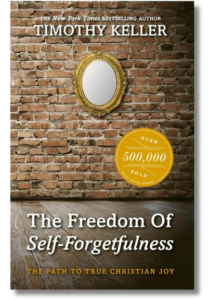 Imagine a life where you don’t feel inadequate, easily offended, desperate to prove yourself, or endlessly preoccupied with how you look to others. Imagine relishing, not resenting, the success of others. Living this way isn’t far-fetched. It’s actually guaranteed to believers, as they learn to receive God’s approval, rather than striving to earn it.
In Tim Keller’s short ebook, The Freedom of Self-Forgetfulness: The Path To True Christian Joy, he explains how to overcome the toxic tendencies of our age一not by diluting biblical truth or denying our differences一but by rooting our identity in Christ.
TGC is offering this Keller resource for free, so you can discover the “blessed rest” that only self-forgetfulness brings.
Jim Davis (MDiv, Reformed Theological Seminary) is teaching pastor at Orlando Grace Church (Acts 29), and a Council member of The Gospel Coalition. He is the host of the As in Heaven podcast and coauthor with Michael Graham of The Great Dechurching: Who’s Leaving, Why Are They Going, and What Will It Take to Bring Them Back? He and his wife, Angela, speak for Family Life’s Weekend to Remember marriage getaways. They have four kids. You can follow him on X.
Justin Holcomb is an Episcopal priest and a theology professor at Reformed Theological Seminary and Gordon-Conwell Theological Seminary. He is author with his wife, Lindsey, of God Made All of Me, Is It My Fault?, and Rid of My Disgrace: Hope and Healing for Victims of Sexual Assault. Justin also has written or edited numerous other books on historical theology and biblical studies. You can find him on Facebook, Twitter, and at JustinHolcomb.com.
Ligon Duncan (PhD, University of Edinburgh) is chancellor and CEO of Reformed Theological Seminary, president of RTS Jackson, and the John E. Richards professor of systematic and historical theology. He is a Board member of The Gospel Coalition. His new RTS course on the theology of the Westminster Standards is now available via RTS Global, the online program of RTS. He and his wife, Anne, have two adult children.