











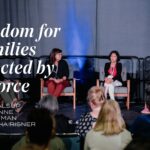






The internet has made our world both bigger and smaller—we communicate more with people globally, but our in-person time with those around us is shrinking. What does this mean for missions? In this session, you’ll discover creative ideas for how we can all participate in the joy of sharing the gospel in our neighborhoods and around the world.
Transcript
The following is an uncorrected transcript generated by a transcription service. Before quoting in print, please check the corresponding audio for accuracy.
Sarah Zylstra
My name is Sarah Zylstra, and I am a writer. I am not a missionary, but I have spent the last 20 plus years reporting in some form or another on the work that God is doing around the world, and that often includes mission work. So I love to talk and think about this, and I’m really excited to talk and think with you about this today. Let me introduce to you the panelists Tina Bosh manages the Lifeway Women Bible Study Publishing Team. Before joining Lifeway, she and her husband Brett served for 19 years with the International Mission Board, primarily in the Middle East. Although she has lived in seven countries on three continents over the course of her life, she’s very international. She’s got three children. She’s got a master’s in theology and is the author of a book called *Given: The Forgotten Meaning and Practice of Blessing* Jen Oshman is here with us too. She has been in vocational ministry for over two decades on three continents. She’s an author, a Bible teacher, and a podcaster, and she focuses on the intersection of culture and Christianity. She’s also the director of women’s ministry at her local church, pursuing a master’s of theological studies, and the mother of four young adult daughters. She lives in Colorado, where her family helped plant Redemption Parker. Welcome. Thanks. Yeah, I cannot wait to talk about missions today, but first let me pray for us, okay? Before we get started, Lord, thank you so much for this time in this place. Thank you for these women. Thank you that you chose us before the foundation of the world to be yours. We cannot thank you enough for that, and thank you also, Lord, for
Tina Boesch
she went back to Boston with young men. She decided that maybe the answer to her problems with she she put a cuddle her. I don’t
Sarah Zylstra
know. Can we turn off Rebecca? I don’t know. You don’t know how she’s coming in here. Let’s keep praying. Lord, we pray for a blessing on Rebecca as she gives her talk, that it would glorify you, and that women would be drawn closer to you. And we pray for the same thing in this room, Lord. We pray for your Spirit to be here. We pray for great joy and delight as we think about inviting others into the joy and delight of being your children. And I pray, Lord, that we would be able to think really creatively, effectively, and thoughtfully today about that. In Jesus’ name, we pray. Amen.
Tina Boesch
Amen.
Sarah Zylstra
Okay, I would love to start us off with a story. Tina has a story, sort of a classic story of mission work done well. Tina, will you start us with a story?
Tina Boesch
Sure. Wow. Okay, I’m going to get used to this. This is loud. Talk quietly. My husband Brett and I went to the field as career missionaries for the first time in 2002, and we arrived in Cyprus about the time that we had a really-I mean, there was a lot of incredible work happening all over the regions of Central Asia and Middle East. One of the missions that had been so well established for decades was a Baptist hospital in the country of Yemen called the Jibla Baptist Hospital, and there was a doctor there named Martha Myers who went to the field in 1977 to Yemen, at a time when one in 13 women died in childbirth. Most Yemeni women at that time would have 10 pregnancies. Often, they would lose more than half of them. Many of those women bled to death in their homes alone, and so Martha went to serve in Yemen at the Jibla Baptist Hospital, and she was a force. So, like many missionaries before her, her first task was learning language and culture to the extent that people who knew Martha would say she’s more Yemeni than she is American. She realized that there were a lot of women. You know, you have a very conservative Muslim culture there, and she realized a lot of women were not allowed to come to the Hospital themselves, their husbands wouldn’t allow them to come to a foreign hospital. So she started a mobile clinic, and she would go all over Yemen by herself in her Land Rover. At one point in 1996, she gets kidnapped and is trapped and hidden under carpets for hours until she escapes and goes back to the hospital and just gets back to work, she didn’t even take a break. So this is the kind of woman she was: fearless, deeply committed to the Yemeni people who absolutely loved her. She was caring for a woman who told. Her husband, that how powerfully impacted she had been by Martha’s compassion, her gentleness. Her husband was a member of Al Qaeda, and he used his wife’s follow-up ticket to gain access to the Baptist compound where Martha worked, and he went in looking for Martha, and he found her in a meeting with two other, a hospital administrator and a nurse, and he executed all of them. Martha died in 2002, a few months after we got to the field, and our team was a communications team, and so, within hours of knowing it had happened, our team leader was on the ground in Yemen, and he did the coverage of everything that happened in the wake of Martha’s death. And he came back, and we all looked as a team at the footage of the funeral. Martha’s casket was made by Yemeni craftsmen who knew her, and 40,000 Yemeni people came and walked by to pay their respects to her. Many of them that Martha had known. Martha is an example of the kind of woman we think about when we think about missionaries. She was meeting desperate human need, and she was sharing the gospel while she was doing it. She learned language, deeply immersed in culture. She understood the people. She put their needs above her own. She is a portrait of someone who had laid down her life for Christ. Her, and this is the way, candidly, she would have wanted to die, the place she would have wanted, to the extent that she saw her life as a glorification of Christ Himself. She fully identified with Him in that way. Her story is told in a book called “Lives Given, Not Taken” by Eric Bridges, about all three who died in Yemen that day. So, just a really powerful example of the effectiveness of women called to cross-cultural mission and the impact they can have on a country and a people.
Sarah Zylstra
And what an example for us to like. I want to be like that’s who I want to be, right? I want to be like exactly like Martha. Except, we know we don’t live exactly in her same time frame, right? We live in a in a time when the internet is prevalent all over the world, right? That means that our time connecting is is bigger. We can connect with more people around the world, and then we. But we know statistically, our in-person time with people is shrinking, and that has an effect on missions. So my first question for you girls is: In a world where almost everyone has access to information about Jesus on the internet, do we still need Martha-like missions, or can’t ChatGPT just answer everybody’s questions? Go ahead. Well, I think that you guys
Jen Oshman
can’t hear me, Katie. Okay, there we go. I think the first way to answer that question is to just refer to the scriptures, which do not change, and God’s command which does not change, and so you guys know Matthew 28. We have the great commission from Jesus, his parting words to go and make disciples of all nations. In Acts chapter one verse eight, he says, “Surely I am with you, and he tells his followers that he wants them to go to the ends of the earth, proclaiming the gospel. Paul speaks of us as ambassadors for Christ. We’re to be sent ones to go. So no matter what kind of technological innovations happen, no matter what the internet can do, or what chatbots on AI can do, or even even emails and texting, embodied ministry still matters because we are humans created in the image of God, and we’re called to be together, to be in community. So there is always going to be a need until heaven. There will always be a need and a call on our lives to go in our bodies to other nations to those who don’t know. Yeah,
Tina Boesch
couldn’t agree more. And if you think about the fact that there were a lot of ways God could have communicated with us, and He chose to take the form of a servant, to empty Himself, to take on flesh, to tabernacle, to dwell among us. If God Himself worked out His mission in that way in a body, how much we we are called to to work in that way, and I will say there is no substitute for incarnational witness, cross cultural witness. One of the things we realize is if you want to access information about the gospel. On the internet, you at least have to be asking those questions and looking for it. In reality, in the places Martha served, of course, even today you don’t have women who are asking those questions until they meet Martha, who’s going to introduce them to Jesus. So you’ve got a lot of places in the world that may have spotty cell service, or internet access, but people aren’t asking those questions because they’re not exposed to the to the kinds of resources we are, where it it encourages us to ask those questions. I mean, we don’t realize, even though we live in a secularized culture in North America, there are remnants of the gospel everywhere that cause people to ask those questions. A lot of people in the world are living in cultures where that simply does not come up until a person goes and starts initiating conversations that lead to questions about the gospel, about who Jesus Christ
Sarah Zylstra
is. I love that. That’s so true. And I will also throw in there, ChatGPT is not actually great at theology. The Gospel Coalition, one of the guys who works for us, is called Mike Graham, and last summer he did a study. He’s like, I just wonder. They were at a TGC conference. He’s sitting around with some guys, and they were like, “We just wonder, you know, how they give ChatGPT and these other like Claude and stuff. They’ll give them like the MCAT or the LSAT, or I don’t, you know, like a test to see how good they are. So, what if we tested it on the Nicene Creed? So they came up with seven questions, right? Like, who is Jesus? What were some of the other ones? Does God exist? Is the Bible reliable? They came up with seven questions, and they asked it to seven of the most popular AI platforms. So think like Gemini or Chat GPT or Claude, and they said or Grok, and said asked it these seven questions, and then they had seven Orthodox theologians grade their answers to see which one did the best. You will never guess. the The AI that is the most theologically Orthodox is Deep Seek, which it comes out of China, a Chinese communist atheist government, has produced the most theologically orthodox AI. What is going on? Well, what when you ask Mike, he’ll say, “What’s going on is there’s worldview. There’s a lot. The worldview coming out of Silicon Valley looks a lot the same, right? And so all of the every AI that’s coming out of America kind of shapes itself around this this other atheist secular worldview. He just ran it again a couple weeks ago, and he said, “Here’s what I found out. There’s good news and bad. The good news is if you put in the words, align yourself, align the response to the Gospel Coalition Foundation documents and the New City Catechism, then it will give you an amazing answer. It’ll give you fantastic answers. But if you don’t put that in, it’s still back. Deep Seek is still the best one, and that’s not even great, right? And so, even if people are asking these questions to ChatGPT, that doesn’t mean they’re getting back a good answer at all, because they’re probably not putting in align this answer to the foundation documents of the Gospel Collision and the New City Catechism, right? They’re just putting in, does is God real or something like that? Exactly. Okay, and of course the problem is where that introduces problems is that a your ChatGPT looks like it’s giving you a neutral encyclopedia answer, right? So it looks like it’s telling you the truth all the time. So if you don’t know any any better, which maybe you wouldn’t, you would just be asking these questions and thinking that was real. Thus, embody somebody next to you saying, “Oh, is that really true? Or let’s look at that. Does the Bible say that? Would be really helpful. Okay, so we do still need in-person missions, but our world does look a lot different than it did in the first century, or even 20 years ago. So, what changes have you two seen just over the last 20 years?
Speaker 1
We were in Europe as missionaries. We’ve actually been back in the U.S. 10 years, so we left in 2016. So we were in Europe in 2015 when the migration crisis happened. You guys might recall that there were. I have the numbers here. I need to find it, but I can’t find it in my notes right now. Oh, here it is. During 2015. Okay, I can’t. I don’t see the number. It’s a lot. Millions
Sarah Zylstra
coming from the Middle East.
Speaker 1
Africa and the Middle East. Yep, Syria, Iraq, and Afghanistan. So 2015 was the biggest. Oh, over 1 million individuals in that year alone arrived in Europe.
Speaker 2
Wow.
Speaker 1
So first of all, being a missionary in Europe then meant that you could reach nations that were closed. So if you had, if you could get in on a visa to Europe, you could reach those. You could reach immigrants from some of the world’s most closed countries, which was really interesting and really chased the changed the face of missionary. Missions in Europe. So there’s that you can you can go to the UK and reach the nations, but it still remains true, or it is true now, that the majority of Christians reside in the global South. 69% of the church in the globe is below the equator, so this is interesting for missiologists as we think about who’s going to do the sending or who should be sent, who should be our missionaries, and what about funding and what about perspective? You know, so it just it’s a changing missionaries don’t typically come from Europe at this point. It’s the global South, and and all the nations are available in the North. So there’s just a lot to work with and to think through there.
Tina Boesch
When I first went overseas, I went to Bulgaria in a missionary status in 1997. So that was not very long after the fall of the of the wall, and that divided, you know, East Germany from Western Germany. You know, that divided the countries that are now post-Soviet from the rest of Europe. And in that era, when I came back to work for the communications office at the IMB, we were still publishing the Commission magazine. We told missionary stories. We used their names. A lot of places we were sending missionaries. They could go on missionary visas, so they had full access. Missionaries were speaking at conferences. They were using their real names. In the time that we served in Central Asia, we saw a massive shift. There was a realization in the missions community, when they looked at places in the world that were totally unengaged with the gospel, where there were unreached and unengaged people, so no gospel proclamation could be documented in those places, they realized that a lot of it was in what we would now think of as the Muslim and and Hindu world and China, kind of what is called in in literature the 1040 window between those I never can latitude and yeah latitude on on a map, and so they started asking so should should government policy limit the proclamation of the gospel and incarnational witness in these places, and so they begin to consider what we would call now creative access strategies. So, can we send Christians into places that don’t issue missionary visas? And those strategies began to really grow when we realized it was possible to actually have Christian presence and witness in places, but maybe not on missionary visas. We could be students there. We can be teachers there. We can start businesses there. We can do those sorts of things. But with the growth of creative access missions, came increasing security constraints that made it hard to talk about what was happening overseas. So we couldn’t use names. We couldn’t use locations. We couldn’t actually tell what was happening? So I think the level of awareness in the American church about what was actually happening on the field diminished, even as a lot of exciting things were happening overseas. A lot of new work was being done. The risks that people were taking were considerable in a lot of those places, and I think that was a really massive shift, as well as the redeployment. I mean, Jen just mentioned we have this extraordinary shift of Christianity to the global South. In the in the time we served in Central Asia, we started to see a lot of missionary partners who were from Latin America, or who were from Korea. Korea. My kids went to a school that had a lot of international mission workers. Half of the students were Korean, so there was a new dynamic on the mission field. I think that a lot of a lot of times in North America, there’s this perception that missions is still a legacy of colonialism. Nothing could be farther than the truth. From the truth, that’s not the dynamic on the mission field right now at all. It’s a really multicultural effort to take the gospel to where it is not yet proclaimed.
Sarah Zylstra
That’s so interesting. And of course, another thing that has changed over the last 20 years has been the massive growth of the internet, social media, and over the last couple years, AI. How have you two seen technology change things for the mission field?
Speaker 1
Yeah, I mean, I’ve personally experienced the positives and the negatives for the missionaries who are sent. It can be beneficial in the way that they keep in touch with people back home, but I’ve also seen it play a really negative role in that it keeps missionaries from feeling at home in their new country because they have a constant feed of what they’re missing out on at home. And so, yeah, the the internet makes it hard for missionaries who are overseas. But again, that connection and those relationships now when I. Travel and meet people overseas. I can stay in touch with them. I can share articles. I can share books. I can, you know, we can keep a relationship going. I can keep sharing the truth with them after I have been there and come back. So, yeah, it’s like it’s like with all of these tools in and of themselves. You know, we we can’t maybe make a moral judgment about them, but there’s there’s some positives and there’s some negatives, and we need to be considerate and thoughtful in how we use them, or choose not to.
Tina Boesch
Yeah, my my husband’s passion is actually internet evangelism, and so while and especially scripture distribution. So a lot of what his work on the field was partnering with local teams to make the gospel available, where we could not necessarily get personnel, and so there’s some places where they could do scripture distribution where we really could have no access at all through through the internet. The other thing that the internet does is make translation now possible in some cases. So, for instance, Brett made a movie about the parable of the Prodigal, in an animated style with some animators in Asia, very like a style that’s really popular in the areas where we lived in, and it’s already been translated into 80 languages, and some of them are languages like Chechen, where there’s almost no gospel resources in a place that’s incredibly hard for missionaries to go to, especially American missionaries, so that it is true that the internet can be used for good and for distribution of gospel resources that are really can capture people’s hearts and minds. I mean, the Jesus film for years has had that role. In I think Christians have always kind of been at the forefront of figuring out how can we use media to help get the gospel in people’s hands, but at the same time, it also offers plenty of risks. Jen has has mentioned several of them while we were overseas. It was like the birth of Facebook, and everybody was making Facebook profiles, and we were in a we were in a high security area, and we were so nervous. It became weird not to have a Facebook profile, but also we were afraid our parents’ friends were going to post things about our mission because our local friends are on Facebook too. So you have to realize it becomes like people feel like you’re CIA if you don’t have a public profile, but also I can’t tell you what my grandma is going to post on my feed. You know, so if you know missionaries who are serving in secure and high security areas, you have to be so careful about what you comment on their posts. Like they can just post a family picture and people be like praying for you and your mission with the International Mission Board, and there, you know, it becomes a huge issue. So there’s a lot of education that has to take place that never did at a time when missions was entirely open in open access countries. So it’s also presented a lot of challenges for missionaries to figure out how can I maintain a legitimate public profile that is who I am, but that also doesn’t jeopardize the security of what we’re doing, and local believers who ultimately are the ones who are most at risk.
Sarah Zylstra
So, do you have advice for people who would maybe want to go in the field one day about how they should steward their social media accounts now.
Tina Boesch
Yes. Yeah. Absolutely. So, if we are Americans in a Muslim culture, people assume we’re Christians because they often have this perception. They think Madonna is a Christian. That actually is one of the barriers to the gospel. When I was in Turkey, Sex and the City was a popular show in Istanbul, and so people think, “Oh, this is what American Christians do. This is their morality. So that becomes a huge barrier to the gospel. So I would say, first, it’s no secret you don’t have to be secret about being a Christian. So it’s totally appropriate to post even before you go, about what you’re learning from the Lord, if you want to do that. But it’s not great to post a lot about missions agencies, about those kinds of things. Being a Christian always and forever, yes, we’re not going to hide that. That’s part of our our witness. But you you wouldn’t want to post about your commissioning service or someone else’s, you know, you want to be careful about the way you navigate your public presence as it relates to your relationship to a mission sending agency.
Sarah Zylstra
That’s awesome. That’s really good, and it makes me think. Do you have other advice, both of you, for those who want to begin thinking about doing missions, I’m thinking globally here. But you could also-I don’t know if there’s also you would have advice for people who want to do missions locally. How do you begin thinking about something like that?
Speaker 1
Yeah. Well, hopefully everybody in here is considering missions, global or otherwise. I’m guessing you are. You wouldn’t probably. We be in this room, and that really excites the three of us up here. We just pray that God-I don’t know-what if the Lord like sends out 200 missionaries from this room to your city, to your backyard, or across the world? I don’t know. We’ll see what God does. But I think it’s the answer that I’m going to give you is pretty simple. But I think it’s really important. It needs to start with a deep love for the Word of God and knowing what the Word says and being transformed and renewed by God’s Word and seeing His heart for the nations, His heart for His glory and His renown in every corner of the world. That starts. It just starts with the Word, and then it starts with prayer, the Spirit of God, and asking the Spirit of God to grow you and change you and help you to unclench, you know, your tight grip on the things of this world that keep you from missions. Whether that’s missions in your backyard, it’s just busyness, the things of life, the kids, the sports, the things that you want to accomplish, or if there’s a fear, comfort, or security issue with you being unwilling to go. But asking the Spirit to change you from the inside out, and then the people of God being having these intimate relationships inside the church, where people know you, they know your gifts, they know your resources, they know your passion. They can call you out when you’re walking in sin, or they can encourage you and support you and send you, whether it’s across the street or across the world, so I know those are those are basic, but it is really how it starts: the Word of God, the people of God, and the Spirit of God. Those three things, and then that’s how the Lord is going to show you what His will is for you. What would you add to that?
Tina Boesch
I love that. I just want to confirm the degree to which the Lord will use the people of God. That was definitely true in my life. There were some women who saw, I think, saw God’s plan for me before I was willing to like receive it, and maybe prayed it into being. My mother was one of those. My mentor in college, Mary Jo Plemons, was one of those. Mary Jo had a really vibrant English as a second language ministry at the church that I went to when I was in college, and she really she was like she was after me to teach that teach a class the fluency class, because she knew I would really enjoy, and she was so patient with me. But it exposed me to some women, like there was an Egyptian woman that I taught who was not allowed to leave her home. It was my first exposure to a Muslim woman was going to to this woman’s home since she was not allowed to come to class. So I think I think the Lord will begin stirring that in your heart. But I want to say the Lord never throws you into the deep end where you’re going to drown. I’ve seen the path to missions, especially career missions, be so gradual for so many people as they get exposure. I mean, I’ve met a couple of women overseas who are like, I knew when I was five years old I was called to mission. But I actually think they’re the outliers. I think very often the Lord’s path to mission is really gradual, as you sort of wade slowly into the water. You know, there’s that method of you either dive in fast or you like wade in slowly to water. I’m a wade in kind of a girl, and so I think the Lord can use both of those. But people were definitely a big part of my story, and I think the confirmation all along the way that the Lord is moving you in this direction, we can see it like it’s stirring in you, but also we are affirming and we want to commission you and send you out. It’s really powerful.
Sarah Zylstra
When you maybe see this in other people, I’m just wondering: are there are there gifts that fit better? I’m not going to say fit better with the mission field, but fit better with certain roles, or or that you like when you, if you were going to identify somebody and say, “I really think you should consider this. What would be a flag to you that that would be a good idea, or that person would be good to consider?
Tina Boesch
Oh gosh, that’s so tough. I would say, first of all, you have to be prepared to work with very little to no affirmation for a long time. If you’re a person who needs a lot of affirmation and encouragement, the mission field is not for you. You have to be really grounded in who you are in the Lord. You have to be able to feed yourself spiritually. Like you need to know how to get nourishment without being in the congregation worshiping. I mean, there are a lot of places in the world you’re going to be in a small house church with your team members, you know, and it’s tough. It is true that you have to be really flexible. I know very few people who get to the field and are doing exactly what they thought they were doing. It’s just the nature of the world that governments change, wars start, like where you thought you were going to be your supervisor. His wife may have gotten sick, or they’ve got a kid who’s sick, so they’re not on the field when you arrive. It’s just like that level of ability to trust the Lord’s hand, knowing that things may not be the way you expected them to be. Like if you can’t roll with that mission. This probably cross cultural missions is probably not the right place for you because that is a dynamic of mission for sure.
Speaker 1
Yeah, I would also say those who are willing to pursue discomfort right here, you know, I think there is a little bit of a misnomer for those who like sort of have romanticized missions, and it’s like, well, when I get there, that’s when I’m gonna start, and that’s just not really how it works. If you’re not sharing the gospel in your backyard and on your street, you’re probably not going to do it on the other side of the world. So I think, yeah, it’s it’s somebody who is willing to put themselves out there and shelve, yeah, shelve the typical kind of American dream and American pace of life, and say it’s better for me to invite my neighbor in and open the Word or share the gospel than it is for me to do one more activity or to put my kid on one more team. And it’s radical. Like that way of life is radical. Saying we’re not going to join the club. We’re not going to join the pace of life. We’re not going to spend the money on that thing. We’re going to actually send a missionary to the mission field, or we’re going to spend the money on our local ministry. Yeah, we don’t just suddenly become sacrificial and evangelistic and on fire for the Lord because we got a plane ticket. So I think yeah, just start and trust the Lord and watch Him increase your faith.
Tina Boesch
I’m feeling this because my kids are both in like high intensity sports.
Speaker 1
It was not personal.
Tina Boesch
I’m feeling like it might have been. I get it. I get it. But I will say for our family, the interesting thing is, my husband is really involved in ethnic church ministry right now, so the truth is, he makes about a third of Micah’s soccer games because he plays a lot. and And we’ve had a conversation as a family. You know, Dad’s not going to be at a lot of your games. It’s not because he doesn’t care about what you’re doing, but it’s because he prioritizes the ministry that he feels called to, so I think that that has been a sacrifice for our family. Brett’s sad to miss, but also the soccer doesn’t matter as much as the ethnic ministry. So, our family has embraced. I am praying that the Lord will use Micah’s soccer because it’s the world’s game. Like everybody plays soccer all over the world, and he plays because it was the only thing kids played where he broke where he grew up, so yeah. So
Speaker 1
one, this is a line I love to share because it’s not original to me. But one mentor on the mission field said to our young family this, and this has like become our family motto ever since we heard it, and it’s this: we will never sacrifice our family for the mission, but we will make sacrifices as a family for the mission. So there’s that delineation. You guys probably know that the story of missionaries or pastors’ families who’ve sacrificed their kids and been like, it’s worth it, and their kids are just carnage, you know, left behind. We don’t want to do that. We want to. I’m my kid’s only mom. Brett’s your kid’s only dad. So you want to be like I’m involved and I’m caring for your soul and I’m shepherding you as your parent. But also, we’re gonna say as a family, we’re not gonna do these things. We’re not gonna spend our money that way, because God’s called us to something better, and this is more satisfying. And so I love that because that is really countercultural for a parent to miss some soccer games for the sake of the church. That’s I mean I’m a pastor’s wife in America right now, and I know where a lot of the church is on Sunday morning, and it’s not at church; they are at the game. So I love that.
Sarah Zylstra
Yeah, that’s definitely true. Do you? These are great tips, you guys, and especially great tips if you’re if you’re starting to think about it, right? You’re dipping your toe in, or you’re thinking, “How can I start sharing with my neighbor? Do you have other general advice for doing missions really well? Like, what do you what if you want to do this? How do you do a really excellent job? Especially, I’ll give. Okay,
Speaker 1
I have one quick answer. This that’s yeah, maybe a bit surprising for me. Even with a background in missions and ministry, if I don’t share with the women who I’m close to with my accountability group, yes, who I am pursuing missionally, I won’t do it. Like if it’s just between me, myself, and I, and maybe maybe I tell the Lord that I’m gonna go share the gospel with my neighbor, I’m gonna have those people over, and I don’t tell another human being, I will not do it because it is uncomfortable and it is inconvenient, and I’m embarrassed and I feel dumb and I feel foolish. But if I tell my close friends who keep me accountable, hey, by next month, I’m going to cross my street with a loaf of banana bread, and I’m going to introduce myself to those people, and I will do it because they will ask me. So, accountability is one of my pro tips. I
Tina Boesch
love it. My pro tip would be, you always take the posture of a learner. So this is a critical overseas. Like one of the most challenging things about working with people in their first terms is they often come thinking they know all the ways things should be done, but when you come into a new culture, the first thing you’ve got to do is learn, learn the language, learn the culture, ask people good questions. The truth is the same as here in America. When I’m on the soccer field, one of my daughter’s best friends is her mom is Palestinian, and I don’t know that much about Palestinians. I’ve never lived in that area, so asking her, you know, I knew she was fast. We went out to dinner one night, and she was fasting for Ramadan. So just asking her some questions, being a learner, and in from a genuine place of curiosity, it opens so many doors. We often think that being on mission means delivering, like convincing people. It means delivering knowledge. There is a moment when we want to have the privilege of sharing the gospel, but we get there by establishing trust, and trust comes through people feeling like we genuinely care about who they are, and what they’re thinking about the world. So I would say take the posture of a learner. Be prepared if you have a chance to share your testimony. Look for gospel connections and opportunities. There’s one missionary who’s so well known for how extraordinarily good she is about transitioning to a Bible story, like in the course of conversation, she’ll basically her name was Annette Hall, and she created lots of Bible story sets that were used in lots of different situations overseas. She was the best trainer, our the International Mission Board ever had on chronological Bible story, and she never left a home without telling a Bible story. So she was concerned about people. She would ask good questions, and she would look for a moment to share a story from Scripture. So cultivating those kinds of ways of being now, wherever you are in your community, around the women that you’re with, prepares you. If you ever get an opportunity to go overseas for a short-term trip, or if you get to go to another city where there might be ethnic ministries, or everybody wants to hear a story, so that’s another great way is beginning learning stories from the Bible. Learning creation to Christ is a great place to start.
Speaker 1
I think you touch on something that I think is really important and difficult in missions, whether it’s in your own community or in another country, and that is pushing against our deeply ingrained American value for efficiency. Missions is just not efficient, and you’re going to feel the internal pressure, like here’s how many people got saved, and here’s what God is doing, you know. And if you’re going to want to be able to report back to people, like here’s how fruitful my ministry was. But the reality is, missions is hard if it’s in your own city or if it’s elsewhere. And I think we need to redefine success, and success is being faithful and just plotting the course and staying with it and honoring the Lord and serving the people that God has brought to you. It’s not numbers driven, and so I think also just for those of you in the room who are part of like missions boards at your church or you’re on the missions committee or you send out missionaries, push against that particular perspective in your church. I can’t tell you over the decades that we were on the field how many churches quit supporting us because they were like, “Well, we can get more for our money in this other country that’s cheaper, which is painful.
Tina Boesch
We have we had a regional leader who did some research, and that it looks like just based on history, there’s it usually requires about 200 years of sustained gospel proclamation in a country before you really see the church take root. Now there are some exceptions, but generally, like if we look at the for instance the kind of proclamation that was in East Asia before the church really took root there, there are a number of case studies that would suggest this is the case. So long, and and I mean that’s prayer and that’s sustained presence, and there are a lot of things that go along with that. But that’s really powerful. The other piece I would say is realize you are not on mission alone, and no missionary is on mission alone. Missions is is the role of the church, the collective church, and for every missionary family that’s out there, it requires a huge community to support and sustain them, and that is not marginal to the mission. That is actually an integral aspect of the mission. In Luke eight, we meet several women. Actually, many were traveling with them, but Mary Magdalene, Joanna, and Susanna are named as women who were supporting Jesus’s ministry and the ministry of the disciples financially. That is a part of the mission. All of the book of Third John is a letter to a financial supporter of the mission, and John and. Encourages to him to send out those who have gone out for the sake of the name in a way worthy of the Lord to give them whatever they need for their journey. Missions we don’t want women like Martha having to spend two years just raising support when she could be in Yemen caring for Yemeni women with the language as the gathered church, an aspect of being an active member of the missionary team is providing the resources missionaries need to stay, to stay healthy, to keep their families healthy, to sustain long-term engagement in hard places.
Sarah Zylstra
Talk just a little bit about how to do that really well, right? If there are women in here who are senders instead of goers, what’s a way to be an excellent sender? I love that question.
Tina Boesch
It’s such a great question. So first of all, I would say realize that sending. We all get very excited about sending. We all applaud. Sending is needs to be you’ve got to see the whole cycle with receiving as well. Missionaries really do need care. We spent one stateside assignment when we only ate with one other American family that wasn’t biologically related to us. Like hospitality is important. Inviting missionaries to share their stories is important. Actually, responding to their email newsletters and letting them know you’re praying for them-you would be shocked at how few responses we got. I mean, we would craft these beautiful newsletters and crickets, like-and you feel forgotten, right? You really feel forgotten. So just respond. It’d be really short, and then showing up financially for for them see their children. You know, one of the things my kids have noted is how much hospitality they received in Islamic cultures, and they don’t find that to be true when they were in America, and they have adjusted to life here. They understand how the culture is different, but we we have not entirely learned in many cases how to practice biblical hospitality, and that’s that’s really hard as we have kids who are growing up in other cultures that are really good at that, that are seeing that in other places. So really seeing their kids, encouraging them, genuinely praying, the sustained prayer support-all of this is part of sending well.
Speaker 1
Yeah, one of the things that really blessed me overseas was receiving either an email. I guess now you could do like a voice text, but where somebody actually typed out or spoke out a prayer and named like my kids individually, you know, and I just felt very seen and known, and that’s something that can be done pretty quickly. But it’s it’s like evidence. Like they didn’t just say, “I’ll pray for you. Like they know my family, they know what we need, and they really did pray for us. It’s a huge gift to those who are far away.
Tina Boesch
There was a young mom in my church who was going out with her family this this spring, and they were headed to the Middle East, and I knew where she was going, and so I told her, “Hey, I want to gift you a massage with a lady that I know who’s just really trustworthy. So after that massage, she called me, and it was like the massage opened the floodgates, of like she was too busy to think about how scared she was, and it enabled her to like process all of that with me. It just those kinds of tangible, simple things can be really powerful in ministering to people’s spirits when they see seen and they they feel cared for.
Sarah Zylstra
That’s awesome. Do you know what time it is? Yeah, it’s 345. Shoot! Oh no! I have one more question. I really want to ask you, and I’m just gonna do it. Hang with me, you guys. I have a question about short-term mission trips because we just hear about like, hey, short-term mission trips first were the best, then they were the worst, right? Like, are short-term mission trips the best or the worst? Okay,
Speaker 1
really quick answer to my perspective is that they are as good as the relationship is with the local long-term church and missionaries. So, to the extent that your short-term team plugs into the local church and the long-term missionaries who aren’t going anywhere, that’s a quality mission trip. You want to propel the local church. You don’t want to come in and do something silly that’s not going to last. You want to be a part of what the local body is doing. What would you add?
Tina Boesch
I 100% agree with that. I think that’s exactly the right answer. I would say they are really valuable for exposure to mission. There’s no other way for people to understand what are the dynamics in the culture, like how is this really different from America? The truth is, it is helpful to gain a global perspective. So one trip can propel. It can encourage missionaries when they’re done well, who are going to be there long after you’ve left. But it can also really help that church get on board with yes. We are in this because we see how meaningful this ministry is. So they can be really good when they’re connected to long-term engagement.
Sarah Zylstra
Love that. I wish I could ask more questions. I’m sure you guys have questions too. Tina and Jen, I think, can stick around for a little while after this. So if you do have questions, come on up and feel free to ask them. Thank you so much for coming. We are just grateful that you are here, and we can even talk about this together. And I hope you have a wonderful rest of your conference.
Tina Boesch has lived in seven countries on three continents. She and her family lived in the Middle East for more than a decade. She works at Lifeway and manages the women’s Bible Study publishing team. She’s the author of Given: The Forgotten Meaning and Practice of Blessing and has written for The Gospel Coalition and Christianity Today. You can find more of Tina’s writing and her stained glass window design at her website.
Jen Oshman has been in women’s ministry for over two decades on three continents. She’s the author of Very Good: What the Bible Says About Being a Woman, as well as Enough About Me, Cultural Counterfeits, It’s Good to be a Girl, and Welcome. Jen is the mother of four young adult daughters and the director of women’s ministry at her church. Her family lives in Colorado where they planted Redemption Parker.
Sarah Eekhoff Zylstra (BA, Dordt University; MSJ, Northwestern University) is senior writer and faith-and-work editor for The Gospel Coalition. She is also the coauthor of Gospelbound: Living with Resolute Hope in an Anxious Age and editor of Social Sanity in an Insta World. Before that, she wrote for Christianity Today, homeschooled her children, freelanced for a local daily paper, and taught at Trinity Christian College. She lives with her husband and two sons in Kansas City, Missouri, where they belong to New City Church. You can reach her at [email protected].