The following is an uncorrected transcript generated by a transcription service. Before quoting in print, please check the corresponding audio for accuracy.
Tina Boesch
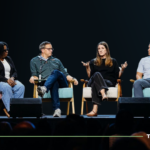
My name is Tina Boesch, and I am really excited to join you guys today. I’d like you guys to introduce yourself. Why don’t you tell us a little bit, first of all, your name, where you’re coming from, and tell us a little bit about your work journey, where the Lord has taken you, maybe your first job, to where you have landed now, some of the key steps along that route,
Elissa Yukiko Weichbrodt
Hey, everyone. My name is Elissa Yukiko Weichbrodt. I am an Associate Professor of Art and Art History at covenant College, which is a small Christian liberal arts college in Lookout Mountain, Georgia. My first job was babysitting and cleaning houses. So So care work, and we can talk later about the identity crisis that I had while doing that care work. I was a cake decorator. I worked for a catering company. I was a photographer’s assistant. I was a residential assistant. I cleaned toilets, but it wasn’t until after college when I got to work in a writing center at at the college that I realized how much I loved teaching college students. I loved moving people from one place to another and equipping and empowering them with new skills. And so I went to graduate school, went to Washington University in St Louis to get my my masters and my PhD, and then ended up being able to go back to my alma mater and teach there. And so I’ve been teaching for the last 11 years, and have added writing, most recently, to the sort of repertoire of what I do.
Missie Branch
My name is Missie Branch. And what’s interesting is my journey didn’t look anything like what it is. You know, I started out, I’m from Philadelphia, and single mom, you know the story, and you’re like, I’m just gonna graduate from high school and try to be great. And then someone had a vision for me to do something more than just be great. And the Lord has navigated my path my first job. I feel like we had all the same jobs in a lot of ways. I was a photographer’s assistant. I cleaned toilets, but my first job was selling old women’s clothing in this little boutique. And I don’t know why they hired me, but the first day on the job, the woman emptied out her cash register and handed me all the money, and was like, Can you deposit this? And I was like, these people are crazy. But anyway, I actually was home for a lot of years. My husband was a church planter, and so I just did a lot of ministry, and I took care of my kids in our home, where in Philadelphia, and we were in Philadelphia, and in that city, putting the kids in public school didn’t feel safe, so my work was at my home and ministry at my church, and I homeschooled, and then we moved to North Carolina because of a series of events, and that was the first time I envisioned me as doing something outside of my home, not because I couldn’t see it, but because I didn’t have the bandwidth. And I started a cake decorating business. We’re basically twins, right? And but then that’s when the Lord really gave me opportunity to pursue education and all of those different things, and that’s when my life really changed. And so it’s been sweet that I almost am living a completely different life now than I had ever imagined just six or seven years ago.
Tina Boesch
I have never been paid to decorate cakes, but I have decorated many of them for my children, but my first job was as a nanny for two twin girls when my senior year of high school, and it was the moment when I realized that children really do have innate personalities, because these two twin infants were so different from each other, same parents, very different personalities. My first job that I had to show up at an office was a journalism internship after my freshman year of high school, and I showed up my first day had a stack of literary journalism to read, but it was a great sort of introduction to the world of professional writing and editing, and it did open doors later for a position as a graphic designer. My husband and I ended up, I mean, I was a philosophy and studio art double major, and that led to no clear career path whatsoever. There was no remunerative work that made sense after that. So I ended up going overseas with the International Mission Board as a journeyman, and then met my husband there. When we came back, we both worked at the International Mission Board, but my job was in the communications department as a graphic designer, but the person who hired me had been my boss at that previous job, and often in the working world, that will happen the Lord will create connections that lead to other open doors and then honestly the our path with IMB continued for 17 years, but in it, we ended up overseas, working full time with a communications team that served the Central Asia region, and we managed a group of writers and photographers. And videographers, and after a long season in graphic design, seminary studies led me to writing which led to editing, which led to Lifeway. So now I am in publishing full time work for Lifeway in the women’s Bible study team. So and never, never would have guessed. Never would have planned. You know, the Lord orchestrates our journey in some really unexpected ways, doesn’t he? It’s just like him. It is like Yes. So many of us will come into a room like this with some myths around work, and especially women in work and Christian spaces. So I’m curious. Let’s just start a conversation by just putting some of those myths on the table, and then we’ll dive into some of the biblical narrative, because we will get to theology. But let’s talk about some myths or negative associations some of us may have with work.
Missie Branch
One, I think people think work is a result of the fall, like we’re working because and things are hard because we messed up. And that’s actually not true. Work is a gift from God. God has created work. Work is good, and to do things and create things with your hands and your minds is actually just a reflection of the creativity and beauty of our God. And so I remember the number of times I’ve been like, I feel like I did something wrong, because I have to keep doing this for 20 more years, but then, but then I remember that God has created us for work, and so that gives you a different perspective on it.
Elissa Yukiko Weichbrodt
And I think related to that, there’s a myth that the only work that matters is the work that makes money, right? And so the idea that the care that I do in the home is not real work, or it’s not as important work as the work that I do in the classroom. That the things that I do for my church might not be as important as the things that I do when I get a paycheck for I think that’s another myth that we have to contend with. I
Missie Branch
was just going to say, and often even in Christian spaces, I think if you’re not doing work that’s directly related to church, then it’s also not real work. And so, which is just not true.
Tina Boesch
That is one I talk with my sister about all the time. So my I’m the daughter of a pastor, so Christian work has been an important part of our family’s life together and but my sister works in the secular world she has been in. HR has founded her own company, Ignite, which has grown just won some incredible awards. And despite all that success, she will tell me, Tina, I feel sometimes lesser than because I’m not in Christian work, and I think that is devastating, because there are so many women that God will call to work in the secular world. One of the women who works with us on some of our Lifeway women events is very highly placed CEO called to that work in a public company that you all would recognize, and comes to do the work with us in events, just because she loves it, but the Lord has not called her to ministry at this time, he has kept her in the secular world for her witness there, we underestimate the degree to which Our work as Christians, sometimes in the world, also can have a meaningful part of our witness. Yeah,
Elissa Yukiko Weichbrodt
and I think that it’s not even that somebody directly tells you that right ever says that you down and says, If you want to be the best Christian, you have to be in full time ministry. But it’s one of those myths that we absorb and and I know in as part of my story, I grew up in a Christian home, and I absorbed this idea that if I wanted to be the very best Christian, that I needed to be in full time ministry. But I also really, really loved art. And so as a seven year old going to Awana Club’s career night, I was in a pickle because I couldn’t decide what I wanted to go as. And so my very first sort of attempt at integrating faith and work was to dress up as a missionary to Japan who illustrated children’s Bibles, because that was the only way that I could figure out how to put together this love that I had of art, and this sense that if I was if I really loved God, I would put art to the side, and I would do important mission work instead.
Missie Branch
I can think of the jobs that I’ve had that had nothing to do with ministry, where every day I would hear people from other religions, basically witnessing to people my coworkers, and the number of times that I was just like, missy, you’re going to sit here and let them have conversations with the Jehovah’s Witnesses and the different people, and you’re not going to say anything. And I think I often felt much more challenged to be a good witness in my secular work, because the people right beside. Of me don’t know Jesus, and so while working in ministry is a high calling, beautiful. We love it. We can also become very complacent, and we can become very routinized and comfortable with we know Jesus, and everyone around us knows Jesus, so we’re all just safe in this bubble. But when you think of people who are out on the mission field, those are people who are working at Starbucks and McDonald’s and all the places outside of the church that are running into people every day.
Tina Boesch
That’s so good. Missy. You. You have been very engaged in the conversation around women and work for a long time. You co host a podcast that’s called Women in work. Shout
Missie Branch
out, is Courtney in here? My co host, boo, yes.
Tina Boesch
So glad you’re here. It’s such a great podcast. The conversations you guys are navigating are so helpful. You’ve also contributed, and I’ve got it here. I want to show it to all of you guys, to women in work. Y’all, it’s excellent. It’s an excellent group of women speaking about all different aspects of work and the theological grounding in your chapter in this book, you do a wonderful job talking about the degree to which our work is an aspect of image bearing in the world touches on creation. We also see that reaffirmed, for instance, in a passage like Ephesians two, eight and nine. Missy tell us a little bit about the degree to which, the way in which we see in creation God is a worker, the way we bear his image when we work. And some a little bit about that. One
Missie Branch
of the things, I’m not a writer, Courtney forced me into that chapter. But one of the things that illuminated for me when I was a child, I painted a picture, and I cannot draw to save my life, like million dollars, missy, draw this. We’re poor. I can’t draw. But I painted a picture a project, and it was put in the art museum, were in my city, and I remember how proud my mom was of this picture in the art museum, and I remember it being such a big deal. And I feel like, What in the world I cannot draw? Why is this picture in there? But I followed the directions that were given to me, and someone guided us through it, and then someone else looked at it and said, I think this is beautiful. This is art, and I think about how we all have been giving these directions, and all of us may have some skills and no skills, but we were created for something particular. And if God says, I’ve created you for good works, and we know our father only gives good gifts, then there is a work that is in each of us to do. And when you think about that, that means whether your work is home, whether your work is CEO, cleaning toilets, that the scripture has already laid a foundation for the value of that work isn’t that crazy. I mean, it’s just beautiful to me. And I think with that comes both the responsibility and a humility. It’s almost like being born into royalty. You know, when you’re born into royalty or or into fame, you really have to steward the influence that you have. Well, well, all of us were born into this created in Christ, Jesus for good works. And so we have to steward that responsibility with humility. We have to make sure that our influence represents the King who has given us this great work. And so when you think of what Courtney and I talk to all kinds of people who do all kinds of things, we interviewed a woman who was a spy with the CIA. I’ll never be a spy with the CIA. I’m never gonna do that go to work, but I spent 16 years just trying to keep my kids alive. I wasn’t even trying to raise geniuses. Literally, I was just trying to keep people alive. But when I look back at that, I look at that, and I say, Ephesians, two told me that I was created for good work, and that was a season of good work, and I’m proud of it. So, yeah,
Tina Boesch
that’s so good, Elise, so you are someone who cares very much about things that are created and made. When you read about God as creator in Genesis, as someone who works in this creative field, how does that inspire you to think about our work in the world?
Elissa Yukiko Weichbrodt
I think that there sometimes is a tendency, maybe especially in more intellectual Christian circles, to think that our work as Christians in this world is primarily deconstructive or defensive, that we are really critical of things that we see out there, and we want to take it all apart. And when I look at Genesis, and when I look at the creation mandate, the cultural mandate, the call isn’t go forth and deconstruct the world, the call. Fall is one of unfolding the potentiality of creation, right? That we are given abundance and that we get to make from that. And that is something that the fall may have distorted, but it hasn’t taken away from us. We still operate from a place of abundance. We are still called to be generative, creative beings. And I want to cast a really big vision for what constitutes creativity and generativity, that when you make a bowl of mac and cheese, even if it’s from a box, you are still making something and that is still good. You are image bearing when you do that right? And so when we can recognize the the manifold ways that we get to unpack all of the goodness that God has put into creation, that’s when we are really living into our image, bearing as as workers and doing what he literally put us on the earth to do
Tina Boesch
right, to cultivate, to steward, to make what was already good even more beautiful, flourishing. That’s so good. I love that perspective of thinking about the abundance that is around us and now constructing other good things that serve the church but also serve society at large. That’s so beautiful. I love that image. Of course, we know we did not stay for very long in that garden that we were supposed to tend, because immediately man and woman are going to resist the good boundaries that God has laid out. And it’s so interesting that God’s judgment falls actually touches for sure. We know, broken relationship with Him affects our relationship with one another, but it also affects our relationship with work. It’s interesting that at his creation mandate to you know, be fruitful, multiply and tend and care for this earth, the curse of sin actually touches on their work. Now, the work that was supposed to be joyful is going to be painful, right? And we see that actual, that descriptor in both God’s judgment of Eve that affects her, her painful labor, physical labor, but also in Adam’s tending of the Earth is also going to be painful. How do we see you guys? How do you guys see the fall and the consequences of sin working themselves out in our working world today? How is sin affecting? What kind of challenges are women facing in the marketplace, honestly, not just in the marketplace, but in our homes, where we work, in our churches, where we work, but also in spaces where we may be working in the world. How does the fall and sin affect those places,
Elissa Yukiko Weichbrodt
like everywhere,
Missie Branch
all the things, right? I mean,
Elissa Yukiko Weichbrodt
the fall breaks our relationship with God, with ourself, with our neighbor and with creation, right? And so because we are working in creation and we are working with our neighbor, we should anticipate that we’re going to see the fall in all of those places. And so that means that I’m not surprised when I have interpersonal conflicts at work, but that it might not just be my colleague’s fault. It could also be my fault too, because the fall runs through me, right? But that also means that there are cracks, that there can be deformations in the institutions that fallen people have made, and so I think both holding onto the way that the fall can affect us as individuals and can also affect systems and institutions is an important thing to be aware of when we’re thinking about how not just our idea of work may have been warped, but our experience of work may also be malformed.
Missie Branch
I think one another. I agree with you, and I think another damaging effect of the fall is the way we have ranked work and assigned higher value to some work and lesser value to others based on our opinion of that work, and God has not done that. And so we then devalued the image bearer who is doing the work that they’re doing, because we don’t find value in that work. And that is sad, because then, just like you said, there’s a break in the relationship. There’s a break between the way you’re viewing each other the way you’re viewing another image bearer between you and the Lord. And yeah, so yeah. And
Elissa Yukiko Weichbrodt
I mean just, just to be very clear and put all out on the table, wage disparity and job segregation, right? Are real ways that we see the fall working out. So what I mean by that is the fact that women are still paid by the dollar. Less than men, and that’s exacerbated for black women and for indigenous and Latino women, and that certain kinds of work women, and particularly women of color, tend to be shuttled into certain kinds of care work. But as a society, we devalue care work. So guess who gets paid less overall as well? Right? That’s all the fall working. That’s not people not working hard enough, or not having a good work ethic, or not valuing education, that is institutional brokenness. And I think we need to recognize that Jesus is needed there too.
Missie Branch
And I mean, you’re 100% right. I think along with that is the idea that if you just work hard, you can make it. And then there’s the assumption that someone who isn’t making it is not working hard, but if a system is broken, their hard work is not going to fix that. Yes. Then
Tina Boesch
there’s the brokenness in us that if our work does lead to success, we can then forget that God has opened the doors that God has provided. It’s so interesting to me that in Deuteronomy, nine the Israelites have just been rescued from oppressive, painful labor. God has delivered them so that they can minister and serve in his presence, and Moses reminds them, on there, they’re on the cusp of the Promised Land. They’re on the cusp of entering in again, to the life, to be able to, you know, work in the garden that God had provided. And Moses reminds them, when you go into the land, when you become wealthy, when you flourish, you may forget. Your heart may become proud, and you may forget your deliverer. And all of us are prone to that. Y’all when, when we do actually see success in our lives, when we see the fruits of our labors, our hearts are prone to take credit for that right, and that can work subtly into our lives in a way that can damage our relationship with the Lord and with others honestly. Leads to unhealthy competition. It can lead to jealousy. There are all kinds of creeping sins that can inhabit our lives when we forget that God is our provider. He’s the one that’s open doors. He’s the one that has enabled us to work in a way that’s satisfying to our souls and and that benefits our communities.
Missie Branch
So good. I’m curious
Tina Boesch
you we began to move away from, I mean, we could spend our entire time talking about the effects of the fall, because they are significant for all of us. But I do want to think about the way that knowing Jesus, Jesus’s relationship with work, knowing him, the way that knowing him redeems work for us, and the degree to which you know we know there’s giftings, common grace, that’s giftings, but also within Christ’s spiritual giftings, right? So let’s kind of unpack some of the ways in which knowing Christ redeems work for us,
Missie Branch
one of the things I have a daughter with special needs. She’s an adult with disabilities, intellectual disabilities, and she has told me that one thing about having intellectual disabilities is that you don’t really get that you have an intellectual disability, which I think is the sweetest gift, because she doesn’t walk around thinking, I’m disabled, right? And she’s taking college classes, one course at a time, one, and she has assistants. And someone said to me, but what is she going to do? Like, what I mean, what is she going to do? And I remember thinking, what is beautiful about Eden is her name? What is beautiful about Eden is that she’s not bothered by that statement. Because I remember the day Eden told me that I asked her if she was a believer, and she told me, of course, Jesus speaks Eden, and we have a connection, a relationship, and ever since that, there’s this sense that we have had of purpose for her life that really just resonates. Eden was created for good work, and Jesus Redeems all the work that she does too. So Eden loves to bake. So Eden bakes for her friends, and I tell her, look at the way the Lord has gifted you to be able to create for His glory. And I think in a broken world, we could say a broken person, broken right person, can only create broken work. But look at Jesus. Jesus shows up and says, All of us are broken, and yet I will redeem even your brokenness for My glory.
Elissa Yukiko Weichbrodt
I love that. That’s so beautiful. I’m thinking about how Jesus himself was a carpenter right in Mark 63 the folks are looking at each other and they’re like, isn’t this the carpenter? Isn’t this the guy who worked with his hands, and now he’s a teacher. And. Um, the wonder of the incarnation is Jesus coming and dignifying our work and being in culture, right? Like Jesus doesn’t come and sort of transcend culture and time and place, and even like the finitude of our bodies, he humbles himself and he takes that on and so Jesus would be tired after a day of working with Jesus needs to take breaks. Jesus takes naps, right? I love that Jesus takes naps sometimes because work is tiring for him, the the way that that is so different from from so many other, particularly ancient religions where you would be working just for the afterlife, where there was no value right now for what you were doing, everything that you were doing was to get ready for what comes next. And sometimes Christians have fallen into that right sometimes we thought like, Oh, our job here is just to try to to get rid of our bodies and to do spiritual work and to work for heaven. But that’s not what the Incarnation teaches us. The incarnation teaches us that the work that we’re doing in these bodies, finite and creaturely bodies, is good work, and it matters now, otherwise, God himself wouldn’t have done it, and he did, and that’s such a gift.
Tina Boesch
It is a gift, and I appreciate your you mentioning just the way in which Jesus’s embodiness while he was here with us also meant that his body required rest. Because one of the ways I think the fall affects us right is honestly, we see it in hostile culture, where there is no time for Sabbath. There is no time for rest. We actually don’t enter into rest at all. And so we are exhausted, and we feel like we’re failing if we’re not honestly constantly producing. So our identity gets wrapped up in what we’re making, what we’re doing, what the position that we have in a way that’s not consistent with seeing our identity in Christ. And so we are burning ourselves out, and we are not present for the people in our lives, because we’re not embracing the rhythms that God put out established for us honestly in the creation of the world, in saying, look, it’s so in that seventh day of creation when God creates the Sabbath. The word work gets repeated three times, and it says, God rested from His work and made that day holy. And we often are defaming right the Sabbath. We’re not entering into it. And I am speaking to myself here, y’all, if my husband were listening to this, he was like, Tina, you have no no ability to talk about this, because this is really hard for me. It’s really challenging when you’re in ministry, and so you are at church and you are working during the week, and the weekend is often the time when you’re reconnecting with your children, but also candidly, doing the laundry and cleaning the house and doing honestly work that is also good and is a part of our family flourishing. So I’d love to know because each one of us, one of the things we haven’t talked about is our family dynamics. So each one of us has worked as single women before we married, and then we have worked as moms. I’m a mom of three. My oldest daughter is 20. She’s overseas in Scotland, and then I’ve got a middle schooler and an elementary schooler. My baby’s 11, missy, how about you? And let’s talk a little bit about this dynamic of balancing the sphere of our work in the world with the sphere of caring for our homes, loving our children, respecting our husbands. Let’s talk a little bit about that. Tell us a little bit about your family dynamic.
Missie Branch
We have four kids, but my kids are all grown. They’re 20 something, all the way down to 19. I just tried to keep them alive. Y’all, they’re just I’m proud of them, but you I did get to stay home for several years. And I’ll be honest, I come from a context where staying home is not the dream. As a matter of fact, where I lived, people would say to me, are you lazy? Like what I remember being asked, are you lazy? Because I was home with my kids. So our context was not the same. I had never in my life said I wanted to homeschool children. There’s just never a thing, but the Lord changes our path and but when my kids got a little older and I felt like the Lord was calling me outside of the home, I remember asking them if there was one thing that I could do on a regular basis. And I actually got this from somebody that we interviewed, but I remember if there’s one thing I could do that could help you feel like I’m still available to you and in your world, like, what is that one thing? And it was beautiful to understand that all of the running around and craziness that I thought I needed to do to make them feel loved and valued was really the stuff I was I thought they needed to feel loved and valued. One of them was just like, if you can just help me. Check my homework, the one thing I don’t want to do, but okay, but yes, I will help you check your homework. And I think really, the goal in our household was to take each season by season, not to make rules of whether you’re supposed to do this and you’re supposed to do that, but to say this is the season that’s before us. What are we going to do in this season, the season when my husband was a student and he was a recording artist and traveling the world, and it was different than the season when he’s a professor across the street, you know? So, yeah.
Elissa Yukiko Weichbrodt
So I have two boys, 14 and 12 also help. We’re just trying to keep them literally alive. I grew up with in more of a culture of that the best Christian woman is the woman who stays home and is a full time homemaker. And I went to college sort of with that idea that having a profession was going to be my backup plan, and that being a stay at home mom was going to be my first, first plan, and when I was a senior, I was seriously dating my now husband, but all of my professors were just talking about me going to graduate school, like, just as if it was a done deal. And I was like, What is this Graduate School of which you were speaking? Because I don’t, I don’t know that was, I didn’t have an imagination for that, and so they imagined on my behalf. And I actually had a very powerful lunch with Kathleen Nielsen, who was at covenant at the time. And I was saying, I don’t, I don’t know if I should go to graduate school, because wouldn’t that be a waste if I get married and have children and I’m just going to stay home with them? And Kathleen looked at me in the eye, and she said, God does not give you good gifts for you to turn them down. Oh, okay. If he is calling you and he is opening these doors, he is not expecting you to say no to that. Can you step out in faith and see what he has for you and and so pursuing, just pursuing graduate work in general, was a really big mind shift for me about what it meant to be a woman, what it meant to be a Christian woman, even the fact that we moved to St Louis for graduate school for me, not because my husband had a job there, and then I decided to go to graduate school, and then we moved back to Chattanooga because I got a job there. This was real, like tectonic plate shifting ways of thinking about gender and work and my marriage, and my husband has been tremendous through all of it, and because he keeps echoing Kathleen Nielsen’s words to me, it’s like Alyssa. God is a good and kind God. He doesn’t open a door and say, Would you like this dream job that you have never dreamed of before, and expects you to say no as a way of proving your holiness. He offers you good things, because he’s a good God. And so for me, this has been, I know it sounds like my story is very straightforward, but there was a lot of angst underneath, underneath all of that. And one thing that actually really helped me was learning more history and learning that it’s it’s not until the Industrial Revolution and the enlightenment that there is a split that happens between the public and the private spheres, between this idea that you work outside of the home and that that’s different from work inside of the home, and that men belong in the public sphere and women belong in the private sphere. That’s actually a really, really new idea. Historically, right in prior to the Industrial Revolution, you are working as a family, and there isn’t a sharp delineation between public and private the I think just recognizing that that is a cultural invention, rather than something that is naturally ordered, allowed me to have a much bigger imagination for what was possible
Tina Boesch
that’s so interesting. I mean, I have, as my husband and I have navigated conversations around which job, when is this right for our family? At this time, we have faced some of those things. This year has been particularly interesting, just because my job has demanded a lot of travel, and so we’ve had to think about how to also be present for our children at some key spaces. And one of the things that the Lord has been convicting us about this is also the year, the second year of being in a home group with some singles and some young married couples, who the Lord, they’re all a part of our church have become a part of our lives. We have a meal together every other week, and they have truly become our family. I. In our spiritual family, and they have helped us parent this year in some really significant ways. They have become, honestly, disciple makers for our children. So there was one week when Brett had a meeting he couldn’t cancel. I was traveling for work, and it was my kid, my daughter’s award ceremony at school, and I knew she was going to be receiving a really significant award, and it was I was heartbreaking to me that I couldn’t be there. So I asked Lauren and Steph to attend in our place. And you know what Naomi felt just as loved and supported as if I had been in the room, because they are her aunties and so I think sometimes as women, we feel like we have to carry all of the nurturing, but the truth is, God has placed us in community, spiritual community, and our children need to experience the care of other adults who are significant in their lives and who are part of their spiritual formation too. That’s been very freeing for me to know that I’m abdicating responsibility as a mother. I am inviting my kids and other women for whom that’s meaningful for them, some of them would love to be mothers, but they are participating in helping to raise my children too, and that’s
Missie Branch
part of their work. That’s right, a work that they were called to. And if I hoard all the work for myself, because I think I’m the best thing for my children, then I’m also not allowing my children to have a vision of what work can look like beyond me, and I think that that’s unfair to our children. Yeah,
Tina Boesch
when we look at the Scripture, at some of the women that we meet in the pages of Scripture. Are there some women that have been inspiring to y’all as you’ve thought about what work might look like for you,
Elissa Yukiko Weichbrodt
I was thinking about Shipra and Puah, the Hebrew midwives, women who are helping other women in their most vulnerable and powerful, one of the most vulnerable and powerful moments of their lives, and who care so much for life that they are also resisting oppressive authority while they’re doing it right. Like that’s a that’s a pretty great role model for a woman doing work, and I think I hadn’t, I hadn’t realized that there were so many role models for that.
Missie Branch
I think a woman that just has always sings, she stands out and just dances, in my mind, is Tabitha or Dorcas, just the creativity and the resilience that it takes to be a single woman caring for widows, and these women in that community would literally have nothing. And yet, through the work of Dorcas, they were felt cared for, and they were built a community. They were a community amongst themselves, so much so that when something happened to her, they were like, she can’t go. And I just think there was something beautiful about the idea that this woman, without necessarily a man, is used by God to bless an entire community of people and is remembered for her creativity, her hard work, her perseverance, and she did it because of her love for the Lord and her commitment to the Lord and Her commitment to the Lord and her commitment to this community, and so it’s just something really beautiful about that, because it wasn’t about necessarily education or promises of some kind of wealth or husband or anything. It was about a commitment in her diving in and just doing good work. I
Tina Boesch
love that one of the women that I always have a look to is Priscilla because of the ministry partnership that she had with Aquila, they’re always mentioned together in Scripture. And for the 19 years that we served with a missions agency for especially at the beginning, before we had children, my husband and I traveled together to do ministry. And I also love the way in which they are doing ministry, but they are also working in a recognizable trade. So these days, so much of the work where the Kingdom needs to break in is in places we cannot go as traditional Christian workers, and so it’s necessary to have a job that’s understood and recognized in those places. So they were tent makers while they’re with traveling with Paul from Corinth to Ephesus, they’re still continuing their tent making trade, supporting themselves that way, while they’re doing ministry. And that was so affirming to me that that there’s a biblical foundation for that style of ministry where and honestly, my husband works with ethnic pastors in Nashville and refugee communities. All of those pastors are bi vocational. They are all doing work that is also funding their ministries. And so I think that’s a really meaningful thing. There does not need to be competition between ministry and work. They really do go hand in hand. We. Have this incredible group of women that we know traveled with Jesus and supported financially him and his disciples during their journeys. Y’all women have been funders of ministry out of their private means since the inception of the church. This is really powerful. I’m Southern Baptist. Lottie Moon Christmas offering was organized by a group of women, as had been the primary funding of mission throughout the world. So women have had a really significant impact globally, partially through their financial funding. I think that’s so cool. Yes. So I want to ask you guys, as we think forward, we’ve talked about the way that the fall impacted our relationship with the work, the way that Jesus Redeems it in so many ways. What is our eternal future as it relates to work? I mean, there is this vision of heaven that we’re trying of all lounging around on clouds, and people say, I don’t even want to experience that, because it’s going to be boring. Is it? Is there any future for work beyond what we’re experiencing now?
Missie Branch
I can’t imagine calling lounging on anything boring. That’s just, I’ll just, that’s me, though, you know that’s me. No, I think the beautiful thing is that we’re talking about God and His plan for us, and there’s no way we can even imagine how beautiful work is going to be when we’re doing it in the presence of God. I think I look forward to that work because I know that work won’t be futile. I know that work won’t be back breaking, and that work won’t mess with my pride and cause me to see me that I will be doing work that will be bringing him glory, and we will all be able to benefit from that.
Elissa Yukiko Weichbrodt
I’ve been thinking about a mosaic that I saw last or this past May, when I was taking students to Rome, which sounds much more luxurious than it actually was, but I was teaching, I was teaching them an art history class there, and there is a church class of precida, and it has a mosaic that has two sisters from the early church, precida and potenciana, who served, who cared for those who were being persecuted and who were persecuted themselves. And in this mosaic, precida and potenciana are shown shoulder to shoulder with Peter and Paul offering their martyr crowns to Jesus. And I think in the new heavens and the new earth, one thing that I’m really looking forward to is working shoulder to shoulder with men. And it won’t be that we’ll be seen as CO laborers in this really beautiful way where we will be able to restore what was there in the garden with Adam and Eve, and to be able to experience that. I long for that, and that Mosaic has just been living in my head as a glimpse of what might be possible.
Tina Boesch
I love that. It’s beautiful in creation. You know, we’re in a garden, but by the time we get to new creation, we see the heavens and the earth reunited, and it’s a garden city. So I’m excited to see and we see the kings of the earth bringing the riches of their cultures into the city. I am interested to see what endures. You know, of the things that we’ve made here, what has eternal, enduring significance there in that garden city. And I love the fact that it is a garden city, because I don’t really want to go back to an untamed garden, right? I mean, we there’s something, some sense in which the work that we have done now we’re seeing culture coming together with nature, and I am excited to live in that space and see the range of culture that is created in the presence of God, y’all, thank you so much for being with me. I have learned so much from y’all. Y’all, wasn’t there so many aha moments. You. Thank You.
I want to just close us in prayer, because I know all of you are here because you have a desire to work in a way that brings glory to the Lord. And I don’t know what profession you are in or what you have called to, but there is no work that you could possibly do that wouldn’t bring glory to the Lord if you are doing it in Christ with an intent of reflecting Him into the world, Lord, God, I am thankful for every sister in this room. Lord who has a desire to bring glory to the name of Jesus in whatever capacity she is in. Lord, if there are teachers, if there are nurses, if there are missionaries, if there are a Olympic swimmers. Lord, painters and artists, whoever is in this room. Lord, whether we are in athletics or care or education. Lord, the foot construction, architecture, research. Lord, there is such an extraordinary range of. Work that we could engage in. But Father, I pray that when we come into whatever space we’re in, interacting with whatever colleagues or teammates we have, or the days when we are in our home, caring for our children, changing diapers, fixing meals, folding the interminable baskets of laundry, Lord, you see all of it, and I pray that every day we would surrender to your plan for us. Lord, that we would give the work that you’ve given us to do back to you as an offering. Lord, that we would bring the character of Christ in we would ask that you would form the character of Christ in us, sanctify us through the work that we’re doing in your name, for your glory and your good. In Jesus’ name, we pray amen.