




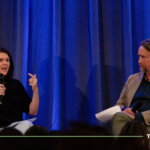







Discipleship begins in the home, and one of the best ways to do this is to study the Bible as a family. Creating a regular habit of spending time together in God’s Word invites children to learn through both their parents’ instruction and their personal experience how to read, interpret, and meditate on Scripture. In this session, you’ll learn about habits and strategies the speakers have used to make family Bible study a regular part of their household routine, and you’ll be encouraged to start with the Gospels when introducing your children to studying Scripture.
Transcript
The following is an uncorrected transcript generated by a transcription service. Before quoting in print, please check the corresponding audio for accuracy.
Michael Kruger
Well, good afternoon, everyone. Great to be with you. Welcome to this session. Melissa and I are so excited to talk to you guys about the Good News Family Devotional, and about family devotionals in general. I know all of you are thinking, I’m going to go to one session and you’re going to fix all my family problems in 45 minutes. We will do our best to do that, but we will fail miserably, I promise. So, we’re thrilled to be here. You know, my wife, Melissa Krueger, she needs no introduction. I’m introducing myself this week as Melissa Krueger’s husband, and just thrilled to be with you to talk about this new book. And it’s fun to be back on the stage with Melissa. How are you? Yeah, you guys, is yours on scoop it up
Melissa Kruger
now?
Michael Kruger
Yeah, you go. Yes, I’m good. I know we never see each other. Can we catch.. we’re gonna catch up for a minute, if that’s okay.
Melissa Kruger
How’s Gus? Oh, he’s good.
Michael Kruger
Yeah, dog’s doing fine. Actually, all joking aside, this is a little bit of the story of our life, like when we see each other in these events, we’re here or there, and then, like, we get together. I’m like, I see her more on the stage than I do sometimes other places that we’re busy, but actually, that’s the theme of our meeting today, which is, what do you do when you have a busy life and you have a family and you have kids, but you still want to get in the word of God with them on a regular basis? How do you manage that complicated life? Well, I think we can say that we’ve been down that road, and we all know it’s not an easy road, but we look back with a great deal of thankfulness, and just want to share a little bit with you guys what we’re learning and have learned about that over the years, and why we’re excited about this new book we have coming out, The Good News Family Devotional, which we’ll say a little bit more about later, and why we think that, hopefully, can be a great tool to help you navigate the very things that we had to navigate. So, let’s start with just family and kids, and Melissa, I’ll have you introduce them. Say something about our family and our kids.
Melissa Kruger
We have three kids. So, Emma is 25 she’s our oldest. She’s married, and she is serving in Southeast Asia right now on the mission field. Literally, to get to her, we could go either way. And so we’re like, ah, man, it’s really far. And then our son just graduated from college. He is in aerospace engineering, so hopefully he’ll make a rocket, so be quicker to get to where our daughter is. Exactly, I’m banking on that. He’s the only
Michael Kruger
one in our family is going to ever make any money, so we’re hopefully
Melissa Kruger
that,
Michael Kruger
so as we have teachers, missionaries, pastors. Clearly, we didn’t take any financial classes. We’re not going to write a book on finances, in case you’re wondering.
Melissa Kruger
Yes. And then our youngest just finished her freshman year in college, so we have been empty nesting for a year, so we’ve just, yeah, so that’s the stage. Someone
Michael Kruger
asked us the other day, what’s it like to be empty nesters, and I’m like, I don’t know, we’re never home, we don’t know what this nest thing is like, can’t wait to experience it 10 years from now. So, when you think back to life with our young kids, that seems like a long time ago, doesn’t it? What are some of the memories that stand out to you when you think about little pitter patter feet running around and us trying to get them in the word of God as little kids? Yeah,
Melissa Kruger
I think you know what. Gosh, I just.. I think it was just so simple. It’s not complicated, hard to do often, but when I, when I think about just times together as a family, it was just daily being together, and here’s what I kind of hate: we were parenting, I’m actually very thankful we were parenting in the day before the iPhone, but what it means is we have video footage of things like ballet recitals that were boring the first time I saw it, and now in some ways that’s what we have these memories of, but we don’t have a lot of the everyday things, because we didn’t have phones, yeah, Who’s gonna haul out a big VHS video camera, and be like, okay, I’m gonna, I’m gonna videotape, you know, just dinner, and just being together, but I think when I really think back on it, those were some of my happiest times of just being at the table with the kids, talking about life, and they were really happy, it wasn’t miserable, I mean, sometimes you think about, you know, I mean, now look, I mean, there were things that happened that were, would make any family frustrated, or whatever. I’m sure kids were throwing food on the floor and all that, but just the joy of being together as a family. I don’t know, what do you.. what would you say? Oh,
Michael Kruger
I think about that. I think we also are speaking a little bit of with the nostalgia of parents with kids out of the home, like, oh, when they were all here, it was perfect. No, it wasn’t. And I’m sure if we could go back, and we’d be saying, I can’t wait till they leave, but it’s true. Every stage of life has its blessing, and the stage we want to talk with you all about today is, is that younger kids stage with kids at home. And so, just to set the scene a little bit. Year, you know, we know everyone here is in a different place. Some of you have young kids, they’re 5678, years old, and you’re right in the middle of sort of the sweet spot for this. Some of you have teenagers, and you’re already dealing with the sort of teenage problem, like, well, how do I get them to study God’s word, and they’re almost out of the house. Some of you want to have kids, you don’t have kids yet, but you’re thinking ahead. Some of you are grandparents, and you’re thinking, I want to teach my grandchildren the Bible. We think all those really, really apply to what we’re, we’re talking about here now. I know that many of you come in with sort of a nuts and bolts questions in your head. How do you do it? What are the things you think about? What are the, what are the factors to consider? And we’re going to get to that, but I think we learned over the years that when it comes to something like a family devotional, you don’t start with nuts and bolts, you start with the big picture motivations. Why are we doing this at all? And so I want to start with that, Melissa, with us in this conversation. If someone were to come up to you and say, you know, I take my kids to church, you know, they go to a vacation Bible school every summer, you know, my kids are involved in youth group. What, what do I even need to do this for? What’s the motive here?
Melissa Kruger
Yeah, I think I, you know, I really think it’s hard to even talk about how significant I think this time actually is, and I think it gets passed over because it feels so common, or maybe we’re just so busy, we just think it’s one more thing to do, but you know, I mean, studies have even shown just the act of having a family meal together is so important for kids, and just, you know, they talk about all the all the different rates of happiness and mental health are all better just from having a family meal together, and I think we all know how hard that is today in our culture. It’s just so difficult to get time together, and so what we’re actually encouraging is a meal of God’s word together. And so, if just a regular habit of eating together as a family is really important for your kids. What might it mean if your family together is feasting on God’s word? And let’s just be honest, when I say that, it sounds like, wow, that sounds like a lot of heart. Look, we all eat hot dogs with our kids sometimes, right? Like, I’m not talking about like a four course meal every night. Sometimes family devotions are like, well, we said one verse, that was it for today, right? That’s what that’s what we got through, and so it’s not like this is always this big thing, but there’s something that happens when your family is seated together at the table and you are talking about God’s word together, and the conversation about it is just different than being in church, you know, in church, or maybe receiving it. Think about when a kid goes to church, they’re hearing, then they’re in Sunday school, maybe they’re doing a coloring shirt sheet, they’re hearing. But there’s something about watching mom and dad talk about the scripture, hearing their brother or sister talking about the scripture. Something happens in that moment that will bond your family in a way, like no other. I mean, what would you say? Yeah, no,
Michael Kruger
I mean, I think the thing that stands out to me as I reflect back on the last many years is, is the way studying the word of God together as a family unites the family in a way that other things just don’t do. And you just think about your family for a moment, you think, what would we do together as a family that bonded us together? Well, we all love to go to a football game, or we all like to do this particular thing for a vacation, or we all had the same hobby, or it was these memories that bind you, and by the way, those are wonderful things too, right? Nothing wrong with those, but when you, when you unify a family around the word of God, there’s a, there’s a spiritual bond there that becomes really, really strong, and that that pays dividends down the road. The dividends we’re starting to see now. I’ll give you some examples of this. It’s not just merely that when we look at our kids, we’re so thankful that they’re following Christ, and they are, and we’re thankful for that, but we see the way they love each other. You know, isn’t it true that when siblings grow up, they fight with each other? And my brother and I were only one year apart, man. We, we, we fought pretty bad, like cats and dogs. And you’re like, I
Melissa Kruger
think the scar right here. Yeah, actually, you can come meet me
Michael Kruger
afterwards. I still have a scar from when he dropped a rock on my head. And yeah, so siblings sometimes aren’t the closest, but what we’ve seen is our siblings care for each other and love each other in ways that go well beyond us anymore presiding over it, we learn later that they call each other, we learn later they pray for each other, we learn later that they support each other and ask how they’re doing and are involved in things. And then the other fruit we’ve seen is that once you teach a child to love God’s word and it’s starting to affect their life, what do they want to do? They want to share with others. So what we’ve ended up creating, not we, but by God’s grace, has been created is people who want to go do ministry as kids. Our daughter Kate is off to India this summer, doing a missions project. Our son, John, has always been so faithful on campus at his university, sharing the gospel. Our daughter and. As a missionary now, so when we look back, I believe what God tells us is that when you plant the word, it bears fruit, and we’ve seen that fruit now. We all know that simply because that’s true, let’s not be under any illusion that wow, if I have a devotional in my family every day, then all is great, all is perfect, all problems go away magically. No, that’s not true. There’s no one to one mathematical formula that says if I have family devotion starting at six months old till 16, that my kids will turn out a certain way. But here’s the thing: is when people realize that my parenting isn’t definitive, they mistake that for saying that parenting is irrelevant, and here’s what we want to encourage you. Yeah, parenting is not ultimate, God’s grace is ultimate, that’s who determines the fate of your child. But that doesn’t make parenting irrelevant. Just because it’s not ultimate doesn’t mean it doesn’t matter. God uses means to really change your kids, so if you’re thinking what can produce the thing I want my child to be the most, I can promise you it’s not getting them into the college that you think they need to go to or being the starter on their sports team, getting them into God’s word has to be the center of that.
Melissa Kruger
Yeah, just to piggyback on that a little bit, I think I think how we would say we viewed it as we are giving our children an inheritance, they may take the inheritance and squander it, we can’t decide that that’s their choice, but if they, if the spirit awakens their heart to the gospel, and we have spent year after year, think about growing up in a home where you memorize scriptures as a young child. I mean, because my brain, it’s really hard to memorize things now, but everything that you memorize Jung, you know, you remember, and so think about it. If you had repetition after repetition of studying the Bible, I can actually remember the first women’s conference here in 2012 I heard Paige Benton Brown speak. Do y’all, anybody know? Yeah, and you remember it, right? I know she’s amazing. And I remember thinking, how on earth does she teach like that? And I’ve since met her, her parents, and they’re, you know, her dad was a pastor, and her mom loves the Lord, and, and what I realized is, so we often, often in the church, you know, we talk about the prodigal children, and that’s right, because we pray for prodigals, and we know they exist, because the Lord has to open up our hearts, but sometimes I think we forget to think about the children who are raised in Christian homes, and then the spirit takes root, and then they have this rich inheritance, and they know the Bible inside and out. What might the Lord do? So, sometimes we hear about prodigal, so we do what Mike says, and we think, “Oh, well, it doesn’t really matter, God has to save. So, I’m not going to, really, you know, it’s okay, whatever. Only God can save them, that’s true. Only God can save them. And if He does, and they have this inheritance that has been put in their hearts year after year, and all those prayers that you’re praying, they matter. They actually, the Lord uses our prayers to do His work, and so the rich inheritance that we have the opportunity to do, and that’s what we’re talking about. We’re talking about what can we give our kids as parents, and I think so often we hear that word inheritance, and we think about money. I mean, you guys, we have true riches to give our kids. We have an inheritance that will never spoil, never perish, never fade, that the stock market has nothing on it, just doesn’t matter. And so, what we have, I think we have to all be committed in this room to say, I have something deeply, deep, I have a treasure to give the next generation. And how can, how can we steward that well? I think that’s the question for us today.
Michael Kruger
Yeah, and so if you think about that motivational piece, we could theoretically just say we’re not going to talk about nuts and bolts at all, we’re just going to, we’re just going to give you that motivational piece and send you out the door. Actually, we would, we would, we would argue that you would do so much good from that, you don’t actually have to have all the nuts and bolts in place, because what we’re going to argue in a moment, and we do this in our book, is that actually very imperfect Bible studies can really make an impact on your kids, they can very second rate in your mind, low tier, clumsy, I’m fumbling around, maybe even got some things wrong. What a mom and dad know theologically, not much. And we claw our way through a Bible study, and at the end we’re like, man, that was painful. And what we want to encourage you is, do not underestimate, do not underestimate. May the power of God’s word, it may look small and inconsequential, like a little mustard seed, but it can grow into a great tree, and so the little little things matter here. So, on that score, though, let’s move into nuts and bolts. Let’s talk a little bit about what it looks like in our house, and I want to lay any beliefs up there. When you know, when you write a book and sit on the stage, there’s a sense of, wow, must have really been great in your house. I kind of wish my family was like yours. I’m sure everything in your home was great. Our kids often say we need to come up to one of these events with you guys, and we need to get on the stage, and we need to tell what the real Kruger family was like, actually, I would love to have them here, because they would, they would just round this out perfectly, and I want you to know that we’re not, we’re that we’re not even hiding from that, we think we were very imperfect parents, like, like anyone, but, but we were committed to making sure that at least as clumsy as it was, we were on the word every day, so speaking of nuts and bolts, Melissa, let’s just start with this broad question. What are some of your memories of devotional time with the kids? What stands out to you when you reflect on that? And I know they were different ages, and we’ll get to the different age thing in a minute, but what are some things that stands out to you?
Melissa Kruger
Honestly, what stands out to me most is John flipping the water bottle and trying to make it stand on the table during devotions, like that’s where the water bottle
Michael Kruger
flip stays. Yeah,
Melissa Kruger
I mean it’s like I can flip it, and I’m like, we’re trying, I’m reading the Bible, and you’re
Michael Kruger
flipping your water bottle.
Melissa Kruger
And then the second thing that makes me, that really stands out, is I can remember we’d be praying, and Gus, who our dog, who had to be under the table because we were all at the table, he would just always sigh when we prayed, it’d be like this big, oh yeah, he would, and then all the kids would laugh, and we’d get totally off track, that was the least spiritual dog ever,
Michael Kruger
convert the dog first,
Melissa Kruger
exactly, exactly, he
Michael Kruger
would be like, oh, they’re praying again. I was like, I don’t even know if a dog can make that sound, you know.
Melissa Kruger
What I will say is, we try to do things really simply, so we would normally read the Bible, and we would pray for each other. And one thing I will, you know, I’ve talked about this before, I do think if you can do a little bit of planning, and this is, this is so easy to do, you can do on the airplane, drive home. I did note cards for each day, and we had five people in our family, so one day was Melissa, Mike, Emma, John, Kate, the person we were praying for that day. So, Monday would be, let’s say it was Emma, you know, and then, but then we would have a missionary from our church that we would pray for, and then we would have actually a person in leadership, we were trying to look at what the Bible, who the Bible tells us to pray for, so it might be their school principal, it might be a pastor at our church, and then we would pray for someone in need in our lives, and so prayer was a big part of our family devotional time, and why I always like to say this is our kids learned to pray for the world outside of them, and I think this is really important for them to do, because what you’re doing is you’re saying, yeah, we’re going to pray for you, but we’re going to pray for the world out there, and they start realizing the world is bigger. In fact, I was talking to Kate about this last week. She goes, ‘Mom, I’m so glad you had us pray for missionaries. She was like, ‘I still think about, you know, Dan and Allison and Chiang Mai. And so our kids, when then they would meet them, they would know, ‘Oh yeah, we pray for you, and they would really see it. So you’re, you’re already giving your kids a vision for a world that’s bigger than them, and that, wow, these people are really so to them. You get to set your children’s heroes, don’t forget that, don’t the world, the world’s gonna, of course, give them heroes, but you get to set, and this is why they go off on the mission field and leave you terrible, I should be warning you against this, but
Michael Kruger
rebel a little bit,
Melissa Kruger
yeah, but I mean, so that was so it was very simple, I would say it took 10 minutes, you know, we’d read, we did different things when they were young, we did the children’s catechism, which is question answer, I can talk about that a little bit more in a minute, because I really believe in the children’s catechism when they’re little, because it gets kids talking. Oh, you know, it was a.. it was not a monolog, it was a dialog, but we would do something, we’d read some sort of devotional, read the Bible, and then we’d pray for each other, and it was that simple. And that’s.. and that’s what we do. Yeah, one
Michael Kruger
of the things, if it’s, if in your mind, a family devotional looks like a church service, just get that out of there. It doesn’t look like a church service, doesn’t even look like a Bible study. Okay, it’s a devotional, so you’re talking 10, maybe 15 minutes, maybe, maybe 10 of those are, or in the word. And five is prayer, I mean, we’re talking very basic stuff here, and this is this is why we think that this is more achievable than you, than you realize, and one of the reasons we brought our study to help facilitate this, but I mean things, and one of the things that Melissa mentioned is, is you know, we would ask the kids questions, we’re going to come back to the question thing in a moment, but we actually have a video of John that is, it still posted on your Instagram, I
Melissa Kruger
think. If you like Google Melissa Krueger Catechism, don’t do it now. Yeah, I wish I could show it, because it is hilarious. So, we’re at
Michael Kruger
this, is when we’re young, I had a lot less gray hair, and we’re around the table having dinner, and I don’t even know why we were filming this. Do you remember why we were filming this? But my son, John, is two, and we’re asking him, Who is God, or who made you God? What else did God make? All things. Why did God make you in all things? For His glory. And He’s answering these questions, and he gets distracted, and he’s, he was throwing his water bottle, then too. Remember, he was, he had like a little sippy cup.
Melissa Kruger
The line you hear over and over is, “John, put the cup down, John, put the cup down. This is pre-flipping the water bottle, yeah. He was in the bottles,
Michael Kruger
apparently. So, but then I said, “You know, you could tell he gets really excited. I said, “So, how many gods are there? And John just gets soup, his eyes get real big. One god on video, and I’m like, my son is a very enthusiastic monotheist, right? But we have these videos, and we look back and just treasure those. They’re just really amazing.
Melissa Kruger
And what I want to say, too, is it wasn’t miserable. So I mean, and here’s my other secret hint. These kids at this age, if you’ve got younger kids, they do not know that other families are not doing this. They only, they don’t know it’s yet. It’s a little bit weird that you’re doing this, you know? They, they only know the family that they’re being brought up in, and you know what these were, you were setting a foundation for them. I think one of the saddest things about our world right now is that a lot of kids grow up and all they really hear is you’re a bag of molecules that evolve somehow, and everything’s random, and basically you know we’re just a product of chance. Wow, no wonder there’s so much hopelessness, right? I mean, look at the Christian message. We say there’s a creator God, He made you, you’re made in His image, you have a purpose to know Him and love Him. We’re, we are giving them words of life and words of hope, and so you know, we can come at it with a lot of joy, it, you know, and so I think the more we can make the time fun and happy, and just kind of be patiently laughing at the flipping water bottle, rather than, you know, making it. Everybody sit down right now, we’re going to talk about Jesus. Yeah, I mean, like, that, that’s, you know, to make it fun is as good as much as you can.
Michael Kruger
Yeah, I mean, yes, there has to be some level of control, right? I mean, we know there has to be some sort of way to corral the crew, but at the same time, you know, parents who are overly sort of defensive, anxious, prickly about every dysfunction in the home Bible study is going to make home Bible study pretty miserable, and you know, just roll with it when things don’t go well. Well, they don’t go well, and there’s a lot of flexibility in a lot of places to learn, but one thing we found over the years that one of the key nuts and bolts for a Bible study is getting them to talk. Okay, so Melissa is really good at this, but one of the things we think, as parents, and this is why parents don’t do it, is we think I have to give a message, I have to teach, and I’m like, no, we just have to read a Bible passage and talk about it, and then get them to talk, so one of the things that we encourage you to think about is how to get your child engaged with good question asking. So, Melissa, you’ve given a lot of thought to this. What were some things you would say to the crew here about sort of why questions matter and how to think about asking good ones? The
Melissa Kruger
first thing I would say, and I will just say a little bit about catechesis, you know, question answer. One benefit is kids start giving answers, and you might say, “Oh, but they don’t understand what you know, because the catechism goes, “How many gods are there? One god, and how many persons does this one god exist? Three persons. What are these three persons? The father, the son, and the holy spirit, or whatever. And you’re like, “Are kids really getting that? Here’s what we’re doing in that moment, just like when your baby’s sitting on a changing mat, and you’re talking about their fingers and their toes and your their cheeks and their nose, yeah, they don’t know what you’re saying, saying either, but that’s how kids learn language, and so when we do this catechesis with our kids, we’re giving them. In the language of the church, and that’s really helpful for them. So then, when they get in church and they hear words like covenant, and they hear names like Noah, and they hear stories about Moses, you’re just introducing those concepts, so they’re able to take it in better later. Now, when we actually start studying the Bible with them. This is a great time to just set them up, you know, to act. All we’re trying to do is create a world where that this book.. sorry, I don’t have a Bible. This book is very familiar to them, and so you know you start by saying, hey, I’m going to read.. I’m going to read this little passage, I want you to listen for the three people who Jesus talks to in the passage. Okay, so can you guys do that? You know, and you know you can encourage them. Can I think you can do it? I think you can do it, and that, that encourages them to start listening. If you even tell them what they’re, you’re going to ask them, I want you to pay attention to the words, and then kids are typically pretty excited to give an answer when they’re little. They like to know something, so when they’re younger, you start with observation questions, and as they age, you start asking interpretation questions, and more and more application questions. And I know that that’s hard to do, and I mean that’s actually part of why we wrote, we wrote this and gave the questions, but we really want it. You want to create a home atmosphere where the parents aren’t always the one giving the answers, but you want to, you want to actually ask your kids, what do you think about the story? What do you notice that’s interesting, and that’s going to start a real conversation in the family,
Michael Kruger
yeah. Studies have shown repeatedly, educational studies have shown repeatedly, that learning is enhanced when people engage with the content themselves through dialog or answering questions, and the ability to get your child to talk and gets them to retain things better generates interest in it better, but here’s another angle to it that you probably haven’t thought of. When your children begin to respond to questions, and they begin to think about a passage and interact with that passage, you begin to learn things from them. Now you’re thinking, maybe not when they’re two, but you would be surprised how many times we had a family devotional. I’m like, I never noticed that before. I never made that connection before, and it’s one of my children that made the connection, and you realize this is this is what we were saying earlier about, about studying God’s Word as a family. What it does is it, it’s there’s there’s vertical learning from from you, from God, but then there’s learning from each other, and it’s that horizontal learning that really unites the family together and really opens up the personalities of your children, different children notice different things, like certain personalities pick up on certain things, other personalities pick up on other things. I can see my children’s own distinctives coming out as they interact with the word of God, and we learn from them. And this is just one of the beauties of a Bible study,
Melissa Kruger
like one example of this, my son John was asking, he’s in your mind, and he was just asking me last week, “Mom, what’s your conference about, or what are you studying? And I was like, “Oh, we’re studying the Psalms, and he, well, one, he didn’t like the Psalms I picked, so there was that, but he was like, “Did you pick this one? Did you pick that? No, no, no, we didn’t pick that one, we had this whole conversation, but then he said yeah, and I was surprised by how many psalms he was rattling off that he knew so well, and so I asked him, I was like, why do you, how do you know all these psalms, John? He goes, well, a couple years ago I was just interested in every psalm that was used in the New Testament, so I did a study where I went through all the new testament, looked for the psalms, and you know, went back and read how they were used in the new testament context, and it basically was this very engineering way of looking at the new testament and trying to figure out the psalms, and you know, it’s just you’re having these conversations, and he never even told me he had done that, and I was like, well, that’s that’d be a great idea for a Bible study, you know. So, so you’re, you start learning from your kids, but his brain is just working like a, like an engineer, he’s thinking through the text that way.
Michael Kruger
Think about it, when you, when you give your kids God’s word, they can explore it as deeply as they possibly can. They would never run out, so here’s my son, who’s a brilliant engineering mind. He’s like, “Yeah, I started doing the connectioning of the dots of the Psalms, and he was rattling off these things, like, what, this is impressive. So I think he’s pretty unimpressed with me, actually, as a biblical scholar. He asked me these hard questions, and I give an answer. He goes, “Yeah, that’s not cutting it, Dad. Sorry. All right, so let’s talk about this for a moment. What happens if you have an older child who doesn’t even want to be there? Maybe you have a 14 year old, 13 year old that’s at that sort of surly stage. You’re like, they sound like our dog, Gus. Oh, I don’t. Want to do a Bible study, or even more to the point, what if they start saying, I don’t even know if I believe this. Any thoughts on that
Melissa Kruger
one thing I would say, the younger you can start, the more it just becomes the habit of your home, and so you might, might have that a little bit less. I mean, it could, it could come up, but if it’s just been the habit, it’s kind of like brushing your teeth. I’m like, okay, this is what our family does. So, I would just encourage, if they are young, if maybe you’ve never done family devotions and you’re thinking we missed the boat, you hear that, and you just feel like such a failure. I always believe in just having a conversation with them, going to your kids and saying, you know, I wish we would have studied the Bible together when we were, when y’all were younger, and I actually want to say I’m sorry about it, and I feel like, you know, I wish I would have done this more, and I know it may feel awkward, but I’d really love for us to start trying to study the Bible together as a family. Could we do that? Would y’all be interested in invite them in? I do. I do think it’s good to have a conversation about it. The older the kids are getting, and then it, but if you have a kid who maybe you’ve been doing family devotions and now they’re getting to the surly stage, what I really encourage you to do is not to engage it maybe at the table in the devotional time, but maybe later say, hey, when you’re one on one with the child, say you really seem pretty disinterested in spiritual things. Can you tell me how you’re feeling about it? Can we talk about it? Have a conversation with them. Remember, you know you’re you can’t make them a Christian, you can’t force the issue, so, but what you want to do is keep the lines of communication open, so be curious, maybe they do have doubts, maybe they were in a really bad mood that morning, you know, maybe it’s not even a big deal at all, but they were, and maybe they’ll just say, yeah, I had a really bad attitude. I’m sorry. Just, but I would do it when it’s not a hot time, you know, when tensions are raised. But just keep the conversation lines over. But what do you think about doubt? You talk about doubt a lot.
Michael Kruger
Yeah, some of you may know that I wrote a book for college students called Surviving Religion 101 which deals with intellectual questions, so not directly related to this, but I do deal with the question of doubt, and doubt can start young. Doesn’t have to wait till college for doubt to happen, and there’s so many things to say about doubt, but I will say this: God has a lot of patience for doubters, a lot of compassion on doubters. As parents, one of the things that we don’t want to do is, if our child starts saying, I’m not sure I believe this, that you know we’re dropping the hammer on them. Moment one, like, well, no, you can’t ever express doubt in this home. You can’t ever ask hard questions in this home. You know, we don’t do that around here. We just believe. And then you shut down the conversation. Yeah, you can shut down the conversation, but I can promise you this is that if your child feels like they can’t voice those things with you, they’re going to voice, they’re going to voice them with other people, and then they’re going to get answers from other people. I’d rather, if my kid has got doubts, I’d rather him bring them to me and have an open, warm conversation about it, where he can freely express them. I don’t jump all over them, and we can have a conversation about those. And so, my biggest piece of advice of many things, and you can read more about it in my other book. Is make it an open conversation where they feel not doubt shamed, you know, but but but I want to hear why you think that. What is what? Why don’t you feel like you believe these things? What is it about it that you don’t find persuasive? We have that conversation and really have that dialog. So there’s so much more to say about nuts and bolts, but one of the reasons we wrote our book is to help you along the way, and so I’m excited, and we’re kind of been building up to this, is to say a few words about the book. So, here I have it in my hands. This is the Good News Family Devotional, 52 weeks in the Gospel of Mark, and I know when the session is over, we’re going to be doing a meet and greet out in the back, and we’ll say more about this in a moment, and we’ll actually be signing these books if you have one, but even if you don’t have one, we want to meet you, but we’re really thrilled about you, even we still want to meet you, even if you don’t have a book, no, we really do, this isn’t about the books per se, it’s about helping parents, and so we really do want to meet you and help you along the way, but Melissa, if someone says, “What makes this different? Why, why is this a distinct family devotional? What would you say?
Melissa Kruger
Yeah, what I love about this is I think part sometimes, and you know we’re in a room basically with all women, so I even think sometimes we as moms are really excited about this, you know, as women saying we want to have family devotions, and then maybe our husband looks at us and he’s like, what, you know, what are we doing? How are we doing? Yeah, like that. And so I think what we have is, I think we all know we want to do this, and we just. Don’t know how to do it, and so there are a lot of books telling us to do things. I find sometimes the church is lacking in books that help us do things, and so what’s different about this. We really based it on the thoughts of Deuteronomy six, which says, you know, we’re to love the Lord our God. The first command is, love the Lord your God with all your heart, your soul, your strength. These commandments that I give you are to be on your heart. Then it says, teach them as you go about your way, teach them diligently to your children, impress them on them as you go about your way. And so what we realized is what the first command to parents is not about our children, it’s about our affections, and it’s that we love the Lord. We pursue the Lord, and then it’s we have His word on our heart, and then we teach it to our church. So we’ve got to get the order right. And so what I love about this devotional, the devotional is actually for the adult. So you have the scripture reading that’s just a portion that’s not a lot of, it’s, you know, we’re going through Mark in a year, you know, so it’s doable, it’s doable, but so the scriptures given, there’s a devotional for the parent that’s helping them understand what’s the Gospel of Mark about, you know, so I think one thing that that kind of keeps us from doing this is we’re like, oh, I’m scared my child’s gonna ask me a question I can’t answer, and so this gives you the kind of, like, I would call it devotional commentary, you know, helping them understand what the text is about, and then it helps equip you before you’re gonna teach your family, and then there are questions for families in there as well.
Michael Kruger
Yeah, one of the things we notice about devotionals out there is either written sort of for kids at a kid level or they’re written without kids in mind at all, and what we’ve done is we’ve written a book that’s for parents and kids both, and so we really want to encourage the heart of the parent, and then we give you tools to take that content and transport it into the hearts of your children, so theoretically you could do a Bible study with no kids at all and really benefit from this, but it’s really designed to be for both, and it’s designed to be for a family, and the way we go from the from the Bible study itself to transfer to the children is a really detailed, well thought through question about section with questions, so we have the devotional, and then we have a major theme that we highlight, and then we have questions, and each of the questions is divided into different kinds of questions and different ages. And here’s the secret sauce: here is that we hit different ages. So, if you have young kids, we can hit – we have questions for them. If you have older kids, we have questions for them. And you might look at the questions and think, I kind of resonate with the young kid questions, maybe that’s you. Who knows, but regardless, we have questions at different levels, and that’s been one of the challenges for Bible studies, is what do you do with Bible study when you have kids at multiple ages? How does this.. what would you say this really does to help?
Melissa Kruger
Well, I was going to open it up. One thing it has.. I don’t know, the front row can see this, but what I was, so I was an educator, and I taught, yeah, if you think teaching the Bible is hard to your kids, I taught high school math. Okay, nobody wants to learn algebra, especially as a 14 year old. That was really difficult to teach, but so one thing you learn when you teach is you kind of need to tell people what you’re going to tell them, and then you tell them, and then you tell them what you told them, and so it’s hard to remember that as you’re doing family devotions, but this we wrote so that you would remember to do that. So there’s a big idea for the day, then there are questions for younger children, there’s questions for older children, then there’s a family application question, and that’s really important, that your kids see you’re learning too, and that mom and dad are applying the text as well. And then there’s family direction for prayer. So these are really just prompts to remind you, what do you do? We were just trying to set you up as well as we could to make this time as easy as possible, so that it gives you the plan for you, and just reminding you, kind of giving you prompts to say what needs to be said.
Michael Kruger
Wow, I’m looking at that a freshman, like that looks pretty good. Look at that, I’d forgotten what that looks like. Yeah, you know what’s funny about books, most people, if you’ve written a book, you know this, is that by the time you, you write the book, it’s a whole year to that book’s on the shelf. And the funny thing about it is, sometimes you write a book and you’re like, I don’t remember writing that, that was a year ago. And what do you remember what you did a year ago? And I’ve had times where I go back and I reread my own books, I’m like, that wasn’t so bad, I kind of like that. And sometimes I read my books, and I go, what was I thinking, but I’m liking what I’m seeing there, and in that, that I think is the is the structure we’re looking at here, which is the word of God, followed by the devotional, followed by really concrete questions and applications. Now, you’ll notice we did this on the Gospel of Mark. Okay, now we picked a. Gospel, because you know how family devotions are. If you want to engage kids, one of the greatest ways to engage kids is to the person of Jesus. Okay, we didn’t write a 52 weeks in the book of Leviticus, it’s in the Gospel of Mark. So we’re face to face with the person of Jesus and his teachings and his ministry, but people have asked us repeatedly, why Mark? What do you think, Melissa? Why Mark?
Melissa Kruger
Because you won.
Michael Kruger
Yeah, because I won. So we have this interior family squabble about our favorite gospel, and Melissa’s favorite gospel is John, and all of you are like, she’s right, and I am the Minority Report, and I really love the gospel of Mark, and apparently I won, so, but we ended up having to pick a gospel. No, but seriously, we do have a different opinion about which our favorite gospel is. But the gospel of Mark works great for family devotions. It’s the shortest gospel. It’s the narrative flows right to the point, the narrative moves around and clicks quickly, and it gets you these independent stories you can grab and really teach, so it’s going to work great. It’s a fantastic gospel already, but it really is something spectacular when it comes to the Gospel of Mark. Anything else you want to say about what makes this devotional unique?
Melissa Kruger
That’s
Michael Kruger
good. Now, before we leave, that Melissa has a brand new kids book coming out, and you get to see the cover of it highlighted here. This is it, Melissa. Say a word about
Melissa Kruger
it. Yeah, this is fun to get to see. So, Harvest House, which produced this devotional, I’ve had, I’ve had a real pleasure of working with them on a couple of kids’ books, and here’s the reality, and this is why I think as parents we need to be always growing ourselves, because the theological questions our kids are asking don’t often come at devotion time, they actually come in the middle of the day, and this this story comes about because when Emma, our oldest, was about five years old, she fell over her bike, and we had been talking that morning at family devotions about how God watches over you and He’s sovereign and He’s in charge of everything, and she looked at me with these big tears in her eyes, and she said to me, “If God’s sovereign and He’s watching over me. Why did he let me fall off my bike? And I was like, okay, great, it’s 2pm on a Monday, and we’re talking about the problem of evil. I don’t know how to answer this question for you. And so this little book, you know, it’s basically all about that. It goes through, it’s looking at James one, what do we do when life doesn’t make sense? And the rhyme is, so count it all joy, whatever you do, count it all joy, God’s working in you, that God’s got a plan, even when we don’t understand. And so it’s trying to help get a big theological truth to a young heart at a young age, and so that’s what that’s about, so I’m really excited about
Michael Kruger
it. Weren’t you all excited about that? I’m so excited about that. If someone said we write a kid’s book on the problem of evil, and you’re like, that’s a great.. no, really, this is this is really an amazing new frontier. I think it’s going to be fantastic. I’ve read it, of course, and I think it’s great, because I read all of Melissa’s books. Yes, you’re not having. yeah, we’re not having this conversation again. Okay, how many books of mine have you read, Melissa? Okay, moving on.
Melissa Kruger
Are there any marriage counselors in the room? Yeah, exactly.
Michael Kruger
Notice, we’re not talking about marriage, just family. Actually, there is a fun little sequence here, so Melissa’s written just amazing children’s books, and then we’ve got the Family Devotional. I’ve written books for kids in college, so I don’t know what’s next. Maybe retired people, I don’t know, maybe we’re getting close.
Melissa Kruger serves as the vice president of discipleship programming for The Gospel Coalition (TGC). She’s the author of multiple books, including The Envy of Eve: Finding Contentment in a Covetous World, Walking with God in the Season of Motherhood, Growing Together: Taking Mentoring Beyond Small Talk and Prayer Requests, Wherever You Go, I Want You to Know, and Parenting with Hope: Raising Teens for Christ in a Secular Age. Her husband, Mike, is the Samuel C. Patterson chancellor’s professor of New Testament and early Christianity at Reformed Theological Seminary, and they have three children.
Michael J. Kruger is the Samuel C. Patterson chancellor’s professor of New Testament and early Christianity at Reformed Theological Seminary. He served as president of the Evangelical Theological Society in 2019. He is the author of Surviving Religion 101: Letters to a Christian Student on Keeping the Faith in College and Christianity at the Crossroads: How the Second Century Shaped the Future of the Church. He blogs regularly at Canon Fodder.