









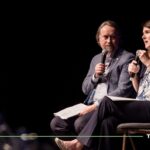

Join this candid, encouraging conversation on the role of seminaries in shaping everyday ministry. You’ll hear personal stories about pursuing a theological degree as a woman later in life, how seminary can deepen your love for Scripture, and the practical ways it can affect your teaching, writing, and walk with Christ. Designed to inspire and equip women serving in the church and beyond, this session offers a compelling vision for how theological training—whether in person or online—can strengthen faith, clarify calling, and bear lasting fruit.
Transcript
The following is an uncorrected transcript generated by a transcription service. Before quoting in print, please check the corresponding audio for accuracy.
Michael Kruger
Well, good afternoon, everyone. Who’s exhausted after hearing that bio read? That was a lot, I know. Let’s close in prayer. Okay, we’re done. Well, it’s great to be with you. I’m so excited to have this conversation with my friend Nancy, and thrilled to talk about seminary. And some of you, I know, are here thinking about going to seminary. Some of you are thinking, I’m never going to go to seminary. Some of you know someone who went to seminary and are thinking I’m never going to seminary, but we think there’s so many wonderful treasures about Reformed Theological Seminary. We love to share those with you. And my friend Nancy is here, of course, because, as you just heard, she is an alum of RTS, and I would love to talk with her about RTS. We’re not going to start there, we’re going to start somewhere else. I know you’re really eager to talk about how your favorite class was the one with me, but we’re not going to go there yet. We want to talk about seminary as a concept, so here’s an.. here’s an opening question for you, Nancy. As we think about this today, and this will be applicable to many of the women here, why go to seminary at all? Here you are in your ministry. That bio was longer than mine, and you’ve got all these books, and you wrote a lot of those before you went to seminary. So, what if someone said to you, ‘Why even go tell us about the decision?
Nancy Guthrie
Yeah, I think I mean it’s been so long ago because it took me so long to do seminary that I actually tried to look up on my computer. I know I had to write an essay to apply that said why I wanted to come, and I wanted to look it up, because I wanted to try to remember. But I think mainly it was first of all, I love the things of God. I love the things of God, and I think you know the more we learn, the more we figure out that we don’t know, and I think that was the case for me. I think what really drove me, though, was, yeah, I’d written a few books, and I was traveling, doing a lot of speaking, and I just had the sense that I wanted to shore it all up, tighten it up, and a big impetus for me was that I grew up in, you know, in general evangelicalism, and had worked in Christian publishing in general evangelicalism for a long time, so I didn’t grow up with the Reformed faith. So I think that was a big impetus for me too, because I felt like that I had a lot of deeply ingrained instincts in terms of how to understand the Bible, and how I understood what God’s doing in the world, and what the whole point is of Christianity, and all those things, but I felt like those things were shaped over a lot of years and were so deeply instilled that maybe I didn’t even know where I had some wrong thinking, and, and, and I wanted to understand the Reformed faith, and for what I was both writing and teaching to be shaped more soundly by it. I wanted to have greater confidence as I was writing a book or teaching the Bible that I was getting things right, and or at least had a better sense of where to go to find out what was right.
Michael Kruger
I love what you said there about, you know, not knowing what you don’t know. One of the jokes I always make to seminary students, and I don’t know if you heard it when you had me as a, as a student, I always tell my first years is that here you are as a first year seminary student, you today know more than you’ll know when you graduate, and they’re like,
Nancy Guthrie
“What?
Michael Kruger
What are you talking about? And they’re like, “I haven’t even taken a class yet. I’m like, “No, but in your mind, you feel like you know a lot, because you don’t even know what you don’t know. And the more you learn, the more you learn about what you don’t know. And so, as your knowledge expands, you learn about more things you don’t know, and so by the time you graduate, you feel like you know less than when you started, and that is the essence of theological training.
Nancy Guthrie
You know, I often tell people about my seminary experience that, and this, I mean, it’s a lot of classes once you finally finish, right? And there were so many classes that I would look at, you know, it was on the list of what I needed to take to finish the degree, and I would look at it, and kind of like, well, I don’t really need that, and then I get in the class and go, oh, I did need, yes, yeah, so that’s kind of going along with what you’re saying, like, I didn’t know enough to know that I needed to know that,
Michael Kruger
we haven’t gotten to it yet, but you look at that long list of classes, you’re like, how many years am I going to be here, and when you talk to seminary students, they talk like they’re like it’s a prison sentence, you know, like I’m a five year guy or a five year girl, I’m in for 10, I’m a lifer, you know, I’m never getting out of here, you know, believe me, it’s not that way, but yeah, so I love that, the idea of knowing what you don’t know. Now, when you think about going to seminary, though, and we’re not yet talking about RTS, but when you buy going to seminary, you have to choose a seminary. Yeah, so what were you looking for? I know you eventually ended up with us at Reformed Theological Seminary, but think back to when you were thinking about a seminary choice, and you can help the ladies here as they think about this. What, what are the main categories you’re searching for?
Nancy Guthrie
Yeah, well, I think I’d rather talk about why. I came to RTS.
Michael Kruger
Let’s do that, then. Yes,
Nancy Guthrie
because I got at a point I had started one place and grew a little bit disgruntled for a number of reasons, and so basically what I did to try to figure out what I wanted to do was I looked at the list of all the classes I was going to need to take to finish my degree, but I’d all the thing I had figured out since then was I also wanted to know what books am I going to be required to read, because that reading the books in seminary, like, if you’re thinking, you know, do I want to go, do I want to audit, I mean, there’s a lot of books, even now there’s a lot of books I’d like to read, and I ought to read, but I haven’t read, but when you have to for class, then you finally read a bunch of things, books on that list that you’ve always wanted to read and knew you ought to read, but then you finally have to, so, so I was like, okay, so I want to look at who’s going to be teaching it, what books am I, and what books am I going to be required to read, and and I did the same thing, went to the RTS website, and I was able to kind of fish out, okay, what classes will I need to take, and since I knew I was doing, I would take most of the classes online, I could already tell who’s the professor who had recorded those lectures, and you can also download the whole syllabus for every potential class, which tells you what you’re going to have to do for assignments, and tells you all the books you’re going to have to read, and I, and so I mean, I think that’s a great way to compare various seminaries, where you want to go, look at your degree program, who are going to be the teachers that you’re going to sit under, and do you want to, and what are the books that you’re going to be asked to read, and what are you going to be required to do, and so that’s what then drew me to come to RTS, because when I looked at that list, I was like, I want to sit under those people, and I want to read those books,
Michael Kruger
that’s really good. I mean, you know, you spent a lot of time in seminary reading, I think that’s obvious. I had a prospective student one time says, I want to go to seminary, but I don’t like to read. Ooh, bad, that’s not good.
Michael Kruger
God calls people to do lots of things. This may not be your thing, so you do read a lot. In finding the right books to read is going to be a key thing, but it’s more than just what books to read. It tells you about the direction of an institution, doesn’t it? It tells you about the ethos, it tells you about the vibe, the theological commitments.
Nancy Guthrie
Yeah, and some of that comes from the books, yeah, you know, so looking at RTS list, I was like, okay, this is a lot of old books, you know, it’s not all the new cutting edge ideas and thoughts,
Michael Kruger
right,
Nancy Guthrie
and one of the solidity of some of the older solid things,
Michael Kruger
yeah, Christianity is not a new thing. Let’s lean into the history of our tradition and really mine the best that’s been as it’s come around. Now, you mentioned that you ended up eventually signing up for our global program. RTS has – you may not know this – but RTS has multiple campuses across the United States. We’re kind of complicated this way. It’s kind of as complicated as the Trinity. We try to explain it to people, but we have eight residential campuses. Yes, eight. And then we have a global campus, and you ended up on the global campus, which is also known as an online campus, rising up to move. So, let’s talk about that decision. Do you ever think about moving? No. So, tell us why, and what was the dynamics of doing seminary from a distance.
Nancy Guthrie
First of all, it was great. It was great. I, yeah, I mean, I, I was, I was already doing a lot of stuff. Yes, and you know, it had a family, we had a life in Nashville, and, and also, it wasn’t like I got to drop everything and do this because there’s this particular job I want to get for me, I mean, and that’s what it might be for some people, but it wasn’t for me. It was just I want to be learning and over the long haul, and I still do. In fact, I was just thinking about taking another class. I hadn’t told you that.
Michael Kruger
Okay,
Nancy Guthrie
extension in Nashville, I do. I might be teaching there. You never know, yeah. All right, but anyway, so to me, I mean, okay, here’s the let’s just talk girls, because here’s how it goes. So you sign up for a class, and you, you can download all the audio on your computer, or on your phone,
Michael Kruger
or video,
Nancy Guthrie
or video, but see, here’s what the video, the video you can’t watch at two times the speed.
Michael Kruger
Oh, that’s true. Okay, don’t we got to cut the tape in the back.
Nancy Guthrie
All right,
Michael Kruger
can’t let this secret out. By the way, by the way, as a sidebar, no one does me at two times the speed,
Nancy Guthrie
all of your exactly all my students online
Michael Kruger
complaining, like I fast forward it, I can’t do that with Dr. Peter, exactly.
Nancy Guthrie
All right, so what’s beautiful is, yeah, you get the whole this this outline of the class that has all of the main points, so I would, you know, print that out, then I. Had a different color pen that I’m writing in the notes, and so I mean, sometimes I would watch the video, but usually what I did was I downloaded on my phone, so I could watch it slightly faster. I’m a quick listener, I’m quick again, and but what was so beautiful about doing it in my, in my view, globally, for a woman, is you know, I could just totally work it around my schedule, and so I would, I would look, especially in the big sense, and in the small sense, so you know, I would have commitments, but I would know, okay, let’s see, I’m going to finish that in June, so I’ve got, I’ve got some time in April, September, October, that I think I could do a class and get the paper written, because you get, you start the class, click, and you got three months to finish, so I was always looking for when can I start a class and have enough time to finish it, and you can start it any time, pretty much, I mean, every couple weeks, right? Yeah, okay, when will I have time to finish it, but then also in just the day to day it working around my schedule, so you know I’m sitting at my desk, I got my phone on my desk, I’m you know playing it at whatever speed, but you know then the the dryer buzzes and I push pause and I go do you know put the other load in right and then maybe make lunch and I come back to it, but also the beauty of that for me was when I was studying and preparing for a test, you know, some classes are harder than others. Okay, and some of them, you know, you’ve got to work through, you get for every class, so you’ve got the, you’ve got the outline that you’re writing notes on, you’re also interacting with the professor online, and you’re interacting with other students online, and a lot of those are very prescribed things. You’ve got the professor’s giving you two questions that you’re going to answer online, and then he’s going to reply to you, and then he’s probably going to have a follow-up question, and you reply to that, and so a lot of times I needed to go back to that lecture to hear what he said about that again. Maybe my notes weren’t complete, so I found doing it the global I had early on in my seminary, I thought to myself, I never want to go visit a class on campus, and I thought that because I thought I’m going to like it so much that I am gonna want to move, and then I’ll just feel terrible. I’m having to do it online, and the truth is, Mike, I hate to bring it to you, but it was kind of the opposite. I went to do it, and once
Michael Kruger
she met these people, it’s like I’m never gonna go back. No, it wasn’t
Nancy Guthrie
about meeting people. I mean, a lot of, for me, was just like city, so the classes I did do, and I did classes in Charlotte, and I did some in Orlando, I think they do an in DC, I’m not sure. Anyway, but you can look online, you can see what, say for a week long class, maybe in the summer or in January, that’s something you’re interested, that you could just go on campus for a week and do that. So, like I did, I went to Orlando, and I spent a week with Da Carson on biblical theology, and I went to Orlando, and I spent a week with Sinclair Ferguson on the Puritans. I mean, pinch myself, right? So I did like those, but in general, for me, I loved the flexibility of, okay, I’ve got these three months, I can work on it, and I can do it on my own time, and the productivity of that, maybe it’s because I’m such a massive multitasker, that for me, going on campus and sitting in class all day, and like, you can’t rewind to the professor and hear it again when you go to sit in class, and you couldn’t do that, and plus, you know, it was more expensive to go, you know, had to have lodging, had to get there, you know, had to be away from the house, and so anyway, I loved doing it globally myself.
Michael Kruger
I think you highlighted actually what sort of many people say is sort of the secret sauce of RTS, which is finding a way to combine really high quality content with flexible sort of delivery, and the flexibility, and you’ve heard Nancy say it is really there for the online, and you can take it kind of at your own pace and your own schedule, but also, even though you didn’t do a ton of on-site classes, the multi-campus system is really flexible too, you can take classes in lots of locations, lots of schedules – summer, winter term, throughout the main term, fall break, spring break. That seems like those are a lot. Every
Nancy Guthrie
few months I would just go on the RTS site, and they have a little thing you can click called upcoming classes, and I would look at that, and I would look at each campus. What are they going to offer in terms of a one week class in January, or some one or two week classes in the summer, and am I, am I interested enough, and would it work with my schedule enough to go on campus to actually do that, and so you know, there were a few times, you know, like one of the hardest classes I took, I’d really hope to go on campus to take it. I knew it was going to be hard and difficult for me, and it never worked out, so I ended up doing it online, but I mean, I just, I like it, the RTS that you’ve got all that information on there, so that someone like me, and probably like a lot of people in this room who are planning their lives, you can look way ahead to go, oh, okay, next January I’m not going to, I’m not going to make any commitments on that week, because I might, I want to keep that open in case I can go take that Greek class from Mike Krueger. Yeah,
Michael Kruger
I don’t think you ever took a Greek class from me. I don’t want to talk
Nancy Guthrie
about that.
Michael Kruger
Don’t want to talk about that. Okay, gonna reinstitute your prison sentence here. So one of the things that’s true for seminary students is that when you’re taking in so much and you’re doing it a lot when you’re in seminary, you’re taking it from the readings, the lectures that you need, you need to process it, and one of the things that you do get in an on-campus situation is that you have a chance to process it with your fellow students after class, you know, in the hallways, etc. You had most of your classes at a distance, so tell us, how the processing went. Who did you did you sort of interact with various folks about what you’re learning in your class, or did it sort of sort of bleed out into your writings in a way that sort of were the main, main way it was processed? I mean,
Nancy Guthrie
I think you do process with a lot on the class stuff online as you interact with the professors, you know, I mean, like, I think it’s at least five to six times during this semester, you’ve I’ve got to send you a message with this question, and you’re going to ask me, and then you’re going to ask me follow up, and then you got to do that, you know, five or 10 times with other students, so yeah, I think one thing I would have perceived about global education is that you’re just so solitary and on your own, and I think one thing that I did think about, oh, maybe I’d want to go to seminary so I can talk to everybody about it, and once again it works great for me this way, or if you’re involved in a
Michael Kruger
local church, theoretically talking to your fellow, and RTS required me
Nancy Guthrie
to meet with my mentor,
Michael Kruger
yeah,
Nancy Guthrie
which for most of the time was my pastor,
Michael Kruger
right,
Nancy Guthrie
which I want to go meet with anyway occasionally, and I, you know, and so, and he’s an RTS doctoral student, he’s an RTS Jackson grad, and now he’s working in his doctorate, so you know, we talked about our teachers, and liked about
Michael Kruger
a fly on the wall some of those conversations,
Nancy Guthrie
but you know, yeah, so I, and so, like, this one really hard class I took, I figured out, okay, so there’s there’s a guy who teaches at a small college at our church who teaches on that topic, and so I decided at that time I would ask him to be my mentor for that class, and so that was great, and so, like, we just met for coffee, and I could ask him a lot of my questions, and he, he helped me come up with an idea for my paper that I could actually pull off, and suggested sources, and so finding a good mentor, especially if it’s a class that’s challenging is really helpful.
Michael Kruger
Yeah, you need someone in your corner cheering you on, and also somebody with
Nancy Guthrie
a good, good bookshelf.
Michael Kruger
Yeah, like a local library. Yeah,
Nancy Guthrie
I remember my pastor coming in one time, I had snuck in his office in between services, and he came down. I was like on the floor, because, like, all the James commentaries were on the floor or something, and he just started laughing. Books from
Michael Kruger
your pastor. No,
Nancy Guthrie
I am a faithful borrower and careful returner, and I made that commitment, but it is.. it can be really helpful, you know. I borrowed a lot from David Filson over those years and stuff, so yeah, it was really helpful to have no people have some good books on their shelves.
Michael Kruger
Okay, so here’s a question I know is probably on a lot of folks’ minds that are here, so here we are at a women’s conference. Think about the average evangelical seminar in the United States – it’s kind of like mostly guys. You look around and it’s sometimes 70 80% male in the classes. Tell us about your experience at RTS, just as a female student, and how that might alleviate any concerns anyone has here about, you know, it would add to their
Nancy Guthrie
concerns. What’s your answer? Maybe we’ll
Michael Kruger
be surprised to hear it. Tell us, what your experience was like.
Nancy Guthrie
Well, I think it might have been slightly different on different campuses. Yeah, but also, you know, you have to factor in that I’m kind of an old lady, so you know, my experience might be different than someone you know, a female who’s going to go to class at 25 or 30 or 40. I mean, I didn’t start taking classes until, let’s see, it was in 2009 and I’m 63 Now, can you do the math? What was I, 48 ish? Yeah, so I didn’t start till then, and so I wasn’t in class until I was at least 50, you know, and early on in classes I was in, you know, I hadn’t none of the guys knew who I was, and so yeah, I think they thought the old lady as time went on, mainly after I started doing the hell. We teach the Bible podcast, then guys tended to know who I was, and and then I had a lot of fun conversations with them. Yeah,
Michael Kruger
so here’s where we come to the sort of nub of the whole matter. So, when you look back at your experience at RTS, what are some of the big theological categories that you feel like were just light bulb moments for you, or biblical categories that were like Baltimore, so in other words, if someone here said, Nancy, give us some, what did you learn? Now I know you can’t summarize all you learn, but like, you know, give us some, some top greatest hits, like when I left seminary, finally I understood X, or before I went to seminar, I thought something was like this, but when I left seminar, like, wow, I have a greater appreciation of Y. So anything’s anything stand out? I didn’t know there was going to
Nancy Guthrie
be a test.
Michael Kruger
I know. I’m sorry. I should have given you a warning.
Nancy Guthrie
I don’t know if I can answer that very well. My very last class, I dearly loved. I took profits with Scott Red as my last class, and I had tons of aha moments there as someone who had written a book already on the prophets, like 10 years ago, you know, and like it’s teaching on the books, yeah, like it’s teaching on the book of the 12, which I’m not so, not sure I could articulate, or just having to study how Isaiah was put together and how that’s organized, and you know that kind of thing. So
Michael Kruger
you do a lot in biblical theology, yes, we all know that this is one of your, your deep loves. Did that, did that emerge sort of post seminary, or did that happen before seminary? And did you see seminary change the way you did it?
Nancy Guthrie
I think that emerged biblical theology. Well, I already had, I already had the what I had before I started was, wow, you can see Christ in the whole of the Bible, and so actually at where I was enrolled first, I talked them into letting me do an independent study of seeing Christ throughout all the scriptures, and so, and that’s, and I did that with writing my book, the one year book of discovering Jesus in the Old Testament, and then wrote a paper about it, and had discussions with a professor and stuff, which is great. So that’s where that started, and I would say that more blossomed into a fuller sense of biblical theology. I mean, if I’m honest with you, the way that came up, I think the biggest emphasis, impetus for that was Westminster Theological Seminary began a very close relationship with Nashville, and so they began sending professors to Nashville, and you know, a lot of those guys have a real strong sense of biblical theology, and we’re teaching some of that, so that’s part of where that really blossomed for me, but I can also remember, even, even before I took, I mean, a seminal class, I think, at RTS is Ligon Duncan’s Covenant Theology class, but the thing was, all of the recordings of the class that are exactly the same ones in the class, you could find at Lig and duncan.com which I had listened to all of those when I was working on one of my Seeing Jesus in the Old Testament books, I think the ones on covenant, and so, so it all, it all gets a little fuzzy as to what all of the impetus were, but you know, listening through those, that was that was a big part of it,
Michael Kruger
so for those of you who don’t know, that the, we’re using terms like biblical theology, like what exactly is biblical theology? Well, usually it’s distinguished from what we call systematic theology. So, when someone says, what’s systematic theology, it’s when you talk about what the Bible teaches in categories, right? What’s the doctrine of God? What’s the doctrine of man? What’s the doctrine of Christ? What’s the doctrine of salvation? What’s the doctrine of the end time? So, you chunk it up in little, little, little categories of ideas that the Bible has, but biblical theology is thinking about the Bible as a story, right, thinking of the Bible as history. How’s it developed over time, and what does each biblical book do with the overall big story of the Bible? And the overall big story of the Bible, of course, is there, even though we think about the Bible in little chunks, verse here, verse there, book here, book there. We all know that when you read the Bible, it’s actually telling one big overarching story of redemption with Christ as the pinnacle of that redemption. So, one of the things you’ve already heard in several of the talks here already this week is a biblical theological perspective from the Psalms. When you read the Psalms, you’re finding Christ in the Psalms, because all the Bible is about Him. And so, so Nancy has done a lot of work on that, and of course, this is what the type of thing that you’ll learn at Reformed Theological Seminary. So, here’s another question for you, Nancy’s, think about your, your seminary education, and I want to, I want to transition from that to talk about how we can help the women in the room here. How did it change you personally when you think about seminary? Here’s one of the things that people have, this idea in their head, that seminary is this dry, sort of boring, stale thing that’ll probably ruin your spiritual life if you stay in too long, should really be called cemetery, not seminary, and you know you’re lucky to get out with your faith intact, um. And you know it’s like taking your medicine, you got to get it over with, but hey, you know, no one really comes out spiritually stronger. What about you? What was your experience personally and spiritually with seminary?
Nancy Guthrie
I feel like I want my husband to answer this. Dave, I don’t wonder how you’d say it changed me or shaped me, maybe it made me a know-it-all. I hope not. That now, that’s
Michael Kruger
that’s your first year, right? You’re the know-it-all your first year, and then by your third year, if you’ve been taught properly, you’re like, I don’t know anything. So,
Nancy Guthrie
yeah, I think that’s really.. I mean, I’ve always been a learner, right? And I’ll probably continue to be, even though I’m so glad I don’t have to take any more tests, yeah, because honestly, the truth of that, that exposed my pride, taking those tests. Like, okay, I’ll just tell you guys, I had this guy, Mike Krueger, for a class, okay, and had to take a test, and I knew he was going to see what my grade was, and he’s my friend, and I figure he thinks I already know stuff, and I’m afraid that both on the test and on the paper I’m going to have to submit to him that he’s going to have to grade, that he’s going to find out I really don’t know anything at all,
Michael Kruger
you know? I can hear everything you’re saying, right?
Nancy Guthrie
Yeah, so I mean that part, that was it, was it, but it was some people, I think. Some women will be tempted to say, “I’ll just audit a class, and I would say, “Don’t go for it, take, because I would not.. I just.. I just wouldn’t have learned as much. The process of studying for and taking tests, the process of having to write a paper and meet the meet the requirements and read the things for it, all of those have such an impact on learning. So, I mean, the truth was, I agonized over taking those tests. David can tell you that we went through, he would help me study for tests, and I would just.. I would just.. I mean, kind of embarrassed about how much I agonized, because most of that was pride. I just really.. I really was like, they’re all.. see, I don’t really know anything. I’m just really gonna embarrass myself. So I’m glad I don’t have to do that anymore. But
Michael Kruger
I like what you said about.. I mean, auditing is a thing we offer at RTS. You can sit in on a class, you can listen to a class, you can listen to all of the classes online, and you know people are amazed. We give away our almost our entire curriculum on our mobile app for free, and people are like, “What? And right now, almost our entire curriculum, you can listen to for free online, and people are like, “Why do you do that? Well, RTS does that because we want to get the word of God out there, and we want to help people all around the world. Great, but, but here’s the thing, Nancy points out, and I’ve seen this. I’ve taught for 25 years at Reformed Theological Seminary, and have a lot of auditors in my class, and look, not everybody can take a class for credit. I get it, but I auditors tell me, what advice would you have for me at the beginning of the term? I was like, well, it’s kind of like this, if you, if you treat seminary as something that you do when you get around to it, or when you feel like it, or when that works for your schedule. Then you’re going to do seminary when you feel like it, and when it works for your schedule, and that means probably not often. What if someone says, “I think I’m going to really start exercising, but I’m only going to do it when I feel like it, and it works for my schedule. And no, you need someone to sort of push you through it. What’s what’s what’s the motivation we give you? Well, you’re taking it for credit and it motivates you, and that’s a good thing. So, so let’s, let’s, let’s think about this for a second. There’s a lot of women here, I think, obviously are thinking about going to seminary. Should they go? That’s, I know that’s a question that’s unanswerable, but just muse on that for a minute. Nancy, should, yeah, should people,
Nancy Guthrie
everybody should,
Michael Kruger
who should
Nancy Guthrie
then, if, if, if you want to understand the Bible better, if you want to be a student of who God is and what He’s doing in the world, if you want to be able to confidently articulate the most important truths of the universe, whether that’s to your own children, or to the children’s Sunday school class, or to the women’s Bible study, or the person you read the Bible with one on one, or the, you know, the person that you’re counseling seminary can really help you with that, and what you will experience, probably like me, you maybe, if you’re just uninitiated, you look like, but I don’t really need church history for that, right? Or I don’t really need you. Look at various lists, and you think, well, I don’t really need that class for that. And all I can tell you was my experience over and over again was, yeah, I did need to know that, and I kept discovering things I didn’t know that I needed to know, so. What if some here say, look, seminary is hard, I can’t do it. What they’re like, I’m just not intellectually up to it. No, seems like I can’t get done. I mean, you’ve been there, what would you say to that? Well, I am glad you said that, because I think most.. I think most people, and I’ll just maybe some women anticipate that.
Michael Kruger
Yeah,
Nancy Guthrie
like it’s gonna.. it’s
Michael Kruger
an intimidating environment. Yeah,
Nancy Guthrie
yeah, I’m just.. I’m just telling you, you can do it. You can do it, and that RTS really.. I mean, yes, some classes are harder than others.
Michael Kruger
Yeah, you’re looking at me when you said that.
Nancy Guthrie
Well, no, I’m trying not to say the class laughs really hard, but yes, some classes are harder than others, but just remember, you know, this is what I would have to do when I was agonizing over tests. I had this little like thing I would say to myself, this is about learning, this is not about a grade, you’re doing this because you want to learn, and no matter what the grade is, you will learn, and then I would, you got your
Michael Kruger
grade, and you’re like,
Nancy Guthrie
no, and no, and then I would call this friend of mine who worked at RTS, and I was like, I need the test pep talk, and she would say to me, nobody is going to ever care about your grade, nobody is ever going to know your grade. Nobody cares. Okay, great. I can go take my test. Okay, but I would say, if you love the things of God, and you love the word, and you want to read good books, and you want to learn from people who know more than you do. Why would you not? And I do understand there’s expense to it, you know, because I’ve done it 66 hours worth, but it’s the way I did it. Okay, we haven’t. This hasn’t come up, but I’ll just tell you, it took me 14 years, 1414 years. Yes, 14. 14 years, yes. Okay, I was doing a few other things, writing a few books in there, doing a few other things in there, but I mean, that’s what was it. Some years I took one class, you know, so I had one three hour commitment kind of class, and most of us can do that over time, and you know they want to, they want you to always be making progress, and I think there, there is a limit that’s less than 14, but I, you know, I came later, and you know, it all worked on anyway, want to always be working on it, but when you, when I think about how much a class costs, a lot of us just decide I want to do one class a year, and that’s going to be my investment in myself and my investment in, in making myself, making myself usable to God, I remember early on in when I was just beginning to write and teach. Before that, I had had a career of being a publicist, so I worked for various publishing companies, and it was my job to promote authors, and so then I wrote my first book, and I was like, am I going to be out there just promoting myself all the time, and the truth is, it came kind of naturally, because I’d done it for a long time, but the other part of me was like, well, that’s kind of gross if that’s what I end up doing, and so I was like, so what am I going to do, and I remember making a very key decision in my life, which was just telling the Lord, okay, here’s what I want to do, Lord, what I want to throw my energies into is preparing myself to be usable by you, and then I want to trust you to use me. I want to trust you to open the doors for me, so I’ll pour my energy into sharpening my skills and becoming.. I hope, and this is.. I may have finished seminary, but this is still my goal, to increasingly become better skilled at handling the Bible, and I still feel like I have a long way to go in that, but to me seminary is a way to make a commitment to say to God, I want to be usable to you, and I really want to handle your word rightly, and this is a way I can do that.
Michael Kruger
I mean, it’s certainly true, not everybody’s called to go to seminary, and we get that, and there’s a lot of circumstances that have to be kind of, you know, overcome financial time and beyond, but one thing I want to make sure no one thinks is that I shouldn’t go to seminary because I’m just not up to the challenge intellectually, that is not true, and if you think that that’s your. Isolated challenge. I want to reassure you that everybody feels exactly that way in seminary, and doesn’t matter if you’re male, female, doesn’t matter if you’re young, old. I see a new crop of students every year, and I’ve seen it for 25 years, and all of them are panicked. All of them think, what am I doing here? All of them think I don’t really know if I’m going to make it here, and so you’re not going to be alone there. And what they realize is that, by God’s grace, and by people around, around you, you step up and you find the way to push, push through the work. You might also be encouraged to know that the female population of RTS is growing in really unprecedented and exciting ways. I’ve had so many female students over the last five years, in particular, have just, just done such fantastic work. I give out a paper award in my Gospels class, in my Hebrew, Hebrews Rep class, every year. So, I have about 50 or 60 students every, every semester in one of those classes. One of those students wins the best paper of the year award, and I’m telling you, this is no joke. This is a serious competition. I mean, we’re talking something read a lot of those online. You can, they’re on their online student journal. You can go and read them. It’s called Pen and Parchments on the RTS Charlotte website. And, and I started this actually at Charlotte years ago as academic dean, because I wanted to increase the quality of our papers. And these are publishable level papers, I mean, we’re talking extremely good work, insightful work, and in a number of these winners over the years have been our female students, just killing it, and my TA, right now, was one of those, she’s, she’s phenomenal, and she actually won that paper award, I would have actually, I kind of felt she would have won more, but I felt so bad about giving it to her again, I almost couldn’t keep doing it because she was so bright and so smart. I was like, I’m gonna give you all these awards, but she, she, and many others like her are just doing fantastic work. So, don’t let intellectual fear keep you from seminary, because this is a room filled with very bright people, and I know you do a fantastic job.
Nancy Guthrie
Can I interrupt? Yeah,
Michael Kruger
please.
Nancy Guthrie
Yeah, you asked me, you know, how I was received in the classroom. So I wonder, for those women who are maybe always in the classroom, and you can speak, you been to a bunch of different campuses. Now you were at Charlotte for a long time, but now you teach at a bunch of different ones. In general, how do you think women students at RTS are what do you think their experience is like, both, both in how they’re treated and interacted with students and professors?
Michael Kruger
Yeah, I think they have a very, very positive experience. Here’s one of the things we’ve really worked out at RTS, is to is to have really good relationships between faculty and students. It’s very personal for both male and female students. We make sure that the students treat each other with kindness and respect horizontally, and we’ve just seen just real camaraderie and teamwork and love and care amongst the student body, and so part of part of the challenge for anybody in an environment like that is just to sheer numbers, right? If you walk into a room and you’re the only woman in the room, it feels a little intimidating, kind of like I feel right now, right looking out, and I’m like the only guy here. Look, I mean, it’s just part of life, but we have a female student body that’s growing in really substantive ways. One thing you ought to know, and we’re wrapping up our time together, but one of the things you ought to know is that we actually have scholarships at RTS, just for women, very competitive scholarships that are designed to encourage women to go to seminary.
Nancy Guthrie
When you say they’re very competitive, what do you mean
Michael Kruger
very competitive in terms of how much funding is behind them? Like, they really, they really provide significant amounts of funding. Oh,
Nancy Guthrie
competitive, like you, because you get zillions of applications. Oh yeah, well,
Michael Kruger
it’s competitive in that West. No way, a minute, but yes, it’s competitive that way too, in the sense that they’re competitive scholarships, you need to apply for them and put your best foot forward for those, but when I say competitive, what I mean is competitive in the sense that they’re financially robust, they very much mean
Nancy Guthrie
lots of money,
Michael Kruger
lots of money, we put a lot of funding behind encouraging women to be theologically trained, because there’s so many more opportunities out there, and this is one of the things that we want to leave you with, is that you know if you dial the clock back 3040 years, there are just a lot fewer opportunities in ministry. Now there’s so many more, and some paid, some unpaid, but you’re at an example of that, 9000 women at the TGC Women’s Conference. There’s a lot of great ministry going on here, there’s a people here who are doing ministry and are going to be trained to do more ministry. RTS wants to help with that, and we’re excited to have you come and listen about how we can help do that.
Nancy Guthrie (MATS, Reformed Theological Seminary) teaches the Bible at her home church, Cornerstone Presbyterian Church, in Franklin, Tennessee, as well as at conferences around the country and internationally, including through her Biblical Theology Workshop for Women. She is the author of numerous books and the host of the Help Me Teach the Bible podcast from The Gospel Coalition. She and her husband founded Respite Retreats for couples who have faced the death of a child, and they’re cohosts of the GriefShare video series.
Michael J. Kruger is the Samuel C. Patterson chancellor’s professor of New Testament and early Christianity at Reformed Theological Seminary. He served as president of the Evangelical Theological Society in 2019. He is the author of Surviving Religion 101: Letters to a Christian Student on Keeping the Faith in College and Christianity at the Crossroads: How the Second Century Shaped the Future of the Church. He blogs regularly at Canon Fodder.