



The Story
Surveys have found that nearly eight in ten Americans regard the Bible as either the literal word of God or as inspired by God. At the same time, other surveys have revealed—and recent books have analyzed—surprising gaps in Americans’ biblical literacy. These discrepancies reveal American Christians’ complex relationship to their scripture, a subject that is widely acknowledged but rarely investigated. To understand that paradox, the Center for the Study of Religion and American Culture conducted the first large-scale investigation of the Bible in American life.
The Background
”The Bible in American Life” is a national study by the Center for the Study of Religion and American Culture. The purpose of the study is to understand better how Americans use the Bible in their personal daily lives and how other influences, including religious communities and the Internet, shape individuals’ use of scripture. The project, according to its researchers, was driven by the recognition that, though the Bible has been central to Christian practice throughout American history, many important questions remain unanswered in scholarship, including how people have read the Bible for themselves outside of worship, how denominational and parachurch publications have influenced interpretation and application, and how clergy and congregations have influenced individual understandings of scripture.
The Takeaways
Some of the more interesting findings from the report include:
• There is a 50/50 split among Americans who read any form of scripture in the past year
and those who did not. Among those who did, women outnumber men, older people
outnumber younger people, and Southerners exceed those from other regions of the
country.
• Among those who read any form of scripture in the past year, 95% named the Bible as
the scripture they read. All told, this means that 48% of Americans read the Bible at
some point in the past year. Most of those people read at least monthly, and a
substantial number—9% of all Americans—read the Bible daily.
• Despite the proliferation of Bible translations, the King James Version is the top choice—
and by a wide margin—of Bible readers.
• The strongest correlation with Bible reading is race, with African Americans reading the
Bible at considerably higher rates than others.
• Half of those who read the Bible in the past year also committed scripture to memory.
About two-thirds of congregations in America hold events for children to memorize
verses from the Bible.
• Among Bible readers, about half had a favorite book, verse, or story. Psalm 23, which
begins, “The Lord is my shepherd…” was cited most often, followed by John 3:16.
• Bible readers consult scripture for personal prayer and devotion three times more than
to learn about culture war issues such as abortion, homosexuality, war, or poverty.
• There are clear differences among Bible readers consulting scripture for specific
reasons. Age, income, and education are key factors.
• Those reading the Bible frequently consult it on culture war issues more than two times
the rate as those who read it less frequently.
• Less than half of those who read the Bible in the past year sought help in understanding
it. Among those who did, clergy were their top source; the Internet was the least cited
source.
• Among Bible readers, 31% read it on the Internet and 22% use e-devices.
• Bible reading differences among religious traditions followed predictably the historic
divides between Protestants and Catholics, and between white conservative and white
moderate/liberal Protestants. However, reading practices defy some stereotypes about
certain groups.
Free eBook by Tim Keller: ‘The Freedom of Self-Forgetfulness’
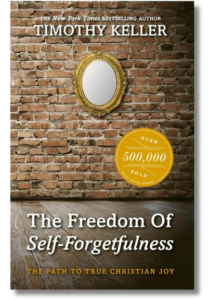 Imagine a life where you don’t feel inadequate, easily offended, desperate to prove yourself, or endlessly preoccupied with how you look to others. Imagine relishing, not resenting, the success of others. Living this way isn’t far-fetched. It’s actually guaranteed to believers, as they learn to receive God’s approval, rather than striving to earn it.
In Tim Keller’s short ebook, The Freedom of Self-Forgetfulness: The Path To True Christian Joy, he explains how to overcome the toxic tendencies of our age一not by diluting biblical truth or denying our differences一but by rooting our identity in Christ.
TGC is offering this Keller resource for free, so you can discover the “blessed rest” that only self-forgetfulness brings.