


Whether you realize it or not, we use salvation language on a daily basis. “Seat belts save lives . . . Save the Children . . . Save the whales . . . Save the economy.” However, when Christians say, “Jesus saves,” some people take great offense. Why is that?
One reason biblical language of salvation offends is because it assumes that we need salvation. If one were to ask, “From what do we need to be saved?,” the Bible unapologetically answers, “from God Himself.” The God who is holy must respond to sin with righteous anger; He will in no way clear the guilty. Because we are sinners, we need to be saved from God’s wrath (Romans 5:9). Therein lies the rub, for people filled with pride do not see themselves as sinners. Nevertheless, the Bible declares that sin is a universal problem (Romans 3:23), and it is because of this problem that we need a savior (Romans 5:8; 6:23). It is within this context that the Bible declares, “Jesus saves.”
The very name Jesus means, “Yahweh is salvation.” Matthew declared that the reason His name would be called Jesus was because He would save His people from their sins (Matthew 1:21). Thus, the Bible presents Jesus as the salvation of God. But the question remains, “Who are His people?” “Who did Jesus come to save?” For this question, the Bible also has an answer.
First, Jesus came to save Jews (Israel). Luke makes a specific effort to show that Jesus had all the Jewish credentials expected of Israel’s messiah. He was circumcised on the eight day (Luke 2:21), and His mother Mary followed the purification and sacrificial rituals given by Moses (Luke 2:23-24, see Leviticus 12). Also, the fact that Jesus was the long-awaited Jewish messiah is confirmed by two faithful and devout witnesses, and as the Hebrew Scriptures note, “on the evidence of two or three witnesses a matter shall be confirmed (Deuteronomy 19:15). In regard to these two witnesses, Luke emphasizes that they were advanced in age. In other words, it was these most devout, faithful and aged Jews who prophesied that Jesus was the long-awaited “Consolation of Israel” (Luke 2:25), the “Redemption of Jerusalem” (Luke 2:38).
Secondly, Jesus came to save Gentiles (non-Jews). Probably quoting Isaiah the prophet, Luke records for the first time in his gospel that Jesus also came to save Gentiles (Luke 2:32, see Isaiah 42:6). God’s plan of salvation included the Gentiles all along, “for [the gospel] is the power of God for salvation to everyone who believes, to the Jew first and also to the Greek” (Romans 1:16).
The fact that Jesus is rejected by some is a fulfillment of prophecy, for Simeon prophesied that Jesus was appointed as a sign to be opposed (Luke 2:34). The very message of salvation, that Jesus died to save sinners from the wrath of God by receiving God’s wrath for His people on the cross, is a stumbling block to Jews and foolishness to Gentiles, “but to those who are the called, both Jews and Greeks (i.e., Gentiles), Christ [is] the power of God and the wisdom of God” (1 Corinthians 1:23). Hallelujah, what a savior!
Free eBook by Rebecca McLaughlin: ‘Jesus Through the Eyes of Women’
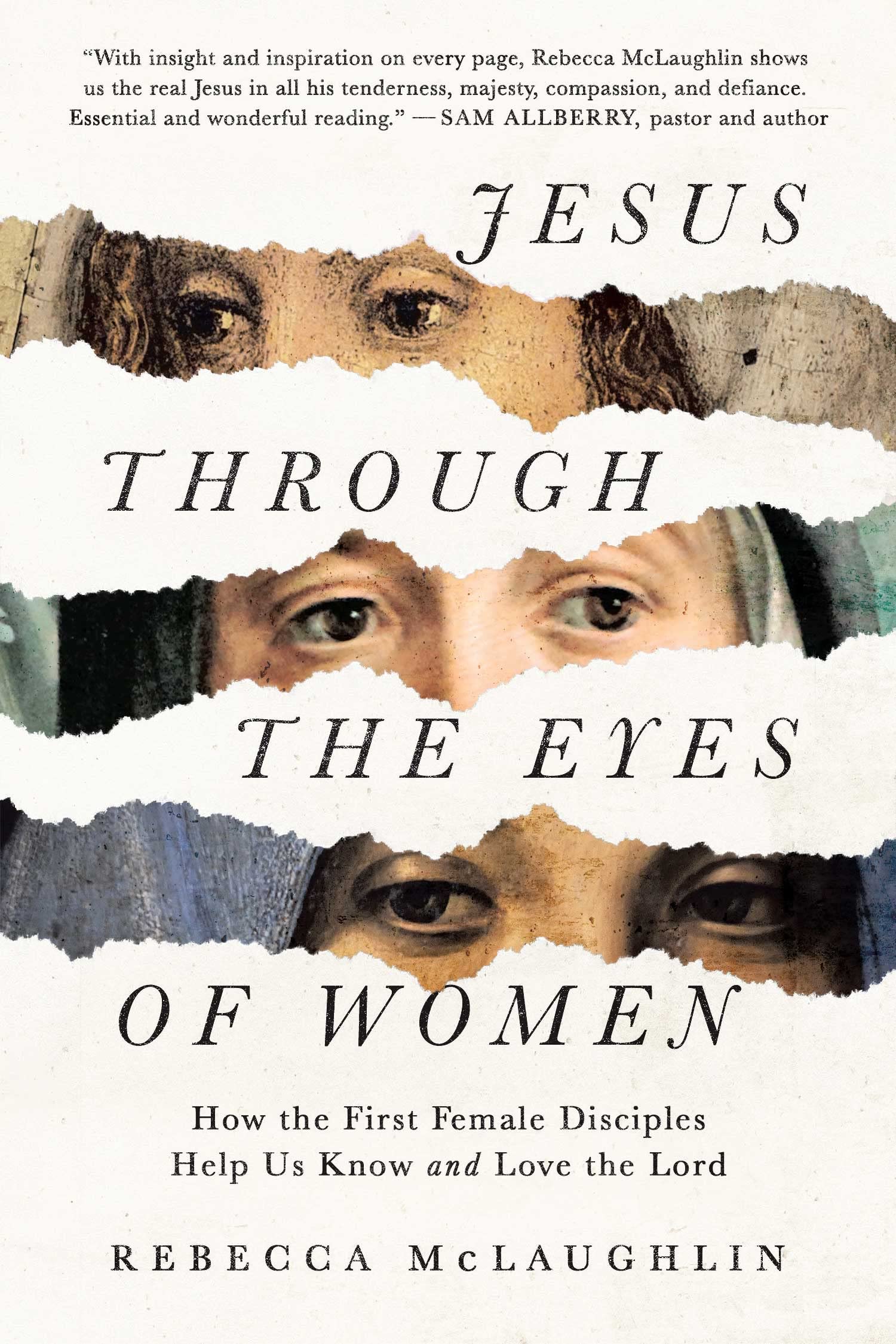 If the women who followed Jesus could tell you what he was like, what would they say?
Jesus’s treatment of women was revolutionary. That’s why they flocked to him. Wherever he went, they sought him out. Women sat at his feet and tugged at his robes. They came to him for healing, for forgiveness, and for answers. So what did women see in this first-century Jewish rabbi and what can we learn as we look through their eyes today?
In Jesus Through the Eyes of Women, Rebecca McLaughlin explores the life-changing accounts of women who met the Lord. By entering the stories of the named and unnamed women in the Gospels, this book gives readers a unique lens to see Jesus as these women did and marvel at how he loved them in return.
We’re delighted to offer this ebook to you for free.