
Many of my favorite reading experiences have come through others’ recommendations. The librarian’s recommendation of The Hobbit changed my childhood and set me on a trajectory of love for Tolkien. Patrick’s Corner, a collection of stories about an Irish family growing up poor in Cleveland, came to me through a book review in the local newspaper.
In the waning days of 2025, the editorial team at The Gospel Coalition want to share some of the favorite books we read this year. We’ve covered some of these books here at TGC with book reviews or podcasts. Some were included in our annual book awards. But we found many of them through recommendations from friends. We offer them as recommendations for you in the coming year.
Cassie Achermann
Tim Keller, The Meaning of Marriage: Facing the Complexities of Commitment with the Wisdom of God (Penguin Books, 2011)
I got married this year, and the seven months of my engagement were busy with planning. But my husband and I wanted to make sure we prepared for more than just our wedding day. In addition to meeting with our pastor for premarital counseling, we read a few books together. Keller’s Meaning of Marriage was a standout. It helped us to know we were on the same page about what marriage is in God’s sight. And it prompted personal reflection and robust discussions about all sorts of topics and dynamics we’re now experiencing in our married life. Keller’s image of glimpsing a magnificent mountain peak through the fog will stick with me.
Jonathan Edwards, Charity and Its Fruits: Christian Love as Manifested in the Heart and Life (1852; reprint, Banner of Truth, 1969)
C. S. Lewis writes, “It is a good rule, after reading a new book, never to allow yourself another new one till you have read an old one in between.” I don’t follow this advice precisely, but I can’t go long without seeking out an old book. After being challenged while reading 1 Corinthians 13, I picked up Edwards’s exposition on this famous chapter. Unsurprisingly, it’s full of piercing insight that prompts self-examination and suffused with warm affection for our Lord, the only One who loves perfectly.
Wendell Berry, Jayber Crow (Counterpoint, 2001)
In a year of great change—that brought me both grief and deep joy—this novel helped prepare me to enter this season with gratitude. Set in a fictional rural town in Kentucky, Jayber Crow is the titular character’s story of the pains, joys, changes, and community he’s experienced throughout his life. Berry’s Hannah Coulter made it onto my selection of favorite books from last year, but I couldn’t help including him again. I’ve got Nathan Coulter on my Christmas list, so we’ll see whether Berry comes through for a third time next year.
Winfree Brisley
Michael Niebauer, Four Mountains: Encountering God in the Bible from Eden to Zion (Lexham, 2025)
Mountains are one of my favorite features of creation. Whether it’s the Italian Alps, the red rocks of Arizona, or the Blue Ridge Mountains of my home state, North Carolina, I never tire of taking in the majestic beauty of mountains. Yet until I read Four Mountains, I’d never considered their prevalence and importance in Scripture. Niebauer shows how four mountaintop encounters with God (Eden, Sinai, Tabor, and Zion) help us understand the grand story of redemption from Genesis to Revelation. His insightful consideration of mountains as a unifying symbol in Scripture refreshed my heart and gave me renewed delight in the beauty of God’s Word.
Richard and Florence Atwater, Mr. Popper’s Penguins (1938; reprint, Little, Brown, 1992)
First published in 1938, this delightful children’s classic tells the story of a humble dreamer who works hard as a housepainter by day and reads books about famous explorers by night. Mr. Popper’s dream of adventure begins to come true in an unexpected way when a penguin is delivered to his Minnesota home. From there, the story is completely unrealistic and silly in the most charming way. I read this book aloud with my 7-year-old son at bedtime, and it delighted us both. He loved imagining the fantastic scenes, like a basement turned into an ice rink playground for penguins, and I appreciated the truly original story, something that seems to be a dying breed in a world of sequels and series that follow a best-selling pattern.
Gavin Ortlund, The Art of Disagreeing: How to Keep Calm and Stay Friends in Hard Conversations (Good Book Company, 2025)
In my family, we often emphasize the importance of being able to disagree without being disagreeable. Unfortunately, public discourse offers few examples of respectful disagreement, so it’s increasingly becoming a skill that must be taught rather than caught. While I lament the need for a book about how to disagree well, I’m thankful that Ortlund has taken up this important topic. He helps us see why healthy disagreement matters, not only for civil society but especially for followers of Christ, and he offers practical principles we can employ in various disagreements, whether online or around the holiday table.
Collin Hansen
Wright Thompson, The Cost of These Dreams: Sports Stories and Other Serious Business (Penguin, 2019)
For all its changes, college football in the Deep South is often an occasion to ponder the memorable 1951 line from Oxford’s all-time most famous writer, William Faulkner: “The past is never dead. It’s not even past.” Today, Oxford’s most famous writer might be Thompson, who explores the complicated legacy of this sport that just means more (than it should). Thompson excels in capturing the extremes of human nature in the thrill of victory and agony of defeat.
Edvard Hoem, Haymaker in Heaven: A Novel (Milkweed, 2022)
This saga of fathers and sons appeals to more than just the typical readers of Scandinavian immigrant literature. Anyone can relate to the cost of seeking a better life, the trade-offs between tradition and progress, and the nostalgia for a world you can’t preserve. Emotions run high when you ponder partings in this life and reunions in the next.
Bobby Jamieson, Everything Is Never Enough: Ecclesiastes’ Surprising Path to Resilient Happiness (WaterBrook, 2025)
This is a book about happiness that explains you’re probably looking for it in all the wrong places. Jamieson brings us into the world of Ecclesiastes and its enigmatic author, Qohelet—the world of hevel, or absurdity. Jamieson guides us through three stories on a life well lived: the contentment of limits, the joys of resonance, and happiness you can’t lose in this world because it comes from another. I enjoyed talking with Bobby on my Gospelbound podcast about one of the best books of 2025.
Megan Hill
Ellen Vaughn, Becoming Elisabeth Elliot and Being Elisabeth Elliot (B&H, 2020 & 2023)
“Never meet your heroes,” they say, but Vaughn’s two volumes about the spiritual hero Elisabeth Elliot are the best kind of introduction. In them, I met a woman who wasn’t, like the fictional Mary Poppins, “practically perfect in every way,” but who was instead a real-life woman who took God’s call seriously. Throughout a life filled with difficulties and disappointments (some of her own making), Elliot relentlessly pursued more of God. Reading about her made me want to be more like her in two important ways: to pray without ceasing and to be willing to give everything for the sake of obedience to the Lord.
Betsy Kirk, Sacred Courage: Thinking Biblically About Fear and Anxiety (William Carey, 2025)
For most of my life, I haven’t been a fearful person. But in recent years—perhaps owing to some combination of swimming in an increasingly anxious culture, staring down middle age, and having three teenagers with newly acquired driver’s licenses—I’ve experienced a growing number of fears. Kirk’s book is just the one I needed to help me understand my anxieties and meet them with the truth of God’s Word. In a sweet turn of events, Kirk is married to one of my childhood friends. Reading her book reminded me that the One who has cared for me since infancy will be faithful for all my days.
Noel Streatfeild, Ballet Shoes (1936; reprint, Yearling, 1993)
This novel about three orphaned girls growing up together in an eccentric household was one of my favorites as a child, and this year I read it aloud with my 8-year-old daughter, who loved it just as much as I did. Originally published in 1936, it’s a story about girls using their unique gifts and abilities to their fullest, but its message isn’t the self-serving “girl power” anthem of many contemporary books. Instead, the girls in Streatfeild’s classic tale work hard and dream big to provide for their household’s needs and, ultimately, to help one another at great cost to themselves. It’s a lesson my daughter and I both need to hear.
Betsy Childs Howard
Dale Ralph Davis, No Hopeless Future: Expositions on the Book of Ruth (Christian Focus, 2026)
When I got a chance to read an advance copy of Davis’s next book, I jumped at it. As readers of Davis expect, these sermons exposit the book of Ruth with scholarly accuracy and an engaging style. Davis’s memorable illustrations will not only stay in your mind but also work on your heart.
Frank Peretti, This Present Darkness (Crossway, 1986)
It’s been about three decades since I first read this Christian bestseller as a teenager, and I wanted to see how it holds up over time. This fictional depiction of the battles going on in the spiritual realm is clearly a product of the 1980s and the preoccupations of the day. I disagreed with some of the charismatic theology (for example, an emphasis on naming particular demons as a way to resist them), but on the whole, I found it well worth my time. Peretti’s story invigorated my prayer life by reminding me afresh that the heavenly battle described in Ephesians 6:12 is affected by and dependent on the saints’ prayers.
Beth Brower, The Unselected Journals of Emma M. Lion: Vol. 1 (Rhysdon Press, 2019)
With more than 20,000 ratings on Goodreads, this series of self-published books by Utah author Brower has quietly become a sensation among lovers of period fiction. Emma’s journals read like much shorter versions of Victorian novels with a touch of magical realism. Unlike much contemporary fiction, Brower’s books aren’t preoccupied with sex, self-discovery, or angst, and are likely to be especially beloved by young female readers.
Jared Kennedy
Scott H. Hendrix, Martin Luther: Visionary Reformer (Yale, 2015)
In this beautifully thorough book, Hendrix retells the events of Luther’s life and how he came to reject indulgences, adopt justification by faith, and spark the Reformation. He also explores Luther’s personal relationships, his historical context, and the political implications of his reforms. I appreciate Hendrix’s full descriptions of Luther’s companions in Wittenberg, and the clear way he describes the theological differences between Lutheran Saxony and the Reformed movements in southern Germany, Switzerland, and England.
C. John Miller and Barbara Miller Juliani, Come Back Barbara: A Father’s Pursuit of a Prodigal Daughter (1988; reprint, P&R, 2020)
This testimony about how God pursued Jack Miller as he pursued his prodigal daughter, Barbara, has profoundly shaped the gospel-centered movement. Many of the lights who influenced my generation—men like Tim Keller, Scotty Smith, and David Powlison—were directly influenced by Miller and his convictions about two-stage forgiveness, spiritual sonship, and how God wins the conscience. Reading Miller’s testimony interspersed with his reflections on the parable of the prodigal helped me more deeply appreciate these spiritual truths.
Nicolette Polek, Bitter Water Opera (Graywolf, 2024)
This is the oddest book I’ve read in a while. Polek’s prose is marked by postmodern defamiliarization, misfit details, and contradictory emotions. Nevertheless, the narrative is quite a testimony: Gia is haunted by bouts of depression, her mother’s phone calls (which she ignores), a string of failed relationships, and, most strangely, by the ghost of Marta Becket, a dancer and the founder of Death Valley’s Amargosa Opera House theater. After visiting the dilapidated theater and contemplating history and eternity, Gia sets aside her ghosts, her deadly sins, and the urge to escape into herself. Instead, she finds hope in the desert’s stark beauty and the book of Psalms.
Brett McCracken
Michel-Yves Bolloré and Olivier Bonnassies, God, the Science, the Evidence: The Dawn of a Revolution (Palomar, 2025)
One interesting part of the ongoing “vibe shift” (the same one that has Gen Z returning to church and Richard Dawkins calling himself a cultural Christian) concerns a noticeable détente in the long war between faith and science. For younger generations, the conflict simply isn’t there like it used to be, in part because more and more scientific discoveries are bolstering Christianity’s case and challenging materialist assumptions. The shift is chronicled in a comprehensive and fascinating fashion in this new book by two French Catholic authors—published in English for the first time this year after selling 400,000 copies internationally. The science summarized here is awe-inspiring and will equip you for great conversations with the skeptics in your life.
Werner Herzog, The Future of Truth (Penguin, 2025)
Clickbait title aside, this quirky riff on our epistemological crisis is every bit the bizarre, meandering romp you’d expect it to be, given the author. Herzog is most known as a documentarian filmmaker whose approach to “reality” and “facts” is endearingly loose. People love Herzog’s films (e.g., Grizzly Man) not because they’re 100 percent accurate but because they’re so wide-eyed in their wonder and curiosity about the world’s unscripted oddities. Herzog favors the quest for truth over truth itself (which he says is “unattainable”). This can be as frustrating to read (or watch) as it is thrilling. So take Herzog’s book with a grain of salt, but enjoy the journey. I didn’t read a more unpredictable and entrancing book this year.
Andy Weir, Project Hail Mary: A Novel (Ballantine Books, 2021)
This best-selling sci-fi novel (soon to be a movie starring Ryan Gosling) was an absolute joy to read. Despite being STEM-nerdy at times, the book has a childlike sense of awe and exploration. Weir’s fun, descriptive writing evokes awe not only at the eccentricities and unknowns of the cosmos but also at the character and capabilities of his protagonists, chiefly Ryland Grace (whose last name isn’t randomly chosen). Like Christopher Nolan (whose Interstellar feels like an inspiration for this book), Weir finds religious transcendence in science—and humanity’s knack for survival—rather than in God. But that doesn’t mean the book isn’t still rife with fodder for contemplating God’s power over the immense cosmos.
Ivan Mesa
James Islington, The Will of the Many (Saga Press, 2023)
Hunger Games meets Harry Potter meets Roman Empire. This is one way to describe this fantasy novel by Australian writer Islington. It’s hard to share much without revealing too much of the plot, but it’s a story set in a world where power is engineered and loyalty is never free. If you’re looking for a fun, rollicking story with good world-building, character development, and dialogue, this is the book for you. Over the holidays, I plan on starting the second entry in the Hierarchy series (The Strength of the Few).
Michael Crichton, Jurassic Park (Alfred A. Knopf, 1990)
At this point in my life, I should know better, but I always assumed the Spielberg-directed film was better than the book. It took Gavin Ortlund to convince me (watch his commendation) to pick up this classic techno-thriller. Thirty-five years after its publication, the world of Jurassic Park still delights and terrifies my imagination. Aside from pure enjoyment, the book might serve as a cautionary tale against the ever-present impulse to play God, especially at the dawn of our AI age.
Peter Brown, Augustine of Hippo: A Biography (University of California Press, 2000 ed.)
I’ve had Brown’s monumental biography of Augustine on my shelves for the last two decades, staring at me in silent judgment. I picked it up in my college days but felt too intimidated to wade through it. Even now, there are whole sections of Augustine’s life and thought—especially of the more philosophical sort—that I struggle to follow. Yet I’m glad I finally read this engrossing work. The best biographies help you understand the man and the times, especially when the prose sings. Brown does that and more.
Andrew Spencer
G. K. Beale and Benjamin L. Gladd, eds., Connecting Scripture New Testament (Holman Bible Publishers, 2025)
This is really a list of our favorite books besides the Bible, but I’m going to put this edition of the New Testament on my list anyway. This study Bible has changed the way I approach my personal study of Scripture and my preparation to teach. Most modern Bibles identify where the New Testament authors quote the Old by offsetting the text, but this study Bible also highlights the textual allusions with notes explaining the likely connections. My delight in Scripture has only grown since I’ve begun using this resource regularly.
Robert Smith, The Body God Gives: A Biblical Response to Transgender Theory (Lexham, 2025)
Smith has done Christians a favor by diving deep into pro-transgender primary sources to present their strongest arguments and refute them using Scripture. This academic volume isn’t an easy read—meaninful engaging with postmodern scholarship doesn’t make for simplicity—but it’s one of the most important books of this year. It joins titles like Robert Gagnon’s The Bible and Homosexual Practice and Carl Trueman’s The Rise and Triumph of the Modern Self as key resources for Christians to understand how our culture went so far adrift on human sexuality.
Joel Miller, The Idea Machine: How Books Built Our World and Shape Our Future (Prometheus, 2025)
I love books. I also love books about books. Miller’s big history of books tells many of the same stories as Simon Winchester’s Knowing What We Know. Yet, though the ground is familiar, there’s a lot of energy in the way Miller traces how books have shaped the way human civilization has developed. I also particularly enjoyed Miller’s emphasis on the way Christian book culture shaped the world. In a world scrolling itself to death, Christianity may have the countercultural heft to anchor our culture’s epistemology.
Sarah Zylstra
Matthew C. Bingham, A Heart Aflame for God: A Reformed Approach to Spiritual Formation (Crossway, 2025)
If you’ve always wanted to dig into the wisdom of the Puritans but were a little intimidated by the language and cultural differences, this is the book for you. Bingham explains how the early Calvinists thought about and practiced spiritual disciplines such as Bible reading, prayer, and meditation. What a gift to learn how our spiritual ancestors worked so hard at loving and enjoying God—and to apply some of their lessons to our own lives.
John R. Bruning, Indestructible: One Man’s Rescue Mission That Changed the Course of WWII (Grand Central Publishing, 2017)
A page-turning recounting of the Japanese invasion of the Philippines during WWII. Suspenseful, gut-wrenching, and fascinating, this book celebrates the deep love and faithfulness of a healthy, committed family.
Jim DeFede, The Day the World Came to Town: 9/11 in Gander, Newfoundland (William Morrow, 2002)
This story of a town in Newfoundland that welcomed thousands of passengers from diverted flights on 9/11 is a quick, easy, and unexpectedly emotional read. DeFede captures the drama, fear, and human kindness that surged during the weeks after the World Trade Center attacks. For anyone old enough to remember that time, DeFede’s excellent journalism will take you back there. For those who aren’t, this will give you a peek into what those days were like.
Free eBook by Tim Keller: ‘The Freedom of Self-Forgetfulness’
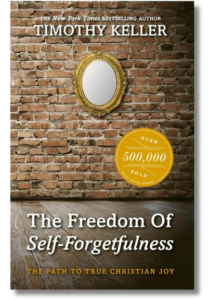 Imagine a life where you don’t feel inadequate, easily offended, desperate to prove yourself, or endlessly preoccupied with how you look to others. Imagine relishing, not resenting, the success of others. Living this way isn’t far-fetched. It’s actually guaranteed to believers, as they learn to receive God’s approval, rather than striving to earn it.
In Tim Keller’s short ebook, The Freedom of Self-Forgetfulness: The Path To True Christian Joy, he explains how to overcome the toxic tendencies of our age一not by diluting biblical truth or denying our differences一but by rooting our identity in Christ.
TGC is offering this Keller resource for free, so you can discover the “blessed rest” that only self-forgetfulness brings.