What does it mean to be Reformed? The label is used frequently but not always carefully. For some, it simply refers to a particular view of salvation. For others, it evokes a tradition, a culture, or even an aesthetic. Yet historically, to be Reformed has meant something much richer.
While no single sentence can capture the fullness of the Reformed tradition, at minimum it means three things: to be biblical, to be covenantal, and to be confessional. The authority of Scripture governs our theology, covenant theology provides Scripture’s redemptive framework, and the historic confessions summarize and safeguard the church’s doctrinal convictions. Remove any one of those pillars, and something essential to the Reformed tradition is lost.
With “Reformed” in its name, it’s hardly surprising that Reformed Theological Seminary has long sought to equip pastors and church members in all three areas. In recent years, members of its faculty have produced substantial volumes on the Old and New Testaments and on covenant theology.
Now, with The Westminster Confession of Faith: A Comprehensive Commentary on Its History, Theology, and Application, they turn their attention to the confessional foundation of the Reformed tradition. The result is a volume that seeks not only to explain what the confession teaches but also to demonstrate why confessional theology remains vital for the church today.
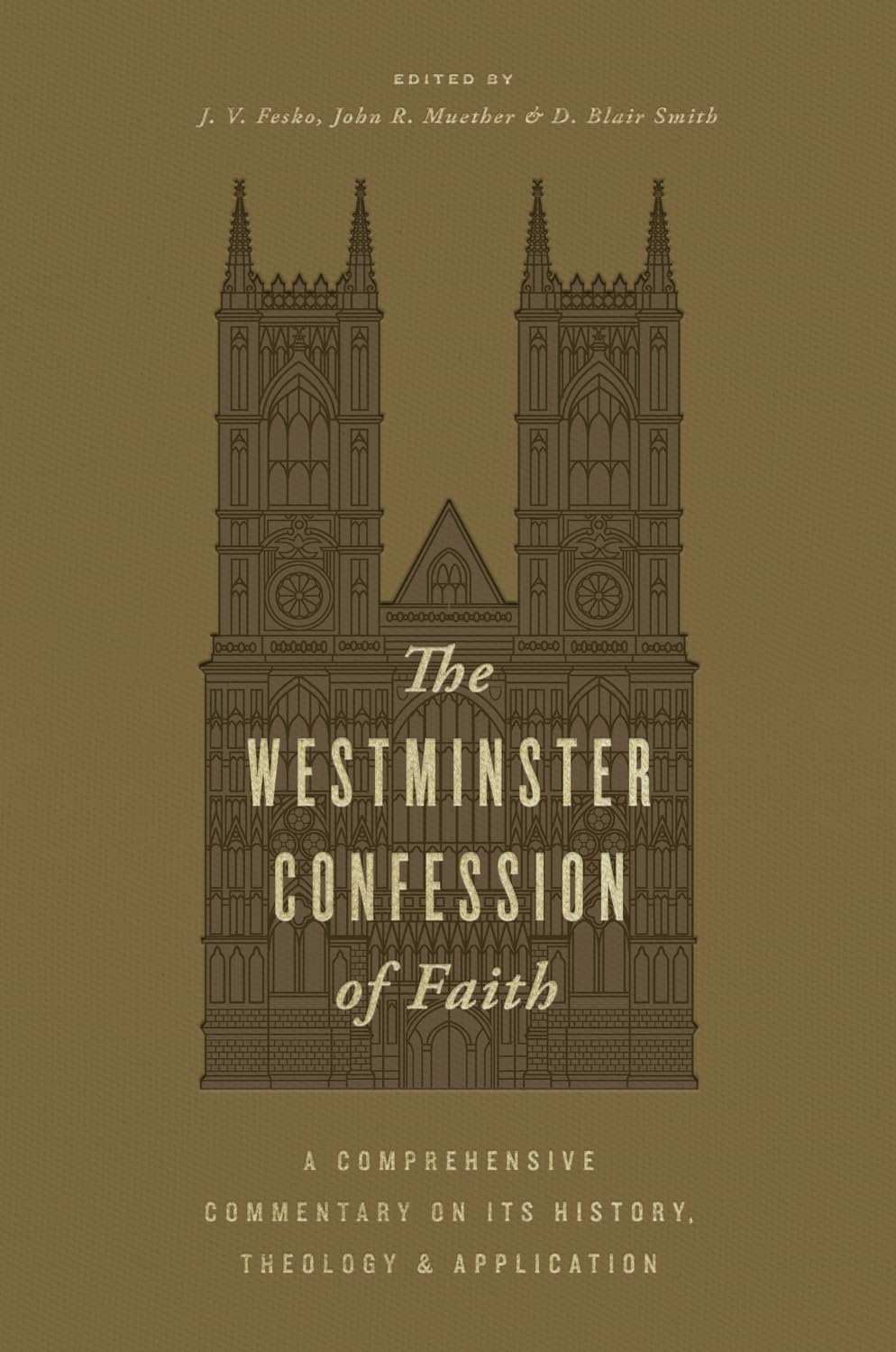
The Westminster Confession of Faith: A Comprehensive Commentary on Its History, Theology, and Application
J. V. Fesko, John R. Muether, D. Blair Smith
The Westminster Confession of Faith: A Comprehensive Commentary on Its History, Theology, and Application
J. V. Fesko, John R. Muether, D. Blair Smith
This essential collection of essays presents an accessible guide to the Westminster Confession of Faith for 21st-century readers. Each chapter is devoted to a section of the historic document, carefully studying its context, its significance to the faith, and its application, as well as any controversies. Clear, thorough explanations of principles, including the Trinity, creation, providence, baptism, last judgment, and more, make this the definitive guide on Reformed Christian doctrine.
What Is the Westminster Confession of Faith?
The Westminster Confession of Faith takes its name from the Westminster Assembly, a gathering of more than 100 ministers and theologians convened by the English Parliament in 1643 at a time of profound political and ecclesiastical upheaval. The assembly was tasked with recommending reforms to the doctrine, worship, government, and discipline of the Church of England.
After more than five years of careful biblical study and theological deliberation, the assembly produced the Westminster Confession of Faith along with the Larger and Shorter Catechisms. Together, these documents have served as the doctrinal foundation of Presbyterian churches throughout the world for nearly four centuries.
The assembly’s influence, however, extends far beyond Presbyterianism. The confession has helped shape the broader Reformed tradition, providing the framework for later confessional statements. As a result, its theological influence shaped generations of Congregationalists, Baptists, and other evangelical Christians. The editors of this volume rightly observe,
The confession is also ecumenical because it found wide acceptance among Congregationalists and Particular Baptists in the seventeenth century, as two different groups of theologians adapted the confession according to their theological convictions, producing the Savoy Declaration (1658) and the Second London Confession (1689). Thus the Westminster Confession is relevant to Presbyterians, Congregationalists, and Baptists. (xx)
Why Another Commentary?
The Westminster Confession has never lacked commentators. From the 17th century onward, pastors and theologians have written to explain its theology. Quality works by A. A. Hodge, G. I. Williamson, R. C. Sproul, and more recently Chad Van Dixhoorn have each served the church well in different ways. So why do we need another commentary on the confession, and what makes this one useful?
The Westminster Confession has helped shape the broader Reformed tradition, providing the framework for later confessional statements.
First, this isn’t the work of a single author but a collaborative effort by scholars whose expertise spans several areas of theology. That breadth allows the volume to approach the confession from different perspectives while maintaining a clear unity of purpose. Each contributor brings particular expertise to the section he addresses, but the volume as a whole is concerned with helping readers understand the confession and its significance for the church.
Second, the commentary is consciously pastoral. Rather than treating the confession merely as a historical artifact or an academic text, the contributors consistently demonstrate how its theology serves the life of the church. Readers are reminded that the confession was written not simply to settle theological disputes but to help the church understand and live out the whole counsel of God.
This pastoral emphasis matters. It’s easy for a confession to become something we study without allowing it to shape the way we live as Christians. The Westminster Confession was never intended to be a document we merely admire or defend. Its doctrines are meant to shape the faith of the church as we “contend for the faith that was once for all delivered to the saints” (Jude 1:3). This commentary is useful because it helps readers make that connection, showing not only what the assembly confessed but why those truths matter today.
Faith with Roots
As a pastor, I’m finding that one of the great needs of our day is a sense of rootedness. Many Christians are looking for something that will give them a deeper sense of stability and connection to the historic Christian faith, something that didn’t begin with the latest movement or cultural moment. They’re looking for something with roots.
It’s easy for a confession to become something we study without allowing it to shape the way we live as Christians.
This is one of the gifts of the Westminster Confession of Faith. Its doctrinal roots have given generations of believers a lasting stability, keeping them grounded in the historic faith through waves of theological and cultural change.
It doesn’t simply teach us what to believe; it roots those beliefs within the life of the church, connecting us to generations of faithful Christians who have confessed these same truths before us.
The Westminster Confession helps us to see that we don’t have to find our footing in the Christian faith on our own. We receive the gift of learning from generations of believers who have gone before us, helping us see the riches of Scripture with greater clarity and confidence. This volume is an invitation to rediscover that heritage and to find fresh encouragement in the faithfulness of God, who has sustained his church through the centuries. May it help a new generation find joy in the riches of the Reformed tradition and pass them on with confidence to those who follow.