



What are you waiting for?
Many women can answer that question without thinking. I’m waiting for the right man to come along; or I’m waiting for the military to finally stop moving us around so we can buy a house; or I’m waiting for a baby.
In her new book, Seasons of Waiting: Walking by Faith When Dreams Are Delayed, Betsy Childs Howard writes about the wait from a well of experience. She explores five things women often most urgently wait for, things that also get a lot of screen time in stories of Scripture: a bridegroom, a child, healing, a home, and a prodigal.
Howard spotlights the redemptive role waiting plays in the Christian life. Her case for waiting passionately and hopefully has no trace of the trite, empty assurances women commonly pass among themselves. She isn’t ending the conversation with “as soon as you’re content, the Lord will give you the desires of your heart!” Instead, she compassionately and thoughtfully guides us into God’s intent, as revealed in Scripture. God’s ultimate goal in making us wait, she says, is to give us himself. He also uses our waiting to tell certain stories again and again until history is complete.
Living Parables
Howard has a beautiful grasp of the role each of us plays in God’s storytelling mission. He makes us wait, but not arbitrarily. Rather, he ordains our waiting to depict one of his many themes in Scripture. So we can either graciously enact his biblical themes in our waiting, or we can miss the parable completely, bucking against the wait.
I found this insight particularly helpful. It redirects us from the question, “When will I learn my lesson so that I can stop waiting?” to ask other ones. In Scripture we read about the woman who lived with a flow of blood for 12 years, only to have it instantly stopped by one encounter, and we wonder, What story could God be telling with my sickness? We read of Hannah praying and begging and crying for a child, and then being given a prophet for a son, and we wonder, Am I crying out to God, or am I simply whining to anyone who will listen? We read of the prodigal son running home to his father’s arms, and we wonder, Can my arms learn to be as open to my wayward daughter as God’s have been to me?
So we see a glimpse of ways our waiting can become informed, holy, and beautiful. Though Howard’s writing is firmly planted in Scripture, it includes real, human material that we can bury our hands in. We recognize the women she writes about because they are our friends. They are us.
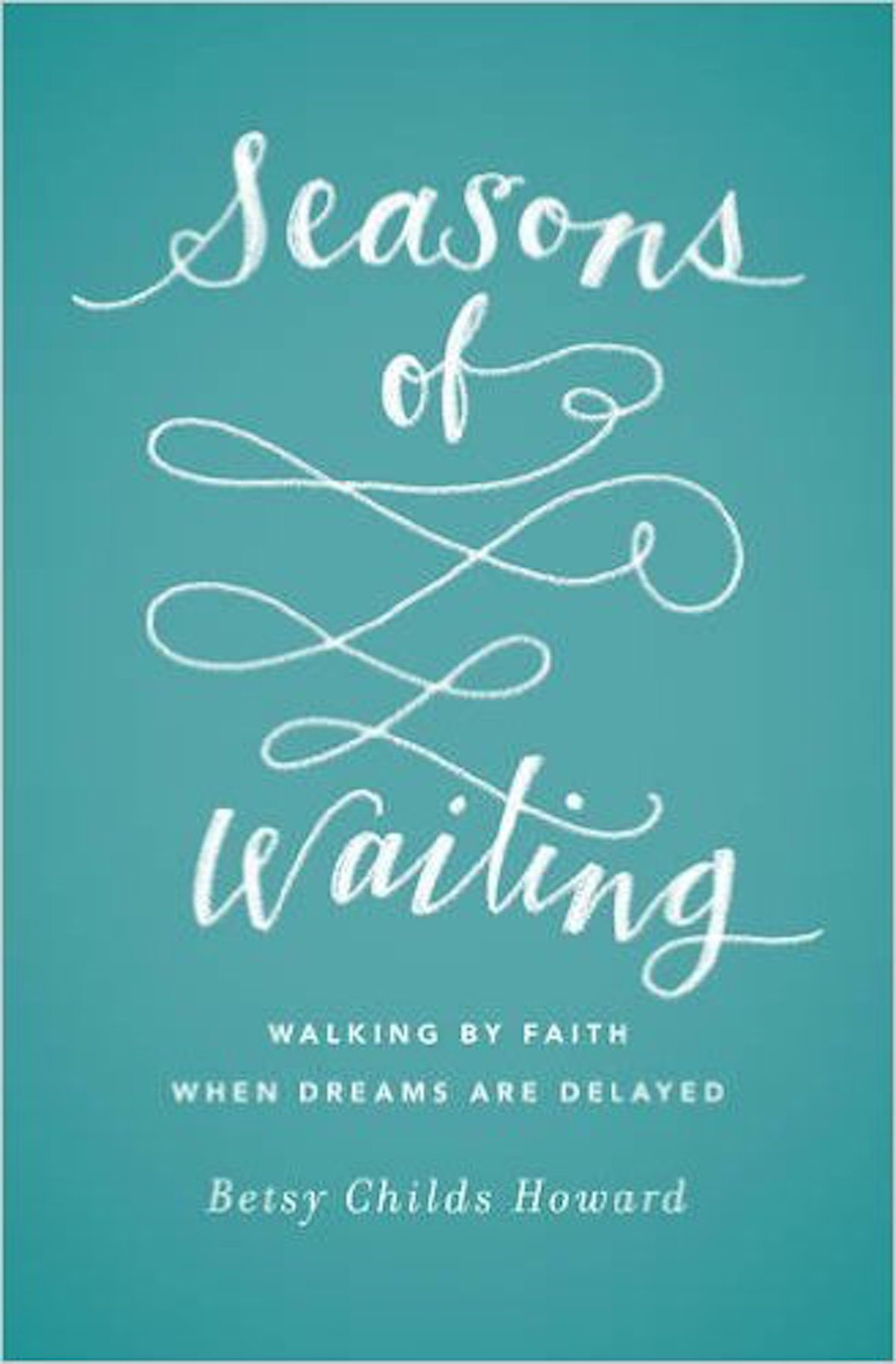
Seasons of Waiting: Walking By Faith When Dreams Are Delayed
Betsy Childs Howard
Seasons of Waiting: Walking By Faith When Dreams Are Delayed
Betsy Childs Howard
We all know the wait, and it’s clear Howard too knows the wait.
But at the end of the book, we learn another truth: The end of waiting also provides an image of God’s story. After all, the redemptive story we participate in ends with a final end to all waiting. It ends with a wedding. New life. A new home. Healing. Repentant prodigals back in their Father’s house.
This means when we get what we’re longing for in this life—a baby, for instance, or the return of a prodigal spouse—we can also see this joy as a small preview of the joy we’ve been promised. No part of the Christian life is without purpose—not even getting what we want.
Two Sides of the Waiting Coin
Howard does a wonderful job addressing two sides of the waiting coin. Be content in Christ while waiting? Yes! Persistently ask and cultivate your longings at the foot of Christ? Yes!
Learning to sit quietly on one’s hands isn’t waiting well, she insists. We must be active and even desperate in our waiting, praying the way Paul, Jesus, Hannah, and Abraham did even as they waited.
Howard also warns us against bitterness, a common relief for the thwarted waiter who’s decided to stop waiting. It’s tempting to become like the barren Sarah, sure of her lifelong childlessness, laughing at God’s messenger when he comes to make promises. The heart of the Christian waiter should be soft, pliable—and still open to being hurt:
What if Hannah had resigned herself to childlessness instead of pouring out her prayers to God with her tears? What if the father of the Prodigal Son had dried his eyes and moved on, rather than watching and waiting for his wayward one to come home? What if Hosea, instead of grieving over his wife’s unfaithfulness, had proclaimed that this was God’s will and he was probably better off without her?
If these biblical characters had suppressed their pain and put on a happy face, we would be missing the deep bass notes that give the gospel such sweet resonance. If there are no tears, then the promise that God “will wipe away every tear from their eyes” (Rev. 21:4) would not be necessary. (19)
Her Own Wait
Howard waits until the end of the book to tell her own precious love story, which you may remember from this website. In 2014, she wrote an article titled “Should I Be Content with My Singleness?” The day after this piece was published, a British pastor contacted her to say he appreciated it. They began to write, and they married a year to the day after he first wrote her. She was 35 and he was 39. They’d actually attended the same church many years earlier in the UK but never met.
Writing just before her wedding last year, Howard urged women to take away a gospel-centered message from her experience:
Your life could change in a blink of an eye. I’m not talking about meeting the love of your life; I’m talking about meeting the one who loved you and gave himself up for you, who went away and promised to come again. Jesus Christ may return at any moment. No one knows the day or hour, so we must always watch and pray.
Although I found Seasons of Waiting helpful in a quick private reading (at about 120 pages, it just takes a few days), I had the recurring thought that discussion would make it even more profitable. It would be perfect for a study group of women, and I’m going to propose it for such a use at my church later this year.