




Sometimes poetry helps us understand truth that logical reasoning cannot. Describing the effects of a severe health crisis, Ben Palpant writes, “I could not track an argument in prose, but I could follow a line of poetry to where it disappeared in the grass.”
That is, no doubt, why so much of Scripture is poetry. When David writes, “My soul thirsts for you; my flesh faints for you, as in a dry and weary land where there is no water” (Ps. 63:1), it communicates more vividly than simply stating that he’s distraught. Poetry communicates in images and ideas that go beyond the words on the page.
Yet many of us read little poetry in our prose-dominated age. That’s why Stephen Witmer, lead pastor of Pepperell Christian Fellowship Church and a TGC Council member, curated 40 of George Herbert’s poems with devotional commentary in his book In All Things Thee to See. Herbert (1593–1633) was a faithful pastor and author whose deep faith overflows the lines of his poetry and points us toward Christ.
I was delighted to have the opportunity to interview Witmer about his recent book.
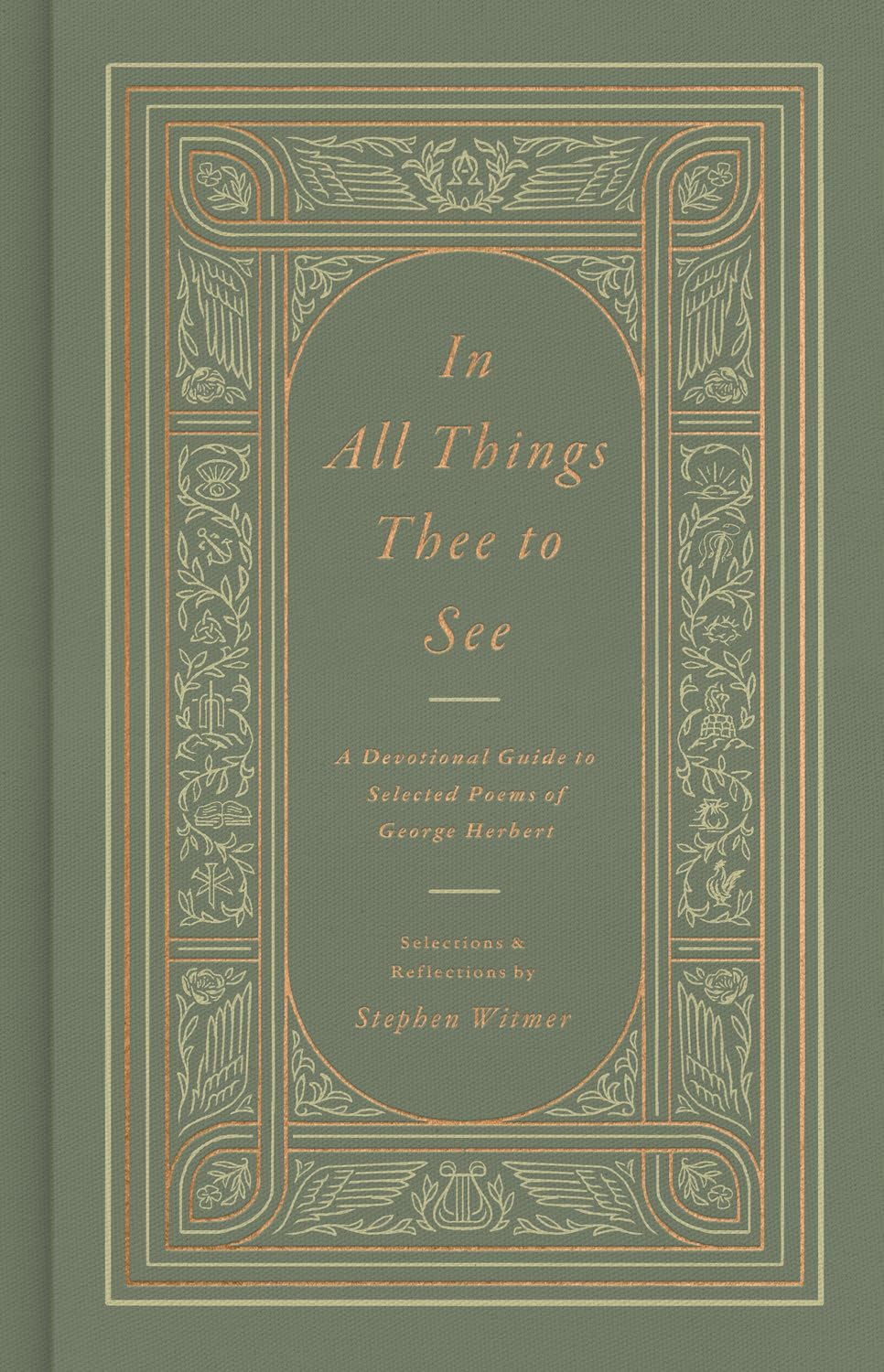
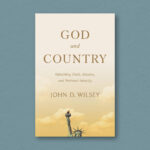
In All Things Thee to See: A Devotional Guide to Selected Poems of George Herbert
Stephen Witmer
In All Things Thee to See: A Devotional Guide to Selected Poems of George Herbert
Stephen Witmer
In this devotional volume, Stephen Witmer presents 40 of George Herbert’s most impactful poems, favored for their brevity, accessibility, and relevance to contemporary Christians. With explanations of unfamiliar terms and concepts and brief devotional reflections, Witmer helps readers gain a deeper understanding of each poem and its application. This beautiful volume shepherds readers toward spiritual growth, inviting them not only to engage with Herbert’s poetry but also to encounter the God who inspired it.
How did you learn about George Herbert?
It was a bit unusual. Of course, George Herbert is best known for his poetry—he’s widely considered one of the greatest spiritual poets of all time. But I came to him via his only published work of prose.
Several years ago, while writing a book on small-town ministry (A Big Gospel in Small Places), I learned that Herbert had written a manual for rural pastors, The Country Parson, which remained hugely influential for hundreds of years.
The Country Parson is insightful, but it was when I heard Herbert’s life story and began reading his poems that my life was significantly affected. In the years since, Herbert has shepherded my soul toward deeper intimacy with Christ and increased my appreciation of the power and beauty of language.
Where does meditating on poetry fit within a Christian’s devotional life? Why should Christians spend time meditating on poetry?
By some estimates, one-third of the Bible is written in poetic form. This means that meditating on poetry is a necessary part of any Christian’s devotional life!
However, I think you’re referring to poetry that reflects on biblical truth but is not itself part of the canon of Scripture. I like to think of the relationship between reading excellent spiritual poetry (like that of Herbert, John Donne, Malcolm Guite, and many others) and reading Scripture as somewhat like salting a meal. The salt is not the main course, but (if you’re like me) it greatly increases your enjoyment of the main course.
Reading the Bible, meditating on it, and responding in prayer is the meat and potatoes of a Christian’s devotional life. But great spiritual poets awaken us to the sweetness of spiritual realities, the devastation of sin, and the majesty of God. And they can train us to read the Bible more fruitfully. For example, I now read the metaphors of Scripture with greater interest and benefit than I did a decade ago, before I began to enjoy great Christian poetry.
How does Herbert’s pastoral experience come through his poems? In what ways does his background make him especially encouraging to pastors?
I think of Herbert as “Pastor George,” a shepherd of souls (including my own). Early in his career, he held an important position as the public orator of the University of Cambridge. He served briefly as a member of Parliament. And eventually God led him to pastor a tiny rural church in the agricultural town of Bemerton, near Salisbury.
Great spiritual poets awaken us to the sweetness of spiritual realities, the devastation of sin, and the majesty of God.
Herbert served as an Anglican priest for three years until dying at the age of 39. By all accounts, he was a devoted and attentive pastor to the farmers of Bemerton. Only after his death were his poems published. So, as the people of Bemerton walked past his manse, they weren’t thinking, There lives the famous poet. They knew him as the pastor who loved and cared for them.
As you read the poems, it becomes clear that Herbert wrote in order to spiritually shepherd readers. All pastors (and all Christians) can benefit from experiencing a world-class talent using his remarkable gifts in humble, devoted service of Christ and his people.
Beyond your book, where should readers go to learn more about Herbert and his work?
I’d recommend beginning with two excellent and accessible books by the English author and churchman John Drury. Drury edited Penguin’s edition of Herbert’s poems, The Complete Poetry, and in that volume his comments on the poems are consistently insightful and illuminating. In Drury’s biography Music at Midnight: The Life and Poetry of George Herbert, he masterfully weaves together skillful analyses of Herbert’s poems with a historically astute account of Herbert’s life.
If you could only pick one of Herbert’s poems to take to a desert island, which would it be? Why?
I love and have been shaped by “Aaron,” “Love (III),” “Prayer (I),” “Faith,” and many others. But I’d choose a poem that’s not as well known or anthologized: “The Glance.”
That poem is about God finding Herbert wallowing in sin and looking upon him, drawing him into relationship as he felt “a [sugared] strange delight.” Herbert knows that God’s look has sustained him through the many trials of his life, and in the last stanza of the poem, he lets his imagination play and his hope rise—if God’s first glance was so powerful,
What wonders shall we feel, when we shall see
Thy full-ey’d love!
When thou shalt look us out of pain,
And one aspect of thine spend in delight
More then a thousand sunnes dispurse in light,
In heav’n above.
For my money, this is one of the most beautiful, hopeful poems in the English language. On that desolate island, I’d want it with me.