When I first developed chronic pain, I naively thought I needed to be happy about my suffering. I mustered every ounce of faith and energy I had, attempting to overcome my adversity and achieve joy in my pain. But I’d bought a lie, believing that being called to rejoice in suffering (Rom. 5:3) meant I had to be happy for my pain.
I subconsciously succumbed to the emotional prosperity gospel—the idea that Christians must always be cheerful, even amid overwhelming loss and pain. What I really needed was a guide to biblical lament.
I’m not alone in having misunderstood suffering. As Brittany Lee Allen experienced chronic pain and mourned the loss of her children through miscarriage, she received unhelpful comments. Some Christians brushed aside her pain and weren’t willing to grieve with her. Instead of mourning as she mourned, well-meaning friends rushed her beyond the grief toward rejoicing.
In Free to Weep: Finding the Courage to Grieve and Embracing the God Who Heals, Allen, an author and speaker, explores how our view of lament is shaped by Christ’s story: his sorrow when Lazarus dies, his suffering in the garden of Gethsemane, and his response to being tortured on the cross. She offers a robust vision for lament in the Christian life, even as she shows how self-sufficiency and comparison tend to undermine the practice of lamenting.
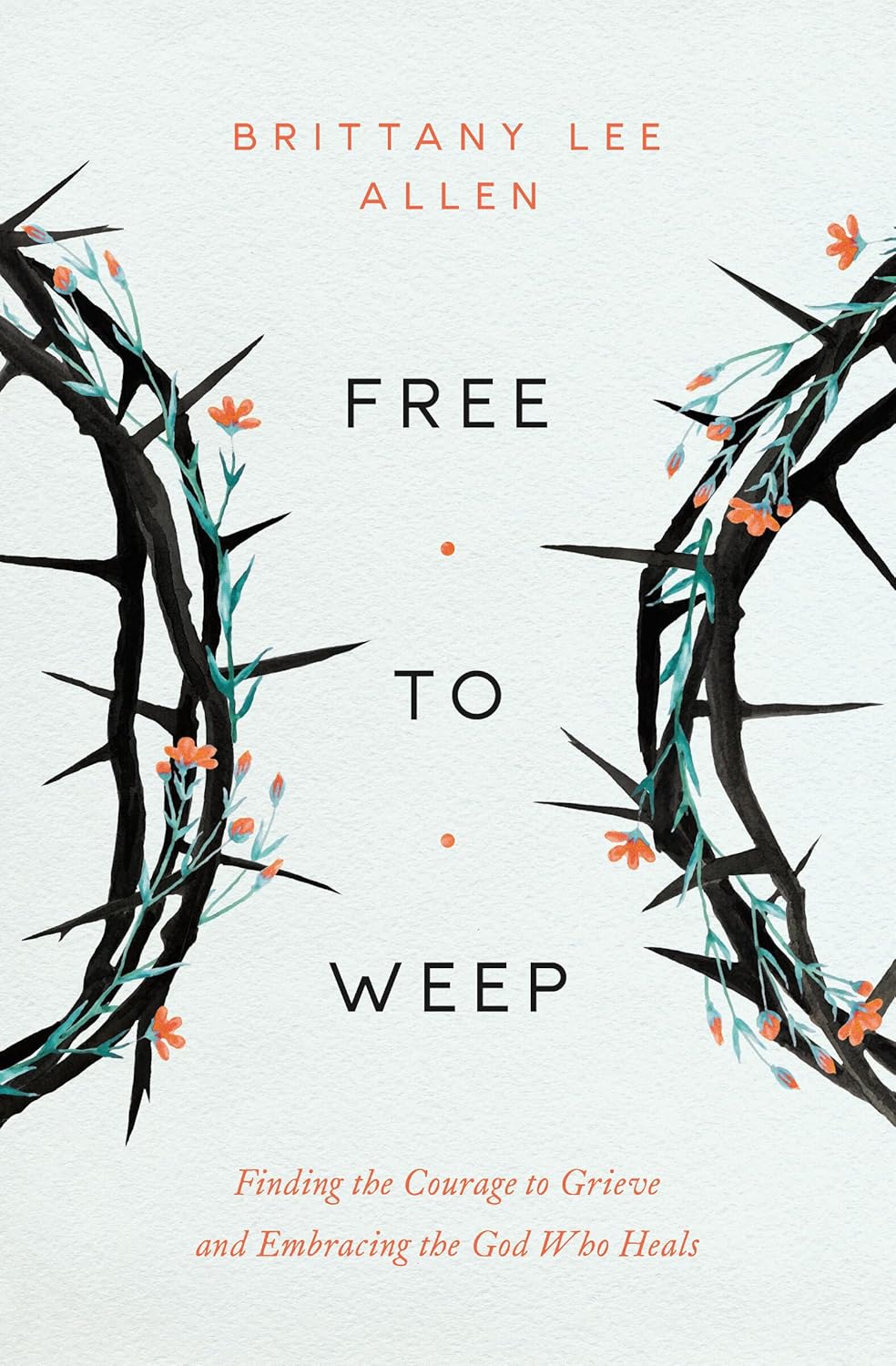
Free to Weep: Finding the Courage to Grieve and Embracing the God Who Heals
Brittany Lee Allen
Free to Weep: Finding the Courage to Grieve and Embracing the God Who Heals
Brittany Lee Allen
Is God frustrated by our tears and weakness? Does he weep with us or is he aloof and uncaring? In Free to Weep, Brittany Allen looks to biblical texts to reveal the God who is “near to the brokenhearted” (Ps. 34:18). In each chapter, Brittany combats and corrects lies and half-truths women (including herself) tend to believe about suffering.
Sowing in Tears
Scripture is filled with passages on grief and lament. Hannah cries out to the Lord when she desperately wants a child (1 Sam. 2:1–11). David laments his loneliness, pain, and suffering (Ps. 13). Asaph cries out to the Lord too (Ps. 77). Jeremiah writes an entire book devoted to lamentation.
Instead of following these examples, we often choose self-sufficiency, denying our weakness and frailty. But this model leaves a significant hole in our theology of suffering, causing us to gloss over lament. When we hold back tears and choose to push through the pain, we forfeit deeper communion with Christ and the comfort that comes with it. Forcing happiness amid suffering isn’t trust; it’s a lack of faith.
Forcing happiness amid suffering isn’t trust; it’s a lack of faith.
In my journey through chronic illness and pain, I feared that lament was a sin. I thought that crying over my loss of health meant I was idolizing my losses or choosing self-pity. Yet Allen reminds us, “Faith runs to God with its questions. Faith brings its wrestling, laying it all down at the feet of the Father, and then humbly submits to his will” (67).
Amid my pain, I needed to rejoice in my suffering and be thankful in all things. But that doesn’t mean I couldn’t cry over my losses and still trust the Lord.
Weeping can be an act of faith when it’s “grieving anything that God grieves, whether it be sin or sorrow” (68). Instead of downplaying our trials, we should freely sow our tears like seeds in fertile soil, knowing that our Savior bids us to come, counts each one, and enables us to reap abundant joy (Ps. 56:8; 126; Matt. 11:28–30). Pouring out our sorrows to the Lord is often a path to deeper communion with Christ.
Looking to Jesus
Comparison can undermine a biblical theology of suffering. When we compare our trials to others’, judge our spiritual maturity by the cheerfulness of our response, or downplay our circumstances, we may stifle our healing, misplace our hope, and live like Pharisees.
Comparison can undermine a biblical theology of suffering.
It can be easy to look at our neighbor and think our experience is less severe than his or hers. But we have to remember that the Lord portions our lot. No matter what we experience, Allen writes, “there should be no competition between grievers; all kinds of suffering can be grieved in the body of Christ simultaneously” (98). It’s not a competition to see who’s suffering most.
As we grieve, we may also be tempted to seek immediate spiritual answers for physical ailments. I remember reading, studying, and praying for hours, trying desperately to discover why I was suffering and in pain. But the Lord was calling me to walk by faith, not by sight—to trust that he was doing something beyond what I could see.
As Allen argues, “Many times, the point of our suffering is not that we find out why we are suffering, but who is with us in our suffering” (106). I believe she’s right. Our Savior is with us in our pain, and that’s sufficient to sustain us through any trial, no matter how disorienting.
Longing for Glory
Paul writes that “the sufferings of this present time are not worth comparing to the glory that is to be revealed to us” (Rom. 8:18). In a therapeutic culture, some read that verse as an assertion that the pain we experience is no big deal—as if Christians should think positively and ignore our agony. But Paul isn’t denying the reality of suffering; he’s expressing his wonder at the gospel renewal of all creation.
Scripture doesn’t prescribe good vibes only. It teaches us to lament in hope as we long for true healing. Our anxieties and sorrows aren’t burdens to our Lord but welcome cries that he’s eager to receive. We’re free to weep. When we lament, we obey God’s call to come weary, poor, and needy (Isa. 55:1–3). We know that one day, he’ll wipe away every tear and make all things new (Rev. 21:4–5).
Although my chronic pain and illness have subsided for now, I’ve come to know Christ more intimately through lament. We don’t have to pretend to be happy in the middle of our pain. Expressing our sorrow can help us experience the depths of Christ’s comfort in the gospel’s transforming power. Free to Weep equips Christians with the language of lament as they long for Christ’s return.