


Here’s an intriguing question: how is it that imperfect people living in an imperfect world are constantly dissatisfied with the imperfection around and within them? By what higher standard can they possibly be evaluating the only experience of life they’ve ever had? C. S. Lewis offered a famous answer: “If I find in myself a desire which no experience in this world can satisfy, the most probable explanation is that I was made for another world.”
In Forever: Why You Can’t Live Without It, Paul Tripp takes Lewis’s insight a step further. Yes, humans are hard-wired for eternity; in fact, “much of our distress at what is, is really a hunger for what will be.” But there’s a paradox; many of us don’t believe in eternity anymore. We have eternity amnesia. We’re “forever people who have lost sight of forever.” Tripp’s goal is to restore eternity to the crucial place God designed it to occupy in human thinking, feeling, and living. He does this in two ways: by showing how life fails to work well when eternity isn’t kept in view and by showing how life makes sense and is lived fruitfully in light of forever.
The book hangs on two key pastoral insights. First, God calls Christians to live with a preparation mentality rather than a destination mentality. This life is not intended to be our final destination. Rather, it is God’s intended means of preparing us for eternity in his presence. This preparation occurs in and through the imperfections and disappointments of this present life. We often miss God’s grace because we’re expecting it to show up as deliverance from troubles rather than the character-refining troubles themselves (85–86). Second, God’s promise to believers of an eternal future in heaven carries with it the implicit guarantee that he will guard us until we arrive safely at the future he has promised (114–116). In Tripp’s moving penultimate chapter (“My Forever Story”) he shares the major importance of this realization in his own life. “When I realized that the promises of forever meant guarantees for me along the way, my life began to change.”
There are few Christian writers today as gifted as Paul Tripp at writing practical pastoral theology and few with his ability to turn a phrase (e.g. the Bible is “a story with a beginning and an end that never ends”). In Forever his skills are fully on display. The book is relentlessly theological and relentlessly practical. While several chapters apply the idea of forever to specific areas such as relationships, parenting, and career, the entire book is constantly pushing through theology to solid, biblically rooted, this-will-change-your-life-if-you-let-it application. This focus on personal holiness was a delight, as I was alternately encouraged, challenged, convicted, and moved to worship.
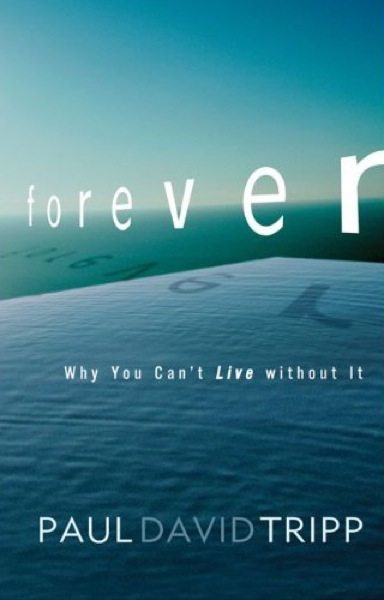
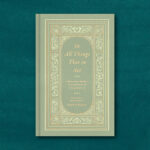
Forever: Why You Can’t Live Without It
Paul David Tripp
Is this all you’re living for? For years, pastor Paul Tripp understood we were “hardwired for forever.” But he didn’t understand that it was more than a valuable insight. It is a practical tool to help us face the disappointment of everyday life. Now he knows, and he can help you discover how to survive and thrive in the middle of your story, with the final chapter of heaven in view. Instead of embracing the world’s motto—“you only live once”—follow Tripp as he unpacks the biblical truth of the world as a broken place, longing for a second chance.
The book’s skillful and almost exclusive application of “forever” to matters of personal holiness left me hankering for more reflection on the bearing of eternity upon cultural and church realities. For instance, how does the frequent biblical claim that Christians are waiting for God’s new creation address the massive popularity of the prosperity gospel in many parts of the world? A 2009 article in The Atlantic quoted one prosperity preacher as saying, “We declare financial blessings! Financial miracles this week, NOW NOW NOW! . . . More work! Better work! The best finances!” In other words: no waiting, we can have it now. Health-and-wealth teachers such as Andrew Wommack respond to their critics, “God wants to give us a dynamic and absolutely victorious life at this present time.” Tripp critiques a kind of personal prosperity gospel with his destination/preparation distinction and his discussion of a “pack it all in” approach to life. Connecting the reality of “forever” with the larger prosperity movement would have been extremely helpful.
I have a few quibbles. Tripp’s frequent use of the terms eternity and forever tends to obscure the important difference between the present heaven (immaterial) and the future new creation (material). His frequent juxtaposing of physical things, which pass away, and spiritual things, which endure (e.g., 166) obscures the fact that many non-physical things are passing away (e.g. fame is not a physical thing, nor is job success) and that some physical things will endure forever, at least in some form (e.g., our bodies).
But this book is an excellent and important one. Among its other contributions, it dispels the myth that eternity is simply a man-generated way of making people feel better about their bleak lives. Just the opposite. As Czeslaw Milosz once wrote, “A true opium of the people is a belief in nothingness after death—the huge solace of thinking that for our betrayals, greed, cowardice, murders, we are not going to be judged.” Tripp shows that eternity doesn’t create complacency; it creates restlessness with the way things are. “God calls us to an eternity-initiated dissatisfaction. Eternity tells us where our story is going and what is possible for us.” By giving us glimpses of a perfect future world, God encourages a holy dissatisfaction that leads us to address the problems of our imperfect present.