


“But God, being rich in mercy . . . made us alive together with Christ.” Nothing is more essential to Christianity than this truth from Ephesians 2:4–5.
In this conversation recorded at TGC25, Ligon Duncan and Michael Lawrence explore the nature of Christian conversion, contrasting the biblical view with the historical trend in American Protestantism that reduced conversion to a personal decision. Scripture teaches that conversion is a divine work of God followed by human response through repentance and faith.
In This Episode
00:00 – Understanding Christian conversion: introduction and definitions
03:11 – Historical context and theological perspectives on conversion
06:06 – Biblical theology and the role of God’s work in conversion
10:01 – Old Testament background and the need for regeneration
21:00 – The role of the New Testament and the new covenant
42:13 – Implications for evangelism and church membership
45:34 – The role of the Spirit in the Christian life
45:52 – Conclusion and final thoughts
Resources Mentioned:
- Conversion: How God Creates a People by Michael Lawrence
- Finally Alive by John Piper
- Turning to God by David Wells
- Faith and Life by Benjamin B. Warfield
SIGN UP for one of our newsletters to stay informed about TGC’s latest resources.
Help The Gospel Coalition renew and unify the contemporary church in the ancient gospel: Give today.
Don’t miss an episode of The Gospel Coalition Podcast:
Transcript
The following is an uncorrected transcript generated by a transcription service. Before quoting in print, please check the corresponding audio for accuracy.
Ligon Duncan
We are here today to talk about conversion, and my conversation partner has written a book on conversion, which you should get a hold of. It’s in the nine Mark series, and it’s just called conversion. And my conversation partner is Dr Michael Lawrence of the Henson Baptist Church in Portland, Oregon. And Michael, we’ve known one another for like, 25 years or more. I mean, a long at least. Yeah, we met through Martin ever Yeah, who’s at Capitol Hill Baptist Church in Washington, DC, but, but Michael went to Gordon Conwell with some friends of mine. We had mutual friends back then. I’m Logan Duncan, and I’m the Chancellor and CEO of Reformed Theological Seminary. I was a Presbyterian pastor for 17 years, and then I’ve, for the last 12 or so years, I’ve been the Chancellor of the seminary. So we’re going to have a conversation about conversion. That’s right. That’s right. Now, Michael is also written on the topic of biblical theology, and that is going to come into play. But I want to start out with some definitions, sure. So obviously, we’re at the gospel coalition national conference. We all care about conversion. So what is conversion?
Michael Lawrence
What is conversion? It’s a great question. Conversion is a word that we’re all familiar with. I mean, conversion just means changing from one thing to another thing. So we convert currency, you know, from dollars to pounds, or pounds to dollars. People convert from being Republicans to Democrats or Democrats to Republican. I have family members who have converted to vegetarianism. In one sense, that’s all conversion is. It is changing from one thing to another thing, but Christian conversion, we understand to be unique and different from all of those other kinds of changes that people make, which are basically just lifestyle choices. That we understand conversion is when God actually reaches in and changes a person, when he rescues someone from the kingdom of darkness and brings them into the kingdom of light, when he takes them from being dead and makes them alive in Jesus Christ. And when someone is regenerated, we call that regeneration. That’s the first major work of conversion. Conversion is first God’s work. What does this now alive person, somebody who’s been made alive by the Spirit, what do they do in accordance with this new nature that God’s given them, they repent and believe, they trust God and they follow God. So conversion, from the Bible’s perspective, is both God’s work and our work. It begins with him. He must make a change in us, a change that we can’t make in ourselves in view of what Christ has done, and then it follows with the response from us of repentance and faith.
Ligon Duncan
Now, Michael, we were talking just a few moments ago, when, when we’re talking about conversion in 2025 there’s a whole history here in North America going back maybe 175 years where there, there’s definitely a stream in American Protestant Christianity that kind of says conversion is something we do. Oh, very much. It’s my choice. It’s my decision.
Michael Lawrence
It’s my choice. It’s my decision. And in fact, men that loved Jesus and wanted to see people go to heaven, not hell, figured out particularly the Second Great Awakening. There are all sorts of things that we can do that will encourage people to make a decision for Jesus, and following on from that conversion quickly became reduced to nothing more than a decision I make. It might be expressed through a prayer I pray, or I raise my hand at a meeting, or I walk down an aisle, or I sign a card. But conversion becomes reduced to something that I do, which, if you were here earlier this morning and you heard John talk about Ephesians chapter one, you’ll understand that is not the Bible’s understanding of what happens, what must first? What must first happen is God does something.
Ligon Duncan
Yeah, and it, you know, we were also saying that the kind of challenge that gospel preaching, and by the way, CH Spurgeon totally stood over against. He did that tradition. He did the ways that he preached. That’s right, very strong emphasis that only God can change. That’s right. Only God can renew you. That’s exactly right. And so he’s really bucking that trend in the 19th century and and there, there are streams of faithful Baptists and Presbyterians and others in Congregationalists and others that that hold on to that, what, what theologians would call divine monergistic regeneration, that God’s at work by His power to change a sinner’s heart. And you even get it in some of the hymnity, there’s a there’s an old song that was in the southern harmony, which was a shape note hymnal in the night. 18th century, that goes, I sought the Lord, but afterward I knew he moved my soul to seek Him, seeking me. It was not I who found o savior, true. No, I was found of thee. And so that’s that’s it, getting it exactly what you’re talking about. So what’s it? What hits me when I look at Michael’s book is he starts out with that. That’s where he starts with God’s work to convert us. And that’s not theologians organize this differently. I mean, you read different systematic theologians, and they’ll sometimes you’ll read a good, a good, solid, Orthodox evangelical systematic theologian that will talk about conversion only in terms of faith and repentance, right, and separate regeneration. But in your book, you start with regeneration and move to repentance. So why did you do that?
Michael Lawrence
Well, because I think this is one of the great problems of the American church. Having reduced conversion to simply a decision that I make my repentance and faith, and divorcing it from the prior work of God, I find that, well, when I got to my church 15 years ago, I had all sorts of parents who were older than me, their kids were a little bit older, and they came to me, and they would say to me, Pastor, what did we do wrong? We brought them to church. We brought them to youth group. They said the sinners prayer, but now they don’t want anything to do with Jesus. We did all the things that we were told to do. They got baptized, they they made all the right noises, you know? And yet, now, 1015, years later, they’re nice, they’re good kids, but they have no interest in Jesus. I fear that this is like an own goal, right? We’ve done this to ourselves by reducing conversion to simply a kind of mechanistic decision, and then we chalk it up. So I wanted to get behind that with this book, and start with, well, what has to happen first, actually, and if we understand that conversion is first God’s work before it’s our work that has downstream consequences for the way we do evangelism, for the way we think about discipleship, for the way we approach church membership and how we think about church discipline. I mean, it has all sorts of consequences that flow, but none of those make sense unless we understand that conversion is first God’s work before it’s ours.
Ligon Duncan
So good, but the Matthew and Mark will go out of their way to tell us that in both John the Baptist preaching ministry and in Jesus preaching ministry, that the message of repentance was a really important part of their proclamation. But there’s a conversation in the Gospel of John between Jesus and Nicodemus, where Nicodemus wants to ask Jesus some questions about that, and Jesus says something to him that totally blows his mind. And you, you camp on that a good bit in the first chapter. So walk, walk us through that conversation with Nicodemus and Jesus.
Michael Lawrence
Yeah. So just, just real quick, Nicodemus comes. He wants to know. He flatters Jesus. He said, Oh, we know you’re such a great teacher, you know. And but basically, you know, Jesus has come talking about how you get in the kingdom of God. And the Pharisees, they know how you get in the kingdom of God. And so he comes basically saying, Hey, why should we listen to you? And Jesus, response to him is, you must be born again. And Nicodemus is response is, if I can paraphrase Jesus, that’s crazy, I can’t get back into my mother’s womb. That’s That’s nuts. And really, what I think Nicodemus is saying to Jesus is, Jesus, you’ve asked me to do something that’s impossible, and God would not ask me to do something that I cannot do in order to get into the kingdom of heaven. Nicodemus is assuming that God is asking us to do something that we can do. He’s assuming that God is the kind of God that will be pleased with our best efforts, he’s assuming religion will help. That’s why he comes talking. I mean, that’s why he’s a Pharisee. Religion is going to help in this. But fundamentally, he’s convinced of the ability of man to do what needs to be done. And Jesus comes along and says, No, actually, you’ve got to do something that you cannot do. And And Nicodemus is just floored by it, yeah. And then what’s so amazing though, is that at the end of the conversation, Jesus says to Nicodemus in verse 10, you’re a teacher of Israel, and you don’t understand these things. Jesus seems to think that if Nicodemus. Had been a good student of the Old Testament, which was the only Bible they had, he would have already known this.
Ligon Duncan
And this is a regular Jesus thing to say to people. He says this to the disciples on the road to Emmaus in Luke 24 you know, you know he’s there with them. And he says, you are, you know you’re foolish and slow of heart to believe all that the prophets have written. And so he does the same thing with Nicodemus. You know Nicodemus. You ought to know this. Now it may be that that phrase, Are you a teacher, or are you the teacher you know? Are you the most prominent theologian here in Israel you know? Are you the RC Sproul and Billy Graham and John Piper and all of that wrapped up into one, and you don’t know this, so which suggests that Jesus thinks that this is crystal clear in the Old Testament. That’s right, that any good Hebrew, who knows these scriptures? Yeah, that’s he’s going to understand this. So this now brings us there is a biblical theology behind that conversation. And when we talk about biblical theology, we’re talking about reading the Bible across across history, across time, the unfolding of God’s plan of redemption. Michael has written on that, and one of the things he does in this, in that little book on conversion is he unpacks some of the Old Testament background, because you need to understand that God has been crystal clear about this need from the time of the Old Testament, and they should have understand it. So a lot of what Jesus does in his ministry is just help them read their Bibles better. So take us back to some of the important passages that lay the groundwork for this in the Old Testament light, sure.
Michael Lawrence
So I think in one sense, the Old Testament is this story of helping Israel understand actually we need God to step in and intervene. I mean, we could go all the way back to Genesis three and four, we could go back to Genesis nine. I actually taught on this this last week in Genesis nine. But maybe the best place to start is with the Old Covenant. God comes along. He makes this covenant with Israel, and after the all, the terms of the Covenant are put in place in Exodus. 24 the people say, Yes, we will obey all of this. We will do it. They’re called on to love the Lord with all their heart. And they say, All right, we’re going to do this as this goes on up the mountain to get more instructions about the tabernacle. And before he can get down, they’ve already blown it. They’ve already broken the covenant. There they are. They’re disobeying most of the 10 Commandments in that in that event, in Exodus, 32 and 33 and it it’s interesting, because they’re in Exodus 32 we get the first language in the Old Testament that, I think is describing that the need for regeneration, because God says to Moses, you know, go down. I’m going to just, I’m going to wipe out this people, for I have seen that they are a stiff necked people. They are a stiff necked people. It’s the language of, like, stubbornness, a Hardness of heart. And this isn’t like, like, my dog’s stubbornness. I have a little dog. We got him, and when he was a puppy, we he couldn’t walk very far, you know, so he just went out into our backyard to do his business. And now I can’t get him to go anywhere else but my backyard. I can take him for a walk for miles, and he will just wait. He’s stubborn, right? That’s not what we’re talking about here. We’re talking about stubbornness that brings with a moral culpability. So So God says to Moses, now these, this is a stiff necked people. I’m gonna destroy them. Well, of course, Moses intercedes for them, and God relents. He judges the people. But then fast forward to Leviticus, and Leviticus 26 Moses is laying out the blessings of the covenant. He’s laying out the some of the curses and some of the discipline of the covenant. The blessings are like, boy, if you keep this covenant, it’s going to be almost like you’re in the Garden of Eden again. Yeah. But if you break this covenant, if you disobey, then, then all of these curses are going to come on you, and ultimately leading to exile. And the comment about the exile, I mean, it’s so clear that this is going to happen that I got it Okay, so it’s, it’s almost, it’s almost like, it’s not, it’s like a prophecy this is, this is going to happen. But then it’s interesting, because God says in lev. Because 26 verse 40, but when they confess their iniquity and the iniquity of their fathers, their unfaithfulness, that they practiced against me, and how they acted with hostility toward me, and I acted with hostility toward them, and brought them into the land of their enemies, and when their uncircumcised hearts are humbled and they make amends for their iniquity, then I will remember my covenant. So one things that we learn there is not only are they stiff necked, they have uncircumcised hearts. Their flesh has been circumcised, their bodies have been set apart to the Lord, but their hearts have not been so we have hard, stubborn hearts. We have uncircumcised hearts. And these two images are going to be the main images throughout the rest of the Pentateuch, for describing the kind of the unregenerate state
Ligon Duncan
that’s really good a couple of things to remember. Their heart, especially in the Old Testament, doesn’t primarily mean your feelings. It means what you deep, most deeply desire. It’s that’s the place from which you desire. You will you want the deepest and so uncircumcised hearts mean hearts that don’t want God more than anything. That’s right, that don’t worship God that’s above everything. So the picture of the golden calf is the perfect picture of an uncircumcised
Unknown Speaker
That’s right, with a stiff neck, right, right? Yeah.
Ligon Duncan
So the other thing I would say, Just to add, is that the Mosaic law, if, again, I think both Jesus and Paul make this move, they say, if you read the Mosaic law as if you can do it, your life is going to condemn you because you can’t right. And if you if you notice what’s so fascinating the Mosaic law, a third of the Mosaic Law is what you do when you break it. Yes, so the Mosaic law did not expect that you were going to be able to to keep it. It was going to require something else to happen for you to be a righteous person.
Michael Lawrence
That’s exactly right, and that’s and that’s where Moses eventually gets, you know, you get to the verge of the promised land. It’s Deuteronomy. 10. Covenant is being renewed. The law has been laid out again. They’re called to love the Lord their God. And then in Deuteronomy, 10 verse 16, Moses calls on this new generation to circumcise their hearts and no longer be stiff necked. So he’s asking them to do something they can’t do it. And he’s going to, he’s going to make that really clear when you get to Deuteronomy 29 he points out, he says, You have seen with your own eyes everything the Lord did in Egypt, to Pharaoh, to all his officials, to his entire land. You saw with your own eyes the great trials. There’s great signs and wonders yet to this day the Lord has not given you a mind to understand, eyes to see, or ears to hear. So Moses understands that he’s asked them to do something that they can’t do. God’s got to do it. And then he will make that even more clear that in the next chapter, when in Deuteronomy, 30 right before he writes the famous song that’s going to remind them of their unfaithfulness, he says in Deuteronomy, 30, the Lord your God will bring you into the land your fathers possessed, and you will take possession of it. He will cause you to prosper and multiply, multiply you more than he did your fathers, the Lord your God, will circumcise your heart and the hearts of your descendants, and you will love him with all your heart, all your soul, yeah, so that you will live, yeah. So there it is. There’s the promise of God coming in, taking the initiative, regenerating them. That’s the New Testament language, the Old Testament language, circumcise your hearts. And we, we’re not even out of the Pentateuch.
Ligon Duncan
Yeah, yeah. Let me just say, as a pastor, I’ve preached four of the five books of the Pentateuch. I haven’t preached Deuteronomy. I’ve really missed out on that, and I’ve come to that late Deuteronomy tells you the whole story of the history of Israel ahead of time. So don’t sleep on Deuteronomy, pastors. I mean, it’s, it’s really, really helpful for your people getting the struggle of the Old Testament, because it tells what’s going to happen ahead of time. That’s right. And so that very principle there that colors everything that happens until 586, BC, that’s right. So from that, that time in Deuteronomy, before they go in the land all the way to the fall of Jerusalem. That’s the story.
Michael Lawrence
That is the story. You need to circumcise your hearts. You can’t circumcise your hearts. God’s going to have to do it when, when the northern tribes are sent off into exile in Second Kings verse 17, it’s because they would not less Listen, but were. Stiff necked as their fathers had been. This is, this is just the consistent story. The same is going to be true for Judah. Jeremiah is going to explain Judah is being sent off. I mean, he’s in the middle of it, right? He’s, he’s right there when Jerusalem falls. He’s going to explain it in the exact same terms. Jeremiah, 925, to 26 he’s going to pick up this same language. I won’t read it to explain why they are being sent off. This is the
Ligon Duncan
story, yeah. And so the prophets will really pick up on the heart language. They’ll they’ll tackle it different ways, Jeremiah, later in Jeremiah, 31 we’ll talk about a time that is going to come when God is going to write the law on their heart. So what’s the problem with the heart? The heart doesn’t want God more than anything else, but now that law, which had been written on stone, is going to be written on the heart, and that’s what Jeremiah calls, he’s the only one who uses the term. That’s what he calls the New Covenant. And of course, the author of Hebrews is all over that, not only the apostle Paul, not only Luke, but especially the author of Hebrews wants us to understand that. We need to. We need to understand what Christ came to do in light of that prophecy from Jeremiah. And Jeremiah
Michael Lawrence
is not the only one. Isaiah is going to do similar things. He’s going to use different imagery. He’s going to use new creation imagery. He’s going to talk about the spirit being poured out and making God’s people grow up. Ezekiel is going to come along, though, and pick up the language of heart again.
Ligon Duncan
And I think Jesus has Ezekiel on his mind. I do too. Conversation with Nicodemus. It’s just, it’s just there. It has
Michael Lawrence
to be there, right? Because, because what, what Ezekiel says in this covenant that’s going to come is that God’s going to take out our Hearts of Stone, those hard hearts, and give us a heart of flesh. God’s going to do this? He’s, he’s, he’s going to reach in and kind of take the initiative, yeah, but, but what’s, what’s so interesting then is in, and if you’ve got, it’s
Ligon Duncan
Ezekiel, 3626 Yeah, and, and it’s that he’s, he’s talking about the same reality that Jeremiah and Isaiah and then Daniel and Amos and Joe Joel and other places. But he says, Moreover, I will give you a new heart. That sound familiar. I will give you a new heart and put a new spirit within you, and I will remove the heart of stone from your flesh, that’s that uncircumcised heart, and give you a heart of flesh. And he then says, and I will put my Spirit within you to cause you to walk in My statutes, and you will be careful to observe My ordinances, and you will live in the land that I give to your forefathers. So you will be My people, and I will be your God.
Michael Lawrence
And then the beautiful thing is chapter 37 that comes right after that to illustrate it, valley of dry the valley of dry bones. How does this valley of dry bones, which represents dead Israel, dead in their sins. How is it going to come to life? Well, is it going to be because they’re kind of stood up and they’re given ears, and then a message is preached to them that they decide, oh, that’s that’s a good message. I like that message. I think we’ll respond to that message. No, that’s not the way Ezekiel 37 goes. Yeah. Now, the way Ezekiel 37 goes is God says, preach to the bone. That’s right. And it’s through the proclamation of God’s Word.
Ligon Duncan
And by the way, God even says to Ezekiel, can these bones live? And Ezekiel gives the ultimate fudge answer, you know, Lord, total fudge. Total fudge.
Unknown Speaker
Like I know this is a trick question.
Ligon Duncan
Preach prophesy.
Speaker 1
Prophesy to the bones and and the bones stand up, and flesh is from the spirit, and then preach. And the spirit, yes,
Michael Lawrence
not only, not only gives them flesh and blood, but but actually makes them alive. And so kind of all comes together right there that it is the Spirit working through the the word preached that regenerates the dead, yeah? And Jesus is saying, Nicodemus, you should have known this, yeah, you should have known this, yeah.
Ligon Duncan
And that’s, you know, that’s what Watts is talking about in how sweet and awesome is the place. You know when, when he says, Why? Why was I made, you know, to sit down at the feast and enter while there’s room when 1000s make a wretched choice and rather starve than come and the only answer is, it was the same. Same love that spread the feast that sweetly drew me in. That’s right. Else I would have refused to taste and perished in myself. That’s right. That’s right. That’s the work. That’s exactly right, doing
Michael Lawrence
that now, if we, if we move this story forward, this is why, when we get to the New Testament, Paul and the other New Testament authors are constantly saying to these believers, live as if you are alive. Live as if you’ve been made new. Take off the old, put on the new. Say no to sin, say yes to God, because they can, they’ve they’ve been regenerated, if they are in Christ, because of what Christ accomplished on the cross, because he not only secured our forgiveness, but he got up from the dead, and so lives with resurrection life, the same life that he makes us alive with the New Testament. Authors say, you can say no to sin, and this is, this is, this is one of the ways you can tell a real Christian, not that they never sin, that’s, that’s glory, that that that still awaits. But the New Testament church can do and should do what so often Old Testament Israel could not do because they had not been made alive.
Ligon Duncan
And it’s, you know, our theme this week is, you know, alive together. John emphasized that it’s God who makes us alive. In the preaching this morning is, wasn’t it interesting? His comment that of the 41 imperatives in Ephesians, they’re all, they’re, they’re, they’re back loaded to four, five and six, yeah, that’s right. So he wants to get this reality through to the Ephesians and us first, yeah, before he then starts exhorting us, yeah, that’s right, to do certain things of the Christian life, so that his his move is, this is what you are in Christ. This is what he has made you to be. Now, be who you are, be who you are. It’s a very different thing than do this and save yourself, right? Or make a decision and save yourself. It’s this is what God has done, right?
Michael Lawrence
It’s also very different from the kind of Christianity I grew up with in a certain corner of the Deep South, in which you can make a decision and then walk away and never worry about it again, but you’re good, you’re safe. I grew up with the doctrine of the carnal Christian. They made a decision for Christ. So they’re saved. We can assure them that they’re not going to hell. But you couldn’t tell by looking at them. And yet, what the New Testament and the Old Testament both are driving at is no, if you’re alive, we’ll be able to tell, like, I love John’s comment, you don’t prove that you’re alive by pulling out your birth certificate. You prove that you’re alive by breathing. You don’t prove that you’re alive in Jesus Christ because you point back to a card you signed or a prayer you prayed. No, you prove that you’re alive in Jesus Christ by following Him in repentance and faith today, just like you did on the first day. That’s really what my book is all about.
Ligon Duncan
Okay, so you’ve just taken us there. So let’s, let’s go on to repentance and faith, because that’s the response, right? So God’s done this divine work in us. He’s given us a new heart. He’s put His Spirit within us, walk, walk us through then repentance and faith as a part of that complex conversion.
Michael Lawrence
I love the way Paul describes it in first Thessalonians, chapter one, verses nine and 10, because Paul points to the Thessalonian Christians, very young church. But he says, You guys are the model for what this looks like. Everybody’s talking about, because they can see how you turned to God from idols to serve the living and true God. I mean, that’s repentance, right? Repentance is it certainly involves a change of mind, but it’s actually a reorientation of the heart’s worship, which would make sense, right? Because you’ve been given a new heart, if regeneration is the first work. Having been given a new heart, a genuine Christian no longer wants to worship that idol, whether it’s a statue on the shelf or your job or your girlfriend or whatever, you no longer want to worship that instead, you turn to God because your heart, its nature, now wants to worship God. That’s what repentance is. It’s a reorientation of the heart in worship that then shows itself over time in all sorts of changes in your life. But it flows from the heart, a heart that’s been made new. Then he then he describes the Thessalonians faith about how you are waiting on Jesus to return from heaven. He doesn’t use the language of faith there, but I think that’s one of the most beautiful pictures of faith in the New Testament, a faith that is no longer a. Trusting in their career, their wealth, their family, whatever it was they were trusting in now. They are trusting in Jesus. They are waiting for him to come back. And it is totally reorganizing their lives. So both repentance and faith, though, they have a point in time where they begin, if they’re genuine repentance and faith, they keep going. It is a life of repentance and faith. I i think it was Tim Keller that used to always say that that repentance and faith the God, therefore the gospel, this thing that we’re repenting and believing in, it’s not the ABCs of the Christian life. It’s the A to Z of the Christian life. We kind of never get past repenting and believing. That’s what a Christian does every day. Gets up and repents and believes, and that’s how we can tell you’re actually alive.
Ligon Duncan
And that that gets back to Nicodemus and so many of these contemporary sense that they were able to keep the law. You know, one of the, one of the first evidences of new life is the realization I can’t, and I haven’t. Oh, absolutely. And so the repentance flows from that. And then you’ve then then you have to say, Well, Lord, I know you’re compassionate, and I know you you forgive the guilty and you forgive iniquity and you forgive transgression. Exodus, 34 but how do you do that? And how are you still a holy and righteous and just God when you do that? Of course, the answer is Jesus. That’s right, that’s that’s what the author of Hebrews the blood of bulls and his goats cannot forgive sin. But once for all, that’s right, he has paid the price, and he’s taken us in to the holy of holies with him, exactly, and so that now I’ve got to focus my trust, my hopes, on him, in the one, the only one who’s ever been righteous and, and that whole complex is the part of the believers experience. That’s right, God reaches out in grace. And let me say this, this was huge for me. I made a public profession of faith when I was 10 years old, and, and I think it was a credible profession. I talked with my mom, with my dad, with my pastor. I talked my grandparents pastor, about it. I had gone through we have a thing in the Presbyterian tradition called communicants class. So before you’re allowed to come to the Lord’s table, you have to make a credible profession to the elders. We do that at baptism. You did. That’s right, the same thing just a little earlier. So, I was baptized. I know you were, I know you were so, so I, you know, I make my profession, I’m baptized. But I, unbeknownst to me, I was an Arminian, yeah, I thought that my repentance and my faith is what created the new birth in me, right? And I heard a preacher preaching on the passage that John preached on, absolutely, yeah. And it changed my life. And I suddenly realized, Okay, before I ever reached out in faith to God, he had already reached out in grace to me, and the only reason I ever would have reached out Amen in faith to him.
Michael Lawrence
We have a very we have a very similar story, because we grew up in the same part of the of the country, very similar churches. But for me, it was same thing. Profess faith his child, I think, was genuine, was immature. I was definitely a Romanian. I go to Urbana in 1984 and hear Eric Alexander preach through Ephesians one through three. And I it was like listening to John this morning, but with a better accent, wonderful Scottish brogue. And yeah, I was, I was, I was cut to the heart. It was so clear. It didn’t begin with
Ligon Duncan
me, but everything came clear. Yes, when I got that, everything came clear. And even even my sense of call to ministry, because I thought, Lord, I want to help people the way that man just helped me with the Bible. Yeah. And, you know, so it’s, it’s, it’s life changing. Quick, quick, systematic theology comment notice how all of the concepts that Jesus talked about in John three or that Paul talks about in Ephesians four, they’re rooted in a long biblical conversation that goes and we really we could have taken it all the way back to Genesis two, absolutely we wanted to okay, because the whole thing’s playing out there as well. So what systematic theologians are wanting to do is try and create some shorthand, some boxes that we can put those things in, so that different parts of the Bible can talk to one another in a helpful way, and we don’t get confused and then turn things. Is upside down, where we’re thinking that our faith causes us to have this new birth, but rather it is the result of the of the new birth. And again, Spurgeon is so helpful on this, we could name other John. John Stott came from sort of an Arminian position into a more doctrines of grace position on this. And in his exposition of Ephesians and the Bible speaks today, so good on on this. So we could point to a lot of people that are helpful. Who’s helped you think through the doctrine of conversion, the doctrine of regeneration, faith, repentance, any, any particular places that you would point people to go, some
Michael Lawrence
people that were very helpful for me, though I don’t know this will be very helpful. Well, I’ll tell you what John Piper and his book, finally alive. Finally alive, which is part of the inspiration, I think, what’s going on here. This this year at TGC, is superb. It’s just so very good. I love, and I don’t know this is gonna be so helpful, but I love David Wells, little book, turning to God, oh wow, now that it’s hard to get a hold of David Wells is one of my theology profs. Wonderful man. Wonderful man. And just his very, very careful look at, what does it mean to turn to God? Kind of the repentance and faith side of it? Very, very good if you can get your hands on it, turning to God. The Puritans, honestly, it’s true, the Puritans were very helpful.
Ligon Duncan
Do you have questions for Michael about this? Yes, all the way back.
Unknown Speaker
Yeah, it’s good. Yes, yeah,
Ligon Duncan
my guess is, Michael and I are together on this.
Michael Lawrence
I’m going to say there’s only one way that anybody’s ever saved God must regenerate them, and then they put their faith in the promises that God has revealed up until that point, all of which are secured finally by Christ’s final once for all sacrifice. So any old testament saint who is genuinely saved, it’s because God regenerated them. Yeah, I just don’t think there is another way the language in the Old Testament. We have to be aware of this. Some of the passages that I was reading to you, these are describing Israel, kind of collectively as a whole, as a corporate body, they’re stiff necked as a corporate body. They have uncircumcised heart. That’s not necessarily a statement about any particular one Israelite. So when you see Old Testament saints who are clearly saints, yeah, it’s because God has done this work,
Ligon Duncan
and I to you know that still leaves you Okay. Well, in what way is the new covenant, uniquely the age of the spirit, with the outpouring of the Spirit at Pentecost. And I think two things have really helped me there. One is a theologian named BB Warfield who taught at Princeton at the end of the 19th century, beginning of the great defender of the doctrine of the inerrancy of Scripture. He did a series of Sunday school classes for seminary students on Sunday afternoon at Princeton, and we’ve got them in a book. And the book is called faith and life. It’s published by Banner of Truth. And in that series of Sunday school lessons, he did a message called the outpouring of the Holy Spirit. And what he does is he shows all the ways that the spirit, that the New Testament, says that the spirit was operative in the Old Testament. And then he says, yet the New Covenant is distinctively the age of the spirit because of four things. And he walks you through four ways in which the New Covenant is uniquely, you know. And the very passages that we were looking at in Isaiah, Jeremiah Ezekiel, point forward to this thing that God is going to do in the new covenant. And so that helped me deal a little bit with a continuity, discontinuity issues. The other thing that will help you is if you look at either the Westminster Confession or the London Baptist confession chapters on Christian liberty, they will show the ways in which the freedom of Christians is further enlarged under the new covenant. And a lot of those are related to the work of the Holy Spirit, and so that will be very helpful to you, as you figure out, because it’s so interesting, the New Testament will borrow language from the Psalms to articulate our regeneration as Christians, which lets you know that it’s not like this is. Utterly unknown to Old Testament saints, you know? So I can, we can still use the language you’re working on, Psalm 51 right now. Yeah, yeah, okay. We can still use the language of Psalm 51 as believers today, beautiful language about the work of the Spirit in our hearts, because that reality is not completely absent. Now, we may want to say it’s more prevailing in in the New Testament church, but the spirit has to be operative for us to have life.
Speaker 1
Yeah, there’s just is no other way. Yes, I Yeah.
Michael Lawrence
So one of the things that I think we gotta be aware of is that one things that happens, particularly Old Testament, that I think you’ll see in the New Testament as well, that the Spirit will come on someone to empower them for a particular office. That doesn’t mean that he regenerated them. Yeah. Them. The kings are all anointed with oil, symbolic of the Spirit anointing them, particularly for this office. Saul is anointed for the office of King. That anointing is taken away because God rejects him as king. I think that also helps to explain a little bit why David prays the way he prays in in Psalm 51 Yeah. When he says, Don’t take your spirit away from me, he doesn’t mean, don’t take my salvation away from me. I know that’s an anachronistic use of language. What he’s saying is, you’ve set me aside for this work as king. Please do not abandon me in it.
Ligon Duncan
Yeah. And the very fact that he’s praying that prayer is proof that he’s indwelt by the Spirit, yeah, you know. And that’s the difference between him and Saul. Saul never repents and and David, David realizes, hey, I’m no better than Saul in this, you know. But his heart is changed, so he goes to the Lord, don’t take your Spirit from me, you know. Forgive me, clean me, you know, give me, create in me a clean heart, oh Lord, and renew a right spirit within me.
Michael Lawrence
Let me just because we don’t have much time left, I think, let me just throw out a few implications of this for your life in the church. One, when you are interviewing somebody for membership, you’re not listening for when they prayed the prayer. You’re listening for evidence of a regenerated life. I’ll take an hour with somebody just hearing their story. It’s kind of like I’m a doctor getting the baseline physical as a new patient coming into the church. But really what I’m listening for is, how has the spirit been at work in this person’s life? Because it will be on, it will show life will show itself. So listen not for a decision, but for evidence of regeneration in your evangelism, call people to repent and believe, but do not reduce that to a prayer. Prayed, yes, of course they should pray. Yes, we should confess our sins and ask the Lord for His forgiveness. That’s great. But don’t reduce it to that and then immediately give them assurance that they’re going to heaven, and they should never doubt it, because when you give somebody assurance based on a decision rather than the evidence of repentance and faith, you’re effectively inoculating them against the gospel. You’re giving them a defective gospel, and now maybe later on, when they hear the Gospel again, they’re going to think, no, I’m good. It’s all taken care of. Do not have to worry about that. Do not inoculate people against the gospel by giving them false assurance based on a mere decision.
Ligon Duncan
I’ll close with a word from Phil Ryken. Phil Ryken tells the story of a man in the 1840s in Savannah, Georgia, who had come under the preaching of a Calvinistic evangelist. And he came to his office to complain to him, and he said, You preachers are the most contradictory men in the world. Why you said in your sermon that sinners were perfectly helpless in themselves, utterly unable to repent or believe. And then you turned around and said that they would all be damned if they did not. Palmer sensed that his visitor was wrestling with the great issues of life and death to make sure that the man really dealt with the gospel. He gave him an indifferent response. Well, my dear sir, there is no use in our quarreling. Either you can or you cannot. If you can repent and believe, all I have to say to you is that I hope you will just go and do it. And then Palmer describes what happened next as I did not raise my eyes from writing. How rude is that he was sitting there writing at his desk and he didn’t look at the guy as I did not. Raised my eyes from writing. I had no means of marking the effect of these words until after a moment’s silence, with a choking utterance, the reply came back. I have been trying my best for three whole days, and I cannot. Ah, I responded, raising my eyes and putting down my pen that puts a different face upon it. We will go and tell this difficulty straight to God. We knelt down and I prayed as though this was the first time in human history that this trouble had ever arisen, that here was a soul in the most desperate extremity which must either believe or perish and hopelessly enable of itself to do it, and that consequently, it was just the case for divine interposition. Upon rising, I offered Not a single word of comfort or advice, and so I left my friend, in his powerlessness in the hands of God as His only helper. In a short time, he came through the struggle, rejoicing at the hope of eternal life.
Michael Lawrence
Amen, amen, amen. There it is. Amen.
Ligon Duncan
Thank you, friends. God. Bless you.
Free eBook by Tim Keller: ‘The Freedom of Self-Forgetfulness’
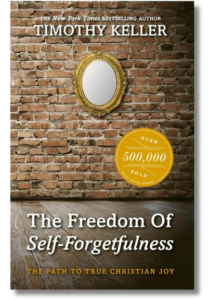 Imagine a life where you don’t feel inadequate, easily offended, desperate to prove yourself, or endlessly preoccupied with how you look to others. Imagine relishing, not resenting, the success of others. Living this way isn’t far-fetched. It’s actually guaranteed to believers, as they learn to receive God’s approval, rather than striving to earn it.
In Tim Keller’s short ebook, The Freedom of Self-Forgetfulness: The Path To True Christian Joy, he explains how to overcome the toxic tendencies of our age一not by diluting biblical truth or denying our differences一but by rooting our identity in Christ.
TGC is offering this Keller resource for free, so you can discover the “blessed rest” that only self-forgetfulness brings.
Ligon Duncan (PhD, University of Edinburgh) is chancellor and CEO of Reformed Theological Seminary, president of RTS Jackson, and the John E. Richards professor of systematic and historical theology. He is a Board member of The Gospel Coalition. His new RTS course on the theology of the Westminster Standards is now available via RTS Global, the online program of RTS. He and his wife, Anne, have two adult children.
Michael Lawrence (PhD, University of Cambridge; MDiv, Gordon-Conwell Theological Seminary; BA, Duke University) is lead pastor of Hinson Baptist Church in Portland, Oregon, and is a Council member of The Gospel Coalition. He is the author of several books, including Biblical Theology in the Life of the Church, Conversion: How God Creates a People, Ezekiel: A 12-Week Study (Knowing the Bible), and with Mark Dever, It Is Well: Expositions on Substitutionary Atonement. He and his wife, Adrienne, have five children and two daughters-in-law.