



Codependency, dependent personality disorder, toxic relationships—these are popular terms in counseling and psychology. But as Christians, we want to understand how they fit with or overlap the sin patterns we read about in Scripture. In this talk, recorded at TGCW24, Ellen Mary Dykas shows how God’s Word addresses common-to-man temptations.
Dykas talks about how to diagnose relational idolatry in our lives, bring real help and healing to those around us, and take steps of faith toward loving people without craving or worshiping them.
In This Episode
0:00 – Relational wholeness introduction and personal journey
2:35 – Overview of relationships in society
6:47 – Sin’s effects on relationships
8:58 – Codependency and relational idolatry
14:18 – Biblical perspective on codependency
23:27 – Diagnostic tools for relational health
29:27 – Path to wholeness and change
41:16 – Practical steps for relational recalibration
Resources Mentioned
- When People Are Big and God Is Small by Ed Welch
- Friend-ish: Reclaiming Real Friendship in a Culture of Confusion by Kelly Needham
- Toxic Relationships: Taking Refuge in Christ by Ellen Mary Dykas
- Jesus and Your Unwanted Journey by Ellen Mary Dykas
SIGN UP for one of our newsletters to stay informed about TGC’s latest resources.
Help The Gospel Coalition renew and unify the contemporary church in the ancient gospel: Give today.
Don’t miss an episode of The Gospel Coalition Podcast:
Transcript
The following is an uncorrected transcript generated by a transcription service. Before quoting in print, please check the corresponding audio for accuracy.
Ellen Mary Dykas
Good afternoon, and welcome to this breakout relational wholeness, how Jesus helps us love people rather than crave or worship them. And I want to start out by saying that this topic is not only a passion of mine, it’s it’s something that’s very personal to me, and every time I get to teach on it, my heart is very tender as it is today, knowing that some of the things we’re going to talk about are going to be resonating in real time for some of you. You know, in many ways, my own journey of sin, of relational pain and struggle is why I’m actually here in front of you today. In the early 2000s I did a Google search, Christian plus Bible plus codependency, and up came a book called when people are big and God is small, by Ed Welch, and that book set me on a healing and transformative trajectory that really led to utter transformation in my life, but also a very surprising journey of now writing and speaking and counseling related to this topic and so friends, I don’t know what brings you here today, but Jesus does, And he has exactly what you need, whether, if it’s good, truth from his word, if it’s comfort, maybe even some correction, to walk forward in a path of change. So I don’t know what he has for you, but I know he is faithful, and he will give it. So let’s just pray, and then we’re going to dig in. So Jesus, we do look to you now, the one in whom are found all the treasures of wisdom and knowledge, you Lord, who are Bread of Life, Good Shepherd, door resurrection, the Way, Truth and Life. And we ask you to encourage, comfort, illuminate, for Your glory and for our good. Amen. Now I want to mention, I’m going to reference a few books and articles today, and if you have the TGC app, if you go to this breakout, there’ll be a handout that you can click on. It’s actually not a handout for my teaching, but it has a whole list of resources, including a lot of articles that relate to the topic that we’re going to address today. I’m also I’m here with a couple of women I serve with, including Caitlin, who’s the director of women’s ministry for harvest USA. She and I will be up front here for a few minutes before the plenary session, which starts, I think, at 430 if you have questions, if you want to chat about anything, we also have a table down in the exhibit hall harvest, USA. We’d be love to we’d love to chat with you, share with you more about our ministry, as well as a position in women’s ministry that we are recruiting for. So let’s begin with just kind of an overview of what are some of the initial differences between what God says about relationships and what the world says around us. Just a quick overview, because you don’t have to really look far to see that all around us. In entertainment social media, there are all these stories of people searching for a soul filling love, for deep connections, even connections that are going to supposedly make life meaningful, maybe even make us feel okay. There’s all these songs that have soulful lyrics about romantic relationships, like back in the day, how do I live without you. You’re my world, my heart, my soul, baby. If you leave you take away everything good in my life, or there’s even songs that have words of worship, like you’re the first thing I know I can believe in. You’re Holy, holy, holy. I’m high on loving you. You’re my healing hands where it used to hurt, my saving grace. You’re my kind of church. And then we’ve got to name the phrase that went viral from the medical drama in the 2000s Grey’s Anatomy. Who knows this? You’re my person. I mean, finally, if we had Taylor Swift and Billie Eilish collaborate on two of their hit songs, it might have gone something like this, you’re my, my, my lover. Can I go where you go? Can we always be this close forever? I don’t know how to feel. I don’t even know how to be happy. I mean, I want to try, but what was I made for? I want to be happy, but I forgot how to be it. It’s something I’m made for, something I can be. Something I wait for, something I’m made for. So as we get started, I want to ask, what are we made for, and what does this have to do with our relationships? I mean, all those lyrics I just shared, they actually reveal deep desires that are built into us by our Creator, desires for unfailing love, for deep connection, to have significance, to know and know others deeply, to have relationships that are safe and comforting. I mean those desires are beautiful aspects for all of us of being image bearers of God, the very One who loves us deeply, knows us perfectly, and who exists himself in a holy, relational Trinity. He’s the one that created us for relationships, for His glory and for our good, and it’s through our connections with each other that we gain deep glimpses of who our amazing savior is, as Father, as Brother, the friend who sticks closer than a brother, who loves us with the tenderness of a mother, the one in whom are found all the treasures of any pastoral counseling wisdom. But he’s even more than that. Jesus is called our eternal bridegroom, the one who’s waiting to be united fully with His Bride, His people, the church. So our relationships with each other are meant to help us grow in understanding him and in becoming more like Jesus, to proclaim Him into the world. I mean, think about it, we can’t obey most of the New Testament unless we’re in deep relationships with people. But But sin, sin the ultimate toxin has infiltrated every aspect of our relationships, our desires, motivations, attractions, priorities. It’s all polluted now due to sins, presence and power, and even though we have been created for a pure love, for your wholeness. In every area we struggle. We all struggle in our connections with people, with our attachments to people. I mean, none of us has a perfect track record, either in loving or in being loved. But before we dive in with some of the struggles we have, we need to we need to be reminded that all of that sin has been remedied for us through Christ’s death and his life after death, his perfect track record has been given to us, and the power which raised Him from the dead is active In all those who believe in Him, including the power we need to begin to develop different types of relationships and to walk away from relationships where there is a messy, enslaving, unhelpful, to say the least, kind of dynamic, those enslaving people, addictions, dependencies we have, which we know have come to have a strong control over our life. I mean, this isn’t what God has created us for. It’s not what he intended for us.
How have I seen some of this relational messiness at work? I mean, somewhat in my own life and in hundreds and hundreds of women that I’ve gotten to walk with over the years. Let me just share with you quickly some of the general things I’ve seen of women with women, women with men, women in parenting or with parenting relationships or their own parents, and then broadly So, first, women with women well, besties, mentoring relationships, even ministry colleagues, something happens, and these friendships go beyond what is godly and can grow into a consuming, obsessive, jealousy filled desperate need, grasping for constant connection. I mean, these women may pray together, they study scripture together, they may even serve together. They may even come to a conference like this together. But there’s an internal panic, not Christ, that keeps them attached, sometimes in inappropriate ways, verbally, physically, maybe even into sexual sin. Kelly Needham in her excellent book, friendish reclaiming real friendship in a culture of confusion, she powerfully describes how our friendships and really this is true across the boards, relationally, but how friendships get off track. When we effectively replace Jesus with a person and can cultivate a friendship that mimics marriage in wanting to have that the blessing of a comprehensive life sharing dynamic, which has been reserved and designed for marriage between one man and one woman, she says, quote, The result of this is an ingrown friendship where personal neediness sits in the driver’s seat instead of sacrificial love over long periods of time. This type of friendship can lead to Addictive dependencies, debilitating despair when something interferes with the friendship and unholy sexual attraction or interaction, she says, these are all distortions of God’s intended purpose for friendship and love, and they will not make us happy in the long run. Now I want to make quick to add here that experiencing those kinds of desires, even attractions towards another woman, that does not equal some kind of a label or identity, like of being gay, without minimizing it in one way, it simply reveals the direction of our heart, desires of our Heart, maybe desires of our body being drawn to something. But many women, and I’ve walked with many of them, many women have allowed a certain relationship with a particular woman to be a gateway into other same sex relationships and maybe eventually embracing a gay identity. Now Kelly’s book, which I would highly commend to you. It also gives such a rich teaching about the goodness of God’s design and friendship, which is different from marriage, but just as rich meant to be just as sweet. Now, what about women and men? Well, I wrote a Bork book for wives, actually wives facing sexual betrayal. It’s called Jesus and your unwanted journey. And in that I address the shame that many wives will put on themselves or feel like it’s being put on them because of their husband’s sin. And in that chapter on shame, there’s a chart called the three views of marriage, which is basically just meant to show how effective, how easy it is to effectively replace Jesus with your spouse, looking to that husband to be a source of unfailing love, ceaseless encouragement, to never miss a cue, to always know exactly what you need, and to be sure a godly husband can be and is meant to be by the Lord is a wonderful gift, a signpost to his love. But sisters, it was never God’s intent that a spouse replace him, and so dating relationships are basically trying to find a boyfriend that can be has shows the potential to maybe be that kind of a husband. What about women and their children? Well, again, marriage is a good gift. Friendship is a good gift, and having children is a beautiful gift, but children are meant to be a son or daughter, not to be the source of a mom’s identity or if her life is okay, or if she has any meaning in life, to try to find identity in your son or daughter, or to equate if she’s doing okay, I’m doing okay, if he’s okay, then life is okay. To let that kind of a dynamic keep growing, and depending on that child’s emotional well being, for your well being is that child grows up, what can develop is almost looking to a child to be an emotional surrogate spouse. That’s not God’s intent. And then these kind of dynamics can spill over into any kind of relationship with a ministry leader, a pastor, a mentor, or whatever it might be. So if that’s the landscape that we’re focusing on, I want to take the rest of our time. We’re going to look at three main things. We want to look at, how does the Bible talk about this idea of codependency or relational idolatry. Two, we’re going to look at what are some honest diagnostics for us to consider, to see if do we need some relational recalibration. And then three, we want to be sure to land our time, giving you a path out some practical steps into some wholeness and change. So let’s start number one. Let’s define this biblically. I’m going to read just four of really, probably 1000s of verses. We could go to four passages and then just give a summary, applying it to our topic for this hour, Exodus, 22, to three. I. I am the Lord your God who brought you out of the land of Egypt, out of the house of slavery. You shall have no other gods before me. Then from Deuteronomy, 13, six to eight, if your brother, the son of your mother, or your son, or your daughter, or your wife or the friend who is as your own soul, if they entice you secretly saying, Let us go and serve other gods, Gods which you’ve never heard of before. You shall not yield to him. You shall not listen to them. And then two from the New Testament. Romans, 125 they exchanged the truth about God for a lie and worshiped and served the creature rather than the Creator who’s blessed forever. Galatians, 513 Finally, for you are called to freedom. Sisters only do not use your freedom as an opportunity for the flesh, but through love, serve one another. So God’s word reveals him as a generous, holy gift giving Creator who created us with relational capacities. Scripture also shows him to be a lord to whom we belong, and the only Savior who rescues us from sin and heals us from the miseries of sin, heals us from the damage done against us. I mean, he has created us to be loved perfectly by himself and to receive the good gift of relationships with each other, but never to replace him as giver with those gifts. Never to engage the gift of relationship at the expense of our holiness or of our dependence upon Christ so he commands for our protection and our good, that we worship Him alone, that he has no rivals or replacements in our hearts and our affections, and that not only protects us, but it protects other people, because everybody’s in their right place, and I’m not looking to you to be what Only God can be. So I want to just think again though about why we struggle with this. I mean, we’ve talked a bit about sin. Sin is always at work here. We’re replacing God with a person a good gift, but we’re also sufferers, and this is a tough world to live in, and it shapes us. It influences us. So when we think about codependency, love, addiction, people addiction, there’s lots of secular reasons and lots of labels for it. Codependency is basically a codependence. It’s two people looking to each other, depending on each other in unhelpful ways. They feed off of each other. They feed off of being needed, or letting someone meet all your needs. But there’s also diagnoses that are given by mental health professionals, like the American Psychiatric Association, they will diagnose somebody with Dependent Personality Disorder, two individuals that meet one main criteria, an excessive and pervasive need to be taken care of. This person exhibits submissive, clinging, needy behavior. Hashtag been there. Give me the diagnosis. Someone that has that kind of behavior due to fear of abandonment. But by their own admission, these mental health professionals, they say, Guess what, no effective treatment options are known or love addiction. This is on the National Institute of Health’s website. Love addiction presents itself as an incessant need for the presence of someone who is indispensable for one’s life, a relationship within which purely dysfunctional behaviors associated with a recurrent fear of abandonment are implemented. Now that’s rough, and I would guess I’m not the only person in the room that maybe has seen themselves in some of those diagnoses, but, but some of us struggle to just keep people in the right place, if you will, because we were young in our faith, or we were just never taught like we were never taught about Christ centered healthy relationships. I mean, maybe you grew up in a family that was characterized by excessive enmeshment in each other’s lives, extreme, unhealthy attachments, or maybe you grew up in a family on the other side where there was no attachment, there was no emotional connection, no emotional comfort, and then you were an adolescent. Teen girl, college girl, young adult, maybe older, somebody came along who basically offered you what all those lyrics were that I sang and you ate it up. I mean, you were starved for attention, starved for connection, but the Bible, the gospel really gives us not only the most clear diagnosis, but the most helpful explanation that our sinful and hurting hearts turn away from the creator and seek the created, saying, instead of him, including people, including relationships. I like how Puritan John Flavel said it the believer is in spiritual danger if he allows himself to go for any lengths of time without tasting the love of Christ and sin and savoring the felt comforts of a Savior’s presence when Christ ceases to fill the heart with satisfaction, our souls will go in silent search of other lovers. When Christ ceases to fill our hearts with satisfaction, our souls will go in silent search of other lovers. It’s humbling. It might feel overwhelming to consider these things you might be saying, Christ, filling my heart, Christ, comforting me like how does that even work? Well, let’s be encouraged that all these relational struggles, my friends, they represent temptations that are common to us, that are common to the human experience, even as they may look really different in our lives. Because think about it, people in our relationships with them. Aren’t they one of the greatest gifts that we can have in this life? I mean, they really are, as I mentioned, it’s how we get to know the Lord, in a lot of ways, is in healthy godly relationships. And God knows better than even we do how we replace him with the very gift of people. And he’s committed. He’s committed to rescuing us, to coming after us. He’s not going to have any rivals in our hearts. He’s not going to have other lovers vying for the glory that is due to Him alone. And this isn’t because he’s narcissistic or needy. No, this. This is what we’ve been created for, and our creator wants to protect that. He wants us to live in wholeness and to have relationships that are filled and fueled with sincere love. So that’s a quick biblical overview. Now we’ve got to do some diagnostics, because we don’t want to just talk up here. So without being overly suspicious or overly cynical, overly introspective, we do need to have some humble discernment and wisdom. So how might we diagnose a relationship that’s gotten off track, that’s off the rails of what God would have for us? What might be markers to alert us to at least pause, maybe put some space between us and someone, maybe even to end a relationship. So in about an hour, we’re going to be starting our plenary sessions. I’m excited. I’m really eager to hear this teaching, and we’re going to be immersed in rich wisdom about what Jesus said uniquely about himself, what he proclaimed about himself in a unique way, as Savior. So I’m going to suggest that one way we make diagnose the health of our relationships is to see to what degree do we understand, believe in and depend upon Jesus to be what only He can be, and how might we tend to actually look away from him to people, husband, friend, son, daughter, mentor to be our bread of life, the light of our world, the door, our good shepherd, our resurrection and life, our way truth and life. So we’re going to apply this to our topic. And so what I’ve done is I’ve I took those I am statements that we’re going to hear unpacked in the plenaries, and I’ve come up with three categories that I think represent them. And we’re going to let this be a pathway for some honest self reflection. So as I walk through this, I want you to consider, are you attempting to be this for somebody, or do you demand, crave that somebody other than Jesus, be this for you? No. Number One are life and soul satisfaction. Are you looking to a person to give you ultimate meaning in life, purpose, a reason to live, maybe to be okay? So this person, their words, presence, attention, affection and need of you, they seem to fill you up. When those things are consistent, if not constant, you’re okay. Life is okay. But when that person isn’t as available, or somebody else comes into their life, or they pull away so slightly, you are undone. That person and the dynamic that you have with them, you’ve allowed it to have a power to make or break your day. Are you looking to someone? Are you trying to be life and so and soul satisfaction number two, are you looking to somebody to be your healing and salvation like do you feel like you need someone to provide healing and wholeness to a very hurting, lonely heart, the brokenness you have to fill in the gaps of what you sense is missing in your life so that you’re complete and not lacking anything. It might feel like this person, and again, in the dynamic you share, it might seem like it has this person has actually healed the deepest places of pain and brokenness at you, in you, at least when you’re around them or in consistent contact with them, or they’re validating you or needing you or needing your neediness. That was my path. I was the needy to be needed caregiver. But in this situation, when that, suppose, when that person’s supposed healing, saving, assuring attention waivers, or again, when it’s pulled back, or they’re putting their attention somewhere else, you feel lost, hopeless, maybe wounded beyond repair. You might even despair of life itself. A mom with this young adult son or daughter that’s in a serious relationship, and you’re happy on the outside, but on the inside, you’re terrified. Don’t leave me. Don’t let another woman in your life. Number three, so again, we’re looking to someone to be life and soul satisfaction, to be our healing and salvation. But then three, looking to a person or trying to be for someone a 24/7 home and refuge. Now David Platt is going to finish out our time on Saturday with John 15. And what does it mean that Jesus is our true vine, and one of the things I love about that passage, passage is it describes us as branches abiding in Jesus alongside of each other, beautifully so, but we’re drawing life not from each other as branches, ultimately, but from Jesus and so relationships that effectively want to bypass Jesus and make you my ultimate home, my security, my safety, something’s off track. If your life has become so fused together that space is unbearable, other people are a threat, and yet, if you’re honest, you might be feeling a little bit suffocated, a little bit stuck and trapped. Maybe your eyes have gotten off of Jesus as a true vine, and you’ve been looking towards a branch to be what a branch can’t be. I had a friendship like this with a Christian sister, and we had our friendship song. It was a cute little Christian song. It was called home away from home, and I was in a big, messy dependency with this friend, but we would just go to this song. We were each other’s home away from home. But then another friend came into her life, and she moved away a bit. She wasn’t as available for me, and I was like undone, and I reached out to her, I cried, I kind of pleaded with her, I said, but I thought we were each other’s home away from home. And she just said, matter of fact, well, I guess I’m moving out. Ooh, that was a wound. Now listen, what I’m talking about are not the normal griefs of changed relationships. I’m not talking about that. I’m not talking about when the ebb and flow of relationships things change. That’s not we’re talking about. We’re talking about relationships that have patterns of obsessive neediness, jealousy. Feeling threatened hiding and concealing what’s really going on, because we don’t want people around us to know the true nature of this relationship. In these situations, other key relationships, including a spouse, can be pushed aside, because, after all, this person is my person. This person is my soul mate. You might be feeling overwhelming distraction, anxiety and paralysis in these relationships, but you just can’t get out God isn’t in his right place, and when Jesus isn’t in his rightful place, people and other gifts won’t be in theirs. And friends, you’re already catching this, but I have so. I have so been there in all of this, like I’ve lived this. And I can tell you, though, that Christ has set me free. He has answered my prayers. Of many, many anxious, fearful, feeling stuck seasons. I had a couple of go to Psalms, Psalm 18 and Psalm 142 I was just praying and praying at the beginning of my own journey of wholeness, praying, God, get me out of this. Bring me into a spacious place. Bring me out of this prison. Lord, you say you delight in me, do something different. Lord, I don’t even know what a healthy relationship is, but God, I want to be free. Help God. And I’m free. Sisters, I’m not without temptations. I don’t love perfectly. I still have to watch over my heart, watch over my attachments and feelings, but I have I am truly free, and I never want to go back. So let’s pivot now. I want to take the rest of our time to share with you some of what I’ve learned along the way, a path towards wholeness, which is holiness. I’ve got five things I want to share. And don’t hear these as linear, 12345, and it’s all done. But you might consider these as five stones to step onto on a path that I believe will get you set on a trajectory of freedom. Now, over all of this woven into all five of these is, you know, undergirding it is a fresh commitment to Christ, to the word and to living honestly with other people, ideally in a local church family where you are known at ground level. So five things, one identify, identify how your relationships may be off track. Maybe it’s one relationship, maybe several. Start Here, pray Psalm 139, 23 and 24 Search me, O God, and know my heart, test me and know my anxious thoughts. See if there’s any offensive way in me and lead me in the way everlasting. Now let’s be honest. Is something off or out of place in your relational world? Do those diagnostics hit home? Has sexual sin entered a relationship, or are you on the road there through cuddling and snuggling that you don’t want anybody to know about? Has your marriage or relationship with a parent or a son or daughter? Has it become somehow suffocating and controlling? That’s not what God’s designed. Have others in your life tried to express concern to you, because there’s something consuming about this relationship. Pray, ask God to show you what’s what now two admit, admit your relational sin and pain to Jesus, your deliverer, and at least one trustworthy person. Now this isn’t the person you might be in a mess with. Okay, no, James 516 I know. I know what we all do with that. James 516 says, confess your sins to each other and pray for each other so that you may be healed. The earnest prayer of a righteous person has great power and produces wonderful results. Jesus is our faithful, precious Savior. He’s the One to whom we’re betrothed, and we’re going to we’re going to feast with him at the wedding supper of the Lamb. We’re going to be the bride there. He’s also our faithful, compassionate friend. What are the hurts in your heart that you’ve wanted this relationship to heal? He’s the only one that can heal our broken hearts from the inside out. Now admit, confess your pain to Jesus and ask Him to help you. So we identify, we admit. Number three, we expect. Now, this is a hard one y’all, but it’s a part of it. Expect a season of pain and grief that can serve God’s purposes. Let me read to you some more from Psalm 142 which, as I mentioned, was one of my go to Psalms during a season of my own, crying out to Jesus. David said, and this psalm says it was written in a cave, probably all alone with my voice. I cry out to the Lord with my voice. With my voice, I plead for mercy to the Lord. I pour out my my complaint before him. I tell my trouble before him. When my spirit faints within me, you God, know my way in the path where I walk, they’ve hidden a trap for me. May look to my right and see there’s no one who takes notice of me. No refuge remains to me. No one cares for my soul. So I cry to you, Lord. I say you are my refuge, my portion in the land of the living. Now the grief comes not only from from maybe recognizing that you’ve been fostering really unhealthy relationships, but also because most of the time separation or space is going to need to happen with this person, the relationship might need To be ended and ties severed. Now marriage relationships, parent child relationships, that’s different. It’s a very different situation, but nonetheless, those relationships sometimes need some new, firm boundaries and letting go of things as they’ve been even letting go a very unhealthy system of relating. It leads to grief. The familiar terrain of life is being walked away from. Loss is happening and letting go of what is it’s going to hurt, and it’s probably going to hurt for a long time, and it’s in this part of the journey that so many just turn back towards that entangled relationship. Don’t leave me. Come back to me, or they go looking for someone else to attach to.
So friends, I want to speak to you like heart to heart. You’ve got a choice here. If this is your situation, you’ve got a choice. You can experience healing pain and walk this out, or you can seek a temporary, sinful soothing that’s only going to lead to more enslaving pain. Take this step, this costly step, of implementing space or even ending a relationship, it’s going to feel like death, because it is a death. You’re letting go, you’re you’re putting to death, you’re Forsaking sin. But isn’t this what the Christian life is like? We’ve been called to identify with our Savior, to take up our cross and follow him, so we must let the gospel touch, cut and heal the deeper issues of our hearts and the things that are there, pain, trauma, anger, fear, insecurity, unbelief, that friend’s words of Mine moving out it I can, I can remember. I can hear her voice in my head, and this has been well over 20 years ago. No, actually, this has been like 36 years ago. It’s been a while it was a wound, but you know what it that was used by God as a key incision with his loving surgeon’s hand to start cleaning out the mess inside. So even though she was pursuing her own sin, and it came on to me, our father had the last word, he used that wound to go in and start cleaning some stuff out. So the promise of the Gospel is that when we die to self for the sake of Christ, new life will come. I mean, that’s what we proclaim at Easter, Good Friday into resurrection. Sunday, we identify with Jesus in our sufferings, in the pain that we experience, including in our repentance. It hurts to let go of idols, and Jesus doesn’t say, Well, you sinned, so deal with it. He comes right to us in the pain that we’re experiencing because of turning away from him, and he helps us. And it takes time, it takes perseverance, to learn these things about. Christian life to learn these things in relationships. So you’re going to need help. So that leads to number four, and that is pursue, pursue Biblical discipleship and counseling regarding lots of things. I’m going to give you just a few to think about. I wrote a 31 day devotional book. It should be available downstairs. It’s called toxic relationships, taking refuge in Christ, and it was written as a way to walk others that have struggled, like me in these areas, to walk you through a discipleship process. And I want the reader to kind of feel like I’m there talking with you, helping you take these steps to consider things like getting to the root of your true fears and beliefs. What is it that you’re terrified of losing if this relationship changes, we need to get to the root there. We need to get to more underlying heart issues. I mean, Jesus said you’ll know the truth, and my truth is going to set you free. So what? What has made you vulnerable to these kinds of relationships? What’s been the journey that your story good discipleship, counseling can help you get to the root of that. But also, as I mentioned earlier, we, most of us, need help just understanding healthy, Christ centered relationships. Now on that, I want to say one of my deep blessings of my childhood is I was not raised on sugar. So guess what? I don’t have a sweet tooth. You could put a whole thing of chocolate here, and I could walk right away from it. But I was raised on chips, so I have a salt tooth, and I’ve gone through seasons where I salted everything, including fruit, blueberries, apples. Somebody told me about salting watermelon. I was like what I never heard of that. One tried that another addiction for me. But here’s what happened. It wasn’t healthy, and the very good sweetness of fruit in God’s design wasn’t enough for me. I needed salt, so I did salt fasts. And guess what? As I fasted from salt, the goodness of that fruit came alive to my taste buds. So that an orange, although I never did, I never did salt and orange. Okay, so that’s something, but the point is this, the same is really true in our spiritual and relational world and in our relationship with Jesus, if we’ve become enamored, intoxicated with the pleasures of sin, healthy relationships, godly Christ center relationships and Christ himself can seem bland, boring and tasteless. We all need a reorientation of our emotional and relational taste buds for what is holy and freeing rather than what is intoxicating and those relationships that can give us a dopamine rush. I prayed and prayed, and I would commend this to you. This might be your starting point. It’s Lord, change my desires, change the very taste buds and appetites of my heart for what is holy and good. Now finally, on discipleship. And again, there’s so much more we could say, but you’re going to need to pursue discipleship and actual account of about accountability, but also implementing accountability in your life. This means having trustworthy people that you’ve given meddling rights to, as Pastor Tim Keller used to say, people you we need people that have a hunting license for they’re going to come after us, not in stalking or an intrusion that isn’t healthy, but people that aren’t going to just help us avoid sin but run after Christ. And I want to give you one verse that has two promises about this. The first one is very sober. The second is very sweet. Proverbs, 2813, whoever conceals his sins will not prosper, but whoever confesses and forsakes them will have mercy. We want to be those who bring our sin into the light and prosper we want to be those who confess and forsake sin and dwell in the mercy of the Lord that leads to number five. Pray. Pray for endurance, to remain steadfast, because sisters, there is so much at stake here. There really is secret lovers, obsessive friendships, same sex dependencies, which might lead to sexual involvement, smothering, unhealthy parent child relationships and idolatry. In marriage. All of these have power to hijack and distract us in destructive ways even. And we do have an enemy, Satan in the kingdom of darkness, has a vested interest in dulling your desires or distracting you from Christ in the kingdom, getting you off track, letting you just be so pleased? Us all pleased with the pleasures of this life, putting our hope in this life rather than the one is to come, the one that come. So I just want to, I want to plead with you as your sister, as an older sister, to many of you, to pray for what Paul says in Colossians 123 that we would that you would remain steadfast, stable, unshifting in the hope of the gospel. By the Spirit’s power, he is supremely worth it. He’s the one we’re coming home to. He’s our Savior. He’s our good shepherd. Now finally, I’m going to close with this with hopeful news.
All of our desires that may get off track, that maybe have gotten us into a mess, all those desires will find their satisfaction in Christ, and it’s only when we grow and understanding that that we can really let go of our idols, and God Himself is doing battle with our idols. He may have prompted you to come to this workshop because he’s wanting to do something in you, and he does this lovingly. He does this unrelentingly because, as I’ve already mentioned, he will have no other rivals in our lives. When people are not in their proper place and Jesus isn’t in his proper place, our lives are not going to flow in a very good way, and that’s putting it lightly. We belong to him. He’s going to keep coming after us. He’s going to keep after to bring us into a spacious place of wholeness, to bring us into a relationship with Himself that is just beyond what we can imagine. Why does he do this? Why is he not going to give up? Because he alone is our bread of life. He is the light of the world. He is the door into real life. He’s our great shepherd. He’s the only resurrection way truth and life. And you know what? He loves us so much. He’s carrying us right now. He’s going to carry us through this life and into the one to come. He sees you, he knows where you’re at, and he has what you need. And I pray that as we go, even go, as we go through these plenary sessions, that there’s going to be some tender, comforting, maybe correcting, but comforting words for each of our hearts, let’s pray, Jesus, you are all of these things. You alone are savior. And I just thank You that You love every woman, every girl sitting in this room and Lord, where there’s a need for relational recalibration. Would you make that clear, where some of us, maybe have a friend or family member in our life and they’re in a mess, give us boldness and humility and gentleness to go be your instrument in their life. Oh, God, I just thank you that you, you have done a great work, Lord in setting me free. That is of you and for you. And I pray for any other person here that needs to have hope for freedom. Give them that hope, Jesus, because you are our living hope. We love you and I now pray prepare our hearts for the teaching from the Gospel of John to go deep into our heart for Your glory and for our good.
Free eBook by Tim Keller: ‘The Freedom of Self-Forgetfulness’
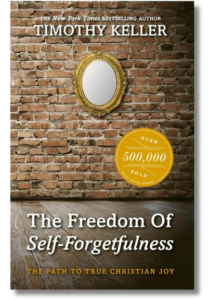 Imagine a life where you don’t feel inadequate, easily offended, desperate to prove yourself, or endlessly preoccupied with how you look to others. Imagine relishing, not resenting, the success of others. Living this way isn’t far-fetched. It’s actually guaranteed to believers, as they learn to receive God’s approval, rather than striving to earn it.
In Tim Keller’s short ebook, The Freedom of Self-Forgetfulness: The Path To True Christian Joy, he explains how to overcome the toxic tendencies of our age一not by diluting biblical truth or denying our differences一but by rooting our identity in Christ.
TGC is offering this Keller resource for free, so you can discover the “blessed rest” that only self-forgetfulness brings.
Ellen Mary Dykas (MA, Covenant Theological Seminary) is the director of equipping for ministry to women for Harvest USA, a national organization committed to Christ-centered discipleship and church equipping regarding issues of sexuality and gender. She has authored several Harvest USA minibooks, discipleship curriculum, including Jesus and Your Unwanted Journey: Wives Finding Comfort After Sexual Betrayal. Ellen holds a graduate certificate in biblical counseling from the Christian Counseling and Educational Foundation (CCEF).