




Benjamin Gladd and Nancy Guthrie outline principles for making sound biblical connections, tracing themes in the text, and avoiding common pitfalls of biblical interpretation.
The New Testament includes 350 direct quotations from the Old, along with 6,000–8,000 Old Testament allusions. Deep Bible study and the proper use of cross-references will help us rightly interpret both Testaments in light of each other and better understand how all the Scriptures together point to Christ.
In This Episode
00:00 – Understanding biblical theology and its importance
02:52 – Defining quotations and allusions
09:15 – Examples of allusions in the New Testament
14:06 – Tracing biblical themes
30:50 – Connecting the Old Testament to Christ
42:54 – Strategies for making organic connections
43:11 – The role of biblical theology in teaching and preaching
Related Resource: CSB Connecting Scripture New Testament edited by G. K. Beale and Benjamin Gladd
SIGN UP for one of our newsletters to stay informed about TGC’s latest resources.
Help The Gospel Coalition renew and unify the contemporary church in the ancient gospel: Give today.
Don’t miss an episode of The Gospel Coalition Podcast:
Transcript
The following is an uncorrected transcript generated by a transcription service. Before quoting in print, please check the corresponding audio for accuracy.
Nancy Guthrie
So you’re here, I suppose, because you want to, you want to figure out how to better put biblical theology into action, whether that is in your teaching, your preaching, or maybe just your own Bible study, or as you take in teaching and preaching, and Ben and I are encouraged that there’s so much interest in biblical theology because it has become so important to both of us has helped us to make sense of the Bible. The Bible is an amazing book, isn’t it? 40 human authors, one divine author. And when we see how this divine author has put together his book, The Amazing coherence. I mean, isn’t that stunning how coherent the message is of the Bible across all of these books? And that means that as we get more familiar with the Bible, we want to grow in our ability to see how it connects to other texts, and not simply for curiosity’s sake, but because we really want to dig down and get into the intended meaning and the most appropriate applications and implications of the text. Now I imagine when you’ve heard people do biblical theology, you’ve been intrigued, haven’t you, when you hear it done well, maybe you’ve been annoyed when you thought it wasn’t done quite so well. And so we want to talk today about how to grow in our skills to do it well. And so we’re going to talk about, we’re going to do our best to talk about in 45 minutes, three tools, three biblical, theological tools that you and I can bring to the text to help it understand it more clearly, and therefore then to be able to communicate it, teach it more thoroughly and helpfully. So here’s the three tools we’re going to talk about, hopefully about 15 minutes each. We want to talk about quotations and allusions. We want to talk about tracing whole bible themes. And then we want to talk about that skill of connecting the Old Testament to Christ. So first, let’s talk about quotations and allusions. Now. Ben, this has been your world. I don’t know how long have you been working on that connection? As they say in the south, it’s been a minute. It’s been a minute working on this connecting scripture, New Testament, and in this, in this new study Bible, and you all can open it up the sampler they gave to you, what you’ll see is color coded you have color coded allusions and quotations in the New Testament, scriptures that we might not immediately recognize ourselves to help us with that. So maybe we should begin first by just defining the difference. Maybe not all of us understand the difference. What is what is a quotation and what is an illusion, right?
Benjamin Gladd
So a quotation is a direct citation of the Old Testament. Those usually stand out, yes. So ESV, IP, I believe, puts them in quotation marks. NASBE, it’s all caps, CSV. It’s bold. NIV, I think is just quotation marks, but they’re all flagged. They’re about 350 of these knuckleheads, and they’re scattered throughout the New Testament. And English versions draw your attention to them pretty easily. So they’ll use, you know, uppercase or whatever illusions, though illusions are much trickier to define and trickier to find, to discover what is an illusion? An illusion is simply an indirect reference to the Old Testament to a previous body of lit. Sure, in the Marvel world, Marvel, do you watch those movies
Unknown Speaker
like me? Well, it’s not
Unknown Speaker
getting better. It’s not getting better,
Nancy Guthrie
if you’re honest, right?
Benjamin Gladd
I like the OG. Marvel. Like them. They use the words like Easter eggs. So that’s how the movie studios talk about illusions, they use the word Easter egg. So think of it like this, there are 1000s of illusions, 1000s of easter eggs, scattered throughout the New Testament. My List. I’ve got a list, and I have not had the time to count it, because I just finished it. I think my number is anywhere between six to 8000. Illusions are in the New Testament. Old Testament allusions in the new Okay, so let me give you some numbers here. So there are about 350 Old Testament quotations in the new six to 8000 illusions. That’s about only what you see in bolded font or in quotation marks, is only about 5% of the Old Testament influence on the new is that amazing?
Nancy Guthrie
Okay, when you say 6000 What do you mean when I’m reading along in the text, what do I What do you see that you say, That’s an illusion.
Benjamin Gladd
Unique words that are found in the Old Testament now they’re unique. They’re not just normal words. We can actually pinpoint text in the Old Testament where the author is referring to maybe
Nancy Guthrie
you could give us some examples. Yes, I will. I
Benjamin Gladd
would love to give you some examples. So if you have your sampler now, I know you’ll probably need a flashlight on your phone. I didn’t realize that there is zero lighting.
Nancy Guthrie
Yeah, if you and if people are watching this at home, they can look at this sampler online, correct? Yes, yes, yes, connecting,
Benjamin Gladd
connecting scripture.com. I think is the website, but I don’t know if the sampler is up yet. Okay, I think we’re working on it. In any case, if you do have your Bibles, if you turn to Mark one, verses two and three, you let me know when you’re ready. All right, in Mark one, two and three, Mark is going to quote three Old Testament texts. The first text is a combined quotation from Exodus 23 in Malachi three. It’s a It’s he pulls both of those together in one and then he quotes Isaiah 40 in verse three. So he quotes three Old Testament texts in a span of two verses. And those texts are really talking about Israel coming out of exile, the new creation bursting forth God’s judgment upon those who do not believe. And that’s exactly the theme of Mark’s gospel, and he’s going to do it through those three quotations. Most of those are two out of the three are actually prophecies.
Nancy Guthrie
And so when we are working in the text, and it’s obvious to us, this is a quotation, what’s the next step we take to help us get underneath this passage, to try to understand why Mark is using
Benjamin Gladd
you’ve got to go back to that old Testament text. You’ve got to go back to Exodus three. You got to go back to Malachi three. You have to go back to Isaiah 40. You’ve got to go back to all of Now, what’s really nice is that almost all your English versions will have in the margins references to those quotations. They’re pretty much all agreed upon. So all you have to do is look at the margins and then go back in the Old Testament, discover what’s the meaning of Exodus 23 What’s the meaning of Malachi three? Malachi three or Isaiah 40 and then you’re going to bring that into the New Testament? Yeah.
Nancy Guthrie
So rather than just reading it as something stuck in the text, you’re trying to bring the meaning that it held in context in the Old Testament into what you’re Yes, yes. All right, so how about illusions?
Benjamin Gladd
Now this is where things get very interesting. I didn’t realize that you all don’t have Mark 10 in your sampler. So this, this example is taken from Mark 10, I’m sorry, from Mark 15. In Mark 15, verse 33 this is an amazing text. We were just covering this on Good Friday when it was noon, darkness came over the whole land until three in the afternoon. This wording here, the whole phrase, darkness came over the whole land comes back to, or refers back to Exodus, 1022, so Moses stretched out his hand toward heaven. There was and here it is, a thick darkness throughout the land of Egypt for three days. Now we have to back up and think, Okay, this is the ninth plague of Egypt. In this ninth plague, what does God do? Now this is a punishment that blankets the Egyptians with darkness. Remember this in Exodus 10. Now, what’s so fascinating here is that. Mark, the author is saying that the new Egypt is Jerusalem. See, just as darkness covered Egypt in the Old Testament, and God was pouring out His punishment upon the Egyptians. Now, what is he doing now the darkness is covering Jerusalem and upon the unbelievers, and ultimately, the darkness is coming upon his son. So we’re probably seeing here. This would be an example of typology how an event in the Old Testament is prophetic, is forward looking to what transpires in the New Testament. And here we have Christ on the cross.
Nancy Guthrie
I think a lot of us are nervous that just just because we see something that’s looks similar, is that really a genuine connection? Does it? Does it really connect? You know what I’m saying, like, I mean, like, so did you get there just because you saw the word darkness, or was there more to it? That convinces you This is an important connection.
Benjamin Gladd
Would that exact phrase reoccurs. So for Okay, as I’m working, the whole phrase, as I’m working I see this exact language. I’m like, well, that’s a pretty good idea. What’s going to confirm that is, remember the context here in Mark 15, Jesus had just finished celebrating what Passover, that’s the 10th plague. That was so you have, do you see how you have the ninth in 10th plagues back to back in here you have Jesus is explicitly saying that he is now the new Passover, that the Passover in the Old Testament and the mosaic administration anticipates Christ as the ultimate Passover sacrifice.
Nancy Guthrie
So in this case, you’ve got phrase for concepts. Yeah, this whole Passover, and even he is God’s first born, right? He’s being put to death as the land, that’s right. So really, if you confidence, you’re not just making
Benjamin Gladd
this up. No, I think we have a lot of hermeneutical confidence here. I tend to my wife says that I exaggerate from time to time, surely not, but not here. Okay, I’m not doing it here. But what’s amazing here is that Mark is trying to take the 10 plagues, and he wants you to view the cross through the plagues of Egypt. And that really frames and colors the event and makes it that much more redemptive historical.
Nancy Guthrie
So as you’re teaching it, yes, how do you bring that in? Or do you does that just help you as the teacher, kind of figure out what’s going on in the passage. You actually need to use that when you teach it.
Benjamin Gladd
Yes, no, I will explain. I mean, when I discover it in my own work, I’ll say, Oh, this is amazing. Look what Mark is doing. And then I immediately think, now, how can I communicate this to my friends? How can I communicate in my Bible study or in my sermon and try to pull out those connections?
Nancy Guthrie
I think that gives people even more confidence in the Bible, don’t you think? I think so. And they see how these things connect, I
Benjamin Gladd
think so. And there are 1000s, 1000s and 1000s of connections. The what scholars have learned in the last 20 years is that we’re becoming more aware of these connections, not that we were totally unaware of them before. It’s just that they’re now bubbling to the surface in a new way, and we’re now starting to see these and you’re going to so when you read commentaries in just in the last 10 years, you’re going to see commentators point out these amazing connections. So I would encourage you to the first thing right here is to look at your cross references. If you don’t know Greek, that’s okay. Use your cross references. I know that the if you know Greek, you would use the NA 28 the margins, if you don’t know Greek, the ESV, NIV, and obviously the CSV. This is what makes this volume that Greg BU and I have done that we have traced all of the words that you see in Greek font in your sampler there. Those are all illusions that we’ve mapped out, and then we put them in the margins so that you can see these connections. Excellent.
Nancy Guthrie
I know that recently, when I was working on I’ve written a couple books recently where these really came into play. I wrote a book on acts, and acts has a lot of quotations in it.
Benjamin Gladd
Does that make a big so? Does the Old Testament inform acts. Do you think, yes, yes.
Nancy Guthrie
I think, I mean, I think we can’t understand acts without understanding like, for example, you begin acts and you’ve got Peter’s sermon in chapter two. Well, his, I mean, he’s doing exactly what Jesus had just taught him to in those 40 days when it says that he explained to them and all the scriptures, the things concerning Himself, and that he opened their eyes to understand the Scriptures. And we can see that that was really effective, because here, when Peter gets up to give that sermon in Acts two, what’s he doing? He’s working his way through the Old Testament, right? So he. Goes to Joel, and he’s able to say, here’s what’s happening right here, Psalm 16, for you know, this psalm of David, and when it says that he didn’t see decay, he’s saying, Hello, David’s body is dead. He did seek His say he’s talking about somebody else. And of course, he’s he’s talking about Jesus. And so he continues to do that. But I think one of my favorite quotes, maybe in the book of Acts, comes at the very end of the book of Acts. I mean, one thing I discovered about the book of Acts is this theme of salvation that runs from beginning to end. If you think about right at there at the beginning, we read that they’re adding to the number those who are being saved. And we’ve got that great quote from Joel several times, all who call upon the name of the Lord will be saved. And so we know that this that Luke is wanting to communicate something about salvation. And it’s so interesting that that’s how it ends as well. When you get to the end of the book of Acts, he’s gotten to Rome, and he does what he always does when he gets it to a new city, which is he goes to the synagogue first and presents the gospel there and then, as is typical, I’m in Acts 2824 some were convinced by what he said, others disbelieved. And then he launches into a quote of Isaiah. And I think you’re exactly right that we have, we have to go back to Isaiah to try to understand because the text itself doesn’t necessarily lay it out there completely for us as to why he’s quoting from Isaiah, and
Benjamin Gladd
Paul probably when he probably cited a longer portion, we only get just a little bit
Nancy Guthrie
right, but when we go back to that with Isaiah, that’s where Isaiah is finding out I’m sending you out to declare my word, and nobody’s going to listen. And he has to face that heartbrokenness about his ministry. And so here Paul is saying he’s kind of, he’s like he’s looking at these people saying You’re just like your parents. Do none of us ever want to hear right? You’re just like your parents. You You refuse to listen. And he says, Therefore, let it be known to you that this salvation of God has been sent to the Gentiles. They will listen. And so he’s helping these Jewish people see what he’s doing in light of the Ministry of Isaiah, and to see themselves, in a sense, as an echo of their own attitude toward the scriptures. So that was a good but, you know, then I wrote a book on Revelation.
Benjamin Gladd
How many Let me ask I want to take? No, I’m take a survey. I’m gonna take a survey. Okay, now you know that the old that John, as they say in the south, loves some Old Testament. I’ve heard that repeatedly. I only hear it at Chick fil A though John loves the Old Testament. In fact, the book of Revelation alludes to the Old Testament more than any other book. So I want to know, I’m going to raise hands. I’m going to see, see your hands. How many of you all think that John alludes to the Old Testament more than 300 times? How many do you think more than 300 What about this? What about over 400 times? Over 500 really? Yeah, like three people are like, John alludes to the Old Testament almost 700 times. And guess how many times he quotes it? 227, 100 allusions, two quotations. So if you’re only focusing on quotations, you’re going to the results are skewed. The theology is going to be skewed. So as you are working through revelation, you’re like, oh my goodness, John is pulling the Old Testament out. How did that shape, which you worked on?
Nancy Guthrie
Well, I think one thing about it is to just recognize how that the Old Testament was like the atmosphere He breathed in and when, and he doesn’t quote it, you’re right. He alludes to it because those that’s like the vocabulary he’s picked up from reading it his whole life and thinking through these things as a life. So what’s come what’s gone into him, just comes out of him. And I mean, I could pick about anywhere, but I think you know, some beautiful things that we see in the beautiful revelation 21 where he is presenting to us the new creation. He uses some of these images from the Old Testament and allusions, and once again, he doesn’t explain them. He just kind of expects us to know. So, for example, when he says and I heard a loud voice from the throne saying, Behold, the dwelling place of God is with man. He. Will dwell with them, and they will be his people, and God himself will be with them as their God. Well, we just have to recognize, well, this is, this is a formula, a covenantal formula we heard way back in Exodus, 34 and 3020 I mean, 24 and 29 when, when the children of Israel came out of Egypt, He’s establishing us. God is saying, This is what I’m all about. These are my purposes. And we hear versions of that line said throughout the scriptures. And so then to get to the end of Revelation and hear now the dwelling place of God, so that seeing how that’s reflecting the Old Testament helps us realize, okay, this has all come about, right?
Benjamin Gladd
All of history is has been moving in
Nancy Guthrie
that direction, that point. I’ve got another one, but our time is getting away from us very quickly. All right, so let’s talk. We’ve talked about the tool of using allusions and quotes. Let’s go on to another biblical theological tool of tracing themes and even just talking about what I’ve just talked about. There’s a little bit of a theme here. And isn’t that the truth been that all of these kind of overlap a lot of these tools that we talk about. So why don’t we each pick a favorite biblical theme and give a sense of how we might connect that through the Bible, right?
Benjamin Gladd
Okay, so first Peter. Love the book of First Peter, one of the main pieces of that book, one of the main themes of that book, is suffering. Peter indicates this in several texts. Well, he’s not just talking about suffering in general. In other words, when, when Peter reminds the churches in Asia, minor, hang in there, be encouraged in your suffering. He’s not just speaking pragmatically, he’s connecting their suffering to the wider suffering of God’s people at the very end of history. Well, how do you get there? How do you make that point? Well, you trace the idea, or the concept or the theme of suffering in the Old Testament. So when you trace that out, you’re going to notice, for example, in Deuteronomy, 430 Israel will be, quote, in distress in the latter days. That means, at the very end of history, Israel will go through a period of great difficulty. This is going to get worked out in Zechariah. Zechariah even says that two thirds of Israel will be struck down and perish. And then most explicitly, in Daniel 10 through 12, we use the fancy word eschatology or eschatological suffering to describe this distress, to describe this type of suffering. So my point is this, when Peter says, hang in there, don’t give up, he’s connecting it to Israel’s sufferings that take place in this period known as the latter days. And so they should know, hey, what we’re going through the Old Testament has anticipated God orchestrated this for our good. I need to preserve my faith in Christ. Now, notice what I’ve done there. That’s a theme I’ve just worked with, the theme whereas quotations and allusions, you’re working with exact words, it’s textual concepts are themes. So we’re working with themes, you notice? So those are connected, but they are distinct. So quotations, allusions, text themes, synthesis, broad strokes, those types of ideas.
Nancy Guthrie
Well, I would say, yes. I would say, first of all, my theme that I want to talk about is very closely connected to suffering. I think it’s the first announcement that there will be suffering in the Bible that comes out of Genesis 315, we hear this curse that’s put on the serpent. I’m going to put enmity. So there’s going to be conflict and between the serpent and the woman, and then between the serpent’s offspring and the woman’s offspring. And then we get to that last line of Genesis, 315, it becomes singular, He will crush your head. You will bruise his heel. So there’s the first announcement that the Christ, this promised Offspring, is going to suffer. And I think I think of Genesis 315 as being one of those verses that I think, Why didn’t anyone tell me how important this verse was in the Bible? As I grew up being taught the Bible so much, because I really think we cannot understand the storyline, not just of the Old Testament, but the storyline from beginning to end, unless we begin to feel the tension that we’re meant to feel when we read Genesis 315 because from then on, we’re watching for this one. When will this offspring of the. Woman come who’s going to put an end to the devil’s evil and this curse that he’s brought into the world, but this one who’s going to suffer in the process of putting an end to that evil. And so then we get to Genesis five, and this is where all good I’m going to read through the Bible plans go to die when we get to Genesis five immediately, and it’s like, do I really need this long list of unpronounceable names? Yes, I think the reason we feel that when we read it is because we don’t feel the tension we’re meant to feel from Genesis 315 that we are we’re watching for the offspring. And with every announcement, so and so lived a certain number of years, and then he died. He’s not the one. And we get that over and over and over again, and then we get to Genesis, chapter 12, another verse, Genesis 12, one through three. If you don’t have it in this underlined in your Bible, then it’s a problem, okay? Because here’s where the story continues with this theme of offspring, that when we find out that Abraham, he’s going to have as many offspring as there are stars in the sky and sand on the seashore. But the very specific thing we learn in Genesis 12 three is that when he God promises him, through you, all the families of the earth are going to be blessed. Now we know this promise offspring of Genesis, 315, this is going to be one of Abraham’s offspring. And as we keep going, it keeps then we get to David, and God makes a promise to David that I’m going to have a son of yours is going to be seated on the throne, and now we know, okay, God is going to bless the world through his king. That is is going to be an offspring of Abraham and an offspring of David. And there’s lots of other great places this theme shows up in the new in the Old Testament, but I’ll skip to the New Testament, where we open up the New Testament, and we read that this is the genealogy of Jesus, Christ, the Son of David, the son of Abraham. I mean, so it sounds like from the very beginning, the New Testament wants to tell us how important this theme of offspring is, and it’s showing that, yes, Jesus is that promised Offspring, and what has he come to do? Well, there would be lots of things, but I think of First John, where John says that this offspring, that he appeared, the reason he appeared, He says it really clearly the reason he appeared was to destroy the works of the devil. So there’s the fulfillment of he’s going to crush your head. And of course, that’s what will happen on the cross. Paul writes in Colossians that Jesus on the cross that He disarmed the rulers and authorities and put them to open shame by triumphing over them. There is his victory. And then we have to think about where we are right now in regard to this theme, the offspring. And we know that, yes, the devil has been defeated. He’s on a leash. He hasn’t been completely eliminated, and we are awaiting that day, that revelation 20 talks about that says that Jesus is going to return, and he is going to destroy the serpent and all of his offspring for good. He’s going to throw them into the lake of the fire, and then he’s going to welcome all of the offspring of the women. I’m thinking about John Piper today, when he was he was talking about the book. Remember that? What did he call it, the book of the life of those of the son? Yeah, I can’t say it exactly, but the in Revelation, it’s called the Lamb’s book of life, right? Whose names are in that book, all those who are offspring of the woman. And so there’s a theme that traces from beginning to end and when, when we can do that. It means that whenever we think we might see this theme, wherever we are in the Bible, we are equipped to get to the gospel in a way that we would never would otherwise, because all of these themes, they tell a story, and they all come to a climax in the life, death and resurrection of Jesus Christ. And when we do that, that’s that’s when we’re getting to the gospel, and that’s what we want to be communicating, and that’s what the people we’re teaching want to hear about is the gospel, and so the themes help us to do this. You know, I’m I’ve been meeting with a young woman at my church, and we’ve spent some time talking about these themes. And one thing I’ve challenged her to do, what we go she goes into church on Sunday, is, you. Know, open up the bulletin, read the text, and try to think, even before the sermon begins, how is the pastor going to get to the Gospel from this text, then to listen for how he does it. And I’m so blessed that I’m in a church that I know he always will. And also we have weekly communion. And so I’m like, Okay, so he’s probably, what’s probably what you’re probably going to hear is that he’s going to take some theme in this passage and use that theme to get the gospel in his sermon. And then when he comes to the table, maybe he’ll use a different theme or the same thing, but he’s once again, again, going to get to the death and resurrection of Jesus Christ at the table. And so that’s one way I’m trying to help her learn to see these themes and see the significance
Benjamin Gladd
of them. You know, you got to wonder, why is it that our knee jerk reaction is to read Scripture atomistically in pieces, instead of connecting that text
Nancy Guthrie
to the whole whether it’s, did you grow up being taught to read the Bible that way? Because I did it.
Benjamin Gladd
I did. I did. I grew up in a dispensational home, okay? And so the Bible was quite literally cut up. I mean, yeah, physically cut it up, yeah. I mean, it really was Israel over here, all these texts go into Israel, then all these other texts go into the church, and then you you keep them separate. So I grew up that’s part of the tradition that I grew
Nancy Guthrie
up in. I think most of us, especially those of us who grew up that way, I mean, we have to retrain our Yes, along these lines,
Benjamin Gladd
don’t we? I think this is one of the reasons why I’m so passionate about biblical theology in my work. It’s because I remember what it was like before biblical theology. I remember, I was in a I was in a Bible study years ago, and this girl asked the question. She said, as a dispensationalist, how do I read the Old Testament? And I told her, as an observer, because you’re that’s not your Old Testament, that’s not yours. You’re not part of that. You’re not part of it as an outsider, as an observer. So let’s talk about now the third tool, Nancy, which is part of this discussion. How do we go from the Old Testament to Christ, but in a good way, right? In a good way, in a healthy way, yeah, how do we make, how do we make that connection
Nancy Guthrie
to find good organic? Yes, that’s my favorite word, too. Organic. It’s really in there, right? Like, you’re not just like,
Benjamin Gladd
oh, I use the word trajectory. I like the word trajectory. Okay, yes, it, it’s
Nancy Guthrie
not necessarily in there, but it’s an organic trajectory.
Benjamin Gladd
Yes, it’s moving towards, I see what you did there. Yeah. Okay, it’s move. You have these texts, and they’re moving towards some, some Old Testament texts, like Isaiah 53 I mean, it’s, it’s right there, right there. Yeah. Other texts, like a Zephaniah one is a little okay, you know, so they’re not all, not old old, not all Old Testament texts are as center, yes, focused on Christ, but they all get
Nancy Guthrie
all serve it right up to you, right? Some of them, you might have to dig a little more. I know I’m working on a project right now where I’m working through the whole of the text of the Bible to create a 365 day resource that will help you understand what you’re about to read in that day’s reading, but then also how that presents to you the beauty of Christ. And have to be honest, starting into it, I’m thinking, Can I come up with 365 statements? Because everyone starts with, everyone starts with a statement about Jesus. And so like, for example, I was thinking like, when I get to Samuel and Kings and Chronicles, like, they’re all just going to start sounding the same. We need a better King, right? And so, and there’s, there’s a lot of Samuel and Kings and Chronicles, and I am pleased to report to you, having just finished the history books on on Sunday, that so far it hasn’t been repetitive. And the other thing I was afraid of is, like, I’m going to be making some stretches here and there, right? Like so that non organic, non organic, exactly like my food so far, so far, I don’t feel like anything has been a stretch. That’s good. Yeah, that in the Scriptures we can find organic. I think it’s legitimate connections
Benjamin Gladd
when, when these books are read well, we learn that these characters are complex and they are on, they themselves are on all sorts of trajectories. They are all they’re very complicated characters, and you have all these texts that work with these characters. And so it just, it really does set us up very nicely for Chris. Ice work. So let’s talk a little bit about, how do we not do this? Like, give me some non organic connection.
Nancy Guthrie
Like, want to study the good stuff, you
Benjamin Gladd
know, there’s got to be. In other words, you’re as you’re writing, you’re probably seeing something. Oh, no. It’s not that. I don’t think it’s that. I think it’s this.
Nancy Guthrie
I mean, I can think of some. I mean, first of all, can we just say this that both you and I and probably everybody in this room, we’re all learning right? And that’s the thing about doing this work. Hopefully we’re going to be better at it five years from now than we are right now, just mainly because we’ve spent more time in the Scriptures seeking to understand them deeply. So I say that to say when I look back at some ways that I tried doing this, you know, 10 or 15 years ago, I kind of cringe sometimes because I think that was a stretch, or I was trying too hard to I grabbed on to maybe a word or an image that wasn’t at the heart of what the passage meant. And therefore I got I got there, maybe illegitimately. It was tangential. Tangential, yeah. And like tertiary. Do you prefer tertiary? Those are all big words, and I don’t think I can do this. So let’s instead. Can we talk about some strategies for doing Yes? Well, yes, please. So I know for me, one thing I have to do is I got to just really carefully read through the text. I love to use the ESV scripture journals so that I can really mark it up. Yeah, and so I’m looking for phrases. Really look for images. So often, images in the Old Testament that I can, I can, I can connect. So I’m looking for words. I’m looking for phrases. I’m looking for people. I’m looking for places. What difference does it make that this happened in Shiloh? Or give you right? Because sometimes those things are going to help me. I’m looking for objects, events. I’m looking for story lines. What’s the back story on this. So, like I just finished working on Esther last week, we got to know the back story of the Amalekites, and that Saul was a son of Kish, and Mordecai is a descendant, you know, relative, of Kish. You got to know that background to have that make some sense to you. You got a lot of getting to Christ is that you see a problem, and you realize there’s only one way this problem is going to be solved, and that’s through the person and work of Christ. Because all of the when you when we get to the end of the Old Testament, when we get to the end of the Old Testament, no hear me? No. All right, let’s share. All right.
Unknown Speaker
I think yours fell off.
Nancy Guthrie
Thank you. There we go. When you when we what was I talking about? When we get to the Old Testament, the problems aren’t solved, and we’re still looking for a better King and a more faithful Prophet, more faithful priest. And so we’re looking for problems. We’re looking for promises. What has been promised, especially throughout the prophets, aren’t we? When is this going to happen? How is this going to happen? And those are all opportunities to get to Christ. So let me just talk about a few of those. So the first one I said, was an event or image that pictures some aspect of who Christ is or what he’s going to do. So I think about the ark, the ark that Noah built. It’s a picture of the person of Christ. What do we do? We come to Christ and we hide in Christ, knowing that judgment is going to fall. And yet all who are in Christ, just as Noah was in the ark, will be saved through the judgment that’s going to fall. Or an event Passover, we’ve already talked about that. I mean, that’s probably the most pronounced, isn’t it? That and that at Passover, God is going to give his own son, or we get to the book of Joshua, and they’re going into Jericho, and we see judgment fall on God’s enemies, but at the same time, salvation is shown to those who want to take hold of the promises of God by faith in someone like Rahab. Is there a person in this passage? Who prefigures some aspect of who Christ is and what he’s going to do. And I think the key thing about most of the people we’re looking for both analogy that escalates or contrast, right? So, so you look at some people in the Bible, and a lot of times it’s both, isn’t it? Most of the time, yeah, right. Is like this person, but better and yet, yes. So it escalates, will be like this. So let me just give you a few examples. I mean, we begin with Adam. Here is here is the first Adam, and we get to Romans. What does it tell us? You know, this first Adam by his sin, he leads all of humanity into disobedience, but then we’ve got the second or last Adam, and through his obedience, he’s going to lead us all into life instead of death. So there is analogy, analogy in the sense that we’re joined to either Adam or Christ. But then this vast contrast in the in terms of the impact of that, one of my favorite people in the Old Testament, to see how he points us to Christ, is Joseph, this beloved son of the father who’s hated by his brothers, kind of sounds like somebody and he he goes from pit to the right hand of the pharaoh in one day. And he becomes essentially the one person in the world to whom everyone who wants to live must come. And so he’s, in a sense, the Savior of the world in his in his day. But, of course, his world is very limited. So I could go on and on with people, but that’s a good one. And then is there a problem or a need that can ultimately only be solved by the person of Christ? So I think about that first big problem in the Scripture, which is the curse. And we’re going to try, you know, we could go all the way through the Old Testament, the impact of curse. In fact, the very last word of the Old Testament, the book of Malachi, I think it’s usually translated, perish, but it could also be curse. So it’s like the word over the Old Testament, first to last, and we And so ends with, how is this problem of the curse going to be solved. And then we turn to Galatians that Christ has become a curse for us, that we might inherit the blessings of Abraham. So that would be a problem or a need. There’s patterns I love. I love looking at the patterns of God, the Father, presenting a bride to his son. He does that with Adam in the garden. Happens over and over again in the Old Testament. And then, of course, that’s that’s actually the story of where the Bible is headed. It’s where the Bible story ends in Revelation that God is going to present a bride to his son. So that’s a number of ways that we can things we can look for in the Old Testament to try to figure out, how are we going to get to Christ?
Benjamin Gladd
Yeah, that’s wonderful. When you mentioned that one there about Adam. Remember there in Genesis two, when it you can see it in the Greek translation more than the English, but it’s Behold the man. That’s exactly what Pilate says in John’s gospel, Behold the man. And there’s probably maybe some irony bound up with there, maybe a little bit of typology, but you get these resonances. You get these connections throughout both. So in my mind, I think the safest way to do these connections, whether it’s concept, whether you’re getting from the Old Testament to Christ, is to, in my view, stick with quotations and illusions. There are 1000s of these. What that means is we need to double down on using our cross servants as well. If you don’t have a Bible with cross references. So sell your kidneys. I don’t know how much a kidney goes. I don’t know how much the kidney goes. You could probably get a really nice heirloom Bible for that. But really spend the money get a really good cross reference Bible, ESV, they all make terrific ones. CSV, whatever. And that’s how you start, because those are connections that the Old Testament and New Testament authors are making, and they’re right there in front of you. You’ve just got to take the time to trace them out.
Nancy Guthrie
I imagine there are some people thinking, you know, like, how do they see those things? Like, you guys make it sound kind of simple, how do you see those things? And maybe they’re thinking to themselves, you know what? I think this is going to require that I know my Bible a whole lot better. Than I do now. And I think we would say, Yeah, I think so. In fact, I think, you know, I remember early on when I was going to a Bible study, and there were, there were women in the Bible study. They like, seemed to know where stuff was in the Bible, or a particular book would be mentioned, and they, like, knew what that book was about. And I remember thinking to myself, well, how do they know that? And I thought, You know what? I think, I think it’s going to take, like, a lifetime to know the Bible that way. And so now at 62 I would say, Yeah, I think it’s going to take a lifetime for us to know the Bible, and even in a lifetime, we’ll never get to the bottom of the beauty of the Scriptures and what it presents to us about Christ.
Benjamin Gladd
That’s right, but Christ will be sweeter. Your worship will be deeper, and Christ will be glorified in this whole process. Thank you all so much for coming. We had such a good time.
Free eBook by Tim Keller: ‘The Freedom of Self-Forgetfulness’
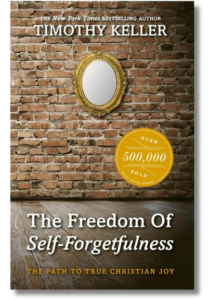 Imagine a life where you don’t feel inadequate, easily offended, desperate to prove yourself, or endlessly preoccupied with how you look to others. Imagine relishing, not resenting, the success of others. Living this way isn’t far-fetched. It’s actually guaranteed to believers, as they learn to receive God’s approval, rather than striving to earn it.
In Tim Keller’s short ebook, The Freedom of Self-Forgetfulness: The Path To True Christian Joy, he explains how to overcome the toxic tendencies of our age一not by diluting biblical truth or denying our differences一but by rooting our identity in Christ.
TGC is offering this Keller resource for free, so you can discover the “blessed rest” that only self-forgetfulness brings.
Benjamin L. Gladd (PhD, Wheaton College) serves on TGC’s staff as executive director of The Carson Center for Theological Renewal. He previously served for 12 years as professor of New Testament at Reformed Theological Seminary in Jackson, Mississippi. He has authored and edited numerous books including From Adam and Israel to the Church, Handbook on the Gospels, and The Story Retold (with G. K. Beale). He is also the coeditor of New Studies in Biblical Theology and the coeditor of Pillar New Testament Commentary series with Don Carson. Benjamin and his wife, Nikki, have two sons.
Nancy Guthrie (MATS, Reformed Theological Seminary) teaches the Bible at her home church, Cornerstone Presbyterian Church, in Franklin, Tennessee, as well as at conferences around the country and internationally, including through her Biblical Theology Workshop for Women. She is the author of numerous books and the host of the Help Me Teach the Bible podcast from The Gospel Coalition. She and her husband founded Respite Retreats for couples who have faced the death of a child, and they’re cohosts of the GriefShare video series.