





Paul commanded Timothy, “Train yourself for godliness” (1 Tim. 4:7). The spiritual disciplines are essential to our growth into Christlike maturity, so we must learn to invest ourselves in these patterns daily.
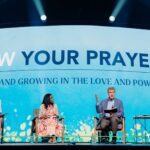
In this panel discussion from TGC25, Andy Davis, Dan Doriani, Trillia Newbell, Ruth Chou Simons, and Afshin Ziafat discuss practical ways to become more faithful in prayer, Bible intake, fasting, and other disciplines.
In This Episode
0:00 – Introduction and opening prayer
1:39 – Panel members’ introductions and personal experiences
4:33 – Defining spiritual disciplines
7:48 – Importance of spiritual disciplines
16:52 – Practical applications and personal experiences
42:01 – Community and accountability
Resources Mentioned:
- Two Journeys Ministry
- The Spirit of the Disciplines by Dallas Willard
SIGN UP for one of our newsletters to stay informed about TGC’s latest resources.
Help The Gospel Coalition renew and unify the contemporary church in the ancient gospel: Give today.
Don’t miss an episode of The Gospel Coalition Podcast:
Transcript
The following is an uncorrected transcript generated by a transcription service. Before quoting in print, please check the corresponding audio for accuracy.
Afshin Ziafat
We are so glad that you have come to join us on this panel discussion on the blessings, the rich blessings, of spiritual disciplines. Before we start, I just want to say that this event, this breakout, is being sponsored by two journeys, which is actually the online ministry of Andy Davis, and so if you go to two minute two journeys.org there’s basically articles and sermons and devotionals and other resources there, but on your chairs you probably saw one of these. Basically, there’s a free digital copy of a 22 week guide for spiritual maturity. So it’s a great resource for you to have again. Just use that QR code in the back. And then also, they have a booth in the exhibit hall. So if you go by there, there’s also another free resource for you there. So we just wanted you to know about those two resources before we get started.
Andy Davis
All right, I’m going to open us in prayer, and then we’ll get started on our panel discussion. Let’s pray together, Father, we look to you for every good and perfect gift we know, Lord Jesus, apart from you, we can do nothing. And so we look to you now for this discussion on this incredibly vital and fascinating topic of spiritual disciplines. I thank you for these brothers and sisters that are with me on this panel, and that we can talk together, pray that You be glorified in everything that we say and think, and that lives would be changed as a result of this conversation in Jesus name, Amen. So let me introduce myself. I’m Andy Davis. I’m senior pastor of First Baptist Church in Durham, and we’re talking today about spiritual discipline. So I’ve asked each of the panel members to introduce him or herself and say real quickly what it is about this topic that excites you. So we’ll go in this direction, starting with you, Ruth.
Ruth Chou Simons
I’m Ruth Joe Simons. I’m an author, artist and founder of gracelace.com, and Scripture art brand, and I’m excited about this topic because it’s been a lifelong journey to even learn spiritual disciplines. It’s a really difficult topic for me, so I’m glad that there are so many of you here who agree that it might be a little difficult.
Afshin Ziafat
My name is Afshin ziafat. I’m the pastor of Providence church in Frisco, Texas, just north of Dallas, and I’m excited about this topic because, you know, being a former Muslim, God is holy, transcendent, and you can just only know about God, to have a personal relationship with God like we do through Jesus Christ, that was just foreign to me. And so for me, I’m excited because of what Christ has opened up for us through the veil being torn in two because of the blood of Christ, so we can boldly approach the throne of God. And so for me, I think I want to just say this in the outset, that it’s not a drudgery, like I have to type of a thing. It’s a man I get to exercise the disciplines to be in the presence of God. So that’s why I’m excited.
Trillia Newbell
Hi, I’m Trillian neubell. I’m a writer speaker. I’m the host of living by faith with moody radio. And I am excited about this. I became a Christian at the age of 22 and someone was faithful to share the gospel with me and then to disciple me. And part of that discipleship was teaching me about the spiritual disciplines and for me to I didn’t know Jesus at all, and so I was like, Who is this guy I’m now following, and for me to know him was to know him through his word. And so I have just, it’s the spiritual discipline. Disciplines have been precious to me.
Dan Doriani
My name is Dan doriani, and I’ve been spent about half my life as a professor and the other half. As a pastor, churches need means of grace, ways that people grow steadily. People want to know how. As a professor, preparing people for ministry, it’s very important that we not just have knowledge of the head, but also knowledge of the Lord and heart. And so spiritual disciplines are something I get to teach and try to inculcate in young men, I personally found them very helpful in a time of darkness. I don’t know if we’ll talk about that or not, but not the normal disciplines, but some of the others became very precious to me personally,
Andy Davis
yeah, for me, a big part of my life in ministry has been extended memorization of Scripture. I spent a lot of time memorizing books of the Bible, and that’s been incredibly vital for me in my personal walk with Christ and my preaching ministry. And so I’m excited whenever I get a chance to urge people to do that discipline and so but I really love hearing what other people do with spiritual disciplines. And we had a virtual meeting together and got to know each other a little bit, but so good to be face to face and be able to talk about this. And I asked Dan to give kind of a definition of what we’re talking about here. We’ve talked we’ve thrown around the term spiritual disciplines, but what is it? And I know there’s a verse first, Timothy, four, seven, that says something about it, but what? How would you define it?
Dan Doriani
Yeah, thanks. And that’s what happens when you’re a professor. They say define the terms. So. So first of all, the passage is really very short for a man who memorizes the Bible. It’s train yourself in godliness. And it’s a word used for athletic training. So it means, train hard for godliness. So I wrote, actually three definitions. One would be a non Calvinistic definition, and it goes like this, practices that help practices that help Christians grow in holiness. And then a short Calvinistic one would be practices that help Christians grow in grace and therefore holiness. And then here’s my full definition, which I worked on for a month. Off and on. I kept scribbling out bad definitions, and this is the least bad of the ones I came up with. Spiritual disciplines are the regular practices affirmed by the church, designed to train disciples in godly character and deeds, designed to collaborate with the work of the Spirit as He leads disciples to mortify sin and grow in grace and obedience to our mission. So that’s partly me and partly us. Want to make sure that we don’t think of spiritual disciplines as me and God, but it’s the Lord and I in the body of Christ.
Andy Davis
Can I ask you a question about all those definitions, how important is the issue of habit? This issue of habit?
Dan Doriani
Yeah, the word practices is supposed to reflect habit. So if, for example, you don’t pray regularly, it helps to find a time to pray. For me, the discipline of gratitude and thanksgiving was crucial. And so I, whenever there was an opportunity, I would just constantly go to gratitude, Thanksgiving as an antidote to anger or despair or something like that. So it can be a practice at a certain time in the day, or can be a practice when something in life moves you to do that. Just repeat that over and over again.
Andy Davis
Evsheen, why? And anyone after Epstein answers, any of you guys who want to want you wait. Why is wait. Why is it so vital for Christians to do these spiritual disciplines?
Afshin Ziafat
Yeah, I mean, it’s vital because our need for sanctification, you know, I think we have to remember the goal of the Christian life, you know, is our becoming like Christ. I mean, First John, chapter three says that when we see Him, we will be like Him, and whoever has that hope thus purifies himself. Doesn’t mean that we can purify ourselves in our own strength, but it means that that’s what we put our effort after. That’s what we put our focus on. And so when you become a Christian, that’s just the starting line. That’s not the finish line. Now all of life is our growing in maturity as we practice those disciplines. And I agree, I think you know, sanctification is, there’s a passive, active sense in it. God is the primary and decisive force behind certainly, obviously, my justification, my glorification, but my sanctification in between, but then I play a role in abiding in Christ through those disciplines. And so it’s not a perfect analogy, but if you think of a sailboat, right, what drives that boat down the water is the wind, right? But you have to still set the sail to catch that wind, if you will. So there’s a mysterious way that we through the disciplines, through those means of grace, participate with the Holy Spirit, as he is, the primary sanctifier of our lives.
Andy Davis
Anyone else? Why is it vital? Why would you say to somebody, maybe trillia, if you meet her, the young woman?
Trillia Newbell
Yeah, well, I’m really glad that you mentioned abiding in Christ, because that is one of the things that I was thinking of is John 15 and how really abiding is obedience. If you read the whole text, the Scripture at the end, he says, You are my friends, if you do what I if you do what I say, if you obey me. And so part of abiding and remaining in Jesus is a relationship that is you to obey means that we need to know what he says. So that’s reading the Word to remain is that we’re running to him. So through prayer. There’s other disciplines that we’re going to talk about, but those are just two that really help us to abide and remain, and, and, and I’m glad that he used the word grace, because it is Grace motivated, Grace based and the power of the Spirit that enables us to do that. So I often say we can’t obey Jesus without Jesus, so we need him to obey Him, and He provides the means through the power of the Spirit and His grace. And so abiding to me is one of the beautiful chapters of the scriptures that help us understand how to exercise this, this spiritual distance disciplines in obedience to Him.
Ruth Chou Simons
Well, I was going to say that as a recovering striver, as somebody who can be really quickly defaulting to like a performance and a worth earning kind of a. Um, basis the Christian life can be a whole bunch of like I need to do more of this so that I can be more of something else. And when I think about how, you know the the first question of the Westminster catechism, right, when we say, what is the chief end of man to glorify God and enjoy him forever? If I was made to enjoy God, then the means of grace is for me to actually know why he’s so worthy of my all in my enjoyment, right? So I think about that. I think it’s Jonathan Edwards, right, the idea of throwing yourself in the path of these of God’s grace, like, okay, just throw yourself in the path of it. I think he says it in a more fancy way, but the allurement, that’s what the word he uses, but but the idea that God’s grace is just pouring forth. But you throw yourself on the path of lots of things in life. But if through spiritual disciplines, if we access those means of grace, we can, like, throw ourselves in the path of all the ways in which God is saying, know me, know that you are loved, know that I’m knowable. And so I want to enjoy God more. And I finally realized that through spiritual disciplines, I can enjoy him more.
Andy Davis
Can you can you say more about that? Because there’s a question I wanted to ask you, in particular, about delight. You know, a lot of people sitting here might look on it somewhat as drudgery, or it’s been an area of failure. How have you find, can I just expand more on the delight that you found in your relationship with God and with Christ through disciplines?
Ruth Chou Simons
Yeah, you know, I, I would say, 20 years ago, I would have, for sure, thought of it as like, oh my goodness, I’m doing it. I just felt guilt a lot. I felt like I wasn’t doing it right. I wasn’t doing enough. I would be further ahead if I could just get myself more disciplined. And I think so much of that was not rooted in delighting in Jesus. It was delighting in my ability to be a faithful Christian, you know, and and so the delight element really is kind of not getting so caught up with what it looks like to be disciplined and so delighted, but to say, Okay, Lord, how can I just in one small way today, know you more, and that keeps me in that habit. The, you know, when we were talking about habits just now and like the repetitive those definitions were so good. I need I need those. But, you know, I often say we default to what we practice the most. And so if I want to default to delighting in Jesus, that I need to actually be practicing those every day. So So I think delight is now kind of at the root more of it, because I want to know Him in that way. Well I
Trillia Newbell
was just going to add and I really think that we just have to ask the Lord for help. And so if I’m going to delight and enjoy, because sometimes I don’t know about you, but you go to church, or you open the Word and we’ve got someone shaking their head, and you’re like, you don’t feel and so if you go to the Scriptures with that kind of I’m going to feel something, then it could become so discouraging. But if you can ask the Lord, I don’t feel this whatever it is, but I know that you can change my affections. I know that you can fill me afresh with your spirit. I know that you can help me to delight in you, even though I don’t feel it. I believe the Lord transforms those things and so, so that’s all I was going to say, is that we should pray and ask for help.
Afshin Ziafat
Yeah, and I think a key thing on that, and I appreciate how both you ladies brought out the delight piece. I think the key for me is when I can tend to forget that it’s ultimately about a relationship, you know, and when I make it about the action of the ritual, then it’s hard to delight in that. But when I remember that you know John, 17 three, this is eternal life, that they know you, they know me, you know that ultimately you know, as Jesus says, You search the Scriptures because you think you in them, you have life, but the scriptures testify of Me. You refuse to come to me. So whether it’s prayer or scripture, memory or being in the word and studying it, my aim is to constantly remind myself that I I am, I am. You know, as David said, one thing, I’ve asked of the Lord that I will seek that I may dwell in the house of the Lord all the days of my life to behold on his beauty. I am engaging with the risen, living Savior. And this is about a relationship. So for me, having that kind of mindset helps.
Andy Davis
Yeah, I want to pick up on what you were saying, Trillian, just a moment ago too, just this sense of the love that Christ has for us. And, you know, I think numbers have said, Boy, I would love to hear one of these great plenary speakers on the last part of Ephesians, three that prayer that we would know how wide and long and high and deep is the love of Christ, and to know that love that surpasses knowledge, so that we will be filled to. The measure of all the fullness of God, truly. What do you think about that, that sense of the love of the dimensions of the love of God? We don’t always feel it, but you mentioned about feelings.
Trillia Newbell
We need faith to believe it. So we aren’t going to always feel it, but it’s true. And one of the things that I am so grateful for about just my relationship with the Lord is it’s not based on me or how I feel, but it’s true. It’s a fact. And so Ephesians three Paul is praying that prayer for the church and that we would be strengthened. And that’s the same prayer that you can I think you mentioned that we should do this in community. And I do believe that’s so good and really important is that when you’re not sensing this truth that is real, pull in community and ask people to help preach that truth to you. But it’s, it’s ultimate, that God loves us. It’s, it’s amazing that we it’s not about us, that He loves us because of Jesus, and that we are clothed with righteousness because of what he’s done. And so I think that that can be a motivator, but it also should bring peace that we are so loved and that it’s we’re infinitely loved. We can’t comprehend the love of God in any way, but I’d love to hear what you think about that.
Dan Doriani
Oh, okay, you just took over because
Trillia Newbell
of the community aspect.
Afshin Ziafat
Just Just the fact that just you said you can’t comprehend, it tells me that that it’s ongoing. Are growing in our knowledge of that love we never arrive. Maturity is not you know, I always say like, you know, you think you’re at that summit, but you find out it’s a false Summit. Well, every summit this side of heaven is a false Summit, in our maturity and in our knowledge of God’s love. So I love that idea. Okay, now
Dan Doriani
I would love to answer that question, so I’ll say it this way. You know, we all have our experiences. They vary somewhat about the way we practice spirituality. For me, some of them are practices, but for me, it’s really studying God’s word and just reading chunks of the Bible and letting it wash over me and just learning more about who the Lord is by watching what he does and what he says, and not with no plan in mind, the emotions just come sometimes, and that’s individual like, you know, I read through the gospel stories again for Easter Week, and just meditated sufferings of Christ, which just moves you to depths of love and tears and sorrow and amazed at his bravery and endurance. And you just, and you’re, you know, you end up worshiping. Now I’m a preacher, so I ended up speaking about what I found. And so that’s a communal aspect when you share it with others. But also we had, as many churches do for Good Friday, we just had readings and nothing but readings. We had five different people reading and different voices. And a lot of people said that was just so immensely moving to hear nothing but the narratives. What Jesus did with prayers, of course, interspersed but nothing but scripture and prayer. And that’s something a lot of churches do. It’s not formulaic. One of the things we all agree upon is this is not there are formulas or steps to take, but it’s not formulaic. It’s steps help you. They’re never a means. They’re always a means. They’re never an end of themselves. They they’re the goal of every practice is to take you to the Lord.
Andy Davis
Well, Dan, let me ask you about spiritual development, sanctification. You mentioned it in your in your definitions, but how? How do the disciplines fit into growth, into Christ likeness. Yeah.
Dan Doriani
So I have a book with me here called the spirit of the disciplines, one of the best books. He’s not a Calvinist, but it’s a marvelous book. Dallas Willard, if you want to start it’s a serious, heavy book, but it’s a fantastic book, and it was very helpful for me, for my sanctification, and when I talk to my students and my friends to remember that the disciplines are not only reading the Bible and praying, but there’s a bunch of others. And as I read, I brought this so I wouldn’t forget them. He has this marvelous description of the different kinds, and he calls them disciplines of abstinence, and they include silence, which is a big deal if you’re a professional talker. I mean, I’d sit there thinking, I need to be quiet. This is a discipline for me to not always have the last word, okay, silence, fasting, solitude. Some of us hate to be alone. We need to be alone. Frugality and sacrifice. Those are abstinence, things you don’t give yourself. Action or engagement. He uses the word engagement, which is lovely word study, celebration and Thanksgiving, service and submission. So submission, you know seminary students. They come thinking, I know a lot. What? And I know more than anybody when I’m done, yeah, you need to submit to your senior pastor, lead pastor, mentors. That’s a discipline for me. I mentioned my dark time. It was being under a heavy hand of an oppressive person, and I the only way out for me was to give thanks for him, over and over and over. That was the way I got rid of anger and bitterness. And I’m not committing that necessarily anybody else, but it’s, it’s finding that discipline of gratitude for all the good in that person. There’s a lot of good in that person. So we have in celebration. You know, it’s easy in ministry to get down and complain the church is so bad. Nobody comes. Nobody came to our discipleship group, I prepared the perfect lesson. Only three people came. I’m gonna quit. Celebrate the three people that came. So the disciplines are really good for us. We obviously focus on prayer and reading and meditating on the Bible, but they’re a bunch of disciplines, and they’ve stood the test of time.
Andy Davis
Yeah, I appreciate you just naming those things in that book by Dallas Willard is a good resource to to expand on those. Anyone else on on the connection between these spiritual disciplines and growth into Christ likeness.
Ruth Chou Simons
I think we live in such a microwave society that we just really want to see results fast, you know, and I I’ve just seen in my life that I want to learn things fast. I want the disciplines like acquired fast. I just get so discouraged when I feel like, Wait, why am I still struggling with this? Or why does this not come more easily? And then I remember that it’s, it’s what we’ve been saying. It’s, it’s actually in the process of growing in those disciplines, I get to see that I am weak, that I must lean on the Lord, that I must have the Lord if I am to know him at all, as trillia was saying earlier. And so I think that sanctification process, that that ongoing, that kind of bringing us closer and closer as image bearers, to be able to be able to know him and reflect Him as we were created to be like that really is an ongoing process that I get to participate in by leaning on him and asking the Lord to make me more like him through the spiritual disciplines. Yeah.
Afshin Ziafat
I mean, I think on that point, one of the key things for me to remember it’s a process, and for it to not to not to become drudgery, is not only just to focus on the relationship, but secondly, to have a road map to have, I would really encourage you, if it’s prayer, if it’s Bible study, if it’s, you know, those are the main ones. There are other ones, you know, if it’s even fasting, if you’re fasting for a time, have a plan, have a goal, like this is what I want to accomplish in the next three weeks. I just think about when I was young, my dad would take us on road trips, and we would take long road trips. I went from Houston all the way to Disneyland, all the way to Niagara Falls once. I mean long ones. But here’s the thing, if we were just aimlessly driving around America without any goal, and it would be miserable, like you know, but the journey became fun because we knew where, where we were going to end up, and it was kind of we were able to just be in that process. So I would just say, you know, map out, like I’m going to study Ephesians, and this is what I want to do. I want to go deep into it for this month and and I that helps me to have a roadmap.
Trillia Newbell
I have a real specific example of a time where the spiritual disciplines, because I believe we were talking about sanctification, helped me grow like Christ, besides just every day, but a real specific example, I was wronged by someone, and I knew I needed to forgive this person, but I couldn’t. I just couldn’t on my own, and it took two years of me pleading with the Lord, reading the scriptures, talking about saying Thanksgiving. I don’t know if I ever did that, but I definitely asked the Lord, because I knew I I’m forgiven much. I know I need to forgive. It was so gut wrenching hard, and so it was years of pouring out begging the Lord. And he grew me, he sanctified me, he changed me. And I, to this day, I’ve forgiven, which is a miracle to me, and I have been able to walk. And I know. I know now, like when I’m tempted to be angry or upset about something where I need to run, and that was the spiritual that’s just real practical way that the Lord worked in my heart to grow me more like him. It was in this one area of forgiveness. But because I exercised it, I can now exercise it quicker.
Afshin Ziafat
One of the things I just that jumped out at me as you were saying, that is the connection between the Word of God and prayer for you. And so you were praying as you were going through the scriptures. It seems like you were praying what you were reading, you know. And so one of the things I want to say. Those of you who struggle with prayer is connect it to your Bible study, like as you’re reading the scriptures, that’s your that’s what you’re praying to the Lord. And in a way, prayer and Bible study is kind of like a breathing you know, your Bible intake is breathing in, prayer is breathing out, breathing out. And so I love that part.
Dan Doriani
Andy, I would love for you to tell everybody about what you do, memorization of Scripture. Not everybody can do it. It’s been really important in your life, and you’re our host. Would you tell us about Bible Memory?
Andy Davis
Yeah, I’d love to I was, I started. I was, I came to Christ my junior year at MIT through Campus Crusade for Christ, and the guy who discipled me got me involved in the topical memory system with the navigators, which is individual key verses on printed on cards. The first one is second. Corinthians, 517, if anyone is in Christ, he’s a new creation. The old is gone. Everything has become new. That was the first verse I ever memorized. Galatians, 220, came after that, and so just did that for for a while, and the real veteran guys and gals at MIT had like, 100 of these cards that the navigators printed out on these snap rings they look like the janitors, like, with 100 keys like on their belts. And I was like, Huh? It seemed like there was a limit to how far you could go with that. But wasn’t until two years later, I was on a mission trip in Kenya, and I was waiting for a bus. And I remember asking the guy, I said, when does the bus come? And he said, in the afternoon. I was like, you know, I’m an American. I was like, I needed like, 1158, or, you know, 12, just in the afternoon. I don’t know when it rolled in three o’clock, all I had with me was my Bible, and I just an idea came in my mind of memorizing Ephesians, starting with Ephesians, one, one. And I did right now, first I could, but I asked you guys not to do that to me, so All right. But no, I started with Ephesians, and I worked on it that summer. But the real hard transition was the American lifestyle, and on the mission trip, it was easier. We were busy, but we had more, a little more free time back in America, I got immersed in overwhelming business, and it was one of the most important decisions of my entire life to keep going with Ephesians. And I kept going 155 verses, I kept working on it, and then when that was done, I added I went on to Philippians. And then at that point I I was interested in learning how to play piano, all right, and a friend was going to teach me. But I also had the idea, the crazy idea of memorizing the Gospel of Matthew. So I was at another fork in the road, so I decided to go with memorization, and I upped my thing to six verses a day, and I just kept going. And that was in the summer and into the fall of 1986 and about six months ago, I finished my last New Testament book, Gospel of Luke. Now I don’t retain them. I say them for 100 days. Each verse, I learned three verses a day. Now I’m settled into three verses a day. Read it 10 times, say it 10 times, and then I say it for 100 consecutive days. And it’s 100 days of immersion, about three and a half months of immersion, and it’s meditation. And what I get out of it is I get two things. I get a lot of things, but I get insight, new ideas, and I get intimacy with Christ, and that’s what I love. Now, before we transition to a real practical side, and I want to talk more practical. We’ve already started with Afshin, did a great job talking about praying scripture. Because I would say, a lot of you would say, I struggle with prayer. I just struggle. I struggle feeling like it’s doing anything I want to have a fuller, deeper, richer prayer life. And if I said to you, would you like to have a fuller, deeper, richer prayer life, it’s like, no, I’m good with mine. Be like, All right, so why are you here, like now today? But I want to ask you, Ruth, if you could we wanted to speak as a panel to somebody who just simply feels discouraged about this topic and feels they don’t have the discipline needed they want it, but they haven’t proven to have it. What would you say to a person like that?
Ruth Chou Simons
Well, you know, I’ve been that person, and I just find that sometimes it’s because I’m looking at this perfect this perfect idea of what it looks like to be a disciplined person. So first of all, I would say, start with one small thing, you know, like when we’re talking practically about it’s a two part. It’s asking the Lord for the desire. Right? Lord give me the desire for the things that I don’t naturally desire when I struggle to desire what I ought, help me desire what I ought. And then secondly, start with one small thing, you know, thinking through what’s one thing I can do rather than thinking. And I don’t know if anyone else struggles with this, but I tend to be like, it’s all or nothing. I either got to be amazing at this or I don’t want to do it at all, you know. And that’s really just a. Struggle in my life where I realized that I am not content to go slow and not content to just make some slow progress. And so I think it’s really important just to say the goal is not to crush it. The goal is to be faithful, and so be faithful with one small thing, even if that means I’m going to put to song one verse today, or if that means when I start panicking in the middle of the night and I’m stressing about all the things I want to fix, I’m going to recall this one verse and I’m going to pray to the Lord this scripture. That’s one of the 330 in the morning is my time, like, when I want to, like, solve all the problems and answer everybody’s emails with a certain tone of voice, you know, like, that’s my time of night that I need to, like, pray the scriptures that I was memorizing during the day.
Andy Davis
So let’s turn the corner. We’ve already started on some practicalities, but some how tos and Afshin. You’ve already started some with praying scripture. What are some other things you practically do, maybe on Bible intake, or anything you want to talk about about this topic that’s very practical that you found helpful.
Afshin Ziafat
Yeah, again, I think starting with a roadmap, starting with a plan, like it seemed like you had you met, you set a plan on Matthew and you went forward. But then I would say, you know, one thing we do, we have these things called huddle groups at our church, and the whole goal of these groups is to teach one another how and train one another and how to do the spiritual discipline. So back to community. But one of the things we use in those groups is just the simple here method, H, E, A, R, for Bible intake. And so if this helps some of you out, I would pass it on. The H is highlight. So that’s essentially observation. You read a passage of scripture, and you’re just highlighting, what are the key things that stick out to me? What are the things that I want to maybe go study a little bit more, I’m a little bit curious about why is this word in here? So highlight E is explained. That’s where you pull out your study Bible, if you have a commentary, go deeper and try to understand. What did this passage first mean to the people who it was written to, first understand, seek to understand that a is apply, what is the principle that’s being taught in this passage? And then the cross referencing of what? Where are other passages that speak into that same principle that I can learn from? And then finally, respond is the R, H, E, A, R, and respond is, what am I going to do with this like God? Like, ask and maybe sit in silence and let him speak to your heart. Like, what do you want me to do in response? Because here’s why that’s important. In Hebrews five, it says that the people who go from milk to solid food onto maturity are those who not only take in the Word of God, but then they put it into practice in their life. And so I think sometimes we don’t, we don’t grow deeper in our faith, because we don’t do the respond piece. And so I would say that leads to my prayer, where I journal what I’m praying. This is what I’m asking of you, Lord, and I can go back and see how I’m doing. So that’s just 1h E, A, R, practical thing I would leave with you.
Andy Davis
Praise God. Anyone else? Practical things that you’re doing on Bible intake, prayer, maybe Dan, some of those, you know, the ones that people don’t think about as much, the disciplines, any practical tips that you want to give people?
Dan Doriani
This is his way of cueing it. I have to leave to catch a plane, so I’m going to do this and drop my mic in humility and joy. I thought
Andy Davis
it was important to say that that he wasn’t storming off. You know, at some point
Dan Doriani
I agree so violently with everything everybody says that I am going to throw down the microphone so hear is great, H, E, A, R is great. Another one is read, meditate, pray, live, read, meditate, pray, live. That’s, RM, no, no, it’s, it’s all it comes from. It’s from the eighth century. There’s no, it doesn’t work. So read, never mind. So you read it like read it three or four times. Think about it. Read in two versions. Read it slides into meditation, not separate. If you read it 345, times, which is what I do most slides into meditation, and then you pray about it because you realize something about God or yourself that you didn’t quite grasp somehow, then try to live it, which of course, leads you back into prayer and maybe to repentance. But the other thing I do recommend that you have a longer list. So you know, lot of we all know that we should pray first thing in the morning and not check our cell phone. It’s, you know, it’s just good maybe turn your phone off, whatever it takes to get you to do that. I’ll let other people cover that. I think we know that, but it is good to have the fuller list. And if you have to be with people and have to be music and have to be with noise, maybe solitude is your discipline, and if you’re you find yourself getting angry, maybe celebration via Thanksgiving is what you need to work on, maybe for a year. So the beauty is that the church spans the centuries, and so there’s lots of wisdom about about the means. US of grace and the disciplines of grace.
Andy Davis
Well, blessings on you, brother, thanks travel. Grateful for what you’ve been able to do. I want to ask our two sisters on on the panel here. You got a card there. Dan, you don’t want to leave. Maybe I just want to ask about my I’ve my wife, and I have five kids. I watched her labor, and we homeschool them and all that. I want to, I want to get you to speak to the challenges of being a mom, especially as kids are growing up, making time for this kind of thing. So Ruth, maybe Ruth first. And I’m a
Ruth Chou Simons
mama to six boys. My oldest is 23 and my youngest is 11 now, and so we’ve gone through the various seasons, and I think for myself, as well as passing it on to my children, we have to have, like, we have so many Bibles in the home, but leaving it out, leaving it available, like, I think, as mamas, we imagine the birds chirping and the coffee staying hot and having this, like, beautiful time in the word when, really we probably just Need to leave our Bibles open, and then pop by on the kitchen island and being like, hey, even if it’s for a minute, I’m gonna read that passage again. And I’m gonna think on it. I’m gonna talk about it, you know. And I was thinking about it as we were talking earlier about how to practically set ourselves up. Dan mentioned, you know, having your cell phone put away or but I think you also have to, like choose not to multitask all the time, right? I mean, if you want to grow in this, I tend to want to do 10 things at a time, because I’m high productivity, you know? But the reality is, if I want to stop and read scripture, chew on it myself, and then talk about it to my kids, I can’t be doing that while I’m listening to a podcast and trying to text my friend and check social media all at the same time. That’s not going to happen. So it’s almost like choosing to say, Okay, we’re going to not make the drive into town or to go get groceries, or the drive isn’t going to be about listening to music or checking our phones or doing anything else we’re going to talk about what we read this morning. And so making that decision actually helps set everybody up to have that conversation.
Trillia Newbell
I think it was Susanna Wesley, don’t quote me, who was in the kitchen and she would take her apron and throw it over her head and pray while her kids were running around or something like that. So I do believe that you can find time to spend with the Lord in prayer. I have a friend who has a prayer closet, so she goes in her closet. I must admit that I am rather disciplined. So I am like the 5am set the alarm get in my knees, kind of person. And I think that that has been a means of grace for me, and I recommend it. I recommend setting that alarm or doing whatever it is, even if it’s at lunch, setting some time to spend with the Lord. I You will not regret it, and I but that is you. I believe that you can be motivated to do that by grace as well, not to earn favor by the Lord, not because of legalism, but because you love him, and you know your need for Him, and you want to know Him. And so, so, so for me, I think one of the things practically, I would say to you, is to figure out when you can we schedule everything and then just make it a part of your life. And I loved what Ruth said about doing it as a family, setting up that Bible, driving in the car and and listening to the Word. Sometimes I take walks and I will listen to the word so. So getting creative, especially if you have young kids. My kids are 15 and 18, and so they’re on their way out. So it does. Some of this has gotten easier, right? But I do think that you can think creatively about how to get in the Word. I’ve heard of people writing index cards. But just know, I think of, just remember apron over your head, prayer and and do it and, and I also do believe real quick that it will bless your children like as they see you leaning into Lord and they you, mommy’s dependent on God. I can’t raise you kids without him, as they say that, I do believe that it will be a blessing, and it’s something that they will not always emulate, but they might, and, and, and I believe it’s honorable, and I encourage you to figure out what it is and how you can practically enjoy him.
Andy Davis
Yeah, listening to your story, I’m reminded of a professor I had at Gordon Conwell named Christy Wilson. He’s a prayer warrior and big into spiritual disciplines, but he told a story about a man that was known for getting up, as you said, very early in the morning. And there was a young man that came to him and said, I just want to know your secret. I mean, how, how do you do it? And he looked at him, and all serious got real quick. I said, Young man, I get up. So in the end, that’s it. That’s the secret. I mean, even it may need to set an alarm and all that, but, but you’re gonna say something. Well, I
Trillia Newbell
just wanted to add something also about something you said earlier, because we moved on way too quickly. He was talking about memorizing Scripture. And I remember, I have had four miscarriages, and so after my second one was completely on my face, I couldn’t read my Bible. Foggy, foggy, just sad. But as I was laying there, the Lord, I’m going to cry, recalled scripture to my mind and to my heart, because I had spent so much time reading them before. So I also want to encourage you, like you said that you couldn’t retain. Sorry, we switched subject real quick, but you said you couldn’t retain. But I believe, I think it’s, I don’t remember if it was Packer or who it is, but someone, one of our people, were going blind, and really sad that he was going blind, and I can’t remember who it was, but, but because he had spent so much time reading the word, it was in his heart. It was ingrained in his in his mind. So I just want to also encourage you with that in a time of suffering, the Lord will recall all of this to your mind, even if you can’t do it, if you can’t open the Scriptures, because you’re you’re just too weak your brain. And I love Romans eight that the Holy Spirit intercedes for us with growings too deep for worse. So so the spirit will pray for you too. You don’t have to have eloquent and Ruth has emphasized this a lot in which is so good, you don’t have to come as this perfect person, and so you can have no words, and the Lord will hear your cry.
Andy Davis
You guys have been amazing. We have gotten through all the questions I wanted to. I still have three minutes left. Final word each of you before I close and pray. Ashton, I’ll give you the first shot, final exhortation or something that the Lord is moving you to say on this topic,
Afshin Ziafat
yeah, I think I would just add what’s been said, maybe echo it again, about practice these disciplines in community. You know, I think there’s so much, you know, I’ve taken the godly training is of more value than bodily training. Way to literally, I don’t work out as often as I should, you know, physically, but there’s so many parallels between working out physically and spiritual disciplines, and one of them is when I was regularly working out. It was it worked better when I was doing it with someone, and I was showing up at the gym, there’s accountability, and we were going through a program together, and I think that’s the same thing, and when you do it, so
Andy Davis
keyword there is accountability. Yeah, that’s what you mean by so getting a brother, or, if you’re home, and getting a sister that can hold you accountable, yeah,
Afshin Ziafat
that’s that’s important. Yeah, we like real quickly. I’ll say this too. In our church, we have this thing seven characteristics of a mature disciple. You can go to a website and it’s the spiritual disciplines are in there. And you can actually, like, actually score yourself, like, how you’re doing, and be able to go to your community group and say, here’s where I’m weak. Like, verbally, say it. And then everyone can say, all right, we’re gonna hold you accountable to this. So we kind of have built in some pathways to do it in community.
Andy Davis
Ruth, how about you any final words or exhortations?
Ruth Chou Simons
You know, there’s a Latin proverb that I can’t do in Latin, but it goes everything I own, I carry with me. And I think about that a lot, about how I carry the cell phone with me, and it’s got all the vital things, all the you know, I could, like, search any scripture. I could search anything. But really, like we’ve been talking about today, part of my desire in growing a spiritual disciplines is that I could drop my cell phone in the ocean. I could be stranded on an island like Castaway or whatever is happening, that I would have this robust relationship with the Lord, that it cannot be affected by World News, or whether I have my device or not, or whether circumstances are going my way. And so it’s a fight, but it’s one where what you truly have is something that is not dependent on a lot of other things that you really have hidden, the word you’ve chewed on it, that prayer goes with you, that everything you own you actually carry with you inside,
Trillia Newbell
truly, I think it’s Jerry bridges coined the word preach the gospel to yourself, and so that is my exhortation and encouragement to you, is that as you’re seeking to grow in the spiritual disciplines that you’re preaching the gospel and reminding yourself of the truth of the good news, every single day, it’s not just for salvation. It’s to carry us. And so remembering him, I think will will serve well. I don’t think I know we’ll serve you so well.
Andy Davis
How about you pray us out, brother, love
Afshin Ziafat
to Yes, Lord, we love you. We thank you for the gift that we get to communion with you and have a relationship with you. And so Jesus, I pray that our encourage. Would, as has been said, if this is an area of struggle that we just turn to you and say, Lord, help us. We want to desire and we want to know, and we want to grow. And so Lord, I pray that for everyone in this room that as they go, they would have a renewed just be reinvigorated to pursue you to say one thing I’ve asked of the Lord, to dwell in the presence of the Lord all the days of my life. And so that’s what we want, Jesus. We need you. We declare that we need you. It’s in Christ’s name that we pray.
Andy Davis
Amen. Thank you all for coming.
Want to go deeper into spiritual formation? Join John Starke for Recovering the Heart of Spiritual Formation, a six-week online cohort from The Keller Center for Cultural Apologetics. Also, consider reading the Disciplines of Devotion series from TGC and Crossway, edited by Winfree Brisley and designed to encourage women as they explore spiritual disciplines.
Andrew M. Davis (PhD, Southern Baptist Theological Seminary) is senior pastor of First Baptist Church of Durham, North Carolina; founder and teacher of Two Journeys Ministry; and the chairman of the Board of The Gospel Coalition. He is visiting professor of church history at Southeastern Baptist Theological Seminary. Davis’s books include How to Memorize Scripture for Life, Revitalize: Biblical Keys to Helping Your Church Come Alive Again, An Infinite Journey: Growing Toward Christlikeness, Exalting Jesus in Isaiah, The Glory Now Revealed, and The Power of Christian Contentment. He and his wife, Christi, have five children and four grandchildren.
Dan Doriani (MDiv, PhD, Westminster Theological Seminary; STM, Yale Divinity School; research fellow, Yale University, 1981, 1995) is professor of theology at Covenant Theological Seminary; interim senior pastor at Briarwood Presbyterian Church in Birmingham, Alabama; and a Board member of The Gospel Coalition. He is the founder and president of the Center for Faith and Work, St. Louis. He has written many books on exegesis and biblical ethics, most recently Romans and Matthew in the Reformed Expository Commentary series, Getting the Message: A Plan for Interpreting and Applying the Bible, and Work That Makes a Difference. He has three children and five grandchildren.
Trillia Newbell is the author of several books including A Great Cloud of Witnesses, Sacred Endurance, If God Is For Us, Fear and Faith, and children’s books Creative God, Colorful Us and God’s Very Good Idea. She encourages and supports other writers as the acquisitions director at Moody Publishers. Trillia is married to Thern, and they reside with their two children near Nashville. You can find her at her website and follow her on Instagram.
Ruth Chou Simons is a best-selling and award-winning author of several books and Bible studies. She is an artist, entrepreneur, podcaster, and speaker, using each platform to spiritually sow the Word of God into people’s hearts. Through social media, her online shoppe, and the GraceLaced Collective community, Simons shares her journey of God’s grace intersecting daily life with word and art. Ruth and her husband, Troy, are parents to six boys.
Afshin Ziafat (MDiv, Southwestern Seminary) is the lead pastor of Providence Church in Frisco, Texas. Afshin serves as a Board member for The Gospel Coalition. He is a contributing author for several books, including The Gospel Project for Adults, and has written for numerous outlets, including Desiring God and TGC. He and his wife, Meredith, have three children.