

“Do any of us really want to be in the position where our retirement account grows in sync with the cancer ward?”
That’s the question posed by Robin John about tobacco, responsible for 100 million deaths in the last 100 years. Naturally, all of us would say no, we don’t want to benefit from other people dying. Yet as Robin points out in his new book, The Good Investor: How Your Work Can Confront Injustice, Love Your Neighbor, and Bring Healing to the World, many of us do hold mutual funds that invest in tobacco companies. We just don’t know it. Come to think of it, how much do we know about any of our investments, especially in long-term retirement accounts?
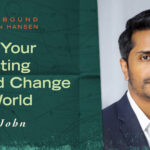
Robin John is the cofounder and CEO of Eventide, an asset management firm dedicated to honoring God and investing in companies that create compelling value for the common good. His vision for Eventide’s values-based investing shows how our work can benefit everyone and not just bolster the bottom line for a fortunate few.
I’d go so far as to say our world can be a much better place if investors—and employees of all kinds—will learn from his example and prioritize what really matters now and in eternity.
In This Episode
00:00 – Joy, purpose, and God’s design for everyday work
01:49 – Why The Good Investor is ultimately a book about joy
02:48 – Growing up in Kerala, India, and immigrating to the United States
04:42 – Community, individualism, and caring for the vulnerable
07:41 – Returning to India and confronting workplace injustice
10:49 – Rethinking success, profit, and the purpose of work
11:53 – Why Christians must examine their investments
14:33 – What does it mean to “root for” a company’s success?
15:36 – Discernment, gray areas, and biblical values in investing
18:07 – Avoiding evil and actively pursuing the common good
19:43 – Weaponry, conscience, and consistency at Eventide
20:13 – The cautionary story of Bill Hwang and ill-gotten gain
23:19 – The false divide between faith and work
25:07 – How investing has changed since 2008
27:14 – What ESG investing is—and where it diverges from Christianity
31:19 – Mission alignment vs. values alignment
32:23 – Encouragement for ordinary, faithful work
34:44 – Legacy, goodness, and hearing “well done”
Resource Mentioned: The Good Investor by Robin John
SIGN UP for my newsletter, Unseen Things.
Help The Gospel Coalition renew and unify the contemporary church in the ancient gospel: Donate today.
Don’t miss an episode of Gospelbound with Collin Hansen:
Transcript
The following is an uncorrected transcript generated by a transcription service. Before quoting in print, please check the corresponding audio for accuracy.
0:00:00 – (Robin John): I really do believe that when Christians discover a God given purpose in everyday work, it leads to such a joyful existence. Joyful work, but also not just joy for us, but joy for others.
0:00:27 – (Collin Hansen): Do any of us really want to be in the position where our retirement accounts count grows in sync with the cancer ward? That’s the question posed by Robin John about tobacco responsible for 100 million deaths in the last 100 years. Naturally, all of us would say no, we don’t want to benefit from other people dying. Yet as Robin John points out in his new book, the Good how youw Work Can Confront Injustice, Love youe Neighbor and Bring Healing to the World, many of us do hold mutual funds that invest in tobacco companies.
0:01:01 – (Collin Hansen): We just don’t know it. Come to think of it, how much do we know about any of our investments, especially in long term retirement accounts? Robin John is the co founder and CEO of Eventide, an asset management firm dedicated to honoring God and investing in companies that create compelling value for the common good. His vision for Eventide’s values based investing shows how our work can benefit everyone and not just bolster the bottom line for a fortunate few.
0:01:29 – (Collin Hansen): And I’d go so far as to say our world can be a much better place if investors and employees of all kinds will learn from his example and prioritize what really matters now and in eternity. Robin’s personal story illustrates the power and potential of economic uplift. And that’s where I’d like to start now. Robin, thank you for joining me on Gospel Bound.
0:01:49 – (Robin John): Thank you so much, Colin. I am so blessed to be here with you. Thank you.
0:01:54 – (Collin Hansen): Now this is an interesting way to describe and to start the book, but why do you say this is a book about joy?
0:02:00 – (Robin John): Yeah, you know, the book is a book that is about purpose ultimately. And I really do believe that when Christians discover a God given purpose in everyday work, it leads to such a joyful existence. Joyful work, but also not just joy for us, but joy for others. The tagline at Eventide is investing that makes the world rejoice. It comes from the Bible verse that says, when the righteous prosper, the city rejoices, but when the wicked prosper, the people groan.
0:02:38 – (Robin John): So I do believe that as God’s people, as Christians are prospering, that there will be joy not just for us, but for the world.
0:02:48 – (Collin Hansen): I love that perspective, really appreciate that. Now Robin, you were born in a small village in Kerala, India, immigrated to the United States when you were 8 years old, family settled in Boston. You talk a lot about this in the what do you remember most about that move?
0:03:03 – (Robin John): Yeah. So, first of all, the first eight years of my life almost feels like a dream that I saw. I feel like my memories are more vivid after moving to the US But I do remember vividly my trip to the US Growing up in a small village in India. I maybe saw an airplane once as a kid, just flying over the village. And then to get inside of one of those airplanes and then land in the JFK airport in New York City.
0:03:36 – (Robin John): Imagine growing up in a place where every house is maybe, I don’t know, 500 square feet to coming to JFK Airport and seeing the skyscrapers and seeing the lights. It was incredible. I had never imagined leaving India as a child. I had no clue where I was going. And now to enter into America, into New York City, was just an incredible experience for me.
0:04:06 – (Collin Hansen): I can only imagine what that would be like. And I love your reflections on some of the differences, some of the changes that trip in the book, interestingly, your book, it’s not about the superiority at all. In the United States, you synthesize where you live with where you live now, in Boston with where you were born. And I loved what you wrote here about Carola. You said, one of the gifts that has shaped me the most is this mutual responsibility woven into who we were to guard family cohesion and to nurture healthy communities. We need more of this here now.
0:04:42 – (Collin Hansen): We need to push against our excessive individualism and take responsibility to protect the most vulnerable among us, our children. It made me think, robin, do we underestimate how much American values and even capitalism itself erode our families and harm our children?
0:05:03 – (Robin John): Yeah. You know, I think sometimes when we are living within a framework, it’s very easy to assume that that framework is okay and that that’s just how things are. And it’s not just an India versus us. Being from India, I purposely use that as an example. I compare and contrast a lot in the book. But even this week, I was walking in New York City and I had a sweatshirt and my first customs were asking me, robin, how come you don’t have a jacket?
0:05:40 – (Robin John): I’m like, well, I never wear a jacket. I enjoy just wearing a sweatshirt. But it was actually freezing and I was walking to my hotel. I wanted to walk late night. It was like a two mile walk. And I saw homeless people along the way. And, you know, I would stop in little stores just to heat up and then keep walking. I couldn’t believe that there were people sleeping on the sidewalks in America and people are just walking by them, including myself.
0:06:12 – (Robin John): I think oftentimes we feel maybe overwhelmed. Maybe we don’t think that there’s anything that we could do to help others. But I think there’s a bigger issue. I think when we see things, we just assume that’s the way things are, and we could become desensitized to it. And I can’t imagine ever seeing my own father or mother or children lying on the side of a street like that when it’s like 15 degrees outside.
0:06:41 – (Robin John): But that is the state of many people, even here in America. So I think in the book, I am challenging us to think more biblically and not conform so much to the patterns of our world around us.
0:06:57 – (Collin Hansen): Yeah. I often say when I’m teaching on cultural apologetics or just helping people to understand cultural dynamics at all, it’s the elements that are the most. The elements that are the most powerful are the ones that we don’t think about, the ones that we don’t notice. They’re the things that you walk past every day, and you don’t even register them as being odd or abnormal or difficult or maybe even don’t even imagine a world where it could be different.
0:07:27 – (Collin Hansen): What work later on took you back to India? I think this was probably the most memorable part of the book for me. And it came in what you learned from that return. TR I’d love if you could just share that story with us here again.
0:07:41 – (Robin John): Yeah. You know, I was working for a large custody bank, and they were outsourcing to India, and they asked me whether I would help with their outsourcing project. And so I moved from Boston to a place called Pune, India, which is near Mumbai, Bombay. And, you know, I’m living there. You know, the company took, you know, good care of me. You know, I would fly first class, and I would stay in nice hotels and then eventually moved into a guest house.
0:08:14 – (Robin John): And that whole experience shaped me. I’m only 24 years old at the time, and there was a cook and a housekeeper in the guest house, and their names were Amal and Kamal. And they would take care of me every day. In the mornings, they would make my breakfast. They would iron my clothes before I went to work. They had dinner waiting for me when I got home. They would do all my laundry, everything. And one day, I’m standing in the kitchen watching them as they prepare dinner for me.
0:08:48 – (Robin John): And behind the kitchen, I saw a pantry, and it looked like a prayer mat. I just thought to myself, are they sleeping back there? So I asked Amal and Kamal, do you guys Sleep back there. They said, yes, sir, we sleep here. I said, well, I want you to take a bed. They said, no, sir, we’re not allowed. I said, why not? They said, we’re not allowed. So I sent an email to management in America. I said, please give Amal and Kamal a bed.
0:09:16 – (Robin John): And the response I got was, we’re not responsible for Amal and Kamal. We outsourced the guesthouse to a local guest house vendor in Pune, India, and they’re responsible for their people. And I wrote back to my management and I said, please, if you just ask, we are a large custody bank from America. The small guest house vendor in India will easily listen and make the change. And my management decided that it was not our responsibility.
0:09:47 – (Robin John): A few days later, I’m sitting in the living room and I see Kamala walking in through the front door. I see one of my American colleagues walking out through the front door. And my American colleague said to Kamal, servants shouldn’t use the front door. That really bothered me. And Kamal walked in. And Kamal looked at me and said, sir, I am a human being too. You know, I really felt hurt when I heard those words.
0:10:19 – (Robin John): You know, really the questions that started coming in my mind were questions like, what am I doing here? What is the purpose of my work? Am I working just to make rich people richer? Am I working just to make myself richer? Or is there a way for me to use my life to serve the animals and camels of the world? So I think as Christians, we should all be asking ourselves, what are we doing in our everyday work?
0:10:49 – (Robin John): Is our work honoring to God is our work uplifting society? Is our work loving our neighbors? If we ask these types of questions about our everyday work, I do believe that we could really be doing work that uplifts society while taking care of the needs of our family.
0:11:11 – (Collin Hansen): Oh, that’s really. I mean, it’s a very moving story. Again, just to be able to hear it again and to see that connection with the work that you’re doing today with business. Rob and I often hear a lot about the freedom to make a lot of money. And just like you described, they’re less about the freedom to be able to do good, be able to pursue the virtuous. And you write in the book, business leaders who risk the lives and well being of others in the pursuit of profit are often rewarded with big offices and a promotion.
0:11:43 – (Collin Hansen): This is the leadership ethos I want to resist. Well, for the rest of us, Robin, what’s the best way we can resist with you?
0:11:53 – (Robin John): You know, more than 50% of the money invested in the stock market are being stewarded by church attending Christians. And that’s trillions and trillions of dollars. And so we as Christians have a huge opportunity to impact the world by simply allocating dollars into the places that are promoting human flourishing and away from the places that are promoting harm in the world. So Christians don’t understand it, but most of us, it’s through our 401k plans, it’s through our IRAs.
0:12:35 – (Robin John): Many of us have financial advisors that don’t share our values. So if we look at what we’re actually investing in, you’re going to find things like pornography, tobacco, abortion, violent video gaming, gambling. Online gambling is becoming a huge issue. Publicly traded companies like FanDuel, DraftKings, Caesar Sports Bet, even Disney owns ESPN Bet. The question is, do we want. So one thing I want to say is that when we’re investing in a company, we are sharing on the profits of the company.
0:13:12 – (Robin John): The Bible talks about ill gotten gain. Proverbs 1 is an example. It says not to share a purse with people that are plundering. So we as Christians should seek to avoid ill gotten gain. Proverbs 16:8 says better is a little bit with righteousness than great revenues with injustice. So we should seek to avoid ill gotten gain. But more than that, when we’re investing in a company, we should be investing in the things that we want to root for in the world.
0:13:45 – (Robin John): Every single time. When we look at our statements, our investment statements, we’re not hoping that the value of our portfolio is getting smaller. We’re hoping that the value of our portfolio is getting bigger. That means we’re rooting if there’s tobacco, if there’s abortion, if there is pornography in our portfolio, that means we’re rooting for these things to be selling and growing in the world. We’re rooting for more profits in tobacco, more profits in abortion, so that we could share in those profits.
0:14:15 – (Robin John): As Christians, the one big question I would ask everybody is what are we rooting for? And we should align our capital with the things that we want to root for so that what we’re rooting for in the world is aligned with how we want to prosper in the world.
0:14:33 – (Collin Hansen): It’s very compelling and I think illustrative in a way that I know I hadn’t really thought about before with that who are you rooting to succeed so that you’ll succeed with them? So it’s not just avoiding the bad, but also promoting the good. And you mentioned a lot of the different Things that you guys avoid in profits and investing. How do you go about that discernment process to decide what’s bad and what’s acceptable for investing?
0:15:01 – (Collin Hansen): You’ve mentioned tobacco, pornography, gambling is one that even since you wrote the book, has changed a lot, really increased a lot and expanded in number of different ways. You mentioning ESPN right there. But I wonder about other things that are not having necessarily positive effects or are having some kind of negative effects. Whether it’s an agribusiness that continues, that contributes to obesity, or tech companies using coerced labor, or even just addicting us to phones or making it easier for us to view illicit content.
0:15:36 – (Collin Hansen): Where do you choose where you’re supposed to draw the line there?
0:15:40 – (Robin John): There is a lot of work in discerning. And every single person, every Christian should be asking themselves this question regarding biblical values and exactly how to interpret biblical scripture in our everyday life. And I don’t think every single person will end up in the same place. My request is that everybody at least get started and start asking the questions. At eventide, we screen out about 70% of the S&P 500, so our investment team could only invest in about 30% of it.
0:16:25 – (Robin John): When it comes to mid cap, the Russell 2000, it’s about 50% that we screen out. And when it comes to small cap companies, less gets screened out. There are less problems that we see in the smaller cap companies. So there are other faith based investment firms that may screen out 5 or 10% of the S&P 500. And so I think everybody needs to get comfortable and ask these questions for yourself. I think most Christians would agree that we want to avoid things like abortion, pornography, tobacco, maybe gambling, maybe alcohol, maybe.
0:17:03 – (Robin John): Christians might say, well, I want to avoid environmental harm. I want to avoid investing in companies that are involved in predatory lending. I want to avoid investing in companies that make weaponry. So we should be asking ourselves these questions and praying through them and reading the Bible and trying to compare these values against what Scripture teaches. That said, to answer your question, it’s not just about avoiding the bad.
0:17:36 – (Robin John): Romans 12 says, Hate what is evil, cling to what is good. So at eventide, we don’t just want to try to avoid the bad. We want to try to embrace the good. We want to try to find the companies that are really promoting human flourishing. Of course, there are many companies out there that are not doing bad that I would be totally fine investing in. But at eventide, we do try to go one step further and ask, is this company really promoting human flourishing?
0:18:06 – (Robin John): And the common good.
0:18:07 – (Collin Hansen): How does that work for an individual investor who as a Christian he or she might be a be a pacifist as an example. So somebody over here might believe in just war theory and therefore investing in a defense contractor, for example, wouldn’t be a problem. But somebody over there, there’s a pacifist. How would that work for you guys?
0:18:29 – (Robin John): Yeah, so we offend everybody equally at Eventide. So we have people that will challeng and we try to be consistent. So to answer your question very specifically there we talk about life at all stages, the right to life at all stages. That includes screening out abortion. That also includes screening out weaponry. And to be clear, I’m not saying that all weaponry is bad. I’m not saying that. But what I am saying is that as investors we are rooting for the companies we invest in and so do we want to see more and more and more weaponry in the world or not?
0:19:11 – (Robin John): And so that doesn’t mean that weaponry is not necessary. There are times I do believe that weaponry is necessary. My co founder Finney is very much from an Anabaptist background and so he does have a different view. And at Eventide what we’ve tried to do is to take all the consciences that Christians have and try to bring that into an investment framework. So at the end of the day we are screening more than what any single investor is asking for.
0:19:43 – (Collin Hansen): Oh, very, very helpful. Talking here with Robin John, author of the Good how youw Work Can Confront Injustice, Love your neighbor and bring healing to the world. He’s co founder and CEO of Eventide. Robin, you write in the book about the cautionary case of Bill Hwang. He was described by BusinessWeek as a paradoxical of a man devoted to his church and driven to give generously with a consuming taste for casino like risk in his professional life.
0:20:13 – (Collin Hansen): Now I want to mention also your own commentary on him from the book. You say you can’t, it turns out, separate your personal faith and the way you do your work. We can’t separate the values we say we hold from the way we live, work and invest. Despite good intentions and good ideals, Huang’s investing inflicted great harm. The profit he amassed for all the good he thought it would do, was poisoned.
0:20:36 – (Collin Hansen): Instead of fighting the dragons, he fed them. In November 2024, Huang was sentenced to 18 years in prison for wire fraud, securities fraud and market manipulation. Robin, the rest of us are not in this world. We don’t rub shoulders with the people in these environments. Is Huang’s story an outlier or is it more common than maybe the rest of us would realize?
0:21:01 – (Robin John): It’s more common. I think the difference is the amount of money that Bill Hwang was managing. I think my experience speaking to Christians is that most Christians have a make all you can to give all you can mindset. And that is what Bill Hwang had. He wanted to make all the money he possibly could make in order to donate to his foundation. And he just wasn’t thinking about how he was going about making that money.
0:21:32 – (Robin John): And he was taking a lot of risk and leveraging in ways that were unwise. I think a lot of Christians have this view of make all you can. And ultimately, if I’m giving money away, isn’t that what God really cares about? And I don’t see a category in the Bible for making money in ways that are not aligned with biblical principles. Like I said earlier, Proverbs 16:8, Better is a little bit with righteousness than great revenues with injustice.
0:22:03 – (Robin John): Deuteronomy 23:18 says, not to bring the earnings of a prostitute, male or female, into the temple to pay any vow for this is an abomination to the Lord your God. In the New Testament we see Judas bringing the blood money into the temple. And the high priest says, this is blood money. It is unlawful for us to receive it into the temple. So this principle of ill gotten gain is there throughout the Bible.
0:22:31 – (Robin John): And the Bible tells us not to receive it, to stay away from it. So this idea that I can make money in that way and it’s okay as long as I’m giving money away. First of all, I would say that most Christians are not giving away 100% of their money anyway. They’re probably giving away 10, 20% of it. So I think we gotta be very careful in how we think about the profits we make and make sure that the profits we make are aligned with God’s heart for the world.
0:23:00 – (Collin Hansen): Yeah, I wonder how much of it is not even making as much to give it away, but simply a total separation between faith and work. A total. That’s my work world. And this is my private devotional world over here. Do you think that’s part of the challenge too?
0:23:19 – (Robin John): That’s a big part of the challenge. And I think that that issue leads to conformity. And you know, Romans 12:2 says, do not be conformed to the patterns of the world, but be transformed by the renewing of your minds, so that you may test and approve God’s good, pleasing and perfect will. And the chapter goes on to say, let your love be without hypocrisy, hate what is evil, cling to what is good. So I do think that a lot of Christians just don’t think carefully about how they’re working, where they’re working, how they’re investing.
0:23:58 – (Robin John): And therefore we tend to behave just like the world and we tend to invest in these indices like the S&P 500 that contains all sorts of problems like abortion and pornography and tobacco, just from a tobacco perspective. Philip Morris International, Altria Group, British American Tobacco, Japan Tobacco, these are all publicly traded companies. And I think if Christians just took the time to look at their portfolio to know what they’re investing in, they would likely make different decisions. But rather what we do is we become so passive in our thinking and we outsource our investing to people that don’t share our values, to firms, to portfolio managers, to financial advisors that don’t share our values.
0:24:47 – (Robin John): Or we just invest in a benchmark, an index like the S&P 500, and we set it and forget it without actually looking at what’s inside of that index.
0:24:57 – (Collin Hansen): A few more questions here with Robin John, co founder, CEO of Eventide. Robin, what’s the biggest way investing has changed just from the start of your career until today?
0:25:07 – (Robin John): So when we started eventide in 2008, you know, we were praying and fasting before the founding of Eventide for about six months. And after starting Eventide, I felt a lot of resistance from Christians. The faith based investing movement was fledgling. Since that point, it’s really grown a lot. Alongside Eventide, there are many other faith based investment firms that have grown. But beyond that, unfortunately what I’m not happy about is that the ESG movement has grown at a much more rapid pace.
0:25:50 – (Robin John): So all faith based firms combined may have 100 to 150 billion dollars under management. The ESG space has trillions under management. When we got started, the ESG space was also very much a small movement. Today everybody talks about esg. Unfortunately, the non Christian world has been aligning their values and their investments. The Christian world hasn’t been doing that. And so what I’m hoping to do with the book the Good Investor, as well as all the work that we do here at Eventide is not just to promote Eventide, but to help start a movement where Christians are really thinking about partnering together and promoting the world together.
0:26:42 – (Robin John): You know, Jesus said in the world that we want to see, right? Jesus said in Matthew 5, Let the world see your good works and glorify your Father in heaven. So hopefully the world will see Christians investing in Ways at times, maybe even sacrificially working and investing in ways that lead to a better outcome for everyone. And hopefully that becomes a testimony and a witness for the church.
0:27:08 – (Collin Hansen): For some of our novices who are watching and listening, could you tell us a little bit more what ESG is?
0:27:14 – (Robin John): Yes. ESG stands for Environmental, Social Governance. It’s the kind of the non Christian, maybe more liberal version of what we are doing. So, for example, we will, you know, we promote life at all stages. We promote for the life of the unborn child. At Eventide, the ESG movement will promote for the opposite. They will promote for the freedom of the mother to make a decision. So some of the values are very aligned. For example, tobacco, I think we would see in alignment.
0:27:52 – (Robin John): But I have been shocked over the years to see that certain values in the ESG world that we shared in 2008 seem to be diverging since that point. So, for example, pornography, I think when we were starting Eventide, I think within the esg, Sri SRI stands for socially Responsible Investing. It’s kind of a singular movement. But I would say 15 years ago when I talked to people there, there was alignment in terms of thinking about pornography, similarly to a Christian.
0:28:32 – (Robin John): But now you have firms like, there’s a firm called Ethical Capital that they purchased pornhub. So, I mean, the name of the firm is Ethical Capital. Right.
0:28:47 – (Collin Hansen): The Upside down world, I guess.
0:28:49 – (Robin John): Yeah. So I would say the values within the ESG SRI socially responsible investing movement has shifted alongside culture, where as Christians, we have a standard which is a bible. So our values shouldn’t be shifting alongside culture.
0:29:11 – (Collin Hansen): Robin, is it so much that they’ve shifted alongside culture or they’ve actually been the engine of the cultural change? Because one of the most significant developments in the last 15 years has been a really significant shift in corporate America toward the left, especially on corporate issues. And is it not the case that with the ESG movement, they also leverage the shareholders against company policies or to change company policies? Isn’t that part of the movement as well?
0:29:42 – (Robin John): Yes, you’re right. And I think it’s a combination of the two. I do think that there are companies, company CEOs, company leadership teams that really are pushing their agenda and using their corporate platform to push their agenda. But I think there are Also lots of CEOs who just feel the pressure and they don’t want to be left behind and they don’t want to be seen as a person who isn’t advocating for the values that are accepted in society.
0:30:13 – (Robin John): So I think there’s A lot of people that just feel the pressure to go along with what the larger firms are doing.
0:30:20 – (Collin Hansen): So essentially, if I’m understanding correctly, there had been more of a laissez faire approach to investing. If you make money, it’s okay. But then there had been a shift toward more values aligned investing. And Eventide represents some of that, but a much larger manifestation of it is on the left. Is that an accurate description then in the last 15, 20 years?
0:30:43 – (Robin John): That is absolutely right. The value space. So at Eventide, usually I talk about mission alignment and values alignment. Okay, when I say mission alignment, what I mean is that. So let’s say you believe in the power of investing to change the world, and I believe in the power of investing to change the world. I would say we’re missionally aligned. Now the question is, is our values aligned? Right. So I would say the ESG SRI world and the faith based world are mission aligned, but not values aligned.
0:31:19 – (Robin John): Christians are values aligned with Eventide. And I’m trying to get them to become mission aligned with Eventide because most Christians will say, you know what? I align with your values, Robin, I’m going to vote based on those values. I’m going to give to charity based on those values. I’m not going to invest based on those values. So I’m trying to get values aligned Christians to becoming more mission aligned with Eventide.
0:31:42 – (Collin Hansen): And so this isn’t merely about our own individual consciences, but this is actually then an engine potentially of broader cultural change for the common good.
0:31:52 – (Robin John): Yes, very much. And I think as individual investors we could feel very small. But when we could partner together, it’s not just with Eventide. There are other faith based investment firms. But when we partner together, I think we can bring about the cultural change that we’re hoping to see.
0:32:08 – (Collin Hansen): A couple more questions here, Robin. John, talking about the good investor, how your work can confront injustice, love your neighbor, bring healing to the world. Robin, what’s one piece of godly counsel you’ve learned that we could all take into any job our calling?
0:32:23 – (Robin John): The biggest is that, you know, Ephesians 2:10 says that we are God’s workmanship, we are God’s handiwork, created in Christ Jesus to do good works. I think the biggest advice I have learned or been given what I would want to share with others is that I think as Christians, we sometimes think that the good work in the good works in the Bible is only what we do outside of the 9 to 5. Right. It’s only the work that we do if we’re not getting paid to do that.
0:33:03 – (Robin John): You know, what we do through a nonprofit or through the church. But I do believe that our everyday work is included here in that. And I do believe that a lot of Christians are doing good work and they just need to be encouraged in it. So in the book, I mentioned my mother when we came to the US she was working as a nursing aide and minimum wage. She would do this for maybe 20 years, receiving minimum wage or so, bathing the elderly, cleaning them.
0:33:35 – (Robin John): She still struggles to speak English growing up. In the book, I talk about the names I was called, names like Habib and, and Apu and all that, asking whether my dad works on the 7 11. And so I could only imagine what my mother might have heard in the town that we grew up. I wish someone had told her, hey, your value is not just your paycheck, your value in this job. It’s not just the minimum wage paycheck that you bring to the house, to the home, to the family.
0:34:09 – (Robin John): But every single day you’re loving and caring for the elderly when you bathe them and when you clean them. And so I think more Christians just need to be encouraged in their everyday work. So I know the topic of this conversation so far was investing, but I just want to encourage people in their work that you might be doing a job where you feel burnt out, but you may be honoring God and loving your neighbor through that work.
0:34:37 – (Collin Hansen): Yeah. Amen. Last question. Robin, by the time you retire, what legacy do you hope to leave?
0:34:44 – (Robin John): So there’s a couple of ways to answer that. So, you know, I often think to myself, you know, when I was, I have four kids. My oldest is 15, my youngest is 2. And my 15 year old when she was like 3, this was many years ago, she was still learning how to speak. And she used to call me Daddy boy or dad boy. And her good was goo. She didn’t say the full. She said one day she said, daddy boy or dad boy, you a goo man.
0:35:18 – (Robin John): So my. So I hope someday when I’m in a casket, she would say, daddy was a good man. So I would say, ultimately, you know, God created us to be good. And we see in Genesis 1 that we are created in God’s image in his likeness. And it says so that we could continue the work that he started. His work is good. He calls good over and over and over his work. I just mentioned the Ephesians 2:10 verse, Someday when we stand before God, we want to hear, well done, good and faithful servant.
0:35:58 – (Robin John): So what I really hope is that you know that ultimately that God would say good. When I stand before God, I hope my children, my wife would say that I was a good man ultimately.
0:36:13 – (Collin Hansen): Great place to end it. My guest here on Gospel Bound this week, Robin Johns, CEO and co founder Eventide his book, Check it out. A good investor how your work can confront injustice, love your neighbor and bring healing to the world. Really appreciate it. This is fascinating. Robin. Keep up the good work.
0:36:29 – (Robin John): Thank you, Colin.
0:36:38 – (Collin Hansen): Thanks for listening to this episode of Gospel Bound. For more interviews and to sign up for my newsletter, head over to tgc.org gospel rate and review gospel Bound on your favorite podcast platform so others can join the conversation. Until next time, Remember, when we’re bound to the gospel, we abound in hope.
Join The Keller Center mailing list
The Keller Center for Cultural Apologetics helps Christians share the truth, goodness, and beauty of the gospel as the only hope that fulfills our deepest longings. We want to train Christians—everyone from pastors to parents to professors—to boldly share the good news of Jesus Christ in a way that clearly communicates to this secular age.
Click the button below to sign up for updates and announcements from The Keller Center.
Join the mailing list »Collin Hansen serves as vice president for content and editor in chief of The Gospel Coalition, as well as executive director of The Keller Center for Cultural Apologetics. He hosts the Gospelbound podcast, writes the weekly Unseen Things newsletter, and has written and contributed to many books, including Timothy Keller: His Spiritual and Intellectual Formation and Rediscover Church: Why the Body of Christ Is Essential. He has published with the New York Times and the Washington Post and offered commentary for CNN, Fox News, NPR, BBC, ABC News, and PBS NewsHour. He edited the forthcoming The Gospel After Christendom and The New City Catechism Devotional, among other books. He is an adjunct professor at Beeson Divinity School, where he also co-chairs the advisory board.
Robin John (Tufts University) serves as a founding member and chief executive officer of Eventide Asset Management. He’s the author of The Good Investor: How Your Work Can Confront Injustice, Love Your Neighbor, and Bring Healing to the World.