The following is an uncorrected transcript generated by a transcription service. Before quoting in print, please check the corresponding audio for accuracy.
Caleb Morell
When you think about Washington, DC, you think about Congress, you think about the president, you think about the Supreme Court, maybe you think about universities. You probably don’t think of local churches. And yet, here’s this ragtag of ordinary people gathering, evangelizing, preaching the Word and God bears extraordinary fruit. So I think the surprise is God we serve, a God who delights in surprising us, as First Corinthians says, by taking the foolish things of the world to astound those who who seem to be wise. You
Collin Hansen
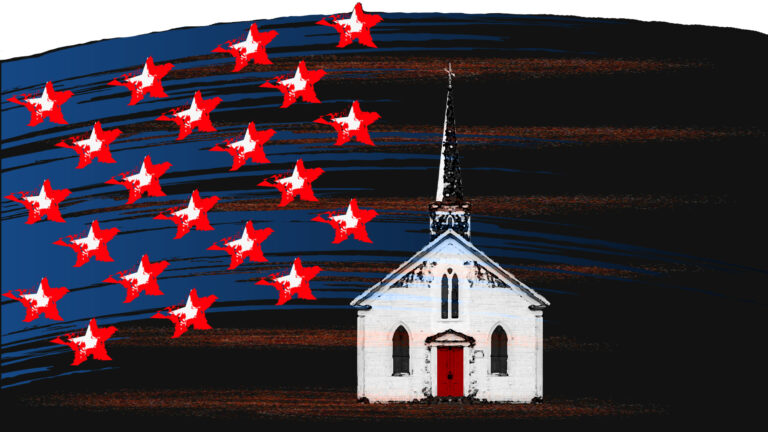
it’s not hard to imagine how a church in Washington DC gets attention. The President visits, the press, monitors its sermons, the academy studies its history, but no president has ever attended services at Capitol Hill Baptist Church. You don’t see much mainstream media coverage. You won’t find great attention from scholars. So what’s the big deal? Let’s ask Caleb Morel, author of the new book a light on the hill, the surprising story of how a local church in the nation’s capital influenced evangelicalism, a book published by a cross way more serves as assistant pastor of Capitol Hill Baptist Church, which began in 1878 at least in my ministry, I do not know a more influential church, even if chbc isn’t exactly a household name among evangelicals, the way that some mega churches with famous pastors would be. In fact, chbc leans the exact opposite direction. This stat astounded me from the book. When morale checked in 2023 is research in this book, more than 400 different men had filled the pulpit of chbc, neither a Sunday morning or evening since 1994 I think the most notable example, one that we’ve written about here at the gospel coalition would be the first Sunday after 911 the attack on the Pentagon, when Senior Pastor Mark dever stuck with his plan of featuring a 26 year old seminary student as the guest preacher. So let’s jump right in here the surprising story of this influential church from Caleb.
Caleb, thanks for joining me on gospel bound. Great to be with you. Colin, first question,
easy question. Off the bat, why hasn’t anyone already done this? Seems like it should have been done years ago. Caleb,
Caleb Morell
that’s what I was wondering. I mean, I came here as a college student in 2012 I was studying history at Georgetown University. I love history. I was interested in capital Baptist Church’s history, and was surprised that no one had done substantive work on its history in in decades, despite the fact that we had a massive archive of church documents just sitting in the basement, largely collecting dust, Mark dever had read a lot of the minutes when he first came as pastor in 1994 obviously, he’s a historian. He was interested in church history. But why has no one done I think church histories can be pretty dry and pretty boring. You’ve probably read some of those. I hope you’ve never written one of those.
Collin Hansen
You know, it can just be like, you’ll do that too.
Caleb Morell
Deacon so and so proposed something at the meeting, you know, just kind of a reflection of the church minutes, where you get the idiosyncrasies of a local church, but you don’t get the bigger narrative of connecting the life of a church with the life of a city, with the life of a nation, with the development of evangelicalism. And so in this book, I try to weave in those narratives with each other. So use narrative within a local church to also tell a broader story that hopefully is applicatory outside of this local church.
Collin Hansen
You know, all the guests, the authors I bring on, have written books that I that I’m interested in, that I enjoy reading. A few of them have written books that I wish I would have written, and you definitely have done that here, Caleb, and I would have had the same thought you did, of Wait a minute, that I think I just would have assumed that somebody had done that at some earlier, some earlier point. But you also mentioned in the subhead subtitle of the book, what is it that makes this story surprising?
Caleb Morell
I think what makes it surprising is the ordinariness of it. When you think about Washington, DC, you think about Congress, you think about the president, you think about the Supreme Court, maybe you think about universities. You probably don’t think of local churches. And yet, here’s this ragtag of ordinary people gathering evangelizing, preaching, the word and God bears extraordinary fruit. So I think the surprise is God we serve, a God who delights in surprising us, as First Corinthians says, by taking the foolish things of the world a. Astound those who seem to be wise, and that’s the story that has just been delightful to tell in the book, How unexpected characters turn out to be the means through which God is preserving a gospel witness on Capitol Hill. Give
Collin Hansen
me a couple of those characters. Let’s introduce see who are two that really stand out for research.
Caleb Morell
Yeah, you got to start with the founder, Celestia Ferris. So one thing that was remembered about our church’s history that people would often talk about was that it all started with a prayer meeting that a woman called in her home back in 1867 Her name was Celestia Ferris. She was remembered as a washer woman at the Bureau of Printing and Engraving, but we didn’t know a whole lot about her. And so as I got into kind of records, trying to find out more about who this woman was, learned her story, how she came to DC, moving from upstate New York with her family, how she married a Civil War veteran and was a member of one of DCs most prominent Baptist churches that was really ripped apart during the Civil War. So in the book, I get a little bit more into her personal narrative and experience in life, how eventually she becomes a widow just a year before the church is founded, when her husband passes away, and so she remains to the church, serving faithfully, but her name is largely forgotten from the annals of time, and yet, without her, it’s hard to say if the church would be here today. And so I just love the fact that you know this, this oak tree that you think of today. You know I think of Jesus the parable of the mustard seed. This oak tree started with the mustard seed, and that mustard seeds name was Celestia Ferris. And I just hope that, I hope that encourages ordinary people, like like us, ordinary church members, who who might look at their lives and say, What am I doing? And I just think of how many times Celestia Ferris, whether she’s, you know, washing clothes at the Bureau of Printing and Engraving, or trying to put food on the table for our kids. Just wondered, What am I doing with my life? You know, did she lament her her status as a widow? What? What is God doing here? You know, we can look back from the privileged perspective of the present and say God was doing extraordinary things to that woman.
Collin Hansen
Give us another example that was great.
Caleb Morell
So that’s, there’s so many, you know, I talk about Mrs. Margaret Roy. Mrs. Margaret Roy was the first African American member of Capitol Baptist Church. So, like many churches after the during the mid 19th century, and particularly after the Civil War, Baptist churches and church of all denominations, tended to split across racial lines, and so DCS churches were entirely segregated for almost 100 years. And so capital Baptist Church formed after the Civil War, had no African American members until 1969 a woman named Margaret Roy who was born in 1909 in Virginia. She was a high school principal, and she had heard the worship services broadcast on the radio, and she appreciated the preaching. She said in an interview that I found in our church archive, somebody had the forethought to interview this woman so that we could actually get her perspective on on why she did this. She said that she liked the way white people worshiped. She said she didn’t like the clapping of hands. She thought church should be somber and serious. So there you go. And and she liked the preaching, and she said she thought she wanted to prove that all black people weren’t this bad. This was in the wake of Martin Luther King’s assassination. DC, like many cities, went through a very difficult time riots, and she was determined to integrate the church. She thought there was no reason she shouldn’t be able to join but she wasn’t just looking to make a political statement. She was looking to make a theological statement, that Jesus had died for all people of all kinds, all kinds of people, all races, and that there was nothing that should prevent her from being able to join the church. And she just poured into loving relationships. She said initially, some people were quite rude to her, but she was just determined to, you know, kill them with kindness. So to speak, she would call on elderly members of the church and just ask if she could go visit them. And in that way, she built a lot of close relationships. So Margaret Roy. Roy is just another one of those figures who, you know, ordinary person, and yet, God used her in extraordinary ways to to help our church to a very difficult time in our church’s history, but also in kind of the broader history of evangelicalism.
Collin Hansen
Well, you’re tempting me here, Caleb, to scrap all of my plans for this interview and just keep asking about the different
Caleb Morell
characters. There’s so many stories go. Well, let’s
Collin Hansen
take that lens back out here for a second, and at the outset of the book, you ask a series of questions, things like, how does a church preserve the gospel? What factors contribute to Church Health? How does a healthy church steward success to grow and growth without becoming unhealthy? A lot of these things we associate with Mark Devers ministry, with nine marks and subsequently with chbc since 1994 it’s too much to ask you to answer all of those questions, but maybe you could summarize some of the basic perspective of what you learned toward those questions in the research service book.
Caleb Morell
Sure, so I’d say a few things, prayer, preaching, people, and then perseverance. So, you know, I’m I’m a pastor, so I gotta alliterate, right? Well done prayer. I mean, the church started with prayer, and God really sustained the church in prayer. And I think we all agree that prayer is important, but sometimes I think we give more lip service to prayer than we give time in our services to prayer. And this church has had a dedicated prayer meeting since before it existed. Uh, Celestia Ferris called the prayer meeting in her home in 1867 the church didn’t start for 11 years. That’s a lot of prayer, I think sometimes, for all our talk of being strategic, we over we underestimate the importance of just praying and asking God. So I think prayer is a big part of how the Lord has kept the light of the gospel shining at this church. I think from the perspective of heaven, we will see prayer for what it is, and that’ll be glorious to see. I think preaching, I think it’s it’s hard to it’s hard to overestimate the importance of preaching. Preaching is obviously important in its theological content, in its evangelistic power. We know that faith comes by hearing the Lord builds and sustains his church by the word, and this church has been blessed by extraordinary preachers throughout his history. From the very beginning, the church called a seasoned pastor named Joseph Parker, whose story I would love to get in on later on in the program. And Joseph Parker had pastored some of the most prominent churches among Baptists at the time, First Baptist Cambridge, Shaman Avenue in Massachusetts. These are important, prominent Baptist churches, and this was his second to last pastor. He did one more in Los Angeles just before he died, but he just had a heart for this local church, which was rightly formed, he said, and he was willing to become our first full time pastor. And I think from Joseph Parker through a guy named Kenneth Owen white in the mid 20th century, an early forerunner in the conservative resurgence of the Southern maps convention, kalynn White was the first to preach expositionally from our pulpit, from what I can tell, and he began a pattern of expositional preaching that has largely continued up through the present. So yaud M says, preaching, I think people I’ve mentioned a few, Celestia, Ferris, Margaret, Roy, just ordinary people who are giving their lives to the local church. As I did interviews for the book, it was so sweet to just hear the impact that Sunday school teachers had on people that I interviewed, the impact that prayer would have on the people I interviewed, but I think just ordinary people, and then, in all that perseverance, the church brought this the Lord brought this church through some really hard times, a church Split just six years into our existence, in 1884 when the the members felt very wronged, a minority of members left with the pastor, and they took the Sunday school children with them to form a rival church a block and a half away. Oh, so this is like nightmare type stuff, and that we took a financial hit. As a result. We felt disparaged, and yet, when the departing members requested to have funds that they had given toward a building project, they requested to have those funds returned. We returned the funds. Wow. So the members just decided, You know what, we’re going to go above and beyond to to show that there’s no ill will, no ill feeling. And I think that that perseverance and just commitment to loving the Lord, to doing good, to trusting God with the results, really is a key, key aspect of keeping the gospel. Was
Collin Hansen
that the biggest crisis and lowest point for the church.
Caleb Morell
That was a big one. You know, another crisis point was following the pastorate of our longest serving pastor today, John Compton ball. We had a pass from 1903 to 1944 so 41 Years he so he grew the church from like 300 members to over 2000 he built the current building. I mean, he, he was pastor during the building project. His portrait still hangs in the vestibule of our church, so it may get moved soon. So obviously, after a very successful, long pastor like that, it’s going to be difficult to find a successor. I mean, who follows? And the pulpit committee came back with a recommendation of a guy named Ralph Walker, who was a pastor in Portland, Oregon, prominent in the northern Baptist Convention and at the members meeting, when the pulpit committee presents the candidate, a long time Sunday School teacher named Agnes Shankle raises her hand and says, I’ve heard considerable reports about him, that he’s compromising in matters related to the fundamentalist modernist controversy, meaning he’s, he’s, he’s Not a man committed to the inerrancy of Scripture. Maybe he’s kind of a moderate man. In the middle, another member reaches up and says the same thing. And from the floor, they move to reject the pulpit committees nomination. I mean, this is Congregationalism in action, amen. Yeah, exactly. And instead, they moved to call K O and White, who would you know, be the first to preach expositionally? He would later become a leader in the conservative resurgence. And I think that might have been the most important turning point. I think if you if you ask, why is capital Baptist Church still preaching the gospel today, that might be the most important moment. I think if we had called a moderate or someone who’s compromising, I think we probably would have drifted the direction of many other churches in this city, because I think there are just key turning points in a church’s history, in a denominations history, when you just need to decide which side you’re on. And we were able to skirt the the fundamental modernist controversy for about 41 years because of the length of the pastorate, but eventually we had to come out one one side or the other. And so thank God for Agnes Shankle. We might rename our fellowship hall after her. Agnes Shankle Hall.
Collin Hansen
I like that. Like that a lot. Well, this is a kind of a connection. Connecting point. Has the church enjoyed a golden age or a golden period. Churches don’t necessarily like to think this way, because they’re always very hopeful that the next this is the golden era, or there will be in the future. But when you can look back on the history, you can usually see building campaigns, or, like in my own congregation, we meet in a former Southern Baptist Church, and you can see that there was the original sanctuary built, then another children’s building, then another children’s building added there. And you could see, okay, you could pretty much date what this golden period would have been there. Is that true for CHPC, yeah,
Caleb Morell
the most obvious one would be mid 20th century. So it would be from kaolin white onward, probably for the next decade, just post World War Two, boom. I mean, 1944 to 1949 were the years of kaylon White’s pastorate, and he baptized 848 people in those five years. Oh, wow. So that’s, I mean, that’s, that’s a revival. And he was a gifted preacher. He was preaching expositionally. He He was really calling out sin and complacency in the nation. He was calling the nation to account. He was preaching the gospel. And I think the Lord was really doing something in that post World War Two era. Following him, we had had another gifted pastor who, you know, partner was the was kind of the home base made CHPC the home base for Billy Graham’s crusade in Washington, DC. You know, I think whereas Kaylin White was really careful on church membership, he was the first to introduce a five week membership class after him, I think we got a little lax, and so our numbers became bloated. I think the membership peaked at like 3692 that’s just a nominal that number doesn’t really mean anything. And so it’s kind of hard to say. When that golden era started to to Abbott, certainly by the 1960s the church was becoming more suburban. Public schooling had integrated. Members were moving out to the suburbs. The church was starting to grapple with complex racial dynamics in the city, and the church began to experience a time of decline, which really continued through the 90s. And I think, you know, honestly, following 911 I think this church started to experience another kind of golden era, so to speak. So 2000, 234, I think with with the, you know, the kind of new Calvinism, the young, restless and reformed, which, you know a thing or two about this church was just growing, I mean, almost exponentially. And I think, I think we’re, we’re still experiencing something of a second golden age. I. And God’s work at this church.
Collin Hansen
Well, I had never had that perspective. Caleb, the time I was at that church was 2002 interestingly, yeah, so interesting when Michael Lawrence had just arrived so spent through the summer, and what brought me to DC was 911 it was work on, originally, the Homeland Security Department, the committee that set it up, JC watts, that’s why I came out to the hill for that. So I wouldn’t have thought about, I mean, I maybe heard Mark preach once, or something like that that whole summer, but it was Michael’s turn, but, but certainly could see a lot of very obvious to see what the Lord was doing. But I wouldn’t have necessarily seen that, yeah, from my perspective as Wow, okay, that might have been a special an especially wonderful time for the church. Now let’s talk about some of the difficulties. If you’ve been a church that goes all the way back anywhere in the United States, but especially in Washington, DC, and at that going all the way back to the founding era, that that that merger, that border between North and South, how did the church shift from being oriented toward the north to becoming oriented toward the south?
Caleb Morell
That’s a fascinating question. So DC is unique in obviously, it’s not a state. It’s the home of the federal government, but our local convention formed after the Civil War, was connected to both northern and southern baptist conventions. So it’s the only state convention that was duly affiliated. And so the Baptist churches of the city tended to be more northern or southern, but they were intentionally seeking to represent the diversity of the nation. That is a an interesting dynamic of church life in DC, as you obviously, we’re five blocks from the Capitol building. We have a steady influx of Office seekers and folks working for Congress or working for members of Congress. So you get, you know, a representation of the of the the nation, here in DC, in the nations the church was, founded by mostly northerners. We, they were all veterans of the civil war fighting for the Union. We had our first Southerner joining in, I think, the 90s, 80s and 90s and we, we started shifting toward being a more southern, Southern Baptist Church in the 19, early 1900s mostly through demographic shifts. The Capitol Hill was not a wealthy part of the city at the time, it was a poor part of the city. And so you had poor whites moving up for jobs. Then you have great depression. And so the church began calling mostly Southern Baptist pastors from the 1890s 1900s onward, in terms of, in terms of the that’s the biggest demographic shift we we continued to partner with both northern and southern baptist conventions as a church up until the 1940s in 1947 there was a another kind of big split in the Northern Baptist Convention, when the northern Baptist Convention had ruled that churches that didn’t contribute financially could no longer remain voting members, essentially, because what had happened is you had WB Riley and others staying in the northern Baptist Convention voice, but giving their money toward kind of their own primary so the northern Baptist Convention said, No more that. And a lot of churches left. We were one of them, and we stopped. Essentially, what we did is we designated our giving to the local association and said we don’t want any of our money going to the northern Baptist Convention, mostly because of the work with the World Council of Churches, the
Collin Hansen
Federal Council of Churches. Oh, very interesting. I just hadn’t thought about that, that switch, and I hadn’t, didn’t realize any of that history as well. Now this is a big question, but I’m not asking to walk through every period here, but you expect a lot of political engagement, just by virtue of the location myriad controversial political upheavals of American history during that time, World War, Civil Rights, terrorist attacks, protest marches, COVID, 19. I’m looking here, Caleb for any patterns you observed that were consistent or or ebbs and flows over those over those years, as it comes to a church and political engagement, really under a spotlight. Yeah,
Caleb Morell
I would love to do an article about modes of evangelical engagement in politics, maybe tracing some different eras. But we definitely had the 19th century, definitely a strong high point of nationalism, of even Christian nationalism in the church. We had a pastor in the 1890s green clay Smith, who was a former congressman, former territorial governor, a member of the clay family of Kentucky, and man, you read his sermons, and it is, it’s, it’s definitely God and country. It is a very clear understanding of the responsibility of Christians to establish laws that reflect God’s moral law, which I would affirm and agree with. Um. But maybe taking it a little far on issues like temperance, for instance, he was a big advocate of prohibition, temperance movement. So a strong emphasis on that, where I’d say that’s going that’s going beyond the moral law taught in Scripture. So you have some of that, and there’s kind of a mixed bag there. In the 20th century, you know, the narrative is that there’s a retreat in fundamentalism. I think I see that. I see at least less emphasis in what did you see? And now in the 1940s and 50s, I think it may be through, through dispensationalism, in part, there is a really strong emphasis on prophecy and viewing current events, particularly around World War Two, through the lens of eschatological prophecies, which is interesting. So I don’t note that extensively in the book, but that’s definitely there. And in the in the 1960s what I see is, generally speaking, a a strong spirituality of the church. So you have things like the pastor saying, well, we’re not going to comment on this political issue because we have tax exemption, because we’re not political and kind of maybe too strong, and that would include we’re not going to talk about racial issues. We’re not talking about segregation. We’re gonna support no prayer in school. So kind of a mixed bag there as well. And I think a lack of understanding of the mission of the church, the responsibility of the pulpit, the opportunity to speak truth and kind of against that. You have Carl Henry, who we haven’t mentioned yet on this podcast, but Carl F h Henry, founding editor of Christianity Today, leading theologian of the 20th century, comes and joins the church in the 1950s 1956 he joins in December, the
Collin Hansen
first year of Christian today. And the whole point was, needs to be in view of the White House, the headquarters, yeah,
Caleb Morell
yeah, yeah. He’s there on 15th Street, overlooking the White House, very much, seeing a mission, right, as he had written about in his 1947 book about kind of re engaging. So yeah, he very much comes to DC with this mission, and I think he plays a role in in guiding the church, in helping, yeah, he even saw his role of kind of shaping the pastor’s view a little bit on these issues. He started a Sunday school class at the church, which he called the hill toppers, where he every Sunday, he would cover worldview issues in a invite only Sunday school class that included generals and political leaders and some pastors and even senators. Senator Strom Thurmond would come and others. So just fascinating to imagine Carl Henry having discussions about communism, World Order, risk of of atomic warfare in the pastor study with with senators, but he very much saw that as his mission.
Collin Hansen
Imagine conversations with Thurman over civil rights during that area era as well talking with Kayla Morel here about a light on the hill, surprising story of how a local church in the nation’s capital influenced evangelicalism. Let’s jump closer to the current day. I don’t suppose many people, though, if you do a weekender, as I’ve done there at CHPC, you learn this story. I don’t know how many people know how Mark dever ended up as the church’s senior pastor. I’m going to ask who was instrumental in that move. You’ve mentioned one person already, but go ahead and tell us a little bit more about who was involved in that move. You
Caleb Morell
involved in that move. Sure. So in 1993 this church dismissed its pastor for immorality, which I detail at some length in the book. But the church was in an incredibly difficult time. We mentioned decline, 60s, 70s, 80s, obviously, they had to let a pastor go for public immorality. That’s a very difficult thing for church. So the church almost seemed like the end of it, at the end of its rope. So coral Henry, who was a member, he wrote to mark Dever, who he had gotten to know while teaching a j term class at Southern Seminary. They had kept a correspondence since 1988 just steady stream of letters going back and forth. And Mark was finishing. He had finished his doctorate at Cambridge University on puritanism. He was intending to teach church history. He was serving as an associate pastor of a church in Cambridge and teaching at the university, and really had his sights set on the professorship, but Carl Henry reached out. He had handed a letter to Don Carson, and Don Carson was the courier who carried that letter over to Cambridge, where he did sabbaticals regularly, and gave the letter to mark. So I don’t have a post date on the letter, which I wish I can’t date it, but I. Know is January, 1993 and and Carl asks if Mark will come and fill the pulpit. Consider becoming the pastor, and Mark’s certainly willing to fill the pulpit. He was on his way in in July of 93 I think, to actually teach a class at Beeson. And so he stops over in Professor Timothy George, or Timothy, George, yeah, so it comes full circle and and so he comes in July 1993 and really it’s just intended to preach as a favor to Carl. Although he had always thought that DC was a strategic place, and he’d always thought one where the Lord would place me, he’d considered pastoral ministry for a long time, and something about the church while preaching, while visiting, while hearing about its history, just gripped his heart, and he subjectively but unmistakably, felt during his quiet time, the day after preaching, that the Lord was calling him here. He said it was just a few times in his life where he sensed that distinctly, and I think it was just the Lord moving his heart. And so he he prayerfully speaking with his wife, agrees to to candidate. And you know, he’s clear with the church that he’s he’s not going to be a be a silver bullet solution. He’s going to preach, Pray, Love and stay he’s going to be patient, but the Lord’s going to have to do the work. And, yeah, really, Mark, Mark pastors of this church for for five years. I’d say those first five years were seemed unremarkable in a lot of ways. You know, he was preaching, he was trying to clean up the church membership roles. He led the church to drop a lot of non attending members and bring us down to our lowest membership number since 1892 so first five years, kind of great success? You’ve brought us to our lowest membership numbers in over 100 years. But under the surface, the Lord was doing remarkable things. The Lord was saving people. Neighbors were coming to Christ. Just true conversions, and people who are still with us today. The Lord was was growing the church’s unity. It had been a, you know, quite divided church on a lot of issues, and the Lord was raising up elders. And so I think a lot of that under the surface plumbing work was happening in the 90s, even when you couldn’t see things on the surface. Yeah, I love that story.
Collin Hansen
What would you say would be the most surprising, even shocking thing you learned about the church?
Caleb Morell
The most shocking thing is easy. In the 1920s and 30s, we regularly had a female creature in our pulpit. Okay, did not know that? Yeah, before Jamie Lee Stockton, she was a revivalist. She was an inherentist, dispensationalist, who nevertheless, kind of, during the Roaring 20s, had quite the career as a traveling evangelist, working with some of the leading fundamentalists of the day. And this was at a time when we were not known as a progressive or liberal church. Yeah, right. And yet that issue had just not really, you know, among northern Baptist at least, that had not become a dividing line yet. And so I just found that that was obviously surprising. Another surprise is in the 1940s we experimented with multiple services. Okay, so now we’re known as kind of the single service church, and that was entertaining to find in 1947 1948 so I think both the continuity and discontinuity is interesting. And what I take from that Colin is, if you’re looking to do sloppy ideological history, you just look for facts to reinforce your bias. But doing real history, like a real biography or a real church biography, in this case, you just have to tell the whole story, and it’s messy and it’s beautiful and it doesn’t fit always into a very tight box, and yet neither do our lives. And so that that made the research a lot of fun, and the the unexpected stories, the the surprises definitely, definitely stick out to me.
Collin Hansen
Well, let’s, let’s close here. You gave those, those four P’s early, which was really helpful. Other than that, anything that you would just want to say that’s most applicable for the rest of our churches, when you look back on this remarkable, unremarkable church named Capitol Hill Baptist,
Caleb Morell
all I would say is that truly, the local church is worth giving your life toward. And Jesus knew what he was doing when he gave the instructions, and his promise remains, I will build my church and the gates of hell will not prevail against it the way that the gospel continues to. Shine. The way that the lights of every local church continue to shine are are through. It’s through local churches and ordinary people giving their lives to support the work of a local church. It may seem like just a prayer meeting, it may seem like just a sermon, but the Lord is doing extraordinary things in your local church, and it’s worthwhile to give your life to passing that torch to the next generation.
Collin Hansen
Amen. I love it. The book is a light on the hill. The surprising story of how a local church in the nation’s capital influenced evangelicalism, published by crossway the author, Caleb Morel. It’s a great book. Highly recommend it. Wish I’d written it myself. Glad you did it, and I wonder if it will spawn some other church histories written it with the same verve and intrigue and non ideological. Just tell the truth. History. Caleb, thanks for your work on this book.
Caleb Morell
Thanks for having me, Collin.