








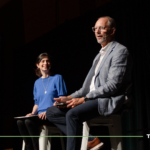









Shepherding little hearts is a big job. Christian parents and grandparents want to fulfill the biblical command to pass down the truths of the faith to our children, but we often feel ill-equipped. In this panel, you’ll hear how to teach children what’s true about God and the world, and to do it from a place of joy and freedom rather than angst. You’ll be taught how to answer questions when you don’t have all the answers, make the most of teachable moments, encourage habits of discipleship in your children, and move beyond information transfer to heart transformation.
Transcript
The following is an uncorrected transcript generated by a transcription service. Before quoting in print, please check the corresponding audio for accuracy.
Betsy Childs Howard
Welcome to Breakout Round One. This is a panel that big questions, small answers help young children understand biblical truth, and we’re so happy to be with you to talk about one of the biggest privileges God has given us in this life, passing the faith on to the next generation. My name is Betsy Childs Howard. I am an editor at the Gospel Coalition. I write books for children, and I’ve been to many of these conferences, and it just gets better and better. So, we’re glad you’re here. I’m gonna let our other panelists introduce themselves.
Amy Gannett
Hi, I’m Amy Gannett, and very sweet. I am a mom of three littles, so just so you know, we’re all in different seasons of parenting, which is so fun. I’ve got a six year old, a four year old, and an 18 month old, and I’m the founder of Tiny Theologians, which is a line of discipleship resources for kids, along with a podcast, and founder of the Bible Study School House, where I write resources for women like you. Bible studies help you grow in your faith as you lead your kids and grow in the Lord. Love that. Okay, I’m Emily Jensen, and like she said, we’re all in different seasons, and so I have three middle school boys at home. My oldest is about to turn 14. I have twins that just exited sixth grade. I have a boy going.. it’s hard to remember them all. I have a boy going into fifth grade who’s 10. This is getting really complicated, and a daughter who’s eight, and she’s going into fourth grade.
Emily Jensen
And I am the former co-founder of a ministry called Risen Motherhood, where I was the content director for 10 years. And now I’m venturing into some Bible teaching, and I’m an author, and yeah, just a mom running her kids around from thing to thing,
Betsy Childs Howard
and I have two little boys, they’re four and six, and my husband sent me a picture, they are challenging each other to walk over Legos for fun, see if they can do it, do okay. Are there particular situations where you find yourself feeling a lot of angst or anxiety about discipling your children, and what is an alternative motivation to angst when it comes to teaching the faith to our children? Emily,
Emily Jensen
yeah, I mean, I don’t know if there’s one specific situation, because I think, especially when they were younger, I just really felt the weight, right, like you want nothing more for your kids as a Christian mom than that they would give their life to Jesus and follow Him all of their days, and because we know the gospel, we know the terrible consequences of them not accepting that, and so that can just really weigh heavy on a heart. And I remember many moments when I would come into, you know, even like the early I’m reading a book about the gospel to them, or I’m trying to talk to them about the gospel, and they’re wiggling, and they’re ignoring me, and they’re running away, and you just want to shake them and be like, this is your eternal soul we’re talking about. That doesn’t work very well. And so I think that as our kids got older, I started to think more in terms of how can I be invitational, how can I invite them into this wonderful relationship with Christ. Only they can accept it, but hopefully we can model that this is joy, this is freedom, this is what gives mom life, and it takes some of the weight off of it, and that really comes when we’re able to let the weight of our children’s soul be in God’s hands, who is sovereign and who is good, and who can be trusted. How’d you handle that, Amy? So
Amy Gannett
good. I think the moments that I feel the most angst are from a negative place, are either I’m comparing myself to another mom, whose kids are not my kids, whose life is not my life, whose home dynamic, and their rhythms are not my rhythms, and so I see what she’s doing, or how it looks from the outside, and I think I should be doing that. I feel all this pressure of performance, which isn’t actually a heart of discipleship surprise, you know, it’s not actually drawing my heart towards a passionate pursuit of my children’s hearts, for the sake of the gospel. The other moments that I feel the weight in a negative way are when my kids, maybe offhanded, say something like, I don’t want to pray, or I don’t want to talk to God, or I don’t want to go to church, and I’m like, your dad’s the pastor, please don’t say that. But when they say something like that. All of a sudden, I.. it’s.. I think I’m getting a reality check of, like, ah, they’re not growing in the gospel, you know. All the discipleship efforts that I put into it are for naught, because, you know, they don’t want to talk to the Lord. And the thing that gives me such encouragement.. I feel like the spirit brings to my mind really consistent. Instantly is how I came to know the Lord, and how I was discipled, and it wasn’t one conversation, one time, or one book that we read over one year, or 365 devotionals, that once we completed that, I came to know the Lord. It was fruitful, faithful, persistent discipleship over the long haul, and the Lord used so many people. He used my parents, who walked faithfully with the Lord. He used Sunday school teachers and mentors, the parents of my friends, to reinforce it. So, remembering Lord, the Lord pursued me, and He came after me and my sinful heart, and grew me in affection for him and love for him, and I can trust him to do the same with my kids, and that means I can take the long view. That means I don’t have – we don’t have to have it all today. We can take the long view of discipleship.
Betsy Childs Howard
Well, when we’re parenting from a place of fear, our kids can really sense it. So, when you, Amy, when you find yourself doing that. What do you do like in that moment? What would be Emily talked about a sense of invitation? What else would you say to get out of that parenting out of fear?
Amy Gannett
Yeah, I think the concept of joy, you mentioned this, the invitation really, what that’s like hankering after is joy, and saying, okay, Lord, first of all, I need you to restore the joy of my salvation, that the idea that this is all gift and all grace, and what a gift it is to walk with Jesus, what a wonderful blessing that is, but also I get in my fearful moments to metabolize the gospel again in my own heart and life, I get the chance to receive the gospel good news that the thing that I think I fear is actually not the worst case scenario in the whole world. The worst case scenario is that I was separated from Jesus by my sin, and guess what, He dealt with that, He paid the penalty and ransomed me to Himself, and so by receiving his grace and salvation, that’s the big picture way that we receive his grace, but in every little moment we get to receive his grace afresh, and so to that fear, in that moment of fear and anxiety, I get to remember, Lord, I am not here to prove myself to you or earn your affection or win your favor, Jesus has done that on my behalf already. So now renew in me a spirit of joy, so that I might invite my kids into this. And you know what? When our kids sense it, there are times that we react in harshness or anger or whatever, and we might have to do some apology and some repair. And what a good opportunity to show them, Mom needs this good message of the gospel, and you are privy to it, because you are my closest neighbor, and so I’m gonna, I apologize to you, and receive your forgiveness, and we get to enact the gospel as just one more way that they are getting to see the glory of Jesus lived out in everyday life. Yeah,
Emily Jensen
I love the gospel application there, and you know something that I have to do with discipleship is think about it in terms of how would I teach a kid to enjoy something else, you know, like we get kind of weird about it when it’s Christian stuff, but if I were to think how would I get my kid to love baking and feel invited into that. Well, I’d probably start young. I would probably be baking all the time in the kitchen and delighting in it and feeding them, you know, the things that I was baking. I might have them pick out recipes with me. I might take them to the store. I might get them cute little apron to wear or a fun little step stool, and then I wouldn’t get really frustrated when they dumped in the wrong amount of ingredients, we know, but this is the long game, I want them to love baking, and so we’re just gonna smile and laugh, you know, and okay, we’re gonna clean up together, we’re gonna enjoy the treat that we made together, and it’s like, oh yeah, yeah, that
Betsy Childs Howard
makes sense, not that hard, and it’s like we need that mood with discipleship as well. We probably have an image in our minds of discipleship where your kids are sitting around being quiet, listening to whatever you’re doing, maybe singing a few songs, but that’s not always where the
Emily Jensen
true growth happens, where sometimes, or when are some times that you have seen some of the best discipleship happen in your family. So we have four boys and one girl, and it was pretty much all wiggles and jumping off couches and wrestling, when we tried to do just times of group discipleship, and I think sometimes it felt like we were doing so much parenting and so much correcting, and it was just getting so heavy, it was like this is not working, and so what. Did work often was for us to like each, my husband and I lean into like our own giftings, and what we enjoyed, which meant I tended to go into like teacher mode with my kids, and my husband was really good at discipling our kids with serving, so we used to do a lot of like one on one with them. I remember there was a season we went through where, like, each kid got to stay up 15 minutes past their bedtime on a different night, and we called it special time, and during special time you get to sit in our bed and just talk to us about whatever’s on your heart, and we had more discipleship in 15 minutes in this in special time than we did in the living room, trying to get a bunch of, you know, wiggly kids, like, take this seriously, because this is God’s word. And the other hot tip I would have is car discipleship, like when they’re all strapped in, that’s your moment, that’s your moment.
Betsy Childs Howard
Well, and I just want to echo that car discipleship. We moved from Manhattan to Alabama, and I was really disappointed that we were going to have to drive a whole lot, but now I’m so grateful because we listen to music, we listen to a lot of Christian kids’ music, we listen to other kinds too. It’s very passive discipleship, some of it they’re memorizing scripture while they listen, others it’s just talking about things they don’t understand, and they’ll ask me questions. You know, what does eternal mean? What does it.. you know, so I have been so thankful, even though sometimes I like wish we could just walk everywhere. I’m really grateful for the car time for listening to things because of the questions it brings about.
Amy Gannett
I also think there is just a reality of parenting that your kid is going to probably be the most open or ask the most open door question when you’re really preoccupied with another task. It can be.. I remember my four year old asking me something about what God was doing right now, or what does God do in heaven all day? When I was literally like gutting a chicken, I was like, you know, elbow deep, and I was sort of like, right now, Lord, really right now. But when we are really preoccupied with stuff is often when there’s going to be these open doors, and just asking the Lord in your everyday life, Lord. When those moments come up, help me be attentive to it, and remember my priorities. My priority right now is not this chicken that I’m prepping. My priority right now, big picture, my big picture priority is discipling my kids, and then in those moments asking the Lord to give you short, simple answers to their short, simple questions, because a lot of times, what is God doing in heaven right now? You might even just say something simple like, right now He’s ruling over everything, there’s nothing He can’t see, and there’s no one He doesn’t know. And the short answer like that might provoke another question, or they might go, okay, and be done with a conversation. But a lot of times, when we feel that open door, like I want to rush in, and I want to answer all the questions, and have the whole conversation, but I would say those two things: asking God for the ability, supernatural ability to put aside the task at hand for the bigger task of heaven, and then also having the ability to give a short, concise answer to their simple questions, because over time that’s going to really return dividends.
Betsy Childs Howard
What if it was a very hard question, and you don’t know the answer to
Emily Jensen
it? I mean, I think it’s always okay to just be honest with your kids and say, here’s what Mommy knows, go back to the core fundamental truths, because a lot of times they’re hard questions are nestled under, like you said truthful core answers of the gospel that you can always go back to, but then you can say, you know, I’m really not sure, can I? I’m gonna go read about that, I’m gonna go learn about that, and then let’s talk about that tomorrow when we’re at the park, and then you find a time to follow back up, but I think it’s okay to not have all of the answers, and if anything, it models for them, like, oh, Mom is still learning about God, and it’s okay to not have all the answers. It doesn’t mean I don’t have real faith or something like that. So it’s definitely a journey, and there have been many times, even where I’ve given a weird answer, and I followed up later, and been like, you know, let me just correct what I said.
Amy Gannett
Mommy thought about that a little bit more, and I don’t know that I was totally correct. I’ve been there. I also think you can just, in those moments, say, “I’m not sure, I totally know what do you think the answer is, or what do you guess about the answer? And it might actually show where that train of thought came from, especially if they’re little, they might actually not be asking the question that they’re articulating, and so if you just say, what do you think might be the answer, they might unpack that a little bit more to help you get to the heart of the question, and then you might be able to follow up and say, oh, I do know something about this, and then a day later, or something, you can circle back and say, you know, you asked me that question, I thought about it more. There, and I was able to read in my Bible, or ask somebody that we both know and trust, and I wanted to tell you what I discovered, and with older kids, that can be kind of fun, because you can say, well, this feels like something we could discover together, would you want to discover the answer with me, and it really feels like you’re both on an adventure to know God more together, so I think going to God’s word and circling back can be really effective.
Betsy Childs Howard
Let’s talk just a little bit about church. When you have babies and toddlers, and your life is really busy, sometimes the investment return on going to church seems like it’s not really going to pay off, but I know both of you highly value church. Why is it important to start getting in the routine of regular church every week when your kids are small? Amy,
Amy Gannett
well, when your kids are small, the person being formed most by that habit is you. It’s us being parents who say church is a priority to me, because it’s a priority to the heart of God and the heart of His kingdom. This is how God sees fit for us to grow in Christ, and it’s with local believers in our local context. What a gift that is. Your local church is such a local gift, and you are a gift to them. Okay, each person is so valuable. So, in those early little days it’s you who’s being formed by the habit of going even when it’s inconvenient, and then as they grow older they are being formed by that. It is there was a study done, and I’m not gonna, the Barnard group did a study probably 10 years ago or so now, but they were trying to track families that, whose kids in college professed faith, and what habits they had when they were young, and that sort of thing. I’m going to get a lot of the details wrong, but what I do remember from the study is that one of the number one indicators that kids would grow up to profess faith of their own is that their family worshiped together regularly, and it didn’t mean they were getting, you know, theological training, or going to all the Christian camps, or VBS, or in all these serious classes, or anything, it was that they just worshiped together, and so it’s very formative. So I think parents, you can really make that a priority, and I think that gets harder for us as parents to make it a priority when kids’ activities come up on Sundays when the weekends are really full, but I will say, as somebody who is in ministry with a lot of college students who are, you know, finding faith in college, I want to say to parents who are in the high school years, please take your high schoolers regularly to church and don’t impress upon them that the most important thing is extracurriculars in sports, because guess what, they’re going to believe when they go to college that the most important thing is extracurriculars in sports. So, we can’t stop taking them to church because of our own lack of discipline in that way, and then expect that they go on to find church again on their own, so I think in those little years the discipline is forming us and it’s going to in turn form our kids. What would you add?
Emily Jensen
I really like what you said about activities, because I think sometimes when you’re in the little years you’re like this is just a phase, like it’s going to get easier, and like, kind of the reasons to not go will go away, and I can tell you, as a parent, that now has, you know, I’m almost in the high school phase, is that activities pick up, and there are actually more reasons to not do it, and a lot of families do drop off if you get into this mindset of like, well, it’s negotiable, and I think about it a lot, like I think about teaching my little kids, like, brush their teeth. It’s like, in the moment, it feels like, if we miss this time, like, is it really gonna hurt anything? It’s like, but okay, we’re teaching them a habit that they need for life, and so even though in the moment you know the in like the toothpaste everywhere doesn’t seem like like is this worth it or could we like just go to bed is yeah it’s absolutely worth it and I know we have the privilege of just seeing dozens of young adults get baptized in our church every year and almost every single one of their stories starts with I grew up in a Christian home, and I went to church every Sunday, and we don’t know when God is going to flip that light switch of faith on, but our goal as parents is to plant the seeds and to form those godly habits, which includes being with God’s people, so it’s worth it,
Betsy Childs Howard
and we’ve all seen when it’s a question whether you’re going to go or not, and you base it on your feelings that morning, it becomes much harder to go, sort of like exercising. I never feel like exercising, but if I commit to do it, I’m glad that I did it, and over time I see. See what I wanted to see from that, but I think for children I was blessed by my parents taking us to church every Sunday, so it just wasn’t a question for me, is this a week that I go to church or not. Okay, shifting gears a little bit. Small kids’ brains are rapidly developing, they’re making connections, and they’re creating neural pathways. How can we capitalize on that development when it comes to passing on the faith? Emily,
Emily Jensen
yeah. I mean, this is so fun. I think this is one of the most exciting things about discipling young children, is that they are forming all these connections. They are really quick learners. I mean, have you ever seen a kid grow up in like a multilingual house, and we had some friends, I think that their child speaks English and Chinese and Spanish, and he’s like, I don’t know, two or something, and it just.. how is that possible? Well, because their brain is just.. it’s just built to learn in that season, and so great. I’m going to tell you about all the God stuff. You know, I remember we would listen to, I mean, kind of cheesy scripture songs, and we’d listen to catechisms, and just read books, and they just learn by watching, and that’s so exciting. I think the other great thing is that their brain is forming these early associations, so like when they hear God, how do they feel? What kind of words pop into their mind when they see a Bible, when they hear prayer, and like what we want to do is give our kids delightful associations with those things, if we can. Church, I love church. I love going to church. The people there are great, you know, and maybe there’s still a theology of church that needs to develop, but boy, if you’ve got that association of that’s a place I want to be, that’s a place I enjoy being, I understand, you know, I like the purpose of it, that’s a huge win. Yeah, and I would add to that, this goes back
Amy Gannett
a little bit to discipling out of fear or parenting out of fear. The environment in which we’re doing this discipleship is just as important as the discipleship that we’re doing, because if going to church is like now, wear your best outfit and be on your best behavior, and don’t say anything, you know, like all buttoned up, then how are they going to feel about church growing up? It’s a place where I have to pretend and perform. If, in the same breath, when you’re like, everybody sit down, and we’re going to do discipleship, you know, and it feels like the air is sucked out of the room. Guess what, they’re not going to want to hear it’s time for discipleship, like they just aren’t going to want to open God’s word, because it’s going to feel, you know, suffocating, but in those early years they’re picking up on all of that, they’re picking up on the joy of reading scripture, they’re picking up on memorization. That’s what I was gonna say, the way little kids’ brains can memorize, they are like a sponge, and we can fill their minds with scripture that they will remember later in adulthood. I still remember scripture that I memorized to certain tunes as a child, and the Lord uses that, His word, in my life. And every time those words come up, as I’m reading through my quiet time, or somebody’s reading that scripture, that same tune comes through my mind with those words from God’s word, and so we can do those two things. We can make the environment of our discipleship something that is to be cherished and treasured by their little hearts, but also we can introduce memorization, because they’re at a really palpable, moldable age for memorization. And what a great time to hide God’s word in their hearts and minds
Betsy Childs Howard
that reminds me of Tim Keller, used to quote somebody named Archibald Alexander, and he would talk about it in the context of should you teach kids things they don’t yet understand, like catechism, they may be small, they may not understand the big words, but they’re memorizing them. I know with some of our scripture memory, my four year old memorizes things almost phonetically, like he does not know what he’s talking about, but so Archibald Alexander said, when you teach kids things they don’t understand yet, it’s like laying a fire in a fireplace that’s going to be lit later, you know, you’ve got all the wood there, you’ve put the kindling, and then later the Holy Spirit is going to light the fire, and just like Amy remembers those Bible verses she learned to tunes, they’re going to have that catechism, they’re going to have those Bible verses in there, and I just think it’s a lot harder when you’re 23 or 43 or 63 to memorize scripture, so the more we can lay in that fireplace now, the better they will be, and we, we should also pray that the Holy Spirit will light that fire.
Emily Jensen
I’d like to spend a little bit of time talking about, like, simplifying discipleship and kind of hacks, if you want to call it that. We can even go back and forth a couple of times if you have more ideas. What are some ways to make teaching the faith to your kids less complicated, Emily? Yeah, I love that question. I tend to think in terms of, like, okay, there’s informal discipleship and there’s formal discipleship, and I think we see Jesus modeling both. There are times when he is teaching really direct, clear things about God, about the scriptures, the kingdom of God, and then there’s a lot of time where he’s just living life with them, and he’s answering questions, and he’s modeling for them what it looks like, and so our kids need both. It would not be right to be like, I’m only just letting them watch me, and then also it would not – it would be very hypocritical if we’re like, I’m teaching them all these things, but I’m not living that out, I’m not believing that at all, so we need both, and I think in terms of making it simple again, we talked about this earlier, is like leaning into what you’re good at, what delights you, and what makes sense for your family, and we’ve really had to get creative, we’ve done special time, I already mentioned the car, but I used to do a lot of stuff at the park when our kids were active and they were playing. We’re going to go on a walk. I’m going to bring some prayer cards with me. We’re going to talk. I would sometimes know, hey, we’re going to walk by a certain section in the library, because I know that they’re going to ask me questions, and I want to be able to have that conversation. There were times when we were traveling, or we were out on kind of like a family field trip, and we planned, hey, this is a time when we’re going to talk about something intentional, and, like I said, for us that worked really well, because we have an active, busy family, and we could kind of find a way to pair that formal with informal, but I’m really grateful for Amy’s resources, because things like that have been a helpful jumping off point for us, even if we don’t finish the whole thing or use it exactly how it was intended to be used. It’s just kind of a thing. It’s like it’s like a new workout close, like you’re like suddenly you’re like, I can, I could go work out again. I got a cute, and before we go to Amy, yeah, just a follow-up question. So, in our prep for this, you mentioned something called habit stacking, which I had never heard that phrase. Oh yeah, you explain what that is. Habit stacking, yeah, it’s just when, like, you, you add something to what you’re already doing instead of doing something completely new. So, an example of not habit stacking is like, oh no, I’m not doing discipleship with our children. When I get back home, we’re gonna find a new part in our day where we’re gonna all sit down and we’re gonna read books together. I’m gonna go through these flash cards. I’m gonna do scripture memory. That is amazing, and that works for some people, and you should try that. But you can also just add to what you’re already doing, so like be more intentional with their bedtime routine. Add in one prayer, or say, “Okay, I’m going to read one verse of scripture to you. You’re already putting them to bed, maybe you’re already reading them something. Just repurpose that time. Or everyone is sitting down at breakfast, and they’re all eating, so they’re a little bit quiet, and you’re like, “Okay, I’m going to stand here and read you this devotion. I’m going to read you something from the Word of God while you’re eating, and maybe you get, you know, a few more minutes of attention.
Emily Jensen
Or, if you are on the way to an event, we used to do this a lot, and say, again, everybody’s strapped in the car, that was worked really well for us, but just, we’re going to pray for this place that we’re going to, and the people that we’re going to go see, and like that was a great time of discipleship for us. It wasn’t a totally separate and different thing, it was just part of our life, and that’s how we live the Christian life. It’s not I got God time, and then I have the rest of my time. We integrate prayer all throughout our day, we think about God at all different times, and we’re just trying to bring our kids into that.
Betsy Childs Howard
And when you have little small kids, I think having it be a part of your routine and expected makes them enjoy it and look forward to it, rather than complain about it. We tried this year on the way to preschool memorizing a Bible verse, like, we would do one each week, and it would always have a song, and it was just a given that we were going to do it, which made it so much easier than me saying, as opposed to, like, I did not schedule time in for my son, who was learning to read, to do his homework at night, so it was always, we should read your book, I’m too tired, you know, but things that are really scheduled in, that are habits everybody is more cheerful about it. Okay,
Amy Gannett
it’s expected. Yeah, actually, yeah. Oh, totally.
Betsy Childs Howard
But, but back to the original question, I don’t want to skip that. So, just to simplify hacks, what works for you?
Amy Gannett
Well, I wanted to build off something Emily had said, about that’s just the whole of Christian life, like we’re just growing, and God grows us in everyday, ordinary ways. So, I think capitalizing on moments that come up to teach your kids a small theological truth, just to plant seeds, and asking the Lord for the availability and awareness of those moments. So, if your child comes to you and says something like, oh, my four. Flower died, you know. They picked you a dandelion, and they find it the next morning on the porch, because you didn’t put it in water. They find it, and they go, ‘Oh, it died, it didn’t live forever. What a great moment to say flowers were not made to live forever, but guess who was made to live forever? You, and you were made to live forever with Jesus. Like that is how God designed you for relationship with Him, and they’re going to go, yeah, but I want another dandelion, and that’s okay, that they move on. You’re planting that seed of truth too. So just having those moments and asking the Lord for the cognitive awareness of those opportunities as they come along, because that is just the Christian life. The Lord is reminding us of himself in 1000 ways every day, so pointing those out to our kids, like it can be something as simple as look at the cotton candy clouds, you know, in the sunrise, or whatever. Can you believe God made the sky to be different colors? Like that is planting a seed that God is the creator. All of these things, I do think I’m a big believer in a good resource for discipleship, and the reason is, is because it does a lot of the heavy lifting. So, depending on what the resource is, whether it’s like a set of cards, we do a lot of ABC cards in our house that are either like scripture memory or theology or the names of God, stuff like that. It just is simple enough that I can say we’re going to do one card this week, not even one card a day. We’re going to do one card a week, and we’re just going to get through the alphabet like it’s.. we’re not going to.. I’m not going to make it the goal for you to memorize every card, or you know, we’re not going to also learn to write our letters and learn all the sounds. We are just going to read one card a week, and I think that just by having the cards often is enough reminder for me to say, yeah, I can do that small thing. So I think as we keep discipleship routines small and simple, as we do that, we actually just give ourselves the gift of it being doable. I think. When we think about discipleship, you kind of mentioned this, like we’re going to do family devotions. All of a sudden, you feel like you have to overhaul your schedule, you have to buy all these new resources, you have to somehow get different children who will sit in the living room with you, and all it’s not small, it’s not doable. So, pick something small, and because it is small, it will be sustainable, and because it is sustainable, the Lord is going to use it over a long course of time.
Emily Jensen
I love that. Another thing that popped into my mind was be intentional with the seasons of the year. You know, the church calendar provides a lot of natural opportunities to change up your rhythms and to focus on different aspects of the gospel story, so maybe you’re doing something intentional during Advent, and then you’re taking a breath after that, and then you’re like, oh, during Lent we’re gonna do this. I know we did some different fasts as a family throughout Lent, and that was really great. We had a lot of good conversation, a lot of good prayer time, so be intentional there. And then, as your kids get a little older and they start to show interest and stuff, be like the fastest person ever to get them a resource for it, you know. It’s like, hey, Mom, I’m just.. I’m really thinking about, you know, whether or not Jesus rose from the dead. Like, how do we know that that happened? I’m like, I got you, you know, and that’s where Prime shipping comes into play, but it’s just, I think, see, like, where are your kids enjoying God, and how can you just help propel them forward down that path of thinking? There are so many great resources out there, and you know, borrow from a friend, you know, swap resources, but just stay nimble, because you’re gonna.. it’s not like set it and forget it. I have a plan, and that’s what’s gonna work. It’s just a constant. It’s just like motherhood. It’s just always changing,
Amy Gannett
and I think just asking for the Lord to give you insight into the heart of your child, like what helps us, me and this child, really connect, and what are they interested in? When do they relax enough to open up all of those things, and so it might seem strange, but like for a child who loves a complex coloring book, if when they’re sitting there with colored pencils and it’s just the two of you, they start monologuing about what’s in their heart and mind. Well, the discipleship resource that you’re buying might be a coloring book, it might not actually be a Bible or a devotional. It’s just asking the Lord to give you a glimpse of your child’s heart that He has given them and show you the pathway towards their heart, because that’s what we’re after. We want to connect with them and help them help answer the real questions that they’re really asking the things that the Lord is doing in their heart, because as hard as it is for us as moms to acknowledge we are not writing our children’s story, the Lord is, and so we want to ask the Lord, What are you doing in their heart and life right now, and how can I be a part of that?
Betsy Childs Howard
Yeah, and one thing on resources, sometimes I found with my kids, like, they really don’t connect with something, and it turns out they were just too young for it, like, save it two years and try again. So I feel the same thing as with toys, I like bought everything a year, a birthday too early, you know. And then when the next year they love playing with it. How do you teach your kids to pray, and what do you do when they say they don’t want to pray?
Amy Gannett
Well, we pray all the time as a family, so that’s one of the things that we do, is we pray in the car, we pray before meals, we pray before bed. We have different times in our day that we pray, and we always invite one of our kids to pray, so even Oliver, our 18 month old, he now knows enough to fold his hands when he’s in his high chair before a meal and say pray, and so there are times where we say Oliver, do you want to pray? That boy cannot pray, he is not about to pray for our meal, but we want to invite him, even in as early as 18 months, and we can say, dear Jesus, and he can’t repeat after me. We say, dear Jesus, thank you for this food, thank you for your goodness and grace, thank you for all that you’ve done for us in Jesus’ name, amen. And you know, my girls are like watching him like this, like, how cute is it that he’s trying to pray, but we always invite somebody at our table to pray, and we’re always happy to pray. I think one of the best things my husband implemented this sort of naturally, because he is a man just of joy, and one of the things that he did just that really has made an impact on our kids is if none of them want to pray, and I say, Austin, do you want to pray? He goes, I get to pray, yes, my turn, and so then he’ll pray for our meal. Our kids are like, I want it to be my turn. So, just what a great way to model enthusiasm in saying I get to talk to the Lord. And if they don’t want to pray, I not everybody is going to agree with me on this, but I do not believe in forcing kids to pray out loud, especially my kids are six and under, so there could be different opinions at different stages of life, but if my four-year-old, who right now does not really want to pray out loud very often, and, and when she does, she does it with no anxiety and a lot of joy, and that is such a gift, but there are a lot of times where she gets kind of quiet, and I can tell she’s shy and embarrassed, and those are not the moments that I want to force her to repeat after me, so that she gets it done, you know. So she prays out loud. There is no checklist in heaven, you know. Nobody’s watching your family at the dinner table and saying, ‘Has all, have all your kids prayed out loud once this week? Or by a certain age, have they learned to comfortably pray out loud in front of other people. If you’ve grown up in the church, it’s often hard to remember that praying out loud is very vulnerable, and it should be. If our theology is in the right place about what prayer is, when I pray out loud, I am giving you a glimpse into what my inner dialog before my heavenly Father sounds like it’s like I’m letting you eavesdrop on the most tender, precious, special relationship I have in the entire world. Okay, and so holding in that sacredness will, I think, motivate us not to force a child to pray, but to instead model the enthusiasm and model lots of different kinds of prayer for them, so modeling spontaneous prayer, where we say, How can I pray for you today? I pray with my kids before school and say, What’s one way I can pray for you today? So, then I pray through their requests to give them an idea of what that sounds like, but then also it’s okay to give your kids scripted prayers and say, you know, when we pray at dinner, it often sounds like this, do you want to try that tonight, and allowing them just to kind of test those muscles until they grow comfortable using their own words. What would you add?
Emily Jensen
Yeah, I love all that. We’re really similar. We’ve really just tried to model prayer. I think one thing I tried to do, especially when they were younger, is try to connect answers to the prayers that they prayed, and so sometimes, especially if at night, you know, I had a kiddo who was like, ‘I’m going to have a bad dream, and I’m worried I’m not going to sleep good, and we prayed, and God answered the prayer, ‘Yes. You know, in the morning, I try to follow back up really fast and say, ‘Remember when you prayed that last night, the Lord answered that prayer, and even if He doesn’t, then you get to reinforce a theology of, like, we still love God, we trust God. I don’t know why God didn’t answer your prayer last night, but you know, here we go on with our day. And my husband did this, and I thought it was cheesy for a while, but every time God has used it, but you know, we’ll lose like keys or a phone or something, you know, and you need to find it, and he’ll tell the family, let’s just stop and pray, like the Lord knows where the keys are. We always find them, and it’s always a really fun, like the Lord answered our prayer, so that’s not it, doesn’t that’s not very spiritual, but we’re trying to show our kids, like, look, there is, we pray for a real. Reason, and it matters, and I think for us, our kids love talking, and so they’ve always loved praying out loud, and we have had to work on how do we have reverence in our prayers. So, if at the table we’re like, hey, let’s say grace, and one of them is like, grace, you know, amen, that’s not, we’re talking about, you know, and so that’s kind of the phase we’re in right now, is even learning about the Lord’s Prayer, and how did Jesus teach us to pray, and what does appropriate reverence look like? Like, yeah, we can smile, we can have our eyes open, but this isn’t a time to like make a joke in front of your friends, and that’s that. Can be tough.
Betsy Childs Howard
Teaching the faith of children is an area of real tension, because there is nothing you can do to make your child a believer. Only God can do that, but He does give us things that we can do out of obedience and faithfulness. Deuteronomy six says talk about these things when you walk along the way, when you sit down and lie down, and we want to be faithful to do that, praying that He will be the one who moves their hearts. We’re about to close, but could you each just give a word of encouragement to people who want their children to follow Christ?
Emily Jensen
Yeah, I mean, can’t get the verse reference right off the top of my head, but you know, do not grow weary of doing good, for in due time you’ll reap if you do not give up. And we live in the midst of a lot of farm fields, and so every year we watch them go from planting to like it looks like nothing is going to grow, and then there’s little plants, and then lots of rain comes, and you think I don’t know if it’s gonna work out this year, and then the plants get bigger and bigger, and every year in October the combines come out and the harvest happens, and I just think, man, what if the farmers just like gave up in June when things look bleak, there would be no harvest, and so I think, as moms, just like, do not give up, keep sowing seeds, that is your responsibility, and we serve a good God, a loving God. And I just don’t think any of us are going to get to heaven and be disappointed in what God did, and I just trust that and cling to that.
Amy Gannett
I would also add to that, because that’s good, that’s encouragement for me, like I’m, I’m taking that in into my season of parenting. I would also add to that, that God knows the exact makeup of each child that He has placed in your family, and He knows the exact limit of your resources, He knows the exact house that he’s given you, the exact schedule and time that you have available. He is not asking you to do something beyond your limits in order to disciple your children. He is asking you to be faithful with what he has given you. And sometimes we get into this mindset, I get into this mindset where I’m like, you know, if only this was different, if only that was different, to the point where I convinced myself, if we had a different house, if we could move somewhere else, discipleship would be easier, and of course it’s not true, but there’s part of us that believes that, you know, it’s just kind of always beyond our grasp, we would have to live beyond our means or our limits of energy, time, resources, whatever, in order to have the discipleship routines that we want, and so nobody knows you, and nobody knows your children like the Lord does, and He has given you everything you need right now, right where you are, as you open your Bible to disciple your children, and nobody wants them to come to know Him more than He does. You think you want it, He wants it so much, infinitely more than you do. So you can trust His affectionate, loving, fatherly heart towards your children, and you can be faithful right where you are, right today, to partner with His fatherly heart in that endeavor.
Betsy Childs Howard
Let’s bow our heads and pray for that right now. Father, thank you for the joy of teaching the faith to children. I pray for every mother, grandmother, teacher, church member in this room that is passing the faith on to children. I pray that we would know that you are the one who does the work, and that we would be faithful to sow the seeds, not giving up. And, Lord, let us see a harvest of righteousness for your name’s sake. We pray in that name. Amen.
Amy Gannett is a writer and Bible teacher passionate about equipping Christians to study the Bible through The Bible Study Schoolhouse. She is also the founder of Tiny Theologians, a line of discipleship tools for children. Amy and her husband, Austin, are church planters serving Trinity Church Greenville in North Carolina. You can read more on her blog and follow her on Instagram.
Betsy Childs Howard is an editor for The Gospel Coalition. She is the author of Seasons of Waiting and many children’s books, including Arlo and the Great Big Cover-Up, Polly and the Screen Time Overload, and God Gives Sleep, a board book for babies. Betsy and her husband, Bernard, live with their two little boys in Birmingham, Alabama.
Emily Jensen is an author, a podcaster, and the cofounder and content director of the Risen Motherhood ministry. She is the coauthor of Risen Motherhood: Gospel Hope for Everyday Moments and the author of He Is Strong: Devotions for When You Feel Weak. Emily lives in central Iowa with her husband and their five children.