



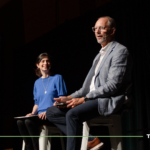
Tantrums. Screen time. Sleep. Discipline. None of us has parenting completely figured out, but we can all learn from each other. In this conversation, recorded at TGCW24, Ginger Blomberg, Betsy Childs Howard, Emily Jensen, and Laura Wifler talk about the high highs and low lows of raising young children and rejoice together that God’s strength is made perfect in our weaknesses.
Transcript
The following is an uncorrected transcript generated by a transcription service. Before quoting in print, please check the corresponding audio for accuracy.
Betsy Childs Howard
Welcome to big, little lives, practical help for parenting in the early years. We’re so happy you’re here. We’re happy you’re here in Indianapolis. We’re happy you’re here at this panel. And I’m hoping that we’ll get some really practical ideas. My children are younger than the other panelists, so it just feels like an opportunity to ask them all my questions. Let me introduce them, and then we will get right down to practical ideas. So Emily Jensen has five children. They range in age from six to 11, and she co founded with Laura risen motherhood. They also your intros are going to overlap, because you’ve done so much together, but Emily has written he is strong, a devotional book, and also is co author with Laura of a new book called gospel mom, which will be out in October. I’ll do Laura next. Laura and Emily are sister in laws. Sisters in law. Laura has three kids, ages six to 11, co founder of risen motherhood and founder of kid lit lab. If you’re interested in writing children’s books, you should check it out. She’s also the author of any time, any place, any prayer, which is a book for children, and co author of gospel mom and then Ginger has five kids, ages nine to 18. She homeschools them, and she is the author of one of our TGC kids books, Charlie and the preschool prodigal. It’s in the bookstore. You should get it. My name is Betsy childs Howard. And I have two little boys, ages two and four, and I’m an editor at the gospel coalition, and I’ve written several children’s books, including Arlo and the great big cover up, and another Arlo book, which will be out in September, called Arlo and the keep out club. So we are going to gear this conversation towards thinking about children six and under, pretty much there are some of them in the audience. It’s great to see the babies out there, and I know you’ve left a lot at home, but let’s dive right in to talking about, what does screen time look like in your family before your kids are six, when they’re really little? Emily, what does it look like for you?
Emily Jensen
Yeah, well, we had our fifth child the day after our oldest turned six, and so we had five kids, six and under. So I was always kind of a pro screen time mom. I felt like in those years when they were all really young and they needed a lot of help with everything. I did utilize screen time as one tool in my tool belt among many so that I could get things done, you know, whether it’s feeding a baby or reading to someone or, you know, I get everybody in the van sometimes, and get them, like, strapped in, and then, like, turn on a little DVD, and then run back into the house and, like, clean the whole house up and get all the bags packed and everything. So I did that a few times, but you know, I was reflecting on this answer and thinking, you know, when we had kids under six, that was, like, a long time ago. Now it feels like and that was before we even had, like Netflix. We were watching stuff like that. So I rented a lot of DVDs from the library, which sounds very archaic and not helpful. So I thought that I would just share a few of the principles that we use to think through screen time in those years. Because something I realized is that not all screen time is created equal. I think there’s a big difference between a family sitting together and watching bluey and a kiddo that is on an iPad alone in their room like those are two different experiences of screen time that are creating two different types of habits. And so I really tried to think through time, so how long are they spending on screens? I think that’s something that is easy to get caught up in and feel guilty about. But I think find a benchmark in your mind that you and your husband are comfortable with, and it’s like, hey, it’s about this much time each day, knowing that there’s gonna be some days where, like, everybody’s sick and it’s more than that, and there’s gonna be other days where you’re out at the park all day and you’re off doing other things and they’re not having screen time on those days. And that’s okay. Another thing would be content. So what are they watching? And I think that that’s a lot more challenging in 2024 than it was when our kids were young. And so I really feel like it’s a tough environment out there, especially if your child gets control of the remote and they’re on a streaming service and they’re starting to click through things. So I do feel like it’s something to be really aware of. And then type of device is really important. So again, is maybe TV is okay, but you feel like, hey, iPad is something we don’t want to get into yet. Or video games, you know, where do you stand on type of device? Um. I think under six, we felt like there was a lot of success with just saying it’s the TV in the main area where everyone can see it. I could not manage devices for a bunch of kids under six. I was like, I just can’t Well, I
Betsy Childs Howard
was wondering with you and others, did you do any games at that, that really early level? Did they do? They did not play any No.
Emily Jensen
I mean, if we were on vacation or something, or if they went over to Grandma’s house, there was a few things, but we have held off on video games as long as we can, so it’s kind of a special thing. And then the last thing I was gonna say is focusing on good screen time habits, like developing those good practices for kids of like, this is part of our day. We turn it off, we walk away. We love playing outside. We love reading books, we love doing all these other things. We try not to take screens alone in a room. You know, developing those habits early on. So those are kind of the principles that helped us.
Betsy Childs Howard
Is that, what does it look like for you? Laura, with small children?
Laura Wifler
Yeah, I think you know, our kids, they did probably play some iPad games, just to give a different look at it, but it was very much monitored. It was in the community room. And lock down your devices like that’s the best thing. The best advice I can give you is don’t hand a kid your phone or an iPad with an all access pass. There are tons of resources out there to know how to lock them down so that they’re very secure. But even, I guess this wouldn’t apply for under six, but we just recently got my son a Kindle, because we’re like, we don’t want him reading e books on the iPad. So even there are some other devices out there, if you’re like, hey, I have a reader already that you can look for. But I would say tech time was very similar, and a big thing for my kids is just reminding them that this is a privilege and it’s not a right, and we are not going to watch TV every day. And that was, I think, for my kids, you know, it was kind of like 330 it’s TV time, and it’s, that’s great. But also I wanted them to love being outside and to know that sometimes, like, we just weren’t gonna fit it in. For some reason, we just can’t. And so part of the rule with watching TV was that they didn’t complain when it was turned off, and they didn’t complain if they didn’t receive it. And so setting those expectations, though, ahead of time, I think, really helped for those days where, like, we were just genuinely were too busy, or maybe they were playing really well. I’m not gonna be like, let’s throw on the TV whenever they’re playing awesome. You know, you wanna let that continue and then just being really strategic about that time. And so I always ask, like, what is it that I need to get I need to get done while use utilizing this tech time? And maybe for me, that would be, would have been writing or doing other kind of computer work that’s pretty hard to do with kiddos underfoot. So just as a mom, realizing that this is like, I like what Emily said, a tool in your tool belt to be strategic with and to not for me, I think there are days where you’re like, Hey, I got to go veg too. You know, I need a nap. I’m gonna let you watch TV. That is fine, but also consistently more thinking of it as, how do I use it strategically as well to get the work I need to get done too? And
Betsy Childs Howard
if you’re not wanting to complain when you turn it off, so is that like, they would then lose the privilege the next day, because that is a real problem, because they’ve already had it, and then the world just falls apart because I turned
Laura Wifler
it off. Yes, yeah. I mean, they would just lose the privilege for the next day. That’s exactly right. And I mean, very quickly they learn that, you
Emily Jensen
know, Betsy was gonna give this tip really quick. I heard that if you give your kids a timer and you say you have 45 minutes, but if you turn it off on your own five minutes before the timer is up, I will add five minutes the next day. I never figured out how that transferred, like, 10 days into the future, but it was a good, like thing for them to learn that, like, I can actually initiate to mom and say, Okay, we’re done with screen time.
Ginger Blomberg
Ginger, anything to add. I definitely agree with having some principles of what you’re thinking of. So for our family, it was community and that it was that it was a privilege. So we did have one video game that was only on my phone, so they didn’t have their own devices. So when we went out somewhere, we didn’t live near people, we knew we would bring the kids and we would say, you can play. I think it was Angry Birds on my phone, and they were so excited, and they could just sit here for a few minutes while I tried on a dress or whatever, or my husband tried on a suit, and so but it was kind of a special thing at that time.
Betsy Childs Howard
Let’s talk about chores and responsibility. Ginger, tell me what that looks like at your house and and how you think about that in terms of your kids ages?
Ginger Blomberg
Yeah. So my youngest is nine, so we are far enough out of the little years that they kind of have that happy golden glow. And I remember in that which is such a gift, it’s so wonderful. But I remember being in the little years and thinking, boy, when you are one minute out of this, you don’t remember what it’s like. So keeping that in mind. So taking this with a grain of salt. We do chores in our house all the time, but my kids are older. We have sort of two ways we approach it, the premise and the practice. The premise is kind of the reason why behind the chores, which. Doesn’t sound practical, but actually is because teenagers ask a lot of questions, why? Why do we have to do this? But so do toddlers, and I can explain to them, this is part of stewardship. God’s given us these gifts, and we work together to care for the good gifts God has given us. We also talk about Adam in the garden, and God told him to work the garden that was before the fall. Part of us is made to work where it says we’re created by God to do good works, not for our salvation, but to bear fruit. And part of our kids is fulfilled when they’re helping. And it’s just can be a beautiful thing in practice. What does that look like? So just speaking friend to friend, not like you have to do all the things we did. I asked one of my teenagers, I said, when did we start chores? And they said, birth. And I mean, I think it felt that way because they were babies, and we would say, Hey, can you help me throw this diaper away? And we’d walk to the trash can and throw away the diaper. Can you help me put your spoon in the dishwasher? But I think it’s realistic to say that when kids are six and under that it’s going to be more work for you, for them to do chores. But the idea is that you’re increasing their ability and their scope so they can take care of their own things. They can help take care of our family. They can help take care of God’s family, and then by the time they’re teenagers and young adults, they’re there. Have the ability and the awareness to contribute. So really, practically, how does that look? Again? This is just, this is descriptive. What works for us, not prescriptive. We have chore charts. Those were, those are, we still use them. Those are golden. We would when they were little. We would just draw pictures, and then it was in a would it one of those page protector sleeves, and they would mark it off with a dry erase marker, and then we’d wipe it off. And just really, practically. Now, it’s very complicated. I don’t even understand the teenagers run it, they rotate all these things but, but the idea is that there’s an expectation set. Here’s what it’s going to look like when the living room is clean, you know. And so there’s not always this feeling of, oh, I didn’t know I needed to do that, or I need you to arrange the pillows. And they don’t know that. That kind of thing. Another thing that really helps us is dividing it up, so each person has personal responsibility for something. So not just saying, hey, I want this room clean in 15 minutes. Go for it, but to say, Could you pick up all the blue blocks right now? It’s easier for me to keep track of and then it’s not so I have five kids, so then it’s not one kid doing all the work with a bad attitude while the others watch and and I can figure out who did what also. So it’s just a maintenance thing. Our last my last tip that was really important for our family is music. Ever since they were babies, we would sing a little chore song or Whistle While You Work, anything that might make it sound fun to work. But even now, as they’re young adults, they turn on the radio really loudly, and they dance in the kitchen. And when we are our best selves, it’s a worshipful experience. But we also know it’s not always going to be like that, too.
Betsy Childs Howard
So I’m still in that phase where it is a lot more work to have them do it. So what are some so throwing things away, cleaning up. What are some other things that small children can
Laura Wifler
do? Yeah, my kiddos, when they were really little, I had them wipe down cabinets, so hot water in a rag, and wipe down cabs walls. They’re pretty good at that. And then helping with sorting laundry, maybe not necessarily folding it. They can Socks, socks, and underwear. They that’s, they do a lot of that, and then unloading the dishwasher, especially like the more get everything colorful. You know, that would be the kit stuff. But I think one of the other things that was big, okay, I have like, 100 ideas. One is Emily. I think this was you who told me this, to take a picture of a room, to take a picture of your living room when it’s clean and the way you want it, and then show your kid make it look like this. And then they, you know, can, it’s like, almost like a spot and find, or something like seek and find type of thing. So that was, like, one kind of fun idea. My kids can karate chop pillows and, you know, maybe they’re not gonna be exactly how I want them, but it’s better than it was. And then I feel like there was one other thing with chores. Oh, I think the biggest thing with chores is really walking them through exactly how to do it and and not giving them an assignment before they’re old enough. Because I think as Christian moms especially, we’re like, everyone needs to contribute to the work of the home. You know, that’s like, we know this, we say this, and we want all of our kids to be involved. But I found that sometimes I was just giving them a task that was too hard, and a five year old just really can’t clean the toilet very well. Like, that’s just not gonna happen, you know, and I don’t want poop flying around everywhere, and those brushes, and it’s just a lot. So I realized, like, maybe I was pushing my kids a little too fast on the chores. And so if you can just find a couple things, or, like, for my kids we never had, we don’t still have formal chores. It’s more just like, hey, if mama has a need, like, you hop to it. You know, like everyone is contributing. We’re all working together. If you don’t help me, then, like, I’m doing everything, and that’s not fair. And so we kind of talk about just, we’re a family, we’re a community. Work together. And then I really try with their chores to make sure, like that they match. And it may just be as simple as, like, yeah, go throw away this diaper. Or, Can you grab mama a new, new pair of pants for her, or whatever? And I think that that’s that’s fine if, like, you don’t have, like, this big formal chore system, that is totally okay. Like, they will still learn to be hard workers. Like that will still happen. So
Betsy Childs Howard
I like the idea of wiping on the counter the cabinets, because I don’t know what you’re but if I get down there and look, I am shocked at what my bottom cabinets look like. I don’t think of that as something that you need to clean regularly, but apparently you do, Laura, what is something that parents of young kids can do to strengthen their marriage that doesn’t require money or childcare? Yeah, I love this question. People always say date nights. That’s just expensive, particularly if you don’t have grandparents or somebody to watch your kids.
Laura Wifler
Yes, and I’m not gonna say date night either, so don’t worry. Okay, so I think with this, I remember whenever I first became a mom, I was a stay at home mom right after my first child was born. And I don’t know if you guys know this feeling, but how you kind of have to download to your husband, you’re like, can’t, here’s what I did today, like, I unloaded the dishwasher and then I went to the store. And, you know, you kind of feel like you need that affirmation of, like, I got something done today, you know, and I did something and so really, from that, I realized, like, I need somebody that I am talking to in a thoughtful way, and like we’re having intentional conversations. And so we did a thing called Sunday check ins, and there were four questions that we asked every week, and you can use these. You can change these however you want. But the first question is, how did I love you? Well, this week, so you’re looking back or last week, you’re looking back on the week and just affirming one another and saying, I really appreciate it when you did this or that, or I loved it when you did this. And you’re both answering these questions, right? So how did I love you? Well, last week, the second one is, how could I have loved or cared for you better last week? So that would just be an opportunity for you to say, like, Oh, I really felt overlooked when this happened, or when you worked late, or whatever those kind of things are. And then the next question is, what do we have on the schedule this week ahead? So it’s actually become even more important that my husband talk about our schedule ahead, because stuff’s just even crazier with me working and with the kids in school and everything like that. But it’s so important, even wherever you are in mom life, to be able to talk about the week ahead and plan for it. And then lastly is, how can I support you best this week? So hey, I really need you home on Tuesday a little bit early. Or, Hey, I’m really nervous about this thing. Can you pray for Thursday mornings, Bible study, the word I’m teaching, or whatever that is. But I really appreciated those four questions that were very intentional. You can do them in the car, you can do them on your back porch. You can do them over the phone, like whatever you need to do, but it forces that deeper conversation. And I think that that was something that was really vital for my husband and I to stay connected, and I think particularly for me, who’s a verbal processor and really thrives on affirmation with a husband who’s more quiet and introverted, to create space for those conversations to happen, and neither of us feeling weird or like him feeling like, him feeling like, Okay, this is my time to talk. I know what I’m supposed to do right now, you know? And so I think that really helped too.
Betsy Childs Howard
Other ideas,
Emily Jensen
man, we’ve gotten made fun of for this one over the years, but we always put our kids to bed early, like
Laura Wifler
so early. They’re so firm about it, guys,
Betsy Childs Howard
it’s good, but throw out a time like, I would
Emily Jensen
say 7pm
Laura Wifler
but older kids, can I say, go to their
Emily Jensen
room? Am I sharing too much? Oh, man, we’re gonna get into this. But I think what’s we didn’t know at the time. We were like, creating this rhythm. We were just so tired again. We had all these little kids, and we’re like, you have to go to bed because we have to be done and but what would happen is we would clean up together after the kids went to bed, and we would talk and we’d have a show. And we didn’t know this, but we were building in, you know, one to two hours together in the evening, and we didn’t always talk or have deep conversations or anything like that, but I saw that as something that really helped sustain our marriage through years where we did not have date night on a regular basis. We did not get that one on one time together, but I’m like, oh, but we did at least talk most evenings and connect in that way, even when we were tired. So that’s the
Betsy Childs Howard
best thing for us right now. Our two and four year old, they go to bed at 630 and we actually wait and have dinner after they go to bed. We’ll do family meal times someday, but right now, it’s just great for us to eat after they go to bed, and it keeps us sane and connected,
Ginger Blomberg
as our kids. Got older, we did that one day a week, and it was date night and but it was fun. It was so fun. It was so wonderful to be able to have that time where we would just have that intentional time together. And the kids were on board with it too. They still are, except now we get to go out, which is awesome,
Betsy Childs Howard
and your older ones can keep your younger ones great. Okay, we want to transition to a slightly different format, just for a few minutes, and I’m gonna get each panelist to give me some rapid fire advice about different topics. So we’ll go down the line. We’ll start with Emily on this. And these are just gonna be short. You don’t have to explain very much. What is your best advice about dealing with sleep deprivation? Maybe you just gave it
Emily Jensen
early. But seriously, I could never nap. You know, everybody was like, nap when the baby naps. I’m like, I am not a Napper. I can’t do it. But if I did not get good sleep the night before, we would put our kids to bed. I’m like, I am just checking out at eight o’clock, and I would catch up on my sleep that way.
Betsy Childs Howard
Ginger sleep deprivation, it’s real.
Ginger Blomberg
If I could do it over, you’re not crazy. If I could do it over, I would accept more help, and I would call my friends more like it’s so hard to talk on the phone when you have little kids. But even if I couldn’t have a coherent conversation, just to check in, I would if I could do it over, that’s what I
Laura Wifler
would do. Yeah, I would say that kindness is always possible. So no matter how tired you are, you may not be starting a business, you may not be crazy creative, you may not be hosting tons of people, but you can always be kind. We’ll
Betsy Childs Howard
start with ginger this time. So Emily’s not always first.
Emily Jensen
What’s your don’t talk about sleep again? What’s
Betsy Childs Howard
your best piece of advice on discipline?
Ginger Blomberg
It’s tricky, but I would say, if you can pause before you do anything, and talk to the Lord and try to understand the situation before you have a reaction. But it’s so hard. I’m not saying we I get it right all the time, but if I could do it perfectly, I would try to pause. Laura discipline,
Laura Wifler
I would say that it is okay to put your child in their room or in a crib until you are ready to re engage, that it’s ready to what to re engage and to be calm, or maybe they need to calm down. So for one of our children, we do have kind of one of those child safety locks on the inside of their door so that they can’t get out until I’m ready to come in, and that if things are just really hard, feel go put them somewhere where they’re safe, take a break and then come back. That is okay. There’s no shame.
Emily Jensen
Emily, um, once someone told me that consistency and discipline doesn’t necessarily mean you give the child the same consequence every single time, and for whatever reason, that just really freed me up, because I had like, one or two things in my mind, of like, when you do this, we do this, and I was like, how does that work in public? How does that work at Grandma’s house? How does that work in this situation? It just really freed me up, like I can respond every time, but it may look different. Very
Betsy Childs Howard
helpful. Okay, Laura, you’re first feeding small children.
Laura Wifler
What you feed your child does not make you more or less righteous.
Betsy Childs Howard
Yeah, say it one more time.
Emily Jensen
Oh, me, okay, so I have a picky eater, and I thought that it was all my fault, and he is now older, and none of my other children are picky eaters. So I think don’t feel too much shame, or don’t prematurely judge that you have done something terribly wrong if you have a picky eater.
Ginger Blomberg
Ginger, I was talking to my teenagers about this, and one of them said, just make whatever you want to eat, because they’re not going to eat anyway. There’s, there’s a level of truth to that. But I would say one thing that really was freeing for me was somebody said, aim for a balanced day or balanced week sometimes, and don’t make every meal a battle. They do need help making good choices, but it, but it doesn’t have to be every meal, every time, perfect.
Betsy Childs Howard
Thank you. Those are very good pieces of advice. Okay, talking with few more in depth questions, Laura, how do you explain the rules and choices you make for your family when they differ from other families choices, and this is especially hard when you’re talking about other Christian families or family families or families at church. So there’s there’s things that we do because we’re Christians that people who are not Christians are not going to do, but then there’s things that we do that other Christians let their children do or don’t do. How do you talk about that without instilling a sense of pride or judgmentalness?
Laura Wifler
Yeah, I think this is really tough. The whole like, But mom, they got to watch that movie or But mom, they get to stay up late, like that whole thing, and we live in a cul de sac with, as the Lord would have it, like lots of other Christian families that go to our church. My sister in law lives literally next door to me, so we are around a lot of believing, incredible families, but it’s amazing because we do have different rules in this. And we are making different decisions on a daily basis, and so this is often heard in my house. And I think the biggest thing first is just lay that foundation with kiddos of, hey, there’s God’s rules, and then there’s our family rules, or our house rules. And we kind of call it the whistler way at our house. So you can think of a cute little phrase, if you want, but just helping your children understand that God has certain commands that he has for everyone, and they’re pretty clear, like, Do not lie, do not steal, and you can walk through those things with them. And yet there’s a lot of freedom within that, right, like God actually has very few big rules for his people. And then beyond that, like as parents, we have the freedom and we have the responsibility to make decisions for our kiddos. And I tell my kids like, God, thought I was the best mom for you, so you know, like, this is what you got, bud, you know. And I don’t know why, you know, but I think. And then we just talk through of like, hey, our family’s gonna make different decisions, like they have a little sister with disabilities who has different needs, and those families don’t have kids with disabilities, so of course, our life is gonna look a bit little bit different. And yet, I also like to point out on the other side of areas where, like, in their minds, it’s a positive thing, right? So making sure that even when your kids seeing, like, Oh, they got to watch this show or this movie, and I’m like, Yeah, but you got to go over to this place, and they haven’t gone to that place, and just them seeing areas where it’s a positive thing that like the rules that our Whistler family have, that we really love. We’re really glad to be a part of this family, and we’re happy for that family, but we’re just not at that spot yet. And so I think that’s one thing, and then also, I have found that sometimes, especially among my Christian friends and what my peers are doing, that sometimes the reason I’m not allowing my child to do something is less so because I believe it’s not right or morally okay for my kids or something like that, but it’s more maybe because I’m being a little bit lazy, or because I am not, I’m just not interested in that, right? Like, I’m not vetting that movie, so it’s a no, or, you know, I’m like, kind of tired, so like, No, we’re not gonna stay up late and go to the pool. Like, I’m just, I’m too tired, and so I think that that’s something I’ve had to kind of work through, of recognizing Where are areas where I am saying no, or I’m bringing a rule into our home because I’m tired and lazy and not because I believe it’s what’s best for my child’s flourishing. Or, like, what is the big deal if they stay up until nine on the Fourth of July, you know, or see fireworks, or something like, can we have, can I bring in fresh freedoms and learn from some of these other families in certain areas? And just making sure, that’s a heart motivation thing, right? Like different families, again, will make different choices, but that’s a little gut check that you can make, I think, and try to be free with your kids where you can I want to be a yes mom, right? We want to be yes moms and so try to do that.
Betsy Childs Howard
I would love to hear from the rest of you.
Ginger Blomberg
So I was going to say that one of the things as my kids have gotten older, so I totally I love what she said, but also thinking that it’s so freeing to be that there are things that I’m good at that another mom might not do. So my kids get to do some things that another mom would say no to, and so there’s just, there’s there’s a God has a good plan. He has a good purpose for our kids. My kids are all terrible. There’s some of them in this room. My kids struggle sometimes with math because it is not my area of gifting, and I have been their teacher, so very humbling, but they are pro at grammar, so like, there’s just different things that different families bring and that and to know that I don’t have I don’t have it all, but I can maybe contribute to another family, or have another family speak into mine as well. Emily,
Emily Jensen
yeah, I think something we try to tell our kids at times because they’re very curious, and they want to know why, and they have been the kids who’ve gone to the other family and been like but why don’t you X Y and Z, or why do you x y and z? So we’ve also had to coach our kids of that’s for their parents to explain to them. That’s for them to talk about in their home. Bring your questions to us, but if you see your friend doing something different, I think it’s okay to have that preparatory conversation to say, hey, that’s something, not something that we need to comment about. That’s
Laura Wifler
how to handle, like, Santa, Halloween, like, that’s how you handle a lot of that stuff. Is like, hey, every family gets to talk about that within their own family, not with others, you know,
Betsy Childs Howard
and probably as you talk about those things with your children, they will really pick up on your heart for it. So I know if my heart is really we don’t do that because we really are better than the family, they’re going to pick up on that, you know. So that makes me want to go back and search my heart for because we need to do what we think is right. But I don’t want to then just inculcate pride in my children by doing that. Also sometimes not wanting people to think I’m a bad parent is a good wake up call for me for something that like my child is doing, that I need to curtail some kind of bad behavior. But other times, I find myself caring more about what other people think. Than what’s actually good for my child. So ginger, do you have advice? Or can you tell me how you have dealt with that just the way you parent in front of other people’s eyes,
Ginger Blomberg
it is so hard that is such a hard issue, and I think it’s because it ties to what we love, and we don’t always understand or even know what we love. There’s all these sort of background things, but we tend to love ourselves more than our children, and it’s just because we’re selfish, fallen people, so part of that. So I remember one time when my daughter was maybe five, one of our kids spilled something. I told her, go get some paper towels. I was angry with her. I mean, I wasn’t angry, but I was just like, please go get the paper towels. And she kind of hesitated, and I could see that she wasn’t gonna go. And so I said, Go get the paper towels. And then she was gone a long time. And I said, please bring those paper towels upstairs now, because the spill is on the floor. And I heard her scrambling around, and she brought me up a stack of alphabet flashcards. And theory upset. I saw this the last one. She had pulled off quickly and had torn the wall, and I was harsh with her. I sent her out of the room, and I got the paper towels myself and calmed down. And I looked back at what she had handed me, and they had been stuck up on the wall because she was learning her ABCs, and she had brought me a, e, i, o, u, so she had brought me the paper vowels, and I was in that moment, I thought, My child is kind of a genius, and I am such a fool. And I was thinking in that moment, what went wrong here? I was preferring my own convenience over what was best for my child, just not even stopping to listen to really understand each other on this issue. I think there can be so many things that we want to prefer in that moment, our image, you know, or sometimes our kids take up so much of our time that they can become part of our identity, and we can feel like our identity is threatened, sometimes in public discipline situations. And one thing that really helps me is having a community of people who love the Lord, who love my children, who love me and who keep me grounded on what’s important. Tim Keller has this quote that community works the gospel out into the corners of our lives, and to say, Why was I so upset? Or should I be more concerned, you know, those kind of things, and just to talk it through with some people that we share similar ideas or values, or we’re learning from each other. Tim Keller has this quote, anger is energy released to defend something that you love. So God is angry towards evil that dishonors him and that ruins that which he loves. But the problem with human anger is this that we tend to over love the wrong things, and so in some ways, raising children is kind of like a years long Academy in learning what our hearts really love, kind of getting down to the root of it, and by God’s grace, teaching us to drawing our hearts more to him and to more to our children, to the things that he loves.
Betsy Childs Howard
Because it can so quickly go from I love discipline, because God tells us to discipline our children to I want people to think I’m a good disciplinarian, and that is the guiding motivation. It’s so hard to keep going back to why are we doing these things? Emily, how do you handle that? Or how did you when they were small,
Emily Jensen
discipline or being embarrassed,
Betsy Childs Howard
discipline like or just parenting in front of other people, parenting from
Emily Jensen
I mean, I feel like I always was, like, sweating and my heart was palpitating, but I so we have one child who has developmental delays disabilities, and so I have been in some very awkward situations with him. I mean, just carried a child out, you know, screaming. And I do find that it’s a good opportunity for me to bring my heart before the Lord. And again, like, Who do I answer to who knows me best, who saw that situation and knows you know what was going on? And honestly to walk forward knowing that it’s not helpful for me to like, replay that situation over and over again. There have been a couple times where I’m like, what my child did. I need to coach them to go back and, like, make that right, but then we all need to move on, and we need to move forward in faith and try not to live in shame for that, you know, so I’ve had to really coach myself through some of those embarrassing moments.
Laura Wifler
I think a big piece of this is that we tend to tie our identity to their behavior. It’s like a direct reflection of, am I a good mom or am I a bad mom? When my kids obey, I am a good mom and. When they disobey or embarrass me, then I’m a bad mom and I didn’t do a good enough job, and I’m missing something. And, you know, I too, have a daughter with disabilities. She’s highly social, she’s highly active, she’s just a big presence everywhere she goes. And I remember with my first two really feeling like I was like a decent mom. They’re pretty well behaved, and they’re gentle kids, and the Lord just really spoiled me, I think. And then I had my youngest, and I realized, like, okay, yep, this is this. They are not a reflection of me, you know, like those, those older kids, like, that’s nothing good that I did because I’m parenting this I’m the same mom with this one, and everything’s going differently. And I have been in so many situations where I’m just like, you know, like, I’m as confused as you dude at the checkout lane. You’re like, I don’t know what to do you want. You want
Speaker 1
to try something here. I don’t
Laura Wifler
know. And, and I think that that is, it is a loss of yourself, and it is a death to yourself, and to just say, like, this child’s behavior is not a reflection of like, who I am as a mom, and maybe, yeah, some discipline strategies need to be engaged. And maybe yeah, like, there need to be more rules. Like, every kid is different, but it has really taught me, I think, to have so much compassion for moms and that we don’t know the story behind. We don’t know all the things that she’s tried, all the advice that she’s gotten, all the advice she hasn’t gotten yet, and maybe needs and different things like that. And so I think as we think about our children, it’s only preparing us for as they become adults and they make their own decisions, and some of our kids, like reality is not every single child that is in related to this room is going to follow Jesus and do all the right things. All of our kids are going to make mistakes. They’re going to fail. And it can’t be attached to our identity of who we are as a mom like all we can do is be faithful in the moment, and all we can do is take the very next step and apply what we know, what the what the gospel has shown us, what the Lord has done in our lives, and then leave the rest up to him, you know. And just say, open hands, Lord, with my kid. And I don’t know, I think it ends up creating a lot of like, when you when you can just laugh along with it, or sort of look a little confused with it. I think with other people, like, they feel uncomfortable, they feel weird, but, but I’m just like, whatever I don’t know. Like, you just can’t care. Like, I used to think of it as humiliating, and now I’ve just realized no, like, this is, this is just life in the fall and like, I’m just humbled. And, you know, like this, just us. You know, we’re just like, my daughter walks like this. You know, everywhere we go, and she got this big, huge walk, and just a lot, but you just let it go.
Betsy Childs Howard
Well, I like what you say about having mercy and compassion for other parents, because it reminds me of the verse about with the measure, use what we measure to you and I, when I’m having a lot of judgmental thoughts about other people’s parenting, I become very self conscious because I assume they’re having those same thoughts. And maybe if I wasn’t having those, I wouldn’t be quite self so self conscious. So as parents, we have tools in our tool belt, but most of us have a couple that we reach for a lot. Emily, what do you think are some underused tools? Maybe that tools that you underused, or that you see other people that they might not think of, this is something we can use.
Emily Jensen
Yeah, so I remember the first time I sat down with an older woman. We had a baby at home, and I said, Will you talk to me about discipline? Tell me everything that you know, and she spent most of our time talking about a word that I’d never thought of related to discipline, and that’s training like the part that comes before they do the thing that’s wrong. And I thought that was so helpful, and I’ve fallen back on that many, many times over the years, because I realized, like, ooh, if my child is failing to obey or meet the expectation, here, did I ever even teach them what to do? Because sometimes I would realize, like, I never, like, told them where their shoes go. And there’s very obvious things that we as adults assume, and it’s like, well, this just makes sense, because there’s the shelf, and of course you would put the shoes on the shelf, but I think sometimes you have to spell out to the two year old, look, mommy’s putting the shoes right here. Now you practice. And I think practice was another thing that we did over and over again, and practice in a situation where it’s totally unnecessary. So we would play a game in our house when we had toddlers, like a ton of toddlers at the same time, just called come. That was the game. And the game was Daddy or Mommy is gonna go to another room and they’re gonna say, Come to whoever. And they would just run and then you get a big hug when you’re there. But we had to play that, because I would be in public with twin toddlers and older, and I did not have enough arms, and I needed to be able to say come. And hopefully they come. At least they practice it. You know, I think modeling is another one. This always felt so silly to me, or. Awkward, but sometimes I would tell them what they needed to say and then repeat it back to me. And I found that with very little kids that was effective. So like my 10 year old would be like, you know, but with a two year old, if they you hand them food and they go, Oh, yuck. And you go, oh no. You say, Thank you mommy for the yummy food, and then they say it back to you. And it’s funny, because now my oldest kids will still sometimes just Thank you mommy for the yummy food. And I’m like, I didn’t mean for that to be burnt into your brain forever, but it worked. So there’s, I think, some things like that, but something I learned later on that I wish I would have known earlier, is just how important, like nervous system regulation is for children, especially, again, with our child that had some disabilities, I found that a lot of traditional techniques did not work with him, and what was really important was creating routines, creating predictability, trying to make sure, you know, he felt as safe and secure and stable as possible, so that we could do preventative things. Or when there is a meltdown or tantrum happening, saying we need to calm down, I’m going to be here with you as we calm down. And then there’s gonna be conversations after that. There might be consequences after that, but I just look back to those little years when I was not thinking about that, and I’m trying to reason with them, when you know, you know how they get and they’re totally out of their minds, and you’re talking to them, but they are not hearing you, and just to realize, like, hey, making sure they’re getting food on a regular basis and sleep, and that you’re creating that routine, it really does impact their behavior. And so I think being as proactive as possible was really helpful to me.
Betsy Childs Howard
Other underutilized tools,
Ginger Blomberg
those were amazing. I love that you played come with your kids. That’s just the best thing I heard today. I wonder if I could talk my teenagers into trying
Betsy Childs Howard
send them all a text, come. We’ve been working on Come to mama with my two year old. And you know, there’s always the time that they don’t come. And he said, I’m backing up. I’m backing up.
Emily Jensen
That is so cute, though.
Betsy Childs Howard
Okay, we just have a few minutes left, and I would like for each of you, we’ll start with Laura and go down the row. What is just one thing you want to tell to the moms who are listening?
Laura Wifler
Yeah, I would say that I would love for all of you to take the pressure off a little bit and to lighten up. And what I mean by that is that I think that especially when you are a mom with little kids at home, it’s this whole new world that has opened up, and there’s all these opportunities and there’s these ways to develop your child spiritually and physically and mentally and, you know, there’s, it’s just this really fun, wild research phase. It’s a season where there’s just, there’s not an end to the learning that you can do and the ways that you can apply yourself and the ways that you can cultivate your children. But I think, as I look back on those years, I think that, like, I really wanted to make i felt like i i almost over maximized those years, and I wish I would have, like, laid, laid back a little bit and just enjoyed my children. You do not have to have a three year old theologian. They don’t have to be spitting out tons and tons of chapters and chapters of the Bible and have all the Scripture memory. That’s nice, but that’s not required. That’s not salvific. It’s not something that is going to determine what happens in the future with your child. And yes, there are some great foundational things that you can begin working on with your kiddos, but my guess is that most of you that come to things like this, that care about your children and want to grow in motherhood with them, like you’re probably really excited and intense about it. You know, I was intense. So I feel like I can say that, but I just want to just say, take some of the pressure off and enjoy your children. And don’t feel like these little years are all you have. You know, we say 18 summers, but it’s also like 18 summers, you know you have time with them, and make sure to space that out in appropriate ways so that you’re not overdoing it in the little years,
Betsy Childs Howard
Ginger quickly.
Ginger Blomberg
I love what Laura said about earlier, about our identity and our hope is in the Lord. It’s not in our parenting. We’re called to obey the Lord, to love our children. Well, we’re not called to have perfect children. What we’re doing matters for eternity, and don’t forget to laugh, because there’s so many funny things.
Emily Jensen
Okay, I would just say, don’t give up. All the hard work that you’re doing is going to pay off, and you may not see it until later, but do not give up.
Betsy Childs Howard
Well. Thank you so much. Thank you all for listening, and we will commit our children to God.
Free Playlist by TGC: ‘The Power to Persevere’
Looking for a playlist of fresh, inspiring Christian music to encourage you in your faith? Check out TGC’s new “Power to Persevere” playlist, created to accompany the upcoming TGC27 Conference.
The 75 songs on the FREE playlist, curated by TGC arts and culture editor Brett McCracken, represent a variety of styles but are united by themes of steadfast faith, God’s sovereignty, and the hope of heaven. Start listening today! Simply click below and you’ll receive a link to the unlisted playlist on Spotify or Apple Music.
Ginger Blomberg is a writer for The Gospel Coalition and the author of Charlie and the Preschool Prodigal. Her husband, Daniel, is a vice president with the Becket Fund for Religious Liberty, and they live in the Lowcountry of South Carolina with their five children, dog, and cat.
Betsy Childs Howard is an editor for The Gospel Coalition. She is the author of Seasons of Waiting and many children’s books, including Arlo and the Great Big Cover-Up, Polly and the Screen Time Overload, and God Gives Sleep, a board book for babies. Betsy and her husband, Bernard, live with their two little boys in Birmingham, Alabama.
Emily Jensen is an author, a podcaster, and the cofounder and content director of the Risen Motherhood ministry. She is the coauthor of Risen Motherhood: Gospel Hope for Everyday Moments and the author of He Is Strong: Devotions for When You Feel Weak. Emily lives in central Iowa with her husband and their five children.
Laura Wifler is the cofounder and executive director of Risen Motherhood. She cohosts the popular Risen Motherhood podcast and is coauthor of the best-selling book of the same name. She is author of the best-selling, award-winning children’s book Any Time, Any Place, Any Prayer, as well as Like Me: A Story About Disability and Discovering God’s Image in Every Person. Laura, her husband, and her three children live in central Iowa. You can find her on Instagram or at her website.