

U.S. District Judge Vaughn Walker did not surprise observers when he decided on August 4 to overturn Proposition 8, California’s ban on same-sex marriage. But as Albert Mohler and others have noted, Walker handed advocates of homosexuality a clear victory with strongly worded language that dismissed defenders of traditional marriage as irrational. He dispatched with centuries of custom and wisdom, taking it upon himself to redefine marriage and assert, “Gender no longer forms an essential part of marriage.” He also drove a wedge between religious and civil marriage:
Marriage in the United States has always been a civil matter. Civil authorities may permit religious leaders to solemnize marriages but not to determine who may enter or leave a civil marriage. Religious leaders may determine independently whether to recognize a civil marriage or divorce but that recognition or lack thereof has no effect on the relationship under state law.
Religious and civil marriage have historically been closely linked in America, many of whose founders inherited their views from 16th-century Genevan reformer John Calvin. Splitting with fellow reformer Martin Luther on the issue, Calvin required engaged couples in Geneva to register with civil magistrates, according to John Witte Jr., author of From Sacrament to Contract: Marriage, Religion, and Law in the Western Tradition. They received from the magistrate a marriage certificate, which they gave to a pastor. He would then announce their pending marriage for three weeks in a row, thereby inviting anyone to offer objections privately. If authorities heard no objections or found them unpersuasive, the couple would be married in the church within six weeks. Thus, Calvin set a pattern linking religious and civil marriage that persists in America today.
Perhaps the time has come, however, for pastors to rethink this position. Some leaders, including D. A. Carson, have already declared their preference for more clearly differentiating between civil and religious marriage, citing practices in other nations, particularly France. I surveyed four experienced pastors for a new feature, TGC Asks: Should pastors separate the Christian wedding ceremony from the civil rite?
Steve Dewitt, senior pastor at Bethel Church in Crown Point, Indiana:
This is an interesting question for a pastor in Crown Point, Indiana, a city known in years gone by as the place to go to get married at any hour of the night. There was a local judge downtown who would marry anyone anytime. Many came to do so, including Ronald Reagan and Muhammad Ali. Is marriage simply the signing of a government-sanctioned certificate by a judge? Or is Christian marriage more than that?
Thinking about your question brings to mind the pressure that pastors feel in the midst of the chaos of a wedding. We have to get many things right: leading the wedding ceremony, remembering all the queues, hitting all the protocols, delivering a challenge to the couple, leading in the vows, etc. The pressure of it leads many pastors to prefer a funeral over a wedding (myself included). What makes a wedding “Christian” is a Christian man and a woman covenanting to follow God’s plan and fulfill God’s purpose for marriage.
At the same time, a pastor in the American culture acts as a steward for the state in the civil rite. We are required to make sure the couple signs their wedding certificate making them officially married in the eyes of the government. In my state, the certificates contain nasty warnings for religious leaders who fail to properly fill out, sign, and file the wedding certificate.
This leads to the interesting question: When is a couple actually married? In the eyes of the government marriage happens when a sanctioned official declares it and the signatures of the couple affirm it. In the eyes of God, I believe, it happens when the couple, in accordance with God’s created plan for marriage, vow to be husband and wife to one another. What if they forget to sign the certificate or it is lost in the mail? Are they married? In the eyes of God, yes. In the eyes of the government, no.
I suggest that in today’s culture, the reverse of this is steadily creeping toward us. We now have marriages where the couple is “married” in the eyes of the government but not married in the eyes of God. This is another example of a secular worldview redefining a created purpose of God. Currently, in the eyes of our government, a fetus is not a human. It is non-human or not-yet human. Yet in the eyes of God, the unborn child is fully human and worthy of all the dignity and preservation that this status requires. The eyes of God and the eyes of the government are seeing things differently. Is God threatened by the redefinition of marriage? Hardly. But what is threatened is the reflection of God himself in marriage. It will be our challenge, as Christian and civil definitions of marriage grow further apart, to preserve Christian marriage and the celebration of it in the wedding ceremony as God defines it.
Perhaps what we will soon need is a new word that captures what God intends marriage to be. For a long time, marriage has been a good word to describe this most important relationship. But as marriage in our culture is less and less what God intends, perhaps a new word or phrase and definition might allow us to rightly describe this wonderful and theologically rich union; Trinitarian plurality in unity, Christ and the church, or agape love in family oneness.
Ryan Kelly, pastor for preaching/teaching at Desert Springs Church in Albuquerque, New Mexico:
While I don’t think we’re a year or two away from it, I do think eventually it may come to the need to separate the religious and civil parts of the wedding ceremony. This wouldn’t be my preference, and I’m in no hurry to get there, but I could imagine the institution and/or definition of marriage so devolving in our culture that faithful pastors would be in favor of such a separation. They would simply choose to, in a sense, reclaim the institution of marriage by separating it from the state’s view of marriage.
That said, it may not be a decision that the clergy will get to make—perhaps government will make it for them. If I’m not mistaken, that’s the scenario in France—there is a civil ceremony, and, for those with a religious inclination, it is followed by a religious wedding ceremony. In other words, in France, unlike the United States, clergy cannot act on behalf of the state to legally marry.
Now, I understand that the California state senate has just recently passed in May the Civil Marriage Religious Freedom Act, which allows clergy to perform or deny any wedding. So that’s one indication that a separation of religious and civil parts of the wedding is likely not right around the corner. But if we continue to follow the trends in western European cultures like France, it certainly may come to that.
Jay Thomas, college pastor at College Church in Wheaton, Illinois:
I see two problems with this judge’s reasoning:
Marriage is not just a civil term, but a theological and moral term. It is one thing to permit a legalized relationship with all the benefits provided for a civil union within the state, which may overlap with marriage, but it is quite another thing to assume marriage is simply another term for a legal union. Christians thus have a compounded view of marriage. We believe in the moral and ultimate realities of marriage AND as citizens of the modern state we have to abide by the civil implications for us. The first is the fundamental reality. The second is what we inherit and should honor as exilic witnesses and sojourners, not unlike taxes.
We are increasingly not being allowed to determine independently whether we recognize what we deem a biblical union or divorce, and how the state will treat us on hiring practices and church membership is going to reflect that, as it is already in some places. The state is going to intervene more and more, at least in very liberal areas where people begin to litigate. Our tax status and, in some cases, person legal infringement are going to manifest themselves as battle grounds. Therein lies the rub, by the state approving the term “marriage” it is very much actively promoting the moral, not just legal, status of gay unions.
So no, pastors should not and cannot separate a Christian wedding from a civil rite. Now, I think there is room to consider marrying unbelieving heterosexuals, as marriage is a creational institution between a man and a woman and you can preach the gospel to them in their counseling and ceremony, but there is no biblical room for any romantic and sexual union between homosexuals. Period.
Free eBook by Charles Spurgeon. ‘Fit to Lead: On the Call to Pastoral Ministry’
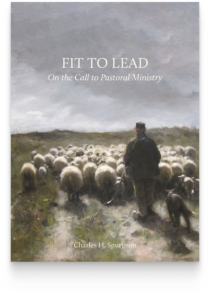 With the rate of pastors retiring, burning out, or concluding their ministries, the need has never been more urgent for aspiring ministry leaders to prepare well for their pastoral calling.
In the eBook Fit to Lead: On the Call to Pastoral Ministry, compiled by The Spurgeon Library at Midwestern Seminary, current and aspiring pastors will gain wisdom from Charles Spurgeon on how to discern and thrive in their call to pastoral ministry. In the short book, Spurgeon—the “Prince of Preachers”—discusses how to identify and encourage those called to ministry, as well as what steps to take in pursuing a call to ministry.
We are delighted to offer this eBook to you for FREE today. Click on this link to get instant access!