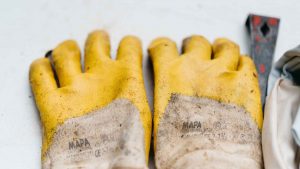





The skin on my scalp has cracked, peeled, and eroded for three years. I’m always aware of it, especially when the itching won’t let me sleep at night or when pretty girls are in the vicinity. Half my hair is gone now, mostly from pulling it out as I try to remove the chunks of skin entangled with my crown of thorns.
It’s a severe case of psoriasis—an autoimmune condition—that also inflicts my mother, along with vitiligo and celiac disease. It’s not my favorite motherly gift, but life and a genetic predisposition toward skin disease came as a package deal.
There are more than 100 autoimmune diseases. In one form or another, they’re all a version of the body’s immune system mistakenly attacking itself. Estimates now suggest more than 50 million Americans suffer from an autoimmune disease, which is approaching “epidemic levels,” as there’s an estimated increase of 3 percent to 12 percent annually.
Our bodies are attacking themselves at incredible rates, nobody really knows why, and the best that modern medicine has to offer is management programs, not cures. If that’s not the epitome of modern times, I don’t know what is.
Yet perhaps it’s an analogy for all times, at least since mortal time began.
Biblical Story of Skin
Clothed in the finitude of time-bound bodies, the introduction to post-fall mortal life began with skin: “The LORD God made for Adam and for his wife garments of skins and clothed them” (Gen. 3:21). This is a sign of both our mortality, as the garments come from animal death, and God’s compassionate deliverance, since he covers Adam and Eve’s shame and gives them protection for the wilderness.
Generations later, the tabernacle, built for life in the wilderness and nomadically carried, had a covering of skins as well (Ex. 26:7, 14; 36:14–19). These typify humanity’s fallen state: the fragile skins house the blood and life-source of humanity, because “the life of the flesh is in the blood” (Lev. 17:11).
The biblical story is filled with skin, a theme neglected by almost everyone. The exceptions are those who’ve meditated deeply on my favorite book of the Bible: Leviticus. It’s dirty, earthy, sickly, and utterly human. Leviticus is full of a host of dermatological diseases gathered in a catch-all term: leprosy. Different from modern-day leprosy (Hansen’s disease), biblical leprosy refers to almost all types of skin diseases. Specific diagnoses are given in Leviticus 13, ranging from severe chronic diseases to milder conditions like psoriasis or fungal infections.
The emphasis on bodily diseases in Leviticus is as fascinating as it is neglected. Despite psoriasis being milder than other skin diseases, if I were an Israelite, I would’ve been considered ceremonially unclean, unable to enter the temple to worship. I’d be an embodied symbol of death and mourning, wearing torn clothes, letting the hair of my head (whatever’s left of it) hang loose, and covering my upper lip as I cry, “Unclean, unclean” (13:45). Lepers lived outside the camp, exiled from the community and God’s presence.
If I were an Israelite, I would’ve been considered ceremonially unclean, unable to enter the temple to worship.
The Torah’s emphasis on skin, and the diseases that corrupt it, isn’t accidental. As Ephraim Radner notes, Leviticus’s interests in mysterious dermatological diseases indicates something profoundly theological: “Life dissipates, literally oozes away, as the skin dissolves, and thus the very character of created existence’s mortal dependence upon God is bound up with the visible presence of an integral ‘skin.’” Radner helps us see that “skinfulness” (as he calls it) is physically and symbolically integral to mortal life.
Skin for Skin
We get a picture of this “skinfulness” in the book of Job. After God allows Satan to extinguish all Job’s children and wealth, the Devil offers one more wager:
Skin for skin! All that a man has he will give for his life. But stretch out your hand and touch his bone and his flesh, and he will curse you to your face. (2:4–5)
With boils and sores from head to toe, Job takes broken pieces of pottery and scrapes his skin while his wife tells him to curse God and die (vv. 8–9). Though Job isn’t an Israelite, if we read this story against the backdrop of the Torah, we see he’s as good as dead, which is why he dwells in the ashes and his wife exhorts him to accept his fate. Whatever the specific dermatological condition, it certainly implies the biblical category of leprosy. He’s cursed by God, yet he doesn’t curse God in return. He maintains his integrity even as his own skin disintegrates.
Christian interpreters have long suggested that Jesus is the true righteous sufferer, the One whom Job typifies and foreshadowes. What’s often missed, however, is the particular manner in which Jesus becomes the true and better sufferer: in accepting the Devil’s wager, skin for skin. He takes on flesh and dwells (i.e. tabernacles) among us, and suffers for our sake in the flesh.
Leviticus’s seemingly oppressive and archaic laws and Job’s tragic story reveal God’s attentiveness to our spiritual and mortal condition. Consider Jesus’s healing of the lepers: He draws near to them, reaches out, touches, and heals their corrupted flesh. According to the Mosaic law, anyone who touches a leper’s skin becomes unclean. According to the Gospels, anyone who touches Jesus’s skin becomes clean.
As with Jesus’s other miracles, healing lepers is a sign of who he is (God in the flesh) and why he came—to give his flesh for the life of the world. The greatest scandal of the Gospels isn’t skin against skin but skin for skin.
Jesus, Leper for Us
Many medieval Christians imagined Christ’s substitutionary death in precisely this fleshly manner. The description of the suffering servant in Isaiah 53:4, foretelling Christ’s crucifixion, is often translated from the Hebrew in (more or less) the following way: “Surely he has borne our griefs and carried our sorrows; yet we esteemed him stricken (נָגַע, na.ga), smitten by God, and afflicted.”
But Jerome (ca. 342–420), the church father who translated the Latin Vulgate, rendered the phrase differently. Instead of “stricken,” the Vulgate reads, “And we thought of him like a leper” (et nos putavimus eum quasi leprosum). Jerome is leaning into the interpretation side of translation here, but he’s informed by the way the text itself suggests the sufferer is treated like the lepers in Leviticus: He is without beauty or majesty, ugly and humiliated, ostracized and despised.
The greatest scandal of the Gospels is not skin against skin but skin for skin.
For more than 1,000 years, this was how Western Christians received the text of Isaiah 53—with the image of a skin-diseased Christ indelibly impressed on their minds and subsequently depicted in their artwork. These works of art don’t portray Jesus with the usual five wounds in his hands, feet, and side; they imagine Jesus covered with holes, spots, and bruises over his whole flesh. The gospel, they might say, is that Jesus became a leper for us.
Deeper Healing
The immune system—a network of organs, white blood cells, proteins, and chemicals—is meant to protect you from sickness and promote healing. But an autoimmune disease inverts this process, attacking the very body it’s supposed to help flourish. Consider the striking resemblance to our spiritual condition, a disease of the soul, which sabotages and corrodes our existence. We wonder with Paul, “Who will deliver me from this body of death?” (Rom. 7:24).
Those with physical diseases bear a dark grace, a gift shrouded in mysterious pain, a bodily “memento mori,” that rehearses the truth of corruption. We learn from Paul that even a thorn in the flesh can be a gift (2 Cor. 12:7). Remarkably, one of the only comprehensive, book-length studies of Paul’s “thorn in the flesh” concludes that it affected his physical flesh and paralleled Job’s sufferings: “some sort of unusual, long-term, intermittent, stabbing, face pain.” Yet Paul learned to say, “I take pleasure in infirmities. . . . For when I am weak, then I am strong” (v. 10, NKJV).
Those with physical diseases bear a dark grace, a gift shrouded in mysterious pain, a bodily ‘memento mori.’
As I lament my corroding scalp, I become increasingly grateful that I have skin in the first place, that my blood and muscles are wrapped in a divinely ordained shelter—frail as it may be. And I wonder how the incorporeal God became “bone of my bones and flesh of my flesh,” how that sacred skin contained the Uncontainable.
I remember that glorious line from Gregory of Nazianzus—“For that which he has not assumed he has not healed”—and marvel at this kind of healing. A deeper medicine. My dermatologists only touch my scalp with gloves on: I am unclean. Jesus takes my skin as his own: I am clean.
The good news is that Jesus came to heal me from the inside out. Lepers are no longer banished from the temple; the Leper-King dwells with me. He makes his home among the destitute; he goes to the ruins and builds his kingdom there. He declares, “My grace is sufficient for you, for my power is made perfect in weakness” (v. 9).
Free eBook by Tim Keller: ‘The Freedom of Self-Forgetfulness’
 Imagine a life where you don’t feel inadequate, easily offended, desperate to prove yourself, or endlessly preoccupied with how you look to others. Imagine relishing, not resenting, the success of others. Living this way isn’t far-fetched. It’s actually guaranteed to believers, as they learn to receive God’s approval, rather than striving to earn it.
In Tim Keller’s short ebook, The Freedom of Self-Forgetfulness: The Path To True Christian Joy, he explains how to overcome the toxic tendencies of our age一not by diluting biblical truth or denying our differences一but by rooting our identity in Christ.
TGC is offering this Keller resource for free, so you can discover the “blessed rest” that only self-forgetfulness brings.