

A map can only help if you know where you are. That’s why, lost in a mall or an airport, you look for that little dot with three words beside it: “You are here.” Once you’ve found it, you know where to go.
In Christ, God has oriented our lives around his purposes. He’s given us a map. Your local church is the dot that says, “You are here.”
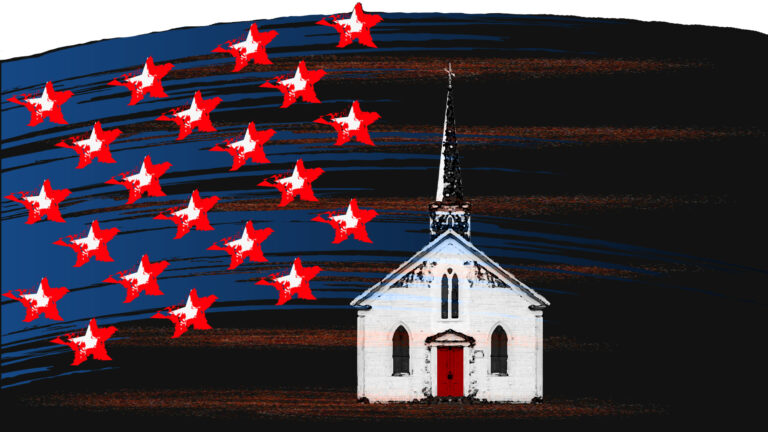
But put God’s map under a blacklight, and you see thousands more dots, deep in darkness. These are unreached peoples and places with no access to the gospel, to Christians, or to churches. In the light, the map says, “You are here.” In the dark, it says, “There they are.”
One verse captures Jesus’s burden for those dots in the dark. John Piper calls it “the great missionary text in the Gospel of John.” Jesus says,
I have other sheep that are not of this fold. I must bring them also, and they will listen to my voice. So there will be one flock, one shepherd. (10:16)
Christ’s scattered flock demands missionary church planting. Consider three truths.
Christ Has Redeemed a Flock
“I have other sheep.” Jesus doesn’t say he might have or hopes to have. He says, in the present tense, “I have.” They’re already his.
This is the bedrock of all church planting. Before any church plants in a new area or sends a missionary team to a new field, Christ has already asserted, “I have other sheep” there. He can make that claim because of what surrounds it: “I lay down my life for the sheep” (vv. 15, 17). At the center of the cross and resurrection is a redeemed flock. Jesus didn’t say, “It is pending.” He said, “It is finished” (19:30).
How can Jesus have these sheep before the cross? Because this has been God’s plan from the beginning. God promises Abraham that through his offspring “all the families of the earth shall be blessed” (Gen. 12:3), and that offspring is Christ (Gal. 3:16). Revelation 5 shows the promise fulfilled: a worldwide flock, redeemed by a worthy Lamb (v. 9).
At Babel, God scatters the glory-greedy people and confuses their language (Gen. 11:7–8). In Revelation, they stand gathered around one throne, singing. Babel leaves them scattered and confused. Blood makes them a choir.
So we plant churches knowing Christ’s work is finished. We proclaim redemption; we don’t provide it. Christ has a flock, and he will gather what he has purchased.
His Flock Is Scattered
Slow down over these words: “other sheep that are not of this fold.” Jesus is in Jerusalem, speaking to the Pharisees, the shepherds of Israel. Standing in the middle of Israel, he claims sheep among the Gentiles, scattered throughout the nations.
We plant churches knowing Christ’s work is finished. We proclaim redemption; we don’t provide it.
Do you realize who he’s talking about? Unless you’re ethnically Jewish, he means you. He was looking through continents and centuries—in my case, to a little island off the Malacca Strait. My church in Singapore exists because somebody obeyed this verse. Somebody crossed an ocean. Somebody learned a language. We’re living proof of John 10:16.
But Jesus has more. He died “to gather into one the children of God who are scattered abroad” (11:52). This is why the Great Commission isn’t a general command to make as many disciples as we can but a specific command to make disciples of all the ethnē, the ethnolinguistic peoples of the world.
Picture healthy churches as cell towers in various locations. Some places have many towers and full bars: the gospel within reach. Other places, like Singapore, have a signal but not full coverage.
But thousands of peoples have no tower at all. Not a weak signal—no signal. No churches. No Bibles. No Christians. These are gospel dead zones, the darkest places on God’s map. Unless someone crosses cultural and language barriers, roughly 300 million people across 3,000 unreached language groups will be born, live, and die without access to the gospel.
While we’re gathered in our churches, they’re scattered among the nations, like sheep without a shepherd.
We Must Plant Churches to the Ends of the Earth
Hear our Lord’s resolve: “I must bring them also.” His determination is our motivation. What drives us isn’t guilt but glory. Guilt might send people to the mission field, but it can’t keep them there, not through the afflictions of church planting. Only glory can. As Spurgeon put it, “If there be anything about which we cannot tolerate lukewarmness, it is in the matter of sending the gospel to a dying world.”
How will Christ bring his sheep? “They will listen to my voice.” His Word—in our mouths. Missionary church planting isn’t a gamble. Jesus didn’t die crossing his fingers. That’s what he told Paul in unreached Corinth: “Do not be afraid, but go on speaking and do not be silent, for I am with you . . . I have many in this city who are my people” (Acts 18:9–10).
Adoniram Judson preached in Burma for six years before his first convert, while supporters back home wondered whether the work was worth it. He wrote, “If they ask again, What prospect of ultimate success is there? tell them, As much as that there is an almighty and faithful God, who will perform His promises, and no more.” By the time of Judson’s death, God had graced Burma with 63 churches and more than 7,000 converts.
This is a difficult and dangerous task. These peoples are unreached for a reason: All the easy language groups are already taken. But don’t weigh risk by the odds of danger. Weigh it by the worthiness of the goal. There is danger in missionary church planting—and far greater danger in playing it safe. If Jesus laid down his life to redeem them, we must lay down our lives to bring them home.
Don’t weigh risk by the odds of danger. Weigh it by the worthiness of the goal.
This doesn’t mean everyone boards an airplane; the task requires goers and senders. Picture missions as a spear. The razor-sharp tip is the missionary team, cutting through barriers to plant a church where none exists. The solid shaft is the church behind them, bearing the weight. A good spear has more weight in the shaft than at the tip. Wherever God has placed you, grab hold and thrust it ahead.
When will the task be done? New Testament scholar George Ladd answered, “I do not know. . . . I know only one thing: Christ has not yet returned; therefore the task is not yet done. . . . Let us get busy and complete our mission.”
He Laid Down His Life
Peter Cameron Scott was born in Scotland in 1867 and raised in Philadelphia. He had a fine voice and his sights set on the opera stage. One day, climbing the opera house steps, he was struck with the conviction that he’d been chasing fame and comfort. He turned around and never went back.
Peter and his brother John sailed for Africa to plant churches among the unreached. Shortly after arriving, John contracted a fever and died; with his own hands, Peter dug a grave and buried him. Months later, malaria nearly took Peter too, and he was evacuated to London. Peter had lost his career, his brother, and now his health.
Then, walking through Westminster Abbey, he came upon David Livingstone’s grave, engraved with the words of John 10:16: “Other sheep I have, which are not of this fold: them also I must bring.” Peter knelt, prayed, and rose knowing what he must do. It wasn’t guilt that drove him back to Africa. It was glory.
In 1895, he returned to Africa’s eastern coast with a team of seven, aiming to plant churches deep in the interior, where Christ had not been named. They called it the Africa Inland Mission.
Fourteen months later, Peter died of blackwater fever, never seeing a single church planted. But his life wasn’t wasted. In the 130 years since, the Africa Inland Mission has planted thousands of churches among peoples once unreached. Like his Good Shepherd, Peter laid down his life to bring the scattered sheep home.
So may we plant churches—for the glory of God, through the local church, to the ends of the earth—until there’s one flock, one shepherd, one great multitude around one glorious throne.
Free Playlist by TGC: ‘The Power to Persevere’
Looking for a playlist of fresh, inspiring Christian music to encourage you in your faith? Check out TGC’s new “Power to Persevere” playlist, created to accompany the upcoming TGC27 Conference.
The 75 songs on the FREE playlist, curated by TGC arts and culture editor Brett McCracken, represent a variety of styles but are united by themes of steadfast faith, God’s sovereignty, and the hope of heaven. Start listening today! Simply click below and you’ll receive a link to the unlisted playlist on Spotify or Apple Music.