




At a time when we typically live longer than any generation before us, it seems all we want to do is preserve our youth. From hair dye to microblading, antiaging creams to Botox, we negotiate with age through products, surgeries, and even downright denial. But Scripture tells us that wisdom is with the aged and gray hair is a crown of glory—so why are we so age-averse?
In this panel discussion recorded at TGCW24, Courtney Doctor, Vanessa Hawkins, Melissa Kruger, Laura Wifler, and Jen Wilkin talk about why a biblical perspective on aging means we don’t have to fear the years.
In This Episode
00:00 – Aging and panel participation challenges
03:32 – Cultural and personal influences on aging
05:53 – Beauty and aging in modern culture
11:46 – Role of influence and responsibility
17:16 – Challenges of aging and chronic pain
20:59 – Balancing stewardship and idolatry
36:24 – Redefining identity and purpose in aging
38:07 – Importance of mentorship and role models
39:53 – Embracing aging and the gift of years
SIGN UP for one of our newsletters to stay informed about TGC’s latest resources.
Help The Gospel Coalition renew and unify the contemporary church in the ancient gospel: Give today.
Don’t miss an episode of The Gospel Coalition Podcast:
Transcript
The following is an uncorrected transcript generated by a transcription service. Before quoting in print, please check the corresponding audio for accuracy.
Laura Wifler
Before we get started, will you guys share your ages with everyone? I feel like that’s important, right? We’re gonna do it.
Jen Wilkin
I’m 55 I have four grandkids.
Vanessa Hawkins
I’m 51 and my daughters are all sitting on the front row.
Unknown Speaker
My daughters are over there,
Vanessa Hawkins
and my sisters, I should say,
Courtney Doctor
Okay, well, I just want to know if y’all were listening this morning. How old am I? 56 I got five grandkids, and I have no idea if my daughters or daughter in laws are in the room, but no awesome.
Melissa Kruger
And I’m 50. As I said, I’m the baby. I’m young. I’m so young, right? And I don’t know if my are my girls here, nope. Striking owls are the best. You’re loved.
Laura Wifler
Well, I feel like I should say my age too, but thankfully, I’m the host, because I don’t know what it’s like to age. So I am 37 and my mom is in the room. My kids are not old enough to probably be in this room, so, but she’s not cheering for me at all. So that’s okay to kick it off. You know, I wanted to go back because when we were planning the session, we all got together on a zoom call and chatted a little bit. And one of the things that you said, Melissa, really stuck out to me. You said, you know, it’s kind of hard to be on this panel. It’s hard to be asked for that. And can you just tell the audience a little bit like, why is it hard to serve on a panel like this? Why? Why’d you make that comment?
Melissa Kruger
I think one reason, I think it’s it’s hard in two different senses. I think publicly, it’s hard, and then privately, it’s hard so publicly, I think what all of us are concerned about being on a panel like this is that we say something up here that becomes a law for other people. You know? I mean, I know Billy Graham had a rule, right? And I don’t even know if he called it, if he ever thought of it that way, he just had a conviction that he was choosing to live by, and yet it sparked this whole, you know, Billy Graham rule. And so I think none of us would want to say anything up here that would become, well, you know, Courtney doctor said, you know, whatever about whatever topic that we might discuss when it comes to aging, and so I think it’s really difficult. We want to say this is a discipleship issue that is very, very important. And it does matter what we think about these things and how we discuss it, but we all should be doing that as we’re in the word and we’re talking to God, and we’re prayerfully thinking about these things, not just because someone on the panel said it. And then privately, I would just say it’s a difficult thing. I mean, it really is something we all deal with. This is personal. I feel like I went from Oh, wow, you’re the speaker. You have kids, you know, like, because you’re so young to no one says that anymore, and all of the sudden you’re like, Huh? Am I just completely outdated, and people want to hear the younger people. So it changes so quickly. You’re like, I thought there was going to be a little longer season where it was just the right spot. And so it is personal. You start to wonder, and it can take a lot of work just to say, Oh, wow, she hasn’t let herself completely go, just to look half way normal.
Vanessa Hawkins
No, I I feel that, Melissa, I knew normal. I feel that so much because in the black community, you know, there’s a there was a time when everybody called me sis, like, Hey, sis, what’s up, sis. Now it’s what’s up auntie. And I’m like, I can’t even buy a sis, but it’s fine. It’s fine.
Jen Wilkin
Somebody called me Mama Jen, and I was like, are we related?
Laura Wifler
Well, building off of that, I think Courtney, I would love for you to speak a little bit about life experiences, things, comments like this, or other things in our life. How does that shape, how we think about aging?
Courtney Doctor
Yeah, I think we all come from, you know, we have a we have a family of origin story, and we have, you know, the things that have shaped our stories, whether it’s the culture we live in or the subculture we live in. You know, there are different parts of the country that are going to value different things more, but there are, every family of origin has values that are taught explicitly and implicitly, and that’s going to shape how we view our physicality. It’s going to shape how we view our body, how we shape it’s going to shape how we view what we think of beauty, and what what beauty is, and what beauty does. I think that’s something we’re going to be talking a little bit about here, sort of that. That street cred of beauty and how important it is. I think that areas of affirmation play into how we think about this, and also areas of desired affirmation, the thing we always wanted to hear but didn’t. I think that plays into it our current friend groups. I mean, they shape completely, shape how we think about things like this, and what’s normalized and what’s exalted and what’s valued and what’s worked for. And then I think the other thing is, so if we’re looking, you know, in our past, to our family, you know, our story of origin, and then we’re looking currently, who are kind of hanging out with. I think we also need to look and see, have you seen anybody age well, and what did it look like, and what did that do for you? And what do you long for in how they did that? So I think there’s a past, present and future aspect that really shapes how we think about this topic. Yeah, I love
Laura Wifler
that those are all like different topics that we want to dig into today. And I appreciate that you mentioned beauty. That you mentioned beauty, because I know that’s in a women’s conference that has to be discussed, right? We need to talk about the beauty questions. So Jen, I’d love if you could talk to us a little bit about beauty and aging, and how our views on beauty and aging are influenced by modern day culture, and why is it so important to allow ourselves to age naturally?
Jen Wilkin
Oh, thanks for the easy question. Yeah. So I would just pose the question to you guys, like, turn to your neighbor and say, what you think the biggest influence is currently on the way people are perceiving beauty? Do it? I’m hearing the word. I heard social media, right? I heard I heard Instagram, yeah, so we all know. And I just, I want to get that out. Oh, you had long answers. That’s good look. And another thing, I want to get that out in the open at the outset, because often when conversations about like, what, what I want for my body, when we have those conversations with someone else, we do tend to communicate it like it’s a discussion that’s happening in a vacuum, and by turning your neighbor and acknowledging, Nope, we’re all actually being shaped by the images that we’re spending time gazing on on social media, or wherever it is then, then what we’ve just said is this conversation isn’t happening in a vacuum. I have, I have adopted the phrase not original to me, but we become what we behold. We all know that we are created to imitate. It’s just a question of what we will imitate. And so I do want to acknowledge at the outset of this conversation that your current perception of how you should look at any age is heavily shaped by where you’ve been casting your gaze. And we’re all casting our gaze somewhere. I include myself in that, okay, but I do think that it brings to the forefront why it’s important for us to be casting our gaze on women who are making different choices than Instagram influencers might be presenting to you one of the things that I try to remind myself of in this conversation, and this is again, this is for me personally. So if this hits you too heavily, that I am sharing my personal process that I go through to try to orient myself, you feel free to adapt this however you need to. But I remember seeing a picture of Mother Teresa when she was advanced in years, and I try to imagine myself sitting down and having a conversation with her about how I’m thinking about my appearance as I age, and how she would respond to me. And it helps me. And I’m not. We don’t all have to. I am not mother, Teresa, and she was in a different, you know, context, than I’m in. There are a lot of things that aren’t parallels, but I do think it just kind of gives like It’s like dumping cold water on my head a little, which is what you need when you have been lulled into a rhythm that might not be supporting a Christian ethic. And so I do think just to acknowledge the forces that are driving us. And then, you know, you think about what a gift it is to be given years. Anyone who has ever lost someone at an early age knows that when you start to get gray hairs, you’re thinking about how that person never got to get them. And so when I see gray hair coming in, that’s what I remind myself of. This is a gift. You know? This is a gift to me. And if I look in the mirror and I never see, you know, we become what we behold. Well, part of it is beholding yourself and your own changing image in the mirror and recognizing, oh, I know why my forehead has lines on it. It’s because of that third child. I just realized my third child is in the room, honey, that was just an example. It’s not really. You’re a delight. You know what I’m saying? Though I’m. Mean and and so I try to remind myself. And then the other thing that I try to remind myself of, I’m sorry, my answer is getting a little long, is I think about Christ’s resurrected body. I think when we think about receiving new bodies in the new heavens and the new earth, we’re picturing whoever that Instagram influencer is like, I’m finally going to have that body that Christ, resurrected body, bore the marks of His earthly work. So I don’t know what my resurrected body is going to be like, but part of me wonders if it won’t still bear some reminder marks on it. And if everybody is Kim Kardashian. Ain’t nobody Kim Kardashian. So I don’t think we’re all going to be supermodels, because what would be the point? And we’re created to be, you know, individuals and be ourselves. So I just don’t know that when we think about aging, we are giving credit for all of the good that can come from acknowledging the passage of time, which is actually a biblical principle. So yeah, those are some of the thoughts that I’m having
Melissa Kruger
and and maybe those scars remain because they’re beautiful, and we’ll actually be able to see the beauty of of the aging process, just like, just like you were saying. But I think part of it when you were saying the Mother Teresa thing, I think we also sell all of ourselves short, because we think, oh, yeah, well, I’m not Mother Teresa, so it doesn’t matter what I do with my body, whereas every single one of us is influencing you think, Oh, I’m not an influencer, but every decision I Make is influencing what my daughters will think is normal, what their friends will think is normal, and our sons will think is normal. And I think we have to bear that responsibility. We are all influencing someone, and it matters what I choose to do. It’s not just my choice,
Vanessa Hawkins
you know? Yeah, I would. I would add to that, I think with culture, we’re always acting on culture, and culture is always acting on us. And so it’s not just a one way thing. And so we, you know, we can feel as though we are so influenced by social media that we don’t really have any advocacy in that, any agency in that. And we do. The truth is, we do. And so we have our spheres of influence. We have people that we are affecting, and just how we live, whether we’re saying anything or not. Yeah.
Laura Wifler
Is there anything else you guys would like to add around, around the message we’re sending to kids and to boys and to girls? Because I think about my little girl at nine and six, and just how it’s I feel like I really try very hard to talk about makeup being fun and that, you know, I’m I’m choosing not to do something instead of like I have to restrict or something like that, and even in language. But yet, my daughter walked up to me and said, Mommy, do you think I’m beautiful? You know? And I was like, Oh, baby, you know. But it is innate in us. And so what are some things that we can do as we talk about the influence to help with the young boys and girls coming up, and what message does aging naturally send to them?
Courtney Doctor
Well, I do think that we’re sending the message culturally that it is the prime virtue, it is the most exalted, the most prized, the most sought after thing that somebody can have and it’s not. And so I think that we’ve prioritized and really just given one or two definitions of beauty, but so so I’m worried about the message that’s going down, but I’ve got to tell you that I’m also encouraged by the message that’s that’s coming up from the younger generation. My daughters have had such an impact on me and my ability to they are so body positive, and they think about their bodies in such healthier ways than I ever did, that I’m learning from them, and it has been redemptive in my life. And so I do think that the message can go a lot of different directions. And just to realize that as we all and not not just body positive, to be body positive, but to have the view of our bodies and what they are doing as we age, have that view. That is the the eternal view, and then the the, you know, how is it being used now? And why are we even given a body? And, you know, all of those questions that that need to be asked. And so I think the messages can, can, can go both ways. We have a lot to learn from our younger sisters.
Jen Wilkin
I would agree with that. I think there’s a stronger sense of the purpose of a body in my daughter’s generation than there was in mine. I would say my generation viewed bodies, women’s bodies, primarily as decorative, and this generation views them more primarily as useful, which is a much more biblical. Local read on on how to think about our bodies, and some of that was just where the culture was at the time that we’re coming into womanhood. And plus, I live in Texas, which impacts it. It really does. And so, so there is that I think we should specify when we’re talking about beauty. We’re speaking specifically of youthful beauty. I mean, I think everyone would say someone can be beautiful at every age, but there is a particular power and privilege that is communicated to those who maintain youthful beauty, and it’s important for us to acknowledge that power is what is being leveraged, and that the reason so in other words, I’m less interested in the question of what you want to do. I’m more interested in the question of why you want to do it, I should say why I want to do it. I don’t even mean to lay that on you. And so I think about that Seinfeld episode, you may remember it where he dates this girl who’s a supermodel, and he dates her because he wants to see what she can get away with that he can’t just because she’s beautiful. And so he speeds while they’re on the highway, and they get pulled over, and she talks the officer out of giving them a ticket because she’s beautiful. And it’s like, you laugh at it’s funny, but you’re also like, Nope, that is true. That is true. And so for many of us, God bless those of you who are stunningly gorgeous in your youth, because you really do feel the loss of societal power more sharply than those of us who are more average in appearance do as we age, who knew there was upside to looking average. But I think all of us feel it to some degree. All of us feel, am I becoming invisible? You know, as you start to hit your middle years, and then the weird thing is, and I do want us to not only talk about appearance, because the weird thing is, is you actually move out of that phase and you go, I don’t actually care.
Jen Wilkin
And I think that is what we want the younger women in the room to know, is you think this thing, if you think this thing that you’re losing is going to cost you your identity, it’s possible it’s actually standing in the way of who you are becoming. This
Laura Wifler
brings me right to my next my next question. It was a good, powerful line. Vanessa, I want to ask you a little bit to speak to the other aspect of aging, where we it brings on, like chronic pain disability. I know, as I’ve watched my parents age, just different things, aches and pains that come on and that can feel really scary. It can look scary as I look ahead, and I know when you’re in it, it’s very scary. And so I’m curious, how are you thinking about that, biblically and with hope?
Vanessa Hawkins
Yeah, what comes to mind when you ask that is my grandfather, who was 90 plus years old, and he was really super fit. I think he didn’t retire till he was like 83 from from doing manual labor. I mean, would get on his roof and do all these things. But he used to have this phrase that he used. He would say, Getting old is a blessing, but it sure is inconvenient. So he would, he would say that, but I say that to say, As Jan was saying before getting older, it really does matter where your gaze is, because if you know, if you have been gazing at the one who has been sustaining you and who is faithful all of your early years, if you’re learning to do that, if we’re learning to do that, We’re being discipled into learning to put our gaze on Christ, then we’re still trusting him into those years. We’re trusting him with, you know, the things that come and the trials that come as we get older. But I also say the other part of that is just good stewardship. I think that we have to take good care of these bodies and so think, yeah, I mean, we are a part of the fall, you know, we are, we’re, you know, we’re under that the results of that. We see the impact of that every day. But it doesn’t mean that we can’t do our very best to take good care of these bodies, and so doing what we can do to steward these bodies well, to, you know, to eat well, to exercise, to do all of those things that we need to do, to to be, you know, to prevent those things, as you know, to as much as we are able. And then the rest of that, you know is we’re setting our gaze on the Lord and trusting that he’ll be faithful, and he is.
Melissa Kruger
I also think there is a real humility that has to come with aging. And I’m talking about things will take longer. I’m slower my brain. Some of the hardest things for me are honestly brain fog, like I don’t think I remember. Well, I’ve never really been great with names, but now I don’t even remember that we actually had a conversation. I mean, I you know, and it. So there is a humility with that, you know, because I think when when I was younger, I maybe was like, why are they so slow? You’re really gonna write a check at the grocery store.
Courtney Doctor
I thought we weren’t gonna get specific here.
Jen Wilkin
I thought you were gonna mention that video we made where I literally forgot Courtney’s name while she was sitting next to Melissa. I don’t even remember his name. I forgot which name you forgot. And then I called Courtney Melissa this morning, didn’t I, when I was talking to you, it’s going fine. It’s all coming out very publicly. Aging is fine. Oh my god.
Melissa Kruger
And, and, you know, it’s, it’s humbling. It’s humbling to say I’m gonna have needs, and I know that those are only going to grow. I mean, it really is humbling to be slower and to say, Hey, I might not have the capacity to do what I used to be able to do. And that’s hard. I mean, there are just some hard things, but, but those are moments to say, This is my lot. And while I choose, this is the day the Lord has made. Well, I choose to be rejoicing and give what I can with what I currently have. So this body is still useful, even if this body can’t work. I mean, goodness, think of the life of Johnny, Eric santada, I mean, what her life has meant to so many people, even though her body does not do what she would like it to do on a daily basis. And so there is still so much our bodies can do, even when we might find ourselves in a rest home. You know, at age 90, who can I? Can I pray for the next generation? Can I share the gospel with with my neighbor next door to me? I mean, there’s still things, if I’m here, there’s still a mission for me, which is the way we can look but, but there’s got to be a new humility that we might be more limited
Courtney Doctor
well, and we don’t turn into that 90 year old woman when we’re 85 right? It starts with what Jen was talking about what we behold when we’re 25 what we’re spending our time, valuing, loving, pursuing, doing, perpetuating. I mean, those are the things like it matters at every age and stage, what we’re doing and what we’re valuing and what we’re loving, because we are not going to be the 90 year old woman who is thrilled just to be praying for somebody, right? And I say just because, obviously, it’s the it’s the most important thing somebody can do and so but, but it doesn’t just happen. You know, wake up one morning and your mother, Teresa,
Melissa Kruger
and I will say something about those 90 year old women. I’m telling you, they’re the most beautiful women I’ve ever seen. When you when you really get to that age and you have walked with the Lord, there is a glow that no cream can give you, and no treatment, whatever you might do can give you. There is a beauty of the Spirit at work in someone I remember this, my friend Debbie. She had breast cancer, and, you know, cancer, the radiation, the treatments, they’re horrible on your body. They’re just horrible on your hair. They’re horrible on your skin. They’re, I mean, they’re horrible. And she was going through all that, but let me say she was radiant. She truly it was so interesting. As her cancer journey had grown so her faith. Her first time at Bible study was the day she was diagnosed, and during that Bible study, she became a Christian. And every day, as she was walking with the Lord and knowing him more and knowing him more, her body was dying because of the cancer, but she was alive, and the glow she had in the midst of dying, it was just it was just something different. So if we want to age gracefully, it is looking to God. That’s what makes us beautiful. Whatever our bodies look like, the spirit alive in someone is what makes them glow.
Jen Wilkin
I heard a principle that ties in with this that has stuck with me. I hope this phrase will stick in your head. Bodies age. People develop. I want to be developing, but part of what develops me into who I’m supposed to be is the fact that my body ages, and so I don’t want to reject the aging process, because the aging process is training me into someone and like you said, it’s an increasing dependence in many ways. It’s a walking backward from the way that we walked out of childhood. Right? When you walk out of childhood, you have increasing you have you have limitless possibilities and increasing personal freedoms. And on the other side of the age curve, after you get past that middle age midpoint, you have decreasing possibilities and not limit, you know, and limited opportunities. And it continues thusly, and if you live long enough. Of your children will care for you in the very same caregiving ways that you cared for them when they were infants. And there’s actually a beauty to that. Now in our culture, we say, don’t be a burden to your children. Let someone else handle all of that. And there are a million ways to do end of life care. So I didn’t just say everybody in here needs to, you know, provide every element of care for an aging parent, but I think it’s worth us considering how we think about the latter half of life, because I promise you, the culture is not they only value the first half of life, which is why they only value youthful beauty, because it’s a journey into irrelevance once you get over the curve. I don’t care if the culture is saying that. I do care if the Christian subculture is I care a lot because the Bible says something very different from that. Says it’s a privilege to care for people who are returning to essentially a state of infancy as they age. It says that’s a whole life pro life ethic. That’s what it means. And it also says that gray hair is a gift that no one is guaranteed. And I didn’t just say you couldn’t dye your hair. Just PS, in case you guys were
Courtney Doctor
I like to keep my gift hidden. It’s it’s a metaphor.
Speaker 1
I cover my wisdom, hide it under a bushel. No
Laura Wifler
speaking of gray hairs that we want to hide. Let’s say someone out here listening wants to change something about their body, maybe that’s physically, maybe that’s with chronic pain and just something that has just been plaguing them for a long time. How do you guys think about the line between stewardship and idolatry? Melissa, maybe you can kick us off.
Melissa Kruger
I’ll say, I’ll start with a general principle, which, let me say it. I mean, clearly, you know, if we’re suffering physically in certain ways. I mean, plenty of people came to Jesus and He healed them. Yeah. I mean, there are realities of that, but I think we probably think wrongly about ourselves if we think that we are going to find contentment by attainment. You know, often we think we need to gain more to be content in whatever it might be. And the reality is that this is what we were talking about with the bread of life, right? You know, we think some physical thing, if I only had this, if only had that, then I would finally be content. There are some of us who live, you know, some, many of you probably live with chronic pain. And yes, I would say, pursue what you can to be free of those things. But sometimes we’re called to live with chronic pain, and there aren’t treatments for certain things. And so there are places where I think we ask the Lord, help me bear this in a way that honors you, and we hold things and you know, so there’s there are definitely right places to get help and things like that. But I do think when you look at certain choices in chasing a particularly beauty things, I think usually it’s just gonna be kind of like when we chase money, who was it? I can’t remember who said it. It was like, how much money is enough? And they said, just a little bit more. Who was that? Do you know?
Jen Wilkin
I don’t know, but I have a joke with my stepmother, the one who let I lit her hair on fire. You noticed I wear the turquoise jewelry? She gives it to me. She has sold it for years as a business and whatever, and so she gives me very nice things. And she will always jokingly say, I’m just trying to purchase your affection, to which I always respond, you’re so close, just keep on trying.
Melissa Kruger
And so, you know, I think there’s just this, you know, we think if I could just, if I could just fix whatever you know, thing that’s bothering us, then we’d be okay. And it’s just never going to be true. It’s never going to be true. I mean, that’s it’s just so good to remember we are on a journey home, and I always like to say, if we really viewed this life like living in an airport, you know, when you’re traveling, you know, things won’t go quite as planned. You’re probably not going to look that cute, your clothes are going to be wrinkled, you’re going to be tired. You might be a little bit crabby, but that’s okay, because you’re not home yet. You’re trying to get there, and so you expect there to be bumps and bruises along the way. I think part of this whole discussion is we think our lives should be perfect. Here. We’re heading home, we’re heading home, and so the thing is to use everything we have in the days we’re given to get home ourselves and to get other people home like that’s the whole thing. We’re just on a journey. And I think so often we’re trying to build our houses in the airport, and when it gets uncomfortable, it they were never meant to be built there.
Vanessa Hawkins
With regard to. To wanting to change things about ourselves. I think heart posture really matters, and so it’s the reasoning why you’re wanting to make the change. If it’s that you’re looking in the mirror and you’re thinking, I just I really don’t like me. If there’s a if there’s this element of, I can never be content with my body, if there’s this element of even self hatred, you know? And so I think that those are some things that we have to deal with. Those are things we have to wrestle with truth, and those are things we have to take before the Lord and to actually address those things. Because if that’s what’s motivating us to want to change ourselves, there’s some inward change that needs to happen first.
Courtney Doctor
I love that. One of my favorite scenes in, sorry, just not a recommendation, just talking about it in the Barbie movie, is when Barbie is on the park bench, the bus bench, and looks over at that elderly woman and says, You’re beautiful. And I was not expecting her to say what she said. She said, I know it, and I loved that. Here’s, you know what? Like the culture’s view of beauty, telling a woman who could be invisible in our culture currently, right? And she said, I know it. That’s because it was in order to be, I mean, you know, no, I’m not spiritualizing that. No, it wasn’t. But I want to be there because I know who I am in Christ, and because I know that there is something he does through the process that is beautiful, that to be sanctified, to look more like Christ, is beautiful. I want that like I want that.
Jen Wilkin
So I think everybody’s probably had the universal experience, or I’m about to really expose myself to ridicule here of where like you buy, let’s say it’s a tube of lip gloss, and you’re like, This is it? This is going to it’s happening for me right now. And then you realize maybe that was not going to be sufficient to the need, but that feeling that you get right. And so I guess my point would be, we don’t have to take aim at the big issues. Let’s take a look at some of the small issues that heart motive behind it is. And here’s the thought process, it’s if I could fix the outside, the inside would just come in line. And that’s actually the opposite of what the Bible says about the way we’re changed. The way the gospel works is from the inside out, not the outside in. And I think it’s no secret that the culture at large is exploring to its extreme limits, the question of, if I change the outside, then the inside will feel better. And as those who subscribe to a Christian worldview, we would say that’s actually upside down and so, so no one wear lip gloss ever again. No, I think that there are innocent ways. There are non consequential ways to purchase a tube of lip gloss and carry it out as far as you need to in your thinking. And so again, it goes back to, what am I expecting this to do for me? Right? And being realistic about what it can do. And then there’s also, there’s never a question of just what it’s going to do. To me, all of our actions have collateral benefit or harm to the people around us. That’s why the gospel, why the New Testament, spend so much time on the one anothers. Because there’s no such thing as an action taken in isolation. And so as you think through what you will or will not do as a Christian, we don’t get to say, Well, I’m just doing this for me, because we recognize that nothing that we do is just for us and just impacts us. And so that can, that can help. Maybe give, give a rather than give a prescription, give, maybe some principles to think about when you’re weighing any particular decision that you want to make. But I do hope that we don’t have to talk about beauty the whole time, because we do have, you know, just the aging in general, once you kind of get past the how I look part, I don’t know. I think you guys, I think we’re all feeling this. I think we’re getting to that age of life where you’re like, This is really great. And everybody led me to believe it would be terrible. Did you think
Courtney Doctor
that it’s like, raising teenagers? Everybody’s like, it’s gonna be horrible. And it was the best time ever. Loved it. Loved their child, right? I mean, it’s, you know, you’re doing okay, by the way, you’re surviving, but yeah, like, I love it. But I also had a little reality check by my very truth speaking youngest daughter. Man, that girl slices it thin. I said, so. Something about being middle aged. And she goes, How old do you think you’re live to be? I’m like, Oh, I’m not middle aged anymore. Okay, I got it. I got it. Like, I’ll call her, yeah,
Unknown Speaker
110 Yes,
Speaker 2
exactly. I mean, man,
Courtney Doctor
but yeah, it’s you, you get here. But I also know here, because I’m just pressed, I’m just a little over the middle. I’m just a little but, you know, I Lord willing, still have a ways to go between this slightly over the middle and and the end. And so, you know, is it scary to think about. Yeah, right now, this is great. I do love this. I love the freedom. I love the self forgetfulness. I love I mean, there’s a lot I really not the forgetfulness. That’s Melissa, the self forgetfulness. I mean, let’s make it clear, I have not lost that yet. We weren’t going up the escalator earlier, though, when we realized I could have babysat her, which is really sad, but that’s kind of what I do professionally. So it’s all
Jen Wilkin
six year old watching an infant. No,
Courtney Doctor
but when I was 12, six, you know, 18, she was 12. Like I could have anyway.
Jen Wilkin
Wouldn’t leave my income with you.
Courtney Doctor
Come to my room later. Girls,
Laura Wifler
I don’t know. I don’t know how to control you guys. Oh my goodness, over here,
Vanessa Hawkins
Laura, Laura, I’m gonna get this train back please. I think there’s a there was a transitional time for me in particular, and you know where going from being a mom of girls to being an empty nester there felt, it felt like there was a time of, kind of redefining who I am. And so some of that is scary. I think in any transition, there are some things because you’re letting go, but at the same time you’re kind of leaning forward to something new. And so it’s, it’s an opportunity to redefine, but you know, there is also some grief associated with that, and so there’s some transition. But once you have redefined, and you’re kind of finding your footing, man, there’s so much beauty in that. There’s so much beauty, and there’s so much freedom, and the relationship does change. My I went from, you know, being my children’s, you know, parent, and, you know, I’m still their parent. But I went from, I went from being the one who was just, you know, kind of advising every step of the way, all of the details of life, to now, kind of being an advisor who hears what’s going on, and I get to hear, you know, life lived through their lens. I get to see what it is that we’ve put in them, lived out and that. And there’s just so much beauty in that. So, yeah, so I would say some transition, of course, some fear, a little trepidation with the transition and letting go, but the redefining and allowing that to kind of thrust you forward to see what it is that Lord has for you in the new season. There’s so much beauty. There so much excitement, so much to celebrate in that
Laura Wifler
I love that. You know, when we were on our call, I asked you guys this personally, because I was like, I need to sit in the seat of the learner. I’m curious what your answer is to this, because I asked you guys, hey, Is it offensive to call someone an older woman the first time? And a lot of times, I feel like people always have that story of, you remember the first time someone called you an older woman? Like, I remember when I was like, always a younger woman, and then one day I was like, what was that? You know, I was called that, and I couldn’t believe it. And so it kind of stands out in our minds. And so I’m curious, if you guys just have any thoughts on, how do we step into aging well, and even, like, take that as a compliment, Courtney, maybe you can kick us off there, as we do our last
Courtney Doctor
question, she’s letting me kick it off because I did. I was, I was in my early 40s, and I was at a friend’s house, and her name’s Anna Porter, so just wanna call her out. And I was getting in my car to leave, and she’s like, you know, thank you. I have so been wanting to meet with an older woman. And I got in my car, and I was like, is she wanting me to connect her with one? Like, what was she asking? And I’m looking in the rear view, I was like, oh. And so, you know, it’s, it’s a little sobering. I’m past the point of that being surprising anymore. But, like, I just turned in this, I just wrote a Bible study with Hunter belis, who’s 20 years younger than me, exactly. And, you know, she loves to talk about how I’m the older saint. And I’m like, Well, we’re also friends, right? Like we’re also but it is, it’s, it’s stepping into it. And I think asking the question, you know, we’ve talked a lot about heart motives, and it’s just so important, but asking the question too, of, why is that hard? Why is it hard? What am I what do I feel like I’m losing? What am I wanting to get? You know, we ask the question, what do I wanting to gain? But I think it’s also important to say, what do I fear I’m losing? And I think that even as we have this conversation, and I want to make sure there’s time here, but even as we’re having this conversation, and I’ve had several. Younger women say, Please age in front of us. Like we want to see this happen, and we want to see it done. Well, it is such a challenge and a call, and I’m just going to say that to all of you who are older than us up here, like, keep aging. Well, show us what it looks like, so we can follow in your footsteps, and others can follow in ours, because it is, like Jen said, it’s our actions are not done in isolation. We have to do this together, and we have to understand and redefine what beauty really is. I think
Jen Wilkin
there’s also that wisdom issue. So my dad is 84 and I will have conversations with girls where they’re telling me, you know, I have a problem I need help with, and they start into what the problem is. And I’m like, I could complete this. I know what conversation we’re having because I’ve had it now at this point, many times with many girls, and that’s fine. I don’t say it like, Oh, hurry up and get to the punch line. But it’s like, I’m waiting, because I know this story, right, and it’s just because I’ve lived 55 years. And then I think about my dad, who is 84 and I think, if I feel this at 55 how many times has he just sat there waiting for me to finish what I’m saying? Because there’s the wisdom that’s given to us from God, and then there’s the wisdom of age, which is just, I’ve just lived longer, and I’ve seen some things, and that’s the wisdom that the culture gives. No You know, it’s like, if you’re not current, if you don’t know how to use your phone, you know, like my kids are already telling me how to use my phone, that’s fine, but that doesn’t mean there’s no wisdom to be offered. And so I think about, when my father passes, what will die with him? What are the things that I will wish that I had asked him when I had the chance? And so when you, when you think about aging, be thinking about like, keep track of that. Keep track of the things that you don’t feel so dumb about anymore, and praise the Lord for the gift of years. And then think, if I know this much, who’s the person who is ahead of me? And let it be said of the family of God that we honored our spiritual parents into old age as we’re commanded to do, because, not just out of obligation, because of the reciprocal blessing that we receive when we do.
Melissa Kruger
And one thing on that, maybe for younger people in the room, is to really think about who you’re listening to, it can be really tempting, because maybe it’s an easier place to find advice to go to. You know, someone who’s been married five years, and you know who’s the new marriage guru, and you’re like, you know that might not be the best place to go. I mean, they could have amazing wisdom. I mean, I’m not. I’m not just trying to discount someone, but I would say it would be safer to go to someone. You know, look at for the people who have been married 3040, years. You go to them and say, What did you do? You know, look to those older people. I know it’s cut. They’re probably not on Instagram talking about their marriage, because they have wisdom,
Melissa Kruger
but they would probably really be willing to sit down with you over coffee. And those are the people who can say, Yeah, I took this way too seriously. I shouldn’t have done this. And those are the people that you want to listen to. So actually, look for the wrinkles. Look for the gray hairs. Look for the look for the people who they’re there. It’s they’ve stuck it out, you know, ask them, look for the woman who’s been walking with Jesus for 40 years, and say, What have you done? Because my whole goal in this life is to endure to the end. That’s the goal. That’s the goal. We are tempted to look for the woman who you know has has the perfect outfit or whatever, look to the woman who’s walking with Jesus and is ahead of you and say, What have you done? I want to be like you.
Laura Wifler
That is a great spot to end. Thank you, friends, so much for the wisdom of wrinkles today and just of sharing, we’re so grateful for y’all.
Free Book by TGC: ‘Before You Lose Your Faith’
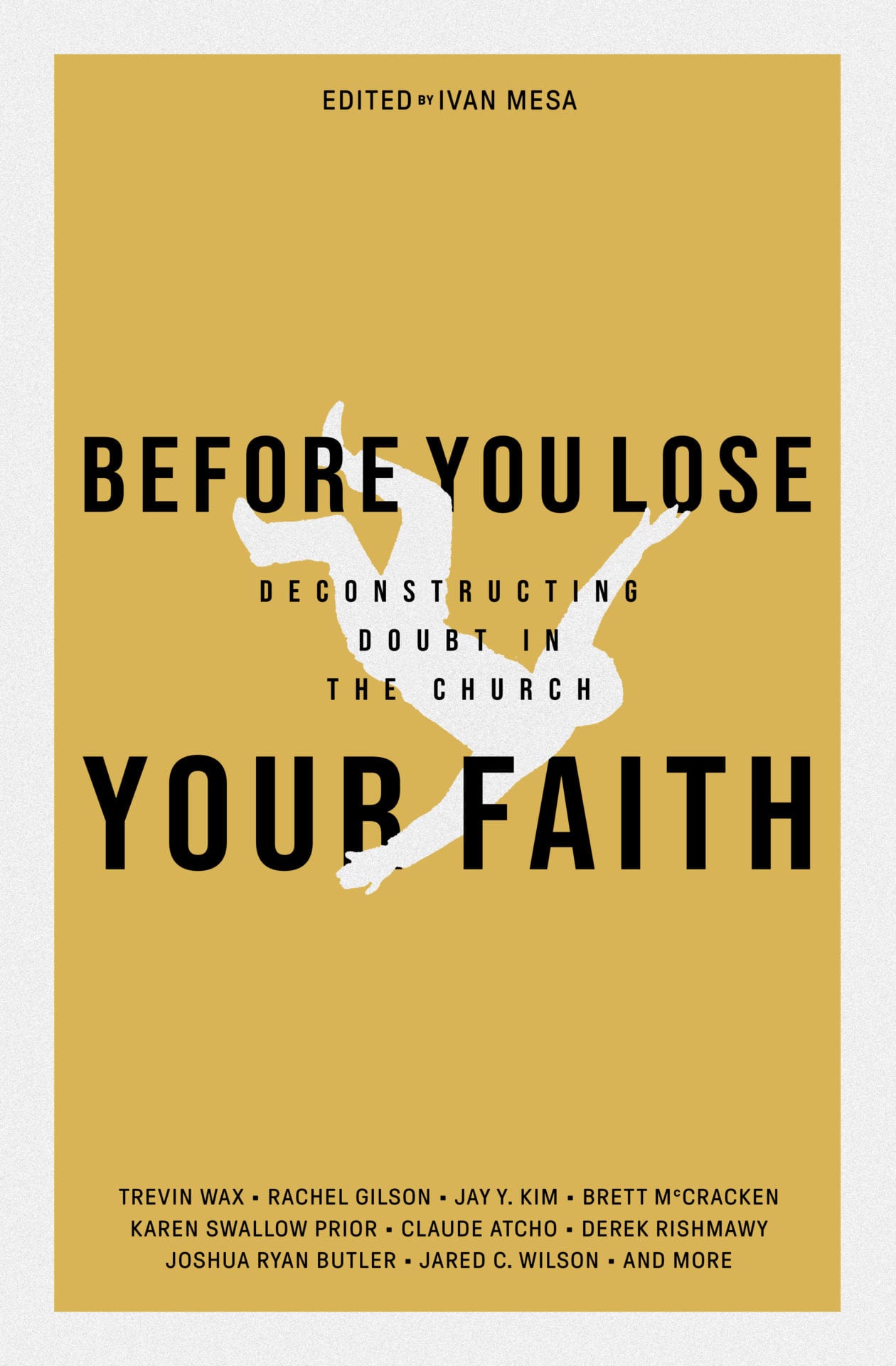 Many young people are walking away from Christianity—for reasons ranging from the church’s stance on sexual morality, to its approach to science and the Bible, to its perceived silence on racial justice.
TGC’s book Before You Lose Your Faith: Deconstructing Doubt in the Church is an infusion of hope, clarity, and wisdom in an age of mounting cynicism toward Christianity.
For anyone entering college or the workplace and looking for a timely reminder of why Christianity is good news in a skeptical age, make sure to get your FREE ebook Before You Lose Your Faith today!
Courtney Doctor (MDiv, Covenant Theological Seminary) serves as the director of women’s initiatives for The Gospel Coalition. She is a Bible teacher and author of From Garden to Glory as well as several Bible studies, including Titus: Displaying the Gospel of Grace, In View of God’s Mercies, and Behold and Believe. Courtney and her husband, Craig, have four children and five grandchildren.
Vanessa K. Hawkins (MDiv, DMin) is the director of community life at Redeemer Lincoln Square in New York City. She is a Bible teacher, a conference speaker, and author of the forthcoming Justice and the Heart of God, a Bible study on the book of Amos. She serves as a fellow for The Keller Center for Cultural Apologetics. Vanessa is married to Marcus, and they have three daughters. You can follow her on Instagram.
Melissa Kruger serves as the vice president of discipleship programming for The Gospel Coalition (TGC). She’s the author of multiple books, including The Envy of Eve: Finding Contentment in a Covetous World, Walking with God in the Season of Motherhood, Growing Together: Taking Mentoring Beyond Small Talk and Prayer Requests, Wherever You Go, I Want You to Know, and Parenting with Hope: Raising Teens for Christ in a Secular Age. Her husband, Mike, is the Samuel C. Patterson Chancellor’s Professor of New Testament and Early Christianity at Reformed Theological Seminary and they have three children.
Laura Wifler is the cofounder and executive director of Risen Motherhood. She cohosts the popular Risen Motherhood podcast and is coauthor of the best-selling book of the same name. She is author of the best-selling, award-winning children’s book Any Time, Any Place, Any Prayer, as well as Like Me: A Story About Disability and Discovering God’s Image in Every Person. Laura, her husband, and her three children live in central Iowa. You can find her on Instagram or at her website.
Jen Wilkin is an author and Bible teacher from Dallas, Texas. She has organized and led studies for women in home, church, and parachurch contexts. An advocate for Bible literacy, her passion is to see others become articulate and committed followers of Christ, with a clear understanding of why they believe what they believe, grounded in the Word of God. You can find her at JenWilkin.net.