



Every summer, when news comes out from various denominational meetings, you’ll notice a pattern. There’s always a controversial vote. A social media storm. Commentators declare the institution either irredeemably corrupt or finally on the right track, depending on what side they’re on. There’s the noise of newsletters and statements, frequent hand-wringing about the future, especially in light of statistics pointing to decline.
Meanwhile, what makes up the bulk of denominational life continues on, unnoticed and undiscussed. Missionaries board planes to the places God has called them. Church planters continue the setup and teardown in their local school, with dozens on their core team and more than a few who have recently come to faith. Pastors sit with grieving families. Seminary students encounter great texts from church history for the first time, joining a conversation that takes on a denominational shape across generations.
None of these elements makes for a news headline, but they’re all part of the engine of what makes denominational life worthwhile, despite the mess.
Understory
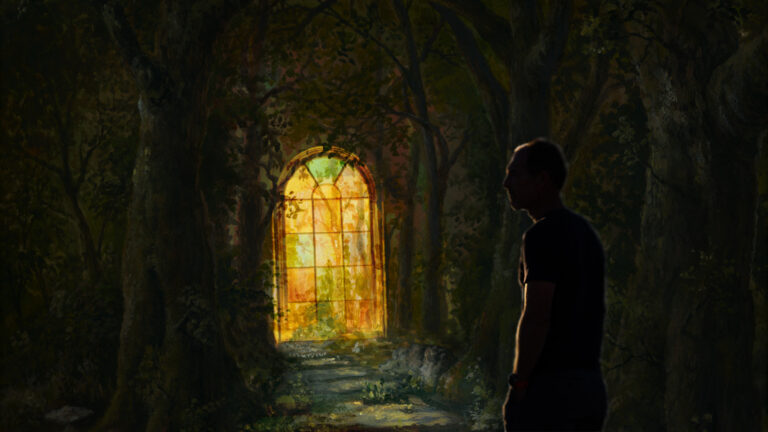
Anne Snyder, editor-in-chief of Comment magazine, has been developing a concept she calls “the understory.” It’s a term she borrows from ecology. The understory is the layer of vegetation that grows beneath the forest canopy. The canopy gets the sun, but the understory does the work. It regulates moisture. It shelters the young growth. It holds the soil in place when the storms hit.
Beneath the understory lies what foresters call the “wood wide web”—an underground network of roots and fungi through which neighboring trees share nutrients, send signals, and hold each other up through drought and storm. Trees that look unconnected above ground are, beneath it, keeping each other strong. Without the understory and the root system beneath it, the forest is just a bunch of tall trees waiting to fall.
Snyder applies this concept to institutional life. What’s needed right now, she argues, is a recognition and a recovery of the small, the hidden, the relational. Churches that stand tall, pastors who are steady and grounded, denominational initiatives that are effective—these efforts are almost always undergirded by the understory and the web of rooted relationships.
What the Canopy Hides
Last fall, I wrote about several challenges to denominational life, including our churches’ tendency to be overexposed to each other. One of the great distortions of the social media age is that it focuses all our attention on the canopy. The controversial vote becomes the story. The incendiary post is what gets shared. The messy ministry situation elicits outrage.
Online algorithms then reward content that provokes negative emotion: a toxic stew of sadness, fear, indignation, or, worst of all, contempt. And because roughly 3 percent of active accounts produce a third of all content online, a tiny, unrepresentative minority ends up defining what the denomination looks and feels like to those watching from outside (and to disconnected people on the inside). Leaders who shape their proposals in response to online outrage often learn this the hard way: It’s the understory, rather than the loudest voices, moving the denomination forward.
Those working hard to improve denominational health (what Jake Meador calls “the stewards”) are hard at work underground, often in unseen ways. It’s not the social media rant that drives the conversation but the private text thread with a number of pastors who love and encourage each other on a regular basis. It’s the email newsletter subscriber who prays for the missionary family featured every week. It’s the church that sends out a core team to start a new church, and celebrates when they hear that the first baptism has taken place. It’s the seminary student receiving from a pastor several theology books he’s longed to read. It’s the prayer chain for a beloved church leader in a state convention or local association, recently diagnosed with a debilitating illness.
The understory is often invisible. It doesn’t generate traffic. But the relational tissue is what keeps the denominational foundation intact when the canopy is swaying in the storms of our current era.
Tending What You Can’t See
I appreciate Snyder’s vision for repair in a broken anti-institutional age. We need builders. Reformers. Restorers. A generation ready to don the gardeners’ gloves and get busy cultivating the soil.
Every pastor who has been in ministry for any length of time knows that ministry is messy. The mission field is messy. Churches are full of broken people making halting progress. Denominations struggle to overcome inertia, to avoid mission drift, to resist cynicism and the pull toward disengagement.
But God is at work in the mess. The Spirit is moving in the understory, strengthening roots, nourishing us through our brothers and sisters in Christ.
When storms arrive (and they will), the stewards well acquainted with the understory will be less inclined to take to the canopy with performative frustration. They’ll be prepared to address challenges through proper channels and do the often unseen work of repair and restoration.
The denominations that make it in an anti-institutional, nondenominational age will survive not because of a better communications strategy or a flashy new initiative that woos other churches to join them. They’ll survive, and thrive, because of faithfulness in the understory. The unseen growth keeps the forest alive and standing when the storms shake the canopy.
If you would like my future articles sent to your email, as well as a curated list of books, podcasts, and helpful links I find online, enter your address.