






When it comes to Christian theology, just about all roads lead through Romans. Paul’s letter to the Romans is arguably the single most important piece of literature in the history of the world. And chapter 8 is perhaps its greatest section. And Romans 8:31–39 is the climax. It is actually an inference from everything Paul says in Romans 5:1–8:30 about the glorious results of our justification.
It’s as if the apostle takes a deep breath as he thinks back over Romans 5:1–8:30, and then asks God’s people, “What then shall we say to these things? If God is for us, who can be against us?” (Rom. 8:31).
That second question is rhetorical, so it has the force of a proposition: Since God is for us, nothing can be against us. Paul then supports what he asserts with four proofs.1
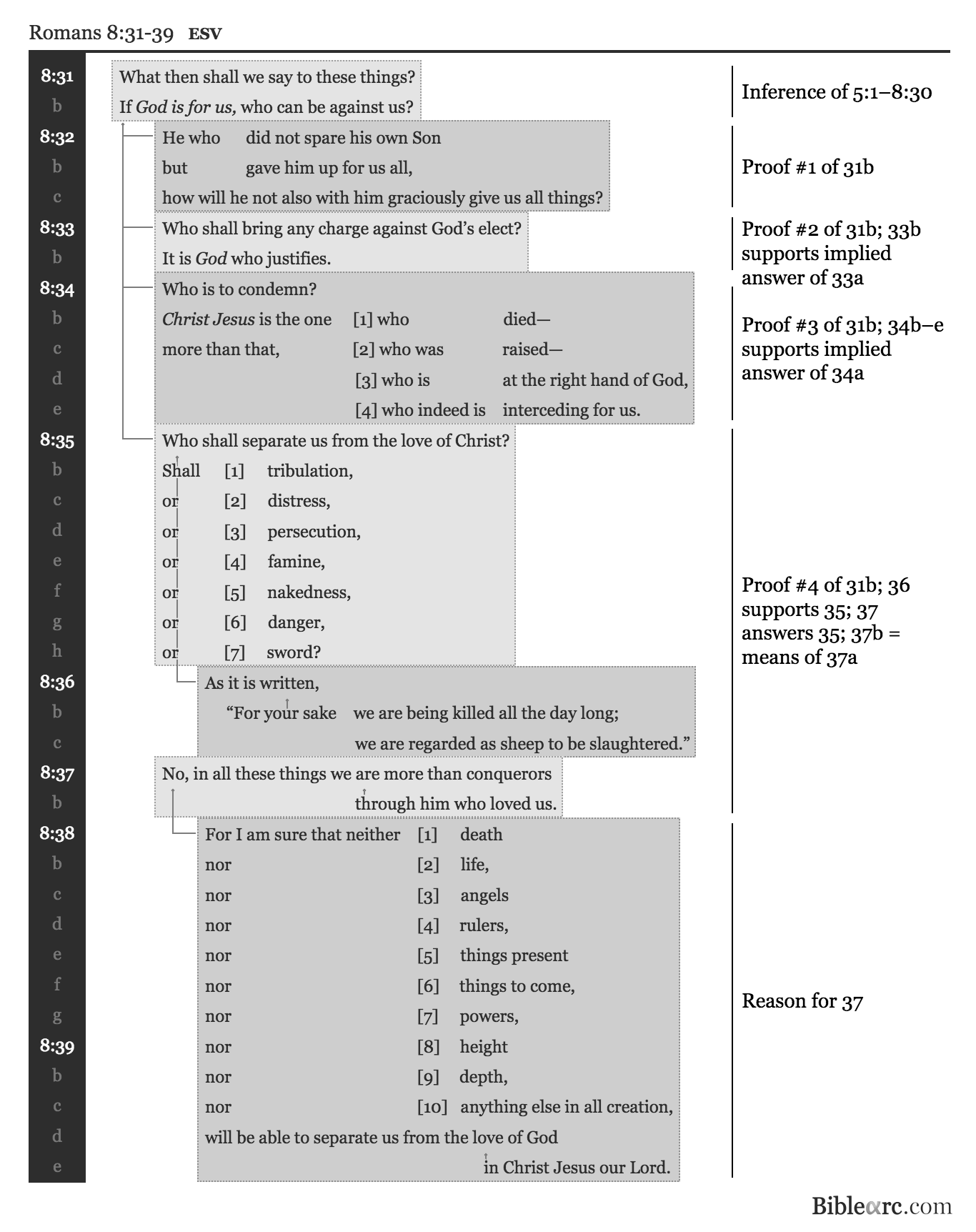
Proof 1: God will graciously give us all things (Rom. 8:32).
Paul is arguing from the greater to the lesser. If God gave us the greatest gift (i.e., he did not spare his own Son but gave him up for us all), then God will certainly give us everything else we need (i.e., he will also with Jesus graciously give us all things).
That is evidence that since God is for us, nothing can be against us.
Proof 2: No one will bring a charge against us (Rom. 8:33).
No one can take us to court before God and win a case against us, because God himself is the one who has declared us righteous.
That is further evidence that since God is for us, nothing can be against us.
Proof 3: No one will condemn us (Rom. 8:34).
No one can condemn us to hell on judgment day because Jesus himself died for us, was raised for us, and is now at the right hand of God interceding for us. We are eternally secure in Christ.
That is even more evidence that since God is for us, nothing can be against us.
Proof 4: Nothing will separate us from the love of Christ (Rom. 8:35–39).
Christ loves us, and no enemy or weapon or calamity can separate us from the love of God in Christ Jesus our Lord.
What more evidence do we need that since God is for us, nothing can be against us?
1 The above phrase diagram graphically discerns and displays the text’s logical flow of thought by dividing up the text into propositions and phrases and then noting logical relationships between them. It indents clauses and phrases above or below what they modify and adds labels that explain how the propositions and phrases logically relate.
Free eBook by Rebecca McLaughlin: ‘Jesus Through the Eyes of Women’
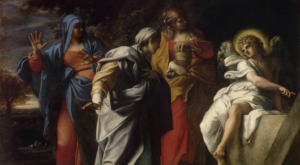
 If the women who followed Jesus could tell you what he was like, what would they say?
Jesus’s treatment of women was revolutionary. That’s why they flocked to him. Wherever he went, they sought him out. Women sat at his feet and tugged at his robes. They came to him for healing, for forgiveness, and for answers. So what did women see in this first-century Jewish rabbi and what can we learn as we look through their eyes today?
In Jesus Through the Eyes of Women, Rebecca McLaughlin explores the life-changing accounts of women who met the Lord. By entering the stories of the named and unnamed women in the Gospels, this book gives readers a unique lens to see Jesus as these women did and marvel at how he loved them in return.
We’re delighted to offer this ebook to you for free.