Steven Baugh explores the profound truths of the Christian Gospel centered on Christ’s resurrection. Baugh discusses the historical and theological significance of the resurrection, emphasizing its foundational role in Christian doctrine and its implications for faith and practice.
The following unedited transcript is provided by Beluga AI.
The following is a message by Doctor Steven Baugh of Westminster Seminary, California. For more information about this message or about Westminster Seminary, please visit us online at www.wscal.edu, or call us at 888-480-8474. That’s online at www.wscal.edu, or call us at 480-8474. Please be seated. We’ll pray to the Lord after we’re done.
I suppose if you wanted to be slightly in your face, you could take a book on Paul and the law and entitle it after a line in Paul and call it the law is not of faith. Something.
I mean, it seems rather in your face. Not that anybody would actually do that, but how about this for a book title? The power of sin is the law. How about that for a title of a book on Paul and the law? The power of sin is the law. How many people do you think would raise red flags of antinomianism? And yet, that’s the verse we’re going to look at now. Turn in your bibles to 1 Corinthians 15:51. We’ll read to verse 57.
51 Behold! I tell you a mystery. We shall not all sleep, but we shall all be changed, 52 in a moment, in the twinkling of an eye, at the last trumpet. For the trumpet will sound, and the dead will be raised imperishable, and we shall be changed. 53 For this perishable body must put on the imperishable, and this mortal body must put on immortality. 54 When the perishable puts on the imperishable, and the mortal puts on immortality, then shall come to pass the saying that is written: “Death is swallowed up in victory.” 55 “O death, where is your victory? O death, where is your sting?” 56 The sting of death is sin, and the power of sin is the law. 57 But thanks be to God, who gives us the victory through our Lord Jesus Christ. (1 Corinthians 15:51-57, ESV)
Now, you know, if you’ve been around me long enough, that I gravitate to this passage, and there are passages I just gravitate to because I’m still trying to figure them out. And sometimes it’s even the little things which engage my intention. And it is this half of verse 56, the power of sin is the law, which I just find so intriguing.
56 The sting of death is sin, and the power of sin is the law. (1 Corinthians 15:56, ESV)
I find this to be a very daring statement, one that is certainly open to misunderstanding.
And I think what really makes that even starker in its obviousness is the fact that he doesn’t go on to explain it at all. And in fact, this passage, there’s no other discussion about the law. There’s no discussion about the law, really, in one corinthians. Why did this even come up? You see, he just sort of puts it in there. So much so that some commentators have asserted that this is a gloss that Paul adds later or somebody else. This really has nothing to do with the context they say, and I don’t agree with that.
I think you understand Paul, you understand why he says this, but it is obvious that he just says this. The power of sin is the law. It’s as if the law is somehow a servant of sin and advancing its cause, so that you can now say, we should have nothing to do with the law. And this is exactly the opposite of what we should say. And if you read Paul and understand what he’s saying, I think we’ll come to that conclusion together, particularly this morning. Let’s look at the context.
And this is vital for any passage, but particularly for this one. Now, last fall, as you know, we were doing a series on 1 Corinthians that continued over from last fall. Last fall, I worked on verse 50 with you, another passage that I find essential to understand the nature of the kingdom of God. The flow is Paul’s assertion that even though we have not yet been resurrected, it doesn’t mean there’s no resurrection for us. And Christ is the first fruits, and that entails necessarily our resurrection in the future.
So Paul is really concluding his assertion, begun at the very beginning, really, of chapter 15, that there is indeed a resurrection ahead for us. But Paul doesn’t go into an opposite extreme by saying, yes, resurrection is ours. And he has this triumphant near quotation of Hosea, the sting of death, where is your victory? O death, where is your sting?
55 “O Death, where is your sting? O Hades, where is your victory?” (1 Corinthians 15:55, ESV)
You know, and then conclude, well, everything is ours. We have it already. In fact, we have been resurrected. You see, Paul does not go down that road, which is where the Corinthians have been.
They have imagined that because of the work of Christ, everything has been concluded, when really everything has been inaugurated, but not consummated yet. And that’s a very important qualification and really explains why Paul brings up this statement in verse 56. It’s because, yes, death is a defanged stinger, and yet it will sting us still. It still has enough power that we will experience death, yet not ultimately, because we will be resurrected.
And so he’s building on the fact that Christ’s work has brought us into fellowship with his resurrection, but it awaits final fulfillment at the last trumpet. So that’s the background of this passage. Now he says this first line, verse 56, “the sting of death is sin.”
56 The sting of death is sin, and the power of sin is the law. (1 Corinthians 15:56, ESV)
If you think about it, it doesn’t seem to be the way to say that. He says the wages of sin is death in Romans 6. Why not say the sting of sin is death, but instead he says the sting of death is sin.
23 For the wages of sin is death, but the free gift of God is eternal life in Christ Jesus our Lord. (Romans 6:23, ESV)
Well, you know, this puzzled me for a while, but I think it’s because I didn’t understand what he meant by sting. By sting, he really means stinger. What we would say, what gives death its bite is sin. You see, if there were no sin in the world, death would have no bite. And that’s all he is saying here. The sting of death is sin because he’s not saying sin causes death here. That’s Romans six. That’s true. He’s not denying that. It’s just not what he’s saying. But notice the implications of this.
You see, death would not exist without sin, and yet death is experienced by everyone because we are all under sin. Sin is universal. Every individual experiences sin. We are born in sin. We’ll get into that later. But despite this, there is triumph. Sin and death are an enemy that has been defeated. This is why he has this triumphant reference to Hosea in verses 54 and 55. And by the way, I talked with Reverend Kiel about this, who’s giving our chapel in a few weeks, and he’s going to talk about that Hosea background. So I won’t.
We will come back and revisit that with him. But see, Paul is bringing out that sin and death work together, that sin brings in death, and without sin there’s no stinger to death. But then he goes on and adds this statement that really we want to spend more time on this morning, and that is the power of sin is the law. And you have to ask, why did he say that? It is interesting how the commentators don’t really ask that question, the ones I’ve consulted anyway. Why even say that?
Some of them say, well, you know, it sort of concludes his argument or it’s sort of an add-on. It sort of came to his mind, and I’m thinking, well, that’s a psychological explanation perhaps, but why does he say that as an important element in his argument and in his instruction and teaching at the end of this triumph? And here is my best explanation, and first of all, it is rather daring. I mean, particularly since it’s not explained. I mean, it is easy for us to misunderstand Paul here.
And in particular, I want to point out to you, there are a host of people today who will limit Paul’s theology to what a Pharisee, or even a former Pharisee, could be imagined to have said. People will interpret Paul’s christian theology through a grid of Phariseeism. And what they would imagine a Pharisee could say, they’ll say things like, well, we can’t accept that. Paul would say that. That militates against his pharisaic past. I’m practically quoting a particular scholar on that.
So now I want you to imagine a Pharisee saying, the power of sin is the law. And you’ll find that Paul is no longer a pharisee. That’s a fact. This militates against that whole agenda, filtering Paul’s theology through imagined pharisaical theology. He is not a Pharisee. He is a christian theologian. And it’s different. The power of sin is the law. The rabbis had a statement about the power of God is the law. This is not that. This is quite a bit different.
And, you know, Paul is the same one who says in one Timothy,
7 desiring to be teachers of the law, without understanding either what they are saying or the things about which they make confident assertions. (1 Timothy 1:7, ESV)
And he is a teacher of the law. He will teach you about the proper use of the law, and he upholds the value of the law for us. And we’ll get to that later. But here, it’s the one thing that dominates his thinking and his theology of the law, is the inability of the law to resolve the fundamental reality we find ourselves in.
You see, the law can only demand of us righteousness. The law comes in as a commandment. Do this, and you will live. But it does not convey to us the power through the commandment to fulfill that requirement and live. That is it in a nutshell. That’s Paul’s theology on the law. I just saved you from having to buy several books. Until Professor Kims comes out, you won’t have to buy any book on Paul and the law, because that’s it. What does he think about the law?
You know, fundamentally, he knows that the law is unable to enable us to engage in righteousness if we are under sin, if our whole life is dominated by that. You see, the commandment comes to us, the very people who are plagued by this teeming morass of sin. I mean, it’s like it’s eating away at us, and it’s in every part of our being, sin qualifies. Everything that we do outside of Christ. And the law can only say, in the day that you do that, you will die. The one who does righteousness will live.
And the day you do that, you will die. That’s the commandment. That’s all it can do as a bare commandment. And Paul knows that. He knows that the people who are by nature children of wrath cannot hear the commandment. He knows that if you do hear the commandment, all it can do is make sin utterly more sinful, because the power of sin is the law. You see, he wants to box us in. He wants us to see that our existence outside of Christ is utterly hopeless.
He wants us to be convinced that through our own efforts, we have no hope. It’s like telling a fish, “Stop breathing, stop living in water. In the day you live in water, you will die.” What can a fish do? By nature? “I live in water.” Fix that.
You know what we need? We need a new creation. We need somebody to come into our situation and transform it. We need somebody to come into this situation who is not born in sin. We need a second Adam. We need a firstborn from the dead.
We need someone to come in and perform the righteousness of the law on our behalf, to fulfill all the righteous demands of God. As we sang today, because he was singing that song, he came into the world singing that psalm, “I have kept your righteousness. your law has been my delight day and night. I came in to fulfill the law.” And this is what Paul says here. He says, “you are boxed in. The power of sin is the law.”
If you are sold under sin, the law empowers sin and has now boxed you in to where you have no hope in yourselves. And that’s where Paul has taken us. And he wants us to see that because he wants to get back to that triumph. He wants to let us sing that victory song. Death, where is your victory? Death, where is your sting? He wants us to sing that because of verse 57. Because in verse 57, he says, but thanks be to God, who gives us the victory through our Lord Jesus Christ.
55 “O death, where is your victory? O death, where is your sting?” 56 The sting of death is sin, and the power of sin is the law. 57 But thanks be to God, who gives us the victory through our Lord Jesus Christ. (1 Corinthians 15:55-57, ESV)
You see, sin is everywhere in our existence, but so is the law. See, that’s another implication of this passage: The power of sin is the law so that everyone is under the law. This, by the way, is Romans 2 and 3. This is what he says exactly: Everyone, Jew and Gentile, is under the law. You either have the law promulgated through Moses, or it’s written on your heart. All are subject to the terms of the law because it is an expression of God’s holiness.
If you’re going to have any interaction with God, you do so in light of His law. And this comes clear when you read the passage. It really is an explanation of the half verse that we’ve been looking at. And all your commentaries, to their credit, point you to Romans 7, where Paul explains what he’s talking about. The power of sin is the law. Let me read this for you: Romans 7, beginning with verse 7,
7 What then shall we say? That the law is sin? By no means! Yet if it had not been for the law, I would not have known sin. For I would not have known what it is to covet if the law had not said, “You shall not covet.” 8 But sin, seizing an opportunity through the commandment, produced in me all kinds of covetousness. For apart from the law, sin lies dead. 9 I was once alive apart from the law, but when the commandment came, sin came alive and I died. 10 The very commandment that promised life proved to be death to me. 11 For sin, seizing an opportunity through the commandment, deceived me and through it killed me. 12 So the law is holy, and the commandment is holy and righteous and good. (Romans 7:7-12, ESV)
Now, brothers and sisters, I submit to you today that the law is holy, just and good. Because God is holy, just and good. You see, the law is not sin. It is not an agent of sin. It does not promote sin. It indeed does the opposite. So for us today who have escaped the law, we have to see the law as holy, just and good, and embrace it.
And this is Romans 6. This is exactly what Paul says in Romans 6. You know why? Because we’re part of the new creation. We’ve come alive finally to righteousness. We can walk in newness of life because the newness of the new creation has begun in Christ, and if you’re wedded to him, you can keep the law. Yeah, vaguely. Halting beginnings. Yeah. We admit that our righteousness is, you know, always tainted this side of the resurrection. But where do you think we’re going? We’re going to holiness and righteousness and goodness, utterly. That’s our life.
So Paul is not denigrating the law or turning us into antinomians. Just the opposite. You see, the effect of Paul’s teaching is that we become gnomians, in a sense, properly so, seeing its proper perspective as an expression of the newness of life given to us as a free gift. We don’t earn it through our law keeping. We don’t acquire life through law. We acquire life through Jesus Christ, apart from the law, yet testified to by the law. I’m just quoting Paul here in various places, places which is what you do with Paul.
You see now he’s thrown this out. The power of sin is the law because it was important to him that you would understand it and then be driven to Christ. And being driven to Christ, you’d be driven to express your own desire for holiness, righteousness, and goodness through the law, through his commandment. So stop coveting, stop stealing, stop violating the law of God, because you are now free to. That is our message. Let’s pray.
O Lord God our father, we thank you for the victory in Christ Jesus. You give us the victory as a free gift, by grace, through faith and we bless you. We sing this song of victory now in our hearts. We too can marvel that death will have no sting, though we will hide in our chambers for a little while as the wrath passes over. Yes, we face death, ourselves and our loved ones.
And yet, O Lord, it is one where we have no fear, because you hold our hand through it, because we have a resurrected savior and look forward to that day when all will be plain and we will be transformed in the twinkling of an eye. To that day, O Lord, hold on to us and let us walk in your ways, and let the law be our delight, the righteousness of Christ, because we are free. Now we pray this in Christ’s Name, Amen.
You are permitted to reproduce and distribute this material in any format, provided that you do not alter the wording in any way and you do not charge a fee beyond the cost of reproduction. For web posting, a link to this broadcast on our website is preferred.
Free eBook by Charles Spurgeon. ‘Fit to Lead: On the Call to Pastoral Ministry’
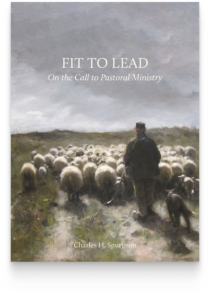 With the rate of pastors retiring, burning out, or concluding their ministries, the need has never been more urgent for aspiring ministry leaders to prepare well for their pastoral calling.
In the eBook Fit to Lead: On the Call to Pastoral Ministry, compiled by The Spurgeon Library at Midwestern Seminary, current and aspiring pastors will gain wisdom from Charles Spurgeon on how to discern and thrive in their call to pastoral ministry. In the short book, Spurgeon—the “Prince of Preachers”—discusses how to identify and encourage those called to ministry, as well as what steps to take in pursuing a call to ministry.
We are delighted to offer this eBook to you for FREE today. Click on this link to get instant access!