Listen or read the following transcript as D. A. Carson speaks on the topic of spiritual warfare from Ephesians 6:10-20.
If you’re a new Christian or if you have just come off the street, and this is the first time you ever heard the lines of this passage, probably, at best, it struck you as rather quaint. There are elements in this passage that might well hit us as even a bit ridiculous. The image of Christian soldiers dressed up in tin pot armor strikes no resonant chord today of preparedness and strength and vitality and firmness. Give us three or four decent SAS men, and we’ll look after your Roman battalion. Throw in a couple of tanks, and you can kiss your legions goodbye. I haven’t even mentioned Harpoon missiles or laser-guided TOW missiles and B-52s. We think militarily in a quite different set of categories. And besides, many of us are a bit tired of war in any case and just don’t like this militaristic jingoism as being part of the Christian faith.
So, before expounding the text, I want to make three preliminary remarks to point us in the direction of what we should properly expect from this passage. First, the Old Testament frequently portrays God as a warrior and His servants as His troops in need of His strength. This passage draws from that Old Testament tradition. Isaiah 42:13, “The Lord will march out like a mighty man. Like a warrior, He will stir up His zeal. With a shout, He will raise the battle cry over His enemies.” Habakkuk 3, “Did you rage against the sea when you rode with your horses and your victorious chariots?” Psalm 35, “Contend, O Lord, with those who contend with me. Fight against those who fight against me. Take up skill and shield and buckler. Arise and come to my aid. Brandish spear and javelin against those who pursue me.”
Likewise, very often in scripture, God’s servants are presented as His troops. Psalm 18 and Psalm 28 and Psalm 59 and many other passages. In other words, the whole tradition of God engaging in a struggle and bringing along His people with us lies deeply rooted in the scriptures, both in the Old and New Testaments, and we simply must come to terms with this theme. God is not simply a kind of soporific grandfather who, every once in a while, manages to prop open an eyelid and bestow some kind glance upon us. He is also a warrior.
Number two, don’t let the old-fashioned armor throw you. That is part of the metaphorical language of the times. As such, it must be understood and carefully unpacked. And we shall see, too, that we cannot replace this list with contemporary parallels and make much sense, the bazooka of righteousness, perhaps, or the electronic shield of faith, the Rapier missile of the spirit, and the tank treads of the gospel of peace. It won’t work, you know. We are stuck with the tin pot armor, and we must make the best of it as we can. Not only would this sort of language be unbearably corny, but there are two further reasons why we cannot make such leaps. First, as we shall see, these pieces of personal armor derive part of their metaphorical power from the part of the body that they protect. So, when you read of the breastplate of righteousness, it turns out that’s significant.
And then, moreover, perhaps more importantly, almost all of these expressions derive from the Old Testament. Isaiah 11, that great messianic passage where Isaiah looks forward to the coming of the Messiah, endowed mightily with the spirit, introducing ultimately a new heaven and a new earth, the home of righteousness. And we read of this Messiah King, he will strike the earth with the rod of his mouth, with the breath of his lips, he will slay the wicked, righteousness will be his belt, and faithfulness, the word can equally be rendered truth. It means reliability. So, if it’s reliability in word, it’s truth. If it’s reliability in deed, it’s faithfulness. And faithfulness, the sash around his waist. Isaiah 59, “God put on righteousness as His breastplate and the helmet of salvation on His head.” Again, Isaiah 52, “How beautiful on the mountains are the feet of those who bring good news, who proclaim peace, who bring good tidings, who proclaim salvation, who say to Zion, ‘Your God reigns.'” In other words, it will be our job to read Ephesians 6 against the background use of these terms in the Old Testament because both Paul and his readers would’ve had that kind of background in mind.
Third, it will also help us to see that Ephesians 6:10-20 is part of a long argument. Many of us, I’m sure, are familiar with the fact that the first three chapters of Ephesians constitute a theological argument, and the last three chapters, the practical implications. But the practical implications are structured, four parts. First, 4:1-16, life in the church. Next section, 4:17 to 5:14, living the Christian life, the life of the new humanity in society. First in the church and then in society. And then 5:15 to 6:9, worship and household living in the new community, in the people of God. And now again, 6:10-20, Christian living and warfare in the face of cosmic powers of evil outside. In other words, the argument is drifting back and forth inside, outside, inside, outside. What we have here before us then is the apostle’s final words in this book on the implications of his theology in the first part of the book as to how to live in our culture, how to live in our world, how to construe the enemy, how to take him on.
So, here is quite frankly a call to battle, a call for preparedness, a call to stand firm. If the metaphors are old-fashioned, the message itself is perennially urgent. We may follow it in three points.
1. Know your enemy.
Know your enemy, for the war you are in is vast and subtle. Know your enemy, for the war you are in is vast and subtle. Verses 10 to 13, “Be strong in the Lord,” Paul writes. “The source of the strength we need is the Lord Himself.” How then are they to be strong in Him? By putting on the full armor of God, verse 11. But before he tells us what that armor consists in, he tells us why it is so important to be strong in the Lord, why it is so important to put on this armor. 11B and 12, “Put on the full armor of God so that you can take your stand against the devil’s schemes. For our struggle is not against flesh and blood, but against the rulers, against the authorities, against the powers of this dark world, and against the spiritual forces of evil in the heavenly realms.” We are not capable of handling the devil on our own. We are not going to beat this enemy by mere moral resolve and a lot of singing and some courage.
We are told here that the devil has vast armies of helpers, world powers. When Paul uses this sort of expression, he doesn’t mean simply the political order of things of his day. He means spiritual powers, demonic forces behind them that operate both in this world and even in what he calls the heavenlies. So we better see right away that our ultimate struggle is not against flesh and blood. Even at the pastoral level, at the personal level in church, it’s very important to remember that.
Somebody in our home, for example, really develops an obstreperous streak. Somebody in the church says something that hurts your feelings. Pastoral staff member wittingly or unwittingly treads on your toes. Is this merely a slightly gauche slip? Do we see the danger merely in the personal failure and then respond with our own nurtured resentments? Or are we aware that despite the personal responsibility for speaking kindly, behind all of that, there is also a whole demonic array that loves to sow division, that loves to engender hurt, that loves to feed bitterness, that loves the sassy tongue, that loves hate? So that we can look beyond the person who has hurt us and see that there is a far more serious enemy with which we have got to deal. The church is not engaged merely in a kind of psychodrama. We’re engaged in a spiritual drama. Not for a moment am I trying to lessen human responsibility and accountability in all of these things, but we had better understand that flesh and blood is not the domain of our operation. Otherwise, we will end up merely trying to manipulate people in some Machiavellian way to get our way for the good of the gospel.
We struggle against the devil himself and all his minions. One of the most powerful passages in the entire New Testament, cast in admittedly apocalyptic language, is Revelation 12 on this theme. Revelation 12. I don’t have time to expound the whole passage, but here we are introduced to the ancient serpent called the devil, Satan, who leads the whole world astray. In apocalyptic imagery, 12:7 and following, we’re told that Michael and his angels fought against the dragon, and the dragon and his angels fought back. But he was not strong enough, and they lost their place in heaven. If I am not mistaken, this is the counterpart in the Book of Revelation for what Jesus says in the Gospel of Luke. As the gospel goes forth, as Jesus is not far from the cross, he says, “I saw Satan fall from heaven.” There is a mighty conflict in which Jesus wins in the Book of Revelation in which the Lamb triumphs. And in consequence, John the Seer says, 12:10, “Then I heard a loud voice in heaven say, ‘Now have come the salvation and the power and the kingdom of our God and the authority of His Christ. For the accuser of our brothers, who accuses them before our God day and night, has been hurled down. They overcame him by the blood of the Lamb and by the word of their testimony. They did not love their lives so much as to shrink from death. Therefore, rejoice, you heavens, and you who dwell in them.'” And then this, “But woe to the earth and the sea because the devil has gone down to you. He is filled with fury because he knows that his time is short.”
Some of you are old enough to remember the closing two years of World War II. The Russians were pressing from the east. The allies had cleaned out North Africa and were pressing up the boot of Italy, and then they landed on the beaches of Normandy. And in three days, they landed 1.1 million men, countless tons of [foreign language 00:13:03.806]. Anybody with half a brain in his head knew the war was over. In terms of numbers, in terms of equipment, in terms of logistics, manufacturing, energy levels, money, replacements, the war was over. Does that mean Hitler quit? “Whoops, sorry, let me sue for peace.” No, some of the ugliest fighting of the war came next. Wasn’t long before there was the Battle of the Bulge. Hitler almost broke out, except that he ran out of gasoline. Whatever you think of the Gulf War a few years ago, it was, again, obvious. Once the allies had got in with a quarter of a million people and their laser-guided missiles, that Saddam Hussein was finished. Does that mean he quit?
In other words, precisely because they’re curtailed, precisely because they know their time is short, they are filled with fury. That’s what Revelation 12 says. Because he’s been cast out of heaven, he has been defeated in principle, he knows that his domain is curtailed and his time is short, therefore, he’s flipping angry. That’s why we have to deal with him. You see, there is a sense in scripture which tells us that the devil himself is a defeated foe. In principle, Jesus has already conquered him. He has no claim on the children of God. Our sins have been forgiven, but that doesn’t mean he quits. “Whoops, made a mistake. Sorry.” Now he is filled with fury because he knows his time is short. And some of the toughest battles, the worst mopping up of the entire engagement take place right now in your life, in my life. We must understand that that is the nature of the engagement. He’s going to try to attack us at the level of our conscience. He’s going to try to stir up hate and opposition. What he cannot manage to squash with dictatorial regimes and punishing persecution and selling Sudanese into slavery, he will try to seduce, he will try to capture by guile. And if we view the battles as merely political, or merely intellectual, or merely economic, or merely personal, we are not probing deeply enough to understand the nature of our engagement.
Indeed, one of the reasons why Paul’s imagery focuses on standing and withstanding is because Paul presupposes that the principle battle has already been won by Christ Jesus himself. It’s not as if we are called upon to fight the principle battle. We are called upon to stand firm now that Christ has until the final blow has been defeated. So, earlier in this epistle, therefore, we read 1:18, “I pray that the eyes of your heart may be enlightened in order that you may know the hope to which He has called you, the riches of His glorious inheritance in the saints, and His incomparably great power for us who believe. That power is like the working of His mighty strength, which He exerted in Christ when He raised him from the dead and seated him at His right hand in the heavenly realms, far above all rule and authority, power and dominion, and every title that can be given, not only in the present age but also in the one to come.” Many of the same words used, Christ rose from the dead. He sits at the right hand of the Majesty on high, and already he rules and reigns over every power, every name, every demonic force, every energy, every spirit being, every human being. He is sovereign. He has been appointed to the right hand of God.
Or, again, 3:10-11, “God’s intent was that now, through the church, the manifold wisdom of God should be made known to the rulers and authorities in the heavenly realms according to His eternal purpose, which He accomplished in Christ Jesus our Lord.” You see, redemption does not only have to do with saving us, it also has to do with declaring God’s goodness to the angels in the heavenly realms and to overcoming all the hosts of darkness. We are part of that huge sweeping campaign. So, now it is given to us to stand and withstand on the evil day, we’re told. Probably referring to this period of struggle between D-Day and V-E day when the Hitlers break out in fury, when the devil himself is enraged. So, know your enemy, for the war you are in is vast and subtle.
2. Know Your Equipment
Number two, know your equipment, for the weapons you use are astonishing and effective. Know your equipment, for the weapons you use are astonishing and effective. Verses 14 to 17, again, we’re told stand firm, and now the various bits of equipment of a well-equipped Roman foot soldier are listed. First, “Stand firm then, with the belt of truth buckled around your waist.” At the metaphorical level, the belt, in the Roman military tunic, held up the lower garments. It meant now that the soldier was freed up, his legs were loose, and therefore he could fight and run. It marked preparedness, readiness for anything. At the level of reality, once you unpack that metaphor, the language comes from Isaiah 11:5, regarding King Messiah, who, by his faithfulness, his truthfulness, his utter reliability, brings in this new dawning era.
So, how are we to belt on this belt of truth, to buckle on this belt of truth? In one sense, of course, the truth is the gospel itself, but that’s not quite the focus here. The focus here is transformed character that is faithful, true, reliable. This is what prepares a Christian soldier for the fight. The last couple of days, I was speaking at an RTSF conference, a Religious Studies and Theological Students conference out in Sunbury Court. And I had a WeChat with Carl Trueman, who teaches theology up in Aberdeen. He mentioned in a private conversation that he’s probably the only person in Britain who has taught an MA course and supervised an MA thesis on the Puritans to a self-confessed Chinese Marxist who was in this country to find out what was thought in this area.
This Chinese scholar came to love the Puritans, not because he was convinced by their theology, but because he loved their passion and sincerity. What they professed and how they lived were one and the same. At the same time, he read up on the theology of Paul Tillich, an American theologian from earlier in this century, whose life, quite frankly, was a moral disaster. He was duplicitous, deceitful, adulterous, manipulative, but somehow his books have exercised a great deal of influence in a fair swab of Protestantism. And this Chinese scholar couldn’t figure out rightly why so many people should be interested in a man so untruthful, unfaithful. In the country where I’m living right now, it doesn’t really matter what the president does, so long as the economics are all right. Conversely, no matter how godly the president might be, if the economics are wrong, he’s in big trouble, which says something about the country itself, doesn’t it?
So, in our grasp of the truth of the gospel, in our bearing witness to the truth of the gospel, we ourselves must be gospel-shaped people. We must be truthful. Buckle on this belt of truth, reliability, and then we’re ready to fight. Otherwise, every little accusation that comes along, we feel a little dirty or ashamed. “I really can’t say anything in that arena. My own life isn’t all too hot there, you understand? Can’t really pray very boldly in that domain because I’m feeling thoroughly ashamed of my prayerlessness, generally.” Gradually, the devil gets back to us working on our soiled conscience, and there seems no way to advance. Oh, then we need to go back to Christ himself, ask for forgiveness and beg for help to be consistent Christians, truthful Christians, reliable Christians.
Then, in the second place, stand firm with a breastplate of righteousness in place. Again, this language is taken from the armor of King Messiah in Isaiah 11. Righteousness has already been a major theme of this book, 4:24, “We are to put on the new self-created to be like God in true righteousness and holiness.” That’s astonishing language. We are to put on the new self-provided by God Himself so that we might be like God in righteousness and holiness. Or, again, 5:9, “You were once darkness, but now you are light in the Lord. Live as children of light, for the fruit of the light consists in all goodness, righteousness, and truth. And find out what pleases the Lord.” This breastplate protects the vital organs. It is almost as if to say we cannot continue to fight. We will die on the battlefield unless we live lives of righteousness. Oh, I know in the first instance, the righteousness we must have is the righteousness of Christ reckoned to us. Christ died for sinners. I know that.
But then, because Christ died for sinners and in consequence of his death on my behalf, in consequence of declaring me just, not because I am, but because he is, and God sees me through him, in consequence of that, I’m renewed, I’m transformed. His spirit comes upon me, and my life must be lived in growing conformity to Jesus Christ. That’s what protects Joseph, you know, when he is tempted by Potiphar’s wife. He was not interested in seeing how far he could get without being burned. “How could I do this great evil,” he asks, “and sin against God?” Now, a man or a woman who thinks like that is relatively immune from even the most powerful and seductive of temptations. A man or a woman instead who thinks, “My wife doesn’t really understand me. My husband is terribly busy all the time and ignores me. God is the God of love in any case, isn’t he? Besides, God doesn’t want strife in the home. A different home would make a better situation, wouldn’t it? After all, I have so many disadvantages. It’s nice for God to bring somebody along who really loves me and cherishes me for who I am.” Add a dose of self-pity. “Nobody will know. I’m not hurting anybody.” And where do you stop?
Show me instead the believer who looks at sin, however attractive it is, and labels it right away for what it is. “How can I do this great evil and sin against God?” Now he’s labeled it. Now he’s identified it. Now she’s repulsed it. She has protected herself with a breastplate of righteousness. You cannot protect yourself from temptation unless you are hungry to be righteous. And this book says we are to put on the new man and be like God in righteousness and holiness. That protects us. And then we are to have our feet fitted, we’re told, with a gospel of peace. This language comes from Isaiah 52. It pictures a messenger skipping across the mountains of Judea, bringing in the news. Somehow God’s forces of one and the enemies have been overthrown. And so, the news comes in with a messenger into the city of God saying, “Your God reigns. Peace is here.” Except that now there has been a supreme victory, victory on the cross, and there is a sense in which what all Christians do is announced to all kinds of people and all kinds of places, “Your God reigns. Victory is here.” So, our feet are shod with a gospel of peace.
In Revelation 12, which I read earlier, we are shown who it is who overcomes the devil in his rage. The followers of Christ overcome him. They overcame him we are told by the blood of the Lamb, we’ll come back to that in a moment, and by the word of their testimony. They did not love their lives so much as to shrink from death. When we are told that they overcame him by the word of their testimony, the text does not mean that they gave their testimony a lot. It means that they bore constant witness to the gospel by the word of their testimony to the gospel. What they did was talk about the gospel. You see, we cannot really withstand the enemy by simply being quiet and righteous. What we must also do is talk about the gospel. How does the church reach out finally and, by God’s grace, transform people? Well, we ought to be running soup kitchens. We ought to be helping the poor. We ought to be helping the disadvantaged. We ought to be sending missionaries. But if we do this perennially and never gossip the gospel, no one will know what it is that impels us. The Kingdom of God advances by declaring the gospel of peace. We must have our feet ready as it were to go and talk about the gospel.
If you have managed somehow to get through a whole year at work or in the home or with your neighbors and never explained the gospel to anyone, God help you. God forgive you. You need to learn how to do it. You need to pray for lost neighbors and fellow workers, and learn how to advance the kingdom by talking about the gospel, the good news that our God reigns. And if you don’t know what to say and they ask you a question you can’t possibly answer, then you say, “I’m sorry, I don’t know how to answer that. I probably should, but I don’t, but I promise I’ll find out and I’ll get back to you.” Then two things happen. You find out how to answer it for the next time, and you have an occasion to talk to ’em about the Lord. There might even be further blessings. You talk to one of the pastors or somebody else, and you pick up a couple of books to find out better how to do it, so you’re a little better equipped. And pretty soon, you got a small group going where you’re training others how to do it. And thus, the gospel advances, and the gospel advances, and the gospel advances all because you’re willing to talk to somebody about the triumph of the King on the cross, his atoning work on our behalf. Willing to swallow a bit of humble pie if you don’t know how to give the answers because they come round again.
You discover very quickly that the people to whom you bear witness don’t mind if you don’t know the answers. In fact, they’re rather pleased. So long as you don’t try to bluff, so long as you admit you don’t know the answers, you can always come back, take them out for a meal, have them around for coffee, try again when you know a few more answers. And if they stump you again, say, “I don’t know, I just do know that Jesus saved my life, and I’ll find out the answers for that one too, because there are answers. It’s just that I don’t know them very well, and I’m trying.” They won’t be offended. And meanwhile, the kingdom is advancing, and you have put on the sandals of the preparation of the gospel of peace. You are becoming a well-equipped soldier in the army of Jesus Christ.
Then you take up the shield of faith, verse 16. In the metaphorical world, this was a full-body shield, four foot by about two and a half foot. It was usually made of wood. Originally, the Romans discovered that the opponents would shoot at them with arrows, with pitch bags on the arrowheads that were set aflame. So, the opponent’s archers would stand way back and shoot these pitch bags, and then they’d stick into the wooden shields, and the wooden shields would burn, and then the Romans were in big trouble. So, very soon, they covered their wooden shields with thick, thick skin soaked in water. And the hope was, of course, that these pitch bags would hit the shield and stick, but then wouldn’t be able to ignite anything because they were soaked in water and the flame went out. Now, that’s the imagery that is picked up here.
“In addition to all this, take up the shield of faith with which you can extinguish all the flaming arrows of the evil one.” Now, this is extraordinarily important. Partly, it means so learning to trust Christ, so learning to trust God as He has provided super provision in Christ, that whenever the devil comes to us and says, “You really are a bit of no good. You think you’re gonna bear witness. You think you’re going to church with all the shoddy sins and secret lusts, and nasty greeds, and low performance in your life.” Because you have learned to trust Christ, you don’t answer back and say, “Oh, yeah, but I try hard.” You answer back and say, “My hope is built on nothing less than Jesus’ blood and righteousness. I have no other argument. I need no other plea. It is enough that Jesus died and that he died for me.” Did you see that passage in Revelation 12? They overcame him by the blood of the Lamb, by the blood of the Lamb.
Picture two Jews at that first Passover, we’ll call them Charles and Sam. Charles and Sam are two Jews who have been through the rest of the plagues, and now they’re coming up to the last one. They’ve been told by Moses to put blood on the doorposts and on the lintel. And then, if they do, when the angel of death passes through the land, their firstborn will be spared. So, they’ve done it, and Charles and Sam are having a little conversation over the back fence. Charles says, “Sam, have you put the blood on the doorpost and the lintel?” “Well, of course. I don’t wanna lose my son. That’s what Moses told us to do. God himself has promised that the angel of death will pass over. Haven’t you done it?” Well, Charles says, “I have, and quite frankly, I’m nervous. You’ve seen all these plagues we’ve had around here, water going to blood, fleas and darkness, all kinds of terrible things. Some of them on the Egyptians only, some of them on the whole land. You know, why should a bit of blood on a doorpost stop the angel of death from taking out my son? I’m really nervous.” Sam says, “Well, I’m not. I put the blood on the doorpost. I did what I was told. God said, ‘Put the blood on the doorpost and the lintel, and your son will be saved.” Oh, Charles says, “I know. But you’ve got three sons, I’ve only got one. If I lose him, I don’t have very much.” That night the angel of death passed through the land. Which one lost his firstborn son?
The answer, of course, is neither, because the promise was not predicated on the intensity of the faith, but on the object of the faith. The promise was not predicated on how enthusiastically or with what assurance Charles and Sam believed, just so that they believed to do what was told. And neither lost a son. So, also, we need to come to terms with the fact that when the devil shoots his arrows and tries to diminish us and destroy us because of our failures, our proper response is not saying, “But I believe very hard. I try harder.” Our proper response is, “The object of my faith, Christ Jesus himself, has freed me. Get behind me, Satan.”
But there are broader dimensions to faith than that, aren’t there? I’m reluctant to tell this story, but I have told it to a few people, partly because the one of whom I’m speaking is safely 4,000 miles away, my daughter. We were in this country three years ago, living in Cambridge. Her best friend was supposed to come over for Christmas. A non-believer from an unbelieving home, but a nice lass, six foot, blonde hair down to here, very athletic, striking girl. She was supposed to come over and spend Christmas with my daughter. The day before I was to go down to Heathrow to pick her up, her parents told me on the phone that she had just been diagnosed with leukemia and wasn’t coming. Well, to make a long story short, this girl went down and down very fast despite the best efforts of very good doctors. We flew Tiffany home at Easter to spend three weeks with her at her bedside, and she bullied a lot of her friends into going in. Melissa had lost all her hair and was not much more than a bag of bones at that stage. Tiffany was there 12 hours a day, cleaning up the trach tube. Then Tiffany flew home to our home in Cambridge, and in June, Melissa died. In July, we went back to Chicago. Tiffany handled an awful lot of that pretty well. She grieved properly. She talked openly. She didn’t suppress it. In all kinds of ways, she was handling it, but I could see that deep down, it was eating her up. I went into her room one day when I heard some sobbing. This was September. I put my arms around her, and I said, “Tiffany, tell me about it.” She said, “Daddy, God could have saved my best friend, and He didn’t, and I hate Him.” I said, “Tiffany, I am so pleased you told me.”
Psalmists come very close to saying things similar, don’t they? When they’re pushed all the way to the wall. But you’ve gotta ask yourself two questions. First, do you want a God like the genie in Aladdin’s lamp, very powerful, but the whole question is, who controls the lamp? Or do you want a God so powerful, so big, that sometimes He does stuff you don’t understand and your job is to trust Him? And second, before you become too convinced that God doesn’t love you or God has it in for you, you’ve always got to weigh in the cross. You lost your best friend. God lost His son. In fact, He gave His son.
The one thing that is absolutely certain in this congregation is that there are a lot of people here who hurt. Some of you have gone through bitter divorces. Some of you have recently lost someone. Some of you are having terrible time at work. Some of you don’t know what you’re going to do with the rest of your life. Some of you are driven to distraction by your children. Some of you are driven to distraction by your parents. And if you’re having a very good year, cheer up, it’ll get worse. For the one thing that is absolutely certain in this life is that the only thing that will stop you from suffering is death. If you live long enough, you will suffer, you will be bereaved, you’ll get sacked, you’ll get some disease. It’s going to happen. And then where will your faith reside? Oh, the devil will want to get you then. Any idiot can be happy when things are going nicely. But will you have the joy of the Lord as your strength when things are going abysmally?
Here, then, is where the shield of faith is so important. It involves deepening your knowledge of the object of faith, knowing God better and better, so that when the devil comes at you with all of the slings and arrows of outrageous fortune, when he shoots at you with his pitched tips to get you to burn up and lose all of your defenses, still you say, “Though he slay me, yet will I trust Him. God is good. God is sovereign.” And in your tears, you will still be steadfast. In the midst of loneliness and bereavement, you will still live with eternity’s values and view. In the midst of temptation, you will still fight on, and you will persevere. But only if you hold up that shield of faith. Then the helmet of salvation. The head so often serves as the source of things that from which other things derive. So, the salvation here is foundational. The point is that what protects the believers from Satan and his attacks is that Christ has already saved them. You cannot possibly be protected against Satan and his attacks if you have not already known the salvation of the Lord, by which your sins are forgiven. You have been reconciled to God. You have received the Holy Spirit as the down payment of the promised inheritance. If this is all very strange to you tonight, I beg of you even now where you sit, lift your heart heavenward and say, “Lord, be merciful to me, a sinner, for Jesus’ sake.” Then take the sword of the spirit, we are told, which is the Word of God. You have a free hand for that. One hand holding the shield. One hand for the sword of the spirit. It is an offensive weapon. The sword was a short, sharp thing used in close combat. This expression, sword of the spirit, does not mean it was given by the spirit, but it is made effective by the spirit. And what is it? It is the Word of God.
Have you ever thought of how the Psalter, the Book of Psalms, opens? “Blessed is the man who does not walk according to the council of the ungodly or stand in the way of sinners or sit in the seat of mockers.” Here you have described a righteous person described negatively, what he is not like. Blessed is the man who does not walk in the council of the ungodly, that is walking along and picking up the advice, the council, the worldview, the value system, the shapes, the priorities of ungodly people. He does not walk in the council of the ungodly. He does not stand in the way of sinners. Not a very helpful translation. To stand in somebody’s way in English, cast up pictures of Robin Hood and Little John on the bridge. They stand in each other’s way, and one of them ends up in the drink. But to stand in someone’s way in that culture meant to stand in their moccasins, to do what they do, to adopt their lifestyle, to be where they are. If you pick up the advice of an ungodly world, sooner or later, you adopt the lifestyle. You stand where they stand, you do what they do, you adopt their priorities. And finally, you may sit in the seat of mockers. Now you’re in your La-Z-Boy chair. You pull the lever, your feet go up, and you look down your self-righteous nose at all those stupid, nasty, right-wing, bigoted, idiotic Christians. At this point, Spurgeon says, “A man receives his masters in worthlessness and his doctorate in damnation.”
So, here is a righteous person described negatively, “Blessed is the man who does not walk in the council of the ungodly or stand in the way of sinners or sit in the seat of mockers.” But positively, verse 2, oh, you might have expected, “Blessed, rather, is the man who walks in the council of the godly, who stands in the way of the righteous, who sits in the seat of the praising.” But it’s not what it says. It says instead, “But his delight is in the law of the Lord. And on His law, he meditates day and night.” As if to say, that over against all of the ungodly counsel, over against all of the false ways, over against everything, is this one positive criteria, his mind is steeped with the word of God. On the night that he was betrayed, Jesus said, “Sanctify them through your truth. Your word is truth.”
Free eBook by Rebecca McLaughlin: ‘Jesus Through the Eyes of Women’
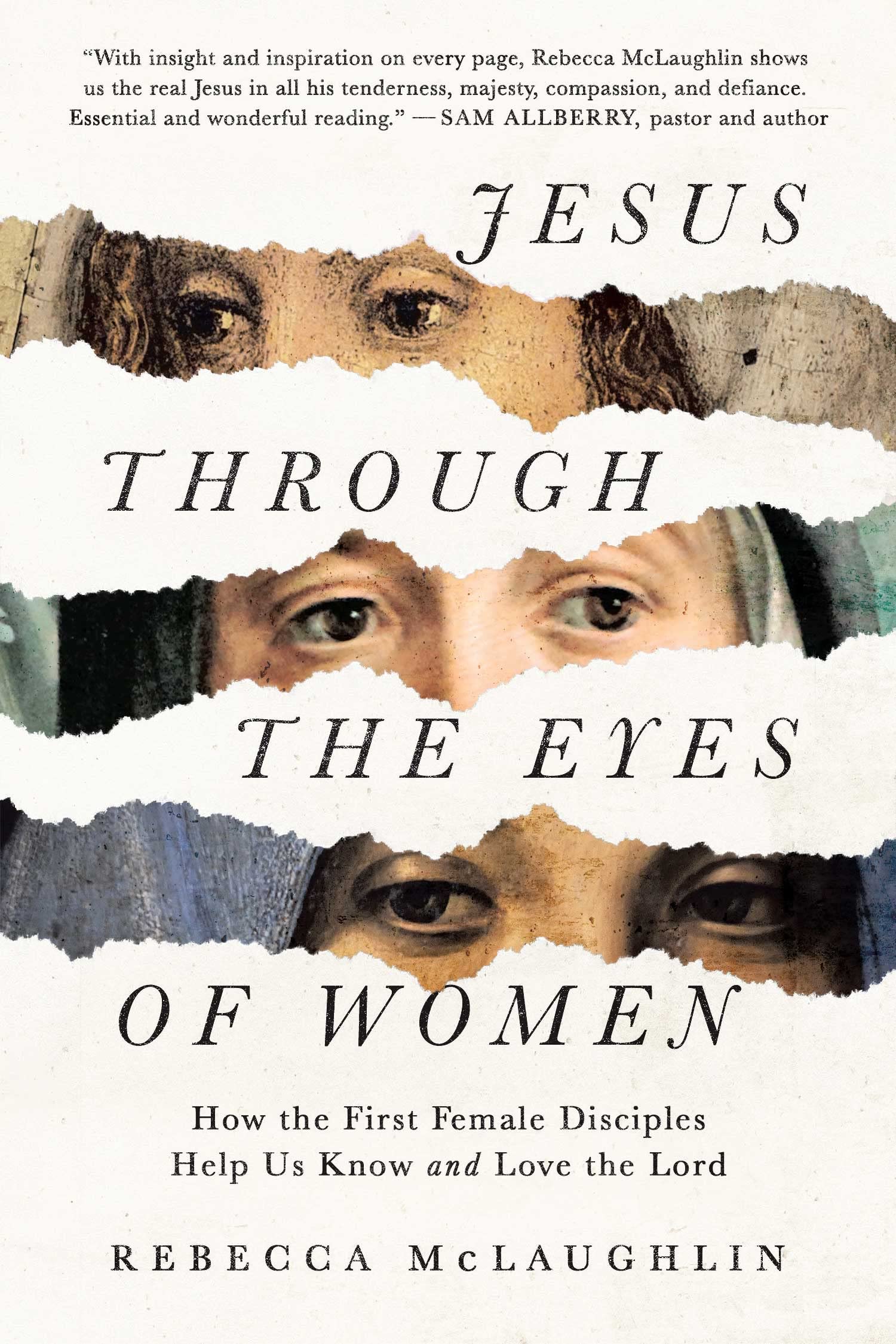 If the women who followed Jesus could tell you what he was like, what would they say?
Jesus’s treatment of women was revolutionary. That’s why they flocked to him. Wherever he went, they sought him out. Women sat at his feet and tugged at his robes. They came to him for healing, for forgiveness, and for answers. So what did women see in this first-century Jewish rabbi and what can we learn as we look through their eyes today?
In Jesus Through the Eyes of Women, Rebecca McLaughlin explores the life-changing accounts of women who met the Lord. By entering the stories of the named and unnamed women in the Gospels, this book gives readers a unique lens to see Jesus as these women did and marvel at how he loved them in return.
We’re delighted to offer this ebook to you for free.