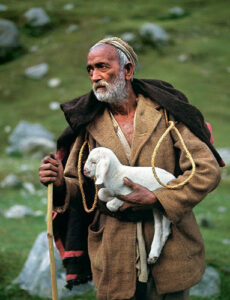
In this sermon, D. A. Carson addresses the perennial question of how a good God can allow suffering through a Biblical lens, emphasizing that suffering and evil are universal human experiences that challenge both believers and skeptics alike. He explores how the Bible presents a perspective on suffering that is rooted in the human condition of rebellion against God, and discusses the Christian doctrine of the Fall and human sin as fundamental to understanding the presence of suffering in the world.
If you live long enough, you will suffer. That’s my cheerful thought for the evening. The only thing that will prevent you from suffering is not living long enough, in which case you will cause somebody else to suffer by being bereaved. I’ve known some people who have gone through an awful lot of years with relatively little suffering, but sooner or later, cancer catches up, heart attacks catch up, Alzheimer’s catches up, old football injuries catch up.
Then, of course, all of the emotional things … divorces, bereavements, sometimes bereavements that seem out of order when parents lose children. Those are all at the personal level. What about tsunamis, Tomas descending on Haiti, a volcano blowing its top and killing people in Indonesia, AIDS, and on and on and on?
For some of us, this remains a fairly distant thing. It’s something we shut out. We don’t want to think about it. We’re reasonably comfortable … until it comes home. We know somebody in one of these places or we ourselves go through really horrible emotional entanglements or we ourselves then receive a death sentence. “You have melanoma and have six months to live.” Suddenly, questions that seemed distant become very close and intimate.
My mother died after nine years of Alzheimer’s. My wife is a cancer survivor. But that’s just sort of typical family stuff, isn’t it? I guarantee if I went around this crowd, there would be a lot of pretty horrific stories at a personal level. So the questions face us all the time. It’s not something to duck, and if it’s any encouragement, the Bible doesn’t try to duck them either.
Some of the writers of the psalms ask questions before God, where, quite frankly, they’re burning with indignation against God. Jeremiah, one of the Old Testament prophets, about 600 years before Jesus, is sometimes called the “Weeping Prophet” because he’s so upset at all of the things he has to go through, all of the things his nation is going through.
One whole book, Job, really addresses questions of suffering and evil. I’ll come back to that book in a few minutes. Even the last book of the Bible, which depicts in symbol-laden terms believers who have already gotten to the new heaven and the new earth.… They’re busy still asking God, “How long does this mess still have to go on on the earth?” It’s not as if the question is never raised by the Bible. It’s raised in many, many different places.
Moreover, it’s not just a question that Christians have to face. I don’t care what kind of background you come from. If you’re sensitive at all, you have to face that question. Suppose you’re a philosophical materialist. That is, you believe all there is in the universe is matter and energy and space and time. That’s all there is.
Part of your head is telling you, “It’s just bouncing electrons. It’s just quarks with their half lives. It’s just what atoms do.” But when you’re actually going through something, you’re busy saying, “Why me?” The very fact that you want to say, “If there is a God out there, this isn’t fair …” Well, if you’re a philosophical materialist, why should you really be upset? After all, it’s just bouncing molecules, isn’t it?
It is a question that faces people as a conundrum, either experientially or intellectually, in just about every tradition. Some world religions and philosophies cast up answers in terms of some sort of difference between the material order, where things are bad, and a non-material, spiritual order, where things are good, so there’s a complete dichotomy in their thinking between orders of existence.
The worst thing we can do is simply pretend the problem isn’t there. I need to tell you right off the bat this evening that if you’ve come here expecting a sort of caramelized, clichÈ-driven answer from some sort of Christian perspective, you’re going to be hugely disappointed. What I want to do instead is drive down six huge shafts into Scripture, into the Bible, into Christianity’s foundation document, which then support a way of looking at things.
The support these shafts provide is an integrated thing. The different shafts themselves are integrated one with another, such that together they form a baseline for thinking about suffering and evil from a Christian perspective. If you take just one of them and try to make everything hang on it, it will seem a bit ridiculous.
For that reason, if you do want to text some questions, I suggest you do it toward the end of the evening. Otherwise you may text in a question that is going to be addressed somewhere along the line of the talk itself. Let me begin, then, with six shafts.
1. Insights from the beginning of the Bible’s storyline
Let me remind you how the Bible begins. It begins with a God who is completely good and self-contained without needing us. He’s not a God who is somehow lonely and thinks, “Oh, if I could just make some image-bearers who would love me and break out their guitars and sing worship songs, I’d be a lot happier.”
He’s a God who is independent and happy but who eventually makes things that are good, including human beings made in his image. The way the Bible construes this is highly varied, sometimes in symbol-laden language, but let’s put it like this. There’s God, and initially people are so rightly related to him that they do love him with heart and soul and mind and strength.
They are orientated toward him. If they wake up in the morning, their thoughts naturally go to him, and they truly adore him and understand truly that their being, their well-being, their way of understanding and relating to each other and to the entire created order derives from him. They are derived beings. He is an un-derived being. Therefore, they are rightly related to each other.
But with the classic rebellion that Christians call the fall, what happens is that each of these individuals made in his image wants to think of himself or herself as god. Instead of God being at the center with the whole order around him, each wants to become at the center himself or herself. That means God himself has to be relegated. If he’s not quite what I want him to be, we’ll make another god. We’ll create gods in our own image.
Besides that, I’m at the center of the universe, and you, you stupid twit, think you’re the center of the universe. So now suddenly, because I want to be god and you want to be god and she wants to be god and over there they want to be god, eventually you have all of the things we call social pathologies: greed, jealousy, envy, rape, war, lust, malice, wretched gossip, and on and on and on, all because we have to be at the center of the universe.
That is why Jesus insists the fundamental commandment is to love God with heart and soul and mind and strength, which means the fundamental sin is not to love God with heart and soul and mind and strength. The second is to love our neighbors as ourselves, which is a pretty easy thing to do if God really is at the center and we do love him with heart and soul and mind and strength. Otherwise it’s an impossible thing to do.
At the beginning of the Bible, there is already a way of looking at reality that sees human beings not as pretty decent blokes who unfortunately are played with by a mischievous God who throws a tsunami in their direction every once in a while because, basically, he’s a bit of a fraud and gets his kicks out of picking on people who are a lot smaller than he is. Rather, the Bible has a way of looking at human beings as already in rebellion, already set over against God.
If someone comes along and says, “But I’m not against God. God is all right. He can mind his business, and I can mind my business, and we’ll get along just fine …” But already that is a failure to recognize God as God. The first responsibility in the Bible of creatures is to recognize their “creatureliness.” That is to say, we have been made by him and for him.
Thinking of God as somehow “other,” who could just leave us alone and then we’d be happy and he can be happy, is already to lose sight of the way things are in the first place. That is, our first obligation is to recognize our creatureliness, to own him as God, and to love him with heart and soul and mind and strength.
That is where we find our deepest satisfaction, our deepest joy, our deepest identity, and apart from that we are lost and, in some measure, corrupting one another and alienated from him and already judged, as it were, already condemned by experience, by nature, by choice. The Bible does not look at human beings basically as essentially good who can then be bowled over by the odd flood or the odd New Orleans hurricane or something like that. Rather, it sees us as people who already stand under the judgment of God.
By and large, the Bible is not surprised by bad things that happen to us, although there are individuals in the Bible who are surprised, but the Bible as a whole is not surprised by that. By and large, the Bible expresses its surprise at the patience of God for not responding with greater anger than he does show. That’s just not the way most of us look at suffering and evil that comes our way, but by and large, that’s the way the Bible fixes its lens on this sort of issue.
2. Insights from the end of the Bible’s storyline
That is to say, you have creation and fall at the one end. At the other end is not just digging a hole in the ground and planting us or cremating us, but at the other end is a heaven to be gained and a hell to be feared, a new heaven and a new earth with resurrection existence, transformed existence.
Biblical Christianity is profoundly supernatural, and there is a supernatural, transformed world order we want to press toward and a judgment to be feared. So much so, the Bible insists, that we’re not really going to be able to see things in proper perspective until we get there, and then not only will justice be done; it will be seen to be done and every mouth stopped, which means that Christians, then, in the Bible are called upon to say, “I don’t have the right to judge this too soon.”
There are some reasons for trusting God. We’ll come to some of those reasons in due course, but at the end of the day, the final rationale, the final warrant for some of this, is going to appear a little farther on down the road. Therefore, I am not simply looking for 70 years or 80 years here as free from any suffering as possible, but I am looking for a new heaven and a new earth, the home of righteousness. I’m looking for transformed resurrection existence. I’m pressing on for things that are beyond this life.
I don’t think you can make a lot of sense of the Bible unless you see that’s the kind of thing it ultimately promises. Historically, there have been many, many Christians who have put up with many, many things over the course of full lives of suffering, precisely because they are absolutely convinced that on the last day they will be vindicated.
Now this is something even a lot of contemporary Christians have a hard job getting their minds around. I told you my wife is a cancer survivor. There was a lady in our church a couple of years ago. We’ll call her “Mary.” She had had a bout with breast cancer seven years earlier, but it was the earliest stages. They thought it was all cleared up. No problem.
In May two or three years ago it came back, and it came back with a vengeance. The doctors were trying everything, but by September she was already very ill indeed. Christians gathered to pray for her, as Christians do. This particular woman was very well known in our community. She had been active on all kinds of fronts to help people, so many fronts it would take too long even to list them all. She was known way beyond our church just because she had been so active in helping quite a lot of people.
About 280 people gathered for prayer for this woman on this particular Saturday in September. My wife went along. I was out of town. People prayed earnestly, fervently, that God somehow would take this cancer away or heal poor Mary or whatever. It got more and more excited and fervent as the time got on.
Eventually my wife prayed. She prayed along lines like this. “Dear God, it really would be wonderful if you would heal poor Mary. We’re sure you can. But if not, teach her to die well. Give her joy in believing. Give her a heritage for her husband and children. Open her eyes so that she can see what is yet to come. Teach her to die well.”
Of course, my wife was using an expression that Christians about 400 years ago used pretty often. Christians were those who were known as people who knew how to die well. Well, we found out afterwards that some of the relatives of this Mary were hoping my wife would experience this before Mary, this dying well. It was sort of letting down the side. We were busy praying for healing, and teaching her to die well wasn’t in the primary orb of anticipated results.
In November, her husband phoned me. “I’ve got to talk to you, Don. I’ve got to talk to you now.” So we went out to a local coffee shop. Basically, what he wanted was this. The Christians in our church are a pretty decent bunch, and they were bringing in meals for the family and looking after her and making sure the house was clean. They were looking after the family. They were pretty good. They were also, in light of the Bible, quite frankly, dumb. What can I say? “How are you doing, Mary? How’s it going?”
“Oh, it’s awful.”
“Don’t worry. We’ve been praying for you. It’ll be all right.”
I beg your pardon? If they really believe that, they’re not looking at the evidence very closely. If they don’t believe it, they’re lying through their teeth, all in the name of encouraging? We live in a culture now where death has just about become the last taboo subject. If I have a group of university students around my table, as I often do.… They’re sitting around the table, and I want to throw out a topic for discussion.
“What do you think about that sexual encounter on such-and-such a film? How do you think that went?” Everybody has an opinion. “What do you think about homosexuality?” Everybody has an opinion. “What do you think about politics? What do you think about the vote on Tuesday?” Everybody has an opinion. “I’d like to tell you how my dad died.” Then you can cut the air with a knife, because I just crossed a social taboo. I’m not allowed to say things like that. Death has become the last taboo.
Even amongst Christians, let it be said, so often we don’t think of the gospel of Christ, the good news of Jesus Christ, as preparing men and women to die well. Oh, it does a lot of things as well. It teaches us how to live well too. That’s true. But it’s not just something that teaches us to produce nice little American citizens to pay their taxes and be really decent toward each other. That may be a by-product, but it’s not the goal of what the Bible is saying. The goal is much bigger than that.
There is a reconciliation of human beings to God and ultimately a transformed existence in a resurrection transformation in what the Bible dares call a new heaven and a new earth, the home of righteousness toward which we press. Christians want to learn how to die well and to live now in the light of what is to come and to turn from evil. This applies, according to none less than the Lord Jesus himself, to all kinds of natural disasters, this way of seeing them in the light of the end.
Here’s a passage from one of the books that describes Jesus’ earthly ministry. It’s Luke, chapter 13. “Now there were some present at that time who told Jesus about the Galileans whose blood Pilate had mixed with their sacrifices.” That is, the Roman governor had slaughtered them, and their blood had mixed with the animal blood of their sacrifices.
“Jesus answered, ‘Do you think that these Galileans were worse sinners than all the other Galileans because they suffered this way? I tell you, no! But unless you repent, you too will all perish. Or those 18 who died when the tower in Siloam fell on them …’ ” An accident. A tower fell down and crushed 18 people to death. “Do you think that they were more guilty than all the others living in Jerusalem? I tell you, no! But unless you repent, you too will all perish.”
In other words, even the disasters that take place, Jesus says, should not be seen as harbingers, as signs that the people who suffered the disaster are somehow more evil than everybody else, as if everybody in New Orleans is more wicked than everybody in LA. Probably not all that likely, anyway. In any case, Jesus says it’s not that they’re more wicked, but rather that we’re all wicked, and ultimately there is judgment to come, whether it happens now or later.
It reminds me of something a Christian thinker by the name of C.S. Lewis wrote at the beginning of World War II. Here’s a little bit of history. C.S. Lewis had fought in the trenches of World War I. C.S. Lewis eventually became a professor of English literature, Anglo-Saxon, at Cambridge. Before that he taught at Oxford for many years.
As a young man, he fought in the trenches in World War I, that most stupid of wars, where there was a 2,300-mile trench across Europe with machine guns and howitzers on both sides, when they mowed each other down as they tried to advance, which went on for about three and a half years. Ten million lost their lives by just being mowed down by howitzers and machine guns, for no gain whatsoever.
Even the causes of the war were so incredibly stupid that later historians clasped their heads in sheer disgust at the multiplied stupidities that went into calling that war into being. C.S. Lewis was there. He watched most of his friends killed, but he survived, and in 1939 war broke out again, a bare 20 years later.
The chaplain of the University Church in Oxford didn’t know how to address the young men in the university when the war broke out. Because C.S. Lewis by this time had become a Christian (he hadn’t been a Christian during the war, but he had become a Christian by then) and was beginning to write some interesting things along these lines, he invited Lewis to say something to students who attended that university chapel.
He climbed into the tall pulpit. I don’t know if you’ve seen these European pulpits in cathedral-like buildings. “Six feet above contradiction,” they say. He climbed into this tall pulpit, and he began this way. The address has been reprinted many times. Learning in War-Time. You could look it up on the web for yourself and get the whole thing. This is how he began.
“A university is a society for the pursuit of learning. As students, you will be expected to make yourselves, or to start making yourselves, into what the Middle Ages called clerks: into philosophers, scientists, scholars, critics, or historians, and at first sight this seems to be an odd thing to do during a great war.
What is the sense of beginning a task which we have so little chance of finishing? Or even if we ourselves should happen not to be interrupted by death or military service, why should we … indeed how can we … continue to take an interest in these placid occupations when the lives of our friends and the liberties of Europe are in the balance? Is this not fiddling while Rome burns?
Now it seems to me that we shall not be able to answer these questions until we have put them by the side of certain other questions, which every Christian ought to have asked himself in peace time. I spoke just now of fiddling while Rome burns, but to a Christian, the true tragedy of Nero must be not that he fiddled while the city was on fire, but that he fiddled on the brink of hell.
You must forgive me for the crude monosyllable. I know that many wiser and better Christians than I in these days do not like to mention heaven and hell even in the pulpit. I know, too, that nearly all the references to this subject in the New Testament come from a single source, but then that source is our Lord himself. People will tell you that it’s Saint Paul, but that’s not true. These overwhelming doctrines are dominical.” That’s an old word that means they come from Jesus.
“They are not really removable from the teaching of Christ or of his church. If we do not believe them, our presence in this church is great tomfoolery. If we do, we must sometimes overcome our spiritual prudery and mention them. The moment we do so we can see that every Christian who comes to a university must at all times face a question compared with which the questions raised by the war are relatively unimportant.
He must ask himself how it is right, or even psychologically possible, for creatures who are every moment advancing either to heaven or to hell to spend any fraction of the little time allowed them in this world on such comparative trivialities as literature or art, mathematics or biology. If human culture can stand up to that, it can stand up to anything. To admit that we can retain our interest in learning under the shadow of these eternal issues but not under the shadow of a European war would be to admit that our ears are closed to the voice of reason and very wide open to the voice of our nerves and our mass emotions.”
Then he goes on to talk about how Christians, even in time of war, under the light of eternity, do think about all kinds of things, including mathematics and biology and chemistry. Then toward the end of his essay he has a section where he talks about how to think about death. He has several points, and I don’t have time to go over them. I’ll mention just one of his points toward the end of his essay.
“War threatens us with death and pain. No one, especially no Christian who remembers Gethsemane [where Jesus suffered so much] need try to attain a stoic indifference about these things, but we can guard against the illusions of the imagination. We think of the streets of Warsaw and contrast the deaths there suffered with an abstraction called ‘life.’ But there is no question of death or life for any of us, only a question of this death or of that, of a machine gun bullet now or a cancer 40 years later.
What does war do to death? It certainly does not make it more frequent. One hundred percent of us die, and the percentage cannot be increased. It puts several deaths earlier, but I hardly suppose that is what we fear. Certainly when the moment comes it will make little difference how many years we have behind us. Does it increase our chances of a painful death? I doubt it. As far as I can find out, what we call natural death is often preceded by suffering, and a battlefield is one of the very few places where one has a reasonable prospect of dying with no pain at all.
Does it decrease our chances of dying at peace with God? I cannot believe it. In fact, if service does not persuade a man to prepare for death, what conceivable concatenation of circumstances would? Yet war does do something to death. It forces us to remember it. The only reason why the cancer at 60 or the paralysis at 75 do not bother us is that we forget them.
War makes death real to us, and that has been regarded as one of its blessings by most of the great Christians of the past. They thought it good for us to be always aware of our mortality. I’m inclined to think they were right. All the animal life in us, all schemes of happiness that centered in this world, were always doomed to a final frustration. In ordinary times, only a wise person understands and realizes it.
Now the stupidest of us knows. We see unmistakably the sort of universe in which we have all along been living, and most have come to terms with it. If we had foolish, un-Christian hopes about human culture, they are now shattered. If we thought we were building up heaven on earth, if we looked for something that would turn the present world from a place of pilgrimage into a permanent city satisfying the soul of man, we are disillusioned, and not a moment too soon.”
Put this in contemporary terms. Most of us, I’m sure, were shocked beyond words, rightly, at the horrendous suffering bound up with the tsunami that hit Southeast Asia three years or so ago, but do you realize there is the equivalent of three tsunamis in Africa per year bound up with AIDS? We get so used to certain kinds of suffering we’re not shocked by it, or the media focuses on one thing, and then we are like Pavlov’s dogs that respond to the media.
So we’re all upset about Darfur, and we should be upset about Darfur, yet before Darfur, at a much greater level of intensity and barbaric persecution, about two million southern Sudanese were put to death or enslaved over a 20-year period by those in the north of the country. That hardly had a whisper in the press.
The Bible does acknowledge that there is this long period between the beginning of the Bible’s storyline and the end of the Bible’s storyline where there is a lot of inequity and injustice and suffering and death, but it does insist that at the end, not only will justice be done, but it will be seen to be done. Meanwhile, part of our existence here is toward a new heaven and a new earth, the home of righteousness.
I have a friend in Australia. He’s an old man now, suffering from all kinds of bodily decrepitude as he approaches the last day himself. His mind is still sharp, but the poor chap is suffering from so many things I doubt I could even remember them all. If you ask him, “Frank, how’s it going?” he says, “I’m not suffering from anything a good resurrection can’t fix.” Of course, in one sense, that’s not escapism; that’s merely basic Christianity.
3. Insights from the place of innocent suffering
After all, for all that we want to say about how we human beings are rebels against God (and that’s true) and that this is a place of suffering and death and, in many respects, from God’s perspective we simply deserve it, at the end of the day you can’t help but witness examples of innocent suffering and cry out again to God, “How long, O Lord? How long?”
One whole book of the Bible is given over to that. It’s the book of Job. It’s disputed exactly when it was written. Probably pretty early on. It could be as old as 2,000 years before Christ, maybe even older. It’s cast as a massive drama. In this drama, Satan himself confronts God and says, “You think this Job fellow loves you truly; he’s the exception of the mass of human beings. But I tell you the only reason he seems to love you and he seems to be good is because you’ve shielded his life so that everything he touches turns to gold.
He’s the richest man in the East. He’s well regarded in his community. He has 10 kids, and they’re all right little angels. He even prays for them preemptively he’s so pious. Lest they should do something naughty, he prays for them preemptively. But you take away this protection, and he’ll turn around and curse you to your face.” God says, “Go ahead. Watch.”
In successive waves of disasters, bands of marauding Chaldeans come down and take away all his cattle. Bands of Sabeans come in and make off with all of his sheep. A horrible storm comes down when his kids are having a party in a house, and everybody in the house, including all 10 kids, are killed. In due course, he himself is afflicted with physical illness.
He’s sitting out on an ash heap, picking at his scabs with pieces of broken pottery, and his wife begins to nag. “Curse God and die. What do you have to live for?” He says, “Shall we receive good things at the hand of God and not bad things?” Then some friends come in, comforters, miserable comforters.
They only do one wise thing. When they arrive, they’re so gobsmacked by the intensity of his suffering they sit and, in true Middle Eastern fashion, just sit there and keep him company and keep their mouths shut for the first week. Then they want to apply their theology to Job’s case. “Job, do you agree that God is just?”
“Yes.”
“Do you agree that God is sovereign?”
“Yes.”
“So if God is just and sovereign and you’re suffering, then …” Job says, “Well, I know God is sovereign. I know he’s just, but I have to tell you, what I’m suffering isn’t fair. I’m not more sinful than my neighbors. I don’t deserve to lose everything. I don’t deserve all this suffering, to lose my family. What I’m suffering just isn’t fair.” They are shocked. “Job, if you’re saying it’s not fair, you are accusing God of injustice. You’re saying God himself is unfair. Is that what you want to say? Hmm?”
“Oh no, I don’t want to say God is unfair. I know he’s sovereign.” He goes into lyrical, poetic lines about how he’s great and good and he makes no mistakes. “On the other hand, human beings fly into trouble like sparks fly off fire. We’re born of women, and all our days are toward suffering, and finally we head to death. Those are the realities. You just can’t deny them.” They say, “Job, Job, don’t you hear what you’re saying? You really are suggesting that God isn’t going to quite cut it. You’re accusing God.”
“No, no. I don’t want to accuse God, but I am saying I wish I had a lawyer.” He actually goes that far. “I wish I had a lawyer. I cry to him. I pray to him, and he doesn’t answer me. I wish I had a go-between, a lawyer, somebody to actually approach him. I have a few things to say to him.”
“Job, do you hear what you’re saying? How dare you? You’re blaspheming against God.”
“No, no, no. I still want to say, ‘Though he slay me, yet will I trust him.’ But I still have some things I want to raise with him.” Eventually, one of them says, “Yes, well, actually you’ve committed more sins you actually even remember. If you just repent, even if you don’t think you have anything to repent of, if you just confess the sins you must have committed, even though you don’t really acknowledge them intellectually, then God will bless you and forgive you your sin because you’ve repented of them, and then everything will be restored to you again.”
Job blows up. He says, “This is ridiculous. If I pretend that I’m repenting and turning away from sins I don’t even acknowledge I’ve committed in order to get blessings from God, I would deserve the curse of God because I’d be lying to God. Don’t you see?” Well, this goes on and on. Another voice comes in.
Eventually, after chapter after chapter of this intense, dramatic presentation of debate, God speaks. He speaks out of a whirlwind. In this dramatic presentation, almost everything God says is cast as a rhetorical question. “Job, the rest of you guys, have you ever designed a snowflake? Hmm? Were you around when I put together the first hippopotamus? Have you ever cast a constellation into the heavens, let’s say Orion? Have you ever made an Orion? Hmm?”
Line after line after line of these rhetorical questions. After about three chapters of them, Job says, “I realize I spoke too soon. There are all kinds of things I shouldn’t have said. I am so sorry. I’ll keep my mouth shut.” God says, “Stand up on your feet. I have some more things to say to you,” and he asks two more chapters of rhetorical questions. At the end of it, Job does not say, “Ah, now I understand.” He says, “I repent.”
Now it’s very important to understand what he meant and did not mean by that. He did not mean, “I repent of any sins that brought along the suffering in the first place,” but “I repent of any arrogance I might have had that implicitly is casting any doubt on you.” Meanwhile, God says that Job basically said the right things about him and the three miserable comforters said terrible things about him.
They had a simple tit-for-tat morality. They were trying to view the complexities of evil in the universe. “If you get clobbered, it’s because you deserve it. If you’re poor, it’s because you deserve it. If you suffered a tsunami, it’s because you deserve it. If you have cancer, it’s because you’re wicked. If you lose a baby, it’s because you deserve it.” How hideously manipulative and grotesque is that? In their very efforts to preserve the integrity of God they actually made a mockery out of incredibly complex matters of suffering and the like. Job at least had the mystery built in.
Now I do have to say one more thing about the book of Job. Modern literary critics don’t like it. In the very last chapter, God restores things to Job. His health comes back. He gets twice as many sheep, twice as many cattle. He’s filthy rich. All his honor comes back. Not twice as many children. I mean, have pity on his wife, but he does have another 10 children.
If you think that’s not plausible, down the street from where I lived when I was growing up I knew a family (some of the kids were my age, my friends) that had 21 children. No multiple births, one mom. She quit at the age of 42. I kept wanting to call her Job’s wife, but I didn’t dare.
When modern literary critics see how the book of Job ends up, they say, “You know, the early part of the book is really good, all this angst and debate without resolution. One side says, and the other side says, and then God asks a whole lot of rhetorical questions with no answers, and you have to interpret it your own way. That’s really terrific. It’s open-ended. Then some idiot of an editor came along and added in chapter 42, and now there’s a happy ending.
You know, 1950s cowboys. The people with the white hats are good. The people with the black hats are bad, and everybody who’s good is very good, and everybody who’s bad is very bad. It’s a 1950s cowboys film with a happy ending. How ridiculous is that? It couldn’t possibly have been written by the same person who wrote all this magnificent drama that went on for chapter after chapter after chapter.”
Job 42 is to the book of Job what the last book of the Bible is to the rest of the Bible. That is, in the end, not only will justice be done but it will be seen to be done. It’s not that there is no mystery. The Bible insists that there is mystery, but mystery is not an end in itself. It’s part of our miserable condition, but it is not an end in itself simply to be cherished as an intrinsic good.
4. Insights from the mystery of providence
Now some of you who have a background in philosophy or the like will know that some of these questions about suffering and evil were put most pointedly by a chap called David Hume. David Hume has been cited again and again as the sort of archetypical question of any notion of a good sovereign Christian God, because the notion finally seems incoherent.
He says, “If God is perfectly good and perfectly sovereign, why is there so much suffering? If he’s good and not sovereign, you might say he doesn’t have the power to prevent the suffering, but if he’s absolutely sovereign and not good, then perhaps he’s merely being malicious amongst us. But if you say he’s perfectly good and perfectly sovereign, then the whole notion is incoherent granted the amount of suffering in the world.”
Of course, although I’m trying to put down some pillars of the way the Bible views goodness and badness and waiting till the end before things are finally resolved and all the rest, there is something to that question. How are we even to begin to think about that? I want to make two statements, which I insist the Bible backs up again and again and again.
I’m not saying they’re easy, but the Bible holds two propositions simultaneously all the time. They surface again and again and again in books of the Old Testament, that is, the things written before the coming of Jesus, and books of the New Testament, written from the time of the coming of Jesus for about a hundred years. These two propositions surface again and again and again.
First, God is absolutely sovereign, but his sovereignty never mitigates human responsibility. The second proposition is according to the Bible, human beings are morally responsible creatures. By that I mean we believe and disbelieve. We obey and disobey. We choose and so on, and we are held accountable for all of these things.
Of course, there may be many, many things that go into it in terms of our background and genes and how tired we are and whether we had a night’s sleep and all the rest. Nevertheless, we are morally responsible creatures who believe, disbelieve, choose, disobey, do good things, and do bad things, but all such moral accountability, all such moral responsibility, never, ever makes God absolutely contingent. That is, it never relegates God to the place where he’s merely a reactor.
Now the Bible holds that those two propositions are simultaneously true again and again and again. It doesn’t enter into long dispositions to defend them. Many Christians have done that in the centuries since the Bible was written, but nevertheless the Bible presupposes them. Let me give a couple of examples, and you’ll see what I mean.
In the first book of the Bible, the book of Genesis, in the very last chapter, chapter 50, you come to a part of the history of Joseph. Joseph had been badly abused by his brothers. They were going to kill him at one point. Then they sold him down into slavery, and in the mysteries of God’s outworking, eventually, though he was horribly abused down in Egypt, nevertheless the time came when he became the equivalent of prime minister of Egypt and helped to save his own family from starvation.
Now the father of Joseph and of the brothers who abused him has died, and the brothers are afraid that now that the old man is dead, Joseph is going to take it out on them. He has the power. He’s prime minister, for goodness’ sake. So they go to him with this song-and-dance routine about how their father wanted him to be a nice chap and all of that.
Joseph says, “Who am I to stand in the place of God? Listen, when you sold me into captivity, you intended it for evil, but God intended it for good, to bring about this result at this time, namely, saving many people’s lives.” Notice what the text does not say. It does not say, “God had intended to get me down to Egypt in a chauffeur-driven, air-conditioned limousine, but unfortunately you guys mucked it up and, as a result, I went down there as a slave instead.”
Nor does it say, “You sold me as a slave into Egypt while God was on holiday. He was taking a small break. He wasn’t watching at that point. Nevertheless, he came back later. He’s such a magnificent chess player that he moved some pieces around and eventually it came out to have a happy ending anyway.” Rather, in one and the same event, “You intended it for evil, but God intended it for good.”
That is, God is sovereignly working in this event, but their human accountability is not thereby mitigated. They are morally responsible creatures, but that doesn’t make God absolutely contingent, coming in on his white charger at the last moment, singing triumphant songs as he sorts it all out, as the sun goes down in the west and the credits go up the screen.
That sort of thing is found again and again in the Bible. Perhaps the best known example in the New Testament, that is, the bits written in connection with Jesus’ life, are found in Acts, chapter 4. In Acts, chapter 4, the Christians are beginning to face their first whiff of persecution, and they gather together and pray. In their prayer, they go over the events that brought Jesus’ death to pass.
They say in Acts 4:27, “Indeed, Pontius Pilate and the leaders of the Jews and the Herodians conspired together against your holy servant Jesus and put him to death on the cross.” Verse 28: “They did what your hand had determined beforehand should be done.” So on the one hand, the political factors that got Jesus into a kangaroo court and got him butchered were the result of, quite frankly, a political conspiracy, nasty expediency. It was human machination, and the people are responsible for it.
On the other hand, you can’t really be a Christian and see how central the cross is to all of God’s purposes, from the predictions of the Old Testament right through the events themselves on to all the results that follow, without seeing that God had designed the whole thing so that Jesus would die on the cross. I’ll come back to that in a few minutes.
You have to see that the death of Jesus was not just a political accident, a minor mishap in a two-bit nation on the eastern end of the Mediterranean in the first century. It was something designed by God himself. Yet even though it was designed by God himself, that does not mitigate the responsibility of the conspirators who actually put him on the cross.
In other words, although the Bible does not explain the mystery of providence.… It doesn’t. There are huge questions about how God’s sovereignty works with human will and the relationship between time and eternity. If this were another sort of lecture in another sort of venue at a PhD seminar, we could usefully explore some of those discussions together.
At the end of the day, what the Bible does do is insist that those two propositions I gave you stand at the very heart of any faithful Christian understanding of the mystery of providence. God is sovereign, but his sovereignty doesn’t mitigate human responsibility. We human beings are morally responsible creatures, but that doesn’t mean God is contingent. We live with those tensions and all the mysteries of how God and his eternity relate to us in our time until the very end.
5. Insights from the centrality of Jesus
Insights from the centrality of what Christians call his incarnation and his atonement. That is, in his becoming a human being and dying on the cross and rising again. Now I don’t know this crowd. I don’t know how many of you have a Christian background. I’m sure in a crowd this size some of you have no Christian background at all, so let me fill in a couple of things for you that are essential to any understanding of Christian faith.
Islam and Christianity both believe there is but one God, but God, as he is understood by Muslims, is, we might say, simplex. That is, he is one simple. I don’t mean simpleton. One non-complex being. Whereas Christians, who equally insist there is but one God, teach instead that this God is one but complex, so that already in eternity past in this but one God, there is God the Father, God the Son, God the Spirit. Still but one God.
Not three Gods. One plus one plus one equals three. One God. Not just separate manifestations, but something more complex. This God is a complex one. The Bible insists that even though we human beings, made in the image of God, have rebelled against him and God could have, with perfect justice, simply wiped us all out and started all over again …
With perfect justice he could have done that. Nevertheless, the Bible presents this God as coming after us, pursuing us, commanding us to turn to him, inviting us to turn to him, reasoning with us, rebuking us, sometimes sending judgments. So much of the Bible’s storyline works along that line.
Then, ultimately, in the fullness of time, the Son becomes a human being. That’s what Christians mean by this word incarnation. Carne is simply the Latin word for flesh. Incarnation is simply the enfleshing. That is, God taking on human form. He becomes a human being. He becomes what he was not. He was always God. Now he becomes a human being.
As this human being, this God-man, he eventually dies on the cross, not as the pawn of nasty political machinations at the eastern end of the Mediterranean but as the God-designed gift, in which God in the person of his Son takes on himself our death, our curse, our sin, and its results, bearing our shame, bearing our blame, the blame of all who would one day in God’s grace put their trust and faith in him. This was God’s plan.
That means God is presented as not a God who is somehow distant and then weighing up all our good points and all our bad points. How many good things have we done? Do they outweigh the bad things we’ve done? Then somehow presenting himself as the Judge who tots up goodies and baddies until eventually the scales tip one way or the other way, and that determines who gets into heaven.
May I tell you something about my wife? I was brought up in a Christian home. My wife was brought up in a very nominal home, and she had a lot of standard ideas you often get in Western culture about how God is up there and sort of pats you on the back if you’re basically good and pats you a little farther down on your back if you’re basically bad.
Eventually, when she was beginning to think through the claims of Christ, before we were married (we were both graduate students at Cambridge at the time), she began to do some serious reading. One of the books I gave her was a little book by an Anglican minister called John Stott, a book called Basic Christianity. John Stott is known for his limpid clarity. He explains things very simply and well and straightforwardly and quotes a lot of Bible verses. She dutifully looked up the Bible verses and so on.
After she had read this book, I bumped into her one day, and I said, “Well, Joy, did you read that book I gave you?” “Yes, I did.” “What did you make of it?” She said, “I’ve come to the conclusion that Christianity is good for good people like you and my friend Carol, but it’s not for me.” Do you hear what she’s saying?
For a start, she hasn’t understood what John Stott has said at all. That’s not what John Stott said. How a graduate student at Cambridge University can read John Stott and think that’s what Christianity is about is almost past understanding. Nevertheless, it reflects how strongly our cultural givens imagine God to be sort of standing up there and patting us when we’re good and booting us when we’re bad and that’s what God’s function is. But it’s not the God of the Bible.
The God of the Bible comes and says, “This is wickedness that deserves death. This is anarchy that is rebellion. You want to cut yourself off from the Prince of life. I can’t pretend it doesn’t happen. I can’t pretend that you’re innocent.” Would God be better if he sort of patted Hitler on the head and said, “But I’m nice; I forgive you,” or came up to Pol Pot and gave him a brotherly hug and said, “It’s all right. You wiped out a third of the population of Cambodia, but I love you anyway”? Would that make God better?
The God of the Bible is not only a God of love; he’s a God of justice. He comes to me in my sin. Not just to the Pol Pots of this world, but to the Don Carsons of this world, in the sin of our own rebellion, of our own self-promotion, of our own making ourselves god. He says, “You do deserve to die. I cannot pretend otherwise. But in the person of my Son, well, he dies your death for you. What I want from you is repentance and trust in him, to turn from yourself and trust in him. That’s what I want, and I pour out my Spirit on you to enable you so to believe and to do.”
Now that’s at the heart of basic Christianity. That’s Christianity 101. That’s the heart of the whole Christian Bible. That is what Jesus Christ comes to do. So you can talk about the problem of evil in philosophical terms of creation or mysteries of providence and what happens at the end and all this sort of stuff, and it’s all relevant at some level or another, but the heart of biblical Christianity, the very heart of it, is Jesus and his death and his resurrection on our behalf.
That means the way we think about God, the way we conceptualize God, is bound up with a God who actually suffers. That means that even when I don’t understand very well why my mother lay in bed with Alzheimer’s for years and years, if I am tempted too strongly to think, “This just proves God doesn’t love me,” I go back to the cross.
While I still have too few answers and can acknowledge with Job that God may be doing some things I don’t have the wisdom to see, just as he makes the constellations that I don’t have the power to make, yet what I can see of God demonstrates his love to such a profound degree in that wretched cross where he bears my sin in his own body on the tree. That’s the kind of God Christians worship.
We’re prepared to stake everything on this God because of the way he has disclosed himself to us in Christ. When we don’t have all of the answers, we still have Christ as the most magnificent demonstration of God’s love for us. I mentioned World War I. World War I cast up quite a number of English poets who wrote after the war, sometimes during the war, poetry that became astonishingly well circulated in the 1920s and 1930s. It’s largely forgotten now. It’s worth going back and reading it.
One of the minor poets was a chap called Edward Shillito, but he wrote one classic piece. It was called “Jesus of the Scars.” It’s four stanzas. I won’t quote the whole thing. Eventually he talks about, as the howitzers are going off and the heavens are yelling and screaming, there’s no place to find God.
Then he thinks of Christ suffering in his poem, and he says, “The other gods were strong, but thou wast weak. They rode, but thou did stumble to thy throne.” That is, stumbling to the cross, which becomes his throne. “And to our wounds only God’s wounds can speak, and not a god has wounds but thou alone.”
6. Insights from the persecuted global church
Do you realize there have been more Christian martyrs in the last 150 years than in the previous 1,800 years combined? There is a strand in the Bible itself that says Christians are to take up their cross and follow Jesus. Now I don’t know if you’ve used that expression where you live. You know, “We all have our crosses to bear. Ingrown toenail, miserable mother-in-law. We all have our crosses to bear.”
But in the first century, nobody joked about it that way. In the first century, taking up your cross was an expression used in connection with crucifixion. The Romans had three ways of executing you. The most miserable was crucifixion. It was reserved for slaves and scumbags. No Roman citizen could be executed without the written sanction of the emperor himself, and it was meant to be grotesquely painful and shameful.
You hung there in nakedness in a public square, suffering, pulling on your arms and pushing with your legs to open up your chest cavity so you could breathe, and going into muscle spasm. It was a horrible way to die. After sentence was pronounced, the victim was whipped again, and then was supposed to take up the cross member, the horizontal member, on his shoulder out to the place of crucifixion.
Then he was stretched out on it and tied or nailed to it. Then the cross member was lifted up onto the upright, which stayed in the ground, and then his feet were fastened, and the actual crucifixion hours then began. So “taking up your cross” was the expression that was bound up with what you did after you were condemned.
You took up your cross, and then there was no more reprieve. There were no cell phones for the governor or the president to phone in and grant a reprieve at the last hour. You were out, and all you had ahead of you was pain and suffering, shame, indignation, and death. Yet Jesus actually goes so far as to say to his disciples, “Unless you take up your cross, you cannot be my disciple.”
In fact, in one passage he actually says, “Unless you take up your cross daily.” How would you like to be crucified every day? This does not seem like a good strategy for winning converts. “How to make friends and influence people: be crucified every day.” Meanwhile, in the culture itself, there are little moral handbooks written in the first century that say one of the things you don’t joke about is crucifixion.
“If you have children, make sure you take them around the square where the crucified people are.” That’s something you don’t joke about. You could no more joke about crucifixion in the first century than you could joke about the Holocaust today. There are some things you don’t joke about, and crucifixion in the first century is one of them.
Yet Jesus picks up this expression, where he’s not talking about ingrown toenails or mothers-in-law, and says, “Unless you pick up your cross and follow me, you cannot be my disciple.” Now clearly he’s not speaking literally. For most of us, that’s not going to happen. Yet there’s something profound in what he’s saying.
He’s saying that the genuine disciples of Jesus go to their death, because it’s in dying that you live. It’s in giving that you receive. It’s in losing yourself that you find yourself. That’s part of what it means to fasten on Jesus, to trust him, and then really let things fall where they may. That means a kind of death to self so that you can actually find yourself, because you were designed, in fact, to be attached to the living God.
In the fourth century, Augustine understood that when he said, “Man’s soul is restless till he finds his rest in God.” That’s why Christians across the years, genuine Christians, not just people who live in Christianized countries, have understood that there is a willing connection between Christian faith and suffering.
When Paul writes to Christians in the city of Philippi in the first century, he actually goes so far as to say in his first chapter, verse 29, “To you it has been granted on behalf of Christ not only to believe in his name, but also to suffer for his sake.” Do you hear that? “A lovely thing has been granted to you. Not only to believe in him, but also to suffer for him.” Which means that two chapters on, the apostle can write, “Oh, that I may know him and the power of his resurrection and the fellowship of his suffering.”
Across the century, Christians have been willing to take on suffering as Christians because it’s the way the Master went, and still to retain integrity and view it as a privilege. There’s a remarkable scene in the book of Acts. Acts is the book that tells us what happened amongst the first Christians after Jesus rose from the dead. Jesus told them the night he was betrayed, the night he was going to the cross, “If they beat up on me, they’re going to beat up on you. If I suffer, you’re going to suffer in some measure too.”
But in the first weeks and months of the Christian church, things were going swimmingly. Thousands were converted. Then more thousands were converted. They were well spoken of by a whole lot of people. Everything seemed to be going swimmingly. Then eventually persecution broke out amongst some of Jesus’ disciples. They were beaten up pretty badly. Then we read of those disciples, “They rejoiced because they were counted worthy to suffer for the name.”
Do you know what I think was going through their heads? They had just finished seeing Jesus suffering and dying and then rising again, and this in the wake of telling them that they too were going to suffer. Then they go through a long period of time when everything is going swimmingly.
I bet you some of them were saying to themselves, “I wonder what we’re doing wrong. People actually like us. People are getting converted. This is a fantastic time. Revival is breaking out everywhere. This is terrific. No suffering anywhere. I can’t believe Jesus was wrong, but, boy, if this is suffering, I can hardly wait to see what happiness is. This is pretty good.”
Then eventually the suffering comes. There is a reaction in the culture, a reaction in society. Christians are put down. They’re being imprisoned and beaten up and so on. Then the disciples are saying, “Yes! He said so, and this is our privilege.” They rejoice because they’re counted worthy to suffer for the name.
That too is part of the way Christians will look at suffering, because they will not think that living 70 years with as few complaints as possible is the be all and the end all, the ultimate goal. Their ultimate goal is to be like Jesus, and that changes everything. Now let me close the lecture in prayer, and then if you have some questions you’ve been texting, some of them will appear on the screen behind me. Let me lead in prayer.
Heavenly Father, not for a moment do we want to make light of suffering or pretend that we have a set of easy answers, but we do want to learn the perspectives we find in your most Holy Word and apply them to our own lives wisely and well. Above all, we want to see the spectacular beauty, the transcendent kindness and love you have shown us in sending your own dear Son to us, becoming one with us, then dying our death in his own body on the tree.
Forbid that we should ever become hardened to such glorious love as this. Merciful God, it may even be that tonight some here are crying out even now in their hearts, “Lord, I believe. Help my unbelief. God, have mercy on me, a sinner.” Grant to all of us a transcendent desire to follow this Christ in repentance and faith. For Jesus’ sake, amen.
Question: “Does God create sin?”
Answer: That’s a good question. Next. You never trust a professor who answers questions by saying the question is bad. Nevertheless, this question does presuppose something that the Bible doesn’t allow. That is, it doesn’t see sin as a created thing, so that God created a constellation or two and hippopotami and human beings and a chunk of sin, because that sees sin as something that was created.
The Bible sees sin not as a created thing, but essentially it’s rebellion against God. It is the de-Godding of God. It is sentient creatures refusing to acknowledge their creatureliness and wanting to become gods themselves. If we are made by this God, he is the source and beginning of life and the center of all things, then it is detaching ourselves from him, and it is inviting his curse upon us. So the Bible does not see sin as a created thing. It sees sin as a rebellious thing.
Now that does not intend to duck the mysteries of providence, and God is still sovereign over all. I could think of a follow-up question that could come to that one that would make things even more difficult. Nevertheless, as that question is asked, I would say simply, no, God does not create sin in any sense. Sin is not a created thing. It is an act. It is an attitude. It is a heart of rebellion. It is anarchy. But it is not a created thing.
Question: “Why was the God of the Old Testament full of so much wrath adding to people’s suffering?”
Answer: It is pretty common to think of the Bible as divided into two parts with almost two Gods, or at least “God negative” and “God positive.” In the Old Testament, God is full of wrath. I mean, you have plagues and war and all that kind of thing. Then you come to the New Testament, and it’s “Gentle Jesus, meek and mild, look upon the little child, turn your other cheek and be happy.”
In this way of viewing the Bible, you move from God who has somewhat of a bad temper to God who is pretty nice on the whole. You have to water down some of what he says about hell and things like that, but nevertheless, pretty nice. I would want to argue, actually, that that’s a pretty serious misreading of the Bible.
I don’t think that as you move from the Old Testament to the New you move from a picture of a bad-tempered God to a loving God. I think, rather, that as you move from the Old Testament to the New, the picture of God’s love is ratcheted up, and the picture of God’s wrath is ratcheted up. Let me back off and explain what I mean by that.
In the Old Testament, yes, there are wars and famines and all that sort of thing. On the other hand, I don’t know how many times the Old Testament says things like, “The Lord is slow to anger, abounding in mercy. He will not always reprove,” and so on. One whole book, the book of the prophet Hosea, actually presents God as the almighty cuckold, that is the almighty betrayed husband who is in agony because his own covenant people are, as it were, spiritually sleeping around, betraying him.
That is, apostasy and turning from God becomes a kind of equivalent of spiritual adultery, so that God himself becomes the betrayed husband, and he’s the one in an anguish and agony. That’s part of the presentation of God in the Old Testament too. In the New Testament, yes, it’s true that God’s love is presented more climactically yet as you come to the person and work of Jesus. That’s true.
Nevertheless, the New Testament speaks with far more clarity than the Old Testament about hell and judgment and eternal suffering. If you doubt it, read the Gospels, Matthew, Mark, Luke, and John, the four first books of the New Testament, and listen to the kinds of things Jesus says about judgment, or read the last book of the New Testament, the book of Revelation, chapter 14, which, using symbolism.… It’s metaphorical language, but it’s shocking metaphorical language.
It pictures an ancient wine vat in a vineyard. You put in all of the grapes, and the servant girls kicked off their sandals and pulled up their skirts and went in and trampled down the grapes. Then at the bottom of the wine vat there were little holes and stone channels, and you collected the juice into grape juice bottles that eventually became the basis for making all of your wine in the first place.
That imagery is picked up to say that on the last day people are trampled in the winepress of God’s wrath until their blood flows at the height of a horse’s bridal for a distance of 200 miles. Grant that it is metaphorical language to talk about the wrath of God. Nevertheless, that’s not exactly gentle Jesus, meek and mild.
You see, I don’t think the Old Testament just pictures God as stiff and righteous and judging and the New Testament pictures God as gentle and loving and soft. Rather, as you move from the Old to the New, you ratchet up the pictures of God’s love until their climax comes in the cross itself, and you ratchet up the pictures of judgment in the Old Testament until you come to the New, where the ultimate judgment is hell itself.
Do you know why people don’t find this so terrifying, why they overlook all this theme of judgment in the New Testament? Well, partly because they don’t read the New Testament all that much, but partly also because we’re so focused on this life we’re far more afraid of war and plague and famine than we are about hell itself, which from the Bible’s point of view is just plain daft.
The most important thing to say is that as these two themes barrel through the Bible, that is, the theme of God’s strict justice holding us to account and coming upon us even in wrath because of our sin and, on the other hand, God’s love pursuing us, inviting us, commanding us to turn, and ultimately pursuing us in the person of his own dear Son.… These two themes barrel through the Bible until they meet climactically, powerfully, in the cross itself.
There is a sense in which the cross portrays not only the love of God in most dramatic fashion, but it portrays the wrath of God in the most dramatic fashion. There is a sense in which wrath and mercy kiss each other in the cross. That’s really at the very heart of any faithful Christian understanding of what the Bible is about. Once again, I’m not persuaded that the analysis that has often portrayed God as bad-tempered in the Old and pretty nice in the New quite squares with the actual evidence you find in the Bible.
Question: “If natural disasters are not punishment and don’t fit into suffering for his sake and God is sovereign and not malicious, what are they?”
Answer: Well, I haven’t said that they are not punishment in any sense. In the passage I quoted earlier from Luke, chapter 13, where Jesus, for example, considers the tower of Siloam that falls, and some people are thinking, “Well, that proves that those people must have been more sinful than others and, therefore, this was a punishment upon them.”
Jesus does not say, “Oh no, no. There was no punishment there. It was just a natural disaster. It doesn’t really count.” What he says instead is, “Unless you repent, you will all perish likewise.” In other words, Jesus does see the tower as, in some sense, pronouncing judgment, and if others have not faced the same judgment, that’s a singular mark of God’s mercy that they have not faced that kind of judgment, but they will face it eventually unless there is repentance and faith.
In other words, at the risk of a generalization, because it is more complex than this, there are many, many judgments and natural disasters and wars and things like that in the Old Testament that are viewed as … not final judgments, but kind of anticipatory judgments of the end. They’re judgments all right. They’re pretty indiscriminating, and it doesn’t mean those who suffer them are necessarily worse than a whole lot of others, but they are all anticipations of the ultimate judgment at the end.
That is why the Old Testament pictures of judgment, far from being the worst things, are really the anticipatory things of the final judgment that comes at the end, apart from the fact that God intervenes by his love and his grace and the person and work of Christ. So there is an entire reorientation of how one thinks about these things, it seems to me, from within a biblical frame of reference.
Now such disasters are often portrayed in other ways as well, sometimes under what I’ve called the mystery of providence, but very frequently they are presented as punishment, but not particular punishments to particular people who are necessarily worse than others, but sort of index punishments of what we must all face unless we repent and turn in genuine faith and submission to God.
Question: “I’ve been living with major physical pain, and I know God can heal me and his will is for me to be healed. Why won’t he or why doesn’t he?”
Answer: Well, whoever you are, I’m terribly sorry if you do live through horrible pain, because pain can be so debilitating and disorienting that it is hard to think straight and hard to maintain good relations. You have my deepest sympathy. Not for a moment do I want to make any of this glib, but when you say that you know God’s will is for you to be healed, you might mean two or three different things, and because I don’t know who you are, I don’t know which one you might mean.
There is a sense in which those who are truly Christ’s will be healed definitively on the last day in resurrection existence. In that sense, you’re quite right. It’s God’s will that you will be healed. If you mean instead you know God will heal you in this life now, whether through medical means or a miracle or whatever, I don’t know how you know that. You may know it, but dare I say it? You may also be mistaken. One remembers that the apostle Paul suffered what he called a messenger of Satan to torment him, what he called a thorn in the flesh.
We don’t know what it was, but it had to have been pretty awful, because he lists some of the things he had put up with in the previous chapter, and they were pretty remarkable. Then he comes to this one, and he had this thorn in the flesh, this messenger of Satan, and he prayed earnestly toward God three times, which does not mean three brief prayers between sipping his orange juice and pulling on his socks before beating it out the back door on the way to work. These were extended intercessory prayer times, begging God to give him release from this.
God’s answer to him was, “My grace is made perfect in weakness.” Ultimately, Paul concludes that, in this particular case, he’ll actually boast in his weakness, then, so that the grace of God might be manifested in him. One of the more revered preachers of the twentieth century was a Brit called Martyn Lloyd-Jones. He was himself a medical doctor, extremely influential in his day. He died in 1981 of cancer, a two-year struggle with cancer.
About six months before he died, the man who became his biographer went to him one day and said, “There are a lot of people all over the country, in fact, around the English-speaking world, who are praying that the Lord will relieve your suffering in this horrible cancer.” Lloyd-Jones bristled as only he could. He was a bit of a crusty Welshman in some respects. He said, “Oh, tell them to stop.”
The man said, “Tell them to stop? What do you mean?” He said, “For 60 years I have preached the sufficiency of the grace of God, and do I now want to be protected from the ravages of death so I cannot taste the grace of God for myself?” Now he was not a masochist, as if he were saying, “Go ahead and hit me again; I like the pain,” but there was something realistic in that at the same time, because there’s so much in our culture that has to escape pain at all costs.
Sometimes God actually gives.… Oh, God can heal. I have no doubt about that. God may, but sometimes God gives people a certain kind of influence and ministry and witness that they wouldn’t get any other way. As I said, my wife is a cancer survivor. She has always been a pretty compassionate person, but let me tell you, because everything that could go wrong did go wrong.… We almost lost her twice, and she had a double mastectomy and all the rest. It was pretty awful.
On the other hand, the result of all of this is that she has also become a kind of ministering angel to I don’t know how many scores of women who have had cancer in the light of this, where she is able to bring comfort and wisdom and grace and help that she would not have been able to give if she hadn’t been through some of that herself. I haven’t even gone into that side of suffering.
So I don’t know who asked this question, and it may be that the Lord will heal you, but on the other hand, there is healing on the last day for God’s people. I acknowledge that. Sometimes right now what there is is spectacular grace, which you may be able to mediate to other people who go through horrible things too. Don’t give up on that possibility too quickly. There are a lot of examples of it in the Bible.
Question: [Inaudible]
Answer: Well, the short answer is I don’t know, but there’s a longer answer. I’m a professor. What do you expect but long answers? The short answer is I don’t know, partly because I do hold very strongly that we can know these things only if God discloses them to us. On the other hand, Paul, one of the early followers of Christ, asks some rhetorical questions in his letter to the Romans. What if God is willing to work things out this way precisely so as to display his grace?
That’s about as close to it as I can get. I can’t say more than that. It may be that 50 billion years into eternity or so, if I may think of eternity in the categories of time, a lot of this will become a whole lot clearer to me. That’s also possible. What I do see is that the Bible treats the goodness of God as much a given as the sovereignty of God, such that it becomes already stepping away from the biblical witness to start pitting one against the other.
If by the “potential for evil” you simply mean the potential for choice of any sort, well, human beings are more than automata, after all. I’m not saying that by creating human beings there is necessarily an inclination to fall or something like that. I’m saying that whatever rebellion there was was human machination, human evil, human rebellion.
God certainly knew it would happen and created human beings in any case. I don’t see how you can deny that from the Bible’s perspective. What if God is willing to put up with all of that, and then even suffer the torments that he does in the person of his Son to redeem his people back, and this not least to display his grace? That’s about as far as Paul can go, and even then it’s a rhetorical question.
At some point after that, I’m willing to say with Job, “I don’t know,” but I can say beyond Job, since he lived so much earlier than Jesus, I do know whom I have believed. He is one who died on a cross and rose on my behalf, and when I can’t answer questions like that, I still go back to the ultimate demonstration of God’s love for me in the cross of Christ.
Download your free Christmas playlist by TGC editor Brett McCracken!
 It’s that time of year, when the world falls in love—with Christmas music! If you’re ready to immerse yourself in the sounds of the season, we’ve got a brand-new playlist for you. The Gospel Coalition’s free 2025 Christmas playlist is full of joyful, festive, and nostalgic songs to help you celebrate the sweetness of this sacred season.
The 75 songs on this playlist are all recordings from at least 20 years ago—most of them from further back in the 1950s and 1960s. Each song has been thoughtfully selected by TGC Arts & Culture Editor Brett McCracken to cultivate a fun but meaningful mix of vintage Christmas vibes.
To start listening to this free resource, simply click below to receive your link to the private playlist on Spotify or Apple Music.