In this sermon, D. A. Carson focuses on the prophetic vision of Zion’s restoration, highlighting themes of hope, redemption, and divine justice. He examines the role of the Messiah in bringing restoration and justice, emphasizing how these prophecies fortify believers’ faith and inspire anticipation for God’s ultimate renewal of all things.
The following unedited transcript is provided by Beluga AI.
I invite you to turn in Holy Scripture to Isaiah 61 and I’m going to read from 61:1 to 63:14:
The Spirit of the Lord God is upon me, because the Lord has anointed me to bring good news to the poor; he has sent me to bind up the brokenhearted, to proclaim liberty to the captives, and the opening of the prison to those who are bound; to proclaim the year of the Lord’s favor, and the day of vengeance of our God; to comfort all who mourn; to grant to those who mourn in Zion— to give them a beautiful headdress instead of ashes, the oil of gladness instead of mourning, the garment of praise instead of a faint spirit; that they may be called oaks of righteousness, the planting of the Lord, that he may be glorified.
They shall build up the ancient ruins; they shall raise up the former devastations; they shall repair the ruined cities, the devastations of many generations. Strangers shall stand and tend your flocks; foreigners shall be your plowmen and vinedressers; but you shall be called the priests of the Lord; they shall speak of you as the ministers of our God; you shall eat the wealth of the nations, and in their glory you shall boast. Instead of your shame there shall be a double portion; instead of dishonor they shall rejoice in their lot; therefore in their land they shall possess a double portion; they shall have everlasting joy.
For I the Lord love justice; I hate robbery and wrong; I will faithfully give them their recompense, and I will make an everlasting covenant with them. Their offspring shall be known among the nations, and their descendants in the midst of the peoples; all who see them shall acknowledge them, that they are an offspring the Lord has blessed. I will greatly rejoice in the Lord; my soul shall exult in my God, for he has clothed me with the garments of salvation; he has covered me with the robe of righteousness, as a bridegroom decks himself like a priest with a beautiful headdress, and as a bride adorns herself with her jewels.
For as the earth brings forth its sprouts, and as a garden causes what is sown in it to sprout up, so the Lord God will cause righteousness and praise to sprout up before all the nations. For Zion’s sake I will not keep silent, and for Jerusalem’s sake I will not be quiet, until her righteousness goes forth as brightness, and her salvation as a burning torch. The nations shall see your righteousness, and all the kings your glory, and you shall be called by a new name that the mouth of the Lord will give. You shall be a crown of beauty in the hand of the Lord, and a royal diadem in the hand of your God.
You shall no more be termed Forsaken, and your land shall no more be termed Desolate, but you shall be called My Delight Is in Her, and your land Married; for the Lord delights in you, and your land shall be married. For as a young man marries a young woman, so shall your sons marry you, and as the bridegroom rejoices over the bride, so shall your God rejoice over you. On your walls, O Jerusalem, I have set watchmen; all the day and all the night they shall never be silent. You who put the Lord in remembrance, take no rest, and give him no rest until he establishes Jerusalem and makes it a praise in the earth.
The Lord has sworn by his right hand and by his mighty arm: “I will not again give your grain to be food for your enemies, and foreigners shall not drink your wine for which you have labored; but those who garner it shall eat it and praise the Lord, and those who gather it shall drink it in the courts of my sanctuary.” Go through, go through the gates; prepare the way for the people; build up, build up the highway; clear it of stones; lift up a signal over the peoples. Behold, the Lord has proclaimed to the end of the earth: Say to the daughter of Zion, “Behold, your salvation comes; behold, his reward is with him, and his recompense before him.”
And they shall be called The Holy People, The Redeemed of the Lord; and you shall be called Sought Out, A City Not Forsaken. Who is this who comes from Edom, in crimsoned garments from Bozrah, he who is splendid in his apparel, marching in the greatness of his strength? “It is I, speaking in righteousness, mighty to save.” Why is your apparel red, and your garments like his who treads in the winepress? “I have trodden the winepress alone, and from the peoples no one was with me; I trod them in my anger and trampled them in my wrath; their lifeblood spattered on my garments, and stained all my apparel.
For the day of vengeance was in my heart, and my year of redemption had come. I looked, but there was no one to help; I was appalled, but there was no one to uphold; so my own arm brought me salvation, and my wrath upheld me. I trampled down the peoples in my anger; I made them drunk in my wrath, and I poured out their lifeblood on the earth.” I will recount the steadfast love of the Lord, the praises of the Lord, according to all that the Lord has granted us, and the great goodness to the house of Israel that he has granted them according to his compassion, according to the abundance of his steadfast love.
For he said, “Surely they are my people, children who will not deal falsely.” And he became their Savior. In all their affliction he was afflicted, and the angel of his presence saved them; in his love and in his pity he redeemed them; he lifted them up and carried them all the days of old. But they rebelled and grieved his Holy Spirit; therefore he turned to be their enemy, and himself fought against them. Then he remembered the days of old, of Moses and his people. Where is he who brought them up out of the sea with the shepherds of his flock?
Where is he who put in the midst of them his Holy Spirit, who caused his glorious arm to go at the right hand of Moses, who divided the waters before them to make for himself an everlasting name, who led them through the depths? Like a horse in the desert, they did not stumble. Like livestock that go down into the valley, the Spirit of the Lord gave them rest. So you led your people, to make for yourself a glorious name.
Here ends the lesson. It is the word of the Lord.
Now, following up on Isaiah 60, our chapters continue with the theme of God’s spectacular intervention to save His people and bring them to the consummation of perfection. That’s the direction in which the entire third part of Isaiah is running. But there are several distinctive features of these three chapters that we should probably identify rather briefly before we plunge into the text itself. Number one, certain themes keep recurring throughout chapters 60 to 63. They include, not exhausted by, but they include light already in the first verse.
One of the functions of this anointed one, the Lord has anointed me, Isaiah 61:1b, to bind up the brokenhearted, to proclaim freedom for the captives, and release from darkness for the prisoners. Mention of the Holy Spirit, Isaiah 63:10-11 and 14, including that little expression, “grieving the Holy Spirit,” picked up by Paul. We’re more familiar with it in Ephesians 4, but this, of course, is the root of that expression. Then questions of justice and injustice keep recurring, Isaiah 61:3, 61:8.
The new covenant surfaces again, as it will later on in the book, Isaiah 61:8. There is a recurring theme of the intervention of God, the guilt of God’s people, the only hope being the intervention of God, the relationship between God’s people and the surrounding nations. These are themes we’ve seen before; they keep recurring, and there’ll be more to probe in them here. That’s the first characteristic, a set of themes that keep recurring. Number two.
What we find are the promises God makes to his people, to Zion, to Jerusalem, which are largely cast in Old Testament categories. That is the restoration of the city, the regathering of the exiles, the priestly classes again, and so forth. But they are so symbol-laden that our vision is inevitably pulled forward. It’s not exhausted in the return from the exile. That, we’ll see, is especially strong in Chapter 62. The nations will see your vindication. Yes. All kings your glory. Well, that’s stretching it a bit for just the return of the exile.
No longer will they call you deserted. Well, that’s true for Jerusalem. But now, the picture of the relationship between God and the city of God is spectacularly generous. And the people, by this stage in the vision, have returned. They have got the city going again. The exiles are back. But now we’re told that the watchmen on the walls are to give God no rest until he establishes Jerusalem. They might be back, but Jerusalem is not properly established, you see? They’re looking for the next stage of glory, and fulfillment, and consummation.
And that trend continues all the way, as we’ll see, until the end of the book. Then third, above all, there are several different speakers in these chapters. And it is not always easy to be certain which one is speaking at any given time. Usually, I’m about 90% to 100% sure. In a couple of cases, it’s 50-50. You may make your own judgment. But let me run through these chapters by identifying the speaker as we go. It brings a lot of illumination to the flow of the text.
If you don’t see that you are dealing with a different speaker, it’s hard to make sense of the logic of the argument. You see the different speakers and lights come in all over the place. So we’ll follow the voices, the different speakers. Number one, first speaker, the servant Messiah, the anointed one. The anointed one, thus the Christ, the Messiah. He comes with unstoppable liberation and vengeance, 6:1-3. the Spirit of the sovereign Lord is on me because the Lord has anointed me, he’s the anointed one, to proclaim good news to the poor.
He has sent me to bind up the brokenhearted, to proclaim freedom for the captives, release from darkness for the prisoners, to proclaim the year of the Lord’s favor and the day of vengeance of our God, to comfort all who mourn, and provide for those who grieve in Zion, and so forth. Now, let me remind you, in chapters 1 to 37, Messiah is presented as Davidic king. Recall especially Isaiah 9 or Isaiah 11 that I mentioned briefly on the first day.
In chapters 38 to 55, Messiah is presented as servant of the Lord, especially chapters 42 and 53. And in our section, Messiah is presented as the conqueror. And here, he’s the anointed one, born along by the Spirit of the sovereign God, who has been anointed to bind up the brokenhearted, to free those who are captives, and to declare the vengeance of God. So, God’s plan, mediated by the Spirit regarding the anointed one, is disclosed already in verse…
Verse 1, there are colorful metaphors built into these first three verses. His role, verse 3, is to bestow on them a crown of beauty instead of ashes. We become so familiar with these expressions as we read and reread our Bible that they don’t strike us anymore. But a crown of beauty, isn’t that spectacular? The oil of joy instead of mourning, a garment of praise. What does it mean to clothe yourself with praise? They will be called oaks of righteousness.
I don’t know how many oaks you have in Scotland. We have a lot in Illinois. I’m pretty ruthless with a chainsaw. And let me tell you, cutting an oak with a chainsaw is a lot different from cutting a pine. It’s a hard, tough, immovable wood. It’s why it also generates so much heat, so dense, of course. And they will be called oaks of righteousness. It’s now not gentle waving ferns pushed around by every wind of opinion. Remember the contrast in Psalm 1? They will be like trees planted by streams of water, which yield its fruit in its season. Its leaf does not wither. Whatever it does prospers.
Over against that, the wicked are like chaff; the wind blows away. No stability, useless, worthless, dismissed. Now, God’s people, because of Messiah’s work, are declared to be oaks of righteousness. But I’m going to indulge in a little excursus. I was told I should not curtail my messages. If you don’t like the excursus, you can blame the organizers of the conference.
But I have mentioned several times that this little bit of Isaiah or that little bit of Isaiah has been picked up in the New Testament and given you a reference or two, or I’ve mentioned that it’s picked up something from earlier in the Old Testament canon and so on. But there’s one here that is so stunning that I think we should meditate on it a little bit and think through exactly how the New Testament has quoted the old. And so, we turn to Matthew 11:2.
This section down to verse 19 is divisible into three parts. First, portrait of a discouraged Baptist. I am not speaking denominationally. John the Baptist is in prison. We read, when John, who was in prison, heard about the deeds of the Messiah, heard about the deeds of the Christ, he sent his disciples to ask him such and such. Now, that’s already striking because usually, Jesus is referred to in the Gospels as Jesus. But here, Matthew refers to him as the Messiah, the Christ.
Matthew does not want his readers to forget just who it is that John the Baptist is doubting. This was viewed as so striking by many of the church fathers that they tried to argue around it. Well, maybe John the Baptist was just pretending to have doubts so that he could get his followers to go and approach Jesus and ask some questions. There’s not a hint of that in the text. No, he’s got some doubts. The question is, why?
In both the Old Covenant Scriptures and the New Covenant Scriptures, there are lots of exemplars of people who are courageous when they face opposition or when they’re discouraged or whatever. There are some who have some downer experiences like Elijah, but there’s a lot of courage. “Of whom the world was not worthy,” Hebrews sums it up. So why is John the Baptist, this mighty man of God, this caller of the nation to repentance, this one who is the voice in the wilderness, why is he having second thoughts?
And the only answer that makes sense in the context is that Jesus is not turning out to be quite the Messiah that he expected. What kind of Messiah had he expected? Well, you can find out what he preached in Matthew 3.
12 His winnowing fork is in his hand, and he will clear his threshing floor and gather his wheat into the barn, but the chaff he will burn with unquenchable fire.” (Matthew 3:12, ESV)
Instead, what do we find Jesus doing? Preaching wonderful sermons, Matthew 5, 6, and 7. Performing wonderful miracles, Matthew 8 and 9. Engaging in a trainee mission, Matthew 10. Where’s the fire?
Where’s the judgment? So they are commissioned, these disciples of John, to approach Jesus and ask, “Are you the one who is to come, or should we expect somebody else?” John the Baptist wonders if he’s made a mistake. And Jesus’ response is, “Verse 4, go back and report to John what you hear and see.” And then he summarizes his ministry in words largely drawn from two chapters in Isaiah, Isaiah 35 and Isaiah 61. This is what you hear and see of my ministry: The blind receive sight; the lame walk; those who have leprosy are cleansed.
That’s the only clause that is not quoting from the Old Testament. The deaf hear, the dead are raised, and the good news is proclaimed to the poor. That’s the bit that comes from Isaiah 61. But on the other hand, from Isaiah 35:5-6, we read, “Then will the eyes of the blind be opened and the ears of the deaf unstopped. Then will the lame leap like a deer, and the mute tongue shout for joy.”
1 The wilderness and the dry land shall be glad; the desert shall rejoice and blossom like the crocus; 2 it shall blossom abundantly and rejoice with joy and singing. The glory of Lebanon shall be given to it, the majesty of Carmel and Sharon. They shall see the glory of the Lord , the majesty of our God. 3 Strengthen the weak hands, and make firm the feeble knees. 4 Say to those who have an anxious heart, “Be strong; fear not! Behold, your God will come with vengeance, with the recompense of God. He will come and save you.” 5 Then the eyes of the blind shall be opened, and the ears of the deaf unstopped; 6 then shall the lame man leap like a deer, and the tongue of the mute sing for joy. For waters break forth in the wilderness, and streams in the desert; 7 the burning sand shall become a pool, and the thirsty ground springs of water; in the haunt of jackals, where they lie down, the grass shall become reeds and rushes. 8 And a highway shall be there, and it shall be called the Way of Holiness; the unclean shall not pass over it. It shall belong to those who walk on the way; even if they are fools, they shall not go astray. 9 No lion shall be there, nor shall any ravenous beast come up on it; they shall not be found there, but the redeemed shall walk there. 10 And the ransomed of the Lord shall return and come to Zion with singing; everlasting joy shall be upon their heads; they shall obtain gladness and joy, and sorrow and sighing shall flee away. (Isaiah 35:1-10, ESV)
So Jesus, in other words, expounds what is going on in his own ministry as fulfillment of Old Testament messianic prophecies. But you know as well as I do that for Bible readers who really keep reading the Bible, you quote just a little snippet of something, and they remember the entire context. So, you must be born again. From where? Go on, go on, answer me. It’s not a rhetorical question. John 3, John 3. And Nicodemus, the interview there. Okay. All we like sheep have gone astray. Isaiah, where? Okay. They’re pretty easy.
If I quoted something from Zechariah, it might not have been so rapid a response, but you get the idea. The point is, though, that John the Baptist knew the prophecy of Isaiah. He understood his own ministry as fulfillment of Isaiah 40. So when Jesus identifies his ministry with two snippets from Isaiah, we’re supposed to understand that John the Baptist knew the context. And you know what’s going through his head? Well, start with Isaiah 35. The two bits that Jesus claims are being fulfilled are verses 5 and 6.
Look at the previous two verses: Strengthen the feeble hands, steady the knees that give way. Say to those with fearful hearts, be strong, do not fear. your God will come. He will come with vengeance, with divine retribution. He will come to save you. Jesus left that bit out.
Then you come to Isaiah 61, our passage:
1 The Spirit of the Lord God is upon me, because the Lord has anointed me to bring good news to the poor; he has sent me to bind up the brokenhearted, to proclaim liberty to the captives, and the opening of the prison to those who are bound; 2 to proclaim the year of the Lord ‘s favor, and the day of vengeance of our God; to comfort all who mourn; (Isaiah 61:1-2, ESV)
All that’s true, to preach the good news to the poor, and the day of vengeance of our God to be. Jesus left that bit out. And Jesus surely knew that John knew that Jesus had left it out. So he’s claiming to fulfill those biblical messianic prophecies so far as the blessings are concerned, and he doesn’t actually mention the contextual vengeance which is equally present in the text, which is the problem that John the Baptist is facing. Where’s the fire?
And what does Jesus say instead? Matthew 11:6. Blessed is anyone who does not stumble on account of me. Do you see what he’s saying? John, the dawning of the messianic blessings has arrived. And if the fire isn’t here yet, if the vengeance and retribution are not widely displayed yet, well, John, blessed is the one who doesn’t stumble on account of me.
6 And blessed is the one who is not offended by me.” (Matthew 11:6, ESV)
Press on, John. Isn’t that remarkable? Because after all, John the Baptist, when he’s probing these questions, doesn’t know he’s going to lose his head three chapters later.
He doesn’t get to live long enough to actually see with his own eyes Jesus hanging on the cross or Jesus resurrected. So here’s a portrait of a discouraged Baptist. Then in the next verses, a portrait of a defended Baptist. Apparently, Jesus’ interview with John’s disciples takes place in front of some others who are listening in. And so now that the disciples of John are leaving, Jesus wants those other people, people who are listening to Jesus’ sermons, not to fall into a misinterpretation of what has gone on.
As John’s disciples were leaving, verse 7, Jesus began to speak to the crowd about John. Now, earlier, John the Baptist had borne witness to Jesus: “He must increase, I must decrease. I’m not worthy to untie his sandals,” and so on. Now, Jesus bears witness to John, but with a very different effect. He turns to the crowd and he says, “What did you go into the wilderness to see, hmm? Why did you go and listen to John? Give up some of your hours of work and income to go and listen to this preacher in the wilderness? Why?”
What drew you to him? Because you thought of him as a reed swayed by the wind? No, they thought of him as an oak of righteousness, a stalwart preacher of repentance. Preparing the way for the Lord. Cutting down the hills, filling up the valleys to make a straight highway for our God.
What did you go out in the wilderness to see? A reed swayed by the wind? Of course, the crowd mutters, “Of course not, don’t be silly.” If not, verse 8, what did you go out to see? A man dressed in fine clothes?
Did you go to hear John because he was posh? No, those who wear fine clothes live in king’s palaces. There was very little middle class in those days. you’re either a worker or you were posh. Not many people in between. You want to talk about the people with the nice clothes, they’re in palaces. So then, what did you go out to see? A prophet?
7 As they went away, Jesus began to speak to the crowds concerning John: “What did you go out into the wilderness to see? A reed shaken by the wind? 8 What then did you go out to see? A man dressed in soft clothing? Behold, those who wear soft clothing are in kings’ houses. 9 What then did you go out to see? A prophet? Yes, I tell you, and more than a prophet. (Matthew 11:7-9, ESV)
Did you go out because you thought he was a prophet? Yes, I say, and more than a prophet. More than a prophet? How is John the Baptist more than a prophet?
Well, he’s the one about whom there is a particular prophecy. He’s not only a prophet; he’s the subject of a prophecy, and that’s quoted for us in verse 10. This is the one about whom it is written, “I will send my messenger ahead of you, who will prepare your way before me.”
1 “Behold, I send my messenger, and he will prepare the way before me. And the Lord whom you seek will suddenly come to his temple; and the messenger of the covenant in whom you delight, behold, he is coming, says the Lord of hosts. (Malachi 3:1, ESV)
John the Baptist is more than a prophet because he is the subject of this prophecy from Malachi that assigns him the role of preparing the way for the coming of the Lord. That’s why John is great. And that is made articulate in 11a.
Truly, I tell you, among those born of women, there has not risen anyone greater than John the Baptist. Do you hear what is being said here? In Jesus’ estimation, John the Baptist is greater than Abraham. John the Baptist is greater than David. John the Baptist is greater than Solomon. John the Baptist is greater than Isaiah. He’s greater than all those born of women, which is reasonably comprehensive. Can only think of one exception myself. He’s greater than all of them up to that point in history. He’s greater than all of them.
But that’s also saying something about who Jesus is. Supposing I had got up here this afternoon and my first opening remarks went this way: “Ladies and gentlemen, I would like to declare to you that Ian Cameron is the greatest man who ever lived because he introduced me.” I suspect you would be looking for a joke there somewhere, or you’d be calling people with white coats, but that’s what Jesus says. When John introduces Jesus, he says, “Jesus must be greater.” When Jesus introduces John, he said, “Yeah, I’m the greater.”
He’s the greatest man who ever lived because he had the privilege of introducing me. Oh, it’s true that Abraham announced Jesus in some respects, and Moses announces Jesus in other respects, and they all point to Jesus in certain respects, but it fell to one man with immediacy and clarity to say, “There, that’s the one.”
11 Truly, I say to you, among those born of women there has arisen no one greater than John the Baptist. Yet the one who is least in the kingdom of heaven is greater than he. (Matthew 11:11, ESV)
And that’s what makes him the greatest man that ever lived. So, portrait of a discouraged Baptist, portrait of a defended Baptist, and finally, portrait of an eclipsed Baptist, 11B. Jesus says, “Yet whoever is least in the kingdom of heaven is greater than he.” Do you ever get up in the morning and stretch, stand in front of the mirror, and say to yourself, “I’m greater than the prophet Isaiah, or I’m greater than Moses?” As for King David, “I’m greater than King David.” Well, there’s a sense in which you ought to, shouldn’t you?
I mean, if John the Baptist is greater than all the ones who came before, and the least in the kingdom is greater than John, doesn’t that mean that the least in the kingdom is greater than… Would you call yourself among the least in the kingdom? According to Jesus, that makes you greater than all those who came before. What’s Jesus doing? What’s he getting at? How clearly you’ve got to define the axis of greatness.
No one would accuse me of being a greater military leader than David, or a greater prophet than Isaiah, or a greater legislator than Moses, or a wiser man than Solomon. No, what’s the axis of comparison? Why is John the Baptist greater than all those who came before? Because on one particular axis, he was the one to whom it fell to point out who Christ was with greater immediacy and clarity than all who came before. And the least in the kingdom points out who Jesus is with greater clarity than John.
I don’t care if you’ve been a Christian for only six weeks. If you’ve been a Christian for six weeks, you can say some things that John the Baptist couldn’t say. You can say quite clearly without any symbol-laden terms, you can say, well, there’s lots of stuff I don’t understand in the Bible. It’s a pretty complicated book, I see that.
But I do know that Jesus died on the cross for my sin, and that He rose again the third day, and He was seen and touched, and He’s alive today, and He’s the King of Kings, and He’s coming back at the end of the age. I mean, I don’t understand… I do understand this. He’s pointing out who Jesus is with greater clarity and immediacy than even John the Baptist could. And that’s what makes you great.
Thus, to imagine Christians who never spend any time pointing out who Jesus is, who never share their faith and articulate the gospel from one month, one year to the next, is to refrain from engaging in the thing that makes you distinctively great. And that is actually following a major theme in Matthew. The previous chapter, as I pointed out, is a training mission to get people ready to announce the kingdom. And how does the whole book end up?
Well, you have the Olivet Discourse in 24:25, the gospel must be preached to the whole world, and then the end will come. And we are commanded to proclaim the gospel, to make disciples of every nation because that’s part of the nexus of what gives us our identity, our importance. We’re not only Christ, but because we’re Christ, we point out Christ with greater clarity than those who came earlier in redemptive history. And if I had time, I could show you that that’s the thrust of the argument all the way down to verse 19.
I just won’t take the time to indulge myself in this excursus any farther. But all of that turns on Jesus identifying what’s going on in His ministry with two passages from Isaiah, Isaiah 35 and Isaiah 61. It all turns on that, and on Jesus’ self-understanding and consequent self-disclosure about who He is by assigning John the Baptist a peculiar role of pointing out who Jesus is. So the first one who speaks then in our passage, Isaiah 61:1-3, is the Messiah, the Anointed One who comes with unstoppable liberation and vengeance.
Number two, Isaiah speaks, Isaiah 61:4-9. Isaiah speaks, and Israel is no longer oppressed by the nations, but becomes their priest. Now, so many of the punishments Israel faced were at the hands of surrounding pagan regional superpowers. Initially, in the days of her slavery, Egypt. At the time of the departure of the northern 10 tribes, Assyria. A century and a half later, Babylon. Then, of course, at the time of their return, the Medo-Persian Empire. And then after that, beyond Old Testament times, the Greek Empire. And after that, the Roman Empire.
Each of them oppressing little Israel. And, you know, all of those empires died. What are we told? “These people will rebuild the ancient ruins and restore the places long devastated, all of the ruined cities, Lachish and places like that, but also Jerusalem itself. Strangers will shepherd your flocks.” That is, they will work for you instead of you working for them as their slaves. “And you will be called priests of the Lord; you will be named ministers of our God. You will feed on the wealth of nations, and in their riches, you will boast.”
Instead of your shame, you will receive a double portion. And instead of disgrace, you will rejoice in your inheritance, so you will inherit a double portion in your land, and everlasting joy will be yours. For I, the Lord, love justice; I hate robbery and wrongdoing. In my faithfulness, I will reward my people.
Now, one of the things that is made abundantly clear in these chapters then is that the great cities of Israel’s enemies, the great cities of their oppressors, will all be destroyed. In other words, this chapter is picking up on earlier themes in Isaiah.
Here, for example, is Isaiah 13:19-22. Babylon, the jewel of kingdoms, the pride and glory of the Babylonians, will be overthrown by God, like Sodom and Gomorrah. She will never be inhabited or lived in through all generations. There are no nomads there. There, no nomads will pitch their tents. There, no shepherds will rest their flocks. But desert creatures will lie there. Jackals will fill her houses. There, the owls will dwell. There, the wild goats will leap about. Hyenas will inhabit her strongholds. Jackals her luxurious palaces.
Her time is at hand, and her days will not be prolonged. You read these chapters in the early part of Jeremiah, the early part of Isaiah, parts of Ezekiel, the destruction of those major megalopolis. It’s formidable. It’s unyielding. It’s unbending. There’s no possibility of rebuilding. So why do we think we should be spared? Do you remember Rudyard Kipling’s famous poem, “Recessional,” 1897? He alludes to passages like this in it.
God of our fathers, known of old, Lord of our far-flung battle line, beneath whose awful hand we hold dominion over palm and pine, Lord God of hosts, be with us yet, lest we forget. Lest we forget. The tumult and the shouting dies. The captains and the kings depart. Still stands thine ancient sacrifice at humble and at contrite heart. Lord God of hosts, be with us yet, lest we forget. Lest we forget. Far called our navies melt away. On June and headland sinks the fire. Lo, all our pomp of yesterday is one with Nineveh and Tyre.
Lord God of hosts, be with us yet, lest we forget. Lest we forget. If drunk with sight of power, we loose wild tongues that have not thee in awe, such boasting as the Gentiles use or lesser breeds without the law. Lord God of hosts, be with us yet, lest we forget. Lest we forget. For heathen heart that puts her trust in reeking tube and iron shard, all valiant dust that builds on dust and guarding calls not thee to guard. For frantic boast and foolish word, thy mercy on my people, Lord.
So why are we more upset with Brexit than with the lack of gospel proclamation in Scotland? It’s not that there’s not a place for good citizenship. Of course, of course, of course. But the British Empire dies. The Third Reich dies, 1,000-year Reich, which lasted 12 years. The Russian Empire dies or comes back to life and maybe dies again. I have no confidence the American Empire will last any longer. But, you know, Jerusalem lives. Even at the historical plane, Jerusalem lives.
Not mighty Babylon, with its hanging gardens thought to be one of the wonders in the ancient world, let alone the heavenly Jerusalem, the Jerusalem that comes down out of heaven, mentioned by Galatians and Hebrews 12, Revelation 21. What goes on in our verses before us is not a simple reversal. It’s not as if the oppressed now become the regional superpower and they become the oppressors. That’s the way it works in human politics. That’s what happens.
Rather, Israel is not depicted as the ruler of the world but as the priests and ministers of the world, verse 6, for finally fulfilling the role assigned to Israel in Exodus 19:6. One writer says, “It is not that the gods of the nations have been discredited and that Israel, having chosen the winner, as it were, is then to be in a position of power and privilege herself. Rather, the gods are discredited in order that the nations may come through Israel to a knowledge of the one true God.”
6 and you shall be to me a kingdom of priests and a holy nation.’ These are the words that you shall speak to the people of Israel.” (Exodus 19:6, ESV)
Israel’s exalted position is to be one of privilege, not of privilege, but of responsibility, serving as priests and ministers. And that is pretty well a summary of New Testament mission. The converted Jews begin to plant churches throughout the Roman Empire. So the Messiah speaks in the first place, then Isaiah speaks, and now in the third place, Zion speaks, Isaiah 61:10-11. Now, I need to acknowledge that there are some people who think this is not Zion that’s speaking, but they’re mistaken. What can I say?
Zion here is clothed with the garments of salvation and anticipates the consummation. It makes more sense to think of this as Zion speaking, the summary of God’s redeemed people, precisely because the speaker here, Zion, is being acted on, not proclaiming or acting, not exercising powers. When Messiah speaks in the first verses of the chapter, it’s clear that the Messiah does the work. Now, when Zion speaks, it’s clear that she is being worked on. I delight greatly in the Lord. My soul rejoices in my God.
Free, His clothed me with garments of salvation and arrayed me in a robe of His righteousness. Here, you are back to righteousness that God provides. We’ve surveyed the tensions on these words already. As a bridegroom adorns his head like a priest, as a bride adorns herself with her jewels.
10 I will greatly rejoice in the Lord ; my soul shall exult in my God, for he has clothed me with the garments of salvation; he has covered me with the robe of righteousness, as a bridegroom decks himself like a priest with a beautiful headdress, and as a bride adorns herself with her jewels. 11 For as the earth brings forth its sprouts, and as a garden causes what is sown in it to sprout up, so the Lord God will cause righteousness and praise to sprout up before all the nations. (Isaiah 61:10-11, ESV)
That imagery of bridegroom and bride comes up again in Chapter 62, as we’ll see in a moment. For as the soil makes the sprout come up and a garden causes seeds to grow, so the Sovereign Lord will make righteousness and praise spring up before all nations.
Then in the fourth place, God speaks, Chapter 62:1-5. God speaks, and Zion receives a new name. Again, there are some disputes regarding who is speaking, but I think this one is really clear. It used to be that almost all older commentators, both from the Puritan age all the way back to the patristic period, understood this to be God speaking. Many modern interpreters think it’s the prophet who’s speaking again. For various reasons, I think that it is God Himself.
But it makes little difference to the burden of the message in this particular case. The point is that God continues His work unswervingly. This vindication of verse 62 is righteousness. For Zion’s sake, I will not keep silent. For Jerusalem’s sake, I will not remain quiet. Until her vindication, her righteousness shines out like the dawn, her salvation like a blazing torch. The nations will see your vindication and all kings, your glory, and you will be called by a new name. A lot of emphasis is placed in Jeremiah on the names assigned, not least in this chapter.
What does that mean? It has almost zero resonance with our culture today until you stop to understand what the name signified. Today, we would say, until you have a new identity. What was Israel’s identity at the time of the exile? Defeated, a moral failure, a damned people, transported in exile. But God gives them a new name. Verse 4, no longer will they call you deserted or name your land desolate. No, no, no, no.
4 You shall no more be termed Forsaken, and your land shall no more be termed Desolate, but you shall be called My Delight Is in Her, and your land Married; for the Lord delights in you, and your land shall be married. (Isaiah 62:4, ESV)
You will now be called Hephzibah, My delight is in her, and your land, Beulah, married. At a time when being married was the summa bonum for most women in the culture. And this continues, verse 12, “They will be called the holy people, the redeemed of the Lord.
12 And they shall be called The Holy People, The Redeemed of the Lord ; and you shall be called Sought Out, A City Not Forsaken. (Isaiah 62:12, ESV)
Jerusalem will be called the city no longer deserted, and you will be called sought after.” Now, there are other Old Testament prophecies that play this name game a little bit too. Do you remember Hosea? Lo-ru-ha-ma, not beloved. Lo-a-mi, not my people. How would you like to name your child not beloved? That’s Chapter 1. Chapter 2 of Hosea, God loves them anyway.
So once we stop worrying about names, which in our culture are more or less arbitrary for people in traditionally Caucasian backgrounds, for people from other cultural backgrounds living in our culture, that’s not necessarily the case. Then the question becomes, not what are you called, but where do you find your identity? One of the things that is tearing apart our culture is the insistence that we all have rights to declare our own identities. We’re most familiar with the debates in the sexual arena, who’s a male and who’s female.
But if I read the situation aright, the situation is simultaneously getting worse and better. It’s got to be so silly that a reaction is coming. A few months ago in North America, a white woman who is dark complexioned was working for the NAACP, a black organization, when her parents disclosed that she was entirely Caucasian in her family tree. “But I think of myself as black, therefore I’m black.” And suddenly, some people started saying, “This is a bit stupid.” But if you’re a woman, “I think of myself as man.”
I mean, a breast here or there, a uterus here or there doesn’t really make any difference, does it? It’s what I think of myself as, yeah, yeah, yeah, but there are those nasty chromosomes that show up in every cell. There’s something going on there. I remember reading an article justifying the transgender position recently, which says, but nobody has ever shown there’s a difference in DNA. He didn’t say, nobody’s ever shown there’s a difference in chromosomes. Manipulative arguments, stupid past belief.
At some time or other, even the press is going to have to start standing up and saying, the emperor has no clothes. And with a twinkle in our eye, and a smile on our face, and courtesy in our relationships, we need to stand up and say those things too. And at the end of the day, we need to say why they’re important. Because your identity is important. If you’re identified as made in the image of God, that changes a lot of things.
If you’re identified as a blood-bought, forgiven son, daughter of the living God, that changes a lot of things. If you can define yourself any way, identify yourself in any way, not only are you unstable and variable, you become your own God. That’s the very essence of idolatry. But now when God speaks to His forsaken, damned, judged people, He says, you’re the sought-after ones. You belong to the city that is no longer deserted. you’re the beloved. you’re the married.
One of the jobs of the Christian church today in our confused, torn-up culture is to establish amongst Christians a truly biblical sense of where their identity lies because only that is faithful to God’s word and breeds stability, emotional stability. As long as we’re defining our own identities, then there’s lots and lots of room for arrogance, for smart aleck one-upmanship. But if God is the one who establishes your identity and the best parts of it turn on the sacrifice of his son, it changes everything and arrogance becomes incomprehensible.
Quite a number of years ago, 25 years ago, Carl F.H. Henry, some of you who are older will remember the name, and Kenneth Concert, who were two of evangelicalism’s top American leaders in the 20th century, both then in their 80s, were asked to give lectures on what they perceived was the course of evangelical history, especially in America, but to some extent, around the world in the 20th century. And they were both learned.
And this was in front of our entire student body, at the time, maybe 600 or 700 students, packed into the place, listening to these men talk about their readings of things over the previous seven or eight decades. The next day, at the same block of time, I was tasked then with interviewing them. And I didn’t tell them in advance what questions I was going to ask. So I asked some straightforward questions and some that were a little trickier. What do you think of Billy Graham?
What do you think of the revolution going on in what was then the Southern Baptist Convention? And so on. And they handled these questions fluently, competently. They’re not going to be tripped up by some young whippersnapper throwing them curveballs. But toward the end of it, I asked them this question. And again, they didn’t know in advance. A lot of men, when they become older, I said, become cranky, old buzzards. They become so bound up with their ministry that they begin to destroy the very work they built up.
They resent the younger men coming along with more gifts and more graces and more energy. They just become bitter old whiners. Now, you two aren’t like that. you’re interested in the future. you’re constantly encouraging young people coming along behind. you’re still reading and thinking.
You love the church. You love the gospel. you’re still preaching as the Lord gives you strength. My question is, how have you managed that? Now, don’t tell me it’s the grace of God. I know it’s the grace of God.
I want to know how the grace of God has worked out in your life. How has this happened? And they both sputtered and mumbled under their breath and didn’t know how to answer. It was the only time in the two-hour video that showed they didn’t have a clue what to say until Carl finally sputtered, how can anybody be arrogant when he stands beside the cross? You see, that’s an identity question.
If Carl was eager to establish his identity as a great Christian leader, who was, after all, responsible for the first Berlin Congress on Evangelism in 1961, which then became the Lausanne movement? That was Carl’s doing. Forty books, including six volumes on Scripture.
You see, if he wanted to establish identity, that’s not the answer he would give. But he saw himself as a man most beloved, and how can anybody be arrogant when he stands beside the cross? These questions of Christian identity are becoming one of the most burning issues in contemporary Western culture.
Before you’re a Scot, you’re a Christian. Before you’re a Presbyterian, you’re a Christian. Before you play games with your identity, you stand under the shadow of the cross. So God speaks, and Zion receives a new name.
More quickly, number five, the prophet speaks. This is the one that I’m uncertain about, whether it’s the prophet or God. It’s hard to decide. And fortunately, once again, it doesn’t make a lot of difference. I think, however, it’s the prophet, Isaiah 62:6-12.
The prophet speaks, and God’s people must steadfastly intercede with God, even while relying on God’s unshakable power. The command to intercede is brilliantly telling, verses 6 and 7. I have posted watchmen on your walls, Jerusalem. That’s assuming that Isaiah is trying to train some other preachers around him, just as Elijah did.
And so, Isaiah is trying to get the message out. They will never be silent, day or night. You call on the Lord, give yourselves no rest. Give him no rest till he establishes Jerusalem and makes her the praise of the earth.
Incessant, unyielding, persistent calling on the name of the Lord. I find it easier to preach about that than to do it, don’t you? And in response, we find God’s unwavering care, verses 8 and 9. The Lord is sworn by His right hand and by His mighty arm: “Never again will I give your grain as food for your enemies.
Never again will foreigners drink the new wine by which you have been toiled. But those who harvest it will eat it and praise the Lord.” There’s a similar tension again between verse 10 and verses 11 and 12.
On the one hand, verse 10, pass through, pass through the gates, prepare the way for the people, build up the highway.
Verse 11, the Lord has made proclamation, say to daughter Zion, see your Savior comes. What we do is we intercede, we beg. That’s our task. The alternative is described in Ezekiel 22, where God says,
30 And I sought for a man among them who should build up the wall and stand in the breach before me for the land, that I should not destroy it, but I found none. (Ezekiel 22:30, ESV)
But the way God wants this to play out is to find His people who are interceding, and God intervenes.
And, of course, if His people do intercede, it’s because God is working in their lives, both to will and to do of His good pleasure. They will be called the holy people, the redeemed of the Lord. So that’s number five. Number six, introduced by the prophet, God speaks. This one’s pretty clear, Isaiah 63:1-6. Introduced by the prophet, God speaks, and utterly and by Himself, destroys His opponents. Who is this coming from Edom? Regional small power that harassed Israel repeatedly.
It sort of snuck in under the regional superpowers and helped the superpowers to smash Israel. And now, in his vision, in his oracle, Isaiah sees God coming from that direction. What’s he been doing? Well, the following verses tell us he’s been destroying them. That’s why his garments are splattered with blood. He comes from Edom. He comes from Basra with his garments stained crimson. Who is this robed in splendor, striding forward in the greatness of his strength? And God speaks, “It is I, proclaiming victory, mighty to save.”
So why are your garments red like those of one treading the winepress? And God speaks, “I have trodden the winepress alone. From the nations, no one was with me. I trampled them in my anger. I trod them down in my wrath. Their blood spattered my garments.” In the early church, many, many people argued that this was a picture of Christ with blood on his garments. I think contextually, that makes very little sense. This is not a picture of the Messiah coming as a sacrifice.
This is a picture of God himself coming with the destruction of the enemies displayed by their blood on his garments. In other words, this is a display of the conqueror coming. And just as he saves his own people, so he destroys the unjust. And he himself is appalled that no one offers him any support, just as Jesus is appalled at Gethsemane when his own disciples go to sleep. He does it himself. He does the salvation by himself. He does the judgment by himself.
And finally, the prophet speaks, 63:7-14, the prophet speaks, and in shattering surprise, he speaks of the kindnesses of God. You see, the end of the previous section finds God saying, verse 6, “I trampled the nations in my anger. In my wrath, I made them drunk and poured their blood on the ground.” And the prophet responds, verse 7, “I will tell of the kindnesses of the Lord.” And you blink twice and say, “Did I miss something? Did we turn a page?”
The fact of the matter is, Isaiah the prophet understands that precisely in judgment is displayed the kindness of God for his own people. I will tell of the kindnesses of the Lord, the deeds for which He is to be praised according to all the Lord has done for us. Yes, the many things He has done for Israel according to His compassion and many kindnesses.
He said, surely they are my people, children who will be true to me. So He became their Savior. Now, sadly, they rebelled, verse 10, but nevertheless in their distress, verse 9, in all their distress, He too was distressed. The angel of His presence saved them.
9 In all their affliction he was afflicted, and the angel of his presence saved them; in his love and in his pity he redeemed them; he lifted them up and carried them all the days of old. 10 But they rebelled and grieved his Holy Spirit; therefore he turned to be their enemy, and himself fought against them. (Isaiah 63:9-10, ESV)
In His love and mercy, He redeemed them. He lifted them up and carried them as in days of old. How did God redeem Israel? From Egypt, by the destruction of Egypt. So what is seen as destruction is also seen as the great kindness for His own redeemed community.
We need to understand, in a way that is antithetical to a lot of contemporary Western thinking, that God’s kindnesses toward His covenant community are spelled out not least in His judgment toward everyone else. That is a common theme in Scripture. I know a lot of Christians who, though in theory, they know that it’s the same God in both the Old Testament and the New, yet deep down they’re rather pleased they live under the New Covenant. War, plague, sword, famine, destruction—those are the typical judgments of God.
Jesus comes along and says, “Turn the other cheek, isn’t that nice?” Oh, I know Jesus says some pretty severe stuff about hell, but, you know, that’s hell. What really scares me is war and famine and the sword. But biblically, you put together the biblical theology, and the punishments of God under the Old Testament, cast so often in historical disasters and catastrophes characterized by war and famine and sword and pestilence and plague, they are merely the markers that point to hell.
It’s not the case that as you move from the Old Covenant to the New, you move from wrath to love. It’s just not the case. As you move from the Old Covenant to the new, the portraits of God’s wrath get ratcheted up and the portraits of God’s love get ratcheted up. Jesus’ love is seen more fully this side of the cross than was seen before it. But the wrath is more terrible too.
Read the closing verses, for example, of Revelation 14, where the angels tramp down in the great winepress of God’s wrath, the people whom he destroys until their blood rises to the height of a horse’s bridle for a distance of 200 miles. I’ll acknowledge all you like that it’s metaphorical, but it’s terrifying. So, if we read stories of judgment and destruction in the Old Covenant, our response should not be, “Boy, I’m sure glad I didn’t belong to that era.”
Our response should be, if that was the judgment meted out under those terms, what judgment is finally meted out at the end? And that will teach us to read history too. World War II was a bloody mess. And, of course, the leaders in the killing on both sides were leading nations with more education, more financial power, more military power, more technology. It’s almost as if God said, you arrogant people, you think you control things? You think you shape the future?
And the destruction of 60 million human beings is itself merely a pointer of the wrath to come. And when you truly see that that is what we deserve, the grace that makes us Beulah, Hefzibah, the city not deserted, makes you cry out and say, how great are the kindnesses of God. I don’t think we are going to be able to proclaim convincingly the glory of the love of God until we regain the capacity to proclaim the wrath of God.
The prophet speaks, and in shattering surprise, he speaks of the kindnesses of God, even in his judgments. And this prepares us then for the next section on the severity of God and the hope for renewal.
Let us pray. Forbid, Lord God, that we should ever become mere theological dilettantes, but to read and hear your word for its clarity, its probing incisiveness, so we learn something of the terror of the Lord, and at the same time, of your great love toward us. Have mercy on your people, Lord, we pray. Raise up in our generation cohorts of men and women who will not give you rest until you bless us. For Jesus’ sake, amen.
Free eBook by Rebecca McLaughlin: ‘Jesus Through the Eyes of Women’
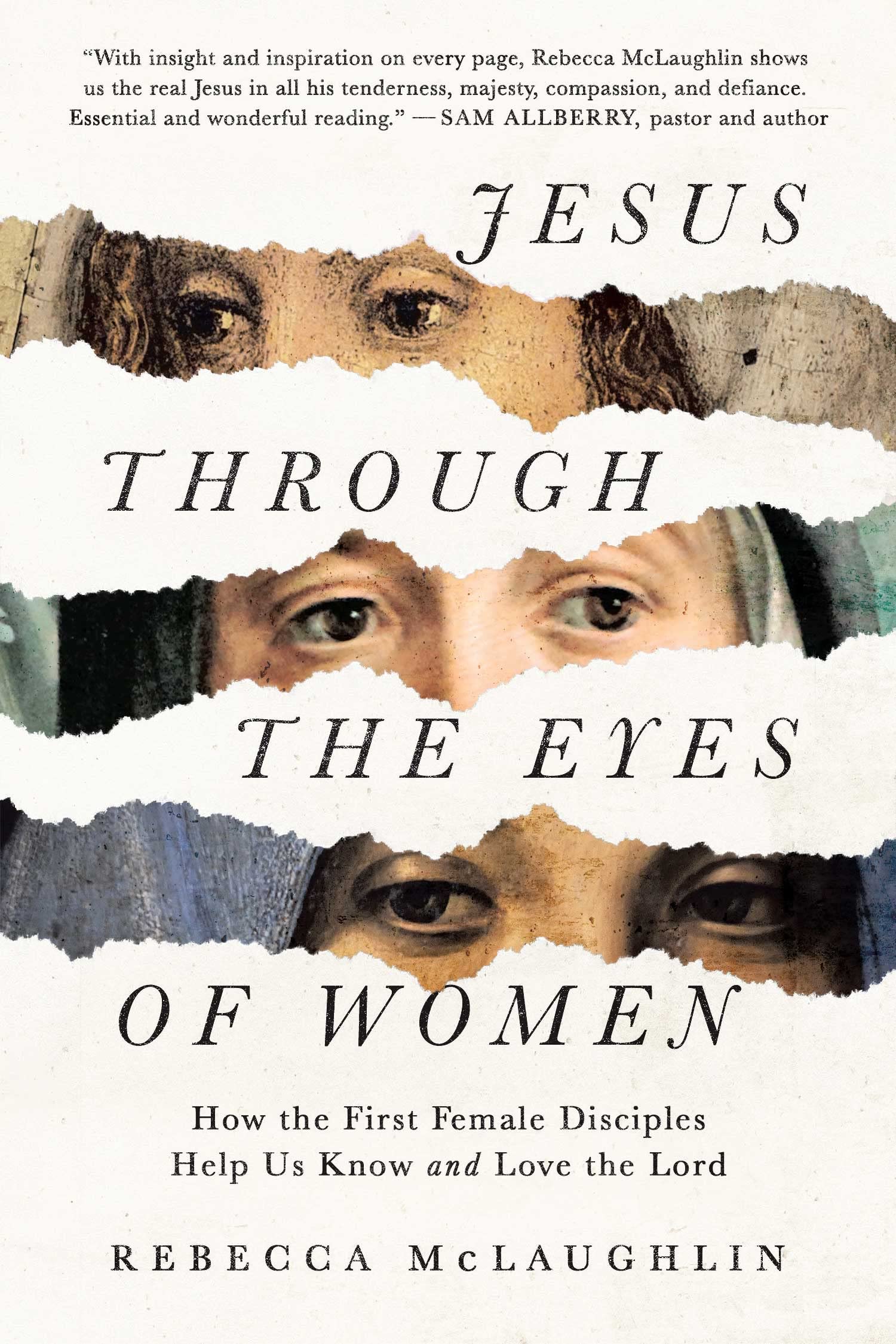 If the women who followed Jesus could tell you what he was like, what would they say?
Jesus’s treatment of women was revolutionary. That’s why they flocked to him. Wherever he went, they sought him out. Women sat at his feet and tugged at his robes. They came to him for healing, for forgiveness, and for answers. So what did women see in this first-century Jewish rabbi and what can we learn as we look through their eyes today?
In Jesus Through the Eyes of Women, Rebecca McLaughlin explores the life-changing accounts of women who met the Lord. By entering the stories of the named and unnamed women in the Gospels, this book gives readers a unique lens to see Jesus as these women did and marvel at how he loved them in return.
We’re delighted to offer this ebook to you for free.