In a famous comedy sketch, Bob Newhart plays a therapist whose only advice to a patient battling a crippling phobia is a blunt, two-word command: “Stop it!” It’s a hilarious scene because it’s so obviously absurd. We know instinctively that significant struggles—especially the deep-seated sin patterns that plague the human heart—can’t be instantaneously overcome by mere willpower or a simple verbal directive to cease and desist.
Yet, for many Christians, the pursuit of holiness feels exactly like that sketch. We know we should be better. We grit our teeth and try to “stop it,” only to become trapped in a cycle of frustration or apathy. In Saved to Sin No More: How Union with Christ Empowers a Life of Holiness, Brad Wetherell, senior pastor at the Orchard, argues that the missing link in our sanctification isn’t more effort but a deeper grasp of the result of our justification.
Wetherell’s thesis is both profound and practical: The doctrine of union with Christ is the only engine capable of driving a life of true, joy-filled holiness. We don’t fight sin to become something; we fight because of who we already are in Christ.
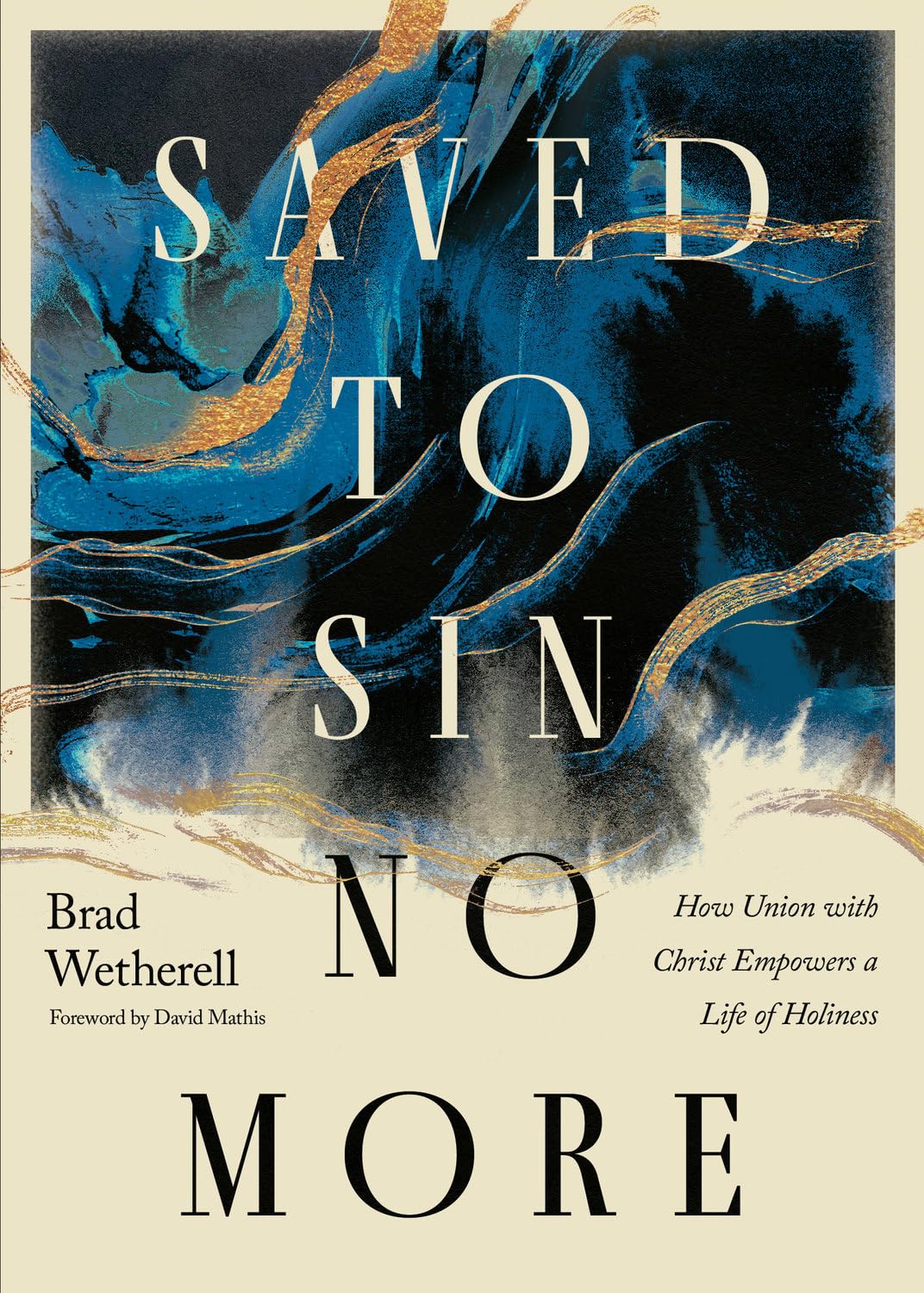
Saved to Sin No More: How Union with Christ Empowers a Life of Holiness
Brad Wetherell
Saved to Sin No More: How Union with Christ Empowers a Life of Holiness
Brad Wetherell
Encouraging for new Christians and lifelong believers, this book explores how union with Christ offers lasting freedom and hope, both in this life and beyond the grave. Chapter by chapter, pastor and author Brad Wetherell walks readers through key biblical passages, showing that in Christ we can marvel at the miracle of conversion, fight sin with greater confidence, and rest in the riches of God’s glorious grace.
Reject Dull Christianity
There’s no such thing as a dull Christian testimony. Sometimes, those of us who grew up in the church feel our stories lack the cinematic drama of a radical conversion from notorious wickedness. We often treat holiness like climbing a mountain, where the person starting at the bottom has a more impressive story than the one starting halfway up. The distance traveled varies, but the view is the same. When we consider the miracle of our union with Christ, we soon realize no one makes it to the peak by her own effort.
There’s no such thing as a dull Christian testimony.
If you’re in Christ, your story is actually his story—a narrative of literal death and resurrection. As Wetherell puts it, “‘Dull testimony’ is an oxymoron. Every salvation story is dramatic” (16). The Christian life isn’t just steady labor toward sanctification. Our old selves are in a casket, and we’ve been made alive in Christ.
We often fail to fight sin precisely because we’re trying to fix a corpse rather than walk in new life. By looking back and realizing we’ve already died, we find the “power of negative thinking” necessary to spur us toward greater holiness.
From Verdict to Vitality
Wetherell tethers most of his argument to a single passage—Romans 5:12–6:23. Readers looking for the “vine and branches” of John 15 or the “body of Christ” from 1 Corinthians won’t find much here. But that tight focus gives the book remarkable clarity on what union means in Paul’s thought.
The Pauline “two Adams” framework reframes our fundamental problem. It’s not just the individual sins we commit—it’s the family we were born into. In Adam, we were destined for death. In Christ, we receive not just a “not guilty” verdict but a new Ruler. This distinction matters more than it first appears.
Most of us default to one of two postures when we think about holiness: striving for self-justifying works (legalism) or passive apathy (licentiousness dressed up as grace). Union with Christ is the third way—we pursue holiness not to earn favor but because favor has already been lavished on us.
Here’s where the book does its most practical work. Wetherell insists the first command in Romans isn’t to do something—it’s to consider. To reflect, ponder, think. That’s countercultural in an age that demands instant results, but it cuts deep: Is our failure to change actually a failure to believe?
“What has been shattered is not the presence of sin but its mastery over believers,” writes Wetherell (50). When we “give in” to sin, we’re acting like employees of a company we no longer work for. An old boss can still shout orders at you, but he can’t fire you. “Sin is not your boss anymore. So when sin makes its demands, you really can say, ‘No!’” (50). Wetherell is honest about what this means in practice: The cure has begun, but we’ll still feel the pull of sin’s passions until heaven.
Freedom of Water
The book ends with an image worth sitting with—and it’s where Wetherell’s tight exegetical focus opens into something much larger.
Most approaches to sanctification are built around avoidance. Don’t do this, stop doing that. But Wetherell navigates the “pink elephant” paradox honestly: The more we try not to think about sin, the more we think about it. The only way to stop thinking about our own failures is to start thinking about Someone else. This isn’t a trick of cognitive redirection—it’s the logic of union itself. If we’re in Christ, the obsessive self-focus that characterizes so much of our struggle with sin is a misunderstanding of where we are.
Union with Christ is the third way—we pursue holiness not to earn favor but because favor has already been lavished on us.
Wetherell’s image of the fish makes this concrete: “A fish is only free when it is bound to the water” (88). We tend to think of holiness as restriction, a list of freedoms surrendered. But that’s like a fish resenting the ocean. The water isn’t the cage. It’s the only place the fish was designed to breathe. Being a “slave of God”—Paul’s provocative phrase—turns out to be the highest form of freedom, because it’s the environment we were made for.
This is the shift the book asks of us, and it’s not a small one. Stop treating sanctification as a renovation project on a basically decent person. Stop treating sin as a set of behaviors to manage. We were dead and are now alive—from corpse to new creation—and the fight for holiness only makes sense from the resurrection side of that equation.
Wetherell offers a theologically robust book on one of the most significant Christian doctrines—and one that deserves more attention. Saved to Sin No More helps us pursue sanctification more vigorously by taking our eyes off our sin and fixing them on the One who saved us. It’s a map back to the water.